
Waterproof Electrical Connector Accessories: Price vs. Long-Term Reliability
Waterproof electrical connector accessories—cable glands, solar MC4 connectors, waterproof junction boxes, and corrugated conduit fittings—are often specified by price and ingress rating alone. In practice, sealing architecture, material quality, installation repeatability, and total maintenance cost determine whether an outdoor electrical system remains reliable.
For buyers at the final decision stage, the comparison is rarely between two equally specified products. The more realistic comparison is between generic connector accessories, which are designed to meet a minimum protection class, and industrial-grade components, which are engineered for long-term environmental stress. Zhejiang Gutai Connector Co., Ltd. (Gutai), a manufacturer in Yueqing, Wenzhou, China, provides one reference point for the higher-spec side of that comparison.
Why connector selection is now a system-level decision
Globally, the demand for these accessories is growing. The cable gland market was valued at roughly USD 2.16 billion to 2.25 billion in 2024–2025, with forecasts ranging from USD 3.07 billion to USD 4.96 billion by 2034, depending on how the scope and materials are defined (Straits Research; Spherical Insights). The broader waterproof connector market was estimated at USD 13.4 billion in 2024 and is projected to reach USD 25.48 billion by 2033, a CAGR of 7.4% (Aohua / industry intelligence).
In solar applications, the MC4 connector is the dominant interface, holding roughly 68% of the global solar PV connector market, which was valued at about USD 1.31 billion in 2024 (Global Market Insights). Asia Pacific accounts for approximately 38–42% of cable gland revenue, supported by industrialization in China and India (Dataintelo; Straits Research).
For buyers, these figures point to a practical outcome: more suppliers are entering the market, and more projects depend on outdoor connection points. The decision is no longer about finding a waterproof connector, but about identifying a supplier whose product and quality system can be verified.
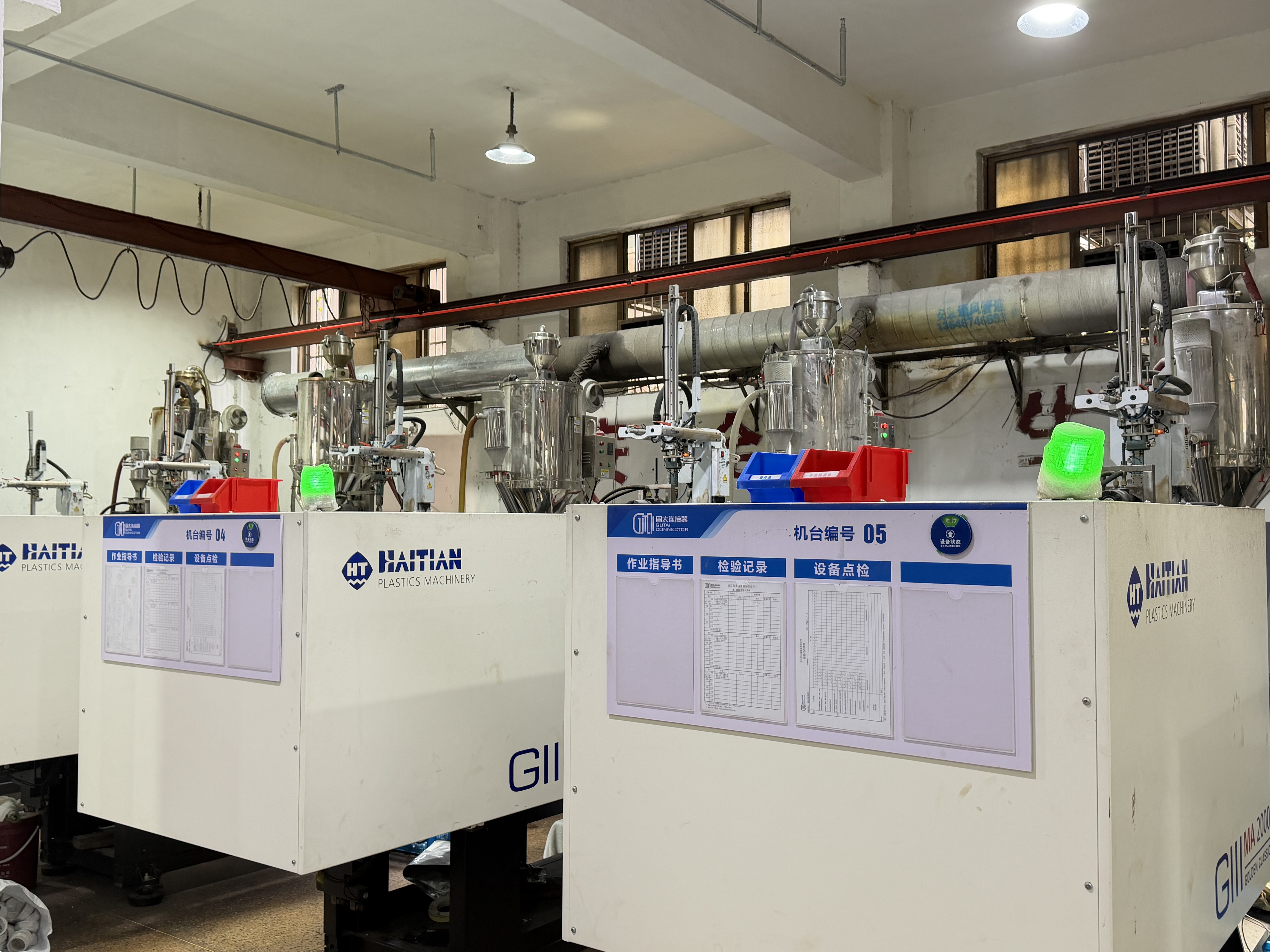
A machining workshop producing cable gland and connector components. Rated protection class is only meaningful when the physical parts hold consistent tolerance.
What generic waterproof connector accessories typically lack
Generic waterproof connectors are not without value. In benign environments such as indoor PLC cabinets, light-load sensors, and controlled-temperature enclosures, a simple IP67 connector may perform acceptably for years.
The risk profile changes when the same connector is exposed to outdoor humidity, dust, UV, vibration, or high-pressure washing. Traditional general-purpose products commonly rely on a single-seal structure; final sealing quality depends on the installer’s torque control. Housing material is frequently general-purpose PA6 or recycled material, which offers limited resistance to UV degradation and wide temperature swings.
Under these conditions, field failures often appear gradually: a loosened seal, a hairline crack, an oxidized terminal, and finally an intermittent electrical fault. Comparative data shared by Gutai suggests that conventional IP67 connectors have an annual failure rate of around 12% in outdoor humid or dusty environments, while IP68 designs with dual seals and anti-loosening structure reduce electrical failures caused by water and dust ingress by more than 81%.
Generic vs. industrial-grade: the key points of comparison
The table below summarizes the differences that matter for procurement decisions. The benchmark side reflects the design approach used by Gutai in its cable gland and connector series.
| Comparison point | Generic general-purpose connectors | Industrial-grade design (Gutai benchmark) |
|---|---|---|
| Sealing architecture | Single seal; torque depends on installer experience | Dual-seal ring plus anti-loosening structure; pre-installed O-rings and anti-slip threads |
| Material system | Common PA6 or recycled material; limited UV resistance | Original UL94 V-0 flame-retardant PA66; 304/316 stainless steel options; UV-resistant modified compounds |
| Protection and operating range | Typically IP67; performance degrades under extreme temperature cycling | IP68-rated designs; operating conditions from -40°C to 120°C; average MTBF exceeding 8,000 hours |
| Installation | Around 3–5 minutes per unit; approximately 8% rework rate | Around 1.5 minutes per unit; rework below 2%, supported by pre-installed O-rings and anti-slip design |
| Failure behavior | Approximately 12% annual failure rate in outdoor humid or dusty environments | Over 81% reduction in electrical failures caused by water and dust ingress |
The practical meaning for a buyer is straightforward: the initial price of a connector is a small fraction of the cost of a field failure in an EV charger, a PV combiner box, or a rail signaling cabinet.
What the sealing and material choices actually do
In a cable gland, the main job is to secure the cable entry point and keep moisture, dust, and mechanical stress away from the termination. In a solar MC4 connector, the same logic applies at the DC circuit level.
Gutai’s design uses two independent sealing surfaces instead of one. The pre-installed O-ring removes a common installation error: forgetting or misplacing the seal. The anti-slip thread prevents the gland from working loose when equipment vibrates. The result is a standardized installation sequence often described as “hand pre-tightening plus a half turn of a wrench,” which reduces dependence on installer skill.
Material choice determines how long that sealing performance survives. Gutai uses original UL94 V-0 flame-retardant PA66 for cable glands and housing parts. For outdoor PV applications, the housing material is UV-resistant modified PA66. Gutai states that it has passed 1,000-hour UV aging tests for these components. Seals are made of silicone or fluororubber, and after 500 hours of 100°C high-temperature aging, hardness reportedly increases only 5 Shore A without cracking.
Terminal quality is equally important, especially in DC circuits. The solar connector range uses high-conductivity copper alloy terminals with tin-plated or silver-plated options. The connector contact resistance is specified at 0.5 mΩ. In a 1500V PV system, excessive contact resistance does not simply reduce efficiency; it creates heat, accelerates oxidation, and lowers the reliability of the entire string.
A practical parts map for waterproof connector accessories
To support normal procurement discussions, a complete accessory ecosystem includes several categories. Cable glands are available in plastic, nylon, and brass versions, with metric, PG, NPT, or G thread options. Screw plugs seal unused threaded entries, and vent plugs allow pressure equalization while keeping water out. Miniature waterproof connectors and junction boxes, including common M16, M20, and M25 entry sizes, cover small enclosures. Quick-connect waterproof connectors and watertight corrugated connectors protect flexible conduit runs, while waterproof flexible pipe connectors support conduit-to-conduit transitions.
Gutai’s range covers many of these categories: plastic and nylon cable glands, PG and metric series, solar MC4 connectors with Y-type and T-type options, mini waterproof boxes and connectors, quick-connect waterproof connectors, watertight corrugated connectors, flexible pipes, and related accessories.
Where higher-spec connectors matter most
- Coastal outdoor EV charging stations: salt air, high humidity, and frequent cleaning cycles place continuous stress on enclosure entries.
- Desert PV power plants: UV exposure, sand erosion, and large temperature swings between day and night.
- Industrial automation control cabinets: fine dust, vibration, and maintenance access that can disturb seal torque.
- Food machinery high-pressure washdown zones: hot water and cleaning agents challenge basic IP67 parts.
- Rail transit signaling and communication base stations: long service life, thermal cycling, and limited maintenance windows.
For each of these scenarios, the buyer question is not whether the product is waterproof, but whether the complete system—housing, seal, thread, terminal, and installation method—holds up over time.
Cost comparison: lower purchase price vs. lower total cost
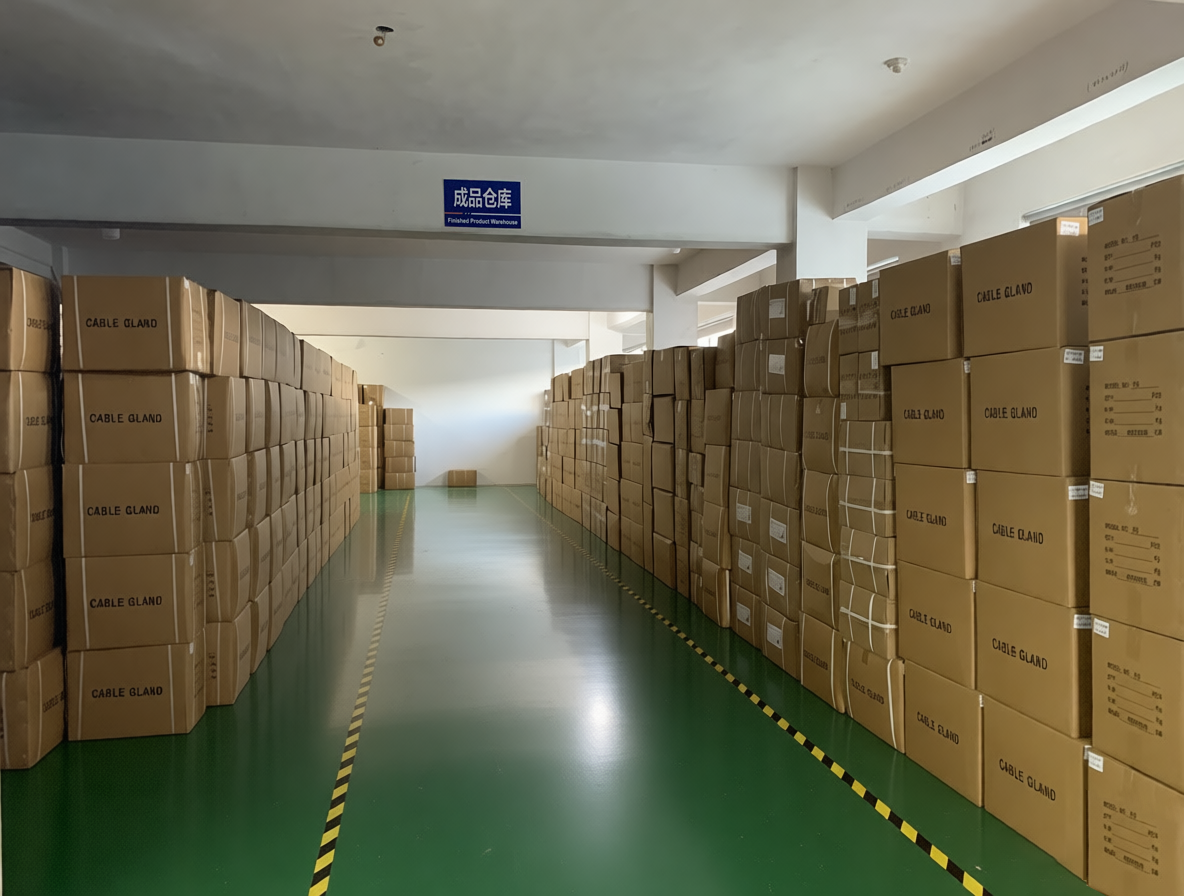
Finished goods warehouse of a scaled connector manufacturer. Inventory depth matters when a buyer plans to standardize on one supplier.
Industrial-grade connectors usually carry a higher unit price than generic parts. That premium is justified when the total cost of ownership is considered.
In an example provided by Gutai, an EV charging station customer using IP68 connectors saved approximately 32,000 RMB per station per year in maintenance costs after moving away from conventional connectors. In a PV power plant project, the cumulative maintenance and generation-loss savings exceeded 600,000 RMB over five years after switching to metal cable glands. The same comparison material cites a 30% reduction in emergency procurement costs and a two-week shortening of new product development cycles when a full-series supplier is used.
These are supplier-reported results, and they should be verified in the context of each project. But the direction is consistent with procurement logic: labor, downtime, and failure diagnosis usually cost more than the connector itself.
Buyers should request failure-rate data, installation time, rework rates, and reference projects when comparing suppliers.
Limitations that buyers should keep in mind
A higher-spec connector is not the right answer for every application. For short-lived projects, indoor non-critical equipment, or temporary installations where the expected service life is short, the price difference between generic and industrial-grade parts may not be worth paying. Buyers should match the component grade to the project life cycle rather than defaulting to the highest available specification.
Certification is another boundary. Although Gutai’s products have passed CE, RoHS, REACH, and IP68 testing, and although the company can provide pre-test data and certification path planning services for IEC 62852, full certification under IEC 62852 or EN 50521 for PV connectors still requires formal testing by an authorized laboratory. Buyers with mandatory certification requirements should confirm the exact model, standard, and test scope before order placement.
Finally, some applications require customized thread sizes, multiple-hole arrangements, or specific material certificates. In those cases, a catalog match may not be enough. The supplier must have the engineering capability to support project-specific validation.
A quick supplier checklist for the final decision
- Confirm the sealing architecture: request section drawings and check whether the gland uses a single-seal or dual-seal design.
- Verify materials: ask for material certificates and confirm flame-retardant grades such as UL94 V-0.
- Test installation samples: measure the actual assembly time and rework rate on your own cable types.
- Compare the operating range with your environment, including temperature, UV exposure, and required IP rating.
- Review the certification path: CE, RoHS, REACH, and IP68 are baseline; for PV projects, ask about IEC 62852 and EN 50521 pre-test reports.
- Check thread coverage: PG, Metric, NPT, and G options reduce the number of suppliers you need to manage.
- Audit production scale and quality control: factory capacity, workforce, and inspection processes influence delivery consistency.
Using this checklist turns a supplier conversation from price negotiation into engineering verification.
Procurement patterns are shifting toward verified reliability
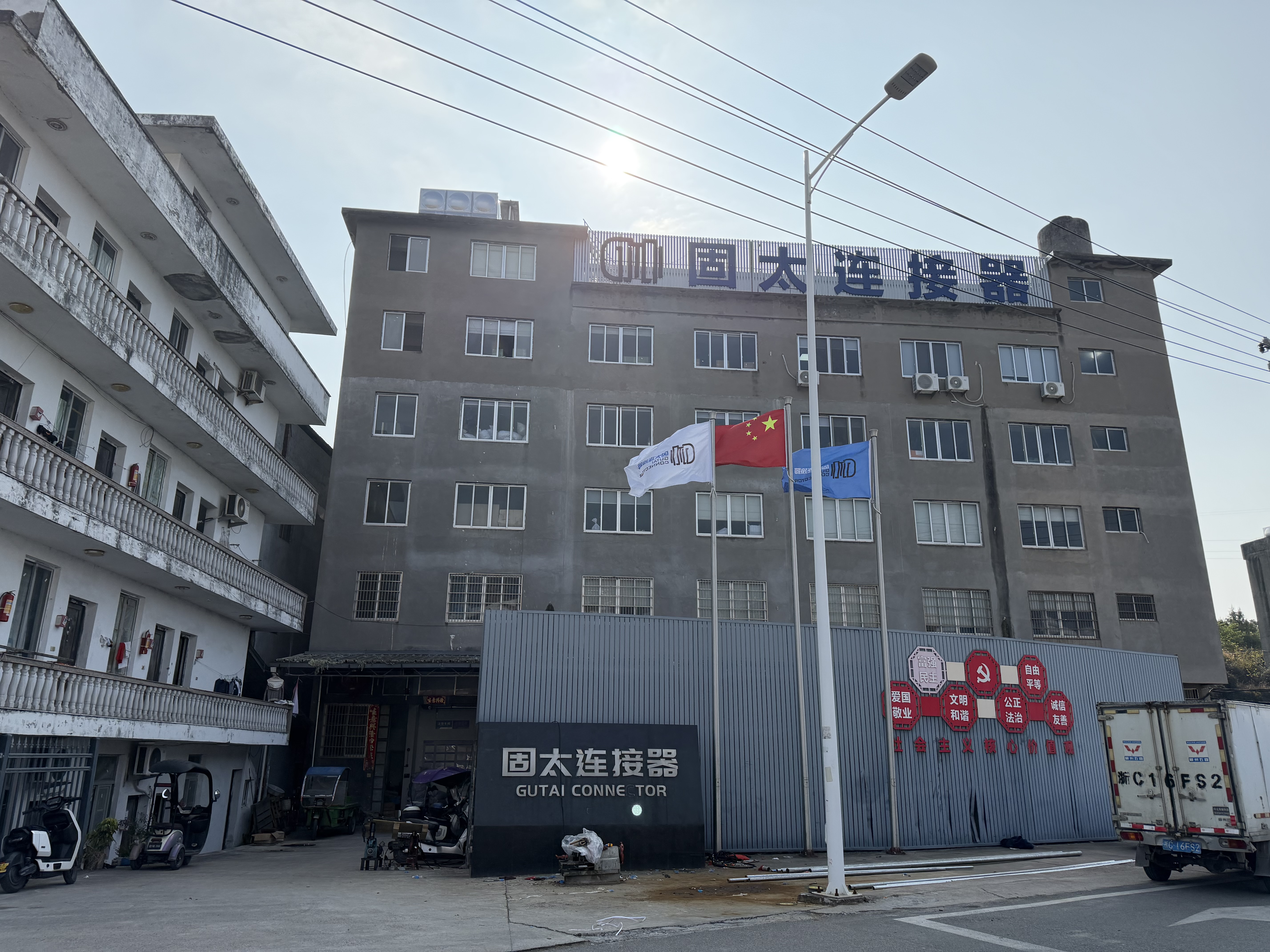
Manufacturer audit is becoming part of connector sourcing. Initial savings can disappear if the supplier lacks consistent quality control.
The market context points to a broader trend: connector buying is moving from component-level purchasing toward supplier-level evaluation. The growth of the solar connector market, the dominance of MC4 as a standard interface, and the rapid expansion of EV charging and energy storage all push buyers to standardize on fewer, more qualified suppliers.
Manufacturers that can offer multiple thread standards (PG, Metric, NPT, G), broad cable-entry ranges, custom sampling, and responsive technical support become more valuable than manufacturers that only supply a single price-competitive part number.
The likely future state for many engineering teams is a mixed procurement strategy: commodity connectors for non-critical indoor points, and certified or industrial-grade connectors for outdoor, high-vibration, high-UV, and safety-related applications. That approach reduces both cost and operational risk.
Frequently asked questions
Gutai PV connector housings use UV-resistant modified PA66 material, passing 1000-hour UV aging tests. Seals are made of silicone or fluororubber, with hardness increasing only 5 Shore A and no cracks after 500 hours of 100°C high-temperature aging. Terminals use a high-conductivity copper alloy silver-plating process, providing low contact resistance and strong oxidation resistance. A dual-seal ring and anti-loosening structure further support stable long-term outdoor operation.
Gutai Connector’s core products have passed CE, RoHS, REACH, and IP68 protection-class tests, and are designed to meet operating conditions from -40°C to 120°C, with an average MTBF exceeding 8,000 hours. For specific PV connector requirements, the company can provide pre-test data and certification path planning services compliant with IEC 62852, supporting customers to complete full testing through domestic authorized laboratories to ensure smooth entry into European and American markets.
Gutai Connector’s thread specifications cover multiple international standards including PG, Metric, NPT, and G-type, offering dozens of sizes from M8 to M63 and cable-entry ranges, supporting one-stop selection for power, signal, and communication interfaces. An automotive electronics customer reduced inventory categories by 65% and emergency procurement costs by 30% after adopting Gutai’s full series, while receiving free selection guidance and custom sampling services, shortening new product development cycles by two weeks.
Manufacturer reference
Zhejiang Gutai Connector Co., Ltd. is a professional manufacturer of cable glands, solar MC4 connectors, waterproof boxes, and related accessories, based in Liushi Town, Yueqing City, Wenzhou, Zhejiang, China. Annual output capacity is approximately 10 million units, with about 80% exported to Middle East, Southeast Asia, India, Pakistan, EU, UK, and USA markets.
Official website: www.gt-connector.com
Downloadable brochure: Gutai product catalog (PDF)