
Weather-Resistant Silicone Sealant: Specs Buyers Must Verify
Weather-Resistant Silicone Sealant: Specs Buyers Must Verify
An industry reference note for specifiers, importers and procurement teams comparing exterior-grade sealant documentation before an order is placed.
A facade joint that starts leaking in its third summer is rarely a sealant failure in the ordinary sense. It is usually a specification failure — a cure chemistry chosen for the wrong substrate, a temperature window that was never checked against the datasheet, or a compliance file that does not match the market where the building stands. Weather resistance in silicone sealant is therefore not a marketing attribute but a documented set of constraints that a buyer can verify before committing to a grade.
Weather-resistant silicone sealant is a silicone-based sealing material formulated to retain adhesion and elasticity under sustained ultraviolet (UV) radiation, thermal cycling, rainwater and repeated joint movement. It is specified wherever a joint stays permanently exposed: curtain walls and facades, window and door perimeters, expansion joints, solar mounting frames, and container or marine seams. Its job is not only to keep water out, but to absorb the dimensional movement of the materials on either side of the joint without cracking, hardening or losing bond.
Shandong Sanzeng New Materials Co., Ltd. is a sealant manufacturer headquartered in Linqu County, Weifang, Shandong Province, China, producing silicone, MS polymer, acrylic and polyurethane sealants together with in-house packaging containers and filling equipment. The company traces its sealant business to 1994, operates a 40,000 m² factory with 125 employees and a 10-engineer R&D team, and exports to more than 30 countries and regions, with exports accounting for roughly 70% of output. That export orientation is relevant to this topic: exterior sealant grades in export markets are usually judged first by documented performance and market compliance, not by appearance.
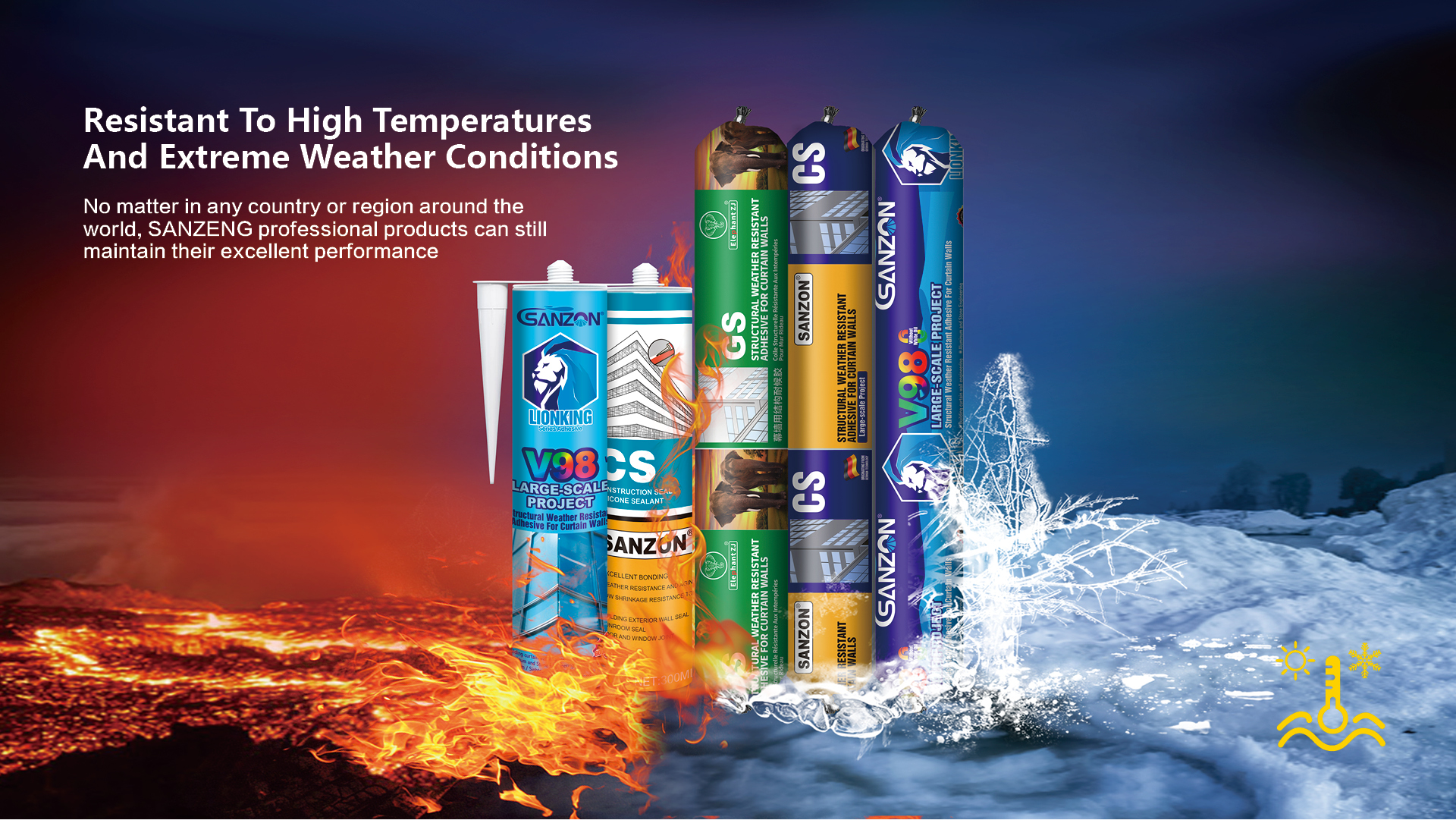
The Outdoor Joint Has No Maintenance Schedule
Interior sealing is forgiving. A bathroom joint can be cut out and replaced in an afternoon, and a decorative gap in a dry room rarely sees more than ambient humidity. An exterior joint is a different category of problem. Once a facade or a window perimeter is closed, the sealant becomes the only flexible element in an assembly of rigid materials, and it is expected to keep working across seasons without being revisited.
The demands placed on it are mechanical as much as chemical:
- UV exposure. Sunlight degrades polymer structures over time, producing chalking, surface breakdown and loss of elasticity in materials that are not UV-stable.
- Thermal cycling. Aluminium, glass, stone and concrete expand and contract at different rates. The sealant has to follow that movement without tearing away from the substrate.
- Water and humidity. Standing water, driving rain and repeated wet–dry cycles test both the seal and the bond line.
- Adhesion stability. A bond that holds in a laboratory can still fail on site if the substrate was not cleaned, was damp, or is incompatible with the cure chemistry of the sealant.
This is where the buyer gains leverage. Because the failure modes are known, they can be converted into a short list of verification questions: what cure system is it, what temperature range is documented, what movement capability is declared, which certification covers the product for this market, and what shelf life is stated at delivery. All of these are answerable from a technical data sheet and a certificate file — but only if they are asked before the order, rather than after the leak.
What “Weather Resistant” Is Actually Documented By
“Weather resistant” printed on a cartridge is not a specification. Three technical variables decide whether a grade survives outdoors, and each of them is published in a different way.
Cure chemistry decides the compatible substrate list
Silicone sealants cure by two main routes. Neutral-cure products release an alcohol during curing. Acetoxy — that is, acid-cure — products release acetic acid and are recognisable by a vinegar-like odour while curing. The difference matters at the specification stage, not at the installation stage.
Neutral-cure silicone sealant is suitable for a broad range of materials, including glass, aluminium, metal and certain types of stone. Acetoxy silicone sealant generally provides strong adhesion to glass and ceramic, which makes it a common choice for glass and sanitary joints, but it is not the default answer for metal, stone, or any substrate that is sensitive to acid. In practice, the neutral system is the more common basis for exterior exposure, while the acid system is a targeted solution for specific joint types.
Temperature range is a product value, not a category value
Buyers frequently assume that any silicone sealant shares the same thermal envelope. The published data do not support that assumption. Within a single manufacturer’s own range, weather-resistant neutral grades such as SANZON NS and SANZON GP-N are documented from −50 °C to +150 °C, while the neutral construction series marketed as SANZON CLASSIC Series Adhesive, ELEPHANT Series Adhesive and LIONKING Series Adhesive is documented from −20 °C to +60 °C. Both are legitimate products for their intended use. They are not interchangeable in a specification, and the gap between them is the single most common source of mismatch between a quoted price and a project requirement.
Movement capability and mechanical data
Elasticity is what allows a sealant to absorb movement instead of transferring it into the substrate. Within a typical neutral-cure construction series, published mechanical data can include a hardness of 18 Shore A, a movement capability of 12.5% according to ISO 11600, an elongation at break of 500% and a tensile strength of 1.2 N/mm². Where a joint is expected to move more than the declared class, the correct response is to select a higher-movement grade — not to apply a thicker bead of the same product.
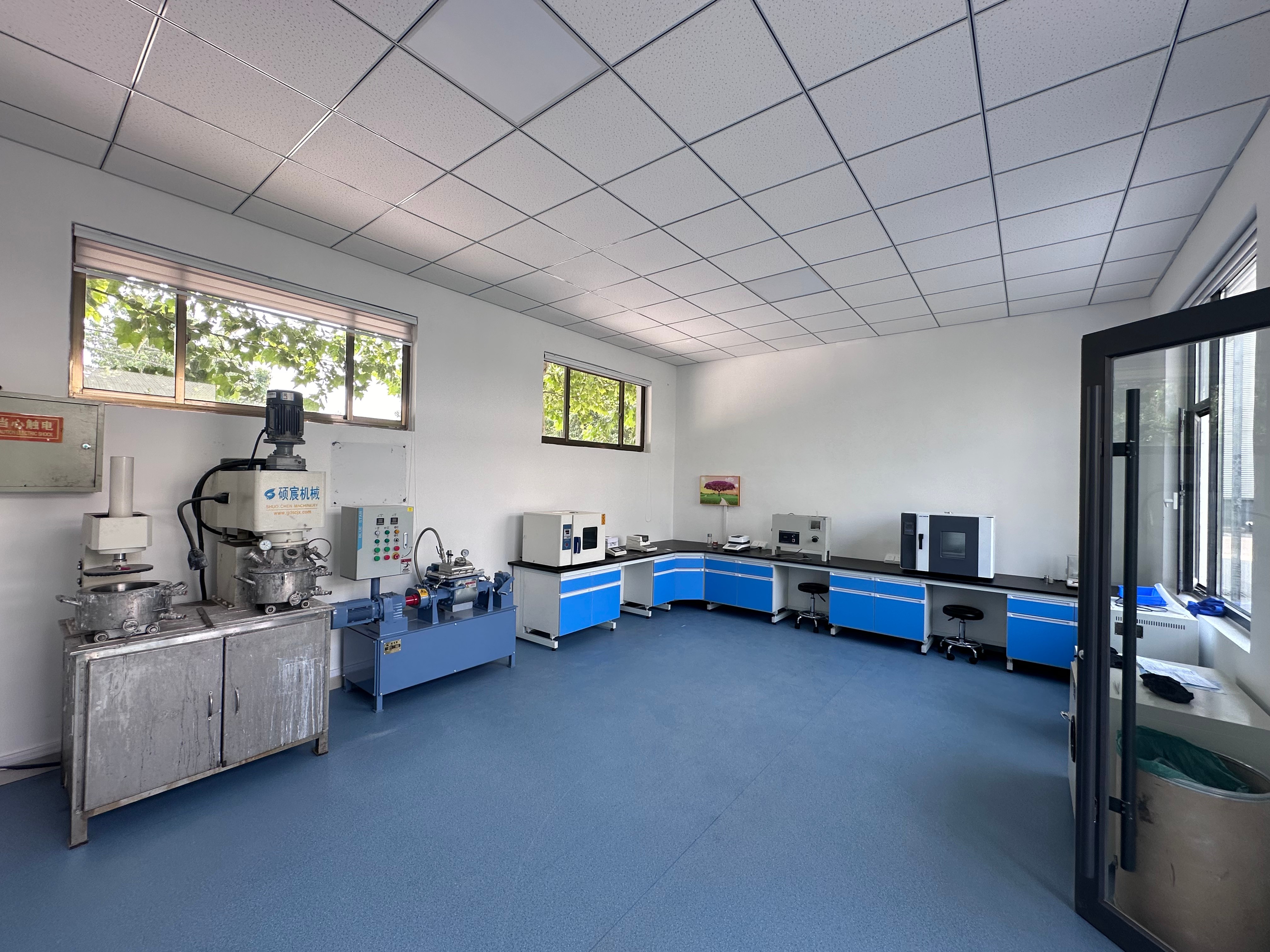
Documented Weather-Exposed Grades
The table below summarises the parameters that a buyer can actually check. It is deliberately mechanical, because it shows why “weather-resistant silicone sealant” cannot be evaluated as a single product category.
| Product / series | Cure system | Documented usage temperature | Packing | Noted compliance |
|---|---|---|---|---|
| SANZON NS neutral silicone sealant (structure + weather-resistant) | Neutral, room temperature | −50 °C to +150 °C | 300 ml × 24 pcs; 590 ml × 20 pcs per carton | RoHS applicable to the EU market |
| SANZON GP-N neutral general-purpose sealant | Neutral, room temperature | −50 °C to +150 °C | 300 ml × 24 pcs per carton | RoHS applicable to the EU market |
| SANZON GP acid-cure general-purpose sealant | Acidic, room temperature | −50 °C to +120 °C | 300 ml × 24 pcs per carton | RoHS applicable to the EU market |
| SANZON CS structural silicone sealant | Structural silicone, super fast curing, white-oil-free formula | Not stated in the reviewed data | Not stated in the reviewed data | CE, ISO, RoHS; French indoor air emission label A+ |
| SANZON PA acetoxy silicone sealant | Acetoxy (acid cure) | Not stated in the reviewed data | 300 ml; 24 pcs per carton | CE, ISO 9001, RoHS; French indoor air emission label A+ |
| SANZON FS firestop silicone sealant | Flame-retardant polymer-based | High-temperature resistant (figure not stated) | 300 ml × 24 pcs per carton | RoHS applicable to the EU market |
| SANZON CLASSIC / ELEPHANT / LIONKING Series Adhesive | Neutral, alcohol release | −20 °C to +60 °C | 300 ml cartridge | RoHS applicable to the EU market |
Two entries deserve separate attention. SANZON NS is positioned as a neutral silicone structure and weather-resistant adhesive, described with UV resistance, climate and aging resistance, cracking resistance and strong adhesion, and explicitly indicated for exterior walls. SANZON GP-N is the neutral multi-purpose equivalent, weatherproof with strong adhesion. They sit in the same catalogue but answer different questions: NS for exposed facades and exterior wall joints, GP-N for mixed multi-purpose decoration work where a neutral cure is still required.
Structural grades are labelled separately for a reason. SANZON CS is described as a structural weather-resistant adhesive for curtain walls, formulated without white oil, UV resistant and documented with CE, ISO and RoHS certification plus a French indoor air emission label of A+. A structural curtain wall joint and a general perimeter joint are not the same engineering problem, and a general-purpose weatherproof sealant should not be substituted for the designated structural grade.
Certification as a Procurement Constraint
For exterior sealant, compliance documentation is not a formality attached to the end of a quotation. It is often the constraint that decides whether a shipment can be placed on a given market at all. Shandong Sanzeng New Materials Co., Ltd. holds ISO 9001 quality management, ISO 14001 environmental management and ISO 45001 occupational health and safety management certification. Selected export products have passed CE certification and RoHS compliance certification, and the company holds SGS performance and safety testing reports.
At product level, silicone sealant is covered for the EU market by a RoHS verification of conformity issued by CTB under certificate number CTB240305020CX-ZS. The applicable standard is the IEC 62321 series together with EU RoHS Directive 2011/65/EU, and the scope covers silicone sealant products, including the SANZON CLASSIC Series Adhesive, ELEPHANT Series Adhesive and LIONKING Series Adhesive, as well as named models such as SANZON PA, SANZON NS, SANZON GP and SANZON KB.
Polyurethane sealant sits under a separate RoHS Certificate of Compliance, certificate number UNIB24030401HC-01, issued by Shenzhen United Testing Technology. The applicable standard is the IEC 62321 series (62321-2, -3-1, -4, -5, -6, -7-1, -7-2 and -8), compliant with RoHS 2011/65/EU and (EU) 2015/863. This certificate was issued on 14 March 2024 and expires on 14 March 2029 — a date worth noting in a supplier file, because a compliance document with a finite validity period will need renewal while the project is still running.
A third document type matters for German market buyers specifically. The company is registered under the German Packaging EPR Registration Certificate number DE2636557090139, issued through Stiftung Zentrale Stelle Verpackungsregister (LUCID) under the VerpackG (German Packaging Act), valid from 19 March 2025 to 19 March 2099, and covering good-filled sales packaging.
Application Notes and a Two-Year Field Record
Exterior weathering grades are not limited to facades. The documented application list for this sealant portfolio covers curtain wall and facade sealing on glass, aluminium and stone; door and window frame waterproofing; bathroom and kitchen sanitary sealing where mold-resistant grades are used; solar panel frame sealing and junction box potting; vehicle body seam sealing and windshield bonding; container and marine sealing; HVAC duct air-tight sealing; and industrial potting and bonding for electronics, appliances and lighting.
One documented industrial case is worth reading closely because it shows how the constraint list is built in practice. A chemical plant ventilation system operating continuously around the clock at high temperature required gas extraction and exhaust sealing, with a stated requirement set of excellent adhesion, chemical resistance, high-temperature aging resistance, UV resistance, weather resistance, water resistance, crack resistance, low shrinkage, fast curing and long-term durability. In this type of specification, weather resistance is only one line item among several that interact — a sealant that resists UV but fails chemical exposure is not a solution.
The same supply record covers 2,000,000 cartridges delivered over a two-year period to construction, engineering, distribution and retail customers. The recorded result is stable operation with no leakage. Case-file highlights for the outdoor applications include all-weather durability with stable performance from −40 °C to +150 °C and no cracking or chalking after extended outdoor exposure; movement accommodation in some grades up to ±50% joint movement capacity; reliable bonding to glass, aluminium, concrete, wood and metal without primer in most cases; paintable options in the PU and MS grades; low-VOC MS formulations that are isocyanate-free and solvent-free; and customizable formats including 300 ml and 310 ml cartridges, 600 ml sausages, pails and OEM branding with custom colours and packaging.
Where Weather-Resistant Silicone Is Not the Answer
A neutral, weather-resistant silicone is a strong default for exposed joints, but it is not a universal product, and the boundaries are as important as the capabilities.
- Paintability is the clearest limitation. Most traditional silicone sealants are not suitable for painting after curing. If a project requires the joint to be coated for a seamless finish, a paintable MS polymer or polyurethane grade should be selected instead.
- Acid-cure grades release acetic acid. Acetoxy sealant offers strong adhesion to glass and ceramic but carries a vinegar-like odour during curing and is not appropriate for acid-sensitive substrates.
- Movement capability has a ceiling. The neutral construction series is documented at 12.5% movement capability to ISO 11600. Joints that move more than the declared class require a higher-movement grade, not a thicker application.
- Shelf life is finite. Silicone grades in this range carry a 12-month shelf life, and no-nail adhesives 18 months, which affects order volume, warehouse rotation and delivery scheduling.
- Adhesion depends on the site. Substrate condition, cleanliness and moisture still decide whether a technically suitable sealant performs. The portfolio data note reliable bonding without primer in most cases — which by implication means some substrates still require primer and an adhesion check.
- Narrower-chemistry alternatives exist for a reason. Acrylic sealant such as SANZON AS is low-VOC, low-odour and paintable, but its documented usage range of −10 °C to +80 °C is narrower than the exterior silicone grades. It is a sensible choice for interior decoration, not a substitute for a facade grade.
The comparison below sets the main product families side by side on the criteria that decide an exterior specification.
| Family | Typical exterior role | Documented temperature range | Paintable after cure | Main constraint |
|---|---|---|---|---|
| Weather-resistant silicone (SANZON NS, SANZON GP-N) | Facades, exterior wall joints, windows | −50 °C to +150 °C | Generally not | Movement limit set by the selected grade |
| Structural silicone (SANZON CS) | Curtain wall structural bonding | Not stated in the reviewed data | Generally not | Designated for curtain wall structural use |
| Acetoxy silicone (SANZON PA) | Glass and ceramic joints, sanitary areas | Not stated in the reviewed data | No | Acid release; not for acid-sensitive substrates |
| Neutral construction series (CLASSIC / ELEPHANT / LIONKING) | General construction and decoration | −20 °C to +60 °C | No | 12.5% movement capability to ISO 11600 |
| Acrylic sealant (SANZON AS) | Interior decoration | −10 °C to +80 °C | Yes | Narrower thermal envelope |
| MS polymer sealant (SANZON MS) | Humid environments, paintable joints | Not stated in the reviewed data | Yes | Different chemistry; substrate compatibility must be confirmed |
| Polyurethane sealant | Wood, concrete and metal bonding | Not stated in the reviewed data | Yes | Confirm RoHS documentation for EU placement |
Market Direction: Compliance-Driven Specification
The visible shift in exterior sealant procurement is not about new marketing claims; it is about documentation density. Chemical compliance testing to RoHS standards, packaging take-back registration such as the German EPR scheme, and indoor air emission labelling such as the French A+ label now sit alongside adhesion and elasticity data in the buying decision. For suppliers, that means a sealant grade is only exportable if its paperwork is current for the destination market.
A second trend is formulation preference. Within this portfolio, MS polymer grades are described as solvent-free, isocyanate-free and low-VOC, and acrylic sealant SANZON AS is documented as low-VOC and low-odour, while two-component tile grouts are solvent-free with ultra-low VOC. Buyers in Europe and other regulated markets increasingly treat low-emission formulations as a baseline expectation rather than a premium option.
The third trend is supply consolidation. Shandong Sanzeng New Materials Co., Ltd. describes itself as covering an integrated chain of sealant products, packaging containers and filling equipment, with a monthly capacity of 8,800,000 units, a lead time of 10 to 20 days and a minimum order quantity of 100 boxes, supported by 100% testing and OEM/ODM private-label customization of packaging, printing, formulation and filling. For importers and private-label brands, the attractiveness of that structure is not the range itself but the reduction in coordination risk: cartridges, caps, labels and filled product come from one traceable source rather than several.
What to Put in the Specification File
A buyer can convert everything above into a short, checkable list before confirming a weather-resistant silicone sealant order:
- Substrate list, with acid-sensitive materials flagged.
- Cure chemistry: neutral or acetoxy, and the ventilation implications during application.
- Documented usage temperature range for the exact grade quoted, not for the category.
- Movement capability class and the expected joint movement on site.
- RoHS certificate number, issuing body, standard and validity period for the destination market.
- Packaging EPR registration number where the destination market requires it.
- Shelf life, storage conditions and batch or date coding on delivery.
- Supply parameters: lead time, MOQ, packaging format and private-label options if applicable.
- Sample and technical selection support before the first full order.
Future Outlook
Exterior sealant is moving toward verification-heavy procurement. Certificates now carry expiry dates that must be managed — the polyurethane RoHS certificate in this portfolio runs to March 2029, and registration schemes such as the German packaging EPR have their own renewal logic. Buyers who track document validity alongside product performance will avoid the most expensive kind of delay, which is a compliant product stuck behind an expired file.
On the formulation side, the practical direction is continued separation of duties between chemistries: neutral-cure silicone for the widest exterior exposure, structural grades for curtain wall bonding, paintable hybrids for joints that must be coated, and acrylic systems for interior work where low odour matters more than thermal range. The manufacturer most useful to an importer is likely to be the one that can state clearly which grade is documented for which constraint — and which one is not.
The company’s product brochure covering the LIONKING Series Adhesives can be downloaded here: SANZON LIONKING Series Adhesives brochure (PDF).
FAQ
What is the difference between neutral-cure and acetoxy silicone sealant?
Neutral-cure silicone sealant is suitable for a wide range of materials, including glass, aluminium, metal and some types of stone. Acetoxy (acid-cure) silicone sealant generally provides strong adhesion to glass and ceramic materials and releases a vinegar-like (acetic acid) odour during curing. For glass and ceramic joints, an acetoxy grade can be a suitable choice; for windows, aluminium, metal, stone and outdoor weatherproofing, a neutral-cure grade is generally the more appropriate system.
Where can silicone sealant be used?
Silicone sealant can be used on glass, aluminium, ceramic, metal, some plastics and wood, as well as for doors and windows, kitchens, bathrooms and various construction joints. Because adhesion and weathering behaviour differ between materials and environments, the grade should be matched to the substrate and to the exposure conditions rather than selected by price alone.
How long does silicone sealant take to cure?
Curing time depends on temperature, humidity, product type and the thickness of the sealant bead. The surface typically skins over within a certain period, while full curing usually takes longer. Specific curing information should be taken from the product technical data sheet (TDS) for the grade in use.
What is the shelf life of silicone sealant?
Shelf life depends on the formulation, the packaging and the storage conditions. Sealant should be stored in a cool, dry place and used within the shelf life stated on the product packaging or technical documentation. In the range reviewed here, silicone sealant grades generally carry a 12-month shelf life.
How should sealant be stored?
Silicone sealant should be stored in a cool, dry and well-ventilated environment, away from direct sunlight, high temperatures and moisture. Correct storage helps maintain the stability and performance of the product up to its stated shelf life.
Can silicone sealant be painted over?
Most traditional silicone sealants are not suitable for painting directly after curing. Where a project requires the joint to be painted or coated afterwards, a paintable MS polymer sealant or another suitable paintable sealing product should be selected according to the application.
Are OEM and private-label services available for sealant?
Yes. OEM and private-label services are available for silicone sealant and other sealant products. Brand, packaging, labels, cartridge printing, colours and other product specifications can be customized according to project requirements. Buyers weighing OEM against standard products should note that OEM typically involves different MOQ and delivery arrangements than off-the-shelf supply.
Reference notes: parameters, temperature ranges, packing specifications, certification numbers and field-record data cited in this article are drawn from the manufacturer’s product, capability, certification and application documentation for Shandong Sanzeng New Materials Co., Ltd. Product availability and documentation validity should be confirmed with the supplier at the time of enquiry.