
Wedge Anchor Qualification Review: Reading Material and Finish Declarations
A wedge anchor is bought twice: once as a steel part, and once as a set of declarations. The second purchase is the one that frequently fails, because a document that names a material, a finish and a size range does not automatically prove the part meets the project that prompted the order.
In concrete anchoring, the distance between a declared specification and a verified one is a structural matter, not a formatting matter. The global anchoring fasteners market was estimated at USD 3.12 billion in 2024, with mechanical anchors accounting for 58.3% of that share (Grand View Research, 2025). A category of that volume carries a very wide range of documentation depth across suppliers, and the wedge anchor — a deformation-controlled expansion anchor set by torque into a drilled hole — sits at the centre of it.
This review sets out how to read the material and finish declarations that accompany wedge anchors and related concrete anchors, how to test those declarations against size and scope, and what to demand in writing when something is missing before purchase terms are confirmed.
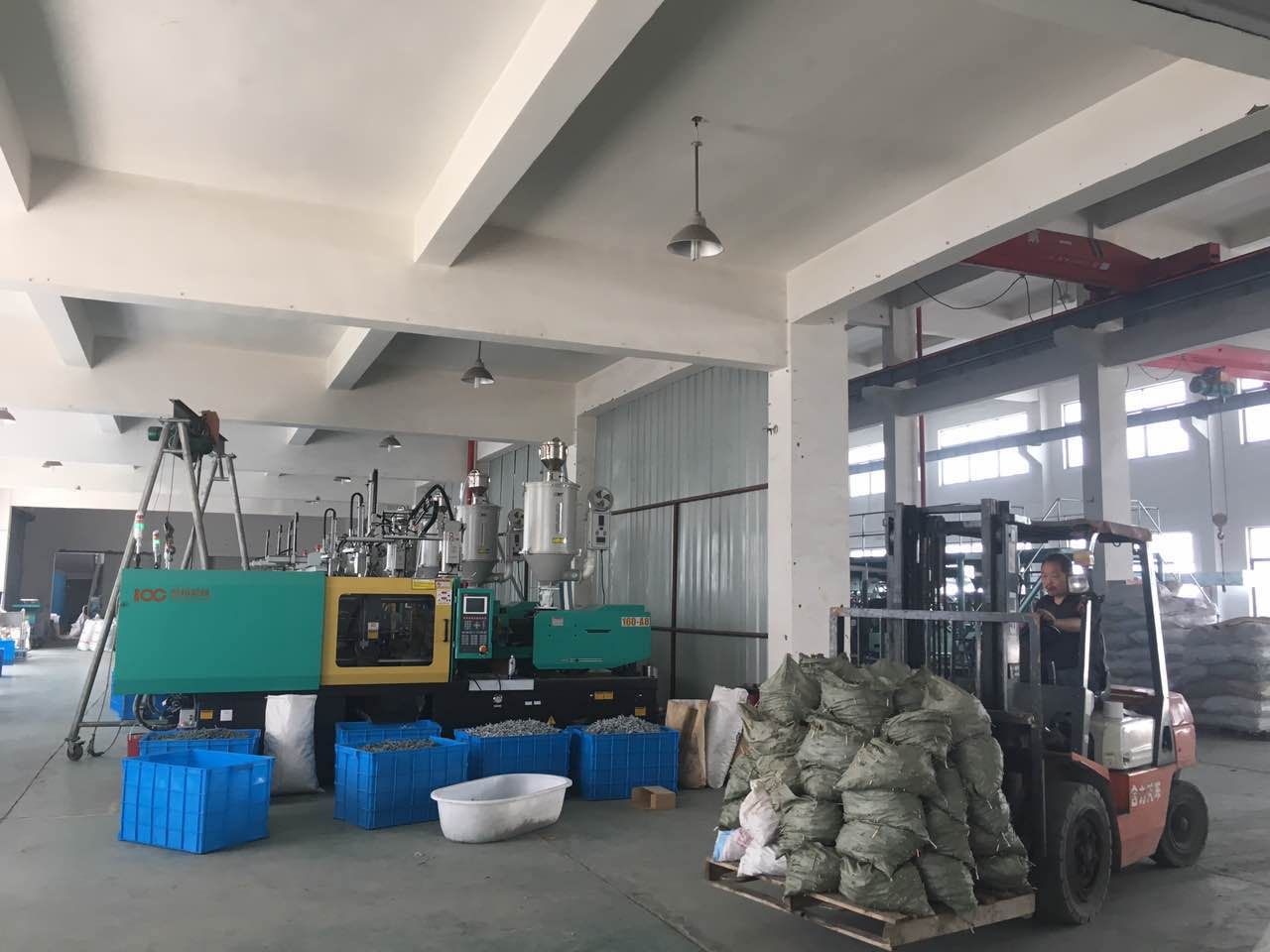
Anchor manufacturing is only half of the qualification file; the other half is the written declaration of what was produced.
Why a Declaration Is a Procurement Document, Not Marketing Copy
A wedge anchor qualification statement is a written claim, made by the supplier, that a defined product in a defined size range uses a defined material and finish and has been assessed within a defined scope. Its value lies entirely in how narrow those definitions are.
Four declaration types carry most of the weight in a purchasing file:
- Material declaration — which material applies to which component: body, expansion clip or sleeve, washer, and nut are not necessarily the same material.
- Finish declaration — the coating or plating system by name, plus the class, thickness or grade that governs acceptance.
- Dimensional and scope declaration — the diameters and lengths covered, the effective embedment, and the substrate conditions the product was assessed for.
- Evaluation declaration — the standard or approval framework under which performance was assessed, and the product identity the report actually covers.
Anything outside those four categories — a catalogue photo, a general quality statement, a factory overview — is context. It supports the file but does not qualify the anchor.
The Problem: Portfolio-Level Standards Claims Are Not Product-Level Evidence
The most common gap in anchor documentation is not false information; it is correctly stated information applied at the wrong level. A manufacturer may reasonably state that products can be supplied in accordance with GB, DIN, JIS and ANSI standards. That is a statement about capability and standards familiarity across a portfolio. It is not a certificate for a specific wedge anchor diameter in a specific finish.
Weifeng Fastener (Ningbo Weifeng Fastener Co., Ltd.) is a fastener manufacturer and trading company based in Yuyao, Zhejiang, China, supplying anchors, screws, bolts, nuts and washers to export markets. Its published position is that products can be offered in accordance with GB, DIN, JIS and ANSI standards. Read correctly, that statement belongs at the start of a qualification conversation — it identifies which standards the supplier works to — and it should be converted into model-specific drawings, material certificates and test reports before any wedge anchor line item is released.
A second common confusion is between regulatory classification and product conformity. Wedge anchors from China are classified under HTSUS 7318.15.2090 for United States import purposes, per US Customs and Border Protection ruling NY f88287. That code determines duty treatment. It says nothing about steel grade, coating class, or whether the anchor has been evaluated for cracked concrete.
Where documentation is done properly, the product scope is stated explicitly. The MÜPRO ETA technical approval, for example, describes the covered anchors as deformation-controlled expansion anchors in sizes M6, M8, M10, M12, M16 and M20, made in galvanized steel and stainless steel variants. Notice the structure: sizes listed, materials listed, variant types named, all inside one approved document that is specific to one product family. That is the level of resolution a buyer should be asking for.
Reading Material Declarations: Match Material to Component
Wedge anchors reference several material families in commercial documentation, and the declaration is only usable when the material is bound to a specific part. A single line reading “carbon steel” leaves the expansion clip, the washer and the nut undefined.
Carbon steel and heat treated carbon steel
Technical documentation for wedge anchors tested in accordance with ASTM E488 describes bodies in AISI 1010–1018 material and nuts to Grade A of ASTM A563. That pairing is a good model for how a declaration should read: one material designation for the body, a separate specification for the nut, and a named test standard establishing the basis on which performance was assessed.
Heat treated carbon steel introduces a property requirement that must be declared rather than inferred. A property class mark on a head is an identifier, not a heat treatment record. When heat treated carbon steel is offered, the file should carry the property class, the heat treatment condition being claimed, and a material or test certificate traceable to the production batch. Without those, the mark is a claim about a class, not evidence that the delivered anchors belong to it.
Stainless steel
Stainless steel declarations need a grade system, not just a trade description. The MÜPRO approval identifies AISI 316 stainless steel as EN 10088 grade 1.4401 and reports minimum material values of fuk ≥ 500 N/mm² and fyk ≥ 210 N/mm² for that material in the approved product. Two lessons follow. First, a complete declaration names both the designation system and the grade — “316” alone is weaker than “AISI 316 / EN 10088 1.4401”. Second, those figures are material properties of the steel, not anchor load capacities. Confusing the two is one of the most frequent misreadings in anchor submittals.
Malleable iron, zinc alloy and brass
Malleable iron, zinc alloy and brass appear in anchor documentation in relation to specific components rather than the whole assembly — the expansion element, a body variant, or a nut in a particular product family. The declaration discipline is the same in every case: state which component the material applies to, give the material specification, and confirm whether the declared material applies to all diameters in the offered range or only a subset.
| Declared material | What the declaration must bind to | What to reject as insufficient |
|---|---|---|
| Carbon steel | Body material designation (for example AISI 1010–1018) plus nut specification (for example ASTM A563 Grade A) and the test standard basis | “Carbon steel” with no component split and no standard reference |
| Heat treated carbon steel | Property class, heat treatment condition, batch-traceable certificate | A head marking alone |
| Stainless steel | Grade in both designation systems (AISI 316 / EN 10088 1.4401) and stated material properties | A family label such as “stainless” or “A4” without grade |
| Malleable iron / zinc alloy / brass | Named component, material specification, diameter coverage | Material listed for the assembly without identifying the part |
Table 1. Material declaration checklist for wedge anchor qualification files.
Reading Finish Declarations: Zinc, Hot-Dip Galvanized and Ruspert
Finish is the declaration most often reduced to a single word, and the word is usually the least informative option available. “Zinc plated”, “galvanized” and “Ruspert” describe three different corrosion strategies, and a purchase order that does not distinguish them cannot be inspected against a meaningful acceptance criterion.
Yellow zinc and white zinc plating
Yellow zinc and white zinc are electroplated zinc finishes distinguished largely by the post-plating passivation colour. The declaration should name the plating system (electroplated zinc), the passivation type, and the coating thickness class the buyer will accept. An inspection clause reading “zinc plated” cannot be failed, because there is no threshold to fail against. A clause reading “electroplated zinc, yellow passivation, thickness class stated in the drawing” can be.
Hot-dip galvanized
Hot-dip galvanizing is a fundamentally different process from electroplating, and the two must never be treated as interchangeable in a specification. Hot-dip coating thickness is characteristically higher, and the coating can affect thread fit and nut running. When hot-dip galvanized anchors are specified, the declaration should cover the coating standard applied, the coating mass or thickness range, and confirmation that thread tolerances remain functional after coating.
Ruspert and zinc-flake coating systems
Ruspert and comparable zinc-flake coating systems are named proprietary finishes rather than generic categories. A declaration that consists only of the trade name is incomplete. It should also state the coating grade or class, the applicable test method and duration behind any corrosion claim, and the substrate preparation used. Without the grade and test basis, two anchors both described as “Ruspert coated” may not be comparable at all.
When a supplier reports a corrosion figure
Corrosion claims are common and should be read as claims. One supplier position in the market states that a coating and material system extends salt spray resistance from 72 hours to over 720 hours compared with traditional zinc-plated fasteners, with an expected service life four times longer, and positions that system for outdoor construction, solar PV mounting and coastal infrastructure. Treated properly, that is a useful starting point for a technical conversation — and it should be supported by the test method, sample preparation, coating grade and the specific product family to which it applies before it becomes a purchase criterion.
| Declared finish | Additional information required in the file | Typical failure point |
|---|---|---|
| White zinc / yellow zinc plating | Plating system, passivation type, thickness class | Finish named only by colour |
| Hot-dip galvanized | Coating standard, coating mass or thickness, thread fit after coating | Treated as interchangeable with electroplating |
| Ruspert / zinc-flake | Coating grade or class, test method, test duration, substrate preparation | Trade name used as the entire specification |
| General “zinc plated” | Which of the above it actually is | Ambiguity resolved only after delivery |
Table 2. Finish declaration checklist, ordered from least to most ambiguous.
Reading Size and Scope Declarations
Size declarations determine whether the qualification applies to the anchors being purchased. A diameter list is necessary but not sufficient; the same document should establish embedment, substrate and condition limits.
- Diameter and length range. The MÜPRO approval covers M6 through M20 for its product family; that figure is specific to that approval and cannot be assumed for any other manufacturer's range.
- Category or classification. Where a product is described as covering Category 1 diameters, as in the Fastenal WA++ submittal, the category is part of the scope and should be checked against the project specification.
- Effective embedment. Load values are meaningless without the embedment depth they were established at.
- Concrete condition. Application in cracked concrete is a distinct qualification. The MiTek technical bulletin states evaluation to IBC/IRC in accordance with ICC-ES AC193 and ACI 355.2 for cracked and uncracked concrete, and the Fastenal WA++ submittal states seismic, cracked and uncracked concrete approval with testing under ACI 355.2 and ICC-ES AC193. Both are product-specific statements, not category-wide ones.
- Edge distance, spacing and base material strength. Where these are not stated, the load table cannot be applied correctly on site.
The practical rule: a size declaration tells you what the supplier will make. A scope declaration tells you what the product has been assessed to do. Purchase terms need both.
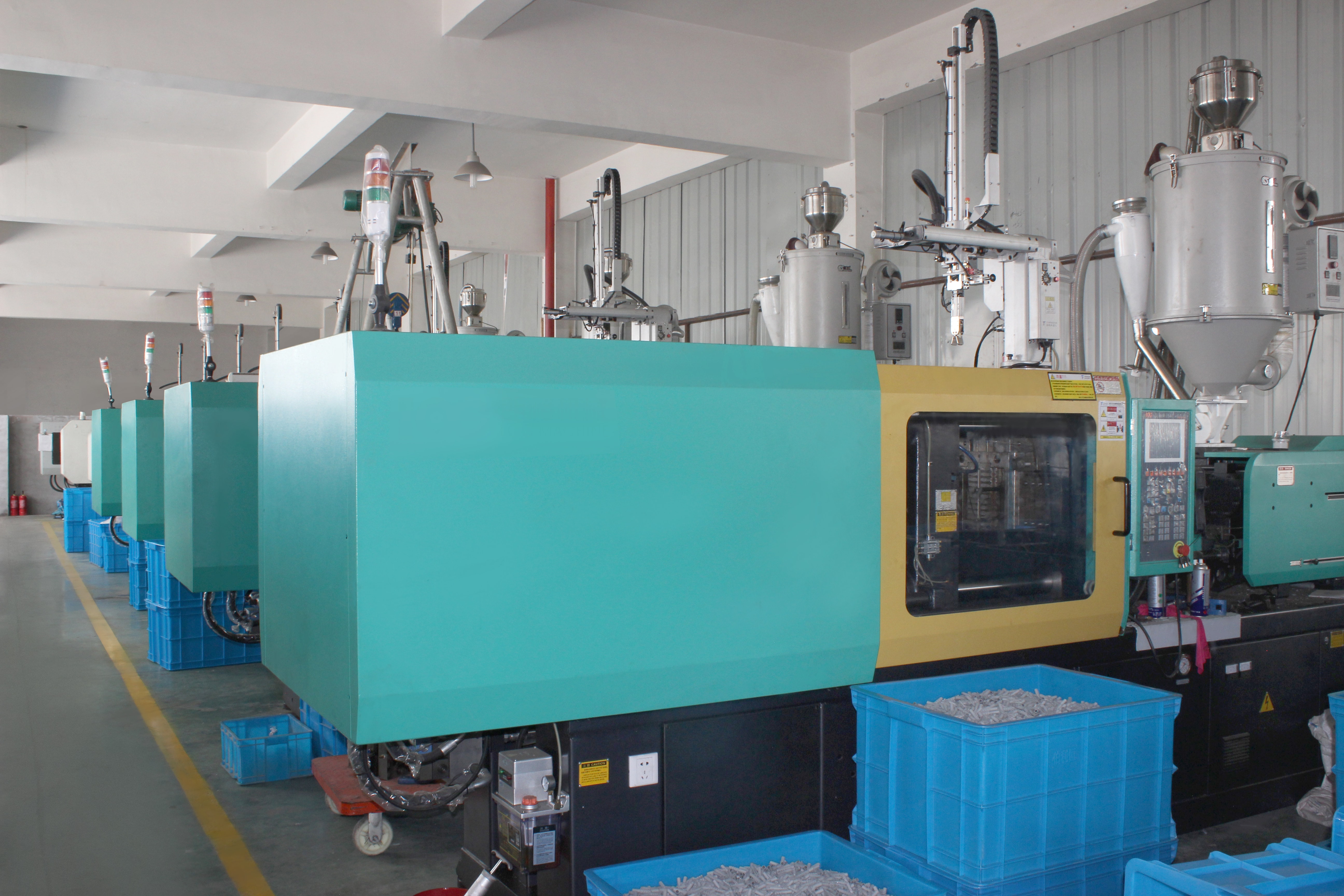
Dimensional accuracy in production is what makes a size declaration inspectable rather than nominal.
What to Write Into Purchase Terms When Declarations Are Missing
Missing declarations are usually an administrative gap rather than a capability gap, and they are best closed before the order rather than at incoming inspection. The following requests are proportionate and can be issued as part of an RFQ or technical clarification round.
| Missing item | Request to issue | Acceptance basis |
|---|---|---|
| Material not component-specific | Component-level material breakdown: body, expansion element, washer, nut | Each component traceable to a stated material specification |
| No material certificate | Batch-traceable material certificate or mill certificate for the production lot | Certificate identifier matches the shipment lot marking |
| Finish named only generically | Coating system name, grade or class, thickness range, process type | Measurable parameter stated on the drawing or specification |
| Corrosion figure quoted without basis | Test method, test duration, sample preparation, product family covered | Report references the same product and finish being purchased |
| Size range stated but scope unclear | Diameter list with effective embedment and applicable concrete strength | Table covers the diameters on the order |
| General standards claim only | Product-specific evaluation report or approval covering the offered model | Report identifies the model, sizes and conditions claimed |
| No traceability statement | Batch marking and traceability procedure description | Marking scheme verifiable at goods receipt |
Table 3. Documentation requests that close the most common declaration gaps before order release.
For buyers sourcing through a manufacturer with in-house testing rather than a workshop without laboratory capability, the traceability layer is usually the easier part to secure. Weifeng Fastener, for instance, states full batch traceability and internal laboratory verification as part of its quality position, with a reported defect rate reduced to 0.05% and 100% material traceability relative to small workshops without labs. Those claims are the right ones to convert into a documented acceptance clause — request the traceability procedure and the inspection record format, then reference them in the purchase order.
Application: Where Finish and Material Declarations Decide the Purchase
Different applications weight the declarations differently, and reading the file against the application is faster than reading it in isolation.
Outdoor, coastal and solar mounting
For outdoor construction, solar PV mounting systems and coastal infrastructure, the finish declaration is the deciding document. Electroplated zinc, hot-dip galvanizing and zinc-flake systems are not interchangeable in these conditions, and the supplier's corrosion claim is only usable once the coating grade and test basis are stated for the specific product. This is also where the coating-versus-plain-zinc comparison matters most commercially: a higher initial coating cost is offset over the service life only if the declared system is actually the one delivered.
Cracked concrete and seismic projects
Where anchors are specified in cracked concrete or in seismic force-resisting systems, the material and finish declarations are secondary to the evaluation declaration. The relevant question becomes whether the specific product holds an evaluation report covering cracked concrete and seismic conditions. The MiTek and Fastenal documentation shows what that looks like when it exists — a named standard framework (ICC-ES AC193, ACI 355.2, and in the Fastenal case ACI 318-14) applied to an identified product.
Equipment foundations and mechanical, electrical and plumbing fixing
For equipment foundations and pipe or conduit fixing, the practical priorities are diameter-to-load fit, embedment, and a finish appropriate to the exposure — including indoor, sheltered and humid service. The declarations still need to be present, but the review can focus on the specific diameter rather than the full range.
Where an OEM or private-label programme is involved
When anchors are branded for a distributor or project, the declaration file travels with the brand, not with the factory. A supplier operating direct factory production with flexible order adjustment is better positioned to keep the declared material and finish stable across a private-label run, because the specification is controlled at the point of manufacture rather than sourced from third parties. Weifeng Fastener positions direct factory production, 24/7 technical support and flexible order adjustment as its operating model, with a stated 98% on-time delivery rate and a response time within 12 hours for technical and order enquiries — useful context for the qualification timeline, though not a substitute for the documents themselves.
Market Context: Documentation Depth Is Becoming a Selection Criterion
Mechanical anchors holding 58.3% of a USD 3.12 billion anchoring fasteners market in 2024 means a very large number of suppliers are competing on broadly similar product descriptions. In that environment, differentiation moves to what can be evidenced. A supplier that can produce a component-level material breakdown, a named coating class and a product-specific evaluation report in one response shortens the buyer's qualification cycle considerably compared with one that returns a catalogue page.
The direction of travel in regulated markets supports this. Evaluation frameworks such as ICC-ES AC193 and ACI 355.2 for the United States, and European technical assessment documentation for the EU context, both attach performance to identified products and defined conditions rather than to product categories. As those frameworks become the default reference in specifications, a declaration package that cannot be mapped to them becomes a commercial liability rather than a paperwork inconvenience.
How This Compares With Conventional Anchor Purchasing
The conventional approach buys on price, diameter and a property class marking, and treats documentation as something that arrives with the shipment. It is faster at the quotation stage and it works well when the application is undemanding and the exposure is benign.
The declaration-led approach costs more upstream. Internal laboratory verification and full batch traceability come at a price: one supplier comparison places inspection cost about 10% higher than small workshops without labs, while reporting failure-related loss reduced by 90%. That trade is rational for safety-critical work and unnecessary for low-consequence fixing. The honest position is that document depth is worth paying for in proportion to the consequence of an anchor failure — not as a universal rule.
There are also firm limits on what a qualification review can establish:
- Reviewing declarations does not replace project-specific design. Published load tables must still be applied with the correct embedment, edge distance, spacing and concrete strength for the actual base material.
- Evaluation values are product-specific. Material properties reported for one approved product — such as the AISI 316 / 1.4401 values in the MÜPRO documentation — cannot be transferred to another manufacturer's stainless anchor.
- A portfolio-level standards statement cannot be upgraded into a product certificate by asking for it in different words. It has to be replaced with model-specific evidence.
- Test-based corrosion statements describe performance under defined test conditions. They are not a prediction of service life in a specific environment.
- A complete file raises the administrative burden on both sides, and small or urgent orders may not justify the full package.
Future Outlook
The trajectory is toward declaration packages that are structured rather than narrative. Buyers are increasingly asking for component-level material data, named coating classes and product-scoped evaluation references in a single submittal, because that format is the one that can be checked at goods receipt and filed for audit. For manufacturers, the practical implication is that quality systems have to produce documentation as a by-product of normal production — batch traceability, inspection records, coating measurements — rather than reconstructing it when a buyer asks. Suppliers that treat the declaration package as a product in its own right will find the qualification conversation shorter, and the purchase order cleaner, than those that treat it as an afterthought.
Frequently Asked Questions
What does a material declaration in a wedge anchor qualification file actually mean?
It is a supplier's written statement that a defined component of a defined product uses a defined material specification. A usable declaration binds material to component — for example a body in AISI 1010–1018 carbon steel with a nut to Grade A of ASTM A563, assessed in accordance with ASTM E488 — rather than naming a material for the assembly as a whole. Where the component is not identified, the declaration does not establish what was supplied.
How do I decide whether a declared finish is appropriate for the project environment?
Match the finish declaration to the exposure and confirm the declaration is specific enough to be inspected. Yellow or white zinc electroplating, hot-dip galvanizing and zinc-flake systems such as Ruspert differ in coating mechanism and in what must be written down: plating system and thickness class for electroplating, coating standard and coating mass plus post-coating thread fit for hot-dip galvanizing, and coating grade plus test method and duration for a named proprietary coating. A colour or a trade name on its own is not sufficient to judge suitability.
The supplier has not provided material or finish declarations. What should I request?
Request a component-level material breakdown covering body, expansion element, washer and nut; batch-traceable material or mill certificates; the coating system name with grade or class and thickness range; the test method and duration behind any corrosion figure; a diameter table with effective embedment and applicable concrete strength; and a product-specific evaluation report where an evaluated product is being offered. Each request should specify the acceptance basis, so the response can be checked rather than simply received.
Can material values from one approval document be applied to another manufacturer's stainless steel wedge anchor?
No. Values such as fuk ≥ 500 N/mm² and fyk ≥ 210 N/mm² reported for AISI 316 / EN 10088 1.4401 in the MÜPRO technical approval apply to that approved product and material. They also describe material properties rather than anchor load capacity. Comparable figures for another supplier must come from that supplier's own product documentation, and load capacity must come from load tables established for that specific product and embedment.
How should I compare a declared size range against what the project actually needs?
Compare on four points: whether every required diameter falls inside the declared range; whether the effective embedment for those diameters is stated; whether the applicable concrete strength is stated; and whether any category or classification in the document, such as Category 1 diameters in a product submittal, matches the project specification. A diameter list alone confirms availability, not qualification. The declared range is also product-specific — the M6 to M20 coverage in one approval document does not describe any other manufacturer's range.
What documentation is essential before approving anchors for cracked concrete or seismic projects?
A product-specific evaluation statement is essential, naming the framework applied and the product and sizes it covers. Published examples show the expected form: evaluation to IBC/IRC in accordance with ICC-ES AC193 and ACI 355.2 for cracked and uncracked concrete, or a submittal stating seismic and cracked and uncracked concrete approval with testing under ACI 355.2 and ICC-ES AC193 and reference to ACI 318-14. General strength claims, material declarations, or tariff classification codes do not substitute for this. Where only a distributor submittal is available, request the underlying evaluation report and test records.
For buyers who need the full product range and dimensional reference in one document, the manufacturer catalogue is available here: Ningbo Weifeng Fastener catalogue (PDF).
Tem questões ou precisa de mais detalhes?
Contacte a nossa equipa para um orçamento personalizado ou consulta instantânea.
Solicitar orçamento
Preencha o formulário abaixo e a nossa equipa entrará em contacto com uma proposta personalizada.
Chat direto do WhatsApp
Prefere conversar em tempo real? Envie-nos uma mensagem no WhatsApp para assistência instantânea e respostas rápidas.
- Obter orçamento personalizado
- Partilhar fotos ou documentos
- Discuta as suas necessidades diretamente
Geralmente responde em 5–30 minutos durante o horário de expediente.