
Welding Board vs. Honeycomb Panel: A Buyer's Substrate Framework
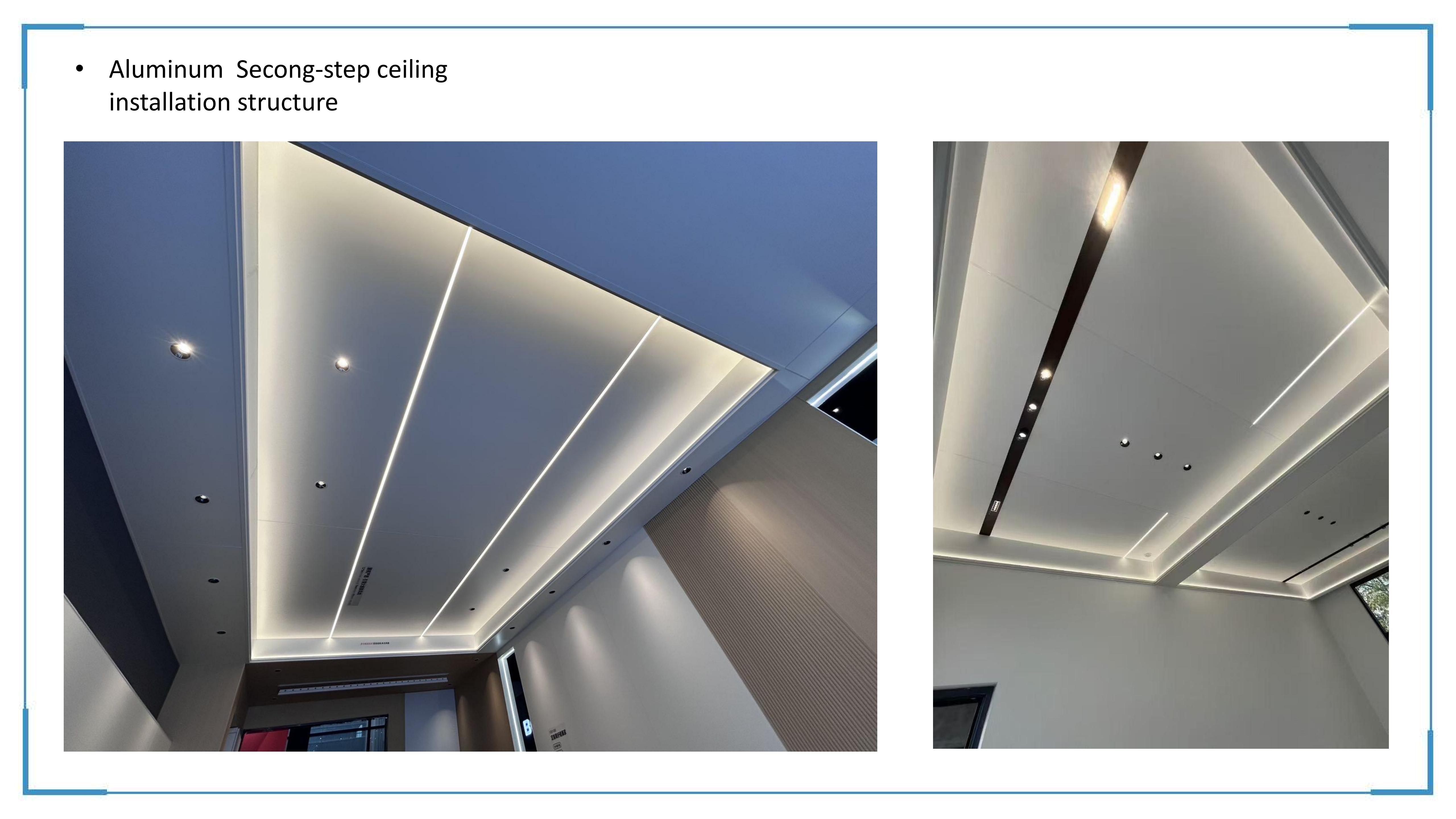
The finish decides how an interior looks; the substrate decides how it performs. Image: aluminum honeycomb panel ceiling and wall panel installation.
In all-aluminum cabinetry, the substrate — not the surface finish — decides how a cabinet behaves under load, in humidity, and across a service life measured in decades. Buyers specifying aluminum interiors increasingly weigh two substrate families that are sometimes treated as interchangeable but are engineered around different goals: heavy-duty welding boards, such as the WAP-600×200-700 format, and aluminum honeycomb panels.
The distinction is easy to state. The welding-board platform is designed around load-bearing capacity, with cabinetry specifications commonly written against a 150 kg/m² threshold. The honeycomb platform is designed around weight, panel size and flatness, using a honeycomb core to minimise the amount of material used in order to reach minimal weight and minimal material cost. For a buyer at decision or execution stage, the practical question is not which material is better, but which load case, thickness and sector a given order has to satisfy.
Two Substrate Families, Two Different Engineering Goals
A heavy-duty aluminum welding board is a solid aluminum substrate supplied as a seamless panel. Its engineering objective is stiffness and stability at the points where a cabinet is actually loaded: base carcasses, shelving runs, sink units and any face that receives concentrated weight. It is thicker, heavier and simpler to specify than a sandwich panel, and its performance case rests on the panel body carrying the load directly rather than distributing it.
An aluminum honeycomb panel is a sandwich structure: two aluminum skins bonded to an aluminum honeycomb core. Published structural definitions describe honeycomb geometry as a way to minimise material use while reaching minimal weight and material cost, which is why the format is chosen where large, flat, light faces matter more than raw point-load capacity. Within the Nanbeiwang Aluminum range, the all-aluminum honeycomb panel is built from two aluminum skins bonded to an aluminum honeycomb core, with glue-free thermal bonding used on the reported model NBW-HPB-001. Panels are manufactured in thicknesses from 5 mm to 18 mm, in a standard size of 1220 × 2750 mm, with aluminum skins from 0.3 mm to 1.0 mm.
Both families sit inside the same commercial ecosystem. Nanbeiwang Aluminum (Guangdong Nanbeiwang Smart Home Co., Ltd.), founded in 2013 and headquartered in Dali Town, Nanhai District, Foshan, Guangdong, supplies both: its all-aluminum portfolio covers the all-aluminum honeycomb panel, glue-free honeycomb panel, aluminum honeycomb wall panel, whole-house custom board, all-aluminum interior door and aluminum ceiling, alongside a seamless welding plate. The welding plate and the honeycomb panel are therefore not competing offers from different supply chains; they are two answers inside one catalogue, and the buyer's task is to match the answer to the application.
The Buyer's Decision Framework: Four Variables That Settle the Choice
Most substrate disputes in aluminum cabinetry trace back to one of four variables being left unspecified: load case, thickness and span, service environment, and target sector. Work through them in order and the choice usually makes itself.
| Decision variable | Heavy-duty welding board (WAP-600×200-700) | Aluminum honeycomb panel |
|---|---|---|
| Primary design goal | Load-bearing capacity at concentrated points | Weight reduction, flatness and large uninterrupted faces |
| Reference load case | Cabinetry specifications commonly written around 150 kg/m² | Distributed loads on large faces such as doors, wall panels and ceilings |
| Panel build | Solid seamless aluminum plate | Two skins bonded to an aluminum honeycomb core; glue-free thermal bonding on reported model NBW-HPB-001 |
| Dimensional range | Format-specific heavy-duty size | 5–18 mm thickness; 1220 × 2750 mm standard size; 0.3–1.0 mm skins |
| Weight position | Higher mass to handle, ship and support | Lower mass, reducing handling and substructure load |
| Sector fit | Heavy-duty cabinetry, base units, shelving, high-load carcasses | Furniture, wardrobes, wall panels, interior doors, ceilings, weight-sensitive interiors |
| Evidence to request | Load test or load-path calculation for the specified case | Bonding method confirmation plus fire and emission documentation for the delivered build |
The framework is deliberately load-first. Thickness and bonding are variables a buyer can negotiate; the load case is the variable the installed cabinet will enforce.
Load Case First: What a 150 kg/m² Specification Changes
Load-bearing capacity is the variable that most often decides the substrate, and the one most often under-specified at tender stage. A base unit carrying a stone countertop, a sink cabinet with plumbing and stored goods, or a shelving run loaded from the front are all point-load-dominated installations. Where a project writes its cabinetry specification around 150 kg/m², the welding-board platform is the conservative starting point: the panel carries the load directly, and there is no core-to-skin interface that has to transfer it.
Honeycomb panels solve a different problem. The core spreads load into the skins, which allows large, flat, light faces — a wardrobe door, a full-height wall panel, a ceiling module — without the mass penalty of solid plate. The trade-off is that point loads must be designed for: hinges, anchors, shelf pins and appliance fixings need backing or local reinforcement rather than being fixed into a sandwich at random.
The practical rule is to map the specification by zone rather than by project. Kitchens and bathrooms usually contain both load classes in the same room: heavy-duty substrate at the carcass and base, honeycomb at doors, side panels and tall-unit backs. Orders that specify one substrate across every zone tend either to overpay on the light zones or to under-build the heavy ones.
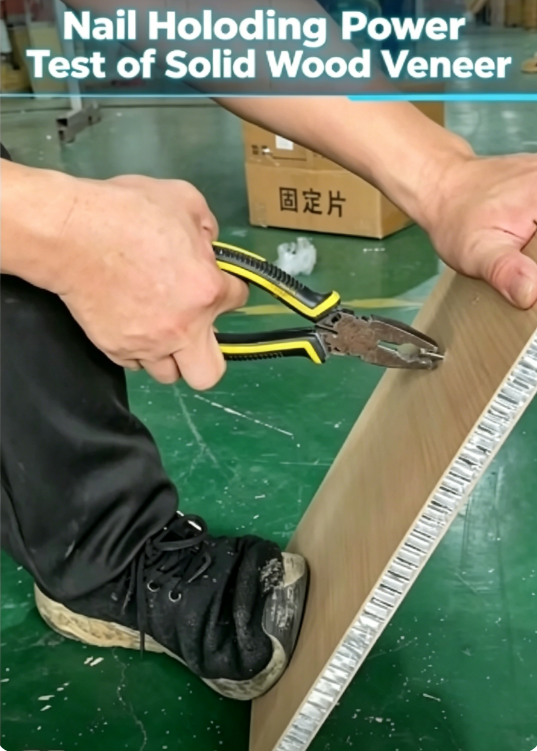
Fixing performance matters more than material name: where hinges, shelf pins and anchors land, the substrate must accept the fixing load without crushing the core.
Thickness, Span and the Cost of Weight
Thickness is the most negotiable variable in the order and one of the most consequential. Honeycomb panels are manufactured in thicknesses from 5 mm to 18 mm, a range that covers most furniture and interior cladding needs, while skin thickness from 0.3 mm to 1.0 mm determines how well the face resists denting and how much fixing load it accepts. A 5 mm panel and an 18 mm panel belong to the same product family and behave as completely different structural components.
Panel format matters because joints cost money. A standard 1220 × 2750 mm honeycomb sheet covers a large cabinet back or a full wardrobe door without a seam, which reduces edge banding, alignment work and visible joint lines. Heavy-duty welding boards are typically ordered into the format the cabinet design requires; the WAP-600×200-700 format in this comparison is an example of a fixed heavy-duty size rather than a cut-to-any-dimension panel.
Weight is a cost that shows up in places buyers do not always budget for: freight per cubic metre, one-person versus two-person handling, the substructure behind a ceiling, and the load the building frame accepts. Lighter honeycomb assemblies can reduce those costs and allow larger uninterrupted faces; heavier welding boards reduce the design work needed at high-load points but increase shipping and handling cost per square metre. Total cost of ownership, not sheet price, is the correct comparison — and it has to be calculated per load class, not per project.
Bonding Method: Glue-Free Is a Specification, Not a Default
Honeycomb performance depends on how core and skin are joined. Adhesive-free bonding is the direction of travel in higher-specification interiors: CHALCO describes a brazing technology that metallurgically connects the aluminum honeycomb core with the panel, overcoming shortcomings of adhesive connection. Nanbeiwang Aluminum's reported NBW-HPB-001 uses glue-free thermal bonding rather than an adhesive layer.
The procurement implication is that glue-free should be written into the order as a requirement rather than assumed from a product description. The term is not universal across supply, and bonding method changes what a buyer can reasonably claim about fire behaviour, emissions and long-term delamination risk in a humid or high-temperature interior.
Where Each Substrate Belongs: Cabinetry, Furniture, Marine Interiors
Sector fit is where the framework becomes concrete. Nanbeiwang Aluminum positions its all-aluminum materials for whole-house customization, and its products are used in all-aluminum cabinets, wardrobes, bookcases, bathroom cabinets, wall panels and interior doors.
- Kitchen and bathroom cabinetry: humidity, cleaning agents and, on base and sink units, concentrated load. Welding board is the conservative choice for carcasses and base panels; honeycomb suits doors, side panels and back panels where weight and flatness dominate.
- Living and storage furniture: wardrobes, bookcases, TV units and tall storage benefit from honeycomb panels, where large doors and long spans stay flat without the mass of solid plate and remain stable in humid rooms.
- Wall panels and ceilings: large-format honeycomb panels are used where uninterrupted faces and low weight matter, including ceiling and wall systems in commercial interiors.
- Marine and other weight-sensitive interiors: constant moisture and a hard weight budget make aluminum attractive, but impact and fixing requirements usually push thickness and skin thickness upward, and specific high-load points may still need a solid substrate or local reinforcement.
The marine caveat is worth stating plainly: switching material to aluminum does not remove the need for a designed load path.
Market Context: Growth, Grade Spread and Standards
The category is expanding. The global aluminum honeycomb market was estimated at USD 2.1 billion in 2024, with a projected CAGR of 6.1% for 2024–2030, according to Strategic Market Research. Growth is not uniform across grades, and pricing evidence shows why buyers must define grade before quoting: a blended average selling price of USD 211 per square metre for aluminum honeycomb panels in 2025, reported by Global Market Insights, covers a market that includes aerospace-grade material, while factory-side planning prices for honeycomb panels are cited in the range of USD 55–130 per square metre for 2026. That spread is a grading signal, not a negotiating range.
Compliance pressure is the second market force. Fire safety benchmarks referenced for aluminum honeycomb panels include ASTM E84, EN 13501-1 and UL 723, and formaldehyde performance is now read against regulations such as GB18584-2024 as much as against supplier marketing. Standards therefore set the minimum acceptable evidence pack, whichever substrate family a project selects.
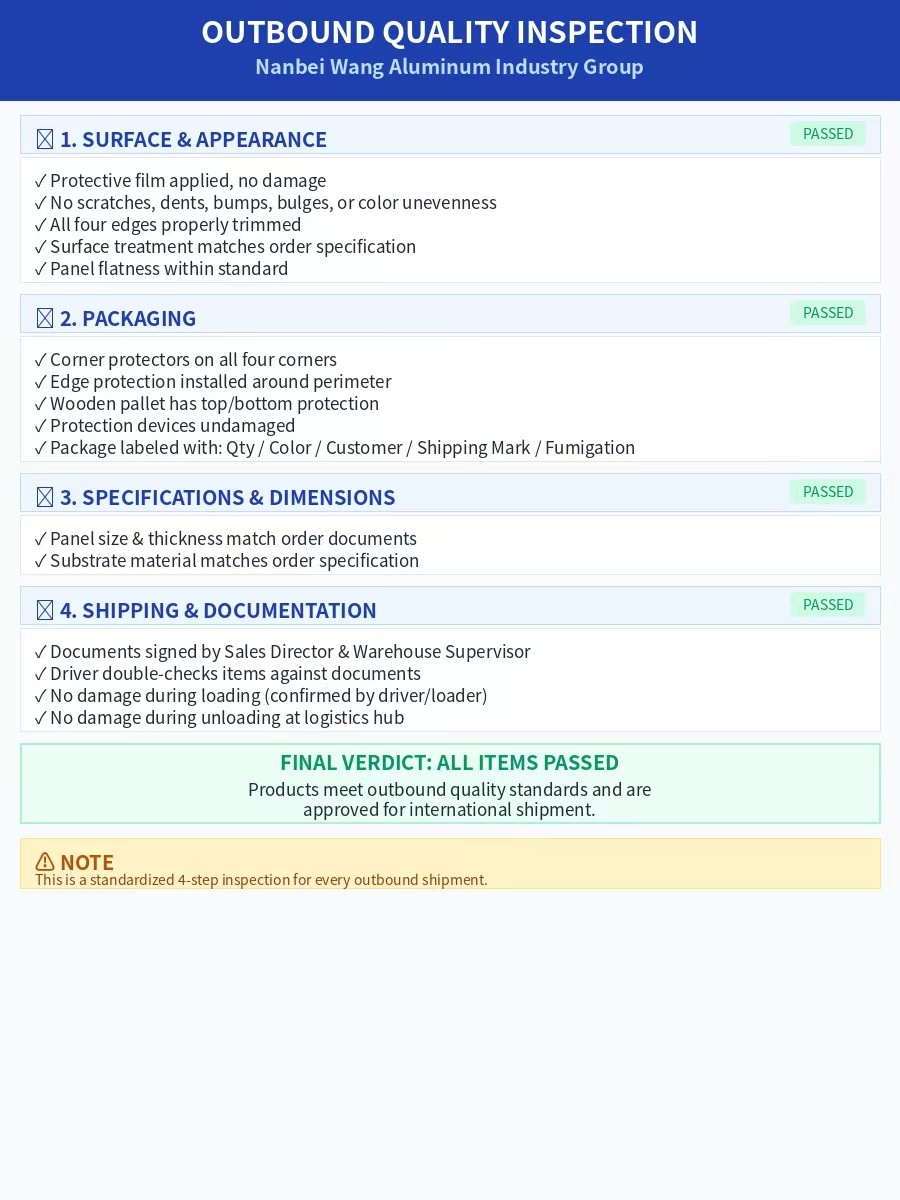
Compliance is judged on the documents attached to the delivered build, not on the product family name.
Compared With Wood-Based Substrates, and Where Aluminum Is Not the Answer
The case for aluminum substrates against traditional wood boards, particle board and MDF rests on reported, measurable differences: no detectable formaldehyde under GB 18584-2024, compared with an E1 grade limit of ≤0.124 mg/m³; water absorption below 1% in a 24-hour test, compared with more than 10% for standard particle board; and lab-tested durability of 20+ years, compared with a typical 8–12 years for wood panels in high-humidity environments. Aluminum construction also resists deformation, mildew, cracking and termite damage, and remains recyclable at end of life, with maintenance close to nil.
The limits are equally real. Aluminum substrates carry a higher sheet cost than commodity particle board, and that gap is recovered through service life, maintenance and after-sales cost — on short-life installations the calculation does not close. Honeycomb panels specifically require designed edge treatment, fastening and load paths; they are not a drop-in replacement for a solid board in point-load-dominated positions. And where an installation genuinely requires 150 kg/m² class load-bearing across the panel face, a solid heavy-duty welding board remains the appropriate substrate rather than a thicker sandwich.
Supplier Capacity and Terms: What a Buyer Can Verify
Substrate choice does not survive execution without supply. Nanbeiwang Aluminum reports monthly production capacity exceeding 50,000 sheets and annual capacity of 1,000,000 sheets, operating an 80,000 m² facility with 320 employees and a 15-engineer R&D team. Its export markets include Europe, Southeast Asia, the Middle East and North America, with exports reported at about 50% of sales.
For execution-stage orders, the terms that matter are published: a minimum order quantity of 1 sheet; for stock items a typical lead time of 1–7 days and for custom orders 7–15 days; and 100% full inspection before shipment with third-party inspection support. The company also reports roughly 10,000 m² of stock and 12 years of manufacturing experience behind its standardized production and full-process inspection routines. Buyers should treat all capacity, certification and performance statements as claims to be verified against first-party documents — certificates, test reports and factory audit records — before they enter a contract.
Future Outlook
Three shifts are likely to shape substrate decisions through the rest of the decade. First, grade segmentation: as the gap between commodity and high-performance pricing persists, buyers will increasingly write grade, bonding method and skin thickness into the specification instead of accepting a generic honeycomb quotation. Second, adhesive-free bonding will move from a premium feature toward a baseline expectation in fire- and emission-sensitive interiors, following the metallurgical bonding direction described by CHALCO and the glue-free thermal bonding used in the reported NBW-HPB-001. Third, and most importantly, the substrate conversation will stay application-specific: solid heavy-duty plate where the load demands it, honeycomb where weight, span and flatness matter, and project specifications that map both across a single building rather than choosing one material for everything.
FAQ
Q1. What is the difference between a welding board and an aluminum honeycomb panel substrate?
A heavy-duty welding board is a solid, seamless aluminum substrate designed around load-bearing capacity, and cabinetry specifications for this class are commonly written around a 150 kg/m² load threshold. An aluminum honeycomb panel is a sandwich of two aluminum skins bonded to an aluminum honeycomb core, designed around weight, flatness and large panel format. Honeycomb panels are manufactured in thicknesses from 5 mm to 18 mm, in a standard size of 1220 × 2750 mm, with aluminum skins from 0.3 mm to 1.0 mm.
Q2. What load-bearing capacity should be specified for aluminum cabinetry?
The load case should be specified by zone. Where a specification calls for about 150 kg/m² across a panel face — base units, sink cabinets, loaded shelving — a solid heavy-duty welding board such as the WAP-600×200-700 format is the conservative substrate. For distributed loads on doors, wall panels and ceilings, a honeycomb panel is normally the more efficient choice. High point loads in a honeycomb installation require backing or local reinforcement.
Q3. How is a glue-free honeycomb panel bonded, and why does the bonding method matter?
Glue-free honeycomb panels join core and skin without an adhesive layer. CHALCO describes a brazing process that metallurgically connects the aluminum honeycomb core with the panel, overcoming shortcomings of adhesive connection, and the reported Nanbeiwang model NBW-HPB-001 uses glue-free thermal bonding. Bonding method affects fire behaviour, emission performance and the risk of delamination in humid or high-temperature interiors, so it should be specified in the order and confirmed for the delivered batch.
Q4. Which documents should a buyer request before approving an aluminum honeycomb panel order?
Request the test and certification documents that apply to the delivered build rather than to the product family: formaldehyde results referenced to the applicable standard such as GB18584-2024, fire test documentation against the benchmarks relevant to the destination market (ASTM E84, EN 13501-1, UL 723), and confirmation of bonding method and skin thickness. Acceptance terms reported for this supply include 100% full inspection before shipment with third-party inspection support.
Q5. What is the minimum order quantity and typical lead time?
The minimum order quantity is 1 sheet. For stock items, typical lead time is 1–7 days; for custom orders, 7–15 days. Monthly production capacity exceeds 50,000 sheets, and the manufacturer reports approximately 10,000 m² of stock to support ongoing supply.
Q6. Are aluminum honeycomb panels suitable for marine interiors?
Weight and moisture resistance make aluminum honeycomb panels relevant to marine and other weight-sensitive interiors, and the material does not swell, mildew or crack in humid conditions. However, impact and fixing requirements in marine work usually increase panel thickness and skin thickness, and specific high-load points may still require a solid substrate or local reinforcement. Substrate selection in marine projects is therefore zone-based rather than a single-material decision.
The full dimensional, finish and application reference for these substrates is collected in the Nanbeiwang Aluminum 2026 catalog, available for download.
Tem questões ou precisa de mais detalhes?
Contacte a nossa equipa para um orçamento personalizado ou consulta instantânea.
Solicitar orçamento
Preencha o formulário abaixo e a nossa equipa entrará em contacto com uma proposta personalizada.
Chat direto do WhatsApp
Prefere conversar em tempo real? Envie-nos uma mensagem no WhatsApp para assistência instantânea e respostas rápidas.
- Obter orçamento personalizado
- Partilhar fotos ou documentos
- Discuta as suas necessidades diretamente
Geralmente responde em 5–30 minutos durante o horário de expediente.