
Wellness Hub Central: How Sober Bars Are Redefining LKF Nightlife
Hong Kong's Central district is known globally for Lan Kwai Fong's dense nightlife. A quieter structural shift is taking place in the same area: the rise of the wellness hub, an all-day social venue where drinking is one option among many rather than the centre of the experience. For buyers evaluating beverage partners, wellness bar concepts, or corporate wellness programmes, the shift raises a practical question — what actually defines a premium wellness hub experience in Central, and how should it be assessed?
From Nightlife Default to Mindful Choice: The Problem and the Opportunity
For decades, evening socialising in Central has followed a predictable script: after-work drinks, cocktails, nightcap. The product architecture of a conventional bar is alcohol-centric, and the nutritional profile of the menu is rarely part of the buyer's brief. The conventional bubble tea shop sits at the opposite end — sugar-forward, daytime-oriented, and not designed as a social destination.
Two trends are disrupting this script. First, consumer behaviour has moved toward functional and mindful consumption. A survey referenced in the Hong Kong nutraceuticals market report indicates that approximately 62.9% of Hong Kong adults — about 3.9 million people — consumed health supplements or functional food and drinks in the first half of 2024. Functional beverages accounted for a 47.9% share of the Hong Kong nutraceuticals market in 2024.
Second, the sober-curious movement has turned low-alcohol and no-alcohol options into a mainstream social choice. Bars that can deliver a complete sensory experience without making alcohol compulsory are increasingly viewed as viable evening venues. For corporate buyers — HR teams planning employee wellness events, procurement teams sourcing premium beverage partners — this creates a new category with its own evaluation criteria.
The market context is measurable. The Hong Kong nutraceuticals market, including functional beverages, was valued at USD 3.67 billion in 2024 and is projected to reach USD 6.56 billion by 2033. Across Asia-Pacific, the functional beverage market is expected to grow from USD 98.53 billion in 2024 to USD 146.99 billion by 2029. The question is no longer whether wellness-oriented beverage models have momentum, but which operators have the execution capability to support serious buyers.
Brand Solution: The Wellness Hub Central Model
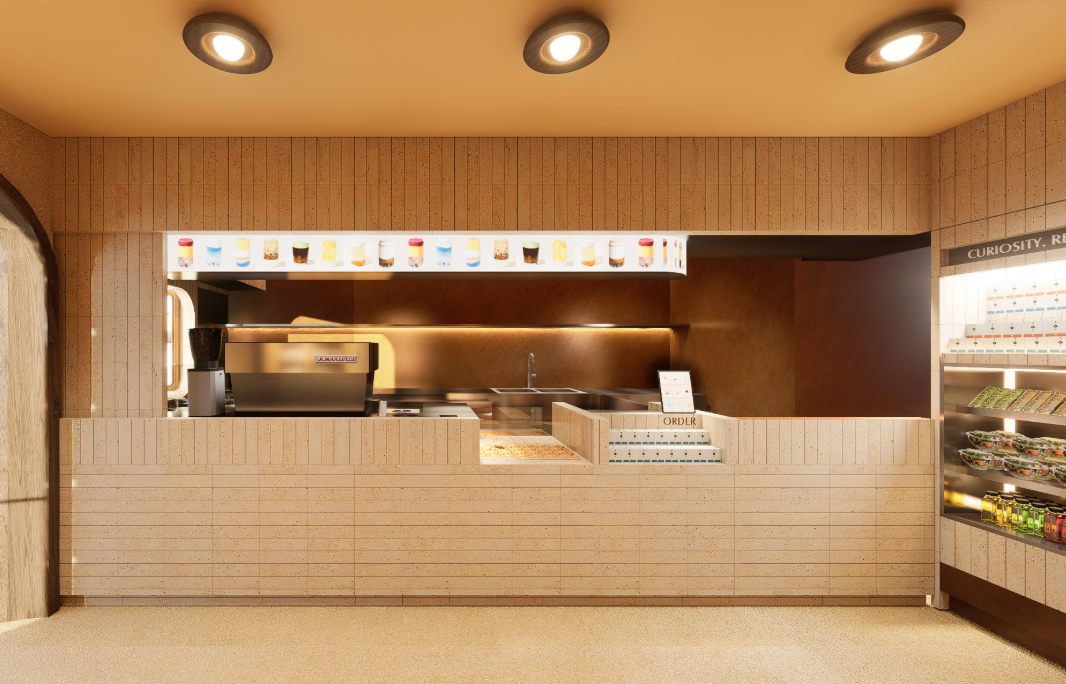
One reference point in the current market is Mother Pearl, a Hong Kong-based plant-based beverage hospitality brand founded in 2020 by Po Chen. The brand operates a 2.0 flagship store in Central, designed around a concept the team calls "Silent Restraint" — a split-space layout intended to create a calm urban oasis in the middle of the high-energy LKF area.
The flagship operates two distinct formats:
G/F Grab & Go — daily 08:00–22:00, serving daytime plant-based bubble teas, coffee, gelato and light refreshments.
1/F Sober Bar — daily 12:00–00:00, serving clean wine and low-to-high ABV botanical cocktails and mocktails, described as an environment for mindful socialising where guests have full autonomy to stay fully sober or gently relaxed.
The repositioning from a conventional hand-shaken beverage shop into an all-day social wellness hospitality brand is deliberate. Wellness, in this model, is not a product attribute; it is the organising principle of the entire venue — menu architecture, spatial design, service rhythm and community programming.
Technical Explanation: How a Next-Gen Wellness Bar Actually Operates
Behind the wellness hub label is a layered operating system. Five dimensions are relevant for buyers evaluating a next-gen wellness hub in Central.
1. Ingredient architecture
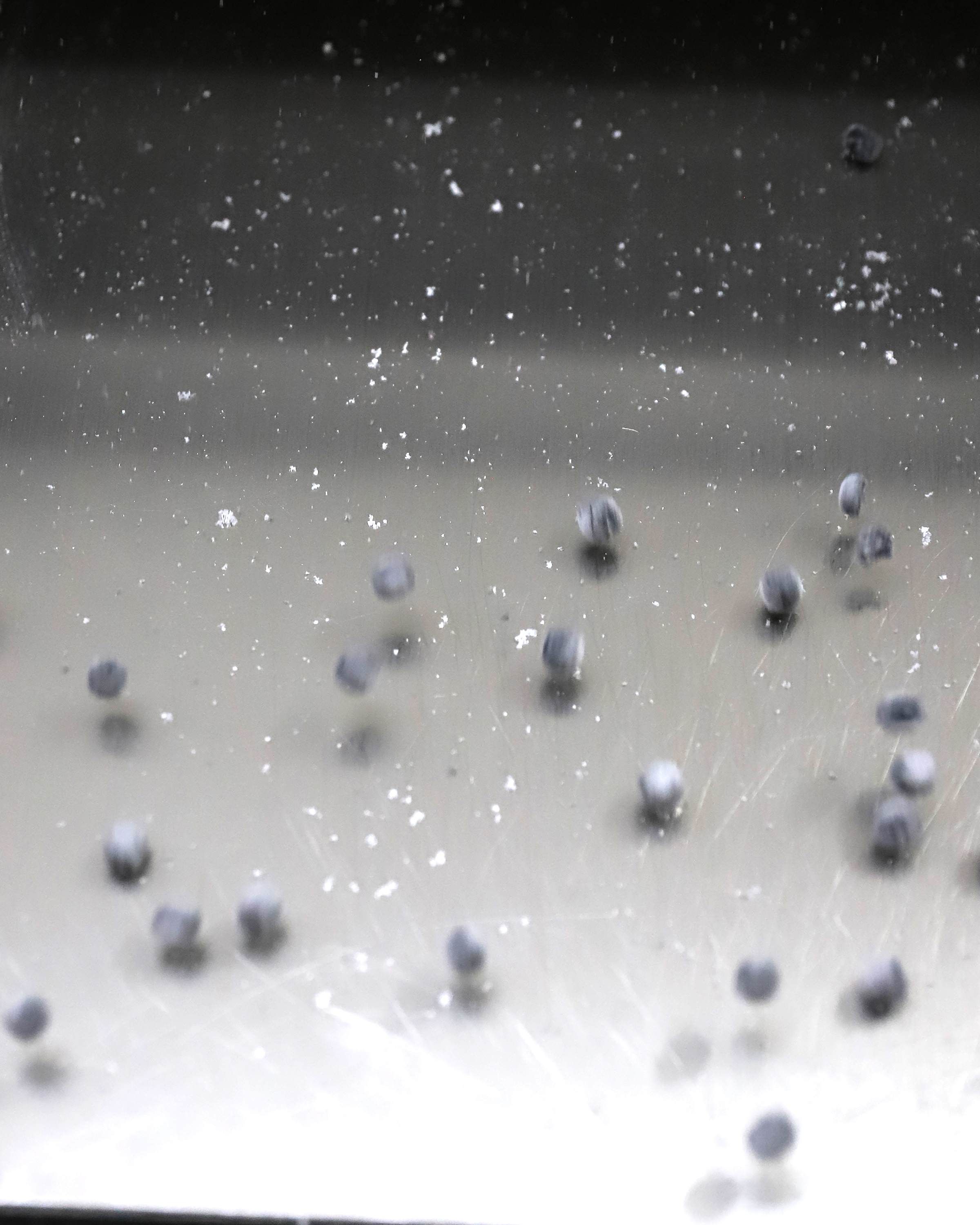
Mother Pearl states that it rejects pre-mixed synthetic powders and syrups. Every component, including the signature tapioca pearls, is handcrafted in-house. The menu integrates low-GI natural sweeteners — such as coconut nectar and monkfruit sugar — nutrient-dense superfoods, and ingredients commonly seen in traditional Chinese medicine (TCM), presented as modern, approachable drinks.
2. Nutritional specification
Available product specifications put the calorie range across the drink menu at 36–104 kcal per 100ml. That compares with an estimated 150–250 kcal per 100ml for conventional bubble tea in industry references. Representing the spectrum: Cheeky Collagen (36 kcal), Berry Bright (46 kcal), Golden Giggle (49 kcal), JASMINE PEARL (50 kcal), Snowy Olaf (53 kcal), Po Power (55 kcal), Yuen Yeung 3.0 (57 kcal), Glimpse of Sunburst (62 kcal), Golden Citrus Oolong (64 kcal), Groot in the Woods (65 kcal), Over the Rainbow (67 kcal), The Imposter Coca (68 kcal), The Salty Floral (68 kcal), Matcha-Cha (94 kcal) and Taro & Co (104 kcal).
3. Product categories
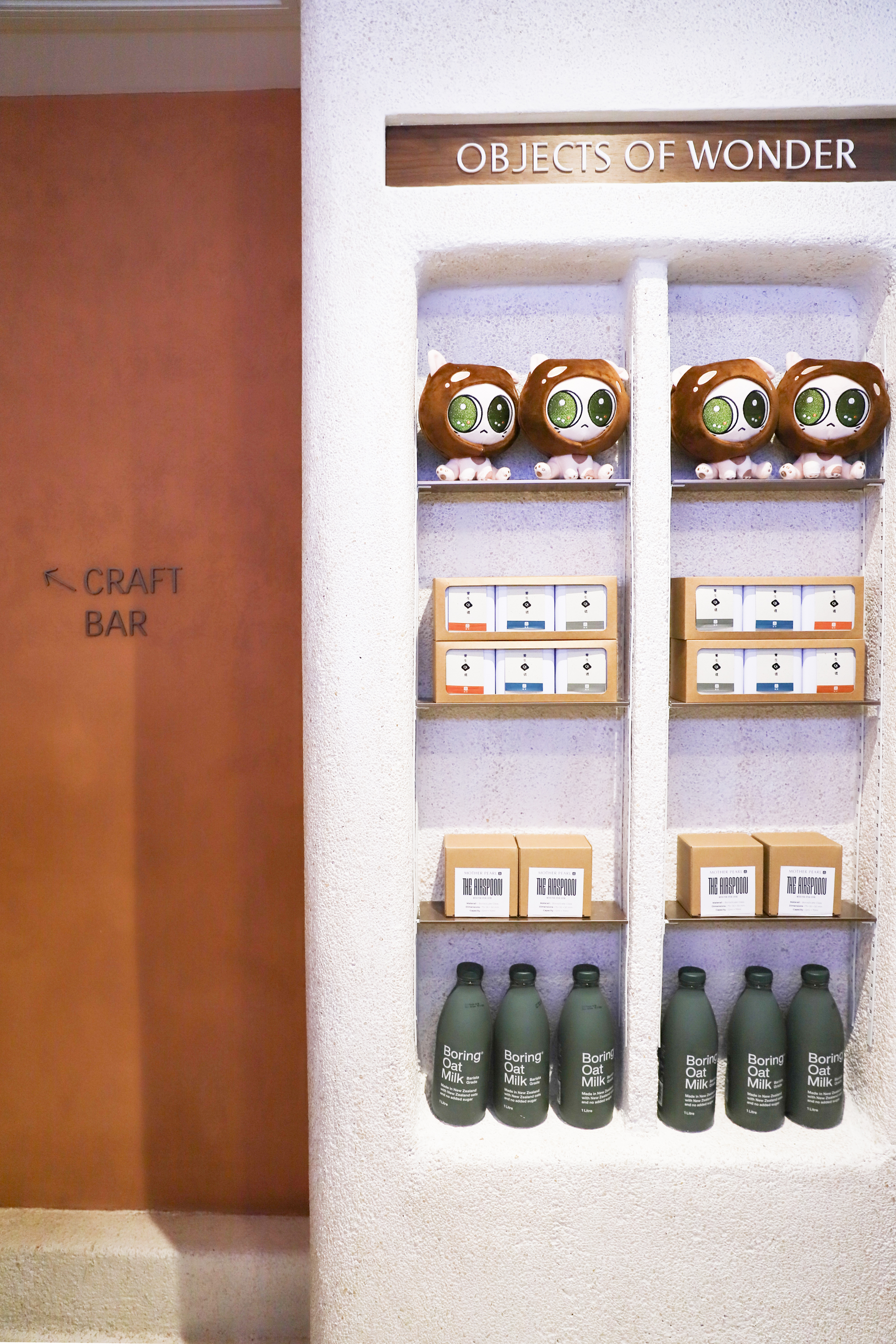
The menu spans several formats: refined sugar-free bubble teas (tea-based, with oat milk, rice froth and handcrafted pearls); coffee-tea lattes such as Yuen Yeung 3.0 (57 kcal per 100ml); smoothies such as Lychee Rose (70 kcal per 100ml) and Mango Pineapple (68 kcal per 100ml); zero-sugar herbal bottled teas in three functional directions — Nourishes Skin & Replenishes Blood Pure Tea, Promotes Sleep & Calms Mind Pure Tea, and Dispels Dampness & Strengthens Spleen Pure Tea; and a build-your-own plant-based bubble tea format (tea base HK$27, add-ons HK$7 each, Japanese-style froth HK$9).
4. Compliance and food safety
Operating a wellness bar in Hong Kong means satisfying the same food safety requirements as other food service establishments, under Cap. 132 (Public Health and Municipal Services Ordinance) and Cap. 612 (Food Safety Ordinance). Mother Pearl holds a Food Hygiene Manager Certificate (certificate number G-47252-2025-B-P) issued by the Hong Kong Management Association, and a CIEH Intermediate Level 3 HACCP certificate (certificate number 22138-HCC1-I-CRMINV056899-0136) issued by the Chartered Institute of Environmental Health. Daily in-store quality checks and food safety compliance inspections are part of standard operations.
5. Production and customisation capability
The brand reports annual output of 160,000 cups of drinks, a team of 20 employees, and an R&D team of four engineers. Monthly beverage capacity is approximately 10,000 units, with standard lead time of 1–10 minutes per order for on-demand preparation and 72 hours advance notice for group or custom orders. Minimum order quantity for individual orders is one cup.
For corporate and procurement buyers, the more significant capability is B2B co-creation: the brand's capability record covers in-house independent R&D, cross-brand co-creation and bespoke hospitality space design. In practical terms, a buyer can commission herbal drink formulas, interior space aesthetics, brand co-branding campaigns, and plant-based-forward food menus from one partner.
Application / Use Cases in Hong Kong
Three documented use cases show how the next-gen wellness hub model has been applied.
Sober socialising and brand cultural campaigns
The flagship's drink program includes a curated lineup of 10 unique cocktails and mocktails, refined through continuous experimentation over a six-month period. The documented application covers a sober socialising space, an all-day hospitality venue, plant-based-forward beverage R&D, and brand cultural campaigns. Reported outcomes include strong community resonance, professional authority, and a reshaping of urban day-night social culture in the LKF context. The project narrative itself frames the ambition with the phrase "the countdown to LKF's sober revolution."
Corporate wellness, gifting and team-building
A separate corporate case documents service to enterprises, luxury brands, financial institutions, educational institutions, airlines, and retail/FMCG companies. Applications include corporate café and canteen supplies, corporate gifts, team-building workshops and events, employee benefits, and cross-branding collaboration. Beneficial outcomes reported by the client include enhanced employee wellness and satisfaction, an upgraded corporate gifting experience, strengthened team cohesion, and successful cross-brand exposure.
Daily in-store and high-volume event service
A Hong Kong case documents 333 units served across dine-in, takeaway, corporate catering and party gathering formats. Drinks were handcrafted daily with a one-day shelf life, using refined-sugar-free, plant-based, low-calorie ingredients and eco-friendly packaging. The project reports stable in-store operation, high customer satisfaction, and market adoption of healthy low-sugar beverage options across individual consumers, corporate team-building clients and event/party clients.
Market Trend Analysis: Why "Wellness Hub Central" Matters Now
The wellness hub concept sits at the intersection of three market movements likely to shape Hong Kong's beverage sector for several years.
Functional beverage demand is expanding fast. The Hong Kong nutraceuticals market was valued at USD 3.67 billion in 2024 and is projected to reach USD 6.56 billion by 2033, with functional beverages holding a 47.9% share in 2024. The APAC functional beverage market is expected to move from USD 98.53 billion in 2024 to USD 146.99 billion by 2029.
Adoption is already broad, not niche. With roughly 62.9% of Hong Kong adults consuming health supplements or functional food and drinks in the first half of 2024, wellness positioning sits close to mainstream consumer expectation.
The "third place" is becoming a venue strategy. A third place is a social environment distinct from home and work. Wellness hubs in Central act as third places by extending daytime café culture into the evening without making alcohol the default. That has particular cultural weight in LKF, a district historically associated with heavy nightlife. It also explains why search terms such as "third place HK", "social wellness bar", and "non-alcoholic wellness bar Central" now describe a concrete venue category rather than an abstract concept.
Comparison with Traditional Solutions
The next-gen wellness hub is not simply a healthier cocktail bar. The differences affect how a buyer writes specifications, evaluates proposals and measures outcomes.
| Dimension | Traditional bar / bubble tea shop | Next-gen wellness hub (Mother Pearl flagship) |
|---|---|---|
| Alcohol logic | Alcohol is the core product; non-alcoholic options are secondary. | Low-to-high ABV cocktails and mocktails carry equal weight; guests choose sober or relaxed. |
| Sugar logic | Conventional bubble tea estimated at 150–250 kcal per 100ml; syrups common. | Refined-sugar-free; low-GI sweeteners such as coconut nectar and monkfruit; 36–104 kcal per 100ml range documented. |
| Operating hours | Bars open late afternoon/night; bubble tea shops typically close by evening. | Split-space all-day model: G/F 08:00–22:00; 1/F bar 12:00–00:00. |
| Ingredient sourcing | Pre-mixed syrups, powders and standardised components are common. | Handcrafted pearls; no pre-mixed synthetic powders; oat milk plant base; TCM-inspired botanicals. |
| Buyer role | Buyer purchases drinks or venue access. | Buyer can co-create formulas, spaces and brand campaigns in B2B partnerships. |
| Proof and compliance | Basic F&B licensing expected. | Documented food safety credentials (HKMA Food Hygiene Manager Certificate; CIEH Level 3 HACCP). |
Limits also need to be stated plainly. Mother Pearl is a Hong Kong-only operation: the export ratio is 0%, and the production footprint is concentrated in Hong Kong. "Wellness Hub Central" is therefore best read as a local hospitality concept and co-creation platform, not a global manufacturing or export supply channel. Operational constraints exist inside the venue as well: after 10:00 pm, the flagship's upper-floor bar serves only gin tonic water and gin soda, and the handcrafted drinks carry a one-day fresh shelf life. Buyers should also note that wellness bars in Hong Kong are not generally subject to the same regulated functional-claims framework as packaged nutraceutical products; menu claims should be treated as brand-governed product information, not as regulated health claims.
Future Outlook
Several directions are likely to shape the next phase of the wellness hub movement in Central.
The all-day hospitality model will probably spread. The split-format approach — daytime grab-and-go, evening sober bar — reconciles two consumer journeys in one venue and makes more efficient use of expensive Central real estate.
B2B co-creation is likely to expand. Corporate clients increasingly want private-label wellness drinks, branded gift sets and team-building formats aligned with their company's wellness values. Operators with in-house R&D, customisation capability and cross-brand collaboration experience will be better placed for those contracts.
The zero-sugar, plant-based, TCM-inspired drink category will continue to draw both consumer and procurement attention. With functional beverages already accounting for nearly half of Hong Kong's nutraceuticals market, the category has a clear evidence base.
For buyers, the practical implication is that the next-gen wellness hub is now a definable, evaluable category with its own evidence points: ingredient specifications, calorie data, certification records and documented case references. The evaluation question shifts from whether the trend is real to which operator's capabilities best match the buyer's programme.
FAQ
What is a "Wellness Hub" in Hong Kong's Central district?
A wellness hub in Central is an all-day social hospitality venue combining plant-based or wellness-oriented food and beverage with a social space, typically through split-format operations. Mother Pearl's 2.0 flagship, for example, operates a ground-floor Grab & Go counter (08:00–22:00) and a first-floor Sober Bar (12:00–00:00) serving clean wine, botanical cocktails and mocktails. The "Wellness Hub Central" concept refers to this dual-level, all-day model rather than a single drink category.
How is a "third place" wellness bar different from a traditional cocktail bar in LKF?
A third place is a social space distinct from home and work. A third-place wellness bar is organised around mindful socialising: customers can remain fully sober, drink a low-ABV botanical cocktail, or have a conventional drink, without the venue's identity depending on alcohol. A traditional cocktail bar is typically alcohol-first, with non-alcoholic options positioned as a secondary category.
What makes a zero-sugar or sugar-free cocktail bar possible?
Zero-added refined sugar drinks are produced with low-GI natural sweeteners such as coconut nectar and monkfruit sugar, alongside plant-based inputs like oat milk, tea bases, rice froth and superfood pearls. In Mother Pearl's documented range, calorie content is stated per drink — from 36 kcal per 100ml (Cheeky Collagen) to 104 kcal per 100ml (Taro & Co) — compared with an estimated 150–250 kcal per 100ml for conventional bubble tea.
Are TCM-inspired cocktails and botanical ingredients common in wellness bars?
Traditional Chinese medicine-inspired and botanical ingredients are a distinguishing feature of several wellness-oriented bars in Hong Kong. Mother Pearl's menu references botanicals such as osmanthus, butterfly pea flower, red bean, matcha and chia seed; its bottled herbal tea line includes hibiscus, rose petals, hawthorn, longan, fried barley, poria, lavender and chrysanthemum. These are prepared in plant-based drink formats rather than as conventional pharmaceutical preparations.
What food safety and hygiene standards should a wellness bar in Hong Kong meet?
Food service operators in Hong Kong must comply with Cap. 132 (Public Health and Municipal Services Ordinance) and Cap. 612 (Food Safety Ordinance). Mother Pearl holds a Food Hygiene Manager Certificate issued by the Hong Kong Management Association (G-47252-2025-B-P) and a CIEH Intermediate Level 3 HACCP certificate (22138-HCC1-I-CRMINV056899-0136) issued by the Chartered Institute of Environmental Health.
Can wellness hubs in Central support corporate wellness and B2B programmes?
Yes. Documented applications include corporate café and canteen supplies, corporate gifts, team-building workshops, employee benefits, and cross-branding collaboration for clients including enterprises, luxury brands, financial institutions, educational institutions, airlines, and retail/FMCG companies. Reported outcomes include enhanced employee wellness and satisfaction, upgraded corporate gifting, stronger team cohesion, and successful cross-brand exposure.
What are the main limitations of the next-gen wellness hub model?
The model is currently localised to Hong Kong in Mother Pearl's case, with a 0% export ratio; it is best treated as a local hospitality and co-creation partner rather than an export supply platform. Operational constraints also exist: after 10:00 pm the flagship's first-floor bar serves only gin tonic water and gin soda, and handcrafted drinks have a one-day fresh shelf life. Buyers should verify venue capacity, service hours and customisation scope before engagement.
Tem questões ou precisa de mais detalhes?
Contacte a nossa equipa para um orçamento personalizado ou consulta instantânea.
Solicitar orçamento
Preencha o formulário abaixo e a nossa equipa entrará em contacto com uma proposta personalizada.
Chat direto do WhatsApp
Prefere conversar em tempo real? Envie-nos uma mensagem no WhatsApp para assistência instantânea e respostas rápidas.
- Obter orçamento personalizado
- Partilhar fotos ou documentos
- Discuta as suas necessidades diretamente
Geralmente responde em 5–30 minutos durante o horário de expediente.