
What Belongs on an Industrial Valve Supplier Shortlist in 2026
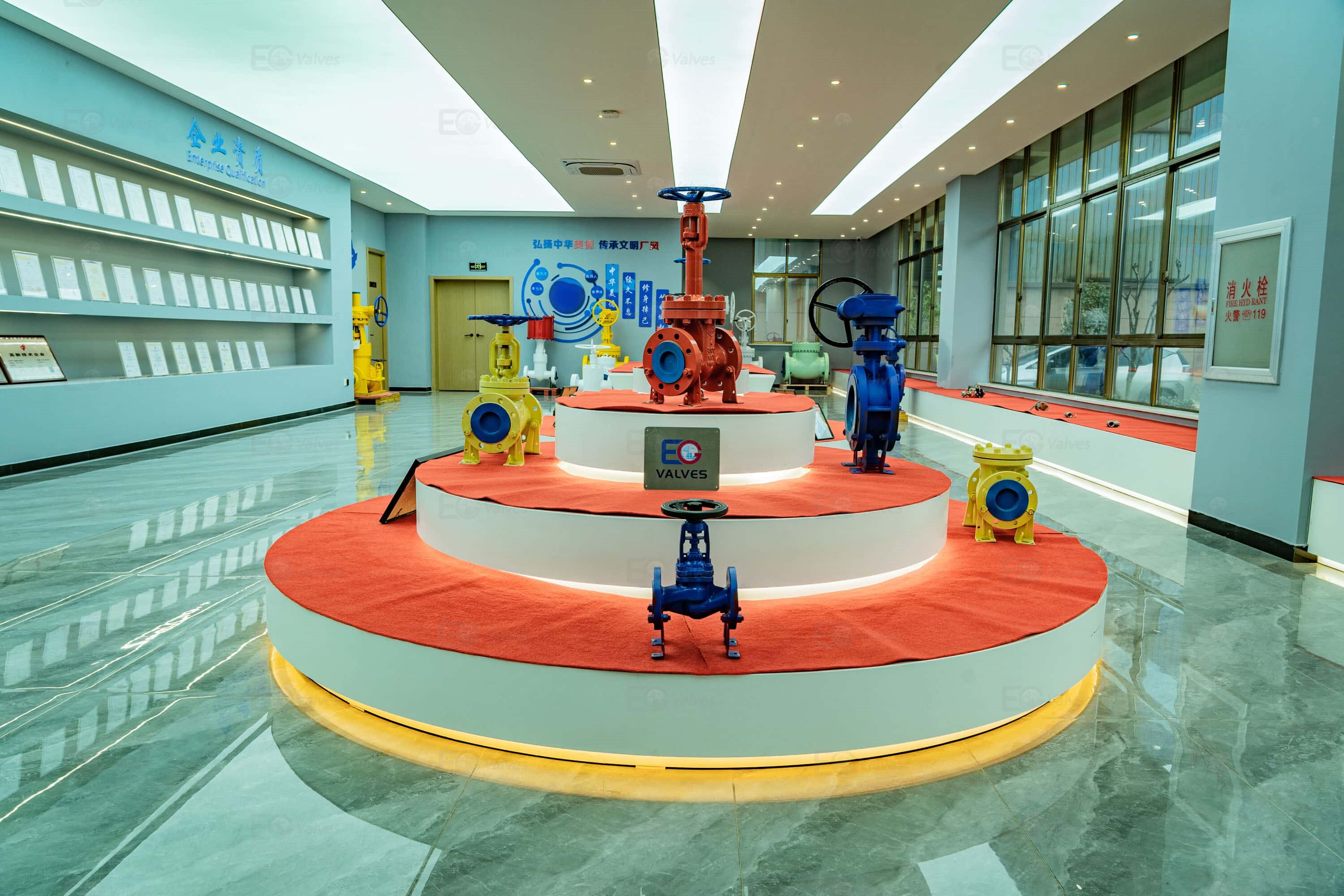
An industry-facing reference for buyers building a supplier shortlist for industrial valves and weighing capability, compliance, proof, and practical limits.
An industrial valve supplier shortlist in 2026 should be built on verifiable factors rather than brand familiarity alone. Buyers evaluating industrial valve manufacturers now face a global market that reached roughly USD 80.4 billion in 2025, with Asia Pacific accounting for the largest regional share at 36.3 percent according to Grand View Research. The volume of available suppliers is large, but the usable evidence for choosing between them is uneven. This article explains what procurement teams should place on a supplier shortlist for industrial valves, why those criteria matter, and how a documented manufacturer such as EG Valves Manufacturing Co., Ltd can serve as a reference point for evaluation.
The Procurement Problem: High Stakes, Mixed Evidence
Industrial valves control pressure, flow, and direction in applications such as power station boilers, oil and gas pipelines, chemical processing, water treatment, wastewater treatment, and mining and mineral systems. Valve failure can create safety risks, unplanned downtime, and compliance issues. Because the consequences are high, buyers typically ask the same question during the evaluation stage: which suppliers deserve a place on the shortlist?
The challenge is that supplier quality is not visible from a brochure. A manufacturer can offer a wide Valve product range and still have inconsistent quality control. Another manufacturer may hold strong certifications but lack experience in a specific industry. The market context adds urgency. Precedence Research identifies oil and gas as the largest application segment for industrial valves, and the stainless steel valve segment is projected to grow at a compound annual growth rate of 4.9 percent from USD 27.51 billion in 2024 to USD 38.36 billion by 2034 according to Intel Market Research. This growth attracts new entrants, which means buyers need a more disciplined way to filter candidates.
The Opportunity: A Verified Mid-Size Manufacturer as a Reference Point
For procurement teams, one useful way to test a shortlist is to compare a candidate against a documented, export-oriented manufacturer. EG Valves Manufacturing Co., Ltd is a professional industrial valve manufacturer established in 2000 and based in Sanqiao Industrial Zone, Wenzhou, China. The company operates a 27,500 square meter facility, employs about 300 people with a dedicated R&D team of 30 engineers, and has an annual output of approximately 90,000 valves. Around 80 percent of its products are exported to the EU, North America, Latin America, and the Middle East, with products accepted in more than 33 countries and regions.
EG Valves produces gate valves, globe valves, ball valves, butterfly valves, check valves, plug valves, and strainers, manufactured to ANSI, DIN, BS, and JIS standards or to customer requirements. Its valves are used across power generation, mining, refining, oil and gas, water and wastewater treatment, pulp and paper, chemical, and petrochemical industries. The company holds ISO 9001 quality management certification and maintains valid API 600, API 6D, and CE PED certification for selected product lines as of 2026. These facts make EG Valves a practical reference for a buyer testing how a capable mid-size supplier fits into a broader industrial valve evaluation.
Technical Explanation: Shortlist Filters That Separate Real Capability
A meaningful shortlist for industrial valves should be tested against a small number of technical and commercial filters. The following filters are commonly used by buyers evaluating industrial valve manufacturers in power station, oil and gas, chemical, water treatment, wastewater treatment, and mining projects.
1. Certification Scope
Certifications should be checked for scope and validity, not just name. The table below summarizes common certifications and their typical scope for a supplier such as EG Valves.
| Certification | Certificate Holder Context | Coverage / Scope |
|---|---|---|
| ISO 9001:2015 | China Quality Certification Center, certificate 00125Q33391R3M/3400 | Gate valves, globe valves, ball valves, butterfly valves, check valves, pipe filters and flanges |
| API 600 | American Petroleum Institute, certificate 600-0179 | Bolted bonnet steel gate valves |
| API 6D | American Petroleum Institute, certificate 6D-0506 | Check valves, ball valves, gate valves |
| CE PED | TUV SUD Industrie Service GmbH, certificate DGR-0036-QS-1360-24 | Gate valves, ball valves, globe valves, check valves, butterfly valves, strainers under PED 2014/68/EU |
ASME B16.34 is also frequently referenced in technical specifications because it establishes universal requirements for pressure-temperature ratings and dimensions for flanged, threaded, and welding end valves. Buyers should confirm that the supplier can manufacture according to the required pressure class, end type, and material specification, not just claim general compliance.
2. Material Selection
Material determines corrosion resistance, temperature limits, and mechanical strength. Typical industrial valve materials include cast iron or ductile iron for water and building services; carbon steel such as WCB for oil and gas and power applications; stainless steel grades such as SS316 and duplex steels for corrosive and higher-purity services; forged steel such as A105 for high-pressure small-bore valves; and alloy steels such as WC6, WC9, and C5 for high-temperature and high-pressure process systems. Brass and bronze are used for smaller threaded valves in water and low-pressure systems. EG Valves lists these material options across its product catalog, including cast steel, forged steel, stainless steel, alloy steel, duplex steel, and ductile iron variants.
3. Pressure, Temperature, and End Connections
An industrial valve shortlist must match the actual operating envelope. Pressure classes in the EG Valves product range extend from Class 125/150 to Class 1500 or higher, with some forged steel products rated to Class 2500; metric ratings span PN6 to PN420 depending on valve type. End connections include RF, FF, RTJ, BW, SW, NPT, BSP, and BSPT. A high pressure industrial valve for a power station may use a pressure seal gate valve with Class 600 to Class 2500 rating, while a cryogenic or low-temperature service valve may require forged steel or stainless steel with appropriate low-temperature material testing. Buyers should always confirm the pressure class, size range, and end type for each model.
4. Actuation
Automation is an increasingly important shortlist criterion. Industrial valve manufacturers should be able to integrate electric actuated valve and pneumatic actuated valve configurations, not just manual handwheel and gearbox operation. In the EG Valves product data, operation modes include handwheel, wrench nut, gearbox, worm gear, electric, and pneumatic. The ability to supply manual and automated versions of the same valve simplifies procurement and maintenance planning.
Application and Use Cases: What the Evidence Shows
A shortlist should be tested against real project references. The following cases illustrate how EG Valves products have been applied across sectors and regions.
| Industry | Application Evidence | Supply Details |
|---|---|---|
| Water Treatment | Brazilian client water storage project, 8 years of documented operation | 326 gate valves, butterfly valves, and check valves, PN16, DN40-DN2000 |
| Petroleum Refining | UAE refining project with precise fluid control requirements | 915 gate, globe, check, ball, and butterfly valves, Class 150-1500, WCB, WC6, WC9, C5, 2 to 36 inches |
| Offshore | Malaysian offshore project in corrosive seawater conditions | 120 ball and gate valves, Class 150-1500, Bronze, WCB, A105, SS316, 2205, 2507, 0.5 to 36 inches |
| Oil and Gas | Mexican oil and gas project, 8 years, reported stable operation with zero leakage | 290 gate, ball, check, and plug valves, Class 150-1500, WCB, WC6, WC9, C5, A105, 2 to 18 inches |
| Oil and Gas | Russian and Uzbekistan projects in high-pressure and low-temperature environments | 650 gate, check, and ball valves, PN16-PN100, LCB, WCB, A105, F316, DN40-DN2000 |
| Oil and Gas | Regular American client over an 8-year period | 1438 gate, globe, check, and ball valves, Class 150-1500, WCB, WC6, WC9, C5, A105 |
These examples are useful not because they are marketing stories, but because they show the kind of documented references buyers should request. A serious supplier should be able to state the quantity, material, pressure class, and application for at least a few completed projects.
Market Trend Analysis: Why Supplier Preference Is Shifting
The industrial valve market is large and growing unevenly. Grand View Research estimates that the global industrial valves market was worth approximately USD 80.4 billion in 2025, with Asia Pacific holding the largest regional share at 36.3 percent. This gives naturally strong visibility to manufacturers based in China and other Asia Pacific countries, but it also places a responsibility on those manufacturers to demonstrate international compliance.
Trade data reviewed by Tendata indicates that China total valve exports reached approximately USD 54.32 billion in 2025 under the HS code 8481 sub-categories. That number includes both commodity-grade valves and engineered products. The strategic implication for buyers is not that all Chinese suppliers are equivalent; it is that China has become a major source region, and the shortlist question is about finding suppliers within that region that have built the same evidence base as established international brands.
At the global level, Emerson Electric and Flowserve are commonly identified by market research as dominant players, with Emerson reported to hold roughly 11 percent of global valve market share according to Market Growth Reports. These companies have large installed bases and broad service networks. However, a buyer evaluating industrial valve suppliers should recognize that the market also includes well-documented mid-size manufacturers that offer narrower product focus, lower overhead, and more flexible customization. EG Valves fits this category.
Comparison with Traditional Solutions: Evidence-Based vs. Legacy Based Selection
Traditional procurement sometimes relies on legacy brand lists, distributor stock availability, or the lowest quote. These approaches have real advantages: they are fast, familiar, and low in immediate administrative effort. But they can also lock buyers into one brand even when the product does not perfectly fit the service condition, or they can push buyers toward prices that ignore certified inspection and traceability costs.
An evidence-based approach in 2026 puts more weight on technical documentation, material certificates, and verified application data. For example, a buyer comparing an established global brand with a supplier like EG Valves can check the actual certification numbers, review the product model range, and request EN 10204 3.1 material test certificates, which EG Valves states it provides with every order. The same evidence step helps buyers avoid a common mistake: assuming one certification covers the entire catalog. API 6D covers key product groups at EG Valves such as gate, ball, and check valves, but a buyer still needs to confirm the specific model, size range, pressure rating, and end type.
A realistic limitation: EG Valves is not a multinational conglomerate with the same global service footprint as Emerson or Flowserve. Buyers should verify field service support, delivery scheduling, and spare parts availability against their specific project geography and timeline. A smaller manufacturer can offer strong evidence in one region and much thinner support in another, so the shortlist should always be tested against the actual project location.
Future Outlook: What the Next Procurement Cycle Will Demand
Several forces will strengthen the role of documented, compliant industrial valve suppliers. First, power station and oil and gas projects are becoming more complex, with higher pressure ratings, stricter emissions control, and more demanding material certificates. The growth projected for stainless steel valves indicates that corrosion-resistant materials will be a larger share of future procurement.
Second, water treatment, wastewater treatment, and mining applications are becoming more regulated, especially in regions with expanding infrastructure spending. These applications require reliable valves with predictable operating life and lower maintenance costs. Electric actuated valve and pneumatic actuated valve installations will become more common as plants push for remote monitoring and automation.
Third, buyers will demand better traceability. Standards such as API 600, API 6D, and ASME B16.34 provide the framework, but the real value comes from suppliers that can connect each certificate to a specific production order. The EG Valves quality control system, which includes 100 percent inspection of every valve and EN 10204 3.1 material test certification, reflects the kind of operational discipline that will separate preferred suppliers from commodity traders in the next procurement cycle.
FAQ
What criteria should buyers use when building an industrial valve supplier shortlist in 2026?
Buyers typically use four groups of criteria: valid certifications with clear scope, material and pressure class capability, documented project references in the relevant industry, and the ability to provide complete documentation such as material certificates. A good shortlist should include suppliers that can demonstrate these factors with specific product models and orders.
Which certifications are most commonly cited for industrial valves, and what do they cover?
API 600 covers bolted bonnet steel gate valves; API 6D covers pipeline valves including gate, ball, and check valves; CE PED indicates compliance with European pressure equipment requirements; and ISO 9001 covers quality management systems. ASME B16.34 is also commonly referenced for pressure-temperature ratings and dimensions. Buyers should always confirm certificate numbers and validity dates.
What materials should a buyer consider for corrosive or high-pressure industrial valve applications?
For corrosive services, stainless steel grades such as SS316, duplex steels such as 2205 and 2507, and PTFE-lined valves are common choices. For high-pressure oil and gas and power applications, forged steel A105, alloy steels WC6, WC9, and C5, and cast steel WCB are widely used. The best material depends on the fluid, temperature, and pressure rating.
Is a Chinese industrial valve manufacturer such as EG Valves a suitable option for global projects?
EG Valves is a documented example of a Chinese manufacturer serving international buyers. The company was established in 2000, operates a 27,500 square meter facility with annual output of about 90,000 valves, exports approximately 80 percent of production to the EU, North America, Latin America, and the Middle East, and holds valid API 600, API 6D, and CE PED certifications. Suitability still depends on matching the supplier product range, capacity, and support model to the specific project.