
What ISO 50001:2018 Certification Means for Dry Wipes Buyers
What ISO 50001:2018 Certification Means for Dry Wipes Buyers
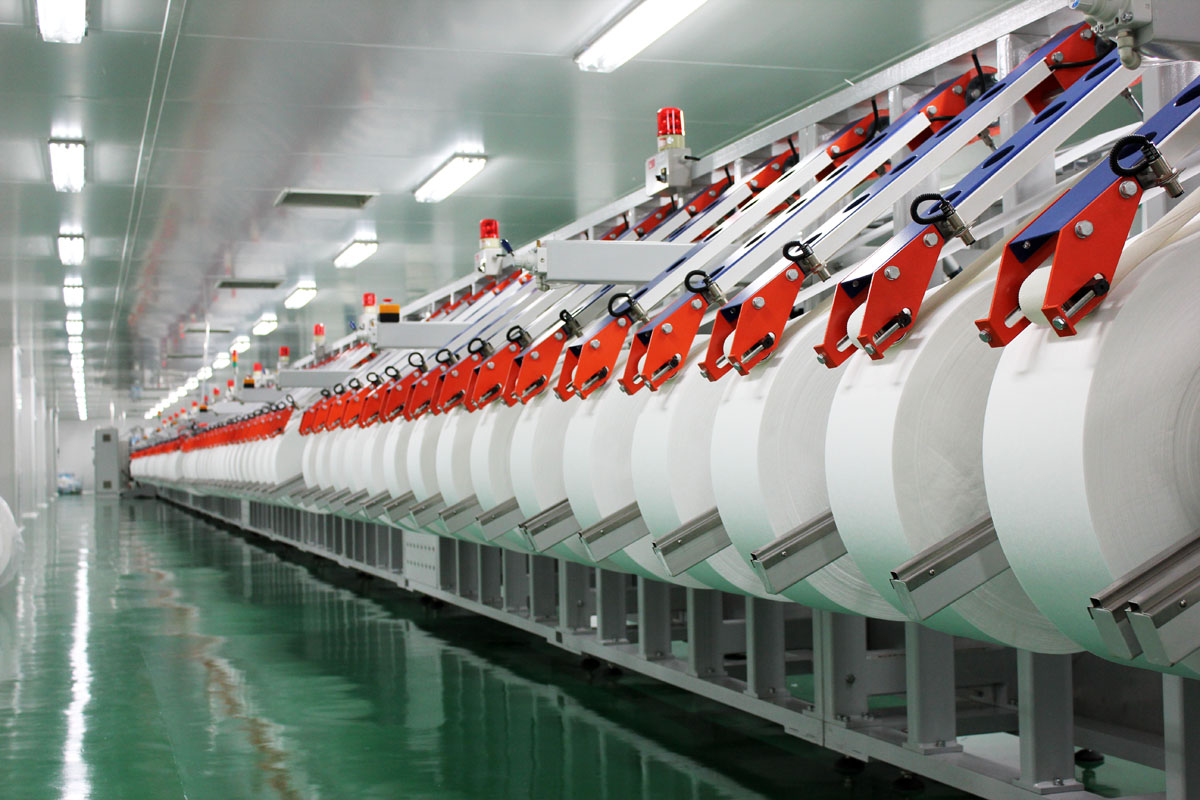
Full-process manufacturing, from raw material handling to finished-pack packaging. Image: Zhejiang Uniquality Nursing Products Technology Co., Ltd.
Energy management has shifted from an internal factory concern to a supplier qualification question in dry wipes procurement. Buyers evaluating disposable dry wipes now receive energy certificates alongside specification sheets, microbial test reports and social compliance audits, and they are expected to know what those documents prove and where their evidence stops.
ISO 50001:2018 is the standard behind that class of certificate. Its Chinese adoption, GB/T 23331-2020, follows the same management-system logic. This article examines what the standard certifies, what Uniquality's certificate number 01326En0008R201 issued by GAC covers in relation to dry wipes product ID 3750, how a documented 10% reduction in energy consumption under comparable conditions converts into procurement terms, and what the credential does not tell a buyer.
Why Energy Management Entered Dry Wipes Supplier Qualification
Dry wipes manufacturing is a converting business. Nonwoven is unwound, folded, cut, counted and packed on continuous lines, and the machinery runs on electricity for long, predictable shifts. Energy is therefore one of the largest controllable conversion costs inside the plant, and it sits between the buyer and the supplier in three practical ways.
- Cost stability. When energy prices move, plants with tighter consumption control have more room to absorb the change before it reaches a quoted price.
- Compliance exposure. Brand owners and retailers increasingly ask suppliers for environmental documentation, and an unverifiable energy claim is a weak answer in a supplier file.
- Continuity. A facility that measures energy performance by line and by shift also tends to measure downtime, scrap and output by line and by shift. The measurement discipline itself is the qualification signal.
For a buyer at the awareness and research stage, the useful question is not "does this supplier care about energy" but "what third-party document exists, who issued it, what scope does it cover, and what decision does it support?" ISO 50001:2018 answers the first three parts of that question; the fourth is a procurement judgement the buyer still has to make.
What ISO 50001:2018 and GB/T 23331-2020 Actually Certify
ISO 50001:2018 is the international energy management system standard. It sets out how an organization establishes an energy policy, defines an energy baseline, sets energy performance indicators, monitors consumption and pursues continual improvement. GB/T 23331-2020 is the corresponding Chinese national standard, which is why the same management-system structure appears in Chinese factory documentation and in internationally oriented certificates.
Two distinctions matter before the certificate is placed in a sourcing file.
- A management system is certified, not a product specification. The certificate confirms that the site or scope named on it operates a documented energy management system within a defined boundary. It is not a performance rating for a single SKU.
- Energy is managed separately from quality and environment. ISO 9001 addresses quality management, ISO 14001 addresses environmental management, and ISO 50001 addresses energy performance specifically. A supplier holding all three demonstrates that the three systems run in parallel, each with its own objectives, indicators and evidence trail.
That distinction is what makes the certificate useful to a buyer. It is narrow enough to be verifiable and structured enough to be audited, which is exactly what a procurement team needs when it cannot visit the plant before placing an order.
Uniquality's Certificate: 01326En0008R201 Issued by GAC
Zhejiang Uniquality Nursing Products Technology Co., Ltd., established in 1987, specializes in OEM/ODM for personal care products including wet wipes and dry wipes. The company holds ISO 50001:2018 certification under certificate number 01326En0008R201, issued by GAC, applicable to the dry wipes product identified as product ID 3750, the disposable dry wipe platform discussed in this article.
Three properties of that certificate are directly relevant when it is placed into a sourcing file.
| Certificate property | What it means for a buyer |
|---|---|
| Standard: ISO 50001:2018, with GB/T 23331-2020 as the Chinese adoption | The document is readable in both Chinese regulatory terms and international supplier-evaluation terms. |
| Issuer: GAC | A named issuing body makes the claim checkable rather than self-declared. |
| Scope: dry wipes product ID 3750 | The credential is tied to the specific product platform under discussion, not to an unrelated product family. |
The certificate also has to be read against the operating context it sits in. Uniquality exports 70% of total sales and serves brand owners in more than 80 countries, with major markets including the USA, EU, SAM, RU and CASA. Its manufacturing base covers 1,000,000 m² of smart factory space with an annual output of 60 billion sheets, supported by approximately 3,000 employees and a research and development group of more than 200 engineers and technicians. Its compliance portfolio additionally includes ISO, CE, GMPC and FSC certifications and a 100,000-class clean room.
Placed together, the energy certificate is not a standalone marketing document. It is one entry in a qualification set that also addresses quality, hygiene, social compliance and material sourcing.
How to Read the 10% Energy Efficiency Claim
Under comparable conditions, the certified dry wipes product consumes 10% less energy, corresponding to 10% better energy efficiency. The value of that figure comes from its comparative form: it describes relative performance under comparable conditions rather than an absolute consumption number that would be meaningless without a reference point.
Read correctly, the claim is a measurement with conditions attached. Three questions turn it into something usable in a procurement conversation.
- What is the comparison baseline? A percentage only carries weight when the reference case is stated — for example, a defined process configuration or an earlier operating period.
- What boundary does it cover? Energy performance can be measured for a line, a workshop or a site. The boundary determines whether the number is comparable to another supplier's data.
- Which conditions are held comparable? Material weight, line speed, pack format and shift patterns all affect consumption, so "comparable conditions" is the operative phrase in the claim.
A 10% efficiency difference matters most in high-volume, continuous converting operations, where energy cost is spread across a large output base. At a facility producing 60 billion sheets annually, small percentage differences in consumption are multiplied across the year, which is precisely why the figure is worth asking about rather than accepting at face value.
What Energy Credentials Change in a Procurement Decision
Energy management certification does not replace product testing, and it should not be presented as if it did. What it changes is the confidence a buyer can place in how the supplier manages its process and its cost base.
Recall risk. Product recalls in disposable hygiene usually trace back to contamination, material deviation or process drift, not to energy use. However, a site that maintains an audited energy management system is also maintaining continuous measurement of process parameters, because the two rely on the same instrumentation and record-keeping discipline. Energy certification is therefore a process-discipline indicator rather than a hygiene guarantee, and it should be read alongside the plant's clean-room classification and product-level testing documentation.
Total cost of ownership. Energy is a component of conversion cost. A supplier with documented efficiency performance has more headroom to keep unit pricing stable when energy markets move, and less need to renegotiate mid-contract. For buyers modelling landed cost across a 12-month programme, that stability has value even when the unit price is identical at the point of quotation.
Procurement confidence. A certificate with a number — 01326En0008R201 — and an issuer — GAC — is checkable. In a category where many suppliers describe efficiency in general terms, a checkable reference point is a stronger qualification signal than an unverifiable claim.
Reporting obligations. Brand owners that must document supply-chain environmental performance can reference the certificate directly. This is an operational convenience: the buyer does not have to build the evidence themselves.
Disposable Dry Bath Towels and the Platform Behind Product ID 3750
The product covered by this discussion is a disposable dry wipe, model YQ002, made of nonwoven with overall dimensions of 15 × 20 cm. It is supplied in 10-piece or 80-piece packs, in soft-pack or disposable packaging, with size, material weight, piece count and packaging open to customization. Nonwoven weights of 35–70 gsm allow one production platform to serve both light facial formats and heavier towel-style formats.
The Disposable Dry Bath Towel format is one expression of that platform. Its intended use case is short trips, business travel, camping and high-speed rail journeys, where a dry wipe functions as a hygienic substitute for unsterilized hotel towels for face, body or shoe cleaning, and is pocket-sized for easy carry. For hospitality, travel retail and travel-kit channels, the format addresses a specific problem: a reusable towel carries no verifiable hygiene history between uses, while a single-use dry towel is packed, sealed and discarded after one use.
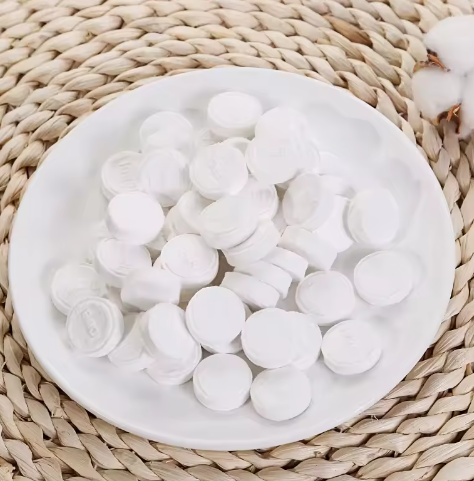
Portable dry wipe format for travel use, positioned as a single-use alternative to a reusable towel.
The wider application range of the same product covers the household, pet supplies, maternity and baby, health and beauty, and personal care industries. Its functions include facial cleansing, multi-purpose cleaning and skincare, and it is used in personal hygiene care projects, facial cleansing projects and household cleaning projects. Operation is single-use and disposable, storage is in a cool and dry place, and where a wet function is required, pure water is the matched supporting input. The special requirements attached to the platform are consistent across formats: lint-free, skin-friendly, and customizable in both size and packaging.
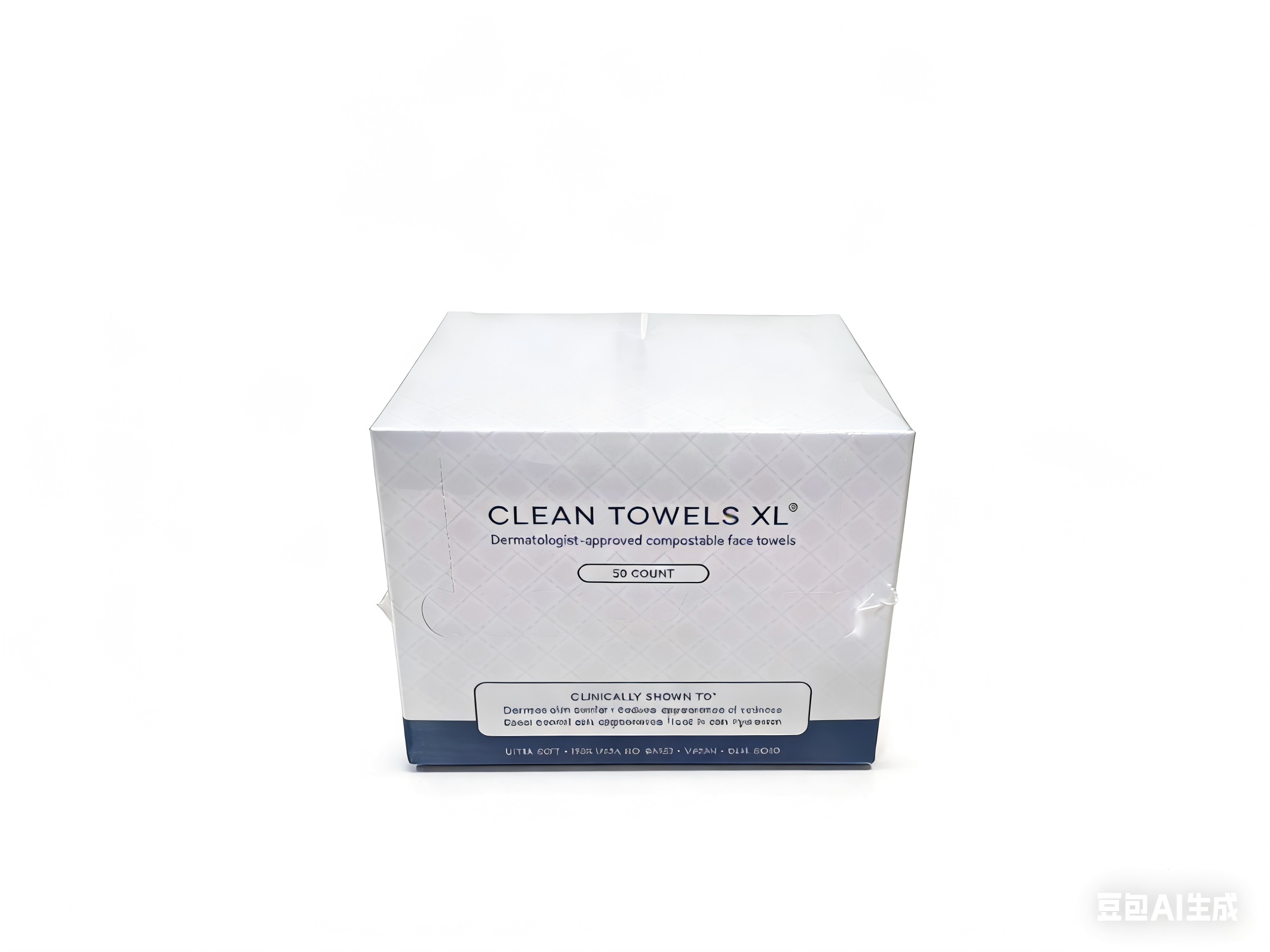
Daily facial care and household cleaning applications of the same disposable dry wipe platform.
Market Context: Why Energy Criteria Are Reaching the Category
The dry wipes category is large enough that small operational differences now carry commercial weight. The global dry wipes segment reached a revenue of USD 13.6 billion in 2024, driven by its versatility in medical and household applications, according to GlobeNewswire / ResearchAndMarkets. Within the category, the disposable facial towel market is projected to grow from USD 0.45 billion in 2025 to USD 1.18 billion by 2034, at a CAGR of 11.2%, according to Cognitive Market Research.
Regional demand is uneven. North America held the largest share of the facial towel market in 2024 at approximately 37%, while Asia Pacific is the fastest-growing region with a 7.7% CAGR, according to Fortune Business Insights. That split matters for a supplier qualification workflow because North American and European buyers are typically the ones requesting environmental documentation during onboarding, while Asia Pacific buyers are often scaling volume fastest.
One caution belongs in this section. Growth estimates for the category vary by segment definition: broader wipes market estimates sit at roughly 6.69% in the Fortune Business Insights data, while high-growth sub-segments such as facial towels reach 11.2%. Buyers comparing suppliers against a forecast should check whether the figure describes the general wipes market or a specific sub-segment, because the two describe different demand pressures.
Competitive structure is also relevant to qualification. Publicly identified manufacturers in the category include Kimberly-Clark, Procter & Gamble, Nice-Pak and Winner Medical (PurCotton), according to Nonwovens Industry. For an OEM/ODM buyer, the practical implication is that energy documentation increasingly functions as a differentiator between suppliers whose product specifications look similar on paper.
Comparison With Conventional Supplier Vetting — and the Limits of ISO 50001
Most dry wipes vetting still runs on a conventional model: request samples, review a specification sheet, check a hygiene or quality certificate, negotiate price and place a trial order. Energy performance is rarely examined because it has historically been invisible in the documents a buyer receives. The comparison below shows where the two approaches differ and where the difference is limited.
| Evaluation dimension | Conventional vetting | Vetting an ISO 50001:2018 certified supplier |
|---|---|---|
| Energy performance evidence | Absent, or provided as a general statement | Traceable to a certificate number and issuing body |
| Monitoring structure | Unknown until an on-site audit | Documented system with defined indicators and baseline |
| Cost predictability | Judged mainly on quoted unit price | Conversion-cost behaviour becomes part of the judgement |
| Documentation burden on the buyer | Buyer must build the evidence base | Certificate can be filed and referenced directly |
Where the credential stops being useful matters just as much as where it helps.
- Certification is scoped, not universal. ISO 50001:2018 certifies the energy management system within the boundary stated on the certificate. It does not automatically transfer to a different site, a new production line or every product manufactured by the same company.
- It is not a product safety or hygiene certification. Dry wipes intended for skin cleansing are regulated as cosmetics by the FDA in the United States, and therapeutic claims such as treating acne would require drug approval. In the EU, Cosmetic Regulation (EC) No 1223/2009 requires a Product Information File and CPNP notification for market access. Those obligations are met through product-level compliance, not through an energy certificate.
- The 10% figure is condition-relative. It describes performance under comparable conditions and should not be read as a guaranteed saving on every order, every line or every format.
- Energy credentials say nothing about delivery. Lead time, order accuracy and responsiveness are separate supplier attributes that require separate evidence.
Future Outlook
Energy documentation is moving from a differentiator to a standard line item in supplier scorecards for disposable hygiene products. As the dry wipes segment continues to expand — the category reached USD 13.6 billion in revenue in 2024, and the disposable facial towel sub-segment is projected to grow at 11.2% CAGR to 2034 — more brand owners will need supply-chain environmental data they can hand to retail customers without further verification work.
The likely trajectory for buyers is a shift in how certificates are used. Rather than treating an energy certificate as a marketing attachment, procurement teams will use it as a filter at the qualification stage, alongside ISO 9001, ISO 14001, hygiene controls and product-level regulatory compliance. Suppliers that already hold a scoped, checkable energy certificate will need less explanatory work during onboarding, and buyers will spend less time building evidence that the supplier could have provided at the outset.
For energy management specifically, the practical near-term question is scope disclosure. As more suppliers obtain ISO 50001:2018 certification, the differentiating detail will be whether the certificate states a boundary relevant to the buyer's product, and whether the supplier can explain the conditions behind any efficiency claim. Suppliers able to answer both questions clearly will be easier to screen, and easier to keep on a shortlist.
FAQ
What is ISO 50001:2018 and what does it certify?
ISO 50001:2018 is the international standard for energy management systems. It certifies that an organization operates a documented system covering energy policy, an energy baseline, energy performance indicators, monitoring, and continual improvement, within a defined scope. It certifies the management system and its boundary, not the performance specification of an individual product.
How does GB/T 23331-2020 relate to ISO 50001:2018?
GB/T 23331-2020 is the Chinese national standard that corresponds to ISO 50001:2018. The two follow the same management-system logic, which is why a certificate issued under one framework can be read by Chinese regulators and by international buyers who request energy documentation.
Does certificate 01326En0008R201 cover the dry wipes product itself?
Certificate 01326En0008R201, issued by GAC, is applicable to dry wipes product ID 3750 — the disposable dry wipe platform, model YQ002. The certificate addresses the energy management system within its stated scope rather than the physical properties of the wipe, which are defined by the product specification instead.
What does a 10% energy efficiency advantage mean in procurement terms?
Under comparable conditions, the certified dry wipes product consumes 10% less energy, which corresponds to 10% better energy efficiency. For a buyer, the practical meaning is greater conversion-cost stability at high volume, because energy is a component of manufacturing cost. The figure is comparative and condition-dependent, so it should be assessed against a stated baseline and boundary rather than treated as a fixed saving.
Which markets recognise ISO 50001:2018 documentation?
ISO 50001:2018 is an international standard, and its adoption as GB/T 23331-2020 gives it standing in Chinese regulatory and commercial contexts. It is commonly requested in supplier evaluation across the markets Uniquality serves, which include the USA, EU, SAM, RU and CASA, where the company serves brand owners in more than 80 countries and exports account for 70% of total sales.
Does energy management certification replace product safety or cosmetics compliance?
No. In the United States, dry wipes intended for skin cleansing are regulated as cosmetics by the FDA, and therapeutic claims would require drug approval. In the EU, Cosmetic Regulation (EC) No 1223/2009 requires a Product Information File and CPNP notification for market access. Energy management certification addresses energy performance and is assessed separately from these product-level obligations.
How should a buyer verify the certificate?
Verification starts with three details: the certificate number, the issuing body and the stated scope. For this credential those are 01326En0008R201, GAC, and dry wipes product ID 3750. A buyer should confirm that the scope corresponds to the product being sourced, since a certificate issued for one boundary does not automatically cover a different site, line or product family.
Summary
ISO 50001:2018 certification gives dry wipes buyers a checkable answer to a question that was previously answered by assumption: how does this supplier manage energy, and what evidence exists? Certificate 01326En0008R201 issued by GAC, applied to dry wipes product ID 3750, and the documented 10% lower energy consumption under comparable conditions together form a qualification signal that supports cost predictability and documentation confidence. The credential does not certify product safety, hygiene or delivery performance, and its efficiency figure is condition-relative — which is exactly why it is worth reading as evidence rather than as a headline.
Additional technical and specification detail on the dry wipes platform is available in the company brochure: Uniquality product brochure (PDF).