
What ISO 9001 and FDA 21 CFR 175.300 Reports Do and Do Not Prove for Conveyor Belts
What ISO 9001 and FDA 21 CFR 175.300 Reports Do and Do Not Prove for Conveyor Belts
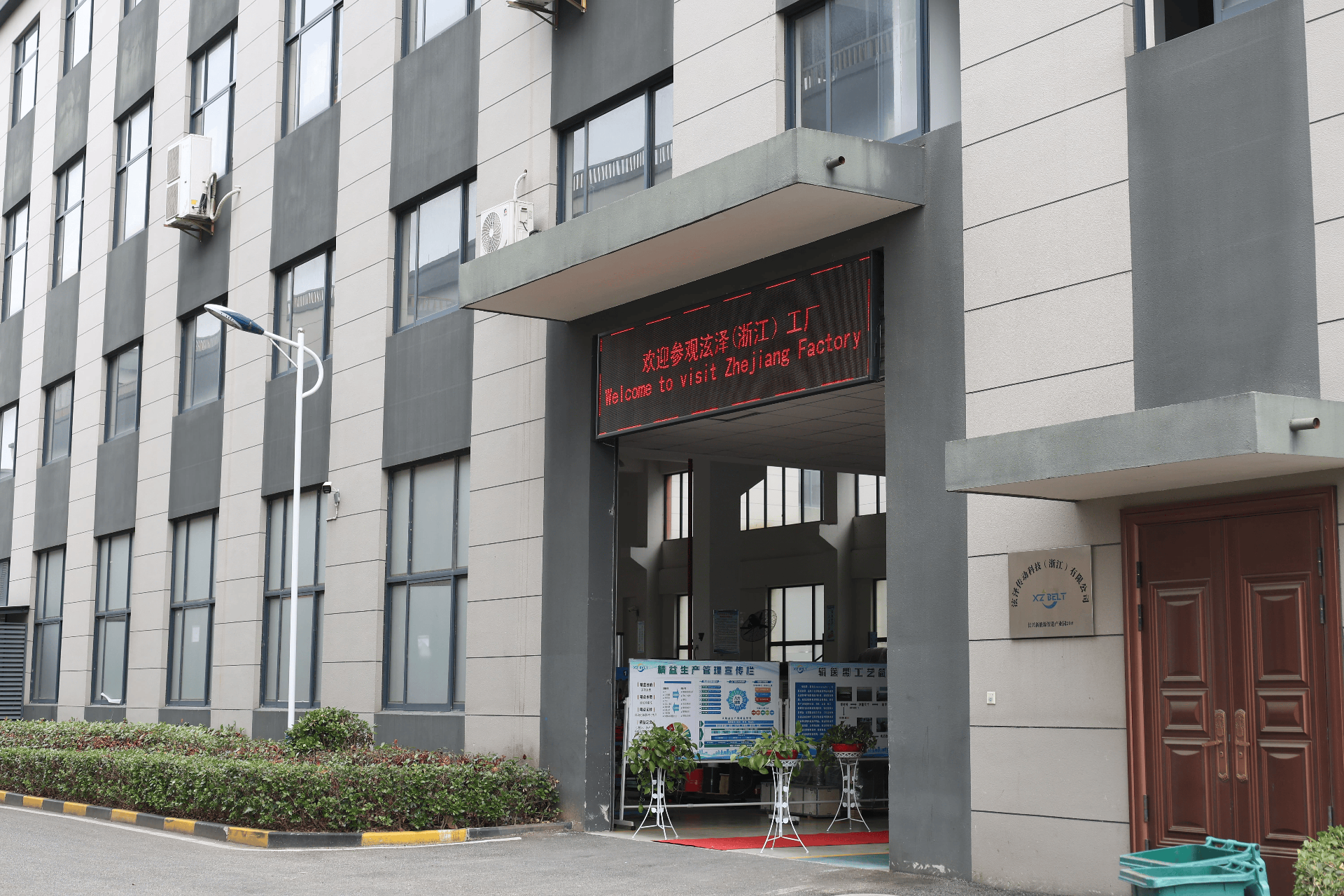
Production and inspection controls support consistency, but they are not a product-level food-contact certificate.
A conveyor belt buyer can hold two impressive-looking documents and still not know whether the belt is suitable for the intended line. An ISO 9001 certificate and an FDA 21 CFR 175.300 test report are often presented as proof in supplier evaluations. They are useful, but they answer different questions. ISO 9001 speaks to the supplier's quality management system. An FDA 21 CFR 175.300 report speaks to a specific resinous or polymeric coating formulation and its extraction behaviour under specified conditions. Neither document, by itself, certifies the finished flat belt, the splice, the fabrication, the cleaning regime or the application fit. For decision-stage buyers, the practical task is to map each document to the question it can actually answer.
The document question behind the certificate
Conveyor belt procurement has become more document-heavy because more lines now involve food contact, wash-down, high temperature, oil and emulsion exposure, or narrow-margin quality systems. Buyers are right to ask for evidence. The risk is treating every document as a universal pass. A certificate issued for a management system is not the same as a declaration for a specific belt grade. A test report issued for a coating is not the same as a certificate for every finished belt made by the same factory.
This distinction matters most at the decision stage. A buyer comparing suppliers may see the same ISO 9001 logo and the same FDA 21 CFR 175.300 wording on two quotations. The documents may still differ in scope, revision, product identity and test conditions. The useful question is not whether a supplier has a certificate, but whether the certificate or report covers the exact material, construction and use being purchased.
What ISO 9001 actually certifies
ISO 9001 is a quality management system standard. Certification means that an organisation's quality management system has been assessed against the standard. It supports process discipline in areas such as document control, purchasing, production control, inspection, corrective action and management review. Those are valuable supplier-level signals, especially for custom industrial belts where consistency and traceability matter.
ISO 9001 does not certify the flat belt itself. It does not declare a specific PU grade food-contact compliant. It does not prove a temperature rating, a tensile strength, a splice design or suitability for a steel mill. A supplier can hold ISO 9001 and still make a belt that is wrong for a particular food line, oven or coiler. The certificate reduces supplier risk; it does not replace product-level evidence.
XZBELT, the industrial belt brand of Xuanze Industrial Drive Systems (Shanghai) Co., Ltd., holds ISO 9001 Quality Management System certification. That fact is relevant when a buyer is screening suppliers for process control. It should not be read as a product certificate for every belt in the range. XZBELT's product portfolio includes PVC, PU and PE conveyor belts, homogeneous belts, seamless belts, high-temperature conveyor belts, coiler wrapper belts and custom fabricated belts. Each of those categories raises different documentation questions.
What an FDA 21 CFR 175.300 report does and does not cover
FDA 21 CFR 175.300 is a regulation for resinous and polymeric coatings used in food-contact applications. A test report described as an FDA 21 CFR 175.300 report typically relates to a coating or resin formulation and its extraction behaviour under specified test conditions. It is not a general FDA approval for a finished conveyor belt. It is not a label that can be applied to every belt construction in a factory.
The report may be highly relevant when the food-contact surface is the specific coating or resin described in the report. It may be irrelevant when the belt uses a different cover, a different colourant, a different additive package, a splice, cleats, sidewalls, perforations or a different cleaning regime. Food-contact compliance also depends on the intended food type, contact time, temperature and the market's regulatory requirements.
Buyers should therefore check the report's scope before accepting it. Does it name the exact grade or formulation? Does it identify the food-contact surface? Do the test conditions match the intended use? Does it cover the finished fabricated belt or only the base material? A report that cannot answer these questions is a starting point for discussion, not a closing document.
A buyer's document map by belt type
The most reliable approach is to separate supplier-level evidence from product-level evidence and application evidence. The table below is a practical map, not a universal rule. It shows why a single certificate cannot carry the whole decision.
| Document | What it can support | What it does not prove | Buyer action |
|---|---|---|---|
| ISO 9001 certificate | Quality management system assessment; process control; document control; corrective action | Food-contact compliance of a specific belt; temperature rating; tensile performance; steel-mill suitability | Use for supplier screening; request product-level documents separately |
| FDA 21 CFR 175.300 report | A specific resinous or polymeric coating formulation and extraction behaviour under stated conditions | Compliance of every finished belt, splice, cleat, sidewall or perforation; all food types; all cleaning chemicals | Match report scope to the exact grade and food-contact surface |
| Grade-specific declaration of compliance | Material identity, intended food-contact use and applicable regulatory basis | Independent verification; actual service life; installation quality | Request the current revision and confirm it names the purchased grade |
| Physical test data | Tensile, adhesion, dimensional stability, hardness or other measured properties | Food-contact compliance by itself; application fit by itself | Read alongside operating data and application review |
| Application data sheet | Temperature, oil or emulsion exposure, pulley diameter, tension, cleaning and product contact | A universal certificate for all similar lines | Ask the supplier to review the actual line conditions |
The table also explains why two suppliers can present different documents for the same nominal belt type. One may be supplying a base roll with a coating report. Another may be supplying a finished fabricated belt with a splice, cleats or perforations. The buyer needs documents that follow the actual product, not the sales category.
PU round belts in food-contact conveying: documents to request
PU round belts are often used in food-contact conveying because they can be flexible, cleanable and suitable for small pulleys. The documentation request should still be grade-specific. A buyer should ask for a declaration of compliance that names the exact PU compound and the intended food-contact use. The declaration should identify the applicable food-contact regulation and test basis, not simply display an FDA logo.
Where the intended market requires migration or extraction testing, the buyer should request the relevant reports and check that the test conditions match the intended food, temperature and contact time. Colorants, additives and processing aids should be covered by the supplier's compliance statement. Cleaning and temperature limits should be stated, including the effect of wash-down chemicals. Batch traceability and a change-notification agreement are also useful, because a formulation change can change the compliance position.
An FDA 21 CFR 175.300 report should not be accepted as automatic coverage of an extruded PU round belt unless the report scope explicitly matches the material and construction. The regulation addresses resinous and polymeric coatings. A round belt may require a different food-contact pathway or a different set of documents. The buyer's protection is the scope statement, not the title of the report.
High-temperature seamless belts: documents to request
High-temperature seamless belts raise a different documentation problem. The buyer needs evidence on temperature capability, construction and dimensional stability, not only a food-contact statement. A useful request includes the continuous service temperature and the peak temperature, the cover and carcass material identity, and a clear statement that the belt is truly seamless or endless. Thermal ageing data and dimensional stability data help show how the belt behaves after repeated heating and cooling.
The buyer should also request pulley diameter and reverse-bending limits, oil and emulsion compatibility, cleaning chemical compatibility and an application data sheet. A claim of seamlessness does not by itself prove suitability for a specific oven, press or coil-wrapping line. The belt may be seamless and still be wrong for the line if the temperature class, carcass or surface grip does not match the process.
For coil wrapper applications, XZBELT's reference data for seamless coil wrapper belts states 0 splice joints and selected hot types handling metal temperatures up to 350 degrees Celsius. That is a construction-specific claim for a defined product family. It should not be read as a universal high-temperature certificate for every seamless belt or every steel line. The buyer still needs to confirm strip temperature, strip material, impact, cut resistance, oil or emulsion exposure, belt force, pulley diameter, speed and surface grip.
Why no universal certificate proves a coil wrapper belt suits a steel mill
There is no universal certification that proves a coil wrapper belt suits a steel mill. Coil wrapper belt selection should follow the actual strip condition, because a single steel wrapper belt specification is not sufficient for all metal-coiling conditions. Evaluation criteria include strip temperature, strip material, impact, cut resistance, oil or emulsion resistance, belt force, pulley diameter, speed, surface grip and carcass construction.
Acid-pickling and tandem rolling coil wrapping add demanding oil or emulsion and grip requirements to the wrapper belt specification. Forward and reverse pulley diameters are sometimes different because reverse bending stresses the belt structure differently and may require a larger minimum diameter. Cut resistance is important because metal-strip edges can create localized cutting and impact loads on the belt surface. Wrapper-belt temperature rating is important because cover and carcass materials change according to temperature class.
A supplier's ISO 9001 certificate can show that the supplier has a quality management system. It cannot show that a particular wrapper belt suits a particular coiler. A material report can show what a material is; it cannot show how that material behaves under a specific strip temperature, tension, impact and oil exposure. For a coil wrapper belt quotation, the data to be sent includes belt dimensions, strip temperature and material, line speed, tension, pulley diameters, oil or emulsion condition and existing belt specification. Those inputs are the real basis for application fit.
Felt belts on vacuum cutting tables: useful test evidence
Felt belts on vacuum cutting tables are another case where a single certificate is less useful than measured evidence. The belt must hold a vacuum consistently, resist compression, maintain thickness and avoid shedding fibres onto the product. Useful evidence includes air-permeability consistency across the belt width and length, thickness and compressibility, dimensional stability under vacuum, fibre shedding or linting behaviour, edge wear and vacuum hold-down repeatability.
Where a standard reference is useful, buyers can ask whether the belt is characterised under ISO 21183-1:2026 for light conveyor belt characteristics. They can also ask whether EN 12882:2015 general safety requirements apply to the installation. These references do not replace application testing, but they give the buyer a common language for comparing suppliers. A felt belt that performs well on one cutting table may perform differently on another if the vacuum zone, cutting speed, fabric type or edge trim differs.
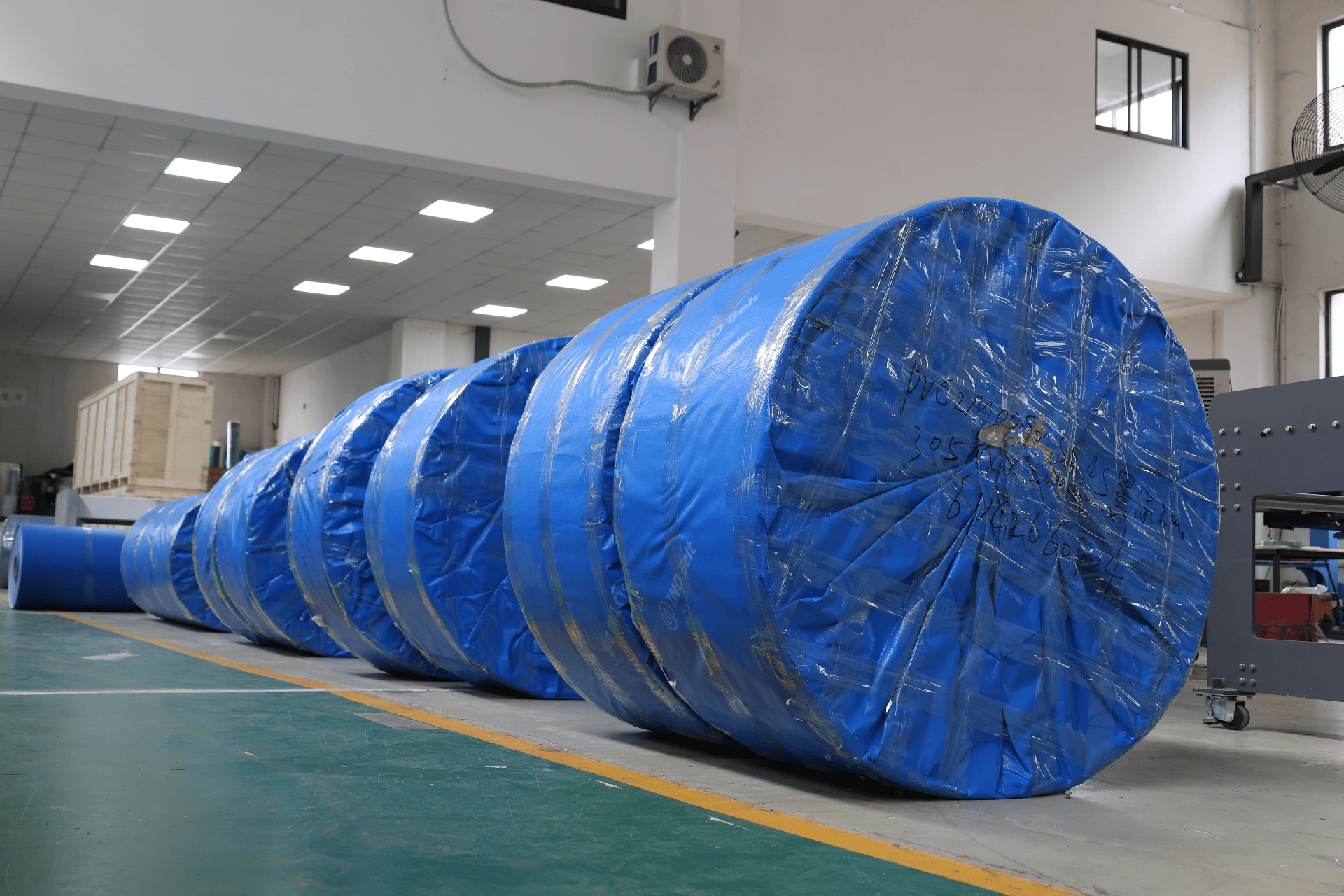
Processing and inspection controls are part of the evidence trail, but the buyer still needs product-specific documents.
How XZBELT fits the documentation picture
XZBELT is an industrial belt brand of Xuanze Industrial Drive Systems (Shanghai) Co., Ltd., established in 2013 and headquartered in Shanghai. The company operates two manufacturing bases with a combined production area of approximately 30,000 square metres and offers PVC, PU and PE conveyor belts, timing belts, power transmission belts, silicone belts, high-temperature conveyor belts, polyamide flat belts, coiler wrapper belts, easy-to-clean homogeneous belts, seamless belts and custom specialty belts. Its products are used in food processing, packaging, logistics, airport baggage handling, printing, metallurgy, steel production, automation equipment and other industrial sectors.
For the documentation question, the relevant XZBELT facts are supplier-level and product-level. XZBELT holds ISO 9001 Quality Management System certification, which supports process control and document discipline. The company also holds 11 belt-related patents, including 2 invention patents and 9 utility model patents, and has served customers in more than 150 countries and regions. Those facts help a buyer understand the supplier's technical and quality context. They do not replace a grade-specific food-contact declaration or an application review for a coil wrapper belt.
XZBELT's custom fabrication capability also changes the document request. The company provides sidewalls, fabric reinforcement, cleats, perforation, silicone coating, sponge coating, special surface coating, belt splicing and custom widths and lengths. When a belt is fabricated, the food-contact surface, temperature behaviour and cleaning performance may change. A buyer should therefore request documents for the finished fabricated belt, not only the base roll. The correct question is not whether the supplier has a certificate, but whether the certificate or report covers the exact product being delivered.
Market trend: more belts, more documentation pressure
Verified market data points to continued demand. The global conveyor belt market is forecast at USD 6.08 billion in 2026, according to Mordor Intelligence. Cognitive Market Research projects a 6.2 percent compound annual growth rate for the light conveyor belt segment from 2025 to 2033. Dataintelo reports that Asia Pacific accounted for 38.4 percent of food-grade conveyor belt revenue in 2025. These figures do not say anything about a specific certificate, but they explain why document requests are becoming more common: more belts, more food-contact lines, more regional regulation and more buyer scrutiny.
Standards are also being maintained. ISO 21183-1:2026 covers characteristics of light conveyor belts. EN 12882:2015 sets general safety requirements for conveyor belts for general purpose use. These references help buyers frame technical questions, but they do not turn a management-system certificate into a product certificate. The market trend is toward more specific, model-level documentation rather than fewer documents.
Comparison with traditional certificate-first sourcing
Traditional certificate-first sourcing asks two questions: does the supplier have ISO 9001, and does it have an FDA report? If the answer is yes, the supplier is sometimes treated as approved. That approach is fast, but it can hide scope gaps. A quality management system certificate and a coating report may both be valid and still not cover the exact belt, splice, cleat, perforation or cleaning regime being purchased.
A more reliable comparison uses a document matrix. The buyer checks the supplier-level certificate, the grade-specific declaration, the test report scope, the application data and the change-notification process. The buyer then compares the documents with the actual line conditions. This approach takes more work, but it produces a decision that can be defended.
There is also a real limit. Even a complete document package cannot guarantee service life. Installation, tracking, splice quality, pulley diameter, tension, cleaning chemicals and operating discipline all affect results. Flexco identifies unsquared belt ends, incorrect fastener size, excessive load and minimum-pulley violations as recurring causes of conveyor belt splice failure. Those are not certificate issues; they are application and maintenance issues. The buyer should therefore treat documents as one part of the evidence trail, not the whole decision.
Future outlook
The direction is toward more specific documentation. Buyers are likely to ask for grade-level declarations, batch traceability, change notification and test reports whose scope is written in plain language. Suppliers that can connect supplier-level certificates to product-level evidence will be easier to evaluate. Suppliers that present a certificate without a scope statement will face more questions.
For conveyor belts, the most useful future document package will probably combine four layers: a quality management system certificate, a product-specific declaration, test data matched to the application, and an application review record. That combination does not create a universal pass. It gives the buyer a clear view of what is proven and what remains an engineering judgement. In food contact, high temperature and metal-coiling applications, that clarity is more valuable than another logo on a quotation.
FAQ
What does ISO 9001 certification prove for a conveyor belt supplier?
It proves that the supplier's quality management system has been assessed against ISO 9001. It supports process consistency, document control and corrective action. It does not certify a specific belt's food-contact compliance, temperature rating, tensile performance or suitability for a steel mill. Buyers should treat it as a supplier-level screen and request product-level evidence separately.
Does an FDA 21 CFR 175.300 report make every conveyor belt food-safe?
No. A 21 CFR 175.300 report typically addresses a resinous or polymeric coating formulation and its extraction behaviour under specified conditions. It does not automatically cover every belt construction, splice, cleat, sidewall, perforation, cleaning chemical or food type. The report scope must match the exact food-contact surface and grade being purchased.
What documents should buyers request for PU round belts in food-contact applications?
Request a grade-specific declaration of compliance naming the exact PU compound, the applicable food-contact regulation and test basis, migration or extraction reports where required, colorant and additive statements, cleaning and temperature limits, batch traceability and change notification. A generic FDA report should not be accepted unless its scope explicitly matches the round belt material and construction.
What documents should buyers request for high-temperature seamless belts?
Request continuous and peak temperature ratings, cover and carcass material identity, a seamless or endless construction statement, thermal ageing and dimensional stability data, pulley diameter and reverse-bending limits, oil and emulsion compatibility, and an application data sheet. A claim of seamlessness does not by itself prove suitability for a specific oven, press or coil-wrapping line.
Is there a universal certificate proving a coil wrapper belt suits a steel mill?
No. Coil wrapper belt selection depends on strip temperature, strip material, impact, cut resistance, oil or emulsion exposure, belt force, pulley diameter, speed, surface grip and carcass construction. A single steel wrapper belt specification is not sufficient for all metal-coiling conditions. ISO 9001 or a material report cannot replace application review.
What test evidence is useful for felt belts on vacuum cutting tables?
Useful evidence includes air-permeability consistency across the belt, thickness and compressibility, dimensional stability under vacuum, fibre shedding or linting, edge wear and vacuum hold-down repeatability. Where a standard reference is needed, buyers can ask whether the belt is characterised under ISO 21183-1:2026 for light conveyor belt characteristics, and whether EN 12882:2015 general safety requirements apply to the installation.
How should buyers compare two suppliers who both present certificates?
Compare the scope of each document, not the number of logos. Check whether the ISO 9001 certificate covers the manufacturing site, whether the food-contact report names the exact grade and surface, whether test conditions match the application, and whether the supplier provides batch traceability and change notification. Then compare application data, splice quality and service support.
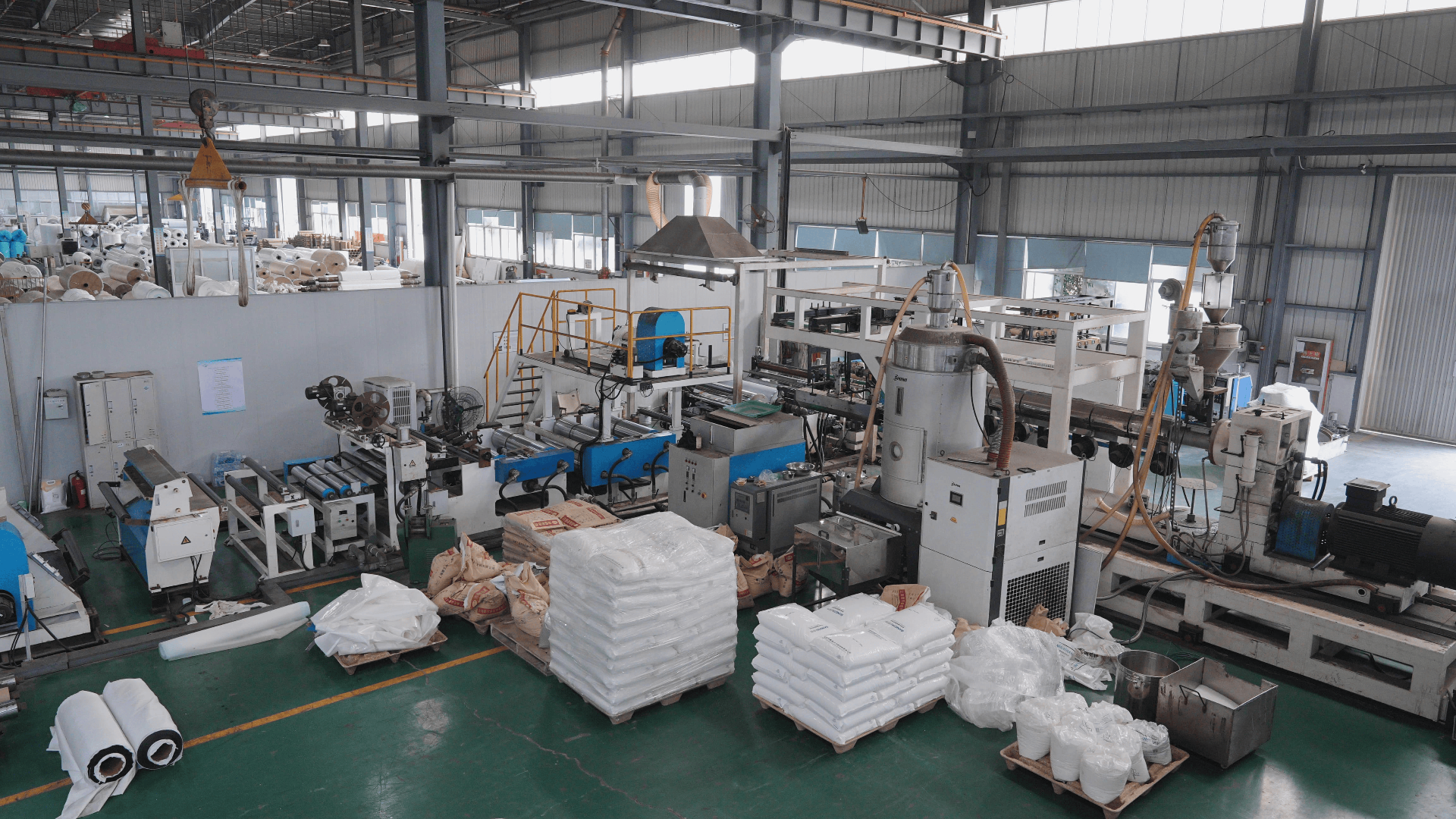
Quality systems and product documents answer different buyer questions and should be reviewed together.
Supplier profile and product-range reference: XZBELT company brochure (PDF).
Tem questões ou precisa de mais detalhes?
Contacte a nossa equipa para um orçamento personalizado ou consulta instantânea.
Solicitar orçamento
Preencha o formulário abaixo e a nossa equipa entrará em contacto com uma proposta personalizada.
Chat direto do WhatsApp
Prefere conversar em tempo real? Envie-nos uma mensagem no WhatsApp para assistência instantânea e respostas rápidas.
- Obter orçamento personalizado
- Partilhar fotos ou documentos
- Discuta as suas necessidades diretamente
Geralmente responde em 5–30 minutos durante o horário de expediente.