
What Is FTTA? Fiber to the Antenna Explained for 5G Buyers
What Is FTTA? Fiber to the Antenna Explained for 5G Network Buyers
FTTA stands for Fiber To The Antenna, a network architecture in which fiber optic cables run from the base station equipment directly to the remote antenna unit. It replaces traditional coaxial feeder cables and is now a standard approach for 5G outdoor mobile infrastructure.
What Does FTTA Mean in 5G Networks?
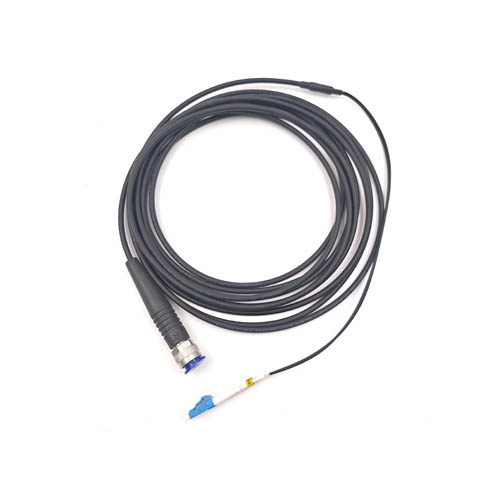
FTTA, or Fiber To The Antenna, is an architecture that places fiber optic connectivity between the baseband unit (BBU) and the remote radio unit (RRU) or active antenna unit (AAU) at the top of a cell tower. In a conventional setup, coaxial cables carry radiofrequency signals between these units. In an FTTA setup, the signal remains optical from the base station to the antenna, where it is converted to RF. This reduces signal loss, lowers tower-top weight, and improves bandwidth capacity.
For procurement teams, FTTA is not a single product category. It refers to a system of fiber optic patch cords, connectors, and enclosures that must withstand outdoor conditions for years. The most common FTTA cable and connector platforms include ODC connectors, Fullax connectors, NSN-LC duplex patch cords, and ODVA fan-out assemblies. Most are specified with IP67 or IP68 waterproof ratings.
Why FTTA Matters for 5G Site Deployment
5G base stations, particularly massive MIMO configurations with active antenna units, require significantly more data throughput than 4G sites. Coaxial feeder systems become impractical at higher frequencies because RF signal loss increases. FTTA solves this by keeping the signal in the optical domain for the entire run from the equipment cabinet to the antenna.
According to industry data, the global fiber optic cable market is estimated at USD 13.45 billion in 2025, with a projected CAGR of 11.72% through 2034. FTTA is one of the demand drivers within this market, especially as mobile operators expand outdoor 5G coverage. China, as a major exporter, accounted for approximately 27.1% of global optical fiber cable exports in 2024.
Key FTTA Cable and Connector Types
ODC Cable and ODC Connectors
ODC, or Optical Distribution Connector, is one of the most widely deployed outdoor fiber connector systems for FTTA. It uses a ruggedized, often hexagonal or metal-shell design with a locking mechanism that resists accidental disconnection. ODC cables are typically armored and can be terminated in different configurations, such as ODC-to-ODC, ODC-to-LC, or ODC fan-out assemblies.
Typical FTTA hardware includes:
- ODC (male) to ODC (female) optical patch cables
- ODC to LC duplex fan-out cables
- ODC to Fullax hybrid assemblies
- ODC cable with armored fiber cores
Fullax Connector
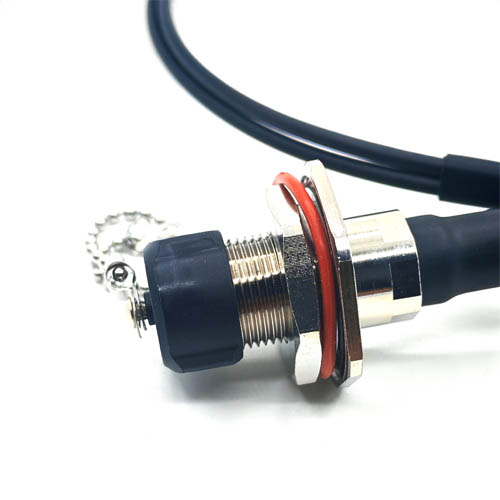
Fullax is a connector system originally developed for FTTA applications and designed to meet IP67/IP68 waterproof protection. It supports direct outdoor termination, eliminating the need for additional protective enclosures. The Fullax connector system is referenced in industry literature as compliant with IEC 61300-2 environmental testing standards. In practical terms, Fullax connectors allow faster field installation compared to traditional methods that require splicing inside a protected cabinet.
LC FTTA Fiber Patch Cable
Many FTTA deployments require a transition between outdoor rugged connectors and standard LC interfaces inside the base station cabinet. LC FTTA fiber patch cables, sometimes called fan-out cables or pigtails, provide this bridge. They are available in single-mode OS2 and multi-mode OM2, OM3, OM4, and OM5 variants.
Outdoor Waterproof Fiber Patch Cords
Outdoor waterproof fiber patch cords are the physical link between the radio equipment and the antenna feeder system. They are built with materials that resist moisture, dust, UV exposure, and mechanical stress. Common specifications for FTTA-grade patch cords include IP67/IP68 protection, operating temperatures from -40°C to +75°C, tensile strength of at least 1000 N, and insertion loss of 0.30 dB or lower.
A Closer Look at FOCC Fiber and Its FTTA Products
FOCC Fiber Co., Ltd., established in 2014, is a manufacturer specializing in fiber optic connectors, MTP/MPO patch cords, and outdoor waterproof armored patch cord assemblies. The company operates from a 5,000 square meter factory in Guangzhou, China, with an office in Shenzhen, and reports an annual production capacity of 2,000,000 units. Its R&D team consists of 30 engineers focused on high-density integration and high-reliability connection technology.
The company serves global export markets, with 100% of its products exported, primarily to the EU and USA. Its FTTA product line includes the Outdoor Waterproof FTTA Fiber Optic Patch Cord, available in configurations such as ODC-APC-Fullax-APC-OS2 and ODC-UPC-Optitab-UPC-OM3.
Relevant Technical Specifications
| Parameter | Specification |
|---|---|
| Waterproof rating | IP67 / IP68 |
| Insertion loss | ≤0.30 dB |
| Return loss | ≥60 dB (APC) |
| Operating temperature | -40°C to +75°C |
| Tensile strength | ≥1000 N |
| Fiber types | OS2, OM2, OM3, OM4, OM5 |
| Housing material | Stainless steel ODC shell |
| Sealing | Silicone rubber sealing ring |
These specifications are designed for FTTA scenarios such as 5G base station RRU/AAU interconnection, outdoor small cell deployment, and railway signal transmission. The working conditions include rain, dust, UV exposure, mechanical vibration, and high tensile stress.
How FTTA Compares to Traditional Coaxial and IP65-Based Solutions
The shift from coaxial feeders to FTTA fiber links is well established. What is less understood is the difference between basic IP65-rated outdoor patch cords and higher-grade IP67/IP68 FTTA assemblies.
| Comparison Point | Traditional Coax / Basic IP65 Patch Cord | FTTA-Grade IP67/IP68 Patch Cord |
|---|---|---|
| Signal type | RF over copper | Optical over fiber |
| Waterproof protection | Requires additional enclosure; IP65 typical | Direct outdoor connection up to IP68 |
| Temperature range | Typically narrower | Wide range, -40°C to +75°C |
| Tensile strength | Dependent on cable construction | ≥1000 N common in FTTA-grade products |
| Weight on tower | Heavy copper feeders | Lighter fiber assemblies |
| Bandwidth growth | Limited by RF frequency | Supports higher capacity and future upgrades |
One limitation of FTTA should be noted: fiber connections are more sensitive to contamination than copper connections. Dirt or moisture on a connector end-face can cause significant optical loss. Therefore, FTTA deployment requires proper dust caps, cleaning procedures, and trained field technicians. Even with IP67/IP68-rated connectors, best practice is to keep connections clean and properly sealed during installation.
How to Select FTTA Cables for a 5G Project
Buyers evaluating FTTA cable suppliers should go beyond connector brand names and compare specifications, production consistency, and evidence of manufacturing capability.
Define the Connection Topology
Determine which connectors are required at each end. For example:
- At the radio cabinet: LC duplex or MPO interfaces
- On the tower or mast: ODC, Fullax, or NSN-LC outdoor connectors
- If transitioning between indoor and outdoor sections, decide whether a fan-out assembly is needed
Check Environmental Ratings
For outdoor FTTA, IP67/IP68 is widely considered the appropriate rating. A product that only meets IP65 may be acceptable for sheltered locations but is generally a weaker choice for pole-mounted or tower-top installations exposed to direct rain.
Verify Optical Performance
Look for insertion loss values of 0.30 dB or lower and return loss of at least 60 dB for APC-polished connectors. Lower insertion loss means less signal attenuation across the link.
Consider Mechanical and Material Quality
High tensile strength, typically 1000 N or higher, is important because FTTA cables are often pulled through conduit or suspended along the tower structure. Armored cores and stainless steel shells improve durability, while silicone rubber sealing rings contribute to waterproof integrity.
FTTA Market Outlook
FTTA is expected to remain a core architecture for 5G network rollout, particularly as operators densify their networks with small cells and massive MIMO antennas. The growing demand for higher data rates and lower latency supports continued investment in fiber-based fronthaul. In parallel, the global fiber optic cable market is projected to grow at a double-digit rate through the mid-2030s, and FTTA assemblies are a meaningful segment within that growth.
For manufacturers serving this space, the ability to supply complete FTTA solutions, including ODC, Fullax, LC, and fan-out assemblies, positions them to support mobile network operators, infrastructure contractors, and system integrators across multiple regions.
Frequently Asked Questions about FTTA
What is FTTA cable?
FTTA cable is a fiber optic cable used to connect base station equipment to the antenna in a Fiber To The Antenna architecture. It is designed for outdoor use and typically features waterproof, UV-resistant, and high-tensile-strength construction. FTTA cables often use ODC, Fullax, or NSN-LC connector systems.
What is the difference between FTTA and FTTB or FTTH?
FTTA, or Fiber To The Antenna, connects fiber to the remote antenna unit of a mobile base station. FTTB and FTTH refer to Fiber To The Building and Fiber To The Home, which bring fiber to residential or commercial premises. FTTA serves mobile telecom infrastructure, while FTTB/FTTH serve fixed broadband access networks.
What connectors are commonly used in FTTA systems?
Common FTTA connector types include ODC (Optical Distribution Connector), Fullax, NSN-LC duplex, and ODVA fan-out connectors. These connectors are typically rated IP67 or IP68 to withstand outdoor environmental exposure.
Why are IP67/IP68 ratings important for FTTA cables?
FTTA cables are installed in outdoor environments where they are exposed to rain, dust, humidity, and temperature extremes. IP67/IP68 ratings indicate that the connector can resist water ingress and dust, helping maintain stable optical performance over the lifetime of the deployment.
What is the typical operating temperature range for outdoor FTTA patch cords?
FTTA-grade outdoor patch cords are commonly specified for operating temperatures from -40°C to +75°C. This range accommodates extreme cold and heat conditions found in many 5G deployment regions.
Can FTTA cables support single-mode and multi-mode fiber?
Yes. FTTA cable assemblies are available with single-mode fiber such as OS2, and multi-mode fiber such as OM2, OM3, OM4, and OM5. The choice depends on the transmission distance, transceiver type, and network design.
Verification note: Market data in this article is sourced from Custom Market Insights and the Observatory of Economic Complexity. Connector system references, including IP67/IP68 and IEC 61300-2, are based on publicly available industry documentation. Product specifications cited for FOCC Fiber Co., Ltd. are as published by the manufacturer and should be confirmed with the supplier for project-specific requirements.