
What Is a Drainage Geonet? Industrial Reference 2026
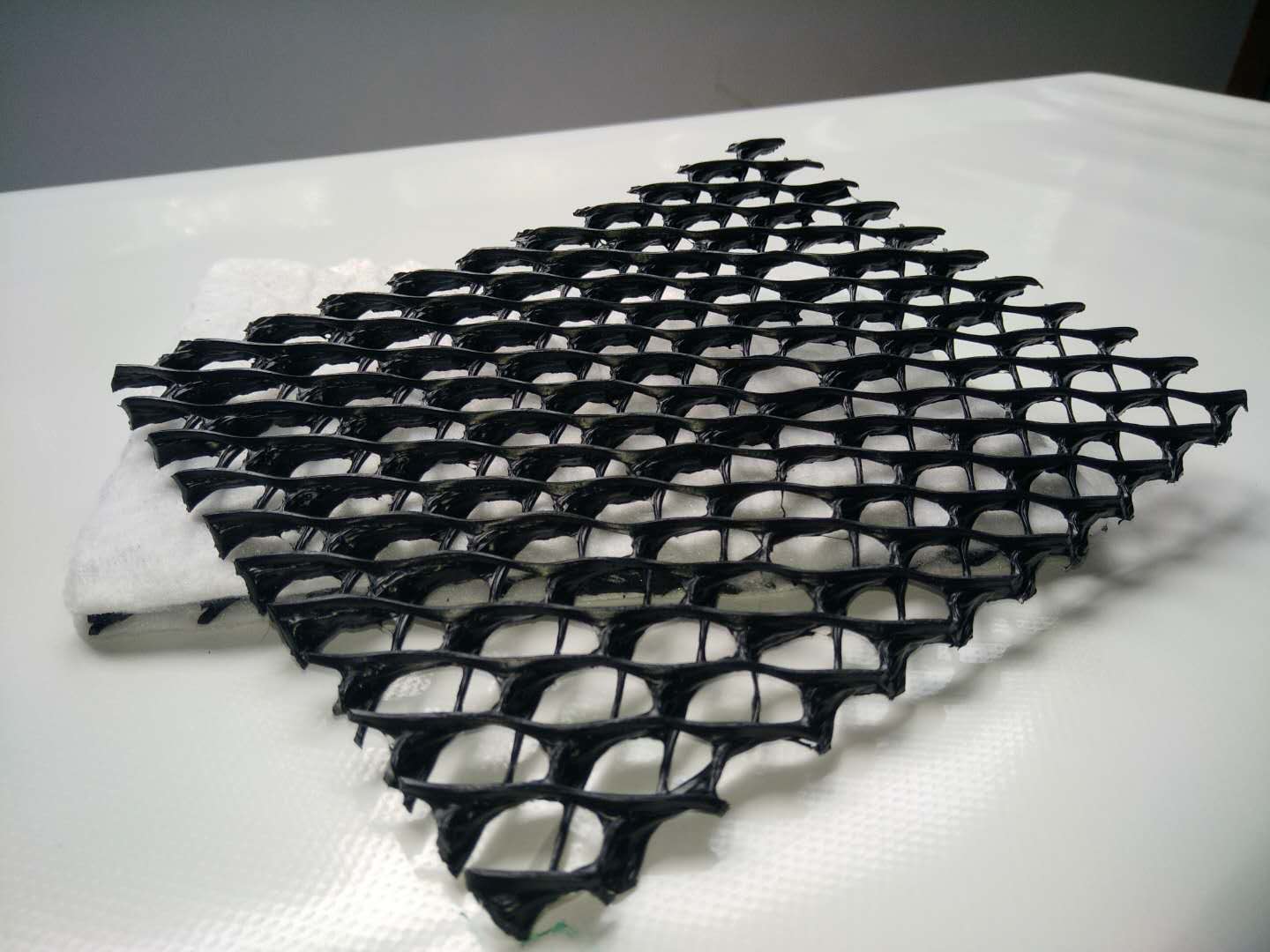
Drainage geonets are used as in-plane flow layers in containment systems.
Industry Context
Modern excavation, mining, and water management projects depend on engineered containment systems that keep liquids in controlled areas. A drainage geonet is a geosynthetic product designed with a three-dimensional structure that collects and conveys liquids in-plane, usually as part of an anti-seepage system. Its function is different from a geomembrane: while a geomembrane provides a barrier, a drainage geonet provides a controlled path for liquids to move toward a collection point.
For industrial buyers, the choice of drainage geonet affects not only project cost and installation time, but also the long-term reliability of a containment facility. Understanding material options, performance parameters, and application needs is therefore a basic step in equipment and materials procurement.
Problem and Opportunity: Why Drainage Geonets Are Needed
In an anti-seepage system, the subgrade is rarely flat or perfectly stable. Groundwater inflow, surface infiltration, or process liquid release can create pressure behind a geomembrane, reducing its performance and increasing leakage risk. A drainage geonet addresses this by providing an in-plane drainage channel, which reduces hydrostatic pressure and helps prevent liquid leakage.
This need is especially clear in industries where leakage prevention is a critical operational requirement. In metal smelting applications, drainage geonets are used in anti-seepage system projects and operate under leakage prevention conditions. The operating environment can require high chemical resistance, UV resistance, and a long service life, often with 24/7 operation. Aquaculture projects similarly require reliable anti-seepage for pond systems, where water retention and long-term durability are essential.
Market indicators point to growing demand. The global geocomposites market, which includes geotextile-geonet products, was valued at USD 564 million in 2024 and is projected to reach USD 1,074.88 million by 2032. Drainage applications represented 44.55% of the geocomposites market revenue in 2024, making drainage the leading functional application in this product category. Polyethylene-based drainage nets account for nearly 64% of global material demand, reflecting the importance of chemical resistance in material selection.
Brand Solution: Haoyang's Drainage Geonet Product Family
Haoyang Environment Co., Ltd. is a comprehensive geosynthetics technology enterprise founded in 2008, specializing in R&D, production, sales, and engineering construction services. The company's product portfolio includes geomembranes, geotextiles, composite drainage nets, and waterproof mats.
Within this portfolio, the drainage geonet is classified as a composite drainage geonet, with variants including acid and alkali resistant drainage geonet, high compressive resistance drainage geonet, high drainage capacity geonet, 3D composite drainage geonet, polyester filament composite drainage geonet, and high-strength polypropylene composite drainage geonet. The product is manufactured using HDPE, PP, or PET materials and is intended for use in the metal smelting and aquaculture industries.
From a procurement perspective, Haoyang operates a 200,000 m² manufacturing facility with annual production capacity of 33,000 tons. The company employs approximately 190 staff, including 20 professional engineers, and has 8 wholly-owned subsidiaries. Export business accounts for 60% of total sales, with major markets including Africa, Central Asia, the Middle East, Southeast Asia, and Indonesia. These upstream factors are useful signals when evaluating manufacturing consistency, production capacity, and supplier reliability.
Technical Explanation: How a Drainage Geonet Works
A drainage geonet transfers liquid along its plane rather than across its thickness. The network of ribs and open channels creates void spaces that allow water to flow horizontally to a drainage outlet. Because the geonet is often placed in direct contact with a geomembrane or geotextile, its compressive strength, tensile strength, and chemical resistance are the main factors determining performance.
The table below summarizes the specification range for Haoyang's drainage geonet:
| Parameter | Value |
|---|---|
| Thickness | 4.0–8.0 mm (customizable) |
| Mass per unit area | 500–1400 g/m² (customizable) |
| Tensile strength (MD/TD) | ≥5–15 kN/m |
| Elongation at break | 10–25% |
| Compressive strength (10% strain) | ≥500–830 kPa |
| Acid/alkali resistance | ≥90% strength retention |
| Drainage capacity | ≥50–120 (L/min)/m (customizable) |
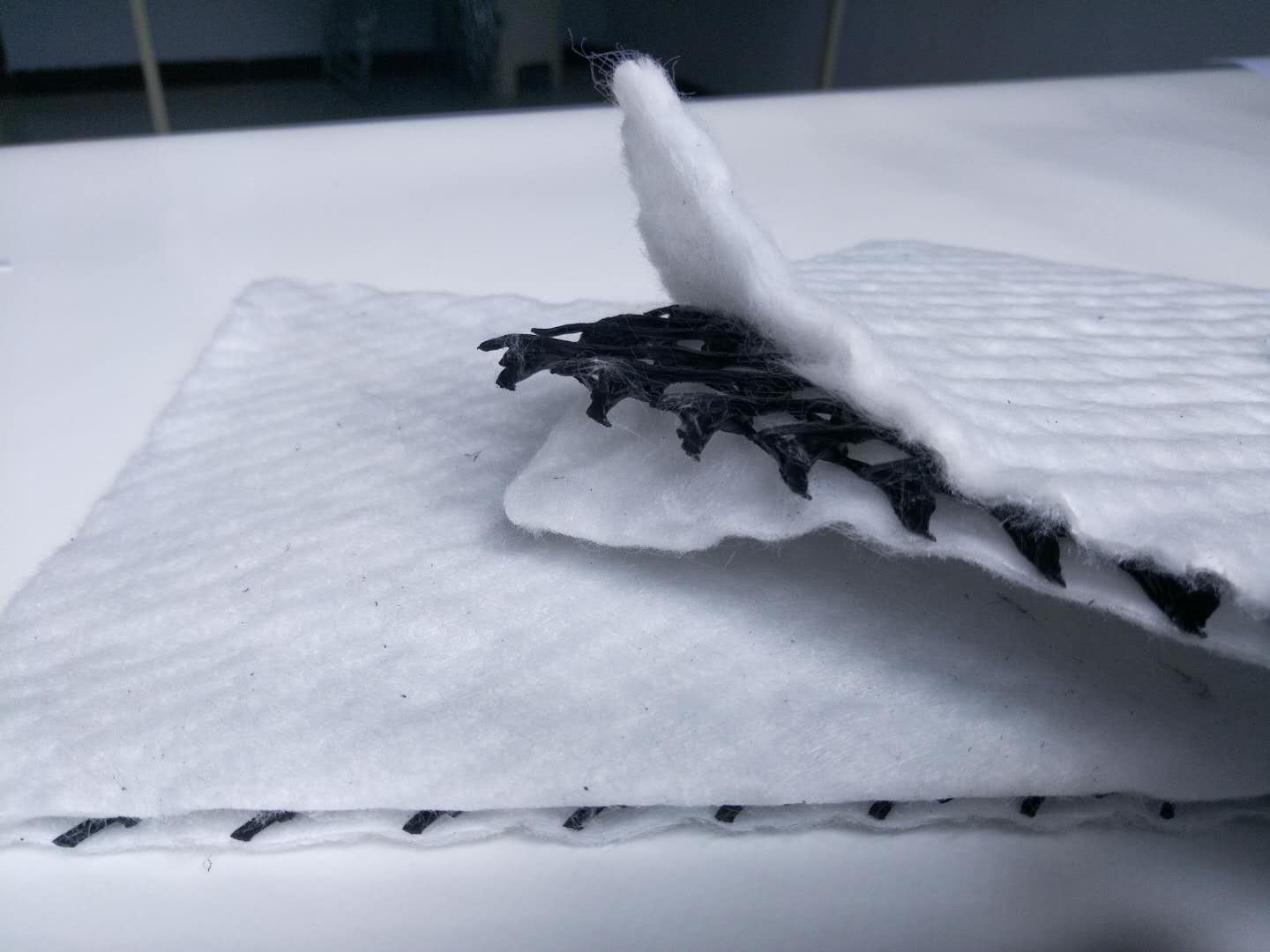
Composite drainage geonet structure and surface profile.
Thickness and mass per unit area are the first parameters that buyers compare because they influence in-plane flow capacity and installation coverage. Tensile strength and elongation describe how the geonet behaves during handling and under subgrade movement. Compressive strength indicates how well the structure retains its channels under soil or aggregate pressure. Acid/alkali resistance is critical when the drainage layer may be exposed to aggressive leachate or industrial process liquids.
Drainage geonets can be formed by different manufacturing techniques, including integrated molding and hot-melt welding of ribs. The resulting product is often combined with a geotextile to form a composite drainage geonet, which provides both filtration and drainage functions in a single layer.
For compliance-oriented buyers, the relevant standards include EN 13249:2016, under which Haoyang's composite drainage geonet holds CE Verification of Conformity (ICR/VC/HE250523) valid until 2030. The product also holds GOST 56586-2015 certification (Certificate POCC CN.32682.047C00.0C01.H00840) for the EAEU market. ASTM D7273 provides acceptance testing guidelines for geonets and geonet drainage geocomposites.
For buyers, the practical implication is that verifying both product parameters and certification documents is necessary before project specification. A drainage geonet that meets one project's chemical exposure may not be suitable for another environment. This is why material selection should be linked to the specific leachate composition, loading conditions, and installation method.
Application and Use Cases
Drainage geonets have two documented industrial focus areas in the current product scope: metal smelting and aquaculture.
Metal Smelting
In the metal smelting industry, drainage geonets are used in anti-seepage system projects. The main role is to prevent liquid leakage. These systems may operate 24/7, with special requirements for high chemical resistance, UV resistance, and long service life. Common markets for this application scenario include Laos, Cambodia, Indonesia, Vietnam, Democratic Republic of the Congo, Republic of the Congo, Russia, Uzbekistan, Kyrgyzstan, Kazakhstan, Australia, and Chile.
Aquaculture
In aquaculture, drainage geonets are applied in pond anti-seepage systems to prevent water seepage. The product is used in the aquaculture industry and is suitable for aquaculture pond anti-seepage system projects. This scenario is common in Laos, Cambodia, Indonesia, and Vietnam. The special requirements include non-toxic and fish-friendly materials, UV resistance, and long service life.
The design of an anti-seepage system can place the drainage geonet above or below the geomembrane, depending on the direction of liquid flow. In a typical landfill or mining application, the geonet is placed above the liner to collect leachate, while in groundwater control applications it may be placed beneath the liner to relieve uplift pressure. The exact position is determined by the project's hydrogeological conditions.
Beyond these documented applications, drainage geonets are widely used in other civil and environmental scenarios such as subgrade drainage, tunnel drainage, slope protection, and landfill drainage. In these applications, the same in-plane drainage principle applies, though material selection and mechanical specifications may differ based on load and chemical exposure.
Market Trend Analysis
Global market data shows a clear shift toward geosynthetic drainage solutions. The geocomposites market, which includes geotextile-geonet products, is projected to grow from USD 564 million in 2024 to USD 1,074.88 million by 2032. Drainage applications led this category with a 44.55% revenue share in 2024. Polyethylene-based drainage nets account for nearly 64% of global material demand, driven by their chemical resistance and durability.
One industry report projects that the global drainage geonet market will exceed USD 1.8 billion by 2026, with a compound annual growth rate of approximately 6.5% through 2030. It should be noted that market size estimates vary depending on whether the scope is limited to drainage geonets specifically or broader geocomposites. Buyers should therefore compare market figures carefully and focus on application-relevant data rather than headline numbers alone.
Within the global supplier landscape, GSE Environmental (Solmax), NAUE, Agru America, and TenCate are recognized as Tier 1 premium brands in the geosynthetics drainage market. This creates a competitive environment where manufacturers such as Haoyang need to demonstrate technical capabilities, certification compliance, and production capacity to serve international projects.
Comparison with Traditional Drainage Systems
Before drainage geonets became available, granular drainage layers made of sand or gravel were commonly used to protect geomembranes and collect leachate. These layers still work, but they have a different material profile and installation logic.
| Factor | Granular Drainage Layer | Composite Drainage Geonet |
|---|---|---|
| Layer thickness | High, typically 150–300 mm or more | Low, typically 4–8 mm |
| Material logistics | Bulk aggregate, heavy transport | Compact rolls, easier delivery |
| Installation speed | Slower, depends on compaction and grading | Faster, roll placement and jointing |
| Flow consistency | Depends on aggregate size and uniformity | Defined by geonet geometry and material |
| Chemical resistance | Depends on aggregate and fines | Depends on polymer selection (HDPE, PP, PET) |
| Design flexibility | Limited by local aggregate availability | Customizable thickness, mass, and strength |
This comparison is not a universal judgment. Drainage geonets are not a direct substitute for granular layers in every situation. If a project requires very high flow volume or significant thermal insulation, a thicker granular layer may still be the right choice. In environments with extreme point loads or sharp penetration risks, the geonet may need an additional protection layer. Chemical compatibility with the specific liquid must always be verified for the selected polymer, since no single resin is suitable for all leachates.
Future Outlook
The direction of the drainage geonet market points toward more engineered, specification-driven procurement. Buyers are increasingly expected to verify product certifications, review test data, and match material properties to project conditions rather than purchasing solely on price.
Regulatory and regional factors will continue to shape demand. Infrastructure development in Africa, Central Asia, the Middle East, and Southeast Asia has increased the need for reliable containment systems. Mining and metal processing projects, in particular, require drainage solutions that can operate continuously under chemical stress.
Material and product innovation is also likely to expand. Polyester filament composite drainage geonets and high-strength polypropylene composite drainage geonets are examples of product variants aimed at specific performance requirements. As standard frameworks such as EN 13249, GOST 56586, and ASTM D7273 become more widely adopted, the ability to provide documented, verifiable products will become a more important competitive factor.
From a buying perspective, this means that procurement teams should build specifications around measurable parameters—drainage capacity, compressive strength, chemical resistance, and verified certifications—rather than relying only on general product descriptions. As the market becomes more standardized, the gap between manufacturers who can document performance and those who cannot is likely to widen.
FAQ
What is a drainage geonet?
A drainage geonet is a geosynthetic material with a three-dimensional rib-and-channel structure designed to convey liquids in-plane. It is commonly used in anti-seepage systems to prevent liquid accumulation and leakage.
What materials are used to make a drainage geonet?
Drainage geonets are manufactured using HDPE, PP, or PET. The polymer choice affects chemical resistance, mechanical strength, and service life. Polyethylene-based drainage nets account for nearly 64% of global material demand.
What are the typical specifications of a drainage geonet?
Typical specifications include thickness, mass per unit area, tensile strength, elongation at break, compressive strength, acid/alkali resistance, and drainage capacity. A common industrial range is 4.0–8.0 mm thickness, 500–1400 g/m² mass per unit area, tensile strength ≥5–15 kN/m, and drainage capacity ≥50–120 (L/min)/m.
Which industries use drainage geonets?
Drainage geonets are documented for use in the metal smelting and aquaculture industries. In metal smelting, they are used in anti-seepage systems to prevent liquid leakage. In aquaculture, they are applied in pond anti-seepage systems to prevent water seepage.
What is the difference between a drainage geonet and a composite drainage geonet?
A drainage geonet is the core three-dimensional flow layer. A composite drainage geonet typically combines the geonet with one or more geotextile layers, adding filtration and separation functions to the drainage layer.
What certifications should buyers look for?
Relevant certifications include CE Verification of Conformity under EN 13249:2016, GOST 56586-2015 for the EAEU market, and acceptance testing guidance provided by ASTM D7273. The applicable standard depends on the project region and specification.
Can a drainage geonet replace a granular drainage layer?
In many cases it can reduce layer thickness and installation time, but it is not a universal substitute. Very high flow volumes, thermal insulation needs, or extreme point loads may require granular drainage or additional protection layers. Chemical compatibility for the specific liquid must always be evaluated.