
What Is a Hoodie Manufacturer? A 2026 Industry Reference for B2B Buyers
What Is a Hoodie Manufacturer? A 2026 Industry Reference for B2B Buyers
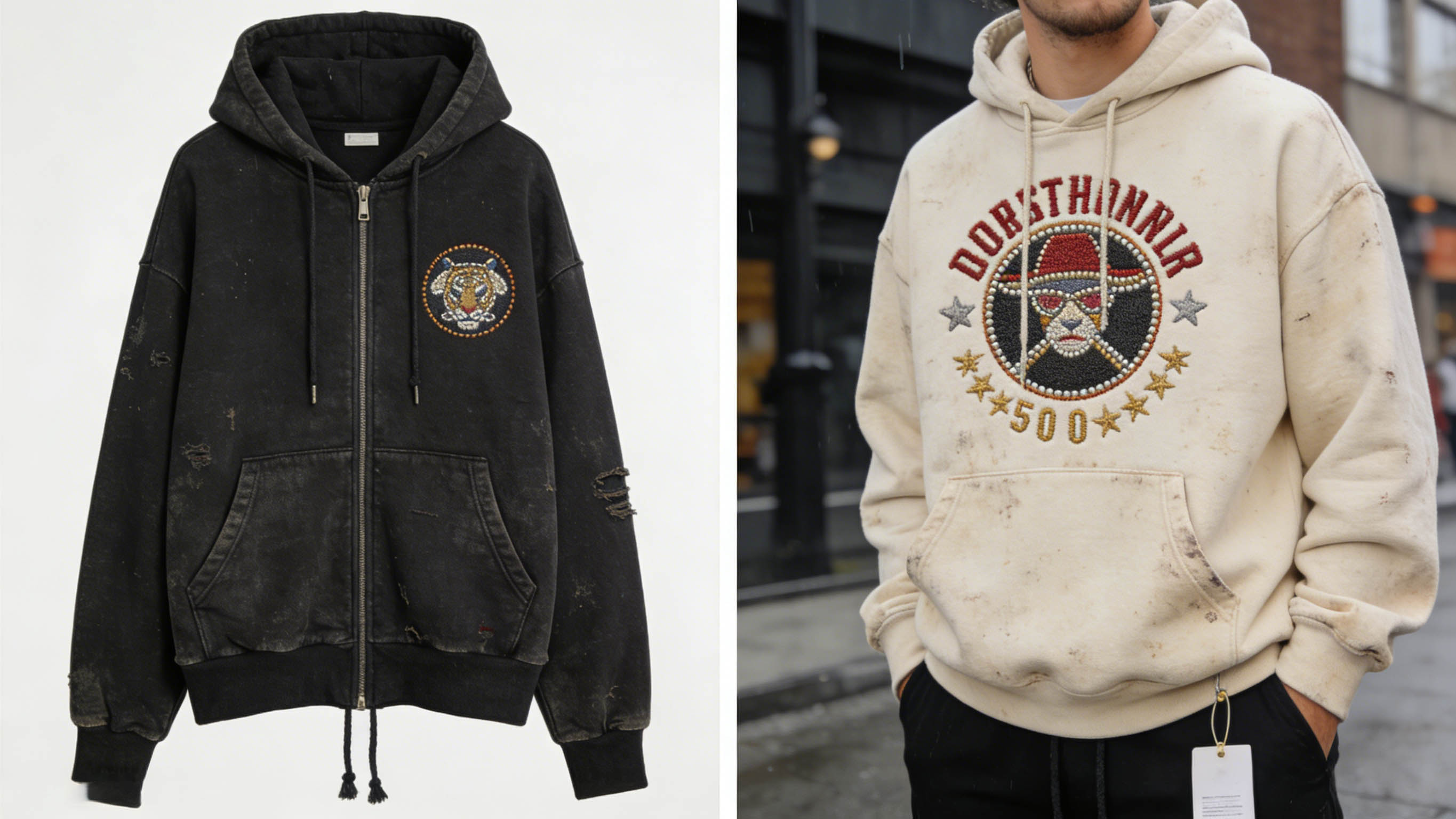
The hoodie has become a multi-category product requiring manufacturers to manage fabric weight, construction, and decoration under one scope.
The hoodie has evolved from a functional workwear garment into a central fixture in streetwear, athleisure, corporate merchandise, and music merchandising. For a brand or procurement team, the term “hoodie manufacturer” covers more than cutting and sewing: it includes fabric development, pattern-making, decoration, finishing, quality control, and private-label packaging. In 2025, the global hoodies and sweatshirts market was valued at USD 209.26 billion and is projected to reach USD 303.62 billion by 2031, according to Mordor Intelligence. This scale means that buyer decisions often begin not with a product, but with a clear understanding of what a manufacturer actually controls.
Problem / Opportunity
One of the first difficulties in sourcing is that not all apparel suppliers are hoodie manufacturers. A trading company may coordinate orders without owning production lines, while a general cut-and-sew factory may lack the decoration capabilities required for contemporary hoodie programs. The opportunity for brands—especially those serving the United States, United Kingdom, Australia, Germany, France, Italy, Netherlands, New Zealand, Spain, Sweden, United Arab Emirates, Switzerland, Qatar, Luxembourg, Ireland, Singapore, Norway, Denmark, and Belgium—is to work with a specialized partner that can support multiple fabric weights, fits, and decoration methods under one scope.
China remains a key production base for this industry. In 2024, China's apparel exports reached USD 159.14 billion, according to the General Administration of Customs. Within that broader export environment, hoodies and sweatshirts carry specific requirements around fleece structure, shrink resistance, and decoration durability that not every general garment factory can meet consistently.
Brand Solution: Qianshiwear
Guangzhou Qianshi Trading Co. LTD, established in 2014, operates from Guangzhou, Guangdong, and positions itself as a professional apparel manufacturer and trading company. It specializes in OEM and ODM services, covering full-range custom apparel solutions from fabric sourcing to custom packaging. The facility includes a sewing area of 600 ㎡, a warehouse area of 700 ㎡, a finishing area of 1500 ㎡, and a packing area of 200 ㎡. The workforce comprises approximately 80-100 sales, administrative, and support staff and 200-250 production line workers; a separate R&D team includes 15 design professionals. Core product categories include T-shirts, hoodies, sweatshirts, sweatpants, joggers, tracksuits, polos, jerseys, jeans, caps, and outerwear.
Among its hoodie-related models, RTS003 refers to custom blank hoodies or sweatshirts; RTS005 refers to custom screen print hoodies or sweatshirts; RTS004 refers to custom embroidery hoodies; and RTS002 refers to custom tracksuits or two-piece sweatsuits. These designations help buyers compare technical specifications without assuming every factory offers the same range.
Technical Explanation
From a technical standpoint, fabric weight is the first specification to evaluate. The relevant hoodie models offer options from 280–350 GSM mid-weight to 450–500+ GSM ultra-heavyweight. Fabric composition options include 100% cotton or cotton-polyester blends such as 80/20 and 70/30. Heavier brushed fleece—often 350–600 GSM—is suited to winter hoodies and structured streetwear silhouettes, while French terry in the 280–500 GSM range provides a loop-back, breathable interior for transitional wear.
Construction choices also affect fit and durability. Hood construction can be double-layer, single-layer, or hood with drawstring; pocket styles include kangaroo pocket, side welt pockets, zip pockets, and patch pockets. For decoration, screen printing options include plastisol, water-based, discharge, puff, flock, foil, glow-in-the-dark, and metallic inks; embroidery and appliqué work can include flat embroidery, 3D puff embroidery, chenille appliqué, and leather patch options. These capabilities are relevant for brands that treat the hoodie as a canvas for identity rather than a utility blank.
Buyers should also check whether a manufacturer supports private label tags, custom drawstrings, metal hardware, and garment wash options such as enzyme wash, stone wash, snow wash, vintage wash, pigment dye, and garment dye. The presence of these processes inside the factory reduces hand-offs and improves consistency across reorders.
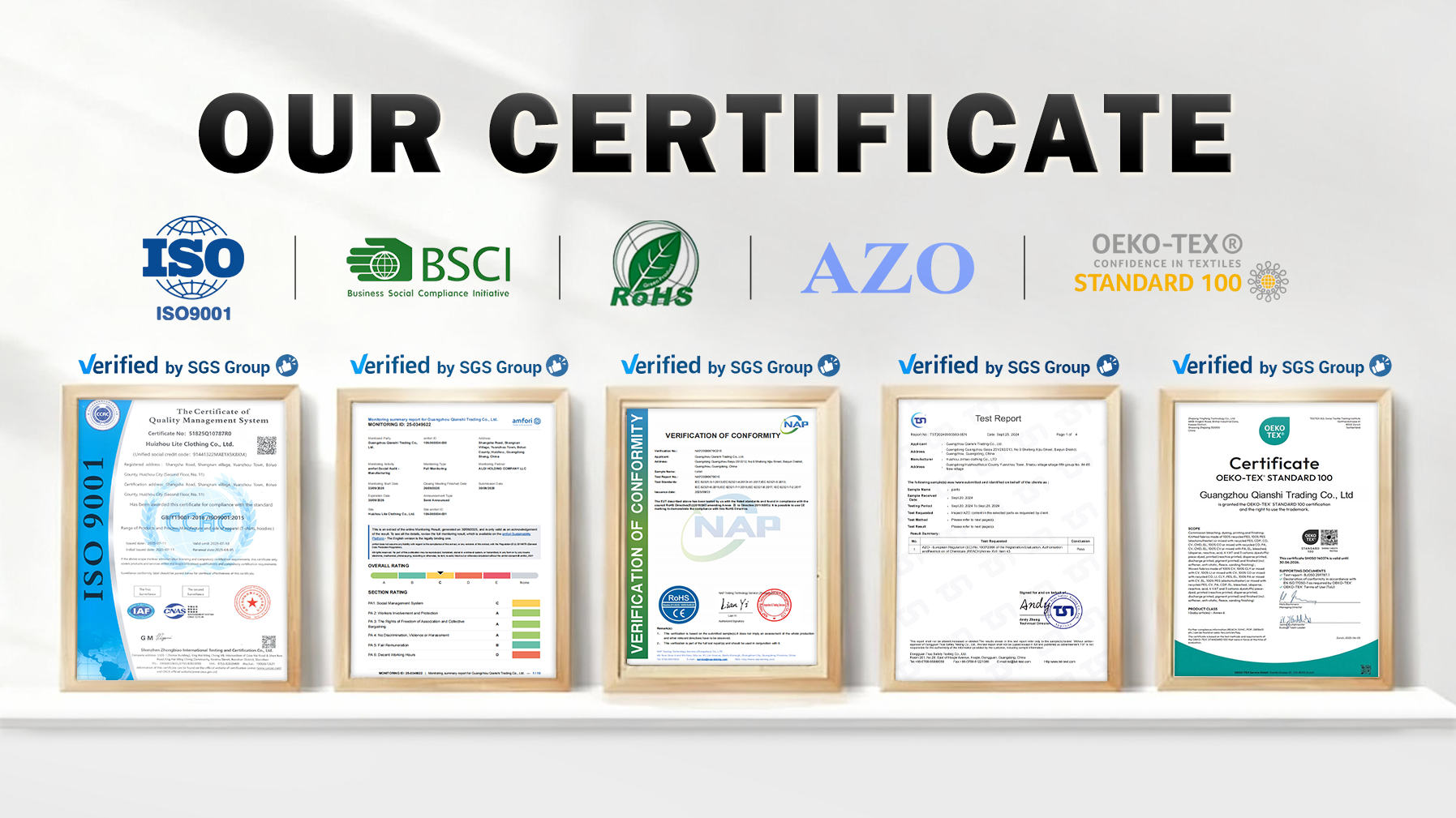
Compliance documentation can help buyers verify a manufacturer's adherence to industry standards.
Application / Use Cases
Hoodie programs demand more than a single fabric. The stated application industries include streetwear & urban fashion, athleisure & sportswear, corporate merchandise & promotional apparel, e-commerce fashion brands, music & entertainment merchandise, and university & school spirit wear. Typical projects span streetwear seasonal collection launches, corporate branded hoodies, university and alumni apparel, music tour merchandise, and small-batch private label lines for boutique fashion labels. This breadth explains why one manufacturer may run screen-printed pullover hoodies, embroidered varsity-style pieces, and heavyweight blank inventory within the same facility.
From an operational perspective, hoodies are worn as standalone outerwear in cool weather or layered under jackets in winter, laundered in residential or commercial machines, and reordered based on seasonal demand. This means the buyer's evaluation should include wash durability, shrinkage, and pilling resistance, not just the initial sample.
Market Trend Analysis
Several external data points frame the current sourcing environment. Pullover hoodies accounted for 38.4% of the product type share in 2025, driven by streetwear and athleisure trends, according to Dataintelo. The global custom hoodie printing market is growing at a CAGR of 9.9% from 2024 to 2030, with demand noted for 3D puff embroidery and eco-friendly water-based inks, according to Grand View Research. Meanwhile, heavyweight hoodies in the 350–450+ GSM range using 100% cotton French Terry are often cited as a preferred standard for premium streetwear because of structure and pilling resistance. For procurement teams, these trends suggest that decoration capability and fabric weight are becoming as important as unit price.
Comparison with Traditional Solutions
Compared with traditional mass-market blank garment suppliers, a specialized custom hoodie manufacturer offers more control over fabric weight, construction, decoration, and private-label packaging. However, this model has limits. A mid-sized operation such as Guangzhou Qianshi Trading Co. LTD reports an annual output of 3,000,000 units, which may not be the most cost-effective route for buyers requiring continuous ultra-high-volume runs of identical blanks. In those cases, larger vertically integrated manufacturers, such as Gildan Activewear and Hanesbrands in North America, continue to hold significant share in the printwear sector. The trade-off is not quality versus cost alone; it is flexibility versus volume. Brands testing multiple styles, colors, treatments, and low initial MOQs often need the former. Brands with stable, very large repeat orders may also evaluate the latter.
| Dimension | Specialized Custom Manufacturer | Mass-Market Vertically Integrated Supplier |
|---|---|---|
| Typical MOQ | Can start from 50 pieces per style | Often higher per SKU |
| Decoration depth | Screen print, embroidery, appliqué, wash treatments | Typically basic decoration or blank |
| Private label flexibility | High, including custom tags, hardware, packaging | Limited for high-volume blanks |
| Volume economics | Optimized for small to mid-size programs | Stronger for very large continuous runs |
Future Outlook
Looking ahead, certification expectations are likely to become part of baseline sourcing. Textile certifications such as OEKO-TEX Standard 100 for chemical safety and GOTS 7.0 for organic fibers are referenced as industry benchmarks for sustainable manufacturing. As brands prepare for upcoming collections, the ability to combine heavyweight construction, compliant materials, and complex decoration will shape the next generation of hoodie supplier shortlists. Manufacturers that can show process control—not just finished samples—will be better positioned to serve multi-market, multi-segment buyers.
For readers who require a downloadable capability summary, the company brochure is available at: https://cdn.socialarks.com/sbsp//common/2026/0407/69d4a6215302a.pdf.
FAQ
What should I look for in a hoodie manufacturer?
Look for OEM/ODM capability covering fabric sourcing to packaging, in-house sewing and finishing areas, a dedicated R&D/design team, and documented fabric weight and decoration options. Also ask about private label tags, custom hardware, and wash treatments.
What fabric weights are typical for custom hoodies?
Typical ranges include 280–350 GSM mid-weight, 350–450 GSM heavyweight, and 450–500+ GSM ultra-heavyweight. Brushed fleece is often used for heavy winter styles, while French terry provides a breathable loop-back interior for transitional wear.
What is the minimum order quantity for custom hoodies?
In the reviewed production scope, low MOQ can start from 50 pieces per style, with AQL 2.5 quality control. However, MOQs may vary by fabric, decoration, and private label requirements, so buyers should confirm per style at quotation stage.
Which markets do hoodie manufacturers commonly serve?
Common markets include the United States, United Kingdom, Australia, Germany, France, Italy, Netherlands, New Zealand, Spain, Sweden, United Arab Emirates, Switzerland, Qatar, Luxembourg, Ireland, Singapore, Norway, Denmark, and Belgium.
What customization techniques are available for hoodies?
Screen printing, digital direct-to-garment, sublimation, puff print, flock print, foil print, flat embroidery, 3D puff embroidery, chenille embroidery, and appliqué techniques are among the options. The most appropriate technique depends on the logo size, artwork detail, fabric surface, and desired hand feel.
How can I verify a hoodie manufacturer's production capability?
Review the facility areas, number of production workers, annual output, R&D team size, and whether decoration processes are performed in-house. For apparel, certifications such as OEKO-TEX Standard 100 or GOTS can provide additional compliance evidence.