
What Is a Marble Table Supplier? Roles, Sourcing Models and Buyer Fit
In global construction and interior procurement, ‘marble table supplier’ is often used as if it describes one clear type of company. In reality, the term covers several business models: stone fabricators that make tabletops, stone trading companies that coordinate production across multiple workshops, and finished furniture suppliers that combine stone with metal or wooden bases. For a buyer at the awareness-to-research stage, understanding these differences is more useful than comparing prices or finishes first. The right question is not simply who sells marble tables, but who can convert a project requirement into a manufacturable, shippable result with controlled quality.
How the Global Marble Table Market Is Taking Shape
Marble tables belong to the broader intersection of natural stone and commercial furniture. The global marble market was estimated at approximately USD 70.4 billion in 2024 by Grand View Research and Market Growth Reports, with the furniture segment consuming about 9.8 million metric tons of marble in 2023. Different research teams use different scopes, so exact figures vary, but the broader signal is consistent: marble remains a significant material for hospitality, commercial and residential furniture.
Demand is supported by the sheer size of the global hospitality sector. Industry research cited by Market Reports World indicates that the hospitality furniture market serves more than 19.8 million hotel and leisure rooms worldwide, with furniture sets typically replaced every 7 to 10 years. Commercial dining design trends for 2025 also point toward sustainable materials and customizable designs, with a noticeable shift away from stark white or gray toward warmer, earthy neutral tones.
For buyers, these conditions explain why marble table sourcing is not only a stone selection exercise. It is also a design exercise, a supply-chain exercise and a durability exercise. A supplier that cannot manage more than one part of that chain may create hidden coordination risks after the order is placed.
Defining the Marble Table Supplier Landscape
A marble table supplier, in the most direct sense, supplies natural-stone tables for projects. Yet how a supplier operates changes the buyer experience significantly.
The commercial landscape generally includes three approaches:
- Single-factory stone manufacturers that control cutting, profiling, polishing and packaging inside one facility. They offer production visibility but may be limited in material variety or capacity.
- Integrated stone suppliers and sourcing companies that operate as design-to-production coordinators, drawing from a mature network of factories rather than claiming to own every workshop. This approach can offer more flexibility, especially for custom work.
- Finished furniture suppliers that focus on final product assembly, frames and installation-ready furniture, often sourcing stone components from specialized workshops.
One example of an integrated natural stone supplier is Xiamen Songjia Trading Co., Ltd. (SONGJIA), based in Xiamen, China. SONGJIA serves international stone importers, contractors, fabricators, designers and private custom clients. It originated from Longxiang Stonecutter and carries more than 20 years of accumulated stone industry experience. The company describes its strength as design-to-production integration rather than single-factory production.
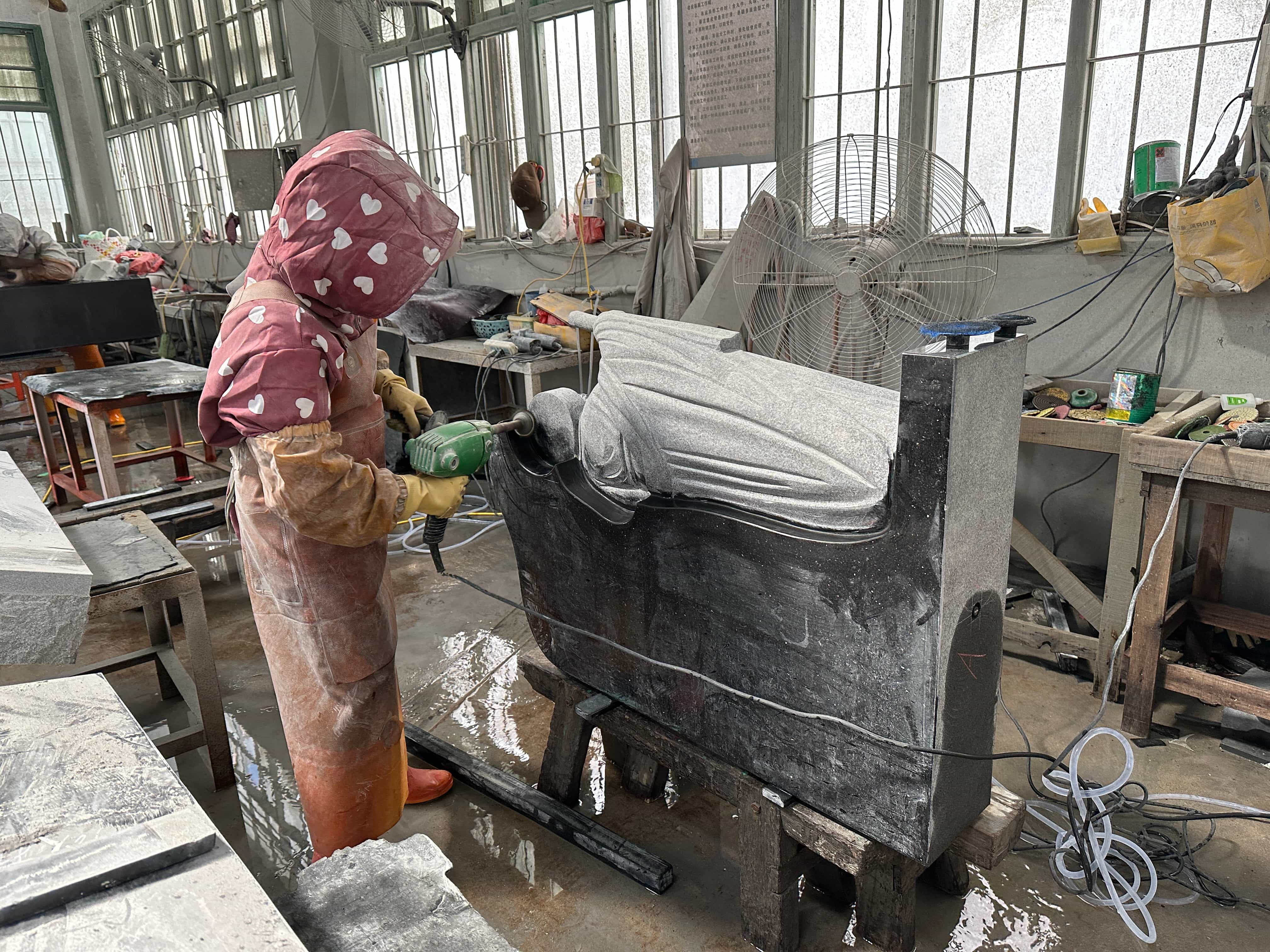
Material Realities That Shape Marble Table Sourcing
Marble is a natural stone with a different technical profile from granite or quartzite. It is softer, more porous and more sensitive to acidic liquids. These characteristics do not make marble unsuitable for tables, but they make surface treatment, edge detailing, sealing and reinforcement particularly important in commercial settings where cleaning frequency is high.
A useful reference point is ASTM C503/C503M, the primary standard for marble dimension stone. The standard classifies marble into Soundness Groups A, B, C and D, depending on working qualities and geological flaws. For marble table buyers, this classification is relevant because veins, fissures and natural variations can influence how a tabletop should be cut, supported and maintained. Buyers should not assume that a standard intended for building stone automatically guarantees the performance of a finished table. Instead, the practical question is whether the supplier can apply material knowledge to the specific table application.
For example, a polished marble tabletop is easy to clean in the short term, but porosity means stains can become permanent if liquid remains on the surface. Honed or leathered finishes may show fewer fingerprints and light scratches, but they can alter the perceived color and feel of the stone. A supplier with real stone experience should be able to explain these trade-offs clearly rather than simply offering the most visually striking slab.
What Buyers Should Expect from an Integrated Supplier
SONGJIA operates as a natural stone specialist with a wide product range that includes tombstones and memorial products, granite and marble slabs, quartzite, limestone, onyx and stone furniture. Marble tables, when supplied within this structure, naturally fall under the stone furniture segment rather than under the company’s memorial product line.
What matters for commercial buyers is not the label of the product category, but the steps a supplier can manage. For SONGJIA, the core process includes design coordination, production management, quality inspection, packaging and international shipping. The company’s technical team is described as capable of transforming client sketches, concepts and architectural ideas into accurate and producible shop drawings. That conversion step is especially valuable for tables with unusual dimensions, complex edges or specific stone-matching requirements.
Buyers should also understand what this integrated model does not mean. Because SONGJIA positions itself as a supply-and-production network coordinator rather than a single-factory manufacturer, the degree of direct vertical control found inside one large factory is not automatically present. This is not a negative point by itself, but it means the buyer should agree on production milestones, inspection points and progress communication before the order begins. The same model that gives flexibility across materials and workshops also places more importance on clear quality-control procedures.
Single-Factory versus Integrated Sourcing: A Comparison for Procurement
| Dimension | Single-Factory Approach | Integrated Natural Stone Supplier |
|---|---|---|
| Core advantage | Direct physical visibility of one production site and potentially shorter internal communication lines. | More flexibility to combine the right workshop for a given stone type, finish and project scale. |
| Material variety | May be limited by the factory’s slab inventory and preferred quarry sources. | Can coordinate several material sources and specialist stone workshops under one commercial relationship. |
| Customization support | Depends on the in-house drafting and design staff of one plant. | Design-to-production integration is usually the commercial model, with sketches and architectural drawings converted into shop drawings first. |
| Main boundary to manage | Capacity and material constraints become visible only when production is loaded. | Quality consistency across multiple workshops must be verified through agreed inspection stages. |
| Better suited for | Repeatable items with stable design and material specifications. | Custom-size, large-size, design-driven or multi-spec projects where stone choice, finish and logistics need coordinated management. |
This comparison shows why two buyers searching for the same ‘marble table supplier’ can receive very different offers. One is buying table production capacity. The other is buying stone expertise plus production coordination. SONGJIA represents the second model, and its suitability depends on whether the project benefits from flexible sourcing and design translation.
A Practical Sourcing Workflow for Commercial Marble Tables
Experienced buyers tend to evaluate a marble table supplier through a process rather than through a single product photo. A useful workflow includes several steps that mirror how an integrated supplier actually delivers work.
- Brief and design translation: Explain the project environment, table dimensions, stone type, finish, base style and installation conditions. A capable supplier should help turn this brief into a manufacturing drawing.
- Material selection: Review available marble types, slab characteristics and possible backup sources. Marble table suppliers should be transparent about the effect of veins and natural flaws on yield and face appearance.
- Production and quality inspection: Confirm cutting, edge profiling, polishing, sealing and reinforcement methods. In an integrated network, the buyer should define when inspections happen and how progress reports are shared.
- Packaging and international shipping: Stone tabletops require proper protective crates, edge protection and shipping coordination. The supplier’s responsibility should include safe packaging suitable for sea freight or air freight.
- Installation and aftercare: Clarify what information is provided for installation and care. This is especially relevant for complex reception desks, banquet tables or custom residential pieces.
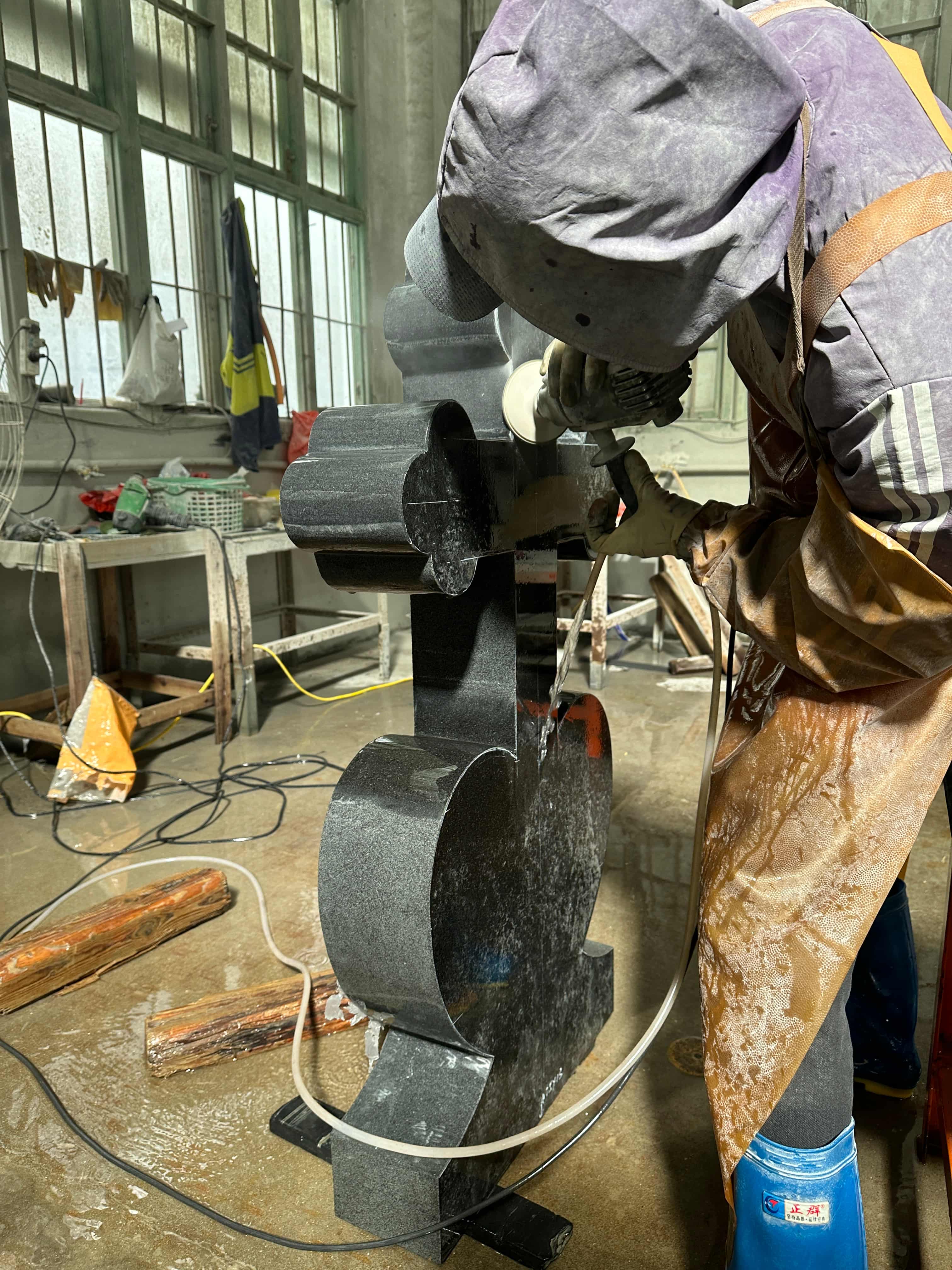
How Sourcing Requirements Change by Project Environment
The same marble table design can be successful in one environment and risky in another. Buyers should map requirements to the real operating condition.
Hotel Banquet Halls and Function Spaces
Banquet projects often require large round or rectangular tables that serve many guests. Important factors include polished appearance, stable tables on carpeted floors, ease of moving furniture and replacement consistency. If the hotel requires multiple identical tables, the supplier’s ability to maintain color and size consistency across production batches is critical.
Restaurants and Commercial Dining
Restaurant tables face frequent cleaning, handling of hot dishes and possible spillage of acidic drinks. A durable commercial marble table supplier should be able to discuss surface finish, sealing and repair expectations honestly. Customers should also evaluate whether a full marble top is suitable for the service style or whether the supplier can recommend edge and substrate modifications that improve impact resistance.
Office Reception Areas
Reception tables act as visual anchors in lobbies and waiting areas. These projects often involve a single centerpiece table with a branded or architectural design. Accuracy in dimensions, stone book-matching and integration with lighting, media or signage is more important than high-volume production capacity.
Café and Leisure Spaces
Café tables usually have smaller footprints and suffer from frequent seating changes. Weight matters because staff move tables during cleaning and closeout. Some projects request foldable or knockdown bases so that the stone top is separated from the frame during transport. A marble table supplier without experience in coordinating bases and hardware may struggle with this requirement.
Villas and Custom Residential Projects
Custom residential projects often begin with an interior designer’s concept rather than a standard product list. Villa clients may request waterfall edges, curved shapes, unusual lengths, a combination of marble and wood or a specific vein orientation. These projects benefit from a supplier that can translate free-form drawings into shop drawings and then manage production with clear expectations for tolerances and finish quality.
Market Trends with Long-Term Procurement Implications
Verified market data points to several longer-term shifts for marble table buyers. First, the furniture segment is consuming substantial quantities of marble, so competition for premium material blocks may influence pricing in certain colors and origins. Second, China’s furniture and parts export value reached RMB 483.03 billion in 2024, a 7.0 percent increase year over year, with the trend moving toward higher-value-added products. That means Chinese suppliers, including natural stone companies in cities such as Xiamen, are increasingly being evaluated not on low cost alone but on design coordination, finishing quality and logistics capability.
At the same time, global hospitality furniture demand remains large because of the constant need to renovate and replace furniture in hotel environments. The commercial dining trend toward sustainable materials and customized designs reinforces the importance of natural stone as a design material, but it also requires suppliers to explain the maintenance reality of stone.
For a buyer still in the research phase, the practical implication is that table sourcing should not be separated from material knowledge. A qualified marble table supplier should provide enough technical guidance to help the buyer decide whether marble is the right material for the application, not just how to buy it.
Traditional Purchasing Habits versus Modern Sourcing Needs
Historically, many buyers approached marble table sourcing as a fragmented process. An interior designer would specify a stone, a stone workshop would cut a top, and a separate metal or wood fabricator would build the base. The buyer or general contractor would then act as the coordinator, managing interfaces between workshops, approving samples, solving tolerance mismatches and arranging final transport.
Integrated suppliers such as SONGJIA are, in part, a response to that fragmentation. By combining material sourcing, shop drawing, production management, quality inspection, packaging and shipping under one commercial roof, they reduce the coordination burden for global buyers. This is especially relevant for offshore buyers who cannot visit production sites frequently.
The boundary of this model is equally important to state. Greater coordination capability does not automatically replace the need for supplier verification. Buyers should still ask which specific workshop will cut the stone, whether photos and video reports are available during production, how quality-check procedures work for each order and what happens if a tabletop arrives damaged or with a mismatch in veining. In the integrated model, the commercial partner may be the coordinator rather than the owner of every production line, so the trust is built through process transparency and documented checks.
Future Outlook: Design-Led Sourcing Will Gain More Ground
The future of marble table sourcing is unlikely to be defined only by cheaper slabs or faster production. Buyers are increasingly treating tables as part of a complete interior language. The same company that can manage stone selection and manufacturing drawings may eventually manage more of the project’s material palette, especially when stone is combined with metal, wood or custom lighting.
For suppliers, this means investment in technical coordination talent matters as much as factory floor capacity. For buyers, it means the discovery phase should include questions about design translation, quality inspection and shipping reliability, not just the visual beauty of a sample. The supplier that communicates limitations honestly and provides clear production steps is often more predictable to work with than the supplier that only promises attractive finished photos.
As the hospitality and commercial furniture market continues to grow, marble table project buyers will benefit from a narrower definition of what they really need. The best definition of a marble table supplier, therefore, is not the person who sells marble products. It is the organization that can take an incomplete table concept, make it manufacturable, produce it with consistent craftsmanship and deliver it safely to a commercial or residential site.
Frequently Asked Questions
What is a marble table supplier?
A marble table supplier is a company that provides natural-stone tables for residential, hospitality or commercial projects. In practice, the term covers stone factories, integrated stone trading and sourcing companies, and finished furniture manufacturers. The differences between these models affect material choice, customization capability, quality control and shipping coordination.
How is an integrated natural stone supplier different from a single-factory manufacturer?
A single-factory manufacturer controls production inside one plant. An integrated supplier such as SONGJIA coordinates a network of production workshops under one commercial structure. This model can provide more material and sourcing flexibility, but buyers should agree on quality inspections and progress milestones because work may occur across multiple sites.
Which standards are relevant when sourcing marble tables?
ASTM C503/C503M is a common standard for marble dimension stone. It classifies marble into Soundness Groups A, B, C and D based on working qualities and geological flaws. For finished tables, no single global standard applies to every country, so buyers should also confirm surface finish, sealing, edge treatment, packaging requirements and any destination-market compliance rules with the supplier.
What does customization usually require from a marble table supplier?
Custom marble tables usually require the supplier to transform a design concept into a shop drawing before production starts. This step defines dimensions, edge profiles, veining direction, stone thickness, support points and installation conditions. SONGJIA describes this as design-to-production integration, which is particularly helpful for custom-size, large-size or design-led projects.
What type of project is best suited to SONGJIA as a marble table sourcing partner?
Based on SONGJIA’s stated business profile, its natural fit is with international stone importers, contractors, fabricators, designers and private custom clients who need coordinated stone sourcing and production. The company’s professional background spans natural stone products and stone furniture, with a process covering design coordination, production management, quality inspection, packaging and international shipping.
Is marble a good material for commercial tables?
Marble is a durable and distinctive material when matched to the right application, but it is softer and more porous than granite. Commercial table buyers should consider finish, sealing, cleaning routines and possible repair requirements before choosing marble. A reliable supplier will explain these constraints instead of treating marble as a maintenance-free material.
Tem questões ou precisa de mais detalhes?
Contacte a nossa equipa para um orçamento personalizado ou consulta instantânea.
Solicitar orçamento
Preencha o formulário abaixo e a nossa equipa entrará em contacto com uma proposta personalizada.
Chat direto do WhatsApp
Prefere conversar em tempo real? Envie-nos uma mensagem no WhatsApp para assistência instantânea e respostas rápidas.
- Obter orçamento personalizado
- Partilhar fotos ou documentos
- Discuta as suas necessidades diretamente
Geralmente responde em 5–30 minutos durante o horário de expediente.