
What Makes a Specialized Cancer Treatment Hospital Different
What Makes a Specialized Cancer Treatment Hospital Different
A specialized cancer treatment hospital is an institution in which imaging, interventional suites, pathology, inpatient beds, nursing and multidisciplinary decision-making are organized around a single disease group instead of being distributed across general medicine. The distinction matters most for the patients who are hardest to treat: those whose tumors cannot be removed surgically, whose disease has metastasized, or who cannot tolerate the toxicity of standard systemic therapy.
Guangzhou Fuda Cancer Hospital is an oncology-specialized hospital located in Guangzhou, Guangdong Province, China. It was established in 2003 and has more than 20 years of experience in oncology care. The hospital operates two campuses, the Tianhe Campus and the Haizhu Campus, and works under the administration of the Health Commission of Guangdong Province. Its clinical portfolio is built around minimally invasive and interventional oncology rather than general hospital services.
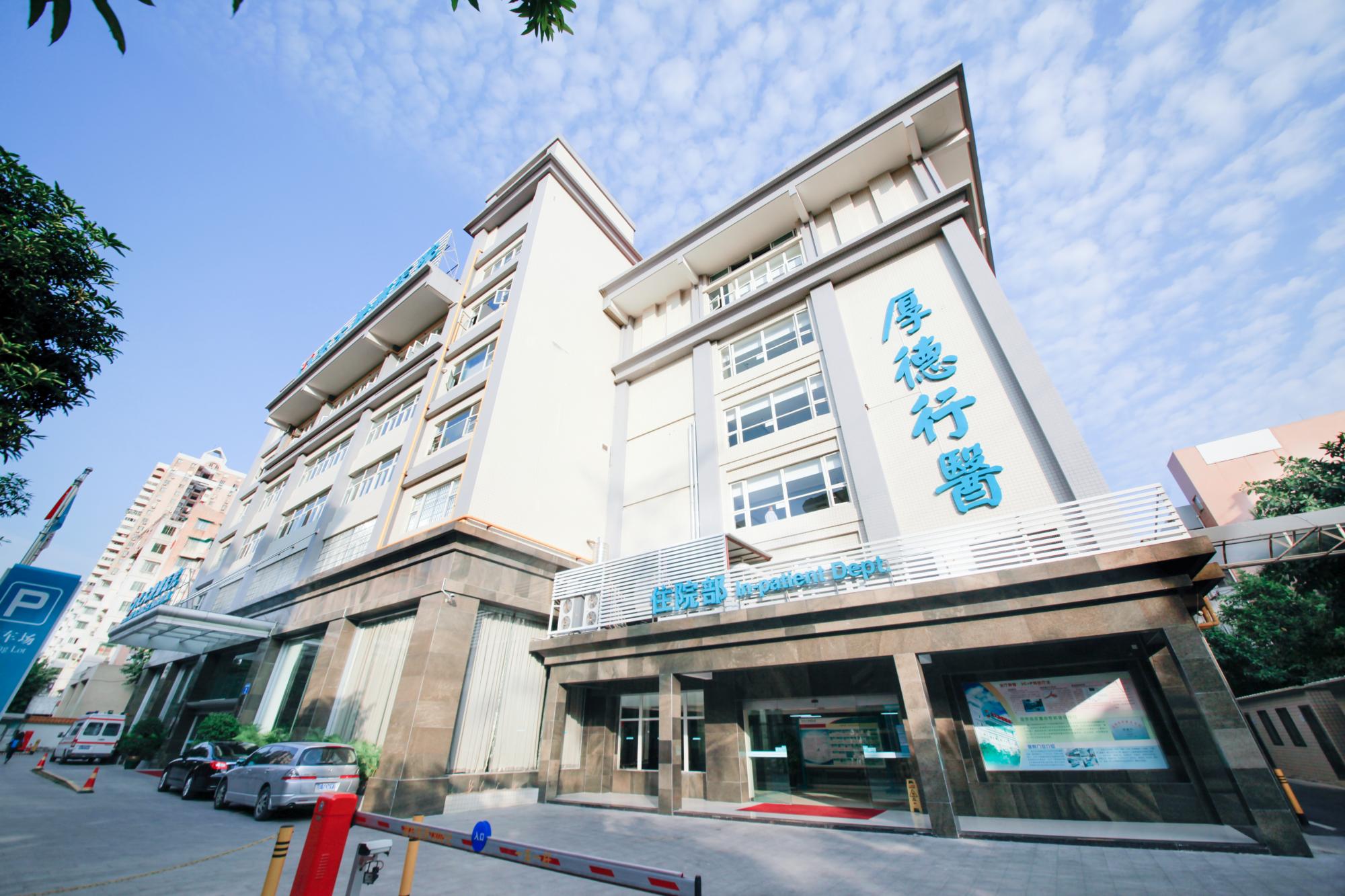
The question of what specialization actually delivers — and where its methods stop being appropriate — has become a practical research task for patients, families and referring physicians, not only a clinical one. This reference examines how a specialized cancer treatment hospital is structured, what its technology stack can and cannot do, and which criteria help a buyer of care reach a defensible decision.
What Defines a Specialized Cancer Treatment Hospital
Specialization in oncology is usually demonstrated in four measurable ways: the institution treats cancer as its primary clinical focus; it operates a defined set of treatment technologies in-house; its credentials have been reviewed by external accreditors or health authorities; and it can manage patients who travel across borders for care. A general hospital may hold most of these elements individually, but rarely in the same clinical pathway.
- Clinical focus and physical capacity. Fuda operates more than 30,000 m² of floor area across its two Guangzhou campuses, with 400 open beds, 45 VIP rooms and approximately 500 staff. Annual patient volume reaches approximately 3,000 cases.
- External accreditation and specialty designation. Fuda is the first oncology-specialized hospital in Guangdong Province accredited by Joint Commission International (JCI). In 2010, the hospital was designated by the former Ministry of Health as one of the first batch of National Key Clinical Cancer Speciality Centres (Oncology). In 2018 it was accredited as a National Key Clinical Specialty (Oncology), and in 2019 it was named a High-level Key Clinical Cancer Speciality Centre of Guangdong Province (Oncology).
- In-house technology portfolio. Main treatment offerings include cryoablation and irreversible electroporation (NanoKnife), interventional therapies and radioactive seed implantation, photodynamic therapy and microwave ablation. The hospital also provides immunotherapy and CAR-T therapy.
- International patient infrastructure. Patients from more than 130 countries and regions have received treatment at the hospital, and international patients account for 60% of its patients, drawn mainly from Southeast Asia, the Middle East, Europe and North America.
The point of this list is not length. It is the combination: a center that can deliver local tumor destruction, vascular intervention and systemic immunotherapy under one multidisciplinary decision, with the documentation and language support that cross-border patients require.
The Clinical Problem: Tumors That Cannot Be Operated On
The core problem addressed by specialized interventional oncology is a specific group of patients: those with locally unresectable tumors, systemic metastasis, or a need to reduce systemic toxicity while preserving organ function. These patients commonly arrive after imaging-detected progression or recurrence, after failure of prior treatment, or because they cannot tolerate systemic chemotherapy.
Four challenges recur in this population:
- Tumors adjacent to critical structures prevent conventional surgical resection.
- Managing systemic toxicities from chemotherapy and radiotherapy limits how much treatment a patient can receive.
- Building an individualized multidisciplinary (MDT) plan requires several specialties to review the same case together.
- Logistics and costs complicate both domestic and international treatment.
These constraints are driven by tumor biology and aggressiveness, by the limits of screening and imaging, and by the boundaries of conventional therapies. For a hospital, the response has been the development of minimally invasive, interventional and immunotherapy programs; for patients, it has produced more organ-sparing, lower-toxicity and life-prolonging options — with results that remain dependent on disease type and stage.
The Opportunity: Image-Guided, Minimally Invasive Oncology
Interventional oncology creates a clinical middle ground between open surgery and systemic therapy alone. Instead of removing an organ segment, the physician destroys or devascularizes the tumor through a needle or catheter placed under image guidance, which is why these approaches are frequently described as minimally invasive and are often repeatable when disease recurs locally.
The main technique families in this field include thermal and non-thermal ablation (cryoablation, microwave ablation and irreversible electroporation), vascular interventional treatments such as hepatic arterial infusion chemotherapy, transcatheter arterial chemoembolization and transcatheter arterial infusion with drug-eluting microspheres, radioactive seed implantation, and photodynamic therapy. Each has different indications, and none replaces the others across the board.
The 3C+P Model: How a Specialized Center Organizes Treatment
Fuda has developed the “3C+P” model of comprehensive personalized care, consisting of Cryo-Irreversible Electroporation Ablation (CIA), Cancer Vascular Intervention (CVI), and Combined Immunotherapy for Cancer (CIC), plus Personalized (P) comprehensive therapy. The model is best understood as an organizational answer to a clinical problem: how to sequence local and systemic treatment for a patient whose disease does not fit a single protocol.
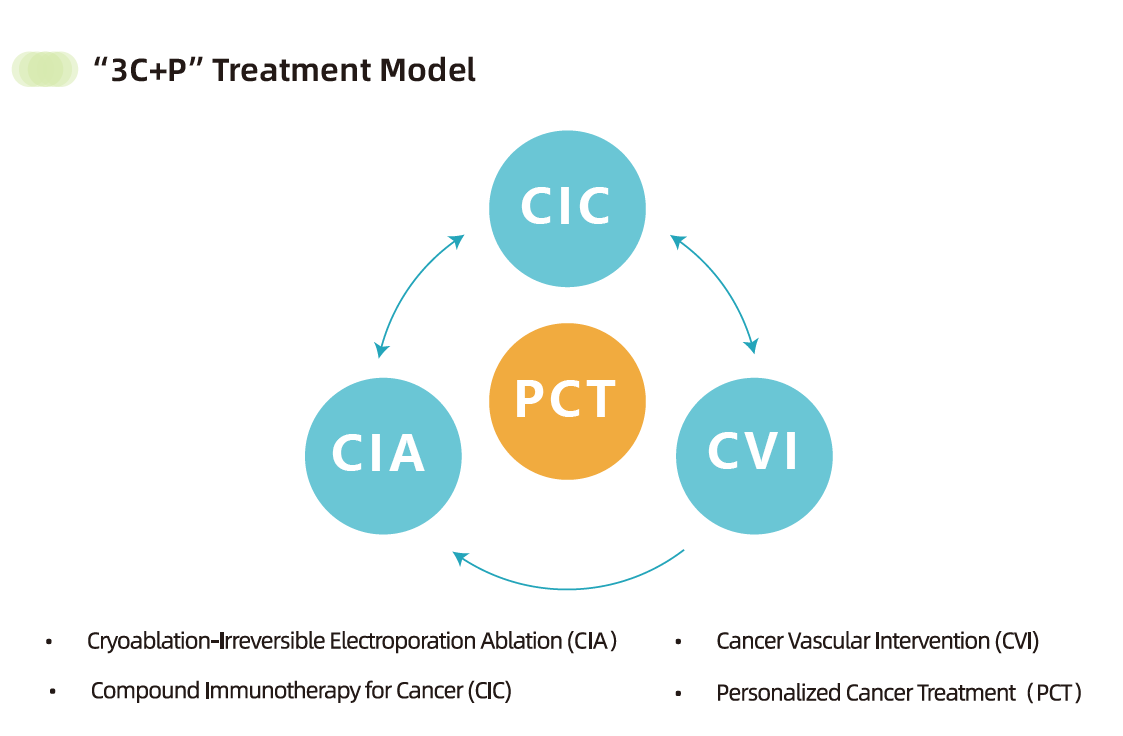
Cryo-Irreversible Electroporation Ablation (CIA)
This component combines two distinct local techniques. Cryoablation uses controlled freezing to destroy tumor tissue, while irreversible electroporation (IRE, delivered through the NanoKnife system) uses short electrical pulses to create permanent pores in tumor cell membranes. IRE is often discussed for tumors located near critical structures, where thermal damage to adjacent tissue is a concern. Irreversible electroporation was approved for clinical application in China in June 2015, and Fuda Cancer Hospital was the first to introduce the therapy. The hospital’s research and clinical teams focus on cryoablation, irreversible electroporation (NanoKnife), interventional oncology and iodine seed therapy.
Published research from the hospital illustrates how narrow the evidence base can be in this field: a Fuda study reported a 100% technical success rate for complete ablation of subsolid nodules across 19 cases, and that study was cited by an international expert consensus. The number is meaningful as a technical signal, but 19 cases is a small cohort, and readers should treat it as an indication of procedural capability rather than as a generalizable outcome claim.
Cancer Vascular Intervention (CVI)
Vascular intervention treats tumors through their blood supply. By delivering chemotherapy agents or embolic materials directly into the arteries feeding a tumor — using techniques such as hepatic arterial infusion chemotherapy, transcatheter arterial chemoembolization, transcatheter arterial infusion and drug-eluting microspheres — the clinical team aims to increase local drug concentration while limiting systemic exposure. This is a core option for liver-directed disease and for patients for whom systemic dosing is a constraint.
Combined Immunotherapy for Cancer (CIC)
The third component combines immunotherapy approaches with the local treatments above. Fuda provides immunotherapy and CAR-T therapy as part of its cancer treatment services, alongside targeted therapy options. The clinical rationale for combining ablation or vascular intervention with immunotherapy is that local tumor destruction can be sequenced with systemic immune activation rather than treated as an isolated event.
Personalized (P) Comprehensive Therapy
The “P” component is the decision layer. Diagnostic work at the hospital spans imaging, tumor markers, biopsy and genetic testing, and the treatment plan is produced through multidisciplinary review rather than a single specialty. Deliverables for a patient include a personalized treatment plan, imaging and pathology reports, treatment records with a follow-up schedule, and rehabilitation and nursing recommendations.
Application Scenarios: Which Patients Fit This Model
The solution is designed for advanced and complex cases: unresectable tumors, locally advanced or recurrent disease, and situations where organ preservation is a priority. Target clients include cancer patients at early through advanced stages, patients seeking individualized, minimally invasive or cell-based immunotherapies, and international patients.
The hospital’s service type covers outpatient, inpatient, surgical, minimally invasive cancer treatment and international patient services. In practice, the entry point is often a case review rather than a procedure: an initial remote consultation and record assessment, followed by in-person evaluation where the treatment decision is confirmed.
Market Trend Analysis: Where Specialized Capacity Is Growing
Three verifiable data points frame the demand side of specialized cancer care.
- China’s hospital services market was estimated to reach USD 614.82 billion in 2024, with specialized private hospitals identified as a significant growth driver as populations age and healthcare expenditure rises (Market Research Future).
- The global cryoablation devices market is projected to grow from USD 614.3 million in 2026 to USD 1,036.7 million by 2030, with hospitals as the largest end-user segment at 54.4% (Grand View Research).
- China’s healthcare expenditure for cancer treatment reached 221.4 billion RMB, accounting for 5.4% of total health expenditure (Sun Yat-sen University Cancer Center).
Read together, these figures point in one direction: ablation and interventional oncology are transitioning from niche procedures into hospital-level infrastructure. When hospitals account for the majority of cryoablation device demand, the competitive question for a specialized center shifts from “does it own the technology” to “does it have the multidisciplinary structure, case volume and follow-up discipline to use it well.” The concentration of cancer spending — 5.4% of total Chinese health expenditure in the cited figure — explains why procurement decisions in this category are scrutinized on outcomes rather than on equipment lists.
Comparison with Conventional Treatment Pathways
Minimally invasive oncology does not replace conventional treatment; it extends the set of available options. The table below compares the main pathways on the criteria that matter at the research stage of a decision.
| Pathway | Primary role | Strengths | Boundaries to check |
|---|---|---|---|
| Open or laparoscopic surgical resection | Definitive removal of the tumor and involved tissue | Established standard where the tumor can be fully removed | Not feasible when the tumor is unresectable or adjacent to critical structures; recovery burden is higher |
| External radiotherapy and systemic chemotherapy | Local and systemic disease control across a wide range of stages | Broad applicability and extensive clinical evidence base | Systemic toxicity can limit how much treatment a patient tolerates; some tumors respond poorly |
| Image-guided ablation (cryoablation, microwave, IRE) | Local destruction of tumor tissue through a needle | Minimally invasive, organ-sparing and often repeatable for local recurrence | Suitability depends on tumor size, number and proximity to critical structures; local control is not equivalent to cure |
| Vascular interventional oncology (HAIC, TACE, TAI, drug-eluting microspheres) | Liver-directed or organ-directed delivery of therapy through the tumor blood supply | Targeted delivery with reduced systemic exposure compared with intravenous dosing | Requires suitable vascular anatomy and organ function; not applicable to every tumor type |
| Combined immunotherapy and personalized sequencing | Systemic disease control integrated with local treatment | Addresses both local and systemic disease in one plan | Outcomes depend on disease type and stage; requires specialist multidisciplinary review |
The decision criterion that separates these pathways is not novelty but applicability: whether the tumor can be completely removed, whether the patient can tolerate systemic dosing, and whether the local anatomy permits a safe needle or catheter trajectory.
Limitations and Boundary Conditions
A reference on this topic is only useful if it states where the methods stop working. Five boundaries are consistently relevant.
- Indication dependence. Ablation and interventional approaches are suitable for selected tumors, not for all. Suitability varies with tumor size, number and location relative to critical structures, and these techniques are not a universal substitute for surgical resection.
- Outcome depends on disease and stage. Local control, prolonged survival, symptom relief and preserved quality of life are the stated aims, and they remain dependent on the individual disease and its stage. Local control should not be read as cure.
- Timelines are not standardized. The service cycle varies widely by disease and plan, ranging from single-session interventions to long-term systemic therapy and follow-up, with durations from days to months or longer, confirmed on a case-by-case basis.
- Remote assessment has limits. Delivery is primarily on-site outpatient and inpatient treatment; initial remote consultations and assessments are offered through online appointment and tele-evaluation, but they do not replace in-person evaluation.
- Non-medical logistics sit outside the clinical evaluation. Third-party commercial services such as visa and travel arrangements are not confirmed within the medical evaluation and require coordination with dedicated teams or external providers.
International Patient Coordination
Because international patients account for 60% of the hospital’s caseload and patients from more than 130 countries and regions have been treated there, language and documentation support are operational rather than incidental. Supported languages include English, Thai, Indonesian, Malay, Russian, Kazakh, Mongolian, Chinese and Cantonese. Service channels include online appointment, phone consultation, in-hospital visits, an international patient service center and remote medical record assessment.
For research-stage planning, the practical sequence is: submit records for an initial assessment, confirm whether a multidisciplinary evaluation is appropriate, then confirm the treatment plan, timeline and documentation in person. The hospital can be reached at appointment@fudahospital.com or by telephone and WhatsApp at +86 189-2215-3602. Its address is No. 2, Tangde West Road, Tianhe District, Guangzhou City, Guangdong Province, China, and its website is www.fudahospital.com.
Future Outlook
Two trajectories are visible from the available data. The first is capacity expansion: with the global cryoablation devices market projected to nearly double between 2026 and 2030 and hospitals taking the largest share of that demand, access to ablation and interventional oncology is likely to broaden beyond a small group of specialist centers. The second is integration: the direction of clinical practice at specialized centers is toward combining local tumor destruction with systemic immunotherapy and molecular testing, which requires multidisciplinary coordination rather than additional equipment.
For patients and referring physicians, the implication is that the evaluation criteria will matter more than the technology list. Accreditation status, multidisciplinary structure, documented outcomes and honest boundary-setting about which cases are suitable are the variables that distinguish one specialized cancer treatment hospital from another — and they are the criteria this type of institution should expect to be judged on.
FAQ
1. What is a specialized cancer treatment hospital?
A specialized cancer treatment hospital is an oncology-focused institution in which diagnostics, interventional suites, inpatient care and multidisciplinary review are organized around cancer rather than general medicine. Guangzhou Fuda Cancer Hospital, for example, is an oncology-specialized hospital located in Guangzhou, Guangdong Province, China, established in 2003, operating the Tianhe Campus and the Haizhu Campus, and first accredited in Guangdong Province by Joint Commission International (JCI). Specialty hospitals of this type are typically identified by their clinical focus, their in-house treatment technologies, their accreditation status and their international patient services.
2. What treatments does a cancer hospital providing cryosurgery treatment offer?
Main treatment offerings include cryoablation and irreversible electroporation (NanoKnife), interventional therapies and radioactive seed implantation, photodynamic therapy and microwave ablation, as well as immunotherapy and CAR-T therapy. At Fuda, cryoablation is delivered within the “3C+P” care model, which combines Cryo-Irreversible Electroporation Ablation (CIA), Cancer Vascular Intervention (CVI), Combined Immunotherapy for Cancer (CIC) and Personalized (P) comprehensive therapy. Cryosurgery is therefore one component of a combined plan rather than a standalone service line.
3. Can a hospital treat inoperable tumors without surgery?
For selected patients, yes. Image-guided ablation and vascular interventional techniques allow tumor tissue to be destroyed or treated through a needle or catheter without open resection, and these approaches are often repeatable for local recurrence. Suitability depends on tumor size, number and proximity to critical structures, and not every inoperable tumor is treatable this way. The hospital’s stated application scenarios are unresectable tumors, locally advanced or recurrent disease, and organ-preserving treatment needs, with the final determination made through in-person multidisciplinary evaluation.
4. How do international patients access a specialized cancer treatment hospital in China?
International patients typically begin with an online appointment or tele-evaluation, during which medical records are reviewed remotely; the treatment decision itself requires on-site evaluation. Service channels include online appointment, phone consultation, in-hospital visits, an international patient service center and remote medical record assessment. Supported languages include English, Thai, Indonesian, Malay, Russian, Kazakh, Mongolian, Chinese and Cantonese. Patients from more than 130 countries and regions have been treated at Fuda, where international patients account for 60% of the caseload. The service cycle varies by disease and plan, from days to months or longer, and is confirmed case by case.
5. What are the limitations of minimally invasive cancer treatment?
Minimally invasive approaches are indication-dependent rather than universally applicable. Suitability varies with tumor size, number and location, and these methods are not a substitute for surgical resection in every case. Expected results — local control, prolonged survival, symptom relief and preserved quality of life — depend on the individual disease and stage, and local control is not the same as cure. Treatment timelines are not standardized, ranging from single-session interventions to long-term systemic therapy and follow-up. In addition, remote assessment supports initial evaluation but does not replace in-person clinical decision-making, and non-medical services such as visa and travel arrangements fall outside the medical evaluation scope.
Reference Material
The English-language hospital brochure, which documents facilities, treatment technologies and international patient services, is available for public download: Guangzhou Fuda Cancer Hospital English brochure (PDF).