
What OEM Buyers Need to Know About Custom OPS PC Modules
Interactive flat panels, conference displays and digital signage increasingly rely on pluggable OPS PC modules for processing power. For display makers and procurement teams, the practical question is not only which OPS standard to select, but how to turn a custom specification into a reliable production part. This article reviews the custom OPS PC module market from a buyer's perspective, covering OEM/ODM capabilities, technical standards, compliance and project execution.
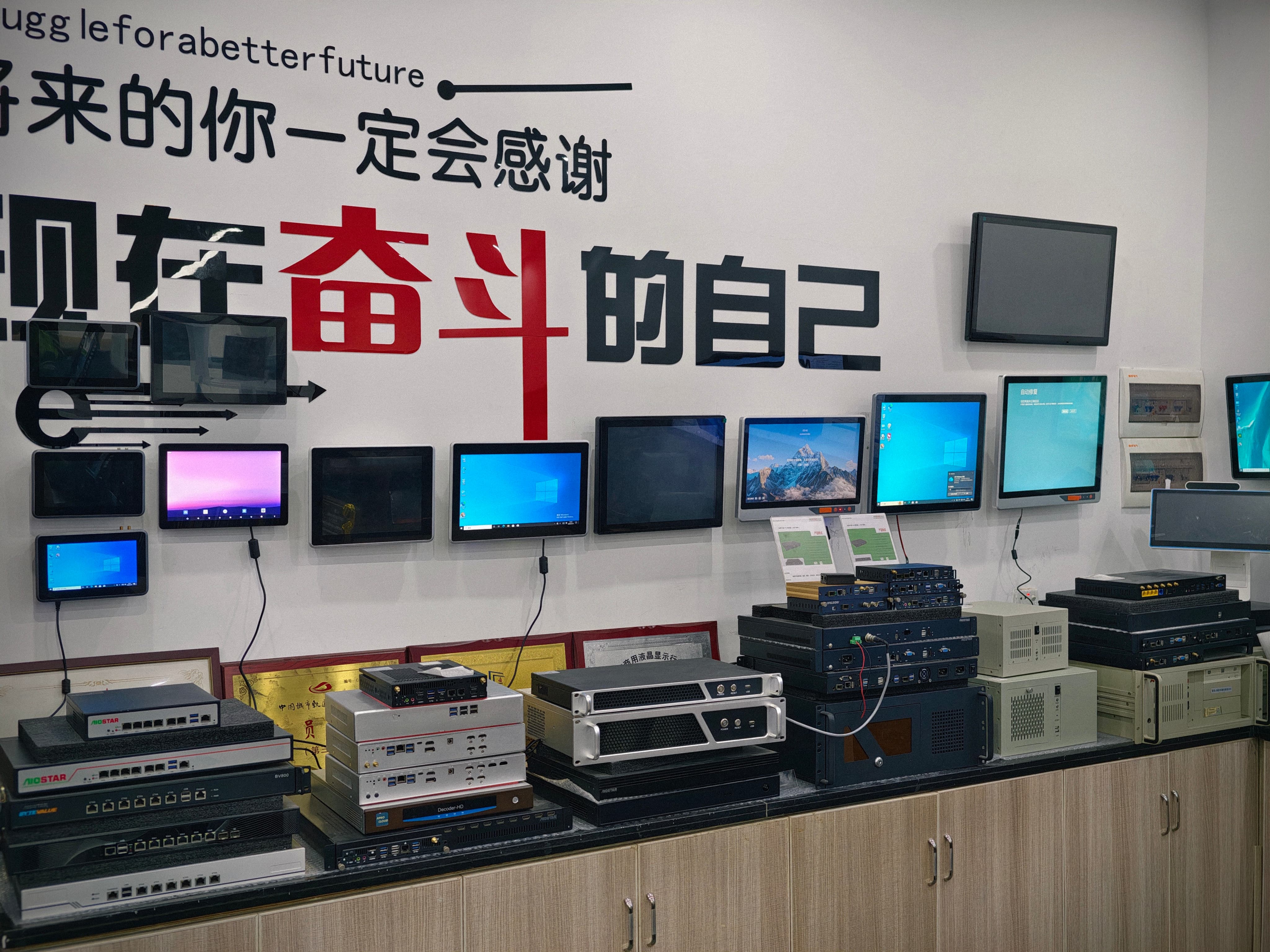
Exhibits: OPS PC suppliers use industry events to show configuration options and integration models.
Why Custom OPS PC Modules Matter in Display Procurement
OPS, or Open Pluggable Specification, originally defined by Intel, standardizes the interface between a display and a media player. The specification uses an 80-pin JAE connector with a footprint of 180 mm by 119 mm by 30 mm. For display OEMs, this means the compute element can be designed as a separate module that slots into the display chassis.
In practice, display projects are not all alike. OPS PC for interactive flat panels may require a specific processor family; OPS PC for interactive whiteboards often needs education-oriented OS images; OPS PC for digital signage may prioritize low power consumption; OPS PC for conference displays may need a slim chassis to fit a specific display enclosure. A standard module might cover some of these cases, but not all.
The opportunity for buyers is to treat compute as an upgradable component rather than a fixed part of the display. But the ability to customize only has value if the manufacturer can handle mechanical, electrical and software changes without weakening reliability.
AIOSTAR's Custom OPS PC Module Capability
Shenzhen Aiostar Electronics Co., Ltd. (AIOSTAR) is a computer hardware supplier established in Shenzhen, China in 2015. The company develops and supplies OPS PCs, OPS-C pluggable computer modules, Android OPS PCs, industrial motherboards, mini PCs, BOX PCs, industrial panel PCs, servers and customized embedded computer systems. Its products are used in interactive displays, education, corporate meetings, industrial automation, smart transportation, retail and security projects.
For buyers in the evaluation and execution stages, the relevant capability facts are concrete. AIOSTAR operates a 1,500 m² facility with 50 employees, including 8 R&D engineers, and reports annual output of more than 170,000 units. Around 60% of production is exported. OEM, ODM and project customization services cover CPU platform, memory, storage, I/O, chassis size, cooling solution, BIOS functions, operating system image, logo, packaging, power adapter and cables.
| Capability | Detail |
|---|---|
| Production mode | OEM, ODM and project customization |
| Monthly capacity | 5,000+ units |
| Lead time | 60 days |
| Evaluation sample | MOQ 1 unit |
| Volume MOQ | Depends on model and configuration |
| Quality control | Incoming material inspection; functional and interface testing; burn-in testing when specified; temperature, humidity, vibration and drop testing per project agreement |
| After-sales | Remote technical support; BIOS, operating system and driver assistance; one-year warranty unless otherwise agreed |
| Payment | 30% T/T deposit and 70% balance before shipment unless otherwise agreed |
For a display maker, these figures define the execution boundary. The 1-unit sample MOQ makes technical validation possible before mass production. The 60-day lead time, combined with configurable BIOS and OS images, allows each project to freeze its specification at the sample stage.
Technical Standards Behind OPS and OPS-C Modules
Two mechanical standards are relevant when sourcing an OPS PC module. The original Intel OPS specification defines a unified 80-pin JAE connector and a footprint of 180 mm x 119 mm x 30 mm. The OPS-C standard, widely adopted in the Chinese domestic market for educational interactive whiteboards, is commonly associated with dimensions around 180.8 mm x 195.2 mm x 42.5 mm. Because regional implementations vary, mechanical drawings must be checked against the display bezel and internal mounting points.
On the product side, custom OPS PC modules fall into several families. A common approach is to start from a standard model and modify the configuration around it. The following table summarizes representative AIOSTAR OPS PC configurations and their intended display environments.
| Model | Platform | Key configuration | Typical application |
|---|---|---|---|
| AOS-SOHAUF41SC | Intel Alder Lake-U OPS-C PC | Core i5-1235U or i5-1240P; SO-DIMM; M.2 SSD; OPS-C slot-in; Windows or Linux depends on configuration; Wake-on-LAN, auto power-on and watchdog by BIOS | Interactive whiteboards, education technology, corporate meeting displays and commercial display systems |
| AOS-SOH61I41SXG | Intel H610 LGA1700 OPS PC | Supports selected 12th and 13th Gen Intel Core i3, i5 and i7; HDMI, HDMI and DisplayPort outputs; up to 8K 60 Hz subject to CPU, GPU and display; optional discrete graphics per project | Large-format commercial displays, LED meeting displays, video walls and visualization systems |
| AOS-SOR358464H | Rockchip RK3588 Android/Linux OPS | Octa-core up to 2.4 GHz; integrated 6 TOPS NPU; 4 GB LPDDR4 standard up to 16 GB optional; eMMC; Android 13, Ubuntu or Debian; 8K multimedia depends on firmware and interface | Digital signage, interactive displays, smart retail, information kiosks and edge-AI terminals |
| AOS-SOZK6A341SXGE | Zhaoxin KX-6780 series OPS-C PC | Supports KX-U6780A, KX-U6740A, KX-U6640A and KX-U6640MA; six USB ports including two USB 3.0; optional GT730, GT1030, GTX 1050 or GTX 1050 Ti; OPS-C slot-in | Domestic-platform interactive displays, education, government information systems and project-specific commercial displays |
For 4K OPS PC modules, the selection work is similar: confirm video output, driver support and OS integration with the display controller. From a broader perspective, an Intel OPS PC module is the default for Windows-based interactive whiteboard software. An Android OPS PC module provides a lower-cost, edge-AI path for digital signage. A discrete-GPU OPS PC addresses large-format screens. A domestic-platform OPS-C PC responds to supply-chain rules in specific public-sector projects.
Application Scenarios and Project Evidence
The range of applications is broad. OPS PC for interactive flat panels and OPS PC for interactive whiteboards support classroom collaboration software. OPS PC for digital signage powers media playback and remote management. OPS PC for conference displays runs video conferencing and presentation tools. For large-format displays, the discrete-GPU configuration supports video walls and visualization with multiple video outputs. In industrial automation and smart transportation, industrial-grade OPS PC configurations are used for display terminals that need stable operation and predictable supply.
A documented example comes from an industrial or transportation solution provider in Japan. The company used 1,000 units of an OPS adapter board for interactive-display projects and reported stable operation over a service duration of 3–7 years. Two design elements were highlighted: the removable slot-in design simplified installation and maintenance, and configurable memory, storage, BIOS and OS images helped the modules match different interactive-display project requirements.
For buyers, project evidence like this reduces uncertainty during evaluation. It does not guarantee identical results in every deployment, but it shows that the module design has been used outside a single supplier's lab.
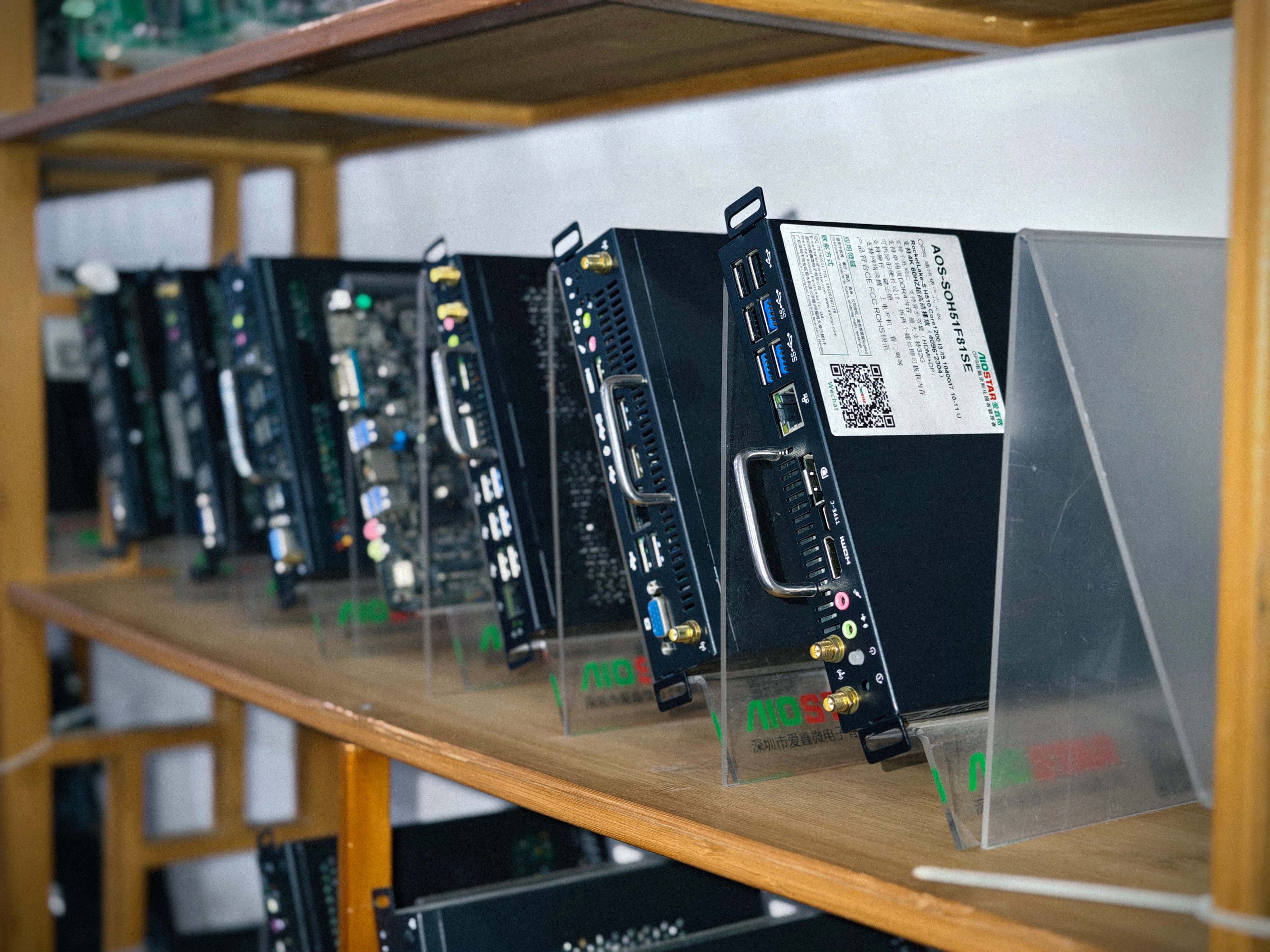
Sample configurations are commonly used to validate chassis fit and thermal performance before volume production.
Market Trends Supporting Modular Display Computing
Market data supports the continued use of modular compute in displays. According to Grand View Research, the global interactive flat panel market was valued at approximately USD 12.6 billion in 2024. The same firm estimates the global industrial PC market at USD 6.48 billion in 2024, with a CAGR of 6.30% through 2032. Mordor Intelligence data suggests integrated OPS-slot compute modules and Android SoC modules ship in 15–25% of new interactive flat panel display units. Another industry reference projects the global interactive whiteboard market at USD 730 million by 2030.
It is worth noting that market estimates vary. One alternative estimate for the 2024 industrial PC market is USD 5.36 billion, which reflects different definitions of what counts as an industrial PC. For a buyer, the exact figure matters less than the direction: display hardware is being upgraded, and modular compute is part of that upgrade path.
How Custom OPS PC Modules Compare with Traditional Integrated PCs
Compared with a PC board mounted directly inside a display, a custom OPS PC module offers several practical advantages.
| Traditional integrated PC | Custom OPS PC module |
|---|---|
| Mounted with custom brackets and cables | Standard slot-in installation |
| Processor upgrade often requires display redesign | Module swap allows compute upgrade |
| Repairs require opening the display | Module can be removed behind the display |
| Supply is often unique to one display model | Standardized connector enables alternative supply options |
The main boundary is mechanical and thermal. OPS and OPS-C are not identical, and the space inside a display slot is limited. High-performance options, such as discrete graphics or 8K output, depend on CPU, GPU and display configuration; optional discrete graphics are available only by project. The thermal design must be validated inside the real display enclosure. A module that works on a bench can overheat in a sealed panel if the cooling solution is not matched.
Certification and Compliance for OPS PC Modules
Compliance is a gate in procurement. For EU-bound products, AIOSTAR's relevant models carry a RoHS Declaration of Compliance, certificate number 25ITC1212100, issued by Shenzhen iTC Product Testing Co., Ltd. The declaration covers PC computer (Microcomputer) and references EU RoHS Directive 2011/65/EU and amendment 2015/863/EU, with test methods based on IEC 62321 standards and EN IEC 63000:2018.
AIOSTAR also holds a CE-RED Certificate of Compliance, number 25ITC1212094, covering OPS computer (Microcomputer) and PC computer (Microcomputer). The certificate is based on Radio Equipment Directive 2014/53/EU and includes tests to EN IEC 62368-1, EN 62311, ETSI EN 301 489 and ETSI EN 300 328 / EN 301 893.
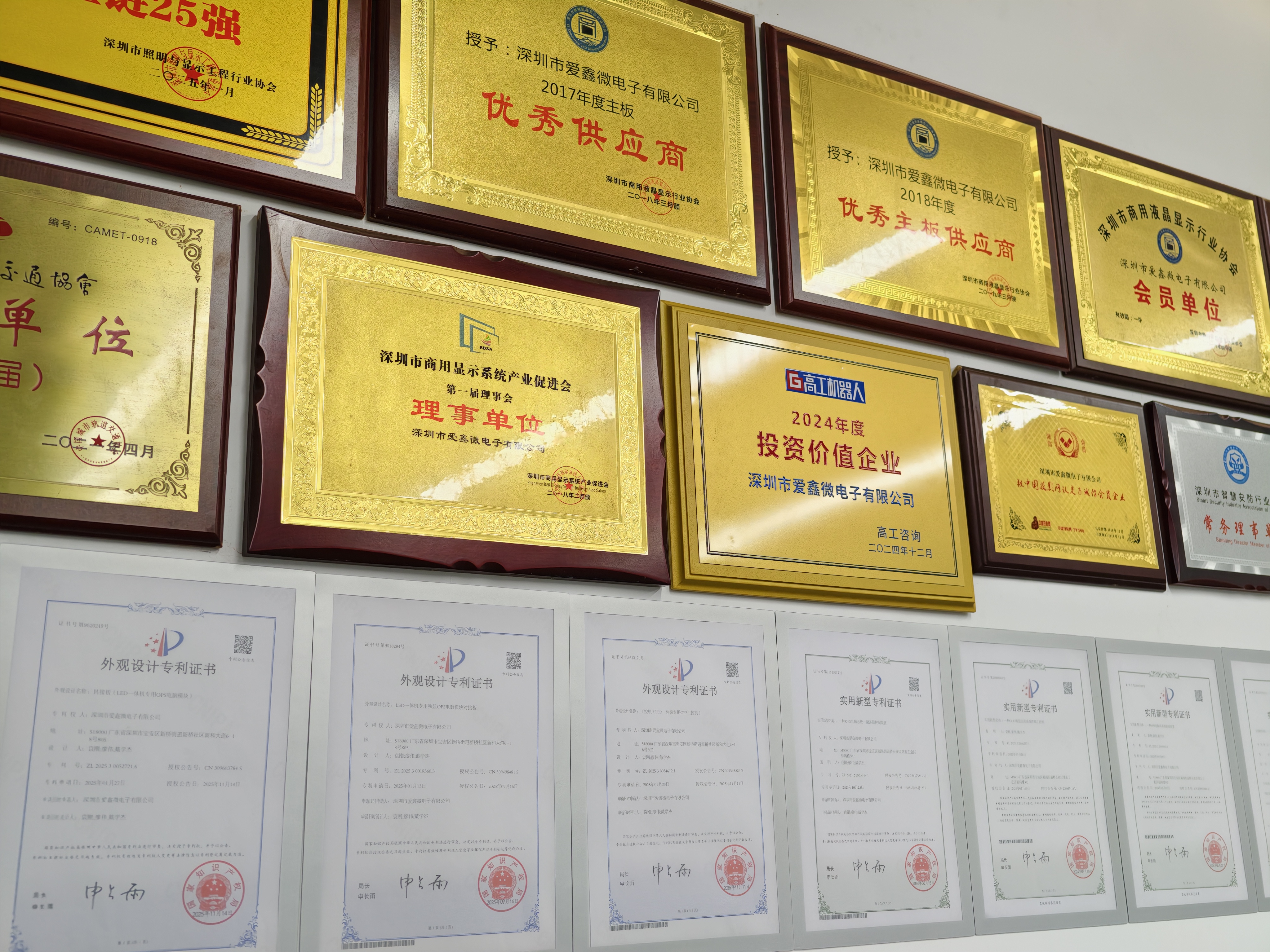
Certificates are model-specific and should be reviewed during the sample approval phase.
Before ordering, buyers should confirm which certificate covers the exact model and configuration they plan to use. Certificate scope is not a blanket approval for all products from a company.
Procurement Checklist for Custom OPS PC Projects
To move from evaluation to execution with less risk, a checklist helps. The following steps are based on the configuration and quality-control practices used in OPS PC projects.
- Confirm OPS or OPS-C mechanical footprint, connector and mounting points against the display chassis.
- Define CPU platform, memory, storage and operating system image.
- Map required I/O and video outputs to the display interface.
- Review cooling solution, chassis size and maximum height inside the display slot.
- Specify BIOS functions such as Wake-on-LAN, auto power-on and watchdog.
- Align certification documents with the target market and model.
- Order an evaluation sample; AIOSTAR offers a 1-unit sample MOQ.
- Agree on functional and interface testing, burn-in, and any environmental tests.
- Record commercial terms: 60-day lead time, payment (30% T/T deposit and 70% balance), delivery method (EXW Shenzhen, FOB Shenzhen, CIF or DAP by agreement).
- Confirm after-sales support: remote technical support, BIOS/OS/driver assistance and one-year warranty.
Future Outlook: AI, Edge Computing and Regional Platforms
Three trends are visible in the OPS PC product landscape.
- Edge AI: the Rockchip RK3588-based module has an integrated 6 TOPS NPU, making local AI processing possible on display terminals.
- Regional platforms: Zhaoxin-based OPS-C modules address domestic-platform interactive displays and government information systems.
- More formal compliance: RoHS and CE-RED certificates are becoming a standard item in the documentation package for OPS PC modules.
FAQ
What OPS PC customization options does AIOSTAR offer?
AIOSTAR provides OEM, ODM and project customization production services. OEM services include customization of CPU platform, memory, storage, I/O, chassis size, cooling solution, BIOS functions, operating system image, logo, packaging, power adapter and cables.
What is the minimum order quantity for custom OPS PC modules?
The MOQ is 1 unit for evaluation samples. For customized projects, the MOQ depends on the model and configuration.
Which OPS PC models are used for interactive flat panels and whiteboards?
The OPS-C pluggable computer module AOS-SOHAUF41SC is designed for interactive whiteboards, education technology, corporate meeting displays and commercial display systems. The discrete-GPU OPS computer AOS-SOH61I41SXG is intended for large-format commercial displays, LED meeting displays, video walls and visualization systems.
What certifications do the OPS PC modules carry?
Relevant models carry a RoHS Declaration of Compliance (certificate number 25ITC1212100) and a CE-RED Certificate of Compliance (25ITC1212094) issued by Shenzhen iTC Product Testing Co., Ltd. The scope covers PC computer or OPS computer (Microcomputer) products.
How is quality control handled for OEM/ODM OPS PC projects?
Quality control includes incoming material inspection, functional and interface testing for finished units, and burn-in testing when specified. Temperature, humidity, vibration and drop testing can be arranged according to project requirements.
What is the typical lead time for an OPS PC customization project?
The manufacturer quotes a lead time of 60 days. Delivery terms include EXW Shenzhen, FOB Shenzhen, CIF or DAP by agreement. Payment is generally 30% T/T deposit and 70% balance before shipment unless otherwise agreed.
Readers who want a broader view of AIOSTAR's OPS PC and embedded computing portfolio can download the company introduction brochure here: AIOSTAR Introduction 2026 (PDF).