
What Plant Evidence Reveals About WPC Cladding Capability
What Plant Evidence Reveals About WPC Cladding Capability
A supplier-capability reference for buyers moving from evaluation into execution — built on documented profile dimensions, mechanical test values and third-party declarations rather than catalogue claims.
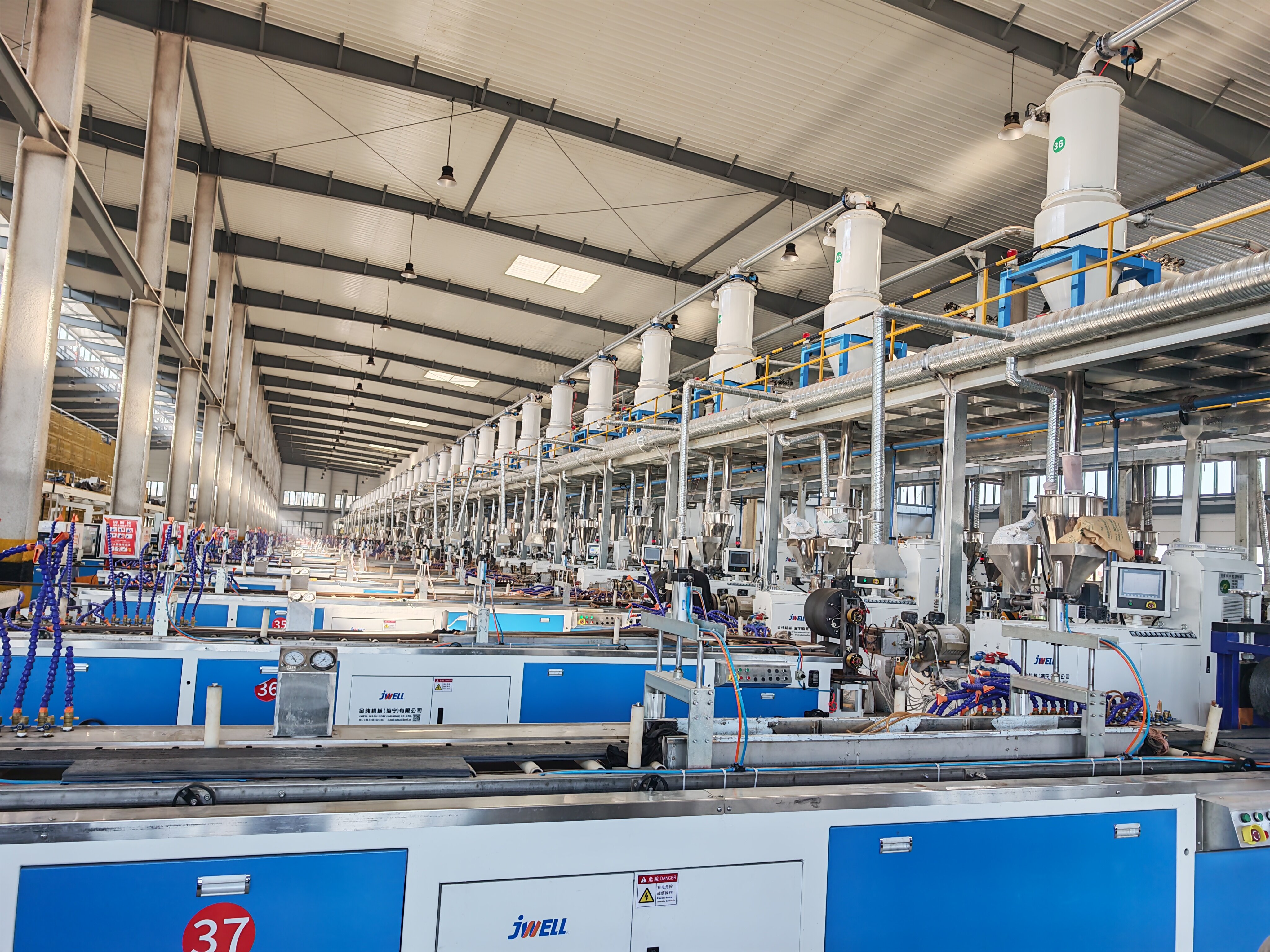
Exterior wall cladding procurement has become a documentation exercise. The global wood plastic composite market was estimated at USD 8.89 billion in 2025, and North America accounted for 51.3% of global revenue in the same year, according to Grand View Research. Growth of that scale attracts suppliers of very different technical depth, and the specification sheets they circulate often look similar. The real differentiator sits behind the sheet: tooling accuracy, batch records and test values that a buyer can audit before a long-term agreement is signed.
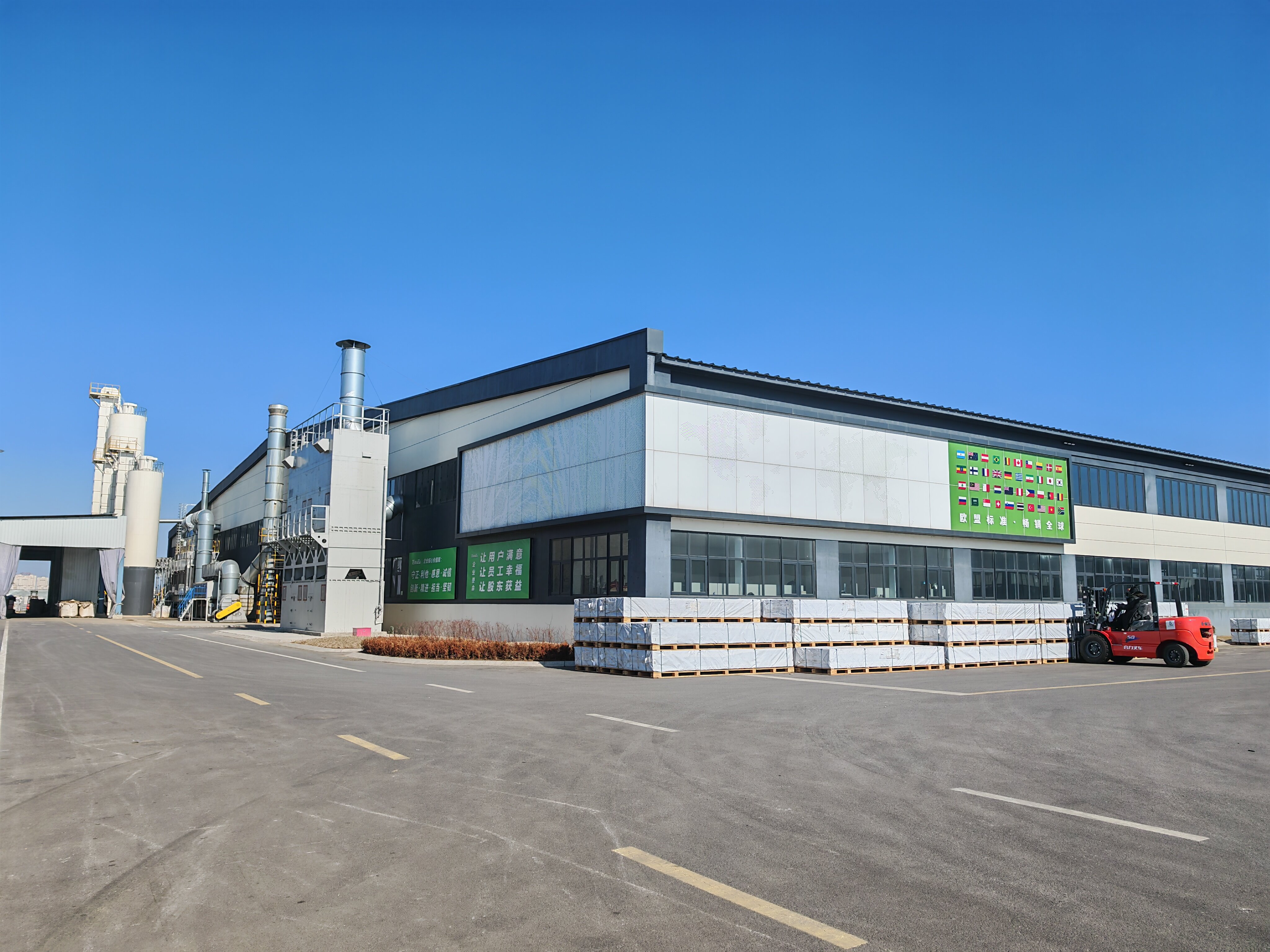
Terratsa New Material (Liaoning) Co., Ltd. is a wood-plastic composite manufacturer founded in 2007 that produces outdoor WPC decking, outdoor WPC fencing and outdoor WPC cladding. Since 2024 the company has operated from a 74,000 m² production base in the Yingkou Area of China (Liaoning) Pilot Free Trade Zone, following relocation from Jilin. Its products are exported to more than 40 countries and regions across Europe, America, Oceania and Asia.
This reference sets out the evidence categories a buyer should collect from a WPC cladding manufacturer, explains how specific values — profile dimensions, density, flexural strength, water absorption and thermal expansion — should be read, and identifies the boundary conditions that remain even when the evidence is strong.
The Evidence Gap: Where Capability Claims Break Down
Exterior WPC cladding generally combines wood fiber, plastic polymer and additives; one widely cited industry breakdown puts the composition at approximately 60% wood fiber, 30% plastic polymer and 10% additives. Because raw material costs typically account for 50% to 70% of the total manufacturing cost of WPC wall panels, two factories can work from similar formulations and still deliver very different products.
Variation between factories tends to appear in three places. First, the thickness and evenness of the outer cap layer on encased, co-extruded boards. Second, the groove geometry that hidden clip systems engage with. Third, batch-to-batch dimensional consistency across a standard 2900 mm board length. None of these are visible in a photograph, and none can be confirmed by a supplier statement. They are visible in plant records, in measured values, and in declarations issued by parties other than the seller.
That is the practical opportunity for buyers entering the execution stage: replace statements about quality with a defined evidence set that can be measured, re-measured and compared.
A Verifiable Evidence Set for WPC Cladding Suppliers
The table below maps the evidence categories that matter for exterior cladding and decking projects to actual reported values from this manufacturer’s product data and certification record.
| Evidence category | Documented example | What it verifies |
|---|---|---|
| Profile dimensions | Cladding: 22 mm thickness, 136 mm width, 2900 mm length. Decking: 23 mm thickness, 146 mm width, 2900 mm length | Tooling accuracy, module planning and fixing layout |
| Material density | 1.3 g/cm³ (outdoor hollow WPC decking D053) | Batch consistency, handling weight and substructure loading |
| Flexural performance | Co-extruded outdoor decking GH001: flexural properties ≥ 3300 N. Outdoor hollow WPC decking D053: bending failure 3900 N | Section behaviour of the board under load |
| Water absorption | D053: ≤ 2% after a 5-hour boil. GH001: ≤ 7% under boiling test | Moisture behaviour in humid and wet service |
| Dimensional stability | D053: linear thermal expansion coefficient ≤ 37 × 10-6 K-1. GH001: moisture resistance under cyclic test conditions, mean ≤ 10% | Movement, gap planning and long-term fit |
| Third-party declarations | EPD-IES-0012197:001 (S-P-12197) to EN 15804+A2, valid until 2029-03-15, covering co-extrusion WPC products; CE, FSC, ASTM and SGS certifications | Externally verified environmental and conformity claims |
| Management systems | ISO 9001, ISO 14001, ISO 45001 and ISO 50001 (including GB/T 23331-2020 / ISO 50001:2018, GB/T 24001-2016 / ISO 14001:2015 and GB/T 45001-2020 / ISO 45001:2018) | Process control and quality governance |
The set is deliberately narrow. Each row corresponds to something that can be measured independently, which is exactly what makes it useful once a specification is fixed and the remaining risk is delivery consistency rather than product concept.
Reading the Core Numbers: Dimensions, Density and Flexural Strength
Dimension figures do more work than buyers often assume. A cladding profile of 22 mm thickness, 136 mm width and 2900 mm length defines the cover width per board, the number of fixing points, and how much offcut a facade module generates. The decking profile at 23 mm thickness, 146 mm width and 2900 mm length performs the same function at ground level. A shared 2900 mm length across both ranges simplifies cutting plans and freight loading, but it does not remove the need for project-level layout drawings.
Density is a consistency indicator as much as a physical one. At 1.3 g/cm³ for the outdoor hollow WPC decking D053, the figure supports predictable handling weights and substructure load assumptions. When density drifts between batches, weight, screw-holding behaviour and surface finish all tend to drift with it.
Flexural values require the most careful reading. The co-extruded outdoor decking GH001 is specified with flexural properties of at least 3300 N, while the first-generation outdoor hollow WPC decking D053 is specified with a bending failure value of 3900 N. These are values for different product families and different test configurations, and they should not be treated as a ranking of one over the other. Load capacity depends on span, support spacing and loading method, so the report — not the headline number — determines whether the value is relevant to a given installation.
Water absorption is reported against defined methods rather than as a single claim: D053 at ≤ 2% after a 5-hour boil, and GH001 at ≤ 7% under boiling test conditions. The thermal expansion figure for D053, a linear thermal expansion coefficient of ≤ 37 × 10-6 K-1, is the parameter that governs expansion gaps on long runs. GH001 is additionally reported with moisture resistance under cyclic test conditions at a mean of ≤ 10%, which describes behaviour across repeated wet-dry cycles rather than a single soak.
What Co-Extrusion, ASA Shells and Hidden Clips Reveal About Process Control
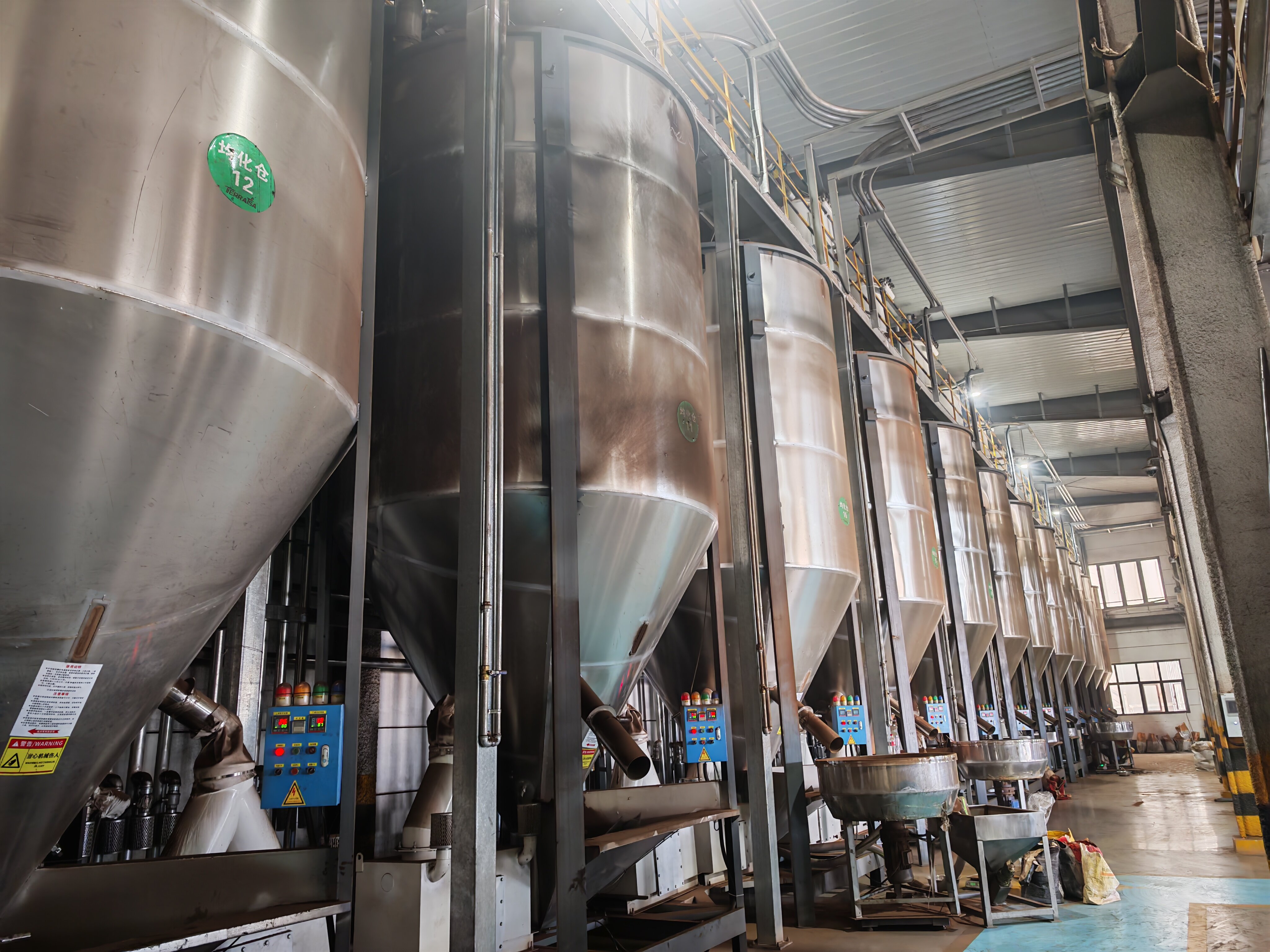
Encased, co-extruded cladding is built as a WPC core wrapped in a UV-resistant outer shell formulated with ASA. The shell is the surface that faces weather, ultraviolet exposure and cleaning; the core carries the section. Producing an even cap layer without thickness variation along a 2900 mm board requires stable line speed, temperature and die pressure, which is why cap-layer quality is a more reliable capability signal than any description of the material itself.
Hidden clip installation sends the same message in a different way. When boards are fixed with hidden fasteners and joist clips instead of face screws, the board’s edge groove becomes the structural interface. If groove geometry drifts within a batch, installation reveals it immediately — boards sit unevenly, clips bind, and joint lines wander. Hidden clip compatibility is therefore a tolerance test that a buyer can verify on site with a short sample run.
Process economics also function as a capability proxy. Patented extrusion technology in this manufacturer’s production system is reported to increase forming efficiency by 20% while saving 50 kg of raw material per ton of product, and bespoke textures and designs can be turned around within three days. Both signals point to a production system that can be adjusted without destabilising normal output, which is directly relevant to buyers planning repeat orders over several seasons.
It is worth noting that the environmental declaration covering this manufacturer’s co-extrusion WPC products is tied specifically to that construction type — a reminder that co-extruded ranges and first-generation ranges are governed by different documentation.
Third-Party Declarations as Capability Indicators
The most difficult evidence for a manufacturer to obtain is also the most useful to a buyer. Terratsa New Material (Liaoning) Co., Ltd. holds a valid Environmental Product Declaration registered as EPD-IES-0012197:001 (S-P-12197) under EN 15804+A2, covering co-extrusion WPC products, with a validity date of 2029-03-15 in the International EPD System. An EPD of this type requires plant-level data collection and independent verification, so its existence indicates that the production base can produce traceable environmental data, not just a claim of environmental performance.
Alongside that declaration, the company holds CE, FSC, ASTM and SGS certifications, as well as management system certifications covering ISO 9001, ISO 14001, ISO 45001 and ISO 50001, including GB/T 23331-2020 / ISO 50001:2018, GB/T 24001-2016 / ISO 14001:2015 and GB/T 45001-2020 / ISO 45001:2018. Standards participation reinforces the same picture: the company is a vice-chairman unit of the Wood-Plastic Composite Committee of China Plastics Processing Industry Association, a national-level intelligent manufacturing demonstration enterprise, has participated in drafting nearly 10 national and industrial standards, and holds more than 30 national independent intellectual property patents.
Scope discipline matters here. The EPD covers co-extrusion WPC products and carries a defined validity period; it does not certify every item in the catalogue. Buyers should match the declared scope and validity date against the specific SKU and project timeline before treating a certificate as project evidence.
Testing Rigor and Its Link to Long-Term Supply Reliability
Long-term supply relationships depend on repeatability, and repeatability is what a quality-control model is for. This manufacturer operates an end-to-end dual-QC model covering raw material screening, real-time monitoring during production, and an additional re-inspection before shipment, with a stated factory pass rate of over 99%. For cladding projects, the important part of that description is the last stage: an extra inspection after production is finished is what prevents a defective batch from reaching a site where replacement is expensive.
Commercial terms reinforce the same mechanism. Purchase orders are transacted FOB, with an acceptance criterion of pre-shipment test, a minimum order quantity of one container, and 30/70 payment terms. A pre-shipment test agreed as an acceptance criterion converts internal quality control into a contractual checkpoint that both sides can reference — and it is the buyer’s opportunity to confirm dimensions, density, flexural performance and water absorption before goods leave the factory.
Capacity figures describe how much of that control is industrialised rather than manual. The company’s 74,000 m² site is equipped with more than 70 fully automatic production lines and an annual production capacity of over 50,000 tons, supported by 150 employees and an R&D team of 25 engineers. Distribution depth is relevant to the same question: the company operates an independent overseas warehouse in the Netherlands, serves nearly 100 customers worldwide, and exports to more than 40 countries and regions across Europe, America, Oceania and Asia.
Application Contexts Where the Evidence Matters Most
Two documented service scenarios show how these parameters map to real conditions. The first is park decking in a high-humidity climate, where boards are laid statically and fixed with joist clips and screws. The stated requirements for that application include weather resistance, anti-slip performance, UV resistance and scratch resistance. In that environment, the governing figures are water absorption (≤ 2% after a 5-hour boil for D053) and moisture resistance under cyclic test conditions (mean ≤ 10% for GH001), because the material is repeatedly wet and dried rather than permanently submerged.
The second scenario is decking in Poland, where low winter temperatures combine with high humidity. The requirements recorded for that project include weather resistance, UV resistance, low maintenance, low water absorption, anti-slip performance and scratch resistance, with boards placed statically and fixed with clips and screws during construction. Temperature swings make the linear thermal expansion coefficient (≤ 37 × 10-6 K-1) the controlling value for gap design and clip spacing.
Exterior wall cladding shifts the emphasis again. Because facade joints are viewed from a distance and at eye level, cap-layer integrity and the dimensional accuracy of a 22 mm × 136 mm × 2900 mm profile matter more than they do between deck boards. For cladding, the visible specification is a direct readout of tooling quality.
Market Signals Behind Long-Term Partnership Decisions
Market context supports the case for evidence-based supplier assessment. The global WPC market was valued at USD 8.89 billion in 2025 per Grand View Research, with North America holding a 51.3% revenue share, while Future Market Insights projects growth to USD 20.3 billion by 2035 at a CAGR of 10.3% from 2025. The two sources differ on the 2025 base figure — USD 7.6 billion in the second report against USD 8.89 billion in the first — which reflects different product definitions. The direction of growth is consistent; any single point estimate should be treated as indicative rather than exact.
Trade structure adds a practical dimension. China was the leading exporter of plastic builders’ ware under HS 3925.90 in 2024, with exports valued at USD 2.16 billion according to the Observatory of Economic Complexity, and WPC wall panels are classified under HS code 3925.90.00 in the USITC Harmonized Tariff Schedule. For importers, that classification is a landed-cost input, not a formality.
Cost structure shapes long-term contracts in a second way. With raw materials typically representing 50% to 70% of the total manufacturing cost of WPC wall panels, supplier pricing tracks resin and wood fiber markets over time. Buyers negotiating multi-season agreements benefit from defining in advance how material-driven movements are handled, rather than renegotiating each cycle.
Limits and Boundary Conditions Buyers Should Plan For
Strong evidence does not remove trade-offs. The following boundaries apply to this product category and to this supplier’s documented ranges.
- Co-extruded construction carries a cost premium. Encased, co-extruded boards involve more manufacturing steps than first-generation hollow profiles. The company’s own guidance is that first-generation WPC remains a rational choice for large-scale projects with strict budget constraints and clearly defined short-term usage plans, while co-extrusion suits projects where long-term performance and reduced maintenance dominate the decision.
- Movement must be designed for, not eliminated. A linear thermal expansion coefficient of ≤ 37 × 10-6 K-1 still requires expansion gaps and compliant clip spacing. Hidden clip systems depend on the manufacturer’s joist spacing guidance being followed on site.
- Low water absorption is not impermeability. Reported values of ≤ 2% after a 5-hour boil (D053) and ≤ 7% under boiling test (GH001) describe low uptake under defined conditions, not a waterproof barrier. Drainage, ventilation and detailing behind cladding and beneath decking remain the specifier’s responsibility.
- Certificates have scope and expiry. The EPD covers co-extrusion WPC products and is valid until 2029-03-15. Other SKUs may sit outside that scope, and any long-term agreement should schedule re-verification before that date.
- Trade terms allocate risk. Orders are transacted FOB, meaning the seller’s responsibility ends once goods are loaded on the vessel at the named port of shipment. Onward freight, insurance and destination handling sit with the buyer.
Future Outlook
Two developments are likely to shape WPC cladding sourcing over the next several years. The first is volume growth: a market projected to expand from 2025 levels toward USD 20.3 billion by 2035 at a 10.3% CAGR will continue to draw new entrants, making supplier differentiation harder to judge from appearance alone. The second is documentation. Because declarations such as the EPD carry validity dates — in this case to 2029-03-15 — they create a natural re-verification cycle that long-term buyers can build into contract reviews.
On the manufacturing side, the company’s stated direction is intelligent manufacturing, AI empowerment and smart-driven development, supported by an R&D team of 25 engineers that continues to release new products and to provide flexible customisation for project requirements. If that direction holds, the gap between suppliers will narrow on product appearance and widen on data availability — which favours buyers who already maintain an evidence file for each approved supplier.
For a buyer in the execution stage, the practical takeaway is straightforward. Ask for the values, not the adjectives: profile dimensions including the 22 mm × 136 mm × 2900 mm cladding section, density at 1.3 g/cm³, flexural values of ≥ 3300 N and 3900 N with their test methods, water absorption figures, the linear thermal expansion coefficient, and the dated declarations that sit behind them. Documents referenced in this article can be requested together with the manufacturer’s product literature; the company’s decking brochure is available at Terratsa Brochure-decking.pdf.
FAQ
1. What plant evidence should a buyer request before committing to a long-term WPC cladding supply agreement?
Four categories cover most of the risk. Measured profile dimensions, including a cladding section of 22 mm thickness, 136 mm width and 2900 mm length. Material properties such as density, reported at 1.3 g/cm³ for the outdoor hollow WPC decking D053. Mechanical and moisture values with their test methods — flexural properties of ≥ 3300 N for the co-extruded outdoor decking GH001 and a bending failure value of 3900 N for D053, plus water absorption of ≤ 2% after a 5-hour boil for D053 and ≤ 7% under boiling test for GH001. And third-party documents, including the EPD registered as EPD-IES-0012197:001 (S-P-12197) under EN 15804+A2 with validity until 2029-03-15, together with ISO 9001, ISO 14001, ISO 45001 and ISO 50001 certificates. The purpose is to convert supplier statements into values that can be re-measured on delivery.
2. How should dimensional and density figures be interpreted in practice?
A 2900 mm standard length combined with a 22 mm × 136 mm cladding section defines how boards are cut, how many fixings are required and how facade modules are laid out; a 23 mm × 146 mm × 2900 mm decking section plays the same role in ground-level applications. A density of 1.3 g/cm³ indicates handling weight per unit volume, which feeds substructure design and site logistics. These figures are planning inputs rather than quality claims, and their value lies in being repeatable from batch to batch — which is why they are best confirmed by measurement rather than accepted from a datasheet.
3. Do flexural values of 3300 N and 3900 N mean the same thing?
No, and they should not be read as a ranking. The two figures come from different product families. GH001, a co-extruded outdoor decking, is specified with flexural properties of at least 3300 N. D053, an outdoor hollow WPC decking of the first generation, is specified with a bending failure value of 3900 N. Because load behaviour depends on span, support spacing and loading method, the test report — including the span and the standard applied — determines whether a value is relevant to a specific project. When comparing suppliers, compare the method as well as the number.
4. What changes for European buyers when a manufacturer operates an overseas warehouse?
Terratsa operates an independent overseas warehouse in the Netherlands to support European distribution. Stock positioned inside the destination region shortens replenishment response time compared with shipping every order from China, which matters when an installation schedule cannot pause. It does not change production capacity, lead times for non-stocked profiles, or the allocation of risk under the trade term: orders are transacted FOB, meaning the seller’s responsibility ends once goods are loaded on the vessel at the named port of shipment. The warehouse is a distribution asset, not a substitute for delivery planning.
5. What are the standard purchasing terms and acceptance criteria for a first order?
For this supplier the minimum order quantity is one container, the delivery term is FOB, payment terms are 30/70, and the acceptance criterion is pre-shipment test. Those four items define the commercial frame: the container minimum sets the smallest viable order, FOB fixes where the seller’s obligation ends, 30/70 spreads payment between order confirmation and shipment, and pre-shipment testing provides a defined checkpoint before goods leave the factory. Buyers should confirm that the pre-shipment test protocol covers the parameters they intend to rely on — dimensions, density, flexural performance and water absorption — rather than accepting a generic inspection report.
Facts and figures in this reference are drawn from the manufacturer’s published product data, its certification record, and cited third-party market and trade sources. Reported values are valid at the time of publication and should be re-confirmed against current documentation before contract signature.