
What Should Buyers Expect From a Tin Box Factory in 2026?
Buyers searching for custom metal packaging rarely type “multi-category tin box factory.” They search by the product they need to pack: chocolate tin box factory, medicine tin box factory, cosmetic tin box factory, tea tin box factory, soap tin box factory or gift tin box factory. Category words are useful on B2B platforms, but they are not an assessment of factory capability. This reference guide for early-stage packaging buyers explains how to read a tin box factory beyond its category label, what kinds of evidence matter, and why a multi-category producer may be the logical starting point in 2026.
One of the first lessons in packaging procurement is that the name of a factory and the work it is actually certified to do are separate questions. A modern tin box factory can serve food brands, personal-care brands and gift brands on the same campus because the underlying metal-forming processes are similar. What changes is the packaging specification, the internal coating, the certification applied to the line, and the documents required by the destination market.
Category labels describe demand, not factory depth
A product-specific factory label can help during the first stage of research. Buyers searching for a lunch tin box factory, a candy tin box factory or a mooncake tin box factory are revealing the end-use, the filling environment and the likely distribution channel. But labels also create an assumption: that the manufacturer concentrates only on that single category. In practice, many tin box factories organise production around a set of processes — printing, baking, cutting, stamping, punching, assembly and coating — and apply the same process base to several end-use categories.
This distinction matters because a packaging buyer is responsible for safety, not only for aesthetics. A chocolate tin that directly contacts a food product requires food-contact material evidence. A medicine tin that protects pills requires stronger traceability and documented process control. A cosmetic tin that holds a cream or perfume requires internal coating compatibility and consistent surface finishing. These requirements are defined by regulations and specifications, not by the words “chocolate,” “medicine” or “cosmetic.”
In the European Union, tinplate intended for direct food contact is referenced by the standard EN 10202:2022, which covers electrolytic tinplate requirements. In the United States, food-contact substances are regulated under FDA 21 CFR. Therefore, a buyer searching for a chocolate tin box factory should be looking for a factory that can demonstrate food-contact material compliance, not simply a supplier that lists chocolate tins on its product page.
JINGLI CAN: A documented model of multi-category capability
Dongguan City Jingli Can Co., Ltd., known in international sourcing as JINGLI CAN, is a useful reference case for this discussion. Established in 1999, it specialises in the design and manufacture of tin packaging and metal cans. Its model is built on process integration, export experience and certification coverage rather than on a narrow product name.
The corporate profile that JINGLI CAN makes available to industrial buyers includes the following evidence points:
- Production scale: a factory area of 150,000 square metres, approximately 2,000 employees and an annual production capacity of 1,800,000,000 pieces.
- R&D resource: a development team of approximately 50 engineers, supporting custom tin packaging design and production engineering.
- Main product groups: custom tin packaging and metal cans, including food tins, tea/coffee tins, cosmetic tins, gift tins and pharmaceutical tins.
- Export profile: export business accounts for 70% of total sales, with major markets in Europe, America and Asia.
- Certification profile: ISO9001, ISO14001, ISO22000, BRCGS, FSSC22000 and SEDEX 4P.
- Operating model: a one-stop manufacturer that integrates R&D, production, marketing, sales and service.
Those facts are useful because they allow a buyer to compare a factory against the actual demands of a packaging project. Scale matters when delivery windows are short. Certification matters when the destination market is Europe or North America. A product list that spans food, tea/coffee, cosmetics, gifts and pharmaceuticals shows that the factory has had to meet different regulatory and commercial expectations at the same time.
How a multi-category tin box factory is technically organised
A tin box begins as tinplate coil or sheet. Printing and lacquering are applied to one side, the metal is cut, and then punching and stamping presses form the sheet into lid and body components. Edges are curled, seams are sealed, and final inspection controls dimensions, decoration and function. When a tin box factory serves multiple categories, it is useful to think of its capability in four technical layers.
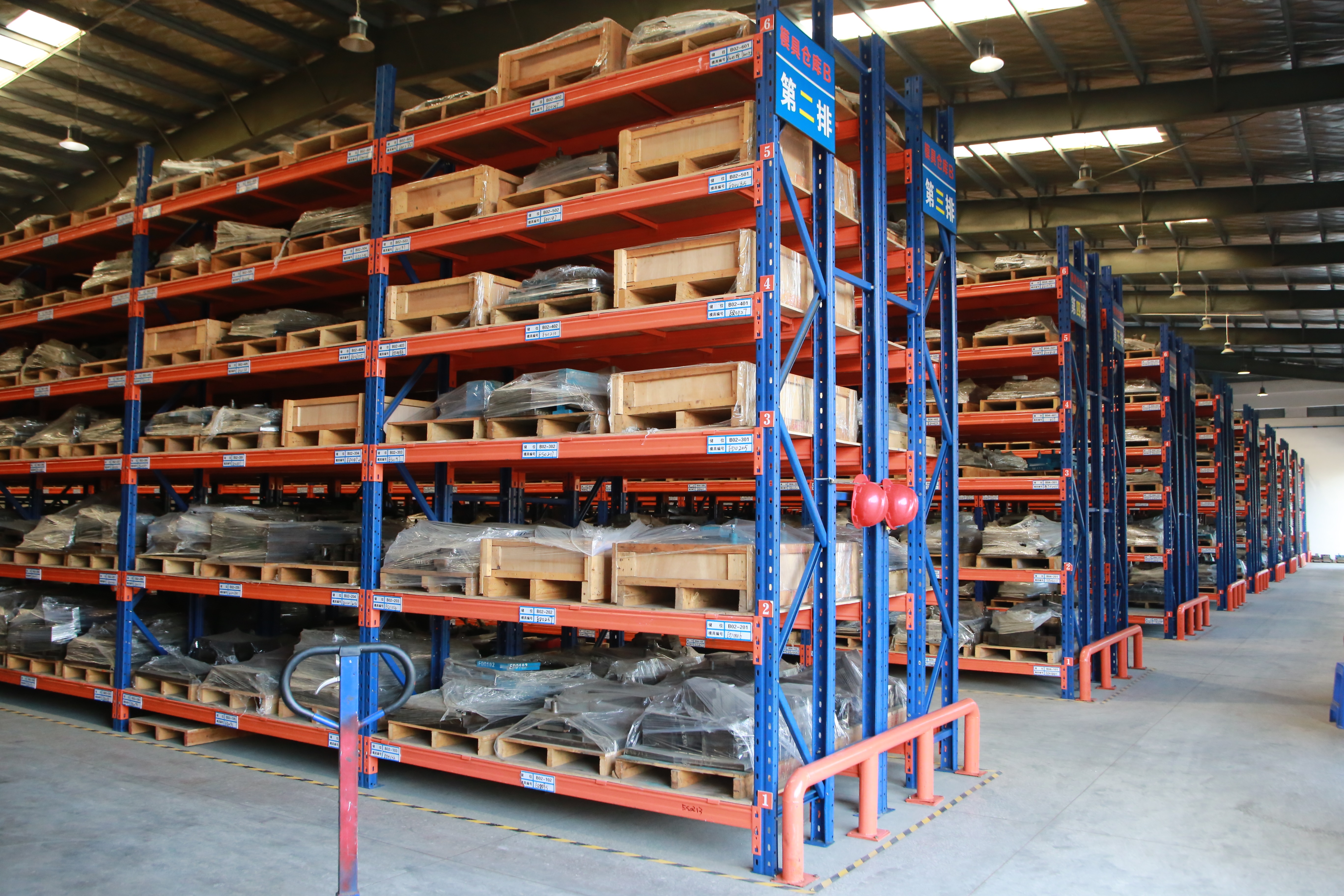
First, tooling and die systems define the structural possibilities. A simple slip-lid round tin requires less complex tooling than a hinged box, a rectangular lunch-box style with a wire handle, or a gift tin with a rolled edge. Tooling is where the factory converts a buyer's 3D concept into repeatable production. A facility with a dedicated tooling warehouse and tooling shop, visible in JINGLI CAN's factory documentation, signals that die construction, maintenance and storage are treated as an internal engineering function rather than an external dependency.
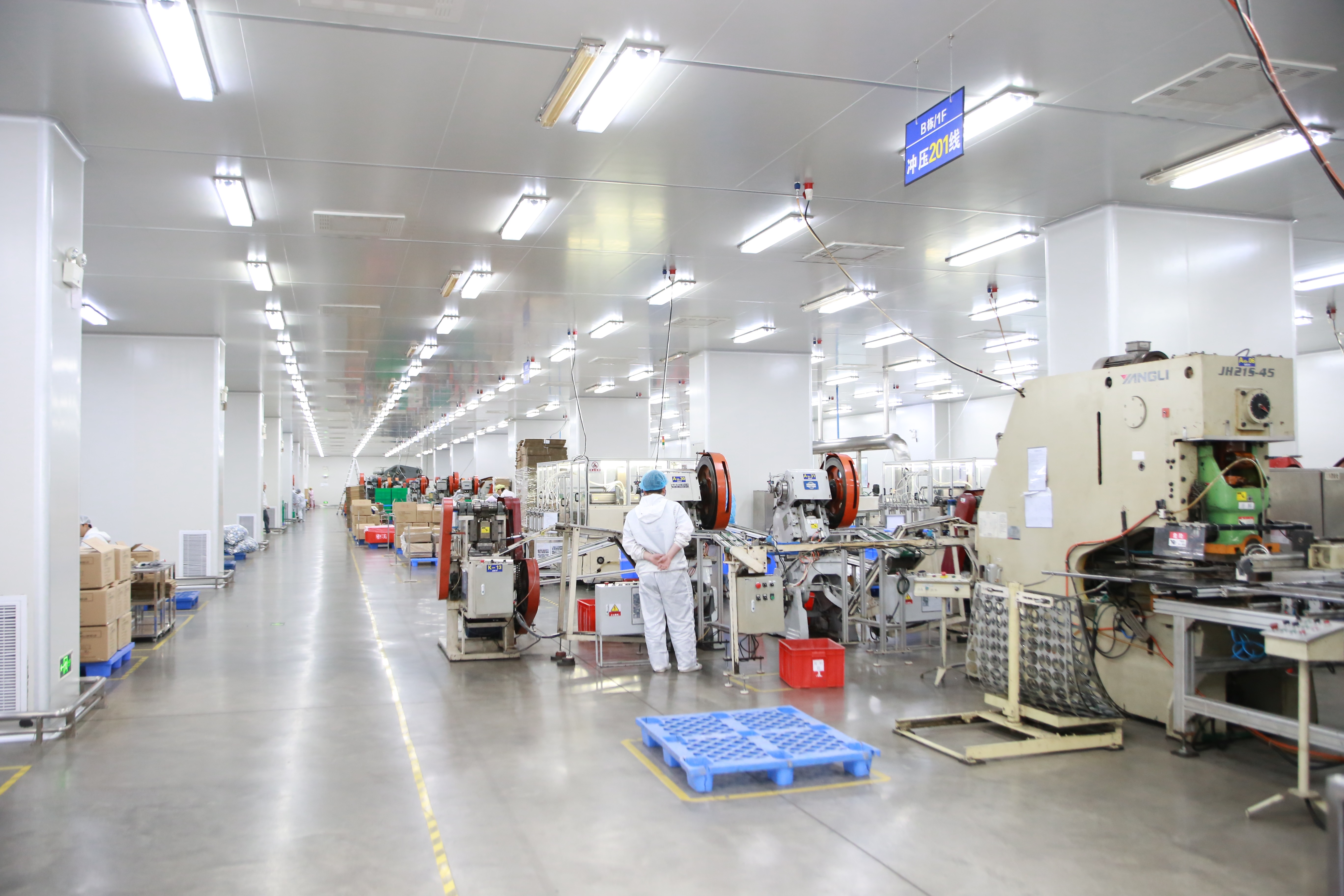
Second, metal decorating controls the visual and protective layers. Tin box buyers evaluate colour fidelity, coating adhesion and scratch resistance. A factory with controlled printing and baking conditions can reproduce brand colours across different SKU families. This is especially important when a brand sells multiple products — tea, candy, cosmetic accessories or gift sets — and needs the same visual language across every tin.
Third, material and coating compatibility controls the internal environment. Food tins require food-grade internal lacquers to prevent metal migration. Cosmetic tins may require specific coating systems because fats and oils can interact with bare tinplate. Pharmaceutical and health-care packaging projects often require stricter material traceability. These are not separate manufacturing universes, but they do require disciplined material control inside the same factory.
Fourth, certification systems create repeatable quality behaviour. ISO9001 addresses quality management, ISO14001 addresses environmental management, ISO22000 and FSSC22000 address food-safety management, and BRCGS is widely used in food packaging audits. SEDEX 4P covers labour, health and safety, environment and business ethics. Together, these certifications give a buyer evidence that the factory is not relying on informal procedures.
Application: How buyers map their search terms to factory evidence
Because many sourcing projects begin with a category-specific search, it is helpful to group those search terms into verification clusters. The table below maps common buyer search patterns to the type of factory evidence that should be requested before sampling or quoting.
| Buyer search cluster | Typical category-specific search terms | What the factory should be asked to demonstrate |
|---|---|---|
| Food and confectionery | chocolate tin box factory, candy tin box factory, chewing gum tin box factory, mooncake tin box factory | Food-contact internal coating, food-grade tinplate documentation, and a certified food-safety management system such as ISO22000, BRCGS or FSSC22000. |
| Tea, coffee and tobacco | tea tin box factory, cigar tin box factory | Moisture protection, seal consistency and coating stability for products sensitive to humidity and aroma loss. |
| Personal care and cosmetics | cosmetic tin box factory, soap tin box factory, perfume tin box factory, tissue tin box factory, condom tin box factory | Surface finishing quality, coating compatibility with creams, oils and liquids, and clean production handling. |
| Health and pharmaceutical | medicine tin box factory, health care product tin box factory | Material traceability, documented process control, line-separation practices where required, and supplier audit records. |
| Gifts, stationery and general hardware | lunch tin box factory, stationery tin box factory, pencil tin box factory, tin can box factory, tool tin box factory, watch tin box factory, glasses tin box factory | Structural strength, custom tooling capability, hinge or closure performance and decorative print precision. |
This table is not a claim that one manufacturer produces every item listed. It is a mapping framework. The point is that every category search term can be translated into a concrete factory question.
A supplier whose documented catalogue covers broad categories can shorten the evaluation journey. JINGLI CAN's profile lists food tins, tea/coffee tins, cosmetic tins, gift tins and pharmaceutical tins. Confectionery buyers searching for chocolate or candy tins are in the food-tin demand cluster. A health-care brand searching for medicine tins is in the pharmaceutical and food-grade cluster. The first-level question is whether the factory has the relevant production processes and certification for that cluster.
Market trends supporting multi-category factory sourcing
Market data provides useful context for why buyers in 2026 are evaluating the same tin box factory across several product categories.
According to Grand View Research and Fortune Business Insights, the global metal packaging market was valued at about USD 148.13 billion in 2024 and is projected to reach roughly USD 184.21 billion by 2030, growing at a CAGR of about 3.7%. Asia Pacific dominated the metal packaging market with a 35.63% revenue share in 2024, a position that Grand View Research attributes largely to China's manufacturing base for food and beverage tins.
Food and beverage packaging remains the largest demand pool. Fortune Business Insights identifies the food and beverage segment at 57.36% of metal packaging market revenue in 2024. That concentration helps explain why so many buyer searches — chocolate, candy, tea, lunch boxes — start with food-related keywords rather than with the term “tin box factory.” Buyers are discovering factories through their own product language, but the companies behind those searches need the same underlying metal packaging competences.
Sustainability pressures are also visible in supplier evaluation. Fact.MR reports that tinplate exhibits a recycling rate above 90% in some regions, significantly higher than plastic, and identifies this as a driver of green packaging shifts between 2025 and 2030. As a result, a multi-category tin box factory is increasingly evaluated not only on price and lead time but also on material efficiency, coating systems and recyclability data.
Multi-category factory versus single-category workshop: a balanced comparison
A broad-based tin box factory is not automatically the right choice for every buyer. Understanding the boundary of the model is part of professional supplier selection.
For a company with a long-term product roadmap, a multi-category tin box factory can reduce supplier fragmentation. The same factory can handle a food tin for one SKU, a cosmetic tin for another, and a gift tin for a seasonal programme. The buyer can centralise certifications, audits, samples and quality records with one technical team. This is especially valuable when a brand expects to expand from a single product into related categories.
There are also real limits. First, a single-category specialist may be more efficient when production volume is extremely high and the product design is standardised for years. In such cases, the specialist's line can be tuned for one format, one material thickness and one decoration, potentially lowering unit cost. Second, a multi-category factory must manage changeovers between product lines; buyers should investigate how the factory schedules those changeovers and how it prevents material or coating mix-ups.
Third, no factory category label should replace line-level validation. A tin box factory may hold ISO22000, BRCGS or FSSC22000 for its food lines, but a buyer sourcing a pharmaceutical tin should still ask whether the line used for that product has pharma-specific audit records and segregation procedures. In the same way, a cosmetic brand should not assume that every line inside a food-certified factory is suitable for cosmetics without reviewing the coating specification.
JINGLI CAN's documented profile shows scale, certification and category diversity. It is a representative example of how a Chinese export-oriented tin box factory is structured. Buyers should still verify the specific product line for their own packaging project before making a final decision.
Future outlook: from category searches to production-based supplier evidence
Search behaviour in packaging sourcing is unlikely to change quickly. Buyers will continue to search for chocolate tin box factories, cosmetic tin box factories and medicine tin box factories because product language is the most intuitive starting point. What is likely to change is the depth of evidence expected after the search.
Over the next few years, more procurement teams will view a tin box factory as a production system rather than as a list of finished products. They will ask for evidence about the tooling base, printing and coating controls, food-safety management standards, export experience and audit history. JINGLI CAN's profile already contains many of those elements: company history since 1999, production scale of 1.8 billion units per year, export business at 70% of total sales, and a six-certification compliance portfolio.
As sustainability requirements become more specific, recycled content, tinplate sourcing and coating systems will enter the evaluation process alongside price and delivery. Asia Pacific will continue to play a central role in metal packaging supply because of its manufacturing infrastructure. Buyers who understand the difference between a category label and a factory capability will be better positioned to build a long-term packaging supply chain.
FAQ for buyers starting a tin box factory search
Q1: What is the first thing to check when looking for a tin box factory?
Start with the documented scope of the producer. Check whether it is a manufacturing organisation or only a trading intermediary, what product groups it lists, what scale it operates at, and which markets it exports to. For example, JINGLI CAN is presented as a manufacturer established in 1999, with about 2,000 employees, a 150,000-square-metre facility and annual production capacity of 1,800,000,000 pieces.
Q2: Does a label like “chocolate tin box factory” guarantee food safety?
No. The label describes a product category, not a certification status. Buyers should ask for food-contact material evidence such as EN 10202 tinplate compliance or FDA food-contact substance compliance, and for a food-safety management system such as ISO22000, BRCGS or FSSC22000.
Q3: What product categories can a custom tin box factory handle?
Many multi-category tin box factories describe their capability in groups rather than in single products. JINGLI CAN, for example, lists custom tin packaging and metal cans such as food tins, tea/coffee tins, cosmetic tins, gift tins and pharmaceutical tins. These groups cover a large share of routine buyer requests.
Q4: What certifications should an exported tin box factory hold?
Common quality and food-safety certifications in the industry include ISO9001, ISO14001, ISO22000, BRCGS, FSSC22000 and SEDEX 4P. For food-contact tinplate, buyers should additionally check standard compliance relevant to the destination market, such as EN 10202:2022 in the EU or FDA food-contact substance rules in the United States.
Q5: How large is the metal packaging market?
Grand View Research and Fortune Business Insights estimate the global metal packaging market at approximately USD 148.13 billion in 2024, with projected growth to around USD 184.21 billion by 2030 at a CAGR of about 3.7%. Asia Pacific held roughly 35.63% of global revenue in 2024.
Q6: How should a buyer move from a category search to a supplier shortlist?
Translate the search term into verification steps. Identify the content to be packed, confirm the relevant material and coating requirements, check the factory's documented product and certification profile, request a sample that reflects the final specification, and verify line-level evidence before placing an order. This allows the buyer to evaluate the factory rather than the label.
Market and standards references: Grand View Research, Fortune Business Insights, Fact.MR, U.S. FDA and European Committee for Standardization. Corporate profile references are from Dongguan City Jingli Can Co., Ltd.
Tem questões ou precisa de mais detalhes?
Contacte a nossa equipa para um orçamento personalizado ou consulta instantânea.
Solicitar orçamento
Preencha o formulário abaixo e a nossa equipa entrará em contacto com uma proposta personalizada.
Chat direto do WhatsApp
Prefere conversar em tempo real? Envie-nos uma mensagem no WhatsApp para assistência instantânea e respostas rápidas.
- Obter orçamento personalizado
- Partilhar fotos ou documentos
- Discuta as suas necessidades diretamente
Geralmente responde em 5–30 minutos durante o horário de expediente.