
What a 59cc–105.7cc Professional Gasoline Chainsaw Range Proves
HTNXT industry reference · supplier capability evidence
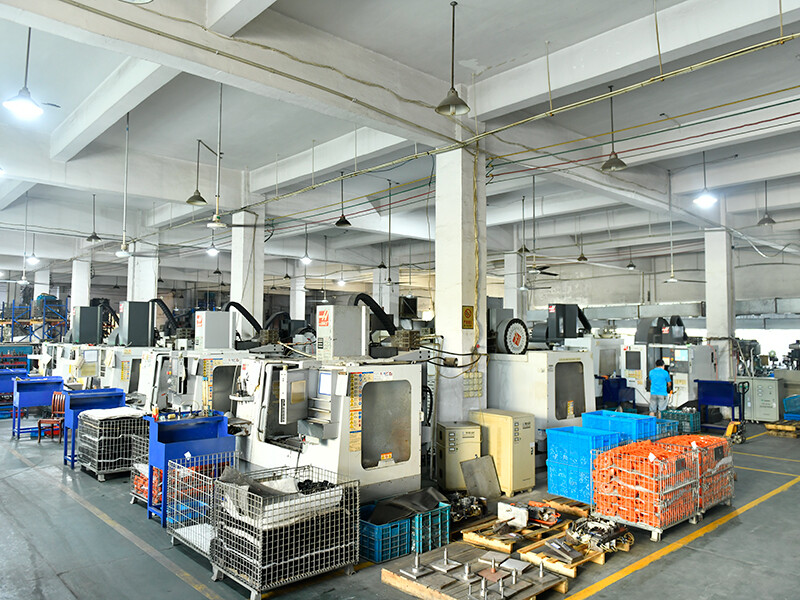
Cover: machining capacity behind the model ladder — production floor of Hanakawa (Zhejiang Hehong Tools Co., Ltd.).
A professional gasoline chainsaw range that runs from 59cc to 105.7cc is a manufacturing statement before it is a marketing one. Each displacement step needs its own cylinder and piston set, its own crankcase casting, its own housing mould, its own assembly sequence and its own test routine — and, in a mature supply chain, its own spare-parts platform. For buyers in the awareness and research stage, that makes range coverage one of the few pieces of supplier evidence that can be examined without a factory visit.
Hanakawa is the garden power tool brand of Zhejiang Hehong Tools Co., Ltd., a manufacturer established in 2006 in Yongkang, Jinhua, Zhejiang Province, China. The company produces gasoline chainsaws, brush cutters, hedge trimmers and a full range of compatible spare parts. Its manufacturing facility covers 40,000 m², including a production area of more than 20,000 m²; it employs approximately 133 staff, operates an R&D team of 12 engineers, reports annual production capacity of 2,500,000 units, and exports 85% of its sales to more than 30 countries, including the United States, Canada, Eastern Europe, South America, Southeast Asia and Russia.
This article examines five Hanakawa professional models — H959, H971, H972E, H992 and H9105 — as capability evidence rather than as a catalogue list. The question driving the analysis is a purchasing question: what does a documented displacement ladder tell an importer, distributor or logging contractor that a specification sheet alone cannot?
Why Displacement Spread Is a Capability Signal
A single-model supplier can buy a finished powerhead, print a box and call itself a brand. A supplier that maintains five distinct professional displacements, each with its own tooling set, cannot operate that way. Every step in the ladder implies a separate set of investments: cylinder porting and machining, crankcase casting and finishing, injection moulds for the outer housing, clutch and drive components sized to the torque band, and an assembly line configured to hold tolerances across the family.
The ladder also implies a testing burden. A 59cc unit and a 105.7cc unit do not share the same heat load, vibration profile or fastener stress. Suppliers that keep both in production must run model-specific performance checks before shipment — which is why range depth tends to correlate with the presence of in-house inspection, machining and mould-making rather than with catalogue length alone.
For a buyer, the practical translation is straightforward. Range coverage is verifiable, comparable and hard to fake at short notice. Claimed capability is not.
The Five Models That Define the Professional Core
The professional core of the Hanakawa line is documented at model level, with displacement, rated power, net weight, maximum engine speed and a named spare-parts platform for each unit.
| Model | Displacement | Power output | Net weight | Max engine speed | Spare-parts platform |
|---|---|---|---|---|---|
| H959 | 59cc | 3.4kW | 5.7kg | 11,500rpm | MS361 |
| H971 | 70.7cc | 4.0kW | 6.1kg | 12,000rpm | MS440 / 044 |
| H972E | 72cc | 3.6kW | 6.6kg | 11,500rpm | MS038 |
| H992 | 91.6cc | 5.2kW | 7.7kg | 13,500rpm | MS660 |
| H9105 | 105.7cc | 4.8kW | 11kg | 11,500rpm | MS660 / 066 |
Model specifications as published in the Hanakawa product data set. Spare-parts platforms are stated by the manufacturer as areas of interchangeability for replacement components.
Two observations matter to a procurement reader. First, the power ladder is deliberately not linear: the H971 produces 4.0kW from 70.7cc, while the H972E produces 3.6kW from 72cc. The higher figure comes from a different engine architecture and a higher maximum engine speed — 12,000rpm versus 11,500rpm — not from a larger bore. Second, displacement alone does not order the range by cutting capability at the top end: the H9105 carries the largest displacement in the line-up at 105.7cc and 4.8kW, while the H992 delivers 5.2kW from 91.6cc at a 13,500rpm maximum engine speed. Buyers comparing these two units are choosing between torque and bar-length support on one side, and peak output and lower unit weight on the other.
What Stays Constant: Housing, Cylinder and Crankcase
The clearest piece of engineering evidence in the range is the material specification that repeats across all five professional models: a glass-reinforced PA nylon outer housing, an aluminum alloy cylinder and a magnesium alloy crankcase.
- Glass-reinforced PA nylon housing — specified for shock resistance. In field use this is the component that absorbs impact from dropped saws, log contact and transport handling, and it is also the part whose mould cost rises most steeply once a supplier commits to five body variants.
- Aluminum alloy cylinder — the wear surface in a two-stroke powerhead and the component that governs heat transfer from the combustion chamber to the cooling fins. Consistent cylinder material across the range is a precondition for consistent behaviour under sustained load.
- Magnesium alloy crankcase — chosen where weight and rigidity have to be traded against each other. A magnesium crankcase is the reason a 91.6cc professional unit can be listed at 7.7kg, and the reason the heaviest model in the family can support a reinforced drive system without becoming unusable.
The distinction is visible when the range is read from the bottom. The entry models — H932 at 31.8cc and 1.5kW, H945 at 45.4cc and 2.2kW — are specified with an aluminum alloy engine, a glass-reinforced PA nylon housing and a hardened alloy steel crankshaft. The professional five step up to a magnesium crankcase. That is a material tier boundary, and it is the kind of detail an importer can check line by line rather than accept as a general statement about build quality.
Spare-Parts Platforms: The Part of the Range Buyers Underrate
A professional gasoline chainsaw is bought once and serviced for years. The commercial value of a model range therefore depends less on the sale than on what happens in month fourteen, when a clutch drum, oil pump or cylinder assembly has to be replaced. On this point the five models map to explicit, named platforms: the H959 to MS361 components, the H971 to MS440 and 044 components, the H972E to MS038 components, the H992 to MS660 components, and the H9105 to MS660 and 066 components.
Platform mapping matters for three procurement reasons. It shortens diagnostic time in the workshop, because a technician can work from a known parts tree. It reduces inventory burden, because a distributor stocking several Hanakawa models can carry a smaller number of distinct fast-moving lines. And it makes after-sales cost predictable, since widely available replacement components tend to keep service pricing stable over the ownership period.
There is a discipline attached to it, and it is worth stating plainly. Platform compatibility is model-specific, not displacement-specific. The H972 and the H972E share a 72cc displacement, a 3.6kW power output and a 6.6kg net weight, yet they reference different parts platforms — MS381 for the H972 and MS038 for the H972E. A buyer who orders on displacement alone will eventually order the wrong component. Orders should be built from the model code, not from the cubic centimetre figure.
From Municipal Clearance to Tropical Log Yards: Application Mapping
Range depth only becomes decision value when each model is attached to a documented working environment. The table below reproduces the applications the manufacturer assigns to each unit.
| Model | Documented operating environment |
|---|---|
| H959 — 59cc / 3.4kW / 5.7kg | Commercial forestry logging, municipal greening, construction clearing, road obstacle removal |
| H971 — 70.7cc / 4.0kW / 6.1kg | Large-scale commercial logging, hardwood processing, engineering demolition, forest thinning |
| H972E — 72cc / 3.6kW / 6.6kg | Commercial intensive forestry logging, hardwood felling, mountain forest operation, construction site clearing, post-disaster emergency rescue, municipal road obstacle removal, large orchard trunk pruning |
| H992 — 91.6cc / 5.2kW / 7.7kg | Large timber felling, old-growth forest logging, lumber mill operations, large disaster rescue, land reclamation |
| H9105 — 105.7cc / 4.8kW / 11kg | Industrial heavy logging, giant tree cutting, log yard primary processing, remote mountain forest exploitation |
Application assignments as published in the Hanakawa model data set.
Read as a sequence, the mapping describes a working progression rather than a price ladder. The H959 is positioned for a professional gasoline chainsaw operator who mixes felling with municipal and roadside work — light enough at 5.7kg for a crew that spends part of the day clearing rather than cutting. The H971 shifts toward continuous production logging and hardwood processing, with a fully adjustable automatic oil pump and a reinforced transmission listed among its features. The H972E is the rescue and mountain model, specified with a safety kickback brake, automatic chain lubrication, a heavy-duty anti-vibration system and an efficient heat dissipation cylinder — the set of attributes that matters when a crew is working storm damage on a slope rather than bucking logs in a yard. The H992 covers old-growth felling and lumber mill intake, with a heavy-duty anti-rebound brake, an oversized cooling system and a thickened magnesium alloy crankcase. The H9105 is the industrial end: a fully reinforced drive system, support for a super long guide bar, and a documented role in log yard primary processing and remote mountain forest exploitation.
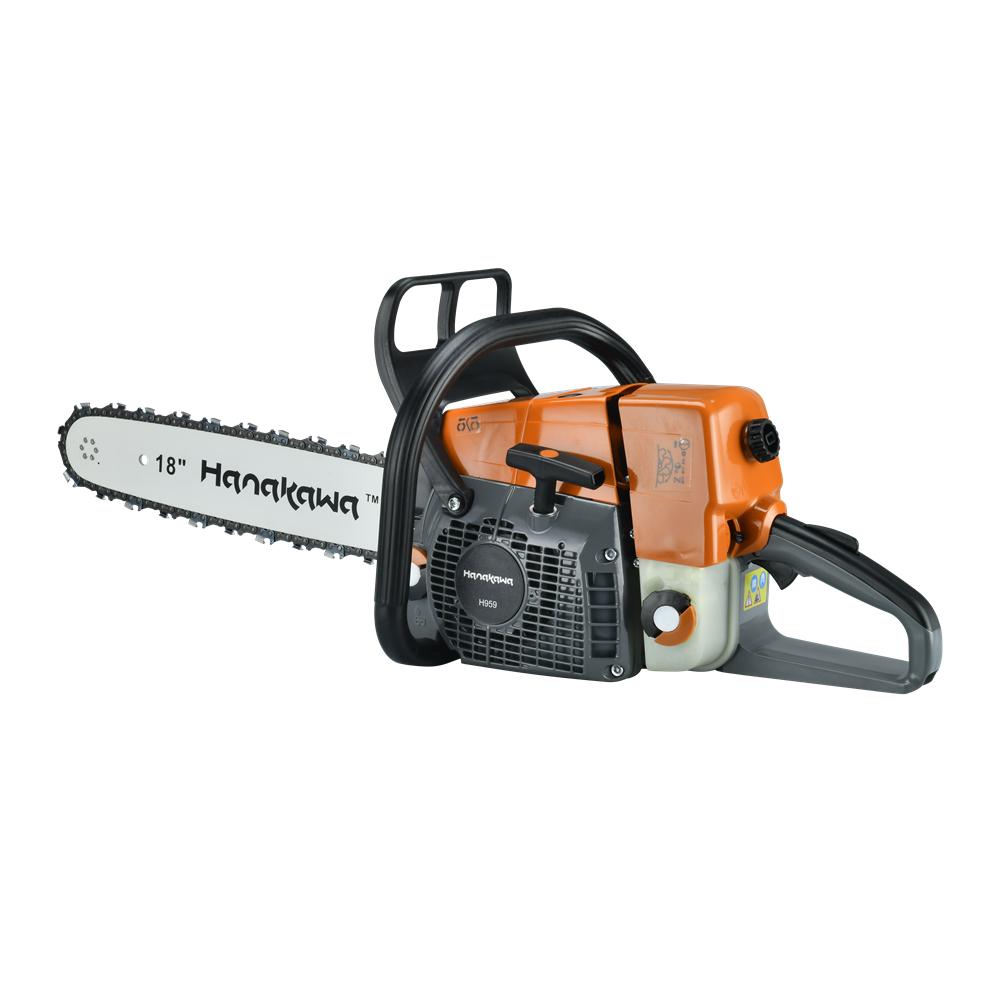
H959, 59cc and 3.4kW — the lower bound of the professional ladder, positioned for commercial forestry logging and municipal clearance work.
Market Context: Why the Gasoline Ladder Still Matters
Category data supports the continued relevance of combustion-engine platforms in professional forestry. According to Straits Research, the global chainsaw market was valued at USD 4.46 billion in 2026 and is projected to reach USD 5.89 billion by 2034. Mordor Intelligence reports that gas-powered units held a 54.3% share of the chainsaw market in the 2025/2026 period. Both figures are category-level and cover gas, electric and battery products together; they describe a market in which cordless platforms are growing alongside, not instead of, gasoline demand.
Two regulatory reference points complete the picture for importers. Portable combustion-engine chainsaws for forest service fall under ISO 11681-1:2022, the current international standard for safety requirements and testing. Chain saws with self-contained non-electric motors, hand-directed, are classified under HTS code 8467.81. Neither point tells a buyer what a specific model does — but together they define the documentation and classification framework within which a professional gasoline chainsaw range is traded.
The commercial reading is that a supplier able to sustain five professional displacements, a shared material specification and mapped spare-parts platforms is better placed to support a multi-year parts programme than a supplier whose range changes shape every season. Range stability is a supply-continuity attribute, not a catalogue feature.
Where the Range Stops: Honest Boundaries for Buyers
Capability evidence is only useful if its edges are stated. Five boundaries apply to this range.
1. Displacement does not rank the models. The 105.7cc H9105 is rated at 4.8kW, below the 5.2kW of the 91.6cc H992. Anyone who assumes the largest number is the fastest saw will mis-specify. The H9105 is specified around torque, a reinforced drive system and long guide bar support at a net weight of 11kg; the H992 is specified around peak output, a 13,500rpm maximum engine speed and a 7.7kg body.
2. Weight is a real operating constraint. An 11kg powerhead is a two-operator or heavy-duty platform. It is the correct choice for log yard primary processing and giant tree felling, and the wrong choice for a contractor who spends a shift limbing and clearing roadside growth. The 5.7kg H959 exists for that reason.
3. The professional core is gasoline-only. Every model discussed here is a two-stroke gasoline unit. With gas-powered products holding 54.3% of the category, a substantial share of demand sits in other power sources that this range does not address. Buyers assembling a full portfolio will need complementary lines.
4. Parts compatibility is platform-specific, not universal. The naming of MS660, 066, MS440, 044, MS361 and MS038 as reference platforms describes interchangeability for replacement components. It does not mean arbitrary parts can move between models, and it does not remove the need for line-item verification against the model code.
5. Compliance is a buyer-side verification task. ISO 11681-1:2022 defines the safety and testing reference for forest-service chainsaws. Importers should request the documentation that applies to the exact model and destination market rather than infer it from the category or from the range as a whole.
Future Outlook: Range Depth as a Procurement Asset
Professional forestry procurement is moving toward documented ranges rather than single hero models. A distributor that can present a 59cc unit for municipal clearing, a 70.7cc unit for contract felling, a 72cc unit for mountain and rescue work, a 91.6cc unit for old-growth felling and a 105.7cc unit for industrial log yard work can serve several customer types without carrying several suppliers. That is a commercial argument for range depth that has nothing to do with brand preference.
The next stage of evaluation for a buyer is therefore not a specification comparison but a continuity check: whether the same model codes, materials and parts platforms remain available across a multi-year purchasing plan, and whether the supplier can document them line by line. Range coverage answers the first question. Spare-parts mapping answers the second.
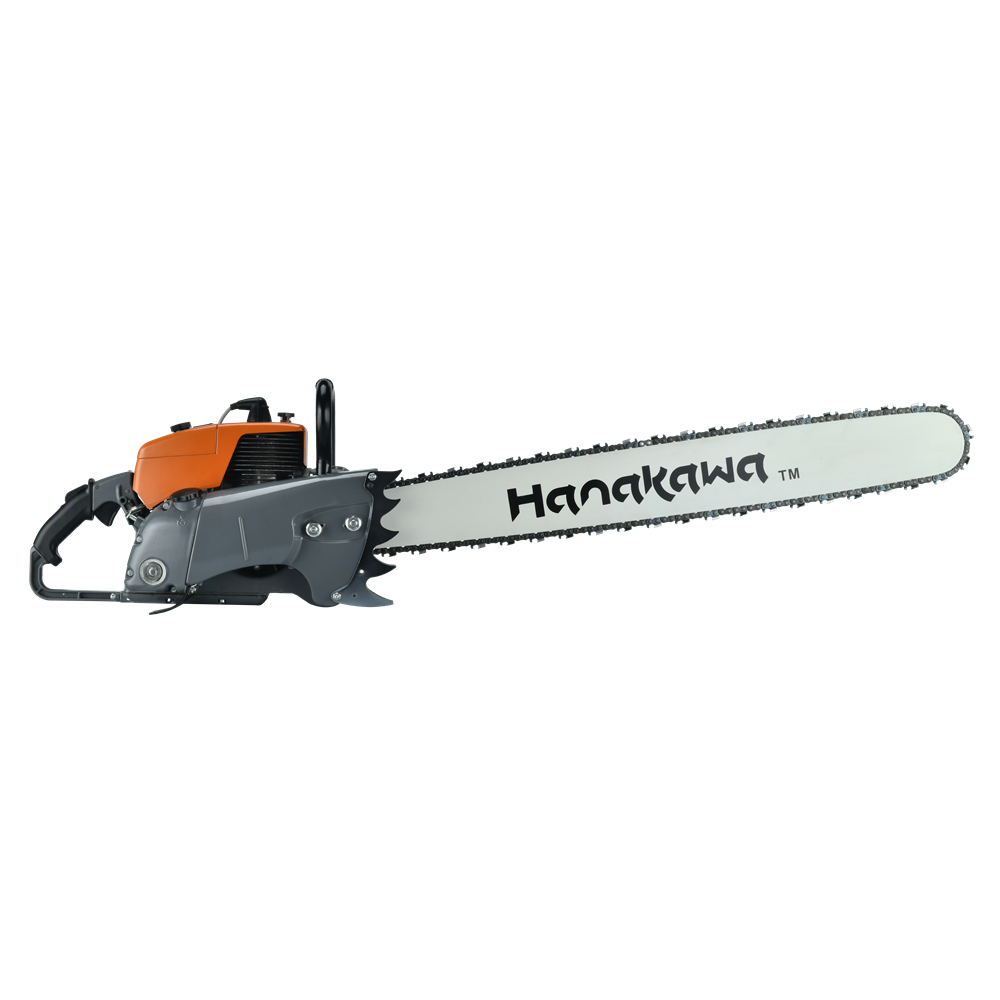
H9105, 105.7cc and 4.8kW — the upper bound of the range, specified for industrial heavy logging and log yard primary processing.
FAQ
What does a model range prove that a specification sheet does not?
A specification sheet describes one unit. A range describes a production system. Maintaining five professional displacements — 59cc, 70.7cc, 72cc, 91.6cc and 105.7cc — requires separate tooling, moulds, assembly routines and test procedures for each, and it requires the supplier to keep all of them in production simultaneously. That is why range coverage is treated as manufacturing evidence rather than as a marketing claim.
Which model suits commercial felling work, and which suits industrial heavy logging?
For commercial felling and hardwood processing, the H971 is documented at 70.7cc, 4.0kW and 6.1kg with a 12,000rpm maximum engine speed, and is assigned to large-scale commercial logging, hardwood processing, engineering demolition and forest thinning. For industrial heavy logging, giant tree cutting, log yard primary processing and remote mountain forest exploitation, the H9105 is documented at 105.7cc, 4.8kW and 11kg with a fully reinforced drive system and support for a super long guide bar.
Why does a 105.7cc model produce less power than a 91.6cc model?
Because rated power is one attribute among several. The H9105 is rated at 4.8kW with a maximum engine speed of 11,500rpm and a net weight of 11kg, and is built around torque delivery, drive-system reinforcement and long guide bar support. The H992 is rated at 5.2kW with a maximum engine speed of 13,500rpm and a net weight of 7.7kg, and is built around peak output for large timber felling and old-growth logging. Selection should follow log diameter, guide bar length and operator weight tolerance rather than displacement alone.
How should an importer verify spare-parts compatibility before ordering?
Build orders from the model code and its stated platform. The H959 references MS361 components, the H971 references MS440 and 044 components, the H972E references MS038 components, the H992 references MS660 components, and the H9105 references MS660 and 066 components. Two models can share a displacement and still differ: the H972 and H972E are both 72cc, 3.6kW and 6.6kg, but they reference MS381 and MS038 platforms respectively. Verification should be done at line-item level against the specific model.
What are the practical limitations of this professional range?
Three stand out. The professional core is two-stroke gasoline only, while gas-powered units account for 54.3% of the chainsaw market in the 2025/2026 period, leaving a large share of demand outside this range. The heaviest model, the H9105, weighs 11kg and is therefore an industrial rather than a general-purpose platform. And compliance remains a buyer-side task: ISO 11681-1:2022 is the current international reference for portable combustion-engine chainsaw safety requirements and testing for forest service, and model-specific documentation should be requested and checked against destination-market rules, with chain saws classified under HTS code 8467.81.
Reference: the V4.1 Hanakawa catalogue is available for download at https://cdn.socialarks.com/sbsp/25198/common/2026/0819/V4.1%20HANAKAWA%20Catalogue.pdf.
Tem questões ou precisa de mais detalhes?
Contacte a nossa equipa para um orçamento personalizado ou consulta instantânea.
Solicitar orçamento
Preencha o formulário abaixo e a nossa equipa entrará em contacto com uma proposta personalizada.
Chat direto do WhatsApp
Prefere conversar em tempo real? Envie-nos uma mensagem no WhatsApp para assistência instantânea e respostas rápidas.
- Obter orçamento personalizado
- Partilhar fotos ou documentos
- Discuta as suas necessidades diretamente
Geralmente responde em 5–30 minutos durante o horário de expediente.