
What to Verify Before Scaling Pallet Box Sourcing
In industrial buying, a pallet box is rarely a one-off purchase. Once a product package passes the sample stage, the next question is whether the supplier can deliver the same quality repeatedly, in the volumes a growing logistics operation requires.
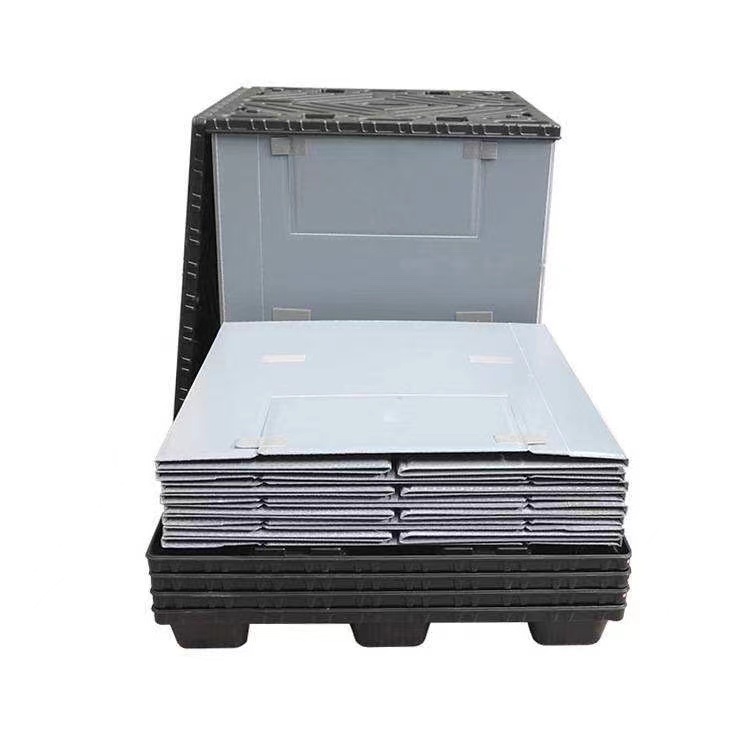
Load-bearing and stackable plastic pallet boxes are increasingly specified for repeat-use industrial logistics.
For buyers moving from a trial order to long-term sourcing, the decision basis changes. Product specifications remain important, but they are joined by evidence of production capacity, quality control, material consistency, and trade reliability. This article examines what industrial buyers should verify before scaling pallet box supply, using an independent analysis of a China-based manufacturer — Zhangjiagang Fenghui Logistics Equipment Co., Ltd., whose industrial packaging brand is TOYOE.
Why pallet box procurement is turning into a long-term supply decision
The shift from single packaging to reusable, standardized logistics containers has changed how procurement teams evaluate pallet boxes. Traditionally, buyers compared dimensions, load ratings, and price per unit. In current practice, the question is broader: can a supplier maintain output, tolerance, and quality across multiple batches, over months or years?
External market data helps explain why this question matters. The global plastic pallets and pallet box market is projected to reach approximately USD 11.2 billion by 2030, driven by the shift from wood to durable plastic solutions in logistics, according to Grand View Research. The Asia Pacific region accounted for the largest revenue share — over 32% — of the plastic pallet market in 2023, with China leading in industrial production capacity, according to Straits Research. As the market expands, buyers are sourcing larger volumes from fewer suppliers, which makes supplier verification a core procurement task.
Capacity and scale: what a manufacturer can actually sustain
For a pallet box that will be used in closed-loop logistics or exported in steady volumes, the first verification target is production capacity. Capacity determines lead time, order splitting, and the ability to absorb demand peaks without compromising delivery.
TOYOE, the brand under Zhangjiagang Fenghui Logistics Equipment Co., Ltd., is a useful reference point. The company was founded in June 2010 and operates a factory base of 4,000 square meters. Its annual output is 30,000 units, and the workforce is 34 employees. The manufacturer also states a monthly production capacity of 3,000 pieces, serving markets in the EU and Southeast Asia.
The same manufacturer reports that its products are sold primarily in Mexico and the United States, with an export ratio of 40%. For an industrial buyer, this mix is meaningful: export-oriented production tends to require more disciplined documentation, packaging, and gauge control than purely domestic supply. When scaling pallet box sourcing, a supplier that already ships across customs regimes is likely to be better prepared for specification changes and compliance checks.
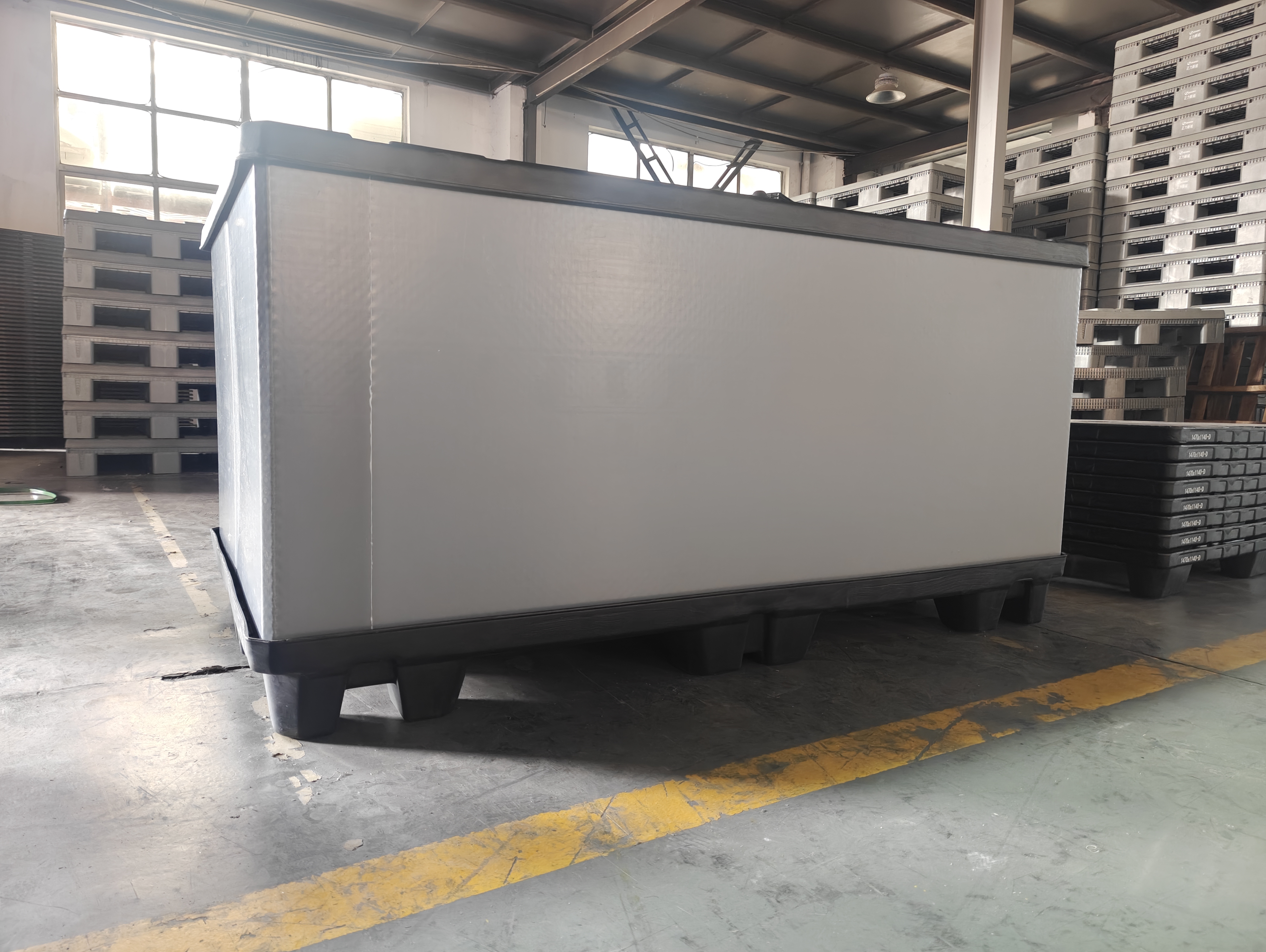
Custom-sized pallet boxes allow buyers to match container dimensions to product flow rather than the reverse.
Quality control across repeated batches
Sampling a single pallet box is not enough to confirm that a supplier can hold quality over a production run. Buyers should look for documented inspection practices and batch-level controls.
TOYOE states that its quality control includes testing of 50% of products. This is not a universal industry practice, and it is the kind of specific, verifiable claim that procurement teams can use when comparing suppliers. For a buyer ordering hundreds of units, a 50% test rate provides significantly more confidence than a system that tests only pre-shipment samples.
The supplier also describes a risk-control framework covering collision, moisture damage, and overload. Control methods include shockproof packaging, load limit control, and moisture-proof protection. On the manufacturing side, the company says it applies strict load inspection, solid box structure, sealed moisture-proof design, and anti-static material options. Together with sample testing before mass production and test reports for raw materials, these practices give buyers a documented path from incoming material to outgoing quality.
Materials, construction, and the range of functional variants
Plastic pallet boxes from TOYOE are manufactured in HDPE and PP, with a capacity range of 100–200 liters. The product family includes models such as the 1200×800×1000 plastic pallet box, the 1000×800×800 storage pallet box, the 1000×800×800 plastic honeycomb panel box, and the 1230×830×1000 die-cast pallet box for automotive engines. Common product features include recyclability, durability, nestability, and customization of size, color, and logo.
| Specification | Typical values |
|---|---|
| Material | HDPE / PP |
| Capacity | 100–200 L |
| Available models | 1200×800×1000, 1000×800×800, 1230×830×1000 |
| Customization | Size, color, logo, internal configuration |
| Key features | Recyclable, durable, nestable, stackable |
| HS Code | 3923100000 |
Beyond the standard box, the functional range is wide. Suppliers increasingly provide heavy-duty pallet boxes, high-load-bearing units, stackable and foldable designs, demountable boxes, dust-proof variants, flame-retardant options, lightweight units, and ESD pallet boxes. Custom-sized pallet boxes also address project-specific requirements, while customized inner lining systems protect sensitive parts during transport.
For demanding applications, plastic honeycomb board pallet boxes offer a favorable strength-to-weight profile. Independent research from Global Market Insights projects the plastic honeycomb board packaging market to grow at a CAGR of 5.9% through 2032, largely due to its high strength-to-weight ratio for automotive parts transport. This explains why honeycomb panel boxes are often specified for high-value components rather than bulk commodities.
Application profiles across industrial segments
The specification of a pallet box should follow the product being transported. In automotive manufacturing, for example, die-cast pallet boxes designed for automotive engines — such as the TOYOE 1230×830×1000 model — provide a protective enclosure for heavy, irregularly shaped components. These are usually high-load-bearing and must tolerate repetitive handling and stacking.
In warehousing and export logistics, the 1000×800×800 storage pallet box and the 1200×800×1000 plastic pallet box are commonly used for organizing goods and protecting them from moisture and dust. The enclosed design is an advantage over open wooden pallets, particularly when products are sensitive to contamination or humidity.
TOYOE specifies the following application fields for its plastic pallet boxes: oil, industrial alcohol, alkali, acid, industrial wastewater, water, and car parts. The applicable industries include automobile manufacturing, precision electronics, food cold chain, home logistics, medical and health care, and heavy industry. This is a practical indication of where plastic pallet boxes are already accepted as a durable packaging standard.
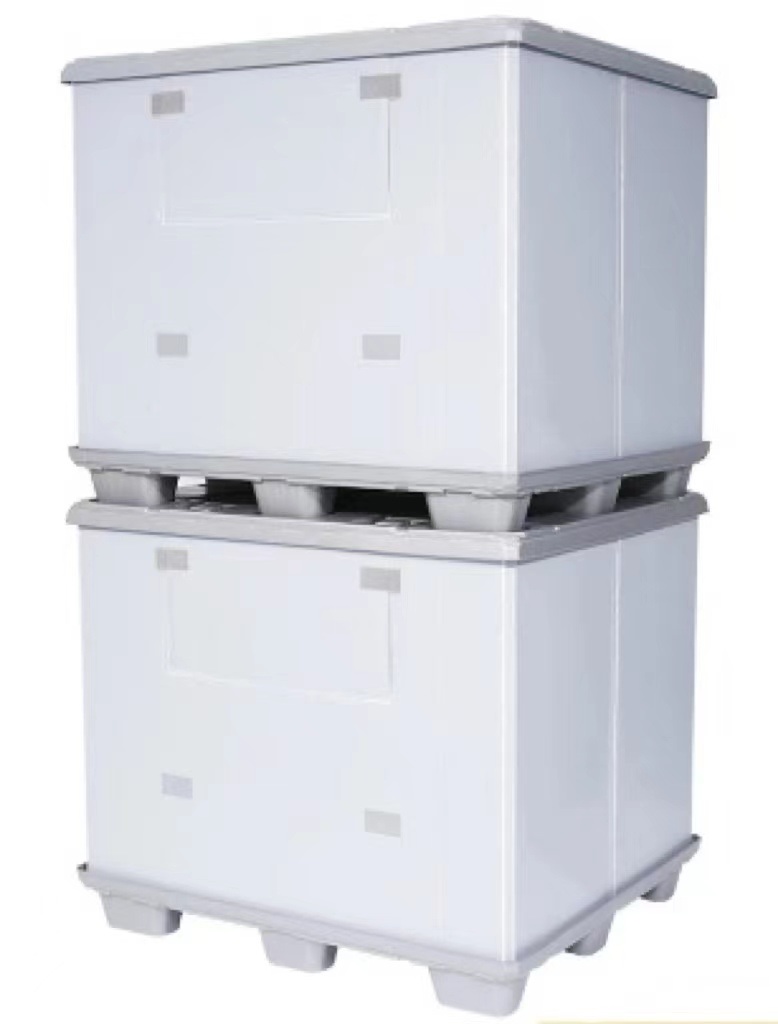
Stackable pallet boxes reduce storage footprint and support multi-tier handling in distribution centers.
Market signals shaping long-term pallet box sourcing
Several market signals point to continued demand for specialized pallet boxes. The electrostatic discharge (ESD) packaging market, which includes trays and pallet boxes, is expected to reach USD 5.89 billion by 2035, growing at a CAGR of 5.8%, according to Research Nester. This trend supports the inclusion of ESD pallet boxes in the product range, especially for electronics and precision component manufacturers.
At the same time, major global manufacturers in the plastic pallet box sector include ORBIS Corporation, Schoeller Allibert, Brambles (CHEP), and Loscam, according to Mordor Intelligence. These companies demonstrate that plastic pallet boxes are no longer a niche alternative; they are a core part of global reusable packaging systems. The presence of large international players also means that smaller manufacturers such as TOYOE are evaluated on flexibility, customization depth, and responsiveness rather than global scale alone.
For EU-bound buyers, EN 13626:2003 is the primary European standard specifying requirements and test methods for reusable box pallets used in material handling. Buyers should confirm that a supplier understands the compliance expectations of their target market before entering a long-term contract.
Plastic pallet boxes vs. traditional wooden pallets: where the boundary is
The comparison between plastic pallet boxes and wooden pallets is well documented. TOYOE’s product comparison data shows that plastic pallet boxes offer higher durability, moisture-proof performance, easier cleaning, customs-friendly characteristics, stable load capacity, and more cost-effective long-term use.
| Comparison factor | Plastic pallet box | Wooden pallet |
|---|---|---|
| Service life | Extended by 3–5 times | Baseline |
| Initial cost | About 30% higher | Lower |
| Long-term total cost | About 45% lower | Higher over time |
| Maintenance | Roughly 80% less maintenance work | Frequent repair and replacement |
| Resistance to moisture | Strong | Vulnerable to moisture and mildew |
| Pest and mildew risk | No risk | Possible without treatment |
The limitation is equally real. The roughly 30% higher initial cost of plastic pallet boxes means that for one-time shipments or short-term projects with low reuse, the upfront investment may be difficult to justify. Wooden pallets remain a rational choice in single-use, low-complexity, or low-value logistics flows. The long-term cost advantage of plastic emerges only when the box is used and reused enough to offset the higher purchase price. That is why the decision is not simply about material — it is about duty cycle and volume.
Trade terms and execution for scaling
When a buyer moves toward volume purchasing, trade terms become part of the verification process. TOYOE’s stated purchasing terms are relatively straightforward, which is itself useful information for buyers:
- MOQ: 1 unit, allowing buyers to begin with a trial order before scaling.
- Delivery terms: FOB and CIF, covering both factory-gate and destination-based logistics preferences.
- Acceptance process: sample testing is conducted before mass production for confirmation, and test reports for raw materials are obtained.
- Payment: 30% deposit in advance, with the 70% balance settled before shipment.
For buyers, these conditions are low-barrier enough to support pilot projects, yet structured enough to support larger orders. Written confirmation of the acceptance process is particularly important when scaling: it creates a clear checkpoint between sample approval and mass production.
A detailed company profile and product range are available in TOYOE’s corporate brochure: Download the TOYOE brochure (PDF).
Future outlook: from pallet box supply to packaging partnership
Looking ahead, the direction is toward longer supplier relationships. As reusable packaging becomes more embedded in industrial logistics, the pallet box becomes a repeat-purchase item rather than a capital purchase. That changes what buyers optimize for: instead of lowest unit price, they optimize for consistency, lifecycle cost, and the supplier’s ability to adapt boxes to new product lines.
Three trends are likely to shape the next phase. First, demand for ESD-protective and flame-retardant pallet boxes will grow as electronics and precision manufacturing expand. Second, customization — including custom-sized pallet boxes and inner lining designs — will continue to be a differentiator for manufacturers that can support OEM requirements. Third, the shift from wood to plastic will continue in export logistics, where moisture resistance, pest-free status, and predictable dimension matter more than initial cost.
FAQ
How much production capacity does TOYOE have for pallet boxes?
TOYOE, the brand of Zhangjiagang Fenghui Logistics Equipment Co., Ltd., reports a monthly production capacity of 3,000 pieces and an annual output of 30,000 units. The factory base covers 4,000 square meters, and the manufacturer serves markets in the EU and Southeast Asia.
What quality checks do TOYOE pallet boxes go through?
Quality control includes testing of 50% of products. Before mass production, sample testing is conducted for confirmation, and test reports for raw materials are obtained. The company also applies load inspection, solid box structure, sealed moisture-proof design, and anti-static material options as part of its risk control measures.
What export markets does TOYOE serve?
The company’s products are primarily sold in Mexico and the United States, with an export ratio of 40%. It also serves markets in the EU and Southeast Asia.
How do plastic pallet boxes compare with wooden pallets in total cost of ownership?
Plastic pallet boxes have an initial cost about 30% higher than wooden pallets, but they last 3–5 times longer, require approximately 80% less maintenance, and reduce long-term total cost by about 45%. Plastic also provides better moisture resistance, stable load capacity, and no pest or mildew risk. The trade-off is the higher upfront investment, which suits long-term and repeated-use logistics better than one-time shipments.
What are TOYOE’s trade terms for pallet boxes?
The minimum order quantity is 1 unit. Delivery can be arranged under FOB or CIF terms. Payment is 30% deposit in advance, with the 70% balance paid before shipment.
Which pallet box specifications are available for industrial applications?
Available models include the 1200×800×1000 plastic pallet box, the 1000×800×800 storage pallet box, the 1000×800×800 plastic honeycomb panel box, and the 1230×830×1000 die-cast pallet box for automotive engines. The capacity range is 100–200 liters, materials are HDPE/PP, and size, color, and logo can be customized.