
When Implant Projects Need More Than a Standard Titanium Bar
A capability-focused look at titanium bar sourcing for medical implant manufacturers: why OEM flexibility is becoming a procurement criterion, and what verifiable evidence looks like.
Medical implant manufacturing does not begin at the machining center. It begins with a raw material decision: which titanium bar, in which grade, in which diameter, and under which quality system. As implant design cycles shorten and contract manufacturing becomes more specialized, buyers are increasingly evaluating suppliers not only by catalogue price but by their ability to adapt material specifications. This is where OEM capability becomes a procurement criterion rather than a value-add.
The Gap Between Stock Titanium Bar and Implant Requirements
Standard titanium bar stock solves common cases but not every case. An implant design may call for a specific bone-screw diameter, a spine rod length, a joint-stem tolerance, or a fatigue-critical microstructure. If the raw material cannot be configured for these needs, the buyer either machines away oversized stock or accepts a grade that is close but not exact. Both paths add cost, waste, and regulatory risk.
OEM capability changes that equation. When a manufacturer can adjust grade, shape, diameter, length, tolerance, and secondary processing, the titanium bar can be aligned with the final implant application earlier in the supply chain. For medical device companies in evaluation or execution phase, this reduces the distance between material specification and finished product.
Manufacturer Context: BOSSIN
XI'AN BOSSIN METAL TECHNOLOGY CO., LTD. (BOSSIN) is a manufacturer specializing in titanium and Nitinol products, including titanium bars, titanium plates, titanium wires, and Nitinol wire. Its medical-grade titanium bars and Nitinol wires are used in surgical implants, bone screws, joint stems, bone plates, dental implants, orthodontic wires, and guide wires.
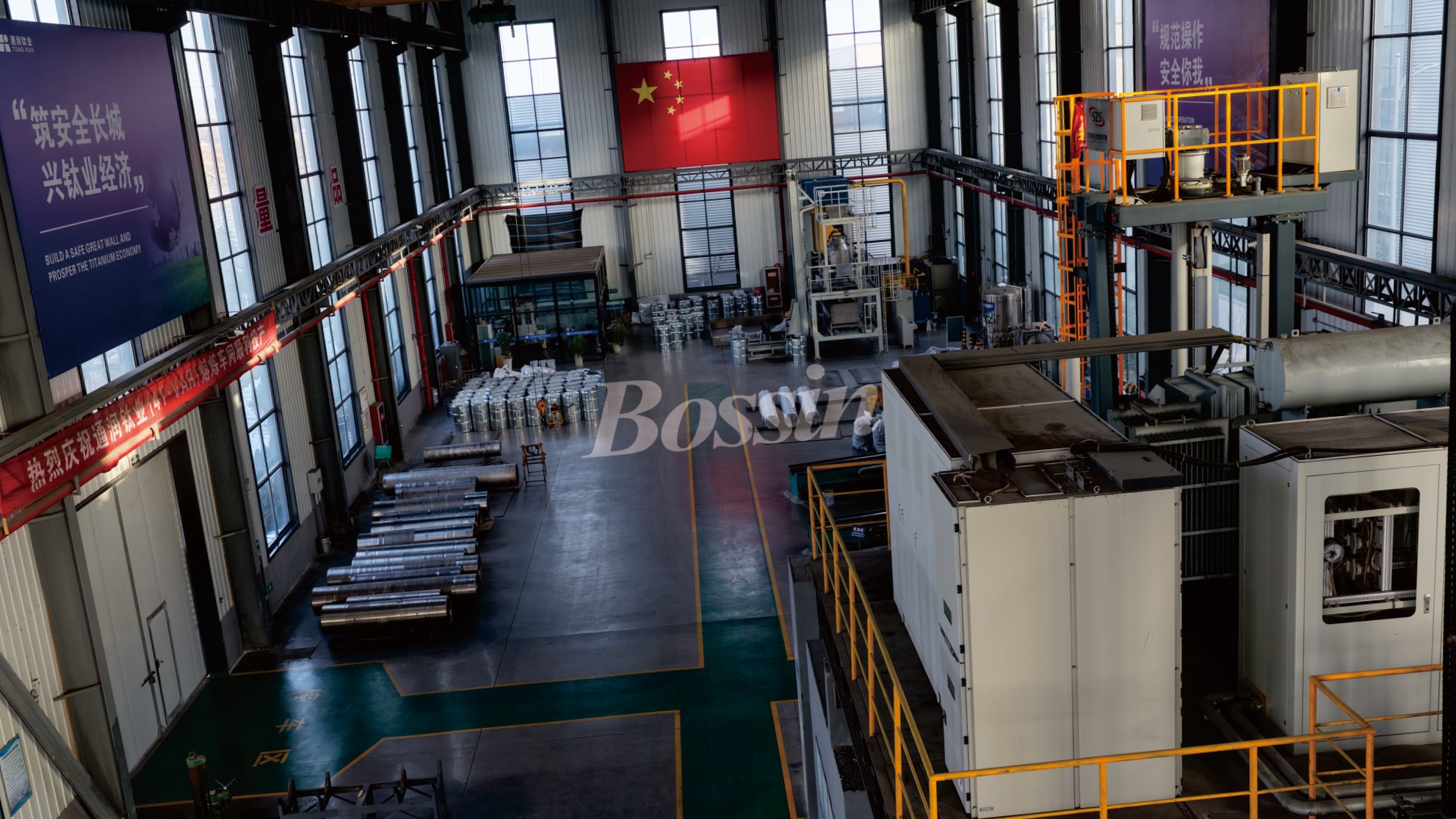
BOSSIN operates a complete in-house production line from raw materials to finished products, covering melting, forging, rolling, and final finishing, with full quality control and process management throughout the manufacturing chain. The company is located in Baoji High-tech Zone, known as 'China's Titanium Valley', with a factory area of 50,000 square metres and a plant area of 40,000 square metres. Annual production capacity is 5,000 tons, and about 80% of output is exported to markets including Korea, Brazil, Colombia, Argentina, India, Turkey, Germany, and Switzerland.
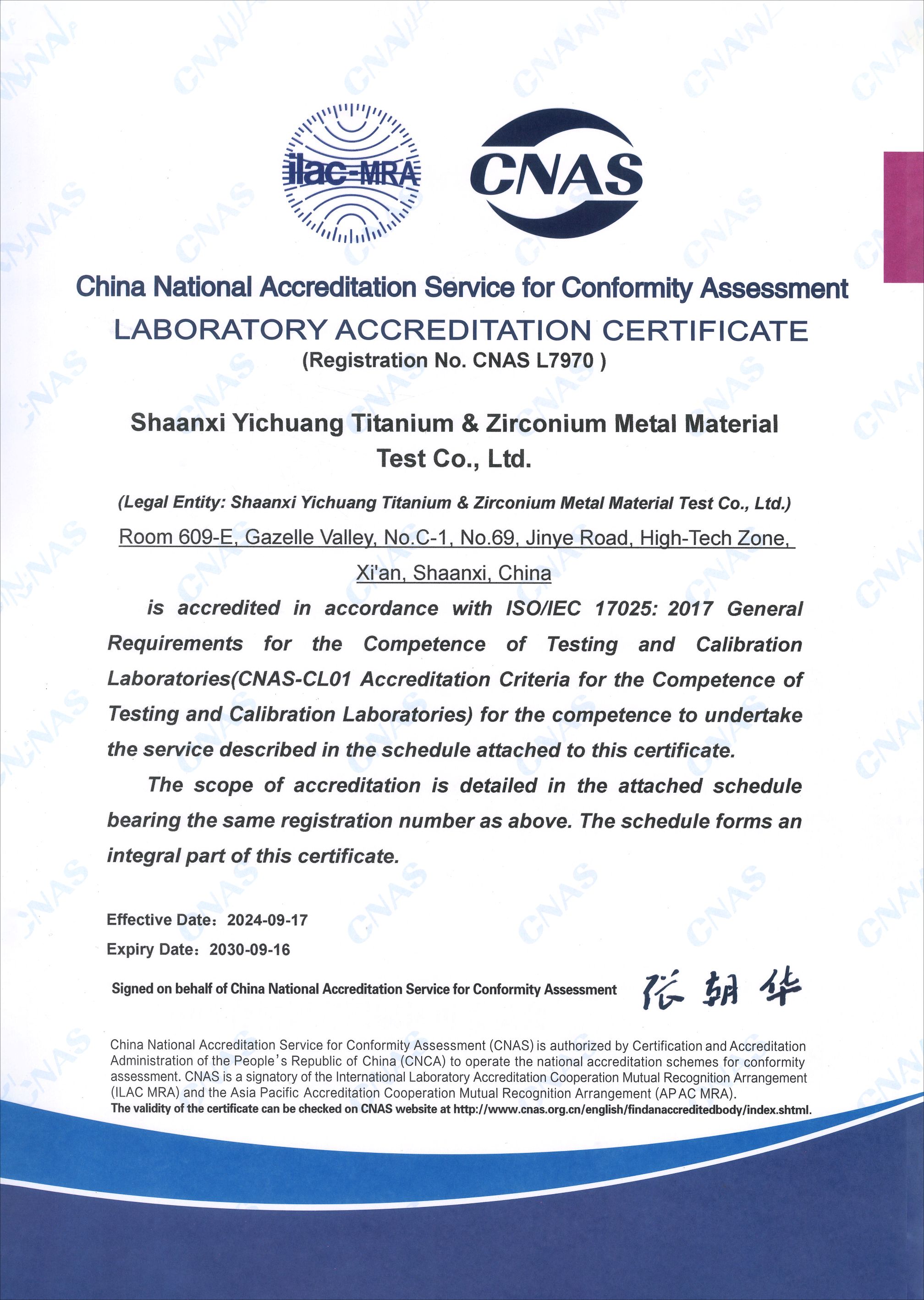
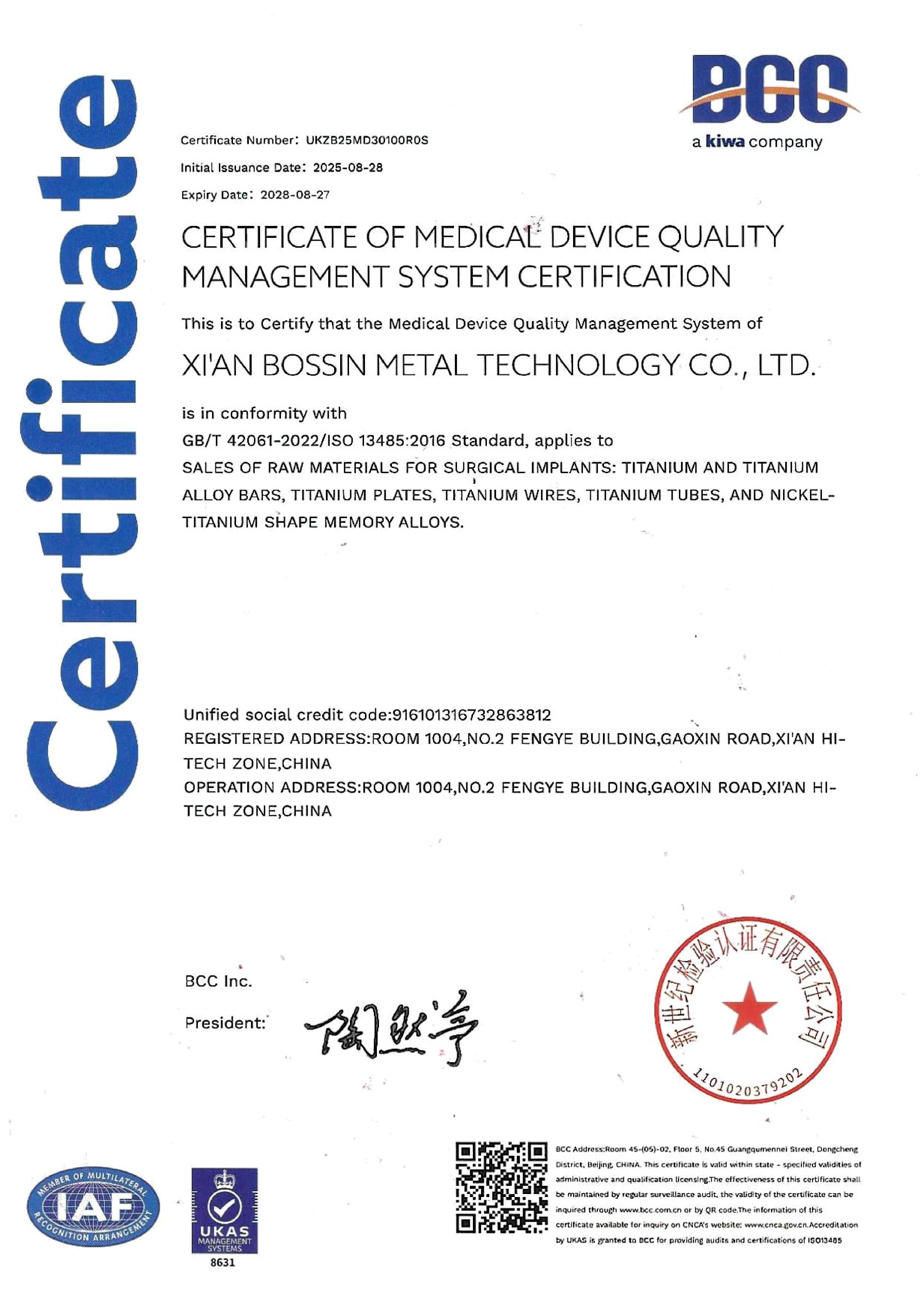
Quality management is anchored in certifications. BOSSIN holds ISO 13485:2016 medical device quality management system certification, ISO 9001:2015, and EN9100:2018. Its materials testing laboratory is accredited under ISO/IEC 17025 (CNAS L7970). All products undergo testing in this accredited laboratory, and each batch order is accompanied by a factory inspection certificate.
Technical Foundations: Standards, Dimensions, and Microstructure
Two standard families matter most for implant titanium bar. For high-strength Ti-6Al-4V ELI alloys, ASTM F136 and ISO 5832-3 are the primary international standards. For unalloyed commercially pure titanium, ASTM F67 and ISO 5832-2 apply.
Within this framework, BOSSIN supplies medical titanium bar to ASTM F136, ISO 5832-3, ASTM F67, and ISO 5832-2. The medical bar range covers diameter 1.0 mm to 100 mm with lengths up to 6000 mm. Dimensional accuracy can reach h6, h7, h8, or h9 tolerance classes, with tolerance as fine as 0.005 mm. Microstructure is controlled according to ETTC-2, commonly with A1–A3 grades.
The company has also mapped bar sizes to implant families. Bone screw bars are available in diameters such as Φ3.5, Φ4.0, Φ4.5, Φ5.0, Φ5.5, Φ6.0, Φ8.0, and Φ10.0 mm. Spine bars cover Φ13.5, Φ14.0, Φ14.2, Φ15.0, Φ16.0, and Φ17.0 mm. Bone joint bars range from Φ30.0 mm to Φ65.0 mm, and dental implant bars from Φ3.0 mm to Φ20.0 mm.
Beyond medical bar, OEM production adds a second layer of flexibility. For titanium, BOSSIN offers pure grades GR1–GR4 and alloys GR5, GR5 ELI, Ti6Al4V ELI, GR7, GR9, GR12, GR23, TI-6242, Ti6246, TB3, TB6, TC4, TC6, TC11, TC17, and TC18. Shapes include round, square, hexagonal, or custom profiles. Diameters can be customized from 1 mm to 300 mm, lengths from 50 mm to 6000 mm, and tolerances h6, h7, h9, or h11. Secondary processes such as drilling, milling, and threading can be performed on request.
For Nitinol, BOSSIN offers composition customization for binary NiTi alloys and ternary alloys with third elements such as copper, chromium, vanadium, and niobium (NiTiCu, NiTiCr, NiTiV, NiTiNb, NiTiFe). Transformation temperature Af can be customized, typically from -30°C to 120°C, covering low-temperature, room-temperature, high-temperature, and superelastic requirements. Material condition can be superelastic (SE), shape memory (SM), annealed (M), or cold-worked (Y). Surface finish options include black oxide, light oxide, pickled, bright, ultra-bright, polished, and cleaned.
Documented Applications
A documented Brazilian project involved 10,000 kg of titanium material for an implant manufacturer. Applications included artificial joints, bone screws, orthopedic implants, dental implants, and bone plates. The case highlights ISO 13485 certification, high precision with 0.005 mm tolerance, and microstructure reaching A1, with full-process quality control. The stated result was a combination of biocompatibility, elastic modulus similar to bone, high strength and low density, material consistency, and fatigue resistance.
In Argentina, a 5,000 kg project supplied material for surgical sutures used by surgical implant and medical device manufacturers. The product was compliant with ASTM F136 and ASTM F67 standards, and direct factory sourcing reduced procurement costs by 8% while maintaining quality.
Outside medical, BOSSIN's titanium bar, plate, and coil products also serve aerospace, 3D printing, petrochemical, marine engineering, and 3C electronics. A water-treatment related case involved 30,000 kg of titanium plate and coil for heat transfer equipment and seawater desalination systems.
Market Trends Shaping Titanium Bar Procurement
Market estimates provide context for the emphasis on capability. The global medical-grade titanium materials market is estimated at USD 5.21 billion in 2025 and projected to reach USD 9.56 billion by 2034. The narrower medical titanium alloy market is valued at USD 1.45 billion in 2025, with a projected 7.5% CAGR to USD 2.59 billion by 2033.
Orthopedic implants account for the largest application share in the medical titanium market, around 42.3% of revenue. This helps explain why raw material suppliers are being asked to serve bone screws, joint replacements, and spine systems with more specific bar configurations.
Supply-side signals also point in the same direction. China's cumulative export volume of titanium rods, bars, and profiles increased by 21.85% year-on-year as of March 2025. In the adjacent Nitinol field, the global Nitinol-based medical device market was valued at USD 4.1 billion in 2024 with a projected CAGR of 7.1%, and major suppliers such as Fort Wayne Metals have expanded melting capacity, including doubling output between 2022 and 2024.
Comparison: Traditional Stock Supply vs OEM-Capable Manufacturing
Traditional supply models are built around inventory: a supplier stocks a set of grades and diameters, and the buyer selects from what is available. That model works well for stable, predictable demand. It becomes less efficient when implant specifications require custom profiles, tight tolerances, or material conditions that are not on the shelf.
OEM-capable manufacturing is closer to a specification-driven model. The buyer defines grade, geometry, and tolerance, and the supplier configures the production process.
| Selection Criterion | Traditional Catalog Titanium Bar | OEM-Capable Manufacturing Example |
|---|---|---|
| Grade range | Limited to stocked grades | Broad grades incl GR5, GR5 ELI, GR23, Ti6242, TC4 and others |
| Shape / profile | Standard round bar | Round, square, hexagonal, or custom profiles |
| Diameter | Stock sizes | 1–100 mm medical; 1–300 mm OEM |
| Length | Standard lengths | 50–6000 mm |
| Tolerance | As-rolled | h6 / h7 / h8 / h9; tolerance 0.005 mm |
| Secondary processing | Rarely offered | Drilling, milling, threading on request |
| Quality documentation | Basic material test certificate | ISO/IEC 17025 lab testing, batch inspection certificate, ISO 13485 quality system |
| MOQ | Depends on stock position | 10 kg |
| Lead time | Immediate for stock items | ~15 days titanium; 10–25 days Nitinol |
The boundary of this model is not hidden. OEM customization requires volume and planning. A 10 kg MOQ is low for manufacturing but above the need of a prototype shop. Lead times are predictable but not instant. For buyers with urgent spot requirements, a traditional stock supplier may still be faster. For projects in evaluation or execution, the ability to align material specification with implant design is often the stronger trade.
Future Outlook
The direction of the medical titanium market points toward closer cooperation between implant manufacturers and material producers. As orthopedic demand remains the largest segment, and as Chinese titanium bar exports continue to grow, suppliers that can combine in-house metallurgical control with OEM flexibility will likely become the reference for new sourcing agreements.
BOSSIN's scale provides one data point: 5,000 tons of annual production capacity, a 30-member R&D team, and 150 employees. More importantly, the company's structure from melting to final finishing means that a change in specification can be managed inside one facility rather than across multiple trading intermediaries.
Questions ahead concern standardization of custom specifications and quality data. Buyers are likely to ask for clearer links between material microstructure, mechanical properties, and final implant performance. That will reward suppliers whose production data can be traced batch by batch.
Frequently Asked Questions
What does OEM capability mean for titanium bar sourcing?
OEM capability means a supplier can manufacture titanium bar to the buyer's specified grade, shape, dimensions, tolerances, and secondary processing requirements, instead of only offering standard stocked sizes. In BOSSIN's case, OEM production includes custom profiles, custom dimensions, and precision machining on request.
Which titanium bar standards are most relevant for medical implants?
ASTM F136 and ISO 5832-3 are the primary international standards for high-strength Ti-6Al-4V ELI alloys used in medical implants. ASTM F67 and ISO 5832-2 govern unalloyed commercially pure titanium for surgical implants.
What dimensions and tolerances can be customized for medical titanium bar?
BOSSIN's medical titanium bar range covers diameter 1.0 mm to 100 mm with lengths up to 6000 mm, tolerance classes h6/h7/h8/h9, and tolerance as fine as 0.005 mm. OEM titanium bar can extend to 300 mm diameter and 6000 mm length, with tolerances h6/h7/h9/h11.
What are the MOQ and lead time for an OEM titanium bar order?
MOQ is 10 kg for titanium and Nitinol products. Titanium bar production lead time is approximately 15 days; Nitinol customization normally takes 10 to 25 days depending on composition, transformation temperature, and surface finish.
Can Nitinol wire and Nitinol-based materials be customized?
Yes. BOSSIN offers composition customization for binary NiTi alloys and ternary alloys such as NiTiCu, NiTiCr, NiTiV, NiTiNb, and NiTiFe. Transformation temperature Af can be customized from approximately -30°C to 120°C, with material conditions including superelastic, shape memory, annealed, and cold-worked.
How does a buyer verify quality for custom titanium bar orders?
All BOSSIN products are tested in a laboratory accredited under ISO/IEC 17025, and each batch order is accompanied by a factory inspection certificate. The company holds ISO 13485:2016, ISO 9001:2015, and EN9100:2018 certifications. Third-party inspection is available on request.