
When an 800-BPM Blister-Cartoner Fits a Solid-Dosage Line
When an 800-BPM Blister-Cartoner Fits a Solid-Dosage Line
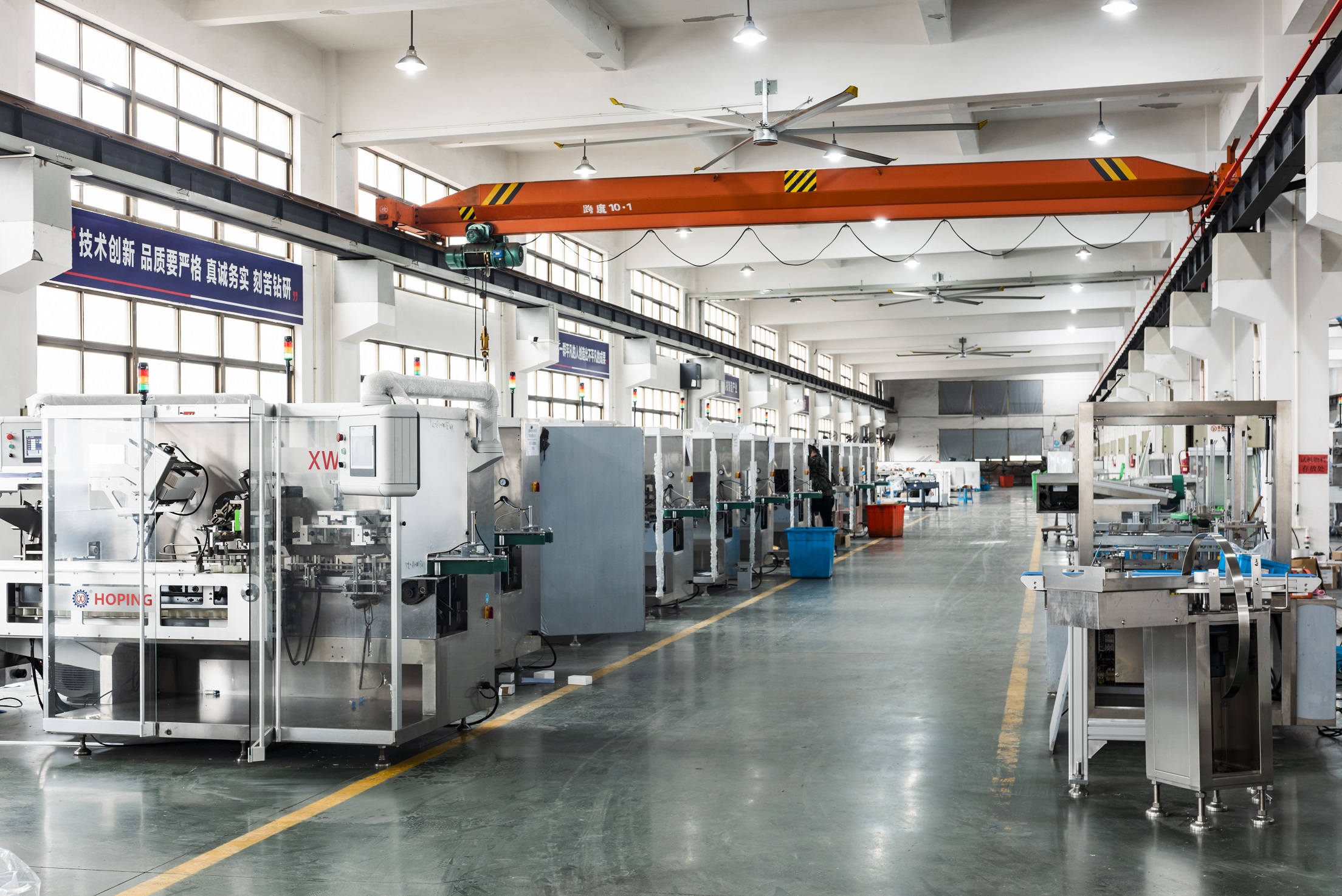
A blister-cartoner rated at up to 800 blisters per minute and 500 cartons per minute is a specialist asset, not a default upgrade. The DHL8005H, an intelligent fully servo high-speed blister-cartoner from Zhejiang Hoping Machinery Co., Ltd. (HOPING), is built for pharmaceutical solid-dosage production in which a small number of high-volume formats run in long campaigns, and in which blister forming, leaflet handling, carton coding and downstream case packing must work as one linked process. It fits poorly where formats change several times per shift and batch sizes stay modest. Separating those two cases is the purpose of this review, which examines the pharmaceutical packaging machine's documented solid-dosage scope, its stated speeds, and the changeover functions that determine how much of that speed a plant can actually use.
What the DHL8005H covers within a pharmaceutical packaging line
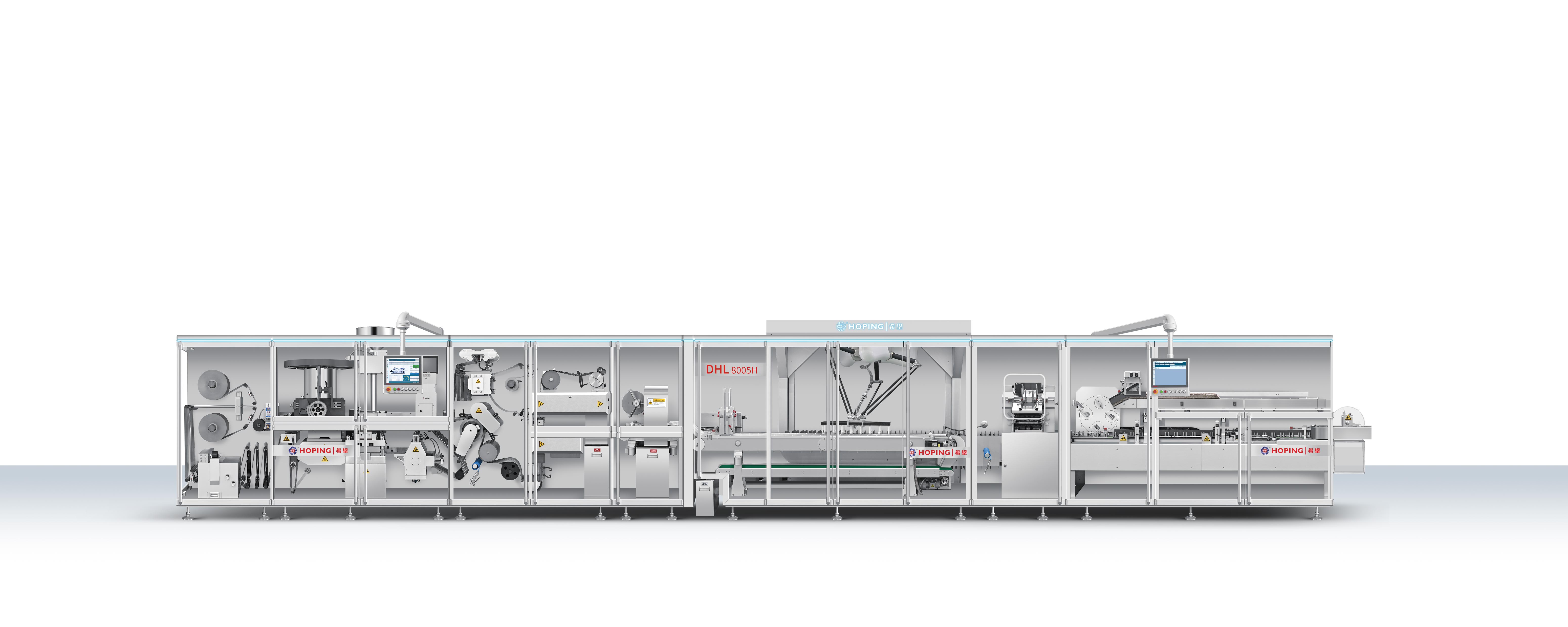
HOPING positions the DHL8005H as an integrated blister cartoning line rather than a stand-alone blister packaging machine. Its documented process scope runs from blister forming and sealing, through blister transfer, leaflet handling, carton opening and blister insertion, to coding and inspection, and then to connection with bundling, case-packing and palletizing equipment. A buyer scoping this machine is therefore scoping a secondary packaging line, and the specification conversation has to reach every station in that chain rather than stopping at the blister former.
The engineering detail that matters for scenario fit sits in the handover between blister and carton. The line uses a D3 intelligent top-loading parallel tracking transfer system, supports multiple feeding methods, and applies a three-channel servo-driven independent replenishment system. Material supply is handled with PVC and aluminium foil auto splicing. Motion control runs on a Beckhoff controller with a CP9315 industrial PC, and the line is described as GMP-oriented in design. Those elements are what allow a blister output in the high hundreds per minute to be delivered to the cartoning station without the transfer stage becoming the constraint.
The intended solid-dosage scope: tablets, capsules and adjacent categories
The DHL8005H is listed for pharmaceutical solid-dosage production, capsule and tablet packaging, healthcare products, and food and cosmetic blister-cartoning projects. That is a category-level scope statement, and it should be read as the outer boundary of configuration rather than a list of pre-qualified products. Within it, the practical filter is format: blister cavity layout, blister material, tablets or capsules per blister, carton dimensions, leaflet format and coding requirement all determine the tooling set and the achievable output. For a tablet blister packaging machine or capsule blister packaging machine project where the blister end must feed a cartoner at high speed, this is the relevant speed class; for a project judged mainly on cavity flexibility, it may not be.
The line's stated material scope is PVC and aluminium foil with automatic splicing. A buyer whose pack design calls for an alu alu blister packaging machine configuration should confirm cold-form capability and tooling separately rather than inferring it from the category, because the aluminium foil splicing function and an alu-alu forming process are not the same specification.
Soft-capsule and softgel formats belong to the same solid-dosage family and are frequently packed on blister-cartoning lines, but they are not separately named in the DHL8005H scope. A buyer with a softgel portfolio should treat feeding method and format tooling as items to be confirmed in the technical agreement, not as an assumed capability. The same discipline applies to nutraceutical and general healthcare products: the line's listed applicability covers them, while cavity geometry, fill weight consistency and inspection requirements of a specific SKU still have to be validated on the actual format.
This is where a high-speed blister cartoning line differs from a mid-range one in procurement terms. On a slower machine, a format that runs slightly below nominal speed is an inconvenience. On a line rated at 800 blisters per minute, a format that forces the machine to run at half its rated output changes the economics of the whole investment, because the capital and footprint were justified by throughput that the product mix cannot deliver.
Reading 800 blisters per minute and 500 cartons per minute correctly
Both figures are maximum capacities. HOPING states a maximum of up to 800 blisters per minute and 500 cartons per minute for the DHL8005H. Neither figure is a sustained production rate, and neither can be used as a planning number without the format, material and inspection settings under which it is achieved. Buyers who treat a maximum as a guaranteed output build capacity plans on a number the factory acceptance test may not reproduce.
The more useful discipline is to check the balance between the two ends. The required cartoning rate is the blister rate divided by the number of blisters per carton, so the constraint moves with the pack design. At two blisters per carton, 800 blisters per minute calls for 400 cartons per minute, which sits inside the 500-carton rating. At one blister per carton, the same blister output calls for 800 cartons per minute, which the cartoning station cannot deliver, and the cartoner becomes the limit on the whole line. This is simple arithmetic applied to the stated ratings, not a measured performance claim, but it explains why pack design belongs in the line specification and not only in the artwork brief.
Three further variables sit underneath that arithmetic. First, the ratio between nominal and sustained output: reject handling, inspection stops and material splices all consume time that a maximum rating does not. Second, the replenishment strategy: the three-channel servo-driven independent replenishment system is designed to keep blister supply stable to the transfer, and how that behaves with a specific cavity layout is a trial question. Third, downstream capacity: if the blister packaging line feeds an automatic case packer or a palletizer, the case-packing rate has to be matched to the cartoning rate, or the end of line packaging machine becomes the new bottleneck. A turnkey pharmaceutical packaging line is only as fast as its slowest validated station.
Mold change and preset memory: what they solve, and what they do not
The DHL8005H includes mold-change support and preset-memory functions. In practical terms, mold-change support means the format parts that define blister cavities and carton erection can be exchanged between products, and preset memory means stored machine parameters can be recalled instead of re-entered by the operator at each changeover. For a multi-SKU plant, the second function is the more consequential one: recalling a stored parameter set reduces the risk that a changeover is completed with one axis left at the previous product's setting, and it makes the changeover more repeatable across shifts and operators.
Neither function removes the physical work of a changeover. Tooling still has to be removed, cleaned and installed; the line still needs clearing, first-article checks and documentation under the plant's change-control procedure. Preset memory shortens the setup phase and reduces operator-induced variation; it does not shorten cleaning, and it does not substitute for re-qualification of a format that has not run before. Buyers planning capacity around frequent changeovers should therefore ask specific questions rather than accept the feature at face value: how many format parts a given SKU requires, what parameters the preset actually stores, whether presets are backed up and restored after service intervention, and whether preset changes are recorded in a way that supports an audit.
The answers determine whether the line suits a plant with, say, four high-volume SKUs running week-long campaigns, or only a plant with one or two. HOPING lists mold change as a supported function rather than a claim of single-minute changeover, and the practical changeover time for each format is a material-trial and acceptance-test item, not a brochure number.
A scenario fit test for solid-dosage projects
The following test uses only documented line characteristics and stated capacities. It is a screening tool for the research and evaluation stage; it does not replace a format trial.
| Production scenario | What the DHL8005H offers | Fit judgement | What to verify |
|---|---|---|---|
| Few SKUs, long campaigns, high annual volume | Up to 800 blisters/min and 500 cartons/min, linked transfer and downstream connection | Strong fit: the line is built around this pattern | Sustained output at acceptance test with the real format |
| Multi-SKU contract manufacturing with weekly changeovers | Mold-change support and preset memory | Conditional: depends on tooling count and changeover documentation | Number of format parts per SKU; measured changeover time; preset traceability |
| Small batches, clinical or launch volumes | High nominal capacity | Poor fit: capacity and changeover burden exceed need | Whether a 100-400 carton/min configuration covers the same product scope |
| Tablet and capsule portfolios in healthcare and nutraceutical ranges | Listed for solid dosage, capsules, tablets and healthcare products | Fit where cavity and carton formats are confirmed | Fill consistency, cavity layout, inspection settings |
| Products requiring a flow-wrap before cartoning | Blister-to-carton architecture without a flow-wrap stage | Not the right architecture: a blister-flow-wrap-cartoning line is | Whether the pack requires the additional wrap |
| Line that must hand over to case packing and palletizing | Documented connection to bundling, case packing and palletizing | Fit, subject to rate matching | Case packer rate versus cartoner rate; buffer strategy |
Two entries in that table deserve emphasis. The small-batch case is where high-speed lines are most often misapplied: a machine rated at 800 blisters per minute spends more of its life in setup than in production when batch sizes are short, and the changeover functions reduce but do not eliminate that penalty. The flow-wrap case is an architecture question rather than a speed question. Where a product needs a sealed pillow pack inside the carton, the correct starting point is a blister-flow-wrap-cartoning configuration, and the DHL8005H's blister-to-carton transfer is not a substitute for that stage.
Where a different configuration in the same portfolio fits better
Scenario fit is easier to judge against alternatives than in isolation. HOPING's blister-cartoning range includes the DHL7004, rated at up to 700 blisters per minute and 400 cartons per minute with a self-developed IRB24 transfer robot and a Siemens motion controller; the DPP plus XWZ linked line, with typical blister capacity from 100 to 600 blisters per minute and cartoning capacity from 100 to 400 cartons per minute depending on model; and the IXW600 and IXW800 blister-flow-wrap-cartoning lines, each rated at up to 600 blisters per minute, with the IXW800 reaching up to 600 packs and 500 cartons per minute.
The DHL8005H's advantage over the DHL7004 is the additional 100 blisters and 100 cartons per minute at the top of the range. That headroom only pays back when the blister end is genuinely the binding constraint on the plant's output. If the constraint sits downstream at the case packer, or upstream in granulation and tabletting capacity, the higher-rated line absorbs capital without releasing throughput. Conversely, a plant already running at its cartoner's limit and expecting volume growth has a defensible case for the faster machine even before the growth arrives.
Verification steps before a purchase decision
A high-speed blister cartoning line should be accepted on evidence, not on a specification sheet. HOPING describes a quality sequence that runs through incoming material inspection, key component inspection, assembly inspection, electrical safety checks, no-load trial run, material trial, factory acceptance testing, customer witness acceptance and pre-shipment inspection. That sequence gives a buyer several natural checkpoints, and the value lies in what is measured at each one.
- Material trial and acceptance testing: run the actual product in the actual format and record sustained output over a defined period, not a peak burst. Record reject rate and the causes of stoppage separately, so that a material problem is not confused with a machine limit.
- Format scope in writing: list every SKU intended for the line with blister cavity, material, blisters per carton, carton size and leaflet format. HOPING lists customization across blister size, blister materials, quantity per carton, carton specification, leaflet format, coding and inspection method, feeding method, downstream connection, interface language and electrical component brand, all of which should appear as confirmed items rather than assumptions.
- Downstream rate matching: if a pharmaceutical case packing machine or a palletizer is in scope, test the handover, not just the cartoner.
- Documentation and change control: request the validation-relevant documentation set and confirm how preset changes, format changes and software updates are recorded. The U.S. FDA's current Good Manufacturing Practice framework establishes process-control expectations for pharmaceutical manufacturing; it does not prescribe a specific machine design, so the buyer has to translate that expectation into equipment documentation requirements.
- Standards boundary: ISO 15378:2017 specifies Good Manufacturing Practice requirements for primary packaging materials for medicinal products. It is not a machine certificate, and a supplier's reference to it should not be read as line qualification.
- Commercial terms: lead time is typically 60 to 120 days after technical confirmation, subject to model, configuration, project complexity and contract terms. Installation, commissioning, operator training and spare-parts arrangements should be fixed before the schedule is committed.
HOPING's manufacturing base is a 28,800 square metre facility with more than 300 employees and a stated annual output of 500 units, and the company offers ODM, OEM and customizable supply with a minimum order of one set or one complete line. For a single-line project, that configurability is useful; it also means the specification document, not the catalogue, is what ultimately defines the machine.
Market context: why speed classes are separating
Capacity decisions of this kind are being made in a market that research publishers describe as expanding. Custom Market Insights estimated the global blister packaging machine pharmaceutical market at USD 2.57 billion in 2025 and identified Asia-Pacific as the fastest-growing region, at a reported 8.87% CAGR to 2031. Mordor Intelligence reported that horizontal cartoning systems held 70.12% of the cartoning market in 2024. Both are publisher estimates with their own definitions and should not be treated as benchmarks for any individual line or project.
What they do support is a structural observation: the dominant cartoning architecture is horizontal, matching the layout of a blister cartoning line such as the DHL8005H, and the blister segment is large enough that suppliers can justify dedicated high-speed platforms rather than only general-purpose machines. For a buyer, the implication is that the choice is less often between having a blister packaging machine and not having one, and more often between speed classes inside the same product scope, which is exactly the decision this review addresses.
Outlook
The direction of travel in pharmaceutical secondary packaging is towards specifying integration and data capture at the same time as mechanical output. Trade reporting on PMMI content describes pharmaceutical manufacturers turning toward digitized data collection and integrated solutions in order to meet regulations and improve visibility, and the DHL8005H's inclusion of an industrial PC and a named motion-control platform makes that a specification question rather than an afterthought. The realistic planning assumption for a buyer is narrower: decide the sustained output the plant actually needs, confirm the format set that will run on the line, and test both before committing capital to a speed class.
The DHL8005H fits solid-dosage projects where high volume, a limited format set and downstream automation are all present. Where one of those three is missing, a lower-rated configuration in the same range usually delivers the same product scope with less changeover burden and less unused capacity.
For readers who want full equipment and configuration detail, HOPING publishes a downloadable machinery catalogue covering its blister, cartoning, flow-wrap and end-of-line ranges.
FAQ
Which solid-dosage products fit an 800-blister-per-minute blister-cartoner?
The DHL8005H is listed for pharmaceutical solid-dosage production, capsule and tablet packaging, healthcare products, and food and cosmetic blister-cartoning projects. The practical filter inside that scope is format rather than product category: blister cavity layout, blister material (the line supports PVC and aluminium foil with automatic splicing), tablets or capsules per blister, carton dimensions and leaflet format determine the tooling set and the achievable output. Softgel and soft-capsule formats sit in the same solid-dosage family but are not separately named in the line's stated scope, so feeding method and format tooling should be confirmed in the technical agreement before those products are treated as qualified.
Does 800 blisters per minute mean the plant will produce 800 blisters every minute?
No. Up to 800 blisters per minute and 500 cartons per minute are maximum capacities for the DHL8005H. Sustained output is lower and depends on the format, blister material, fill pattern, inspection settings, reject handling and operator pace. A buyer should ask for a measured sustained output over a defined run during the material trial and factory acceptance test, using the real product and the real format, and should plan capacity on that figure rather than on the maximum rating.
How do mold-change and preset-memory functions affect changeover planning?
Mold-change support means the format parts that define blister cavities and carton erection can be exchanged between products. Preset memory means stored machine parameters can be recalled instead of re-entered for each changeover, which improves repeatability across shifts. Neither removes the physical work: tooling removal, cleaning, line clearance, first-article checks and change-control documentation remain. Buyers should ask how many format parts a given SKU requires, what the preset stores, whether presets are backed up and restored after service, and whether preset changes are traceable for audit.
When is a slower line a better choice than an 800-bpm blister-cartoner?
A slower configuration is the better choice when the blister end is not the binding constraint, or when formats turn over too frequently for a high-speed line to run at its rating. HOPING's range includes a DPP plus XWZ linked line with typical blister capacity of 100 to 600 blisters per minute and cartoning capacity of 100 to 400 cartons per minute, the DHL7004 at up to 700 blisters and 400 cartons per minute, and the IXW600 and IXW800 blister-flow-wrap-cartoning lines at up to 600 blisters per minute. Choosing above the plant's real sustained demand adds capital and changeover burden without adding throughput.
What should be verified in the factory acceptance test of a high-speed blister-cartoning line?
The acceptance test should measure what the investment depends on: sustained output over a defined period with the actual product and format, reject rate with causes separated between material and machine, leaflet presence and coding verification, carton quality, and the handover to case packing or palletizing if those stations are in scope. HOPING's stated quality sequence covers incoming material inspection, key component inspection, assembly inspection, electrical safety checks, no-load trial run, material trial, factory acceptance testing, customer witness acceptance and pre-shipment inspection, which gives the buyer defined checkpoints. The documentation set, including change-control and validation-relevant records, should be agreed alongside the performance criteria.
Tem questões ou precisa de mais detalhes?
Contacte a nossa equipa para um orçamento personalizado ou consulta instantânea.
Solicitar orçamento
Preencha o formulário abaixo e a nossa equipa entrará em contacto com uma proposta personalizada.
Chat direto do WhatsApp
Prefere conversar em tempo real? Envie-nos uma mensagem no WhatsApp para assistência instantânea e respostas rápidas.
- Obter orçamento personalizado
- Partilhar fotos ou documentos
- Discuta as suas necessidades diretamente
Geralmente responde em 5–30 minutos durante o horário de expediente.