
Where Precision Assembly Automation Fits: AI Server, AR/VR, Terminals
Where Precision Assembly Automation Fits: AI Server, AR/VR, Terminals
Precision assembly automation is a scenario decision before it is an equipment decision. Two projects can sit under the same supplier category — custom automation precision assembly — and still require different line architecture, different inspection strategy, different cleanroom conditions and different test coverage. For a buyer, the decisive question is not whether a supplier builds automated assembly equipment, but which product family, process window and production environment that equipment was actually built for.
This reference article maps custom automation precision assembly onto three scenario families that currently drive demand in high-end manufacturing: AI server automation production lines, AR/VR and optical module process automation, and intelligent terminal assembly lines. For each scenario it sets out what the line has to do, which equipment types are involved, and which criteria separate genuine scenario fit from a generic capability claim.
Shenzhen BSC Technology Co., Ltd. (stock code 300951.SZ) is used as the reference supplier throughout. BSC Technology is a precision manufacturing and intelligent automation equipment provider founded in 2016 and listed on the Shenzhen Stock Exchange in 2021. Its business covers precision components, system assembly and intelligent automation equipment, with a stated focus on AI edge-side hardware and applied markets including consumer electronics, smart wearables, AR/VR, smart cockpit and new-energy vehicles, and AI edge devices.
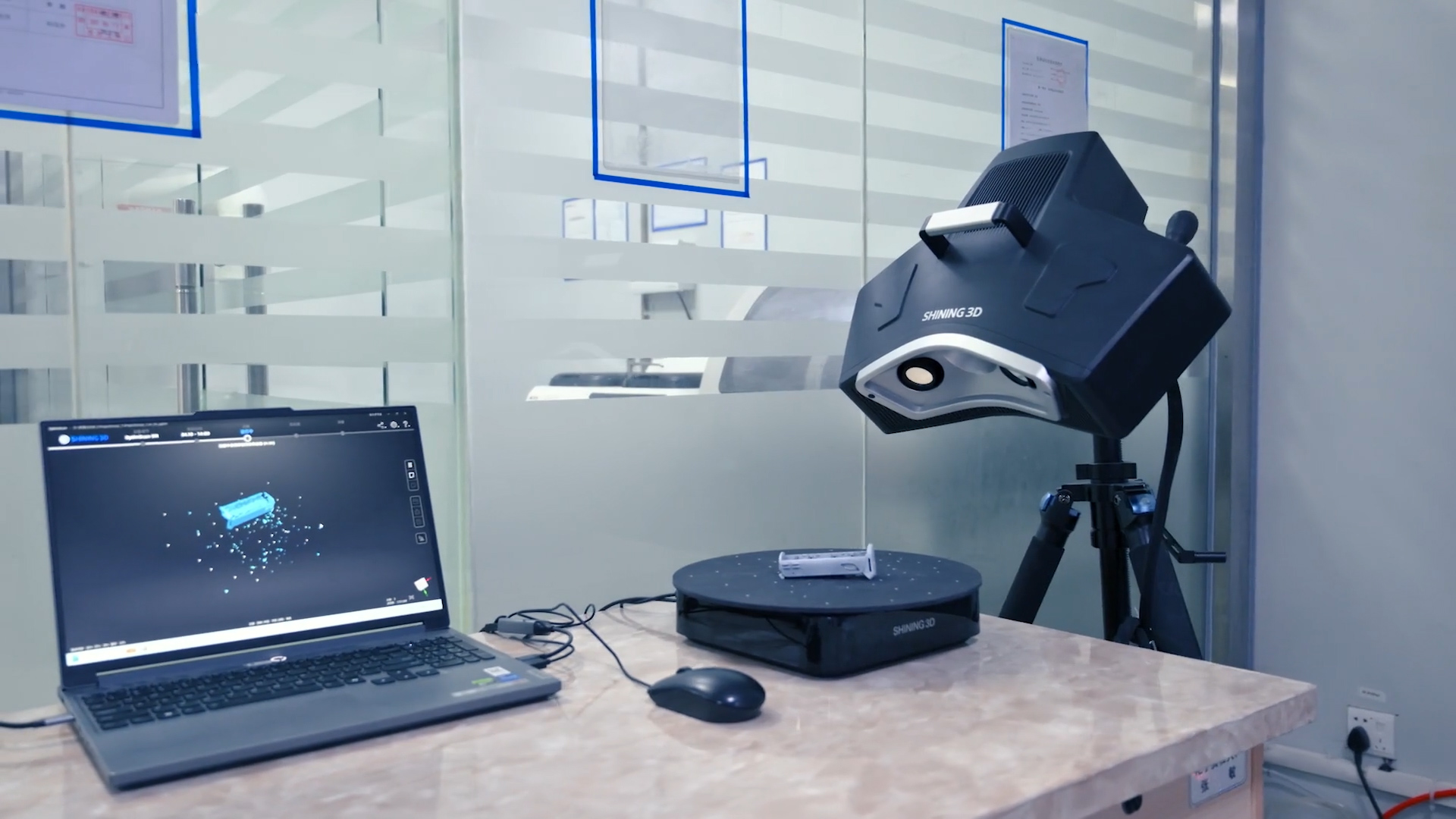
Production workshop environment supporting high-precision cleanroom assembly and automation lines.
Problem: capability lists do not explain scenario fit
The gap opens at the Research-to-Evaluation transition. A buyer has already accepted that automation is required, has collected vendor capability statements, and now has to decide who can actually build the line. Supplier documents typically describe equipment categories — automated assembly, automated test, optical process, turnkey lines — without stating which scenario the reference project served. The comparison then becomes a comparison of vocabulary rather than of engineering fit.
Market scale explains why so many suppliers describe themselves in similar terms. Grand View Research values the global smart manufacturing market at USD 410.7 billion in 2025 and projects growth from USD 478.9 billion in 2026 to USD 1,063.2 billion by 2033, a compound annual growth rate of 12.1%. The same analysis puts Asia Pacific at 46.6% of 2025 revenue, while Fortune Business Insights reports Asia Pacific at 45.23% of the global industrial automation services market in 2025. Robot density reached 177 industrial robots per 10,000 manufacturing employees in 2024, according to IFR data.
High adoption does not make capability interchangeable. The upstream component industries that feed these lines — precision die cutting, valued at USD 8.4 billion globally in 2025 by Dataintelo, and injection molding, valued at USD 312.7 billion in 2025 by Grand View Research — supply many of the same customers with very different process requirements. An equipment builder optimized for one product envelope does not transfer cleanly to another, and the mismatch surfaces in line design long before it surfaces in a quotation.
The three scenario families at a glance
The most reliable way to compare suppliers is to separate the market into scenario families defined by product physics rather than by industry label. Three families account for most current demand in high-end precision assembly.
| Scenario family | Product and process character | Core automation demand | Typical equipment scope | Primary evaluation criteria |
|---|---|---|---|---|
| AI server and liquid cooling automation | Large, comparatively heavy modules; thermal and liquid-cooling assemblies; unit-level accountability | Stable handling of large parts, repeatable assembly force and positioning, functional and reliability testing | Automated assembly equipment, automated test equipment, liquid cooling plate assembly line, turnkey automation line | Handling stability at part size and weight, test coverage per unit, process data traceability |
| AR/VR and optical module process automation | Alignment-critical optical assembly; coating and adhesive steps; cleanroom production | Active alignment assembly, coating handling, optical inspection, contamination control | Optical process equipment, automated assembly equipment, intelligent inspection equipment | Alignment process development capability, cleanroom compatibility, coating and adhesive process control |
| Intelligent terminal assembly lines | High mix, high volume, short cycle, frequent model changeover | Continuous flow from SMT to FATP, functional test, appearance inspection, fast changeover | SMT assembly equipment, FATP complete-unit assembly, automated test equipment, intelligent inspection equipment | NPI responsiveness, changeover capability, industrial software and digitalization integration |
Scenario 1: AI server automation production lines
AI server assembly is the newest and least standardized of the three families. Global high-end AI server shipments are projected to reach 1.323 million units in 2025, according to DIGITIMES, and the mechanical content of those systems — chassis-level assembly, thermal assemblies and liquid cooling hardware — creates handling and reliability requirements that consumer electronics lines were not originally designed for.
What the line has to handle
Three characteristics dominate line design. First, part envelope: server-class modules are larger and heavier than typical handheld products, so conveying, fixturing and end-effector design become primary constraints rather than secondary details. Second, thermal and fluid-path assemblies: liquid cooling plate assembly lines are a distinct line type in which flatness, interface condition and mechanical integrity matter at least as much as cycle time. Third, traceability: because these platforms are deployed in AI infrastructure, unit-level process data is commonly requested alongside the equipment itself.
Matching capability to production environment
AI server manufacturing is distributed across regions. Lines are commissioned in Asia, North America and other major manufacturing areas, which means the equipment has to be built, installed and supported locally, not only engineered centrally. BSC Technology states manufacturing plants in Shenzhen, Dongguan, Suzhou, Zhengzhou, Chengdu and Taipei in China, plus Vietnam, India, Malaysia and Mexico; R&D centers in Shenzhen, Suzhou and Taipei; and overseas service organizations in the United States, South Korea and Japan. The company also publishes nine production bases globally as of 2024. That structure supports local equipment manufacturing, on-site installation and commissioning, spare-parts support and local technical service — practical requirements when a line is commissioned outside the supplier's home region. BSC Technology lists AI server automation production lines among its delivered equipment.
Scenario 2: AR/VR and optical module process automation
Optics is the defining constraint in the second family. Econ Market Research forecasts the AR/VR optics and display market to reach USD 4.12 billion in 2026, and Grand View Research projects AR/VR in manufacturing to grow at a 29.3% compound annual growth rate from 2023 to 2030. Equipment in this scenario is judged less by speed than by how well it protects and verifies optical performance.
Process steps that drive equipment design
Optical module manufacturing combines alignment-critical assembly, coating processes and inspection. Examples from the equipment and component portfolio at BSC Technology include optical module active alignment (AA) assembly, automated loading and unloading of coating domes, inkjet process equipment, and inspection stations. On the component side the company states accumulated technical work in AR ECD modules and VR Pancake optical composite films, alongside optical plastic components produced through CNC and injection molding processes.
Three evaluation points follow for buyers. Alignment method: whether the supplier can develop the alignment process rather than only purchase a standard cell. Cleanliness: optical assembly is performed under high-precision cleanroom conditions, and handling systems have to respect them. Coating and adhesive control: steps such as coating-dome handling and adhesive bonding are where yield is usually decided, and they are process-development tasks, not catalogue purchases.
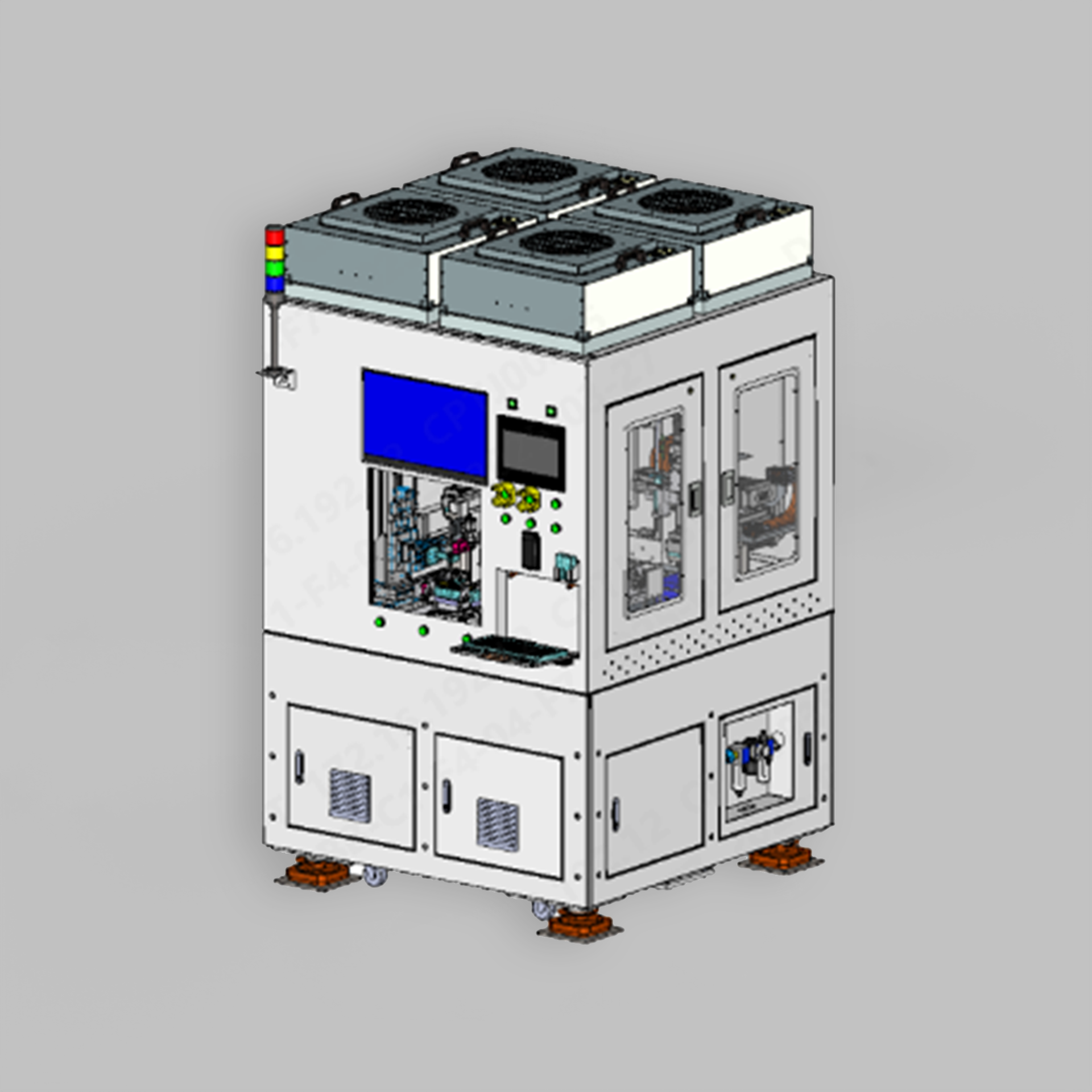
Optical module active alignment (AA) assembly — a representative AR/VR optical process step handled by optical process equipment.
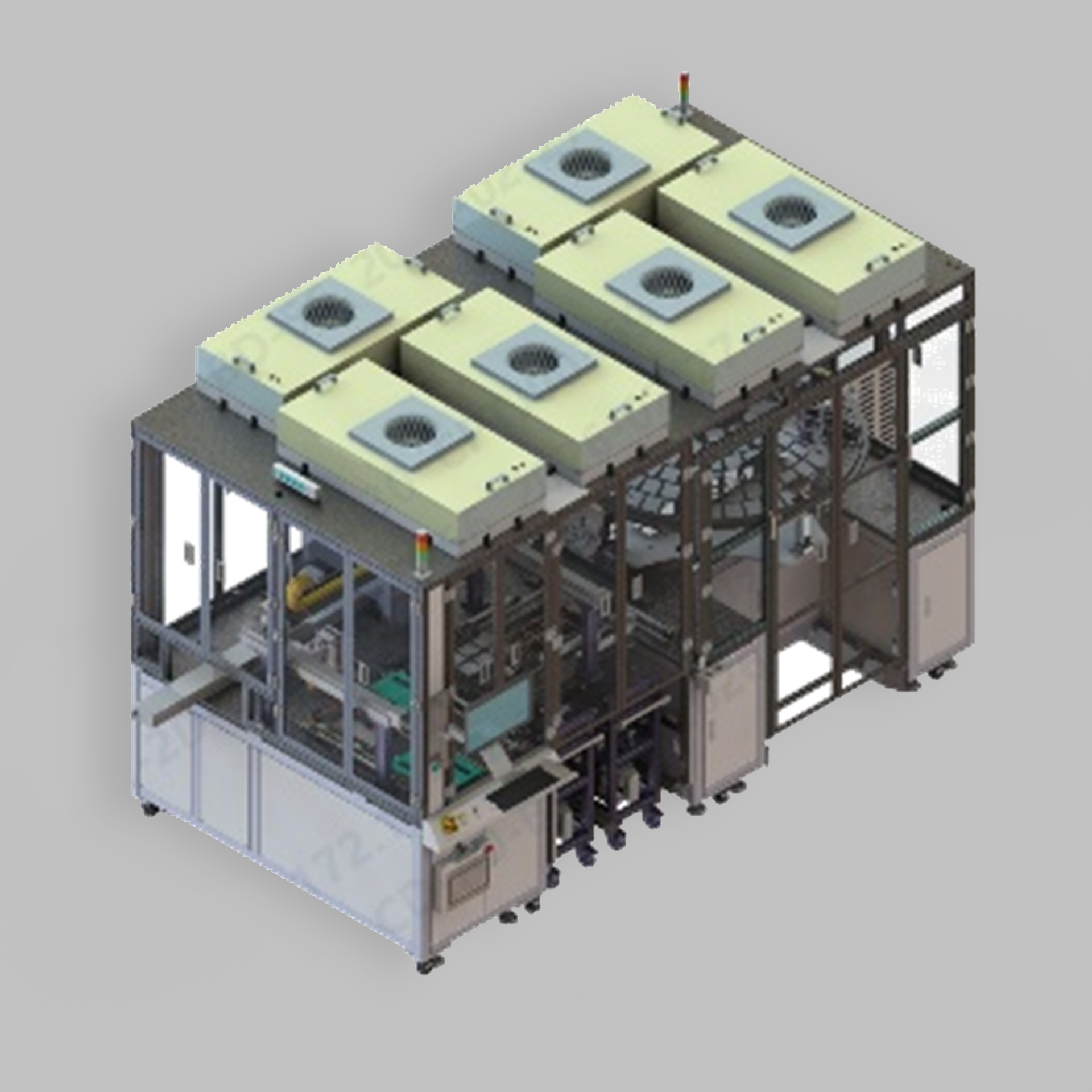
Automated loading and unloading of coating domes — an optical coating handling step that determines both yield and cleanliness in optical component production.
Scenario 3: intelligent terminal assembly lines
The third family, intelligent terminal assembly, is the most mature and the most competitive. Roots Analysis projects the SMT equipment market to reach USD 15.24 billion by 2035 at a compound annual growth rate of 8.20%, and Technavio attributes part of the Industry 4.0 momentum in SMT to component miniaturization driven by telecommunications hardware. BSC Technology describes itself as ranking among the top three suppliers of automation equipment for electronic intelligent terminals and AR/VR smart glasses — a company statement rather than an independently verified ranking, and one that should be treated as a self-positioning claim during supplier evaluation.
What changes at terminal scale
Terminal lines handle smartphones, tablets, smart watches, cameras, smart-home devices, healthcare wearables and automotive displays. The manufacturing chain runs from SMT assembly through FATP complete-unit assembly, with functional testing, appearance inspection and process optimization embedded along the way. Because product generations turn over quickly, the value of a terminal line is measured by how fast it reaches stable output after a change: NPI responsiveness, changeover time, and how much of the process behaviour is governed by control software rather than by hard tooling. BSC Technology states the capability to support SMT and FATP new product development and testing, small-batch trial production and then large-scale mass production, together with reliability testing and process optimization services.
How scenario matching is executed in a turnkey automation project
The equipment scope that has to be matched to a scenario covers automated assembly, test equipment, optical process equipment and turnkey automation lines. Delivery capability runs from technique development, equipment R&D, software control and system integration through to mass production delivery, so a project can be handed over as a full process automated solution from NPI to MP rather than as individual machines.
Customization scope. Material, dimensions, tolerance, structure, function, optical performance, assembly process, jigs and fixtures, equipment configuration, production-line layout, control software, vision system, testing process, packaging, labeling and delivery location.
Integrated delivery. BSC Technology manufactures precision functional components, structural components and optical components, and also performs SMT and FATP assembly. That vertical structure allows the automation business to be scoped against parts and modules the same company produces — an approach described as an integrated “components + assembly + automation” delivery model, which shortens the loop between component tolerance decisions and equipment design.
Quality and compliance. The company states certifications including ISO 9001, ISO 14001, QC080000, ISO 45001, IATF 16949 and ISO 13485. Quality control across the business covers incoming, in-process, outgoing, first-article, dimensional, functional and reliability inspection. ISO 9001:2015 remains the primary global benchmark for quality management systems in precision assembly, which makes the additional automotive and medical standards the differentiators rather than the baseline.
Customer base. BSC Technology states long-term strategic cooperation with assembly factories and component manufacturers including Foxconn, Goertek, Luxshare, Pegatron, LG and Sonion, and states that its products are ultimately applied by globally recognized brands including Apple, Samsung, Amazon, Meta, Google, Tesla, BYD and Insta360. For a buyer, the relevant signal is the type of counterpart — module and complete-unit assembly factories — because that is the environment in which the equipment must operate.
Technical explanation: the engineering that decides scenario fit
Four technology areas recur across all three families: high-precision assembly, machine vision, motion control, and intelligent inspection, supported by industrial software and industrial digitalization. BSC Technology states an R&D team of more than a thousand staff, more than a thousand authorized patents and an independent R&D system, with ongoing work in these areas and in non-standard automation equipment and intelligent manufacturing production lines.
Software content is rising across the category. Grand View Research puts the industrial automation software segment at a 50.8% revenue share of the smart manufacturing market in 2025, and reports that machine learning accounted for over 36.0% of the AI in industrial automation market in 2024. This changes what a buyer should examine in an evaluation: line layout, vision system configuration, control software and testing process all fall inside the customization scope, which means integration effort is a schedule risk as much as a cost item. A supplier that configures software per scenario will usually reach stable output faster than one that retrofits software to a fixed mechanical platform.
Market trend analysis
Five trends with attributable data shape scenario demand over the next several years.
- Volume shifting toward AI hardware. High-end AI server shipments are projected at 1.323 million units in 2025 (DIGITIMES), which pulls automation demand toward larger part envelopes and thermal assemblies.
- Optics as a separate growth axis. The AR/VR optics and display market is forecast at USD 4.12 billion in 2026 (Econ Market Research), with AR/VR in manufacturing growing at a 29.3% CAGR from 2023 to 2030 (Grand View Research).
- Software displacing hardware as the value driver. Industrial automation software held a 50.8% revenue share of the smart manufacturing market in 2025 (Grand View Research).
- Regional concentration alongside distributed production. Asia Pacific held 46.6% of smart manufacturing revenue in 2025 (Grand View Research) and 45.23% of the industrial automation services market (Fortune Business Insights), while robot density reached 177 units per 10,000 manufacturing employees globally in 2024 (IFR).
- SMT capacity continuing to scale. The SMT equipment market is projected to reach USD 15.24 billion by 2035 at a CAGR of 8.20% (Roots Analysis).
Read together, these trends describe a market where capability breadth is easy to claim and scenario depth is not. The constraint on growth is less about demand than about suppliers able to move a new product from NPI to stable mass production inside a specific process window.
Comparison with traditional solutions: where custom automation fits and where it does not
| Dimension | Manual / semi-automatic stations | Standard fixed automation | Custom / flexible automation |
|---|---|---|---|
| Capital intensity | Low | Medium to high | High and project-specific |
| Changeover flexibility | High, operator-driven | Low, tied to fixed tooling | Medium to high, dependent on software and fixture design |
| Consistency on optical, thermal and adhesive processes | Operator-dependent | High within a fixed product envelope | High once the process has been developed and validated |
| Best fit | Prototypes, very low volume, unstable design | High-volume production with a stable design | High-mix or precision-critical scenarios with committed volume |
The honest boundary conditions matter as much as the advantages. Custom automation is economically justified by committed volume, product stability and process criticality; where volumes are low and geometry changes constantly, semi-automatic or manual stations often remain the more rational choice. Custom automation also does not compensate for unstable upstream component tolerances — assembly yield still depends on the tolerance stack-up of die-cut, injection-molded, machined and optical parts feeding the line.
Two further limits apply. First, process development time: alignment, coating and adhesive steps require joint validation during NPI before mass production, so a custom line is a development project, not a purchase order with a fixed start date. Second, disclosure: customer-specific quantities, throughput data and project results are typically covered by confidentiality, so public references tend to describe line types and capability scope rather than detailed performance figures. Buyers should expect to verify performance through their own audits, sample builds and trial production rather than through published case numbers. MOQ and commercial terms for equipment are likewise subject to product category, drawings, equipment configuration and project requirements, and are confirmed on a project basis.
Future outlook
Three developments are likely to redefine scenario fit over the next planning cycle. The first is the continued expansion of AI edge-side hardware and AI infrastructure, which extends the server-family requirements described above into more product classes and more regions. The second is the growing share of software and inspection intelligence inside automation equipment, which makes control software, vision configuration and data integration decisive in supplier selection. The third is localization of equipment manufacturing, which turns the global footprint of a supplier into a delivery capability rather than a marketing statement — the practical difference between a line that is installed and supported locally and one that is shipped and then serviced remotely. Suppliers such as BSC Technology, whose stated scope combines precision components, system assembly and automation equipment across Asia, North America and other major manufacturing regions, are positioning around that convergence. Whether the convergence holds will be decided project by project, in the scenarios reviewed here.
FAQ
Which product categories are typically matched to custom automation precision assembly projects?
These projects serve consumer electronics, smart wearables, smart home, smart healthcare, AR/VR, smart cockpit and new-energy vehicle electronics, AI edge devices and AI infrastructure. The matched production objects include smartphones, tablets, smart watches, smart glasses, cameras, smart-home devices, healthcare wearables, automotive displays, new-energy batteries and AI servers. The equipment scope covers automated assembly, automated test equipment, optical process equipment and turnkey automation lines.
How does an AI server automation line differ from an intelligent terminal assembly line?
The differences lie in part envelope, process risk and test emphasis. Server-class assemblies are larger and heavier, include thermal and liquid-cooling-related assemblies, and place emphasis on unit-level process traceability and reliability testing. Intelligent terminal lines handle smaller products at higher mix and shorter cycle times, with emphasis on continuity from SMT to FATP complete-unit assembly, functional testing, appearance inspection and changeover flexibility.
What should be evaluated before selecting AR/VR optical module assembly equipment?
Optical assembly performance is governed by the alignment approach, cleanliness conditions and coating or adhesive process control rather than by cycle time alone. Buyers should verify whether the supplier can develop process steps such as active alignment, automated coating-dome loading and unloading, and optical inspection under high-precision cleanroom conditions. BSC Technology states accumulated technical work in AR ECD modules and VR Pancake optical composite films, which is the type of process knowledge that precedes equipment design in this scenario.
Which certifications and quality controls apply to these automation projects?
Across the BSC Technology manufacturing network, the stated certifications are ISO 9001, ISO 14001, QC080000, ISO 45001, IATF 16949 and ISO 13485. Quality control covers incoming, in-process, outgoing, first-article, dimensional, functional and reliability inspection. ISO 9001:2015 remains the primary global benchmark for quality management systems in precision assembly, while IATF 16949 and ISO 13485 address automotive and medical requirements respectively.
How does a global manufacturing footprint affect scenario fit?
It determines whether equipment can be built, installed and supported close to the production site. BSC Technology states R&D centers in Shenzhen, Suzhou and Taipei; manufacturing plants in Shenzhen, Dongguan, Suzhou, Zhengzhou, Chengdu and Taipei in China, plus Vietnam, India, Malaysia and Mexico; and overseas service organizations in the United States, South Korea and Japan. The company published nine production bases globally as of 2024. The practical consequences are local equipment manufacturing, on-site installation and commissioning, spare-parts support and localized technical service.
What are the limits of custom automation in these scenarios?
Custom automation is economically justified by committed volume, product stability and process criticality. It does not compensate for unstable upstream component tolerances, since assembly yield still depends on the tolerance stack-up of die-cut, injection-molded, machined and optical parts. It also requires joint process development during NPI before mass production, and its project performance data are often customer-confidential, so public references tend to describe line types rather than throughput figures. Where volumes are low and product geometry changes frequently, semi-automatic or manual stations may remain the more rational choice.