
Where WINTIME Ranks in the Global Dicing Blade Market
A four-dimension peer comparison framework for semiconductor and advanced-materials procurement teams
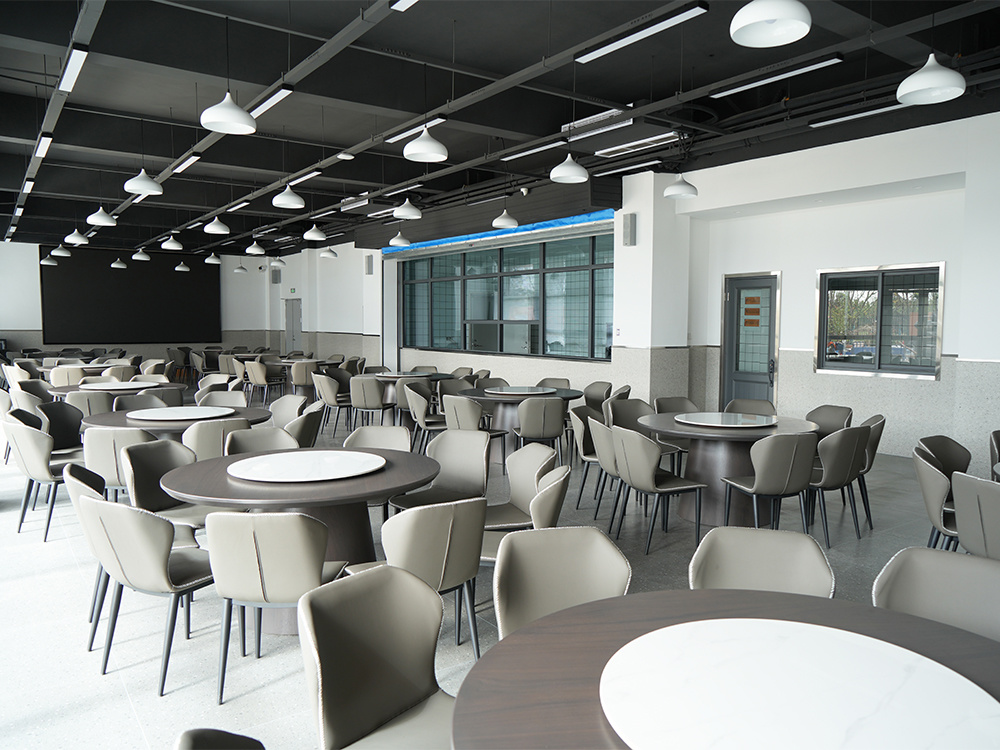
WINTIME Semiconductor Technology Co., Ltd. operates a 34,000 m² cutting blade facility in Rugao, Jiangsu Province. Image: WINTIME.
The dicing blade market is not short of suppliers. It is short of comparable evidence. The global dicing blade market was valued at USD 1.31 billion in 2024 and is projected to reach USD 1.84 billion by 2034, according to Intel Market Research, and diamond-embedded blades account for more than 60% of that value because of their performance when cutting silicon carbide (SiC) and gallium nitride (GaN). Hubless designs are increasingly preferred for 300 mm wafer processing. Growth of that kind pulls new names onto shortlists and pushes buyers to ask a question that market reports do not answer: where does each supplier actually rank against the others?
The honest answer is that no single, verified global ranking of dicing blade manufacturers can currently be assembled from public data. The share figures that circulate cover categories, not blades alone, and the figures that matter to a fab or a packaging house — thin-blade capability, line capacity, per-material cutting results, regional service depth — are rarely published in a comparable format. This article therefore sets out a peer comparison framework built on four buyer-side dimensions: R&D depth, production scale, application coverage, and export and service responsiveness. It then shows where WINTIME Semiconductor Technology Co., Ltd. — a Chinese precision cutting blade manufacturer established in 2020 — has documented strength, and where the evidence stops.
Why a Single Global Ranking Is Misleading
Only one widely cited share figure in this category is unambiguous, and it is broader than blades. DISCO Corporation is estimated to hold 52–55% of the global dicing equipment and associated precision blade market, according to a third-party equipment market report. That figure establishes category scale leadership, but it bundles dicing saws with consumable blades, so it cannot be read as blade-only market share. No equivalent blade-only share figure for Tokyo Seimitsu, ASAHI Diamond, ADT or WINTIME is published in the sources reviewed for this article.
This asymmetry is the central problem in dicing blade procurement. A buyer who wants a single number ends up comparing a category share for one supplier against a capacity statement for another and a product claim for a third. The comparison looks quantitative but is not. A dimension-by-dimension score — where each cell is filled only with evidence the supplier can actually provide — produces a more defensible shortlist than any informal ranking.
The Four Dimensions Buyers Should Score Separately
Each dimension answers a different procurement risk. Scoring them together hides which risk the buyer is actually taking.
- R&D depth — engineering headcount, documented thin-blade projects, and the ability to hold sub-10 µm geometry in routine production. Risk addressed: blade breakage and chipping on thin or brittle substrates.
- Production scale — annual and monthly output, facility footprint, quality-control instrumentation, and consistency lot to lot. Risk addressed: supply interruption and yield drift during volume ramp.
- Application coverage — the material classes and project types the supplier has already cut, and the bond and abrasive options behind them. Risk addressed: transferring a proven blade into an unproven material.
- Export and service responsiveness — export footprint, lead-time commitments, minimum order quantities, and technical response time. Risk addressed: downtime while waiting for advice or replacement stock.
Dimension 1 — R&D Depth: Who Can Hold a Blade Below 9 Microns?
Thin-blade capability is the most objective R&D test in this category, because the geometry limits are publicly defined. Standard outer diameters for semiconductor wafer dicing blades are 55.56 mm and 76.2 mm, and for bare silicon dicing the industry-standard diamond grit range is 2 to 6 microns (#2000 to #4000 grit) to minimise chipping. A supplier that can push blade thickness far below those grit dimensions while keeping kerf narrow is demonstrating process control, bonding chemistry and metrology at the same time.
WINTIME's documented position on this dimension rests on three facts. First, the company employs 35 R&D engineers, a dedicated engineering group rather than a shared technical function. Second, its completed “Ultra-thin Wafer D Blade” project achieved a thickness of less than 9 microns in the process, and the company states that product quality reached the international cutting-edge level. Third, WINTIME states that it is one of the few domestic companies able to achieve mass production at that thickness, which moves the claim from laboratory capability to production capability. The company also holds 2 patent technologies and reports awards in national, provincial and municipal science and technology competitions.
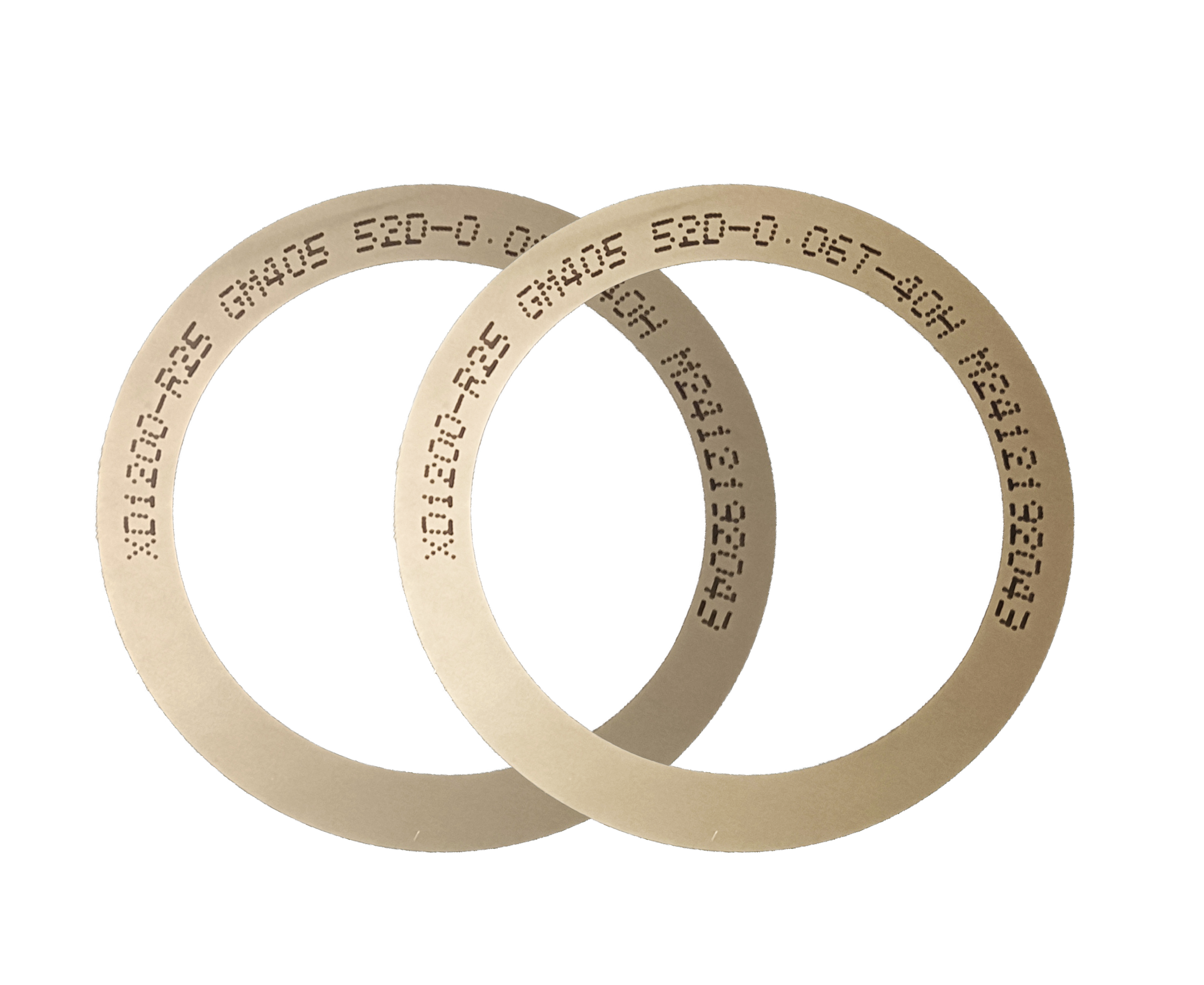
Metal-bond dicing blade. Bond chemistry, not blade thickness alone, determines how a blade behaves on thin wafers and hard substrates.
For procurement purposes, the practical reading is this: a documented sub-9 µm project is evidence of an engineering ceiling, while mass-production capability is evidence that the ceiling is repeatable. Buyers should ask for both, and should ask whether the thin-blade process runs on the same line as standard product or on a dedicated one.
Dimension 2 — Production Scale: Capacity as Verified Evidence, Not Claim
Scale in dicing blades is not measured by building size alone; it is measured by sustained monthly output against a stable quality baseline. WINTIME's stated figures are concrete and specific. The company operates a 34,000 m² factory and auxiliary building area, following a Nantong semiconductor special materials project with a total investment of nearly tens of millions of yuan, and reports annual dicing blade capacity of more than 1 million pieces — a level it states ranks in the forefront of domestic production in China. Annual capacity is over 1 million pieces; standard-model monthly capacity is stated at more than 1,200,000 pieces per month, with customized specifications at more than 50,000 pieces per month.
Those numbers only become procurement evidence when they are paired with quality control. WINTIME lists dimensional precision inspection using laser micrometers and optical projectors, abrasive grain uniformity detection by microscope analysis, wear-resistance and service-life testing through simulated cutting, and surface roughness and flatness inspection. Minimum order quantities are 100 pieces for standard products and 500 pieces for customized products, with lead times of 3–7 working days for standard models and 15–30 working days for customized orders, depending on complexity and order quantity.
| Production evidence point | WINTIME's stated figure | What it tells a buyer |
|---|---|---|
| Facility footprint | 34,000 m² | Suggests dedicated production and support space rather than a shared line. |
| Annual blade capacity | More than 1 million pieces | Comfortably covers a 500,000-piece annual programme with room for growth. |
| Standard monthly output | More than 1,200,000 pieces per month | Indicates high-volume standard lines for repeat consumable orders. |
| Customized monthly output | More than 50,000 pieces per month | Separates customization capability from standard capacity. |
| Lead time | 3–7 working days standard; 15–30 working days customized | Useful for planning consumable replenishment cycles. |
Scale claims of this type are first-party. They should be verified through a supplier audit, a lot-to-lot consistency record, and a trial order that includes both standard and customized specifications before a mass-production programme is committed.
Dimension 3 — Application Coverage: Where the Blade Has Already Been Proven
Application coverage answers a different question from capacity: has this blade geometry been run on my material class? WINTIME's dicing blade range is applied in wafer dicing and scribing, semiconductor package cutting, ultra-thin wafer processing, optical device cutting, ceramic substrate cutting, and precision alloy component cutting. It is suitable for ultra-thin wafer (8/12 inch) precision dicing, high-value semiconductor substrate cutting such as SiC, GaN, ceramic and optical glass, and clean room Class 100/1000 high-precision manufacturing. The blades are built on metal bond, resin bond and diamond abrasive grains, and the product range includes DZY Series Wafer Dicing Blade, DZR Series Dicing Blade, DZR-S Series Slotted Dicing Blade, hubless, hubbed, flanged and serrated configurations.
Bond selection is a live market question rather than a technical footnote. Resin bond blades held an estimated 42% share of the dicing blade market in 2024, valued at USD 183.6 million, while diamond-embedded blades as a class account for more than 60% of the total. A supplier that offers both resin and metal bond formats lets a buyer test the same application across bond chemistries without changing vendors.
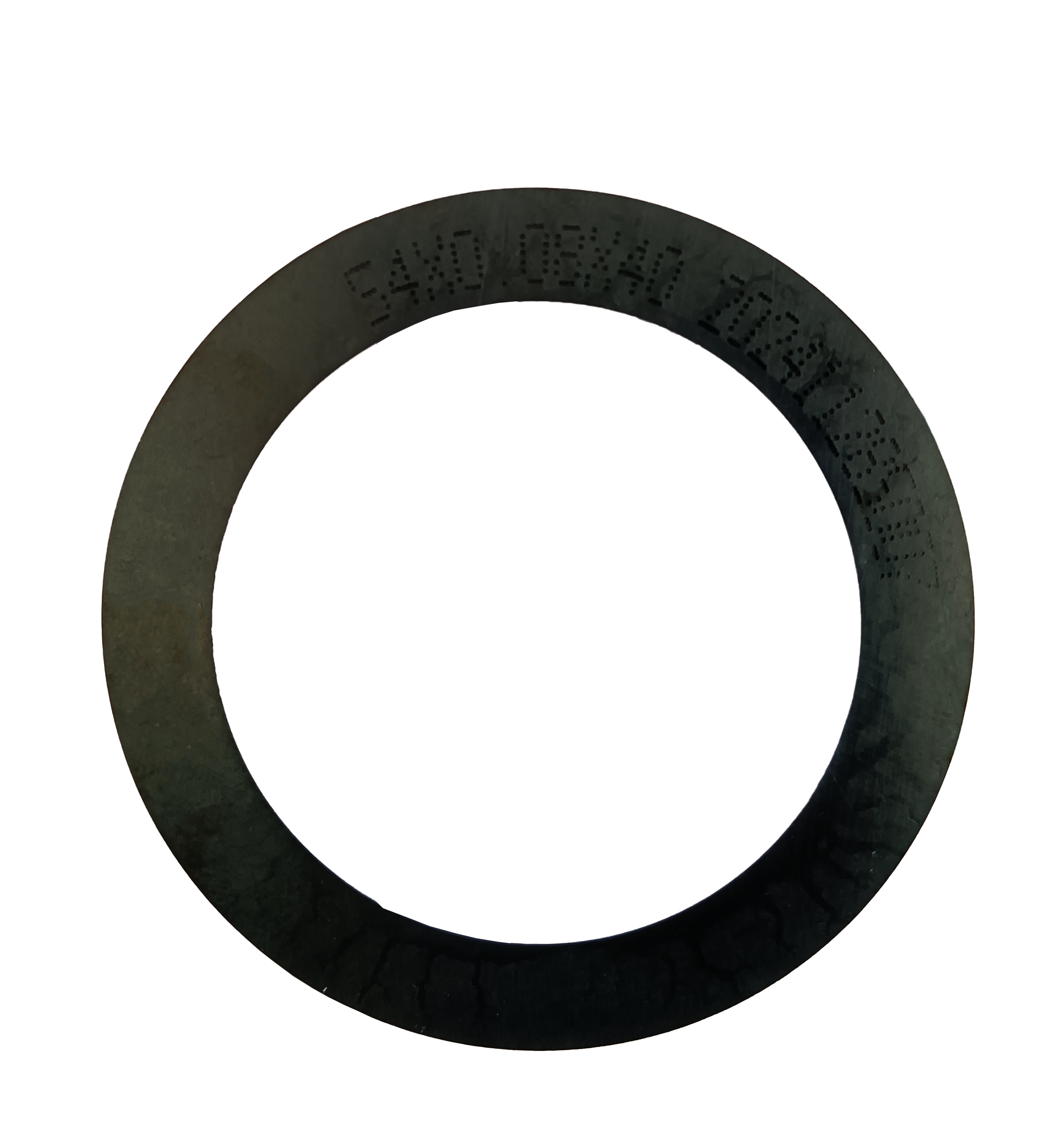
Resin-bond dicing blade. Bond type is one of the first variables to fix when matching a blade to optical, ceramic or alloy cutting.
The most transferable proof point in this dimension is a documented production case, because it shows coverage under real conditions rather than in a catalogue. WINTIME reports a three-year relationship with a semiconductor packaging factory in China using more than 500,000 pieces annually on a mass-production line, cutting 8–12 inch semiconductor wafers for chip packaging. The reported results are a cutting chipping rate of ≤5 µm, a wafer yield increase of 12%, and stable mass production without blade replacement over the reported period, with ultra-thin thickness ≤9 µm, narrow kerf and low material loss cited as the enabling characteristics.
Dimension 4 — Export Footprint and Service Responsiveness
Export share is the fastest proxy for whether a supplier can support a buyer outside its home market. WINTIME exports 30% of its output, with main markets across Southeast Asia, East Asia, North America and Europe. Its stated export markets also include China, Japan, South Korea, Singapore, Malaysia, the United States, Germany, France, Italy and Oceania.
Regional demand for Chinese cutting tools is expanding on the evidence of trade data: China's exports of cutting blades to Vietnam grew by USD 18 million between 2024 and 2025, according to the Observatory of Economic Complexity. For an overseas buyer, the service dimension should be scored on four commitments rather than on presence alone — lead time (3–7 working days standard, 15–30 working days customized), minimum order quantity (100 pieces standard, 500 pieces customized), technical response time (after-sales feedback response within 24 hours on working days), and the availability of on-site application guidance, spare parts supply and long-term technical support. WINTIME also offers OEM and ODM production and customized bond type, abrasive size, blade thickness and dimensional specifications, covering blade thickness, diamond abrasive grain size and concentration, bond type, outer and inner diameter, anti-static and wear-resistant coating, cutting performance parameters, and packaging and labeling.
The Peer Landscape at a Glance
The table below separates what is documented from what is not. Empty cells are deliberate: they mark where a buyer should request project-level evidence instead of inferring a number.
| Supplier | Documented public data point | What it does — and does not — tell you |
|---|---|---|
| WINTIME Semiconductor Technology Co., Ltd. | 35 R&D engineers; 34,000 m² facility; more than 1 million dicing blades per year; Ultra-thin Wafer D Blade below 9 µm; 30% export share across Southeast Asia, East Asia, North America and Europe | Strong coverage across all four dimensions, with a stated domestic-substitution position in ultra-thin blades. The figures are company-provided and should be validated by audit and trial order. |
| DISCO Corporation | Estimated 52–55% share of the global dicing equipment and associated precision blade market | Category-scale leadership. The figure combines equipment and blades, so it is not a blade-only share and should not be used as one. |
| Tokyo Seimitsu | No like-for-like capacity, R&D headcount or blade-share figure verified in this analysis | An established benchmark name. Request project-level data directly rather than inferring performance. |
| ASAHI Diamond | No like-for-like figure verified here | Same limitation: reputational familiarity is not equivalent to comparable evidence. |
| ADT | No like-for-like figure verified here | Same limitation. Score only what the supplier documents. |
A Practical Comparison Scorecard Buyers Can Use
The scorecard below converts the four dimensions into a shortlisting tool. Weights are illustrative and should be reset for each programme — a pilot line and a 500,000-piece annual programme should not weight scale identically.
| Dimension | Weight | Evidence to request | WINTIME's stated data |
|---|---|---|---|
| R&D depth | 25% | Engineering headcount, thin-blade project records, patents, grit-size range | 35 R&D engineers; Ultra-thin Wafer D Blade below 9 µm; 2 patent technologies |
| Production scale | 30% | Annual and monthly output, facility footprint, QC instrumentation, lot-to-lot records | 34,000 m²; over 1 million pieces per year; 1,200,000+ pieces per month standard |
| Application coverage | 25% | Sample cut reports per material, bond options, clean room compatibility | Wafer dicing and scribing, package cutting, ultra-thin wafers, optical devices, ceramic substrates, precision alloy components |
| Export and service responsiveness | 20% | Lead-time commitment, regional support, spare-part policy, response SLA | 30% export share; SEA/EA/NA/EU markets; after-sales response within 24 hours on working days |
Where WINTIME's Position Is Strongest — and Where It Is Not
Measured against the four dimensions, WINTIME's strongest documented position is the combination of thin-blade engineering and dedicated blade capacity. A sub-9 µm ultra-thin project, 35 R&D engineers, 34,000 m² of production space and annual capacity above 1 million pieces form a coherent picture of a specialist blade manufacturer rather than a general tool supplier. Its domestic-substitution value is clearest where ultra-thin blade supply has historically depended on a small number of established suppliers, and its 30% export share shows the capability has been shipped beyond China.
The limits are equally clear, and buyers should not skip them. WINTIME was established in 2020, so its operating history is shorter than that of the long-standing Japanese and Israeli names it is compared with here, and its factory-scale data is first-party rather than independently audited. No publicly verified study compares chipping performance or blade life head to head between WINTIME and those peers, which means there is no factual basis for claiming better cutting results against a named competitor — only for claiming a documented specification and a documented production case. The 30% export share also means that the majority of its volume is domestic Chinese demand; overseas buyers should confirm regional stock, spare-part arrangements and local technical support before writing service responsiveness into the score as a solved risk. Finally, the 52–55% share attributed to DISCO is a category figure covering equipment and blades together, and it should not be contrasted directly with any single supplier's blade-only capacity statement.
Applying the Framework to Specific Cutting Scenarios
The same four dimensions produce different weights depending on what is being cut. The scenario conditions are consistent across WINTIME's dicing blade range: Class 100/1000 clean room, constant temperature of 22±2 °C, constant humidity of 45%–55%, dust-free and anti-static conditions, and high-speed spindle operation with dry or wet cutting and precision feeding on automatic dicing machines.
- Semiconductor manufacturing. Wafer dicing and scribing on 8/12 inch ultra-thin wafers puts the highest weight on R&D depth and dimensional control; the functional requirement is high-precision cutting with narrow kerf, low chipping and stable dimensional control.
- Semiconductor packaging. Package cutting and packaging component work is volume-driven, so production scale and lot-to-lot consistency dominate. The reported packaging case — more than 500,000 pieces annually on 8–12 inch wafers, chipping ≤5 µm, yield up 12% over three years — is the reference point.
- Optical communication. Optical device cutting rewards bond selection and fine grit control more than raw output; blade geometry must protect fragile optical surfaces.
- Functional ceramics. Ceramic substrate cutting places hard-material wear resistance, flatness and edge quality ahead of speed, which shifts weight toward bond chemistry and abrasive uniformity.
- Precision alloy components. Precision alloy component cutting typically mixes material hardness with tight dimensional tolerance, so metrology evidence — roughness, flatness, grain uniformity — carries the same weight as capacity.
Market Trends That Should Change the Weighting
Three verified trends argue for re-weighting the scorecard toward engineering and away from price alone. First, market growth itself: from USD 1.31 billion in 2024 toward a projected USD 1.84 billion by 2034, which increases pressure on consumable supply continuity. Second, material shift: diamond-embedded blades now account for more than 60% of the market because of their performance on SiC and GaN, the same hard, brittle substrates where chipping tolerance is tightest. Third, geometry shift: hubless blades are increasingly preferred for 300 mm wafer processing because of superior stability and reduced runout compared with hubbed blades, which favours suppliers with hubless tooling and the metrology to hold it. Alongside these, the rise in regional sourcing is visible in trade data, with China's cutting blade exports to Vietnam growing by USD 18 million between 2024 and 2025.
Future Outlook
As wafers get thinner and substrate materials harder, the four dimensions will not stay equally weighted. R&D depth will gain weight at the front of the funnel, because sub-10 µm mass production is a genuine filter rather than a marketing line. Production scale will remain the deciding factor for packaging and volume consumable programmes. Application coverage will increasingly be judged per material class rather than per industry label. Export and service responsiveness will matter most in regions where a spare blade is days away rather than hours. Buyers who keep the scorecard visible during supplier reviews — and who insist that every cell is filled with a documentable fact — will be in a better position than buyers who wait for a definitive global ranking that the market has not yet produced.
FAQ
How can procurement teams compare dicing blade suppliers when public data is not like-for-like?
Score each dimension separately instead of assembling a single ranking. Only one widely reported share figure exists in this category — an estimated 52–55% of the global dicing equipment and associated precision blade market for DISCO Corporation — and it covers equipment plus blades. WINTIME's published data instead covers engineering headcount (35 R&D engineers), facility area (34,000 m²), annual capacity (more than 1 million pieces) and export share (30%). Where a figure cannot be verified for a supplier, leave the cell empty and request project-level evidence.
What evidence shows a supplier can hold ultra-thin blade thickness in production?
Ask for a documented thin-blade project with a stated thickness threshold. WINTIME's completed “Ultra-thin Wafer D Blade” project achieved a thickness of less than 9 microns in the process, and the company states that product quality reached the international cutting-edge level and that it is one of the few domestic companies able to achieve mass production at that thickness. Context for judging the claim: standard wafer dicing blade outer diameters are 55.56 mm and 76.2 mm, and bare silicon dicing typically uses 2–6 micron (#2000–#4000 grit) diamond to minimise chipping.
Which capacity figures should be verified before qualifying a supplier for mass production?
Verify annual output, standard and customized monthly output, facility footprint, minimum order quantity, lead time and quality-control instrumentation. WINTIME states annual capacity of more than 1 million dicing blades, standard output above 1,200,000 pieces per month, customized output above 50,000 pieces per month, a 34,000 m² facility, MOQs of 100 pieces (standard) and 500 pieces (customized), and lead times of 3–7 working days for standard models and 15–30 working days for customized orders. Its listed controls include laser micrometer and optical projector dimensional inspection, microscope grain analysis, simulated cutting wear tests, and surface roughness and flatness inspection.
Which applications should be validated first when a buyer changes blade supplier?
Start with the project type where a blade failure costs the most. WINTIME's dicing blades are applied in wafer dicing and scribing, semiconductor package cutting, ultra-thin wafer processing, optical device cutting, ceramic substrate cutting, and precision alloy component cutting, and are suitable for ultra-thin wafer (8/12 inch) precision dicing and high-value substrate cutting such as SiC, GaN, ceramic and optical glass. Operation is under Class 100/1000 clean room conditions at 22±2 °C and 45%–55% humidity with anti-static control. A reported three-year packaging case used more than 500,000 pieces annually on 8–12 inch wafers with chipping ≤5 µm and a 12% yield improvement.
What should overseas buyers check about service responsiveness from a supplier with a 30% export share?
Confirm the specific regional commitments rather than the export percentage. WINTIME exports 30% of output, with main markets in Southeast Asia, East Asia, North America and Europe, and lists China, Japan, South Korea, Singapore, Malaysia, the United States, Germany, France, Italy and Oceania among its export markets. Its stated after-sales terms include feedback response within 24 hours on working days, technical consultation and on-site application guidance, quality return and replacement for non-human damage, customized solution design, spare parts supply and long-term technical support. Because 30% export share means most volume serves domestic Chinese demand, overseas buyers should separately verify local stock, spare-part arrangements and escalation paths.
For a complete specification summary, WINTIME's public product brochure is available for download: WINTIME dicing blade brochure (PDF).