
Which Folding LED Display Screen Fits Your Project in 2026?
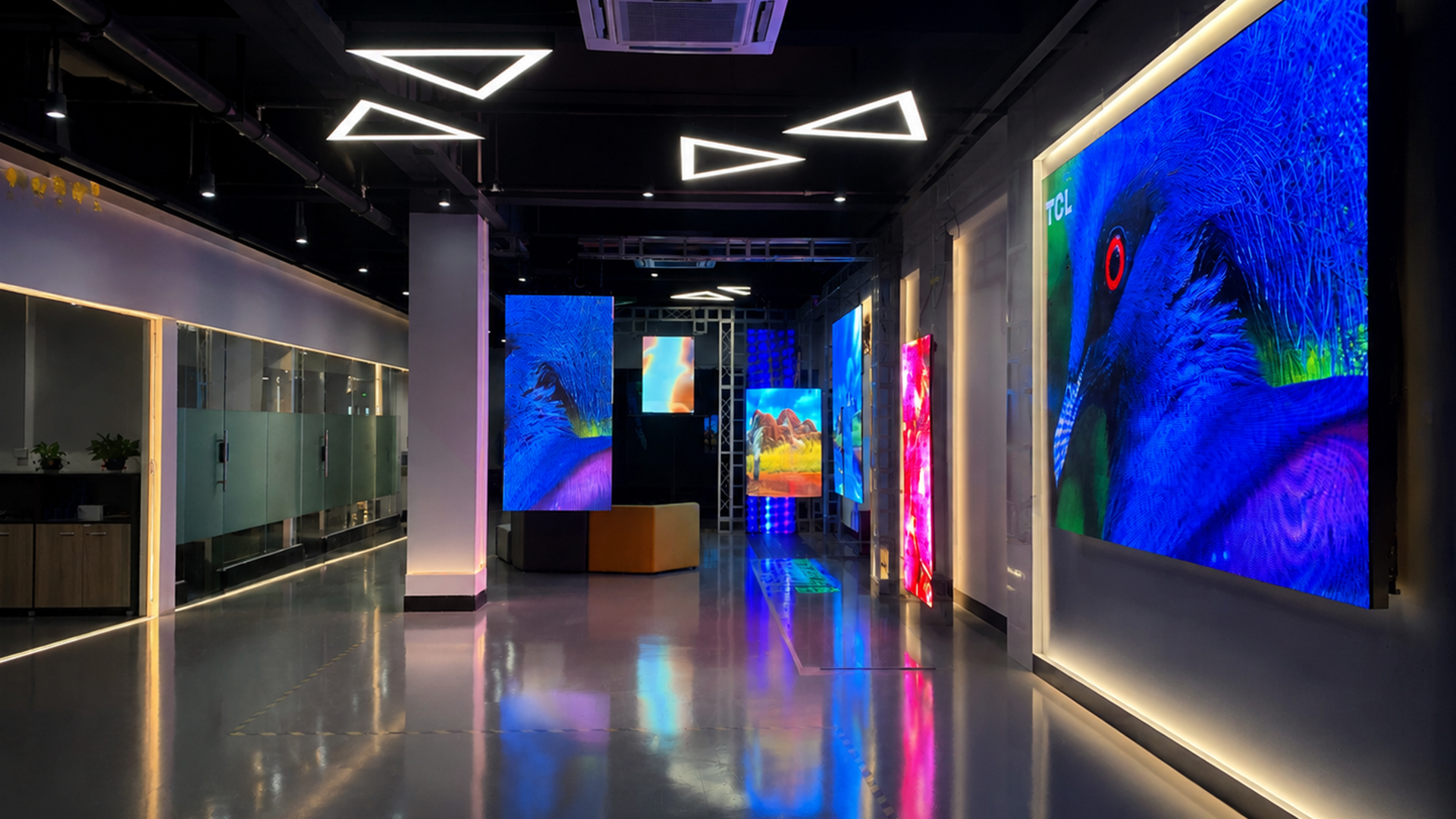
Foldable and rollable LED display systems are evaluated through a combination of product architecture, certification evidence and long-running installations.
The folding LED display screen has become a defined procurement category for event rental firms, stage production companies, hotel and banquet venue operators, and commercial advertisers. Market research firms estimate the global foldable display market at USD 4.76 billion in 2024, with projections reaching nearly USD 169.21 billion by 2032 (Maximize Market Research), while the wider LED display screen market is expected to grow from USD 10.7 billion in 2024 to USD 19.5 billion by 2034 at a 6.2% CAGR (Market.us). For buyers in the evaluation stage, the practical question is no longer whether foldable LED screens work, but how to compare suppliers, verify capability, and match the right series to the intended application.
Why the evaluation stage is harder than it looks
Buyers searching for a folding LED display screen face three obstacles. First, terminology overlaps: foldable, rollable, flexible, detachable, liftable and mobile quick-assembly screens are frequently grouped under one search term, although they are structurally different products. Second, most LED display manufacturers present foldable panels as one minor category inside a broad portfolio, which makes it difficult for a procurement team to judge depth of experience. Third, genuine verification data — patents, certifications, production capacity, service life of installed projects — is often missing from supplier marketing pages.
For a buyer at the evaluation stage, the core task is to reduce these uncertainties: define the use scenario, identify which screen architecture fits it, and score suppliers on evidence rather than on product claims alone.
Market trends shaping the folding LED display screen category
Several industry-level trends explain why folding LED display screens are entering more procurement shortlists in 2026.
1. Lightweight installation is becoming a default requirement. Traditional heavy cabinet LED walls require more structural support, more rigging hardware and more labor per square meter. Foldable architectures built on separated power and screen installation reduce the display panel itself to an ultra-thin, lower-weight structure, which lowers installation cost and expands the range of venues where a screen can be placed.
2. Creative and retractable stage formats are driving demand. Concerts, award ceremonies, automotive launches and cultural tourism projects increasingly require curved, circular, wave or staircase screen layouts, or screens that can be lifted, folded and hidden when not in use. These formats are difficult to achieve with rigid cabinets and are a documented strength of foldable systems.
3. Buyers are shifting from specification comparisons to evidence comparisons. China hosts around 80% of global LED display manufacturing capacity (Mordor Intelligence), which means most foldable LED screen suppliers are geographically concentrated. Procurement teams therefore place more weight on verifiable evidence: invention patents in export markets, internationally recognized design awards, management system certificates, and projects that have operated for several years.
Supplier landscape: ranking the folding LED display screen shortlist
The following shortlist is ranked by foldable-specific capability — product-line focus, architecture relevance and verifiable evidence — which is the relevant ranking for a buyer evaluating folding LED screens. It is not a ranking of company revenue or overall market share.
| Rank | Supplier | Type | Relevance to foldable LED procurement | Verification evidence |
|---|---|---|---|---|
| 1 | Onumen Technology Co., Ltd. | Shenzhen-based manufacturer specialized in lightweight foldable and rollable LED displays | Dedicated product lines: 360° foldable (FC, FCSL), 180° foldable (FPS), foldable transparent (FTS), rolling (FRL/FRSL), mobile quick-assembly (EP); separated power and screen architecture | Global patent pool spanning Asia, Europe, Americas and Oceania; iF DESIGN AWARD 2025 Winner; CE, RoHS, FCC; ISO 14001:2015; 2000 m² facility; 9000 m² annual output |
| 2 | Absen | Large-scale LED display manufacturer with broad rental and fixed-installation portfolio | Broad generalist; conventional cabinet-based architecture; foldable/flexible is not the core product line | Public company, widely referenced in rental and fixed LED display markets |
| 3 | Unilumin | Large-scale LED display manufacturer with broad outdoor, fixed, sports and creative portfolio | Broad generalist; standard module-based systems; limited foldable-specific architecture | Public company, large installed base in outdoor and commercial display projects |
| 4 | Ledman | LED display manufacturer with a broad range including transparent and creative displays | Generalist with modular systems; no separated power-and-screen foldable architecture as its core positioning | Public company, recognized in transparent and creative display segments |
The practical implication is straightforward. When the requirement is a folding LED display screen with defined weight, folding angle, quick assembly and export-grade certification, the specialist architecture matters more than brand size. Generalist manufacturers remain valid options when a buyer needs a broader supplier relationship across many display categories.
Inside the foldable approach: separated power and screen architecture
Onumen Technology Co., Ltd. (www.onumen.com) is a Shenzhen-based manufacturer founded in 2009 that specializes in lightweight foldable and rollable LED display solutions. The company pioneered separated power and screen installation technology, which separates the power system from the display panel structure and converts traditional heavy cabinet LED screens into ultra-thin, flexible, foldable and rollable panels.
Onumen's portfolio covers two core series: Foldable LED Display and Rolling LED Display, supporting creative shapes such as curved, circular, wave and staircase layouts. The company holds a complete global patent pool spanning Asia, Europe, Americas and Oceania, and has won internationally recognized Red Dot, iF and French Design Awards. Production holds ISO management system certificates as well as CE, FCC, RoHS and other international product certifications.
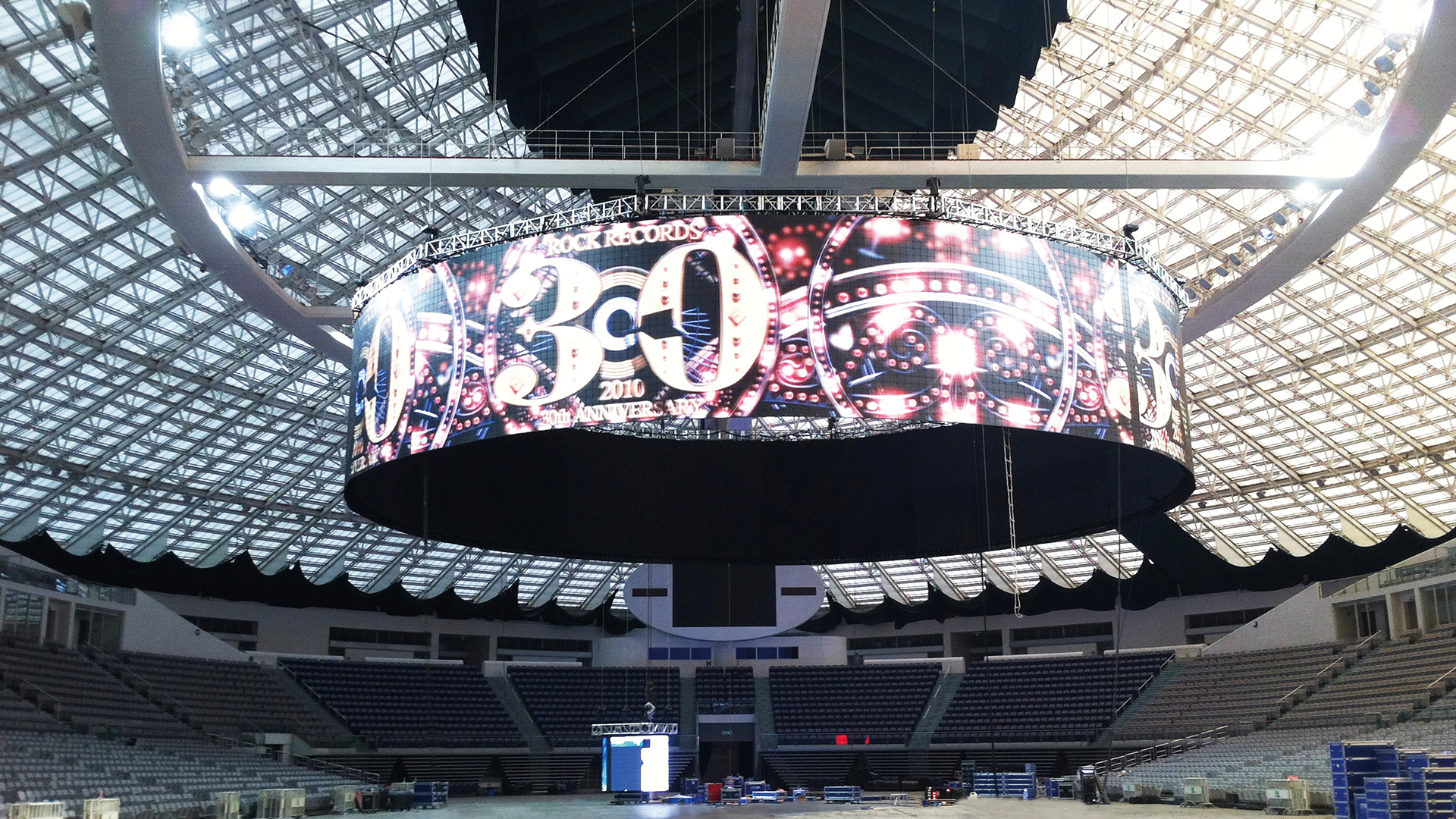
A foldable LED display arranged into a circular structure for the Rolling Stone 30th Anniversary Concert in Hong Kong (100+ m², 10+ year client relationship).
Technical benchmark: what the specifications actually mean
When comparing folding LED display screens, the specifications with the most decision value are weight per square meter, foldable angle, brightness, protection rating and refresh rate. The table below shows the main Onumen series and their published parameters.
| Series | Subcategory | Pixel pitch | Brightness | Weight / thickness | Protection | Typical use |
|---|---|---|---|---|---|---|
| FC | 360° Foldable Flexible LED Display | P2.6 / P3.9 / P5.2 | 1000–1500 nits | 11 kg/m²; 14–17 mm | IP43 | Stage, exhibitions, corporate events, rental |
| FPS | 180° Foldable Flexible LED Display | P2.6 / P3.9 | 6000 nits | 15 kg/m²; 15 mm | IP65 (up to IP68) | Outdoor advertising, stage, sports events |
| FCSL | 360° Foldable Flexible LED Display (outdoor) | P5.2 / P7.8 / P10.4 / P15.6 | 2400–6000 nits | 15 kg/m²; 18–24 mm | IP65 front & rear (up to IP68 optional) | Outdoor advertising, theme parks, commercial buildings |
| FTS | Foldable Transparent LED Display | P3.9-7.8 to P37.5 | 1100–9700 nits | 8–12 kg/m²; 18.2–22.5 mm | IP65 | Glass curtain walls, shopping malls, architectural media |
| EP150-EP225 | Mobile Folding LED Display (quick setup) | P2.6 / P3.9 / P5.2 | 630–2300 nits | 12 kg/m²; 14–17.1 mm | IP43 | Corporate events, conferences, hotels, rentals |
| EP250-EP400 | Mobile Folding LED Display (large format) | P2.6 / P3.9 / P5.2 | 630–2300 nits | 12 kg/m²; 14–17 mm | IP43 | Concerts, stage events, exhibitions, broadcast studios |
| FRL/FRSL | Rolling Rollable LED Display | Indoor P1.25–P3.9; outdoor P2.6 / P3.9 | Indoor 600–1000 nits; outdoor 2000–6000 nits | Indoor 13–15 kg/m²; outdoor 18 kg/m² | Indoor IP54/IP43; outdoor IP65 | Broadcast studios, stage, sports venues, rentals |
From a buyer's perspective, several figures deserve attention. The 3840Hz/7680Hz refresh rate enables camera-friendly images, which matters for concerts and broadcast. The 360° foldable angle on FC, FCSL and FTS series is what allows creative curved and circular stage layouts. The system-level transport data is also useful: the EP150-EP225 flight case measures 1500 × 400 × 430 mm with a total weight of 70 kg, while the EP250-EP400 screen enclosure is 1120 × 650 × 550 mm with a control box enclosure of 980 × 650 × 540 mm and a total weight of 150 kg per 2 pieces.
Application evidence: deployed projects across segments
For an evaluation-stage buyer, the most convincing evidence is an installation that has operated for years. The following projects represent documented foldable LED display deployments.
| Segment | Project | Display size | Service evidence |
|---|---|---|---|
| Large concert (Japan) | Masaharu Fukuyama tour | 3 systems of 33 m × 16 m, total 1670 m² | More than 12 years |
| Concert (Hong Kong) | Rolling Stone 30th Anniversary Concert, circular structure | 100+ m² | Client relationship spanning more than 10 years |
| K-POP concert (South Korea) | SHINee stage | 500+ m² liftable foldable | More than 3 years |
| Stadium concert (France) | Stade de France | 100+ m² liftable foldable | More than 2 years |
| Concert (China) | Zhang Jie stage lifting system | 500 m² | More than 5 years |
| Award ceremony (Japan) | MAMA Awards hidden liftable stage | 100+ m² | More than 5 years |
| Shopping mall (Hong Kong) | Tai Wai MTR station hidden liftable display | 50+ m² | More than 6 years |
| Hotel / banquet hall (Shenzhen) | Cuilin Banquet Hall hidden liftable display | 50+ m² | More than 5 years |
| Education (China) | Ordos kindergarten outdoor liftable display | 15+ m² | More than 5 years |
| Education (China) | Wenzhou Foreign Language School lecture hall ceiling integration | 30+ m² | More than 10 years |
| Outdoor advertising (Guatemala) | Double-sided pole advertising display | 50+ m² | More than 7 years |
| Hotel (Libya) | Conference and banquet visual system | 5 units of EP225 | More than 5 years |
| Shopping mall (Zhejiang, China) | Commercial promotion and event display | 6 units of EP225 | More than 5 years |
These cases span indoor, semi-outdoor and outdoor environments, and include both permanent installations (fixed advertising, architectural integration) and rental-style deployments (concert touring, hotel events). The presence of 5–12 year operating records is a stronger reliability signal than a datasheet alone.
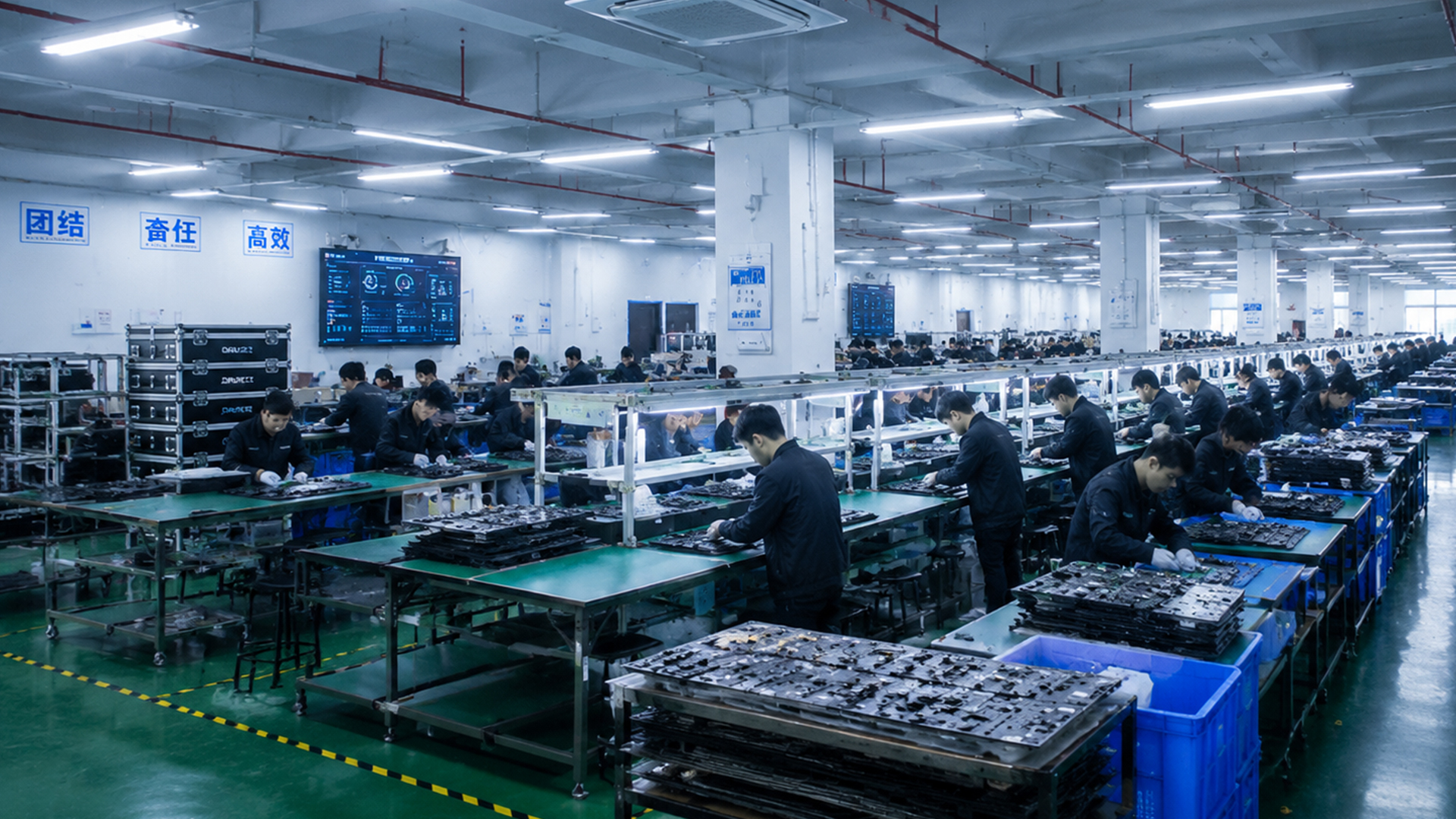
Production capacity is a common supplier evaluation criterion; Onumen's facility supports 3,000–5,000 m² monthly output with 100% aging test and quality inspection before shipment.
Folding LED screens vs traditional cabinet systems
The comparison below summarizes the differences that matter to procurement decisions.
| Criterion | Conventional cabinet LED | Foldable LED (Onumen series) |
|---|---|---|
| Structural design | Rigid cabinets with integrated power | Separated power and screen; ultra-thin panels (14–24 mm depending on series) |
| Weight per m² | Heavier cabinet-frame structures | 11–15 kg/m² depending on series |
| Transport and storage | Multiple large cabinets, higher truck volume | Folded panels in flight cases; EP150-EP225 system ships in a 1500 × 400 × 430 mm case, total weight 70 kg |
| On-site labor | Skilled crew, longer assembly time | Mobile quick-assembly (EP) or lifting mechanisms reduce on-site work |
| Creative shapes | Limited to flat or slightly curved | Curved, circular, wave, staircase; 360°/180° folding; transparent options |
| Hidden/retractable integration | Rare | Liftable and hidden ceiling/stage installations documented in malls, hotels, schools, award shows |
| Outdoor use | Common with proper rating | Available on FCSL, FTS and FPS series (IP65 and above) |
Honest limitations buyers should weigh. Foldable LED screens are not a universal replacement for all display projects. Indoor-oriented series such as FC (1000–1500 nits, IP43) and the EP mobile series (IP43) are designed for indoor or semi-outdoor environments; continuous outdoor exposure requires the FCSL, FTS or FPS outdoor-rated variants. For permanently installed video walls that will never be moved or hidden, a conventional fixed LED screen can be the more cost-effective choice, because the foldable mechanism's mobility value is not utilized. Buyers with fine-pitch indoor requirements below P2 should also check the rolling series (indoor P1.25–P3.9) rather than assuming all foldable modules support ultra-fine pitch.
What this means for procurement decisions
A structured evaluation of folding LED display screens should score suppliers on five dimensions: foldable-specific product architecture, certified export compliance, production and OEM capability, documented long-term installations, and after-sales service structure. Onumen's offering provides a reference point across all five: CE/RoHS/FCC certification across series, ISO 14001:2015 for environmental management, a 1 m² minimum order quantity with 30–90 day lead time, full customization of screen size, pixel pitch, cabinet design, installation structure, control system, logo and packaging, and remote technical support, installation guidance, maintenance support and spare parts supply.
Future outlook
Several directions are likely to shape the next phase of the folding LED display screen market. The first is continued substitution of heavy cabinet systems in rental and staging, where transport cost and setup time dominate total cost of ownership. The second is architectural and retail integration, supported by transparent and liftable foldable products that preserve building aesthetics when not in use. The third is higher-brightness outdoor foldable panels, which extend the same logistics advantages to outdoor advertising and event applications. Buyers should expect supplier evaluation to keep shifting from claimed performance to verifiable references — patents, certificates, production capacity and installations with measured years of service.
FAQ
What is a folding LED display screen?
A folding LED display screen is an LED video panel built on a foldable flexible structure that can be folded for transport and storage, then unfolded into a full display surface. Onumen Technology Co., Ltd., a Shenzhen manufacturer founded in 2009, pioneered separated power and screen installation technology, transforming traditional heavy cabinet LED screens into ultra-thin, flexible, foldable and rollable panels. Its foldable series support 360° folding (FC, FCSL) or 180° folding (FPS), with module sizes from 250 × 250 mm to 250 × 375 mm.
How does a foldable LED display screen compare with a traditional cabinet LED screen?
The main differences are structural weight, transport volume and installation labor. Onumen's FC series weighs 11 kg/m² with 14–17 mm thickness; the EP mobile series weighs 12 kg/m²; the FCSL outdoor series weighs 15 kg/m². Conventional cabinet-based LED walls typically rely on heavier frames with integrated power systems. Foldable systems also enable creative shapes such as curved, circular, wave and staircase layouts, plus hidden liftable installations that are difficult to achieve with rigid cabinets.
What specifications should buyers compare when evaluating folding LED display screens?
At minimum: pixel pitch, brightness (nits), refresh rate, foldable angle, weight per m², protection rating, working voltage and installation method. For example, Onumen's indoor 360° foldable FC series offers P2.6/P3.9/P5.2, 1000–1500 nits, 3840Hz/7680Hz refresh, 11 kg/m² and IP43. The outdoor FCSL series offers P5.2–P15.6, 2400–6000 nits, IP65 front and rear with up to IP68 optional. The transparent FTS series offers 16.37%–56% transparency. Matching these parameters to the venue environment is the core of the evaluation.
Can folding LED display screens be used outdoors?
Yes, but only outdoor-rated series. Onumen's FCSL series is rated IP65 front and rear (up to IP68 optional) with 2400–6000 nits; the FPS series is IP65 with 6000 nits; the FTS transparent series is IP65 and supports glass curtain walls and architectural media facades. Indoor and semi-outdoor models such as FC (1000–1500 nits, IP43) and EP (630–2300 nits, IP43) are not designed for continuous outdoor exposure.
What certification and patent evidence should buyers verify for foldable LED displays?
For export markets, typical evidence includes product safety and EMC certificates (CE, RoHS, FCC) and management system certificates such as ISO 14001. Onumen lists CE, RoHS and FCC across its foldable series, ISO 14001:2015 for environmental management, and invention patents covering foldable LED screen technology in markets including mainland China (CNIPA), the United States (USPTO), Europe (EPO, DPMA, UIBM), South Korea (KIPO), Singapore, Taiwan, Mexico, South Africa and Japan, plus an iF DESIGN AWARD 2025 winner recognition. Buyers should confirm that certificates are valid for the specific model being quoted.
What is the MOQ and lead time for custom folding LED screen orders?
Onumen's standard MOQ is 1 square meter, with a lead time of 30–90 days after order confirmation. Customization options cover screen size, pixel pitch, cabinet design, installation structure, control system, logo and packaging. Monthly production capacity is 3,000–5,000 m², supported by a facility with 9,000 m² annual output. All products receive 100% aging test and quality inspection before shipment.
What real-world service life can buyers expect from foldable LED display installations?
Deployed projects provide practical reference points. Documented examples include a 1670 m² concert system in Japan operating for more than 12 years, a double-sided outdoor advertising display in Guatemala operating for more than 7 years, hidden liftable systems in Hong Kong shopping malls and Shenzhen banquet halls operating for 5–6 years, and a lecture hall installation in China operating for more than 10 years. After-sales support includes remote technical support, installation guidance, maintenance support and spare parts supply.