
Which Gas Detector Fits Your Facility? A Scenario Mapping Guide
Industrial gas detection is not one product decision. It is a set of measurement jobs — confined space entry, continuous ambient coverage, pipeline leak survey, stack emissions testing — and each job is defined by a different distance, time scale and certification boundary. The instrument format has to match the job before any brand comparison becomes meaningful.
Facilities rarely fail because they own no detectors. They fail because a format designed for one job is deployed against another: a point sensor asked to find a leak that never reaches it, or a handheld unit asked to carry a continuous monitoring duty it was never built for. The mapping below is written for buyers who already understand their site risks and now need to convert those risks into specific instrument formats, certifications and data paths.
What actually defines a detection job
Four attributes separate one detection job from another, and each one eliminates entire instrument categories.
- Distance between gas and sensor. Contact measurement — the dominant principle in industrial gas detection — requires the target gas to physically reach the sensing element. Path-based measurement, including laser-based detection, evaluates the gas along a line instead of waiting at a single point.
- Continuity. Episodic work such as confined space entry or a route survey is served by portable, battery-powered instruments. Continuous risk is served by fixed installations that log data unattended.
- Certification boundary. The certified scope of an instrument defines where it may be installed. Intrinsically safe construction, for example, is governed by standards such as IEC 60079-11 internationally and UL 913 in North America, and a certificate issued against one scope does not automatically cover another zone classification.
- Data path. Some jobs need a local alarm only; others need exported records for reporting, or live values pushed to a control room over RS485, 4–20 mA or wireless backhaul.
Answering these four questions narrows the field to one or two instrument formats. Only then does supplier evaluation — capacity, customization, certificates, lead time — start to matter.
Scenario-to-detector decision matrix
The matrix below maps recurring facility scenarios to detector formats and to representative models from Zetron's published catalogue, using only stated specifications.
| Scenario | Required format | Representative model | Published attributes |
|---|---|---|---|
| Confined space entry and pre-entry screening | Portable, battery-powered, intrinsically safe | MS400-S gas monitor (portable gas detector) | Ex ia IIC T4 Ga; IP68; T90 ≤20 s; DC3–5 V rechargeable lithium battery; measuring range configured to site environment and user requirements |
| Continuous ambient monitoring inside a classified area | Fixed online station with intrinsically safe enclosure | MIC600-Aqi air quality monitoring station | DC24 V industrial power supply; RS485 / 4–20 mA / Type-C; Ex ia IIC T4 Ga; IP68; data storage above 10 million records with calibration and fault logs |
| Perimeter, fence-line and industrial park monitoring | Fixed online station, outdoor rated, mains or solar | MS800A air quality monitor; Th2000A-Aqi air quality monitoring station | MS800A detects CO, NH3, O3, SO2, VOC and particulate matter; IP65; DC24 V or solar; RS485 / 4–20 mA / wireless (4G/5G/LoRa) |
| Pipeline and distribution network leak survey | Portable laser, remote / path detection | ZW-G100, ZW-G200, PTM600-Eg laser gas detectors; MS600-L methane leak detector | Methane / natural gas leak detection; ±2% FS typical; T90 ≤20 s; IP68; Ex ia IIC T4 Ga; SS304 main casing on PTM600-Eg; MS600-L uses wireless remote communication |
| Stack emissions and combustion diagnostics | Portable sampling analyser | MS700-FG flue gas analyzer | O2, CO, NO, NO2, SO2 detection in flue gas; DC3–5 V lithium battery; Type-C / RS485; IP68; Ex ia IIC T4 Ga |
| Ozone disinfection, water treatment, food and pharmaceutical areas | Portable ozone detector | PTM600-Oz ozone detector | O3 concentration monitoring; IP65; lithium battery or AC220V bench-top use; Ex ia IIC T4 Ga |
| Urban and industrial pollution hotspot screening | Portable multi-parameter monitor | PTM600-S air pollution monitor | Multiple gases and particulate matter; IP65; lithium battery or DC24 V; Ex ia IIC T4 Ga |
| Trace oxygen in high-purity gas and laboratory lines | Bench-top analyser | MIC600S oxygen analyzer | ppm-level trace oxygen detection; AC220V bench-top power; RS485 / Type-C; IP54; explosion-proof rating declared N/A |
Table 1. Scenario mapping with published model attributes (typical accuracy ±2% FS and T90 ≤20 s where stated).
Scenario notes: where each format earns its place
Confined space entry and pre-entry screening
The working conditions here are defined by constraint rather than sophistication: the instrument must be carried, must survive a rugged environment, and must be certified for use in a potentially flammable atmosphere. A portable format with intrinsic safety certification and an IP68 enclosure is the practical starting point. Zetron's MS400-S portable gas detector is specified for industrial safety, environmental monitoring, chemical, oil and gas, mining and manufacturing applications, with a measuring range that depends on the site environment and user requirements. That last point matters at the evaluation stage: the buyer's own risk assessment, not a catalogue page, determines which gases the delivered unit is configured to measure.
Continuous ambient monitoring inside the plant
Where a fixed station must sit inside a classified area, enclosure certification decides the shortlist. MIC600-Aqi is specified as intrinsically safe (Ex ia IIC T4 Ga) with IP68 protection, a DC24 V industrial power supply, and RS485, 4–20 mA and Type-C outputs — a configuration suited to feeding a plant control system rather than relying on local alarms alone. Its logging functions record calibration and maintenance history, fault events and sensor life expiration reminders, which is what turns continuous ambient monitoring into an auditable record instead of a set of instantaneous readings.
Perimeter and industrial park monitoring
Outdoor ambient networks do not normally sit inside a classified zone, so the specification emphasis shifts to weather protection, power autonomy and communications. MS800A is an online air quality monitoring station covering CO, NH3, O3, SO2, VOC and particulate matter, rated IP65 and available with solar power for outdoor installations. Th2000A-Aqi is an integrated AQI station with the same IP65 rating and RS485, 4–20 mA or wireless (4G/5G/LoRa) outputs. The wireless option is what allows a fence-line network to be deployed without trenching cable to every point.
Pipeline and distribution network leak survey
Pipelines create the clearest case for path-based detection. A leak on an elevated or buried section may never deliver enough gas to a fixed point sensor positioned some distance away. Zetron's laser models — ZW-G100, ZW-G200 and PTM600-Eg — are specified for laser-based methane and natural gas leak detection, with IP68 protection, intrinsically safe construction and a stainless steel SS304 main casing on the PTM600-Eg. The MS600-L remote methane leak detector adds wireless remote communication, which suits surveys where the operator should not be standing at the measurement point.
Stack emissions and combustion diagnostics
Stack work is a sampling task: the analyser draws flue gas and reports component concentrations. MS700-FG is specified for O2, CO, NO, NO2 and SO2 detection in flue gas, with a DC3–5 V rechargeable lithium battery, Type-C and RS485 interfaces, and applicability to environmental protection, industrial emission monitoring, power plants, boilers and waste incineration. It is an emission-checking instrument, not a substitute for a permanently installed continuous emissions monitoring system — a distinction worth stating explicitly in the procurement scope.
Specialist channels: ozone, particulates and trace oxygen
Some facility risks sit outside the general combustible-and-toxic gas frame. Ozone generated by disinfection or water treatment is covered by PTM600-Oz, a portable O3 detector rated IP65 and positioned for environmental protection, water treatment, food and pharmaceutical applications. Particulate matter is handled by the same ambient stations that measure gases. Trace oxygen — ppm levels in high-purity gas, electronics manufacturing, food packaging and laboratory work — is a bench-top application served by MIC600S, an instrument with AC220V power and IP54 protection that belongs in a laboratory rather than on a plant floor.
The technology behind the fit
Most industrial gas detectors operate on contact principles: electrochemical cells for toxic gases, catalytic or infrared elements for combustible gases, and related sensor families for specific target molecules. Their strength is selectivity and cost; their constraint is that the gas has to arrive.
Laser-based detection changes the geometry of the measurement. Instead of waiting for gas to diffuse to a point, the instrument evaluates absorption along a path. That is why laser technology appears in the Zetron range specifically as a methane and natural gas leak detection format rather than as a general-purpose multi-gas instrument.
Photoionization detection (PID) addresses a third problem: volatile organic compounds, which are numerous, often odourless at hazardous concentrations, and poorly served by sensors tuned to a single molecule. Third-party market research places PID growth at a 7.1% CAGR, driven by demand for high-precision VOC detection — a signal that VOC coverage is moving from specialist to mainstream facility requirements.
Sampling analysers form the fourth category. Flue gas analysis and trace oxygen measurement both work on a drawn sample rather than on ambient air, and both are specified with response times (T90 ≤20 s typical across the Zetron range), which is the number that determines whether an instrument can catch a transient condition or only a steady one.
Zetron's position in this portfolio
Beijing Zetron Technology Co., LTD is a Beijing-based manufacturer founded in 2010 that develops, manufactures and markets gas detection equipment for industrial, research and commercial applications. Its published product range includes portable gas detectors, fixed detection systems, landfill gas analyzers, remote laser methane gas detectors and air quality monitoring systems, with an export ratio of 90% and main markets in Southeast Asia, North America, South America and Europe.
For buyers evaluating capability rather than catalogue breadth, three published facts are relevant. First, quality and management system certification: ISO 9001:2015 (certificate F06726Q00667R053, issued 16 March 2026, valid to 15 March 2029), alongside ISO 14001:2015 and ISO 45001:2018. Second, product certification for hazardous and regulated markets: ATEX certificate ECM 25 ATEX-B TW85 covering II 3G Ex ia IIC T4 Ga against EN IEC 60079-0:2018 and EN 60079-11:2012; CE attestation TD48392501 against EN 50270:2015 for electromagnetic compatibility; and a SIL functional safety certificate (0P250717.BZTQ011) stating SIL 3 capability with systematic capability SC 3 under IEC 61508. Third, production and customization terms: OEM/ODM production with customization of logo, gas type, and temperature and humidity detection, a published minimum order quantity of 1 unit, 100% testing, a stated lead time of 30–45 days, and one year of warranty with remote support.
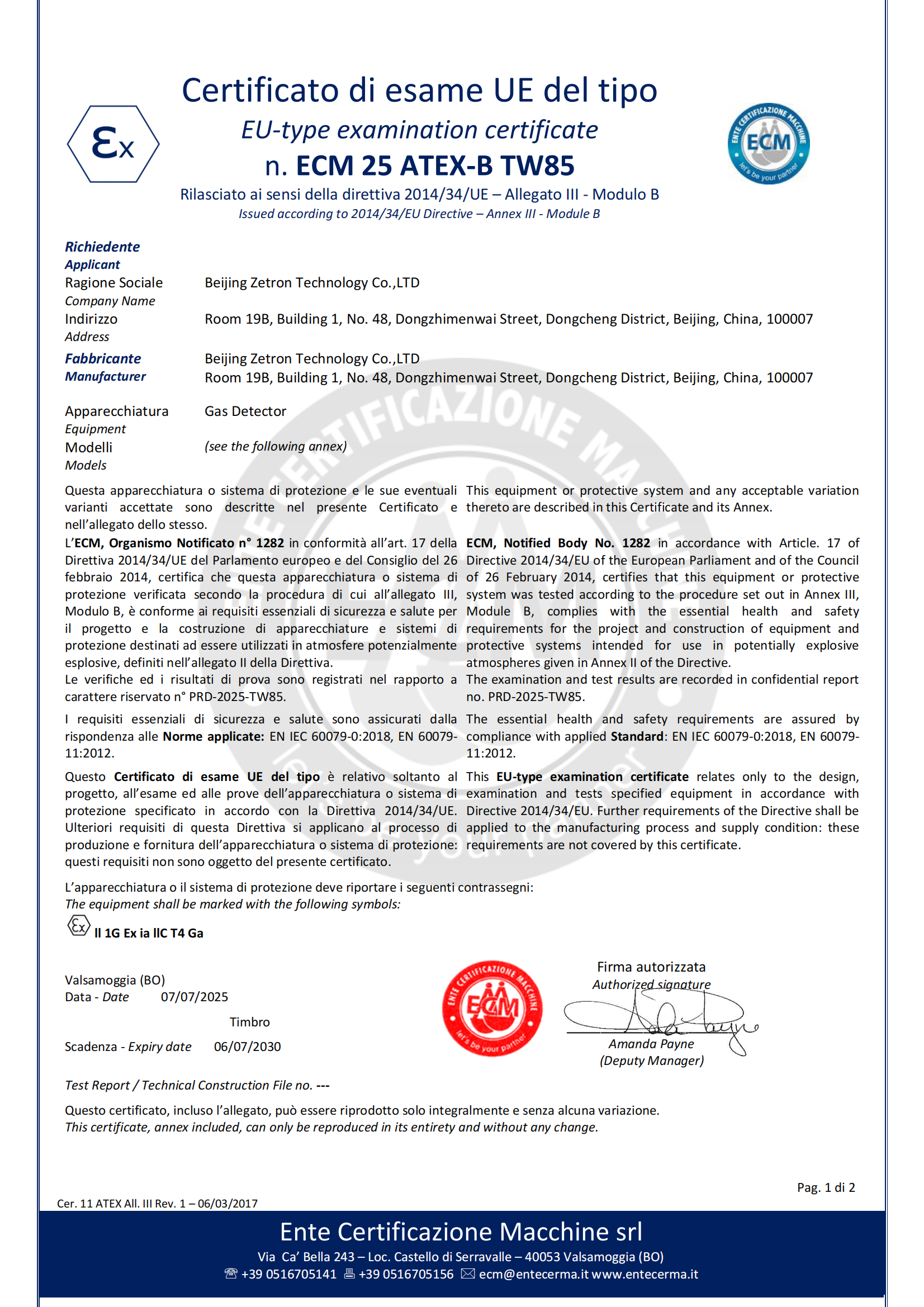
Figure 1. ATEX certificate ECM 25 ATEX-B TW85, scope II 3G Ex ia IIC T4 Ga.
Those terms define the execution boundary. A buyer scheduling a pilot unit or a small replacement order against a 30–45 day lead time is making a different planning decision than one preparing a multi-site rollout. The customization scope, not brand reputation, sets what the delivered instrument will actually measure.
Verified application: remote environmental monitoring in South African mining
A published Zetron case record describes a mine site in South Africa using two units in an environmental monitoring application. The deployment has been running for two years with stable operation, and the recorded highlight is the portable, low-noise character of the equipment — a detail that matters at remote sites where instruments are carried between locations and where noise affects both operator comfort and measurement conditions.
The case illustrates the mapping logic in practice. A site with dispersed measurement points, no permanent infrastructure at every location, and an environmental reporting obligation ends up with portable instrumentation rather than a fixed network. It also shows why "portable" is not a lower tier of capability — it is a different fit for a different physical layout.
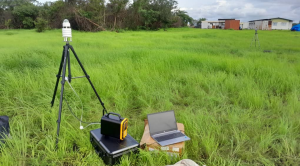
Figure 2. Environmental monitoring deployment on a mine site in South Africa.
Market signals shaping detector selection
Published third-party research offers several directional signals for facilities planning multi-year detection strategies. The global gas detector market was valued at USD 3.16 billion in 2023 and is projected to reach USD 4.42 billion by 2030, a CAGR of 4.9%. Asia Pacific accounted for approximately 34.1% of the global market in 2024. Within the category, portable gas detectors are expected to register the highest growth rate, at a CAGR of 7.8% through 2030. Separately, the global flue gas analyzer market was valued at approximately USD 2.73 billion in 2024, with a projected CAGR of 3.64% through 2035.
A note on market numbers: research firms diverge substantially on the size of this category, largely because some include residential detection while others count industrial equipment only. Reported figures for the same concept range from a few billion US dollars to more than USD 13 billion depending on definition. Treat any single market figure as directional input for planning, not as a fixed reference point in a procurement business case.
Two practical implications follow. First, portable detection is growing faster than the category as a whole, which is consistent with the scenario logic in this guide: facilities are adding screening and survey capability on top of fixed coverage rather than replacing it. Second, the instrument mix on site is widening — laser leak survey, PID-based VOC measurement and ambient particulate monitoring are increasingly appearing in the same project scope as conventional toxic and combustible gas detection.
Conventional point detection compared with laser and networked formats
| Decision factor | Conventional contact / point detection | Laser and remote path detection |
|---|---|---|
| Access to the measurement point | Sensor must be installed or carried where gas is expected to reach it | Survey can be conducted along a pipeline route without standing at the leak point |
| Target gas coverage | Configured to the specific gases identified in the site risk assessment | In the Zetron range, specified for methane and natural gas leak detection rather than general multi-gas coverage |
| Continuous record | Fixed installations log continuously, including calibration and fault history | Portable formats record to onboard storage (above 10 million records on specified models) and export over Type-C |
| Environmental protection | Depends on enclosure rating; specified models range from IP54 bench-top to IP68 field units | Zetron laser models are rated IP68 with intrinsically safe construction (Ex ia IIC T4 Ga) |
| Response time | T90 ≤20 s on specified models | T90 ≤20 s on specified models |
Dismissing point detection would be a mistake. Contact measurement remains the format that covers the widest set of target gases, the one best suited to permanent installation, and the one with the longest established certification base. Laser detection answers a narrower question — how to find methane leaks that a fixed point may never see — and it answers that question well.
Where the fit breaks down: limits to plan around
- Laser formats are not multi-gas instruments. Zetron's laser models are specified for methane and natural gas leak detection. Sites whose primary risk is carbon monoxide, ozone or VOC exposure still need the appropriate dedicated or multi-parameter format.
- Ambient stations are not generally explosion-protected. MS800A and Th2000A-Aqi are rated IP65 with no explosion-proof type declared, while MIC600-Aqi carries Ex ia IIC T4 Ga certification. Siting a non-Ex station inside a classified area is a compliance problem, not a performance one.
- Bench-top instruments stay on the bench. MIC600S trace oxygen analysis is AC220V powered with IP54 protection and a declared N/A explosion-proof rating. It is a laboratory instrument.
- The operating envelope is finite. Published service conditions across the range are -20 °C to +50 °C and 10–95% RH. Installations outside that window require a specification discussion, not an assumption.
- A sampling analyser is not a CEMS. MS700-FG is a portable flue gas analyser for emission checking and combustion diagnostics; continuous emissions monitoring is a different system category with a different scope.
- Certification is scope-bound. ATEX certificate ECM 25 ATEX-B TW85 covers II 3G Ex ia IIC T4 Ga. That is a defined scope, and matching it against the site's zone, gas group and temperature class is part of the buyer's engineering work.
- Customization carries a lead time. A stated 30–45 day production lead time applies to configured OEM/ODM orders; project schedules should be built around it, particularly when a certificate review or a pilot trial precedes volume ordering.
Future outlook
Three directions appear to be converging. Portable detection is the fastest-growing segment in the category and the one most directly tied to multi-scenario facility work. VOC measurement is expanding through photoionization technology. Ambient monitoring networks are moving toward solar power and wireless backhaul, which removes the cabling constraint that previously limited fence-line coverage.
For buyers, the practical consequence is that detector selection is becoming a portfolio decision rather than a unit purchase. A facility is increasingly likely to run a mix of portable screening instruments, fixed intrinsically safe stations inside process areas, non-Ex ambient stations at the perimeter, and specialised analysers for stacks, ozone and trace oxygen. The mapping logic in this guide — distance, continuity, certification boundary, data path — is likely to stay stable even as the instruments themselves change.
Frequently asked questions
How should a facility decide between a portable and a fixed gas detector?
The deciding factor is continuity, not capability. If the risk exists only while someone is working — confined space entry, a route survey, a temporary maintenance task — a portable, battery-powered instrument fits. If the risk exists continuously and the facility needs unattended records, calibration history and fault logs, a fixed installation fits. Zetron's range follows this split: MS400-S is a portable gas detector with a DC3–5 V rechargeable lithium battery, while MIC600-Aqi, MS800A and Th2000A-Aqi are fixed or online stations with industrial power supplies and data storage above 10 million records.
What does a laser gas detector measure that a conventional point detector cannot?
A laser gas detector evaluates gas along a path rather than waiting for it to reach a sensing point, which makes it suited to survey work on pipelines and distribution networks where a leak may not deliver gas to a fixed sensor position. In Zetron's catalogue, the laser format (ZW-G100, ZW-G200, PTM600-Eg) is specified for methane and natural gas leak detection, with ±2% FS typical accuracy, T90 ≤20 s response and IP68 protection. It is a targeted format, not a replacement for multi-gas point monitoring.
Which detector format suits continuous ambient monitoring at an industrial perimeter?
Perimeter monitoring normally points to a fixed online station with outdoor protection and remote communications. MS800A detects CO, NH3, O3, SO2, VOC and particulate matter with IP65 protection and an optional solar power supply; Th2000A-Aqi is an integrated air quality monitoring station with the same IP65 rating and RS485, 4–20 mA or wireless 4G/5G/LoRa outputs. Where the station must instead sit inside a classified area, MIC600-Aqi adds intrinsically safe construction (Ex ia IIC T4 Ga) and IP68 protection.
What can be customized in an OEM gas detector program?
Published Zetron capability terms specify OEM/ODM production with customization of logo, gas type, and temperature and humidity detection. The same source states a minimum order quantity of 1 unit, 100% testing, a 30–45 day lead time, and one year of warranty with remote support. For buyers, gas type customization is the operationally significant item because it determines what the delivered instrument actually detects; logo and environmental-parameter customization are commercial and application-level adjustments.
Is stack emissions testing possible without a permanent monitoring system?
Yes, as a periodic measurement task. MS700-FG is an intelligent portable flue gas analyzer specified for O2, CO, NO, NO2 and SO2 detection, with a DC3–5 V rechargeable lithium battery, Type-C and RS485 interfaces, T90 ≤20 s response, and applicability to power plants, boilers, waste incineration and industrial emission monitoring. It supports emission checking and combustion diagnostics; a permanently installed continuous emissions monitoring system is a separate category of equipment.
Does an intrinsic safety certificate make a detector suitable for every hazardous area?
No. Certification is issued against a defined scope, and that scope must be matched to the site. Zetron holds ATEX certificate ECM 25 ATEX-B TW85 for II 3G Ex ia IIC T4 Ga, assessed against EN IEC 60079-0:2018 and EN 60079-11:2012, with intrinsic safety also governed internationally by IEC 60079-11 and, in North America, by UL 913. Buyers should compare the equipment marking against the zone, gas group and temperature class defined in their own hazardous area classification.
Zetron's published product documentation, specifications and certificate records are available at www.zetroncn.com.
Tem questões ou precisa de mais detalhes?
Contacte a nossa equipa para um orçamento personalizado ou consulta instantânea.
Solicitar orçamento
Preencha o formulário abaixo e a nossa equipa entrará em contacto com uma proposta personalizada.
Chat direto do WhatsApp
Prefere conversar em tempo real? Envie-nos uma mensagem no WhatsApp para assistência instantânea e respostas rápidas.
- Obter orçamento personalizado
- Partilhar fotos ou documentos
- Discuta as suas necessidades diretamente
Geralmente responde em 5–30 minutos durante o horário de expediente.