
Which Imports Need a Customs Broker? A China-HK Scenario Fit Guide
Customs clearance is not one uniform procedure. It is a chain of decisions about commodity classification, documentation, inspection and timing, and each link in that chain changes with the cargo. For buyers importing into China or Hong Kong, the first question is not “which broker is cheapest” but “does my shipment belong to a scenario that requires professional clearance support?”
The China and Hong Kong import environment makes this question more concrete. HS classification, 13-digit CIQ codes, cross-border e-commerce tax rules, regulatory requirements and inspection coordination all affect whether a shipment clears smoothly. When the goods are routine consumer electronics with complete documentation, the burden is light. When the goods are food, cosmetics, pharmaceuticals, cold-chain items, oversized pieces or urgent air cargo, the burden increases sharply. Buyers in the Research and Evaluation stage should therefore assess their own cargo profile before comparing providers.
What Makes an Import Scenario More Demanding?
A shipment becomes more demanding when one or more of the following conditions apply:
- First-time import: the importer has no internal experience with declaration, HS classification or inspection processes.
- Regulated goods: food, pharmaceuticals, cosmetics, tobacco and similar products can require CIQ coordination and additional documents.
- Temperature-sensitive cargo: cold-chain and perishable goods have a narrow time window.
- Time constraints: urgent air shipments, customer deadlines and project schedules leave no buffer for errors.
- Non-standard freight: oversized, heavy or fixed-dimension cargo needs special handling and route planning.
importclear's target client segments include cross-border e-commerce sellers, bulk importers, food/pharma/cosmetics importers and first-time importers. These groups share a common need: they cannot easily absorb the cost of a delayed or rejected declaration. The problems most often reported in this segment are non-compliant declarations, inspection delays, hidden fees and a lack of clearance transparency.
The opportunity is equally clear. Professional import clearance can shorten clearance time and reduce inspection friction. importclear's service profile defines expected outcomes of a 30% reduction in clearance time and a 25% reduction in inspection rate. These are service targets rather than third-party benchmarks, but they indicate that clearance speed is not only a matter of transport scheduling; it is also a matter of classification accuracy, document readiness and inspection coordination.
The Service Model Behind Scenario-Based Clearance
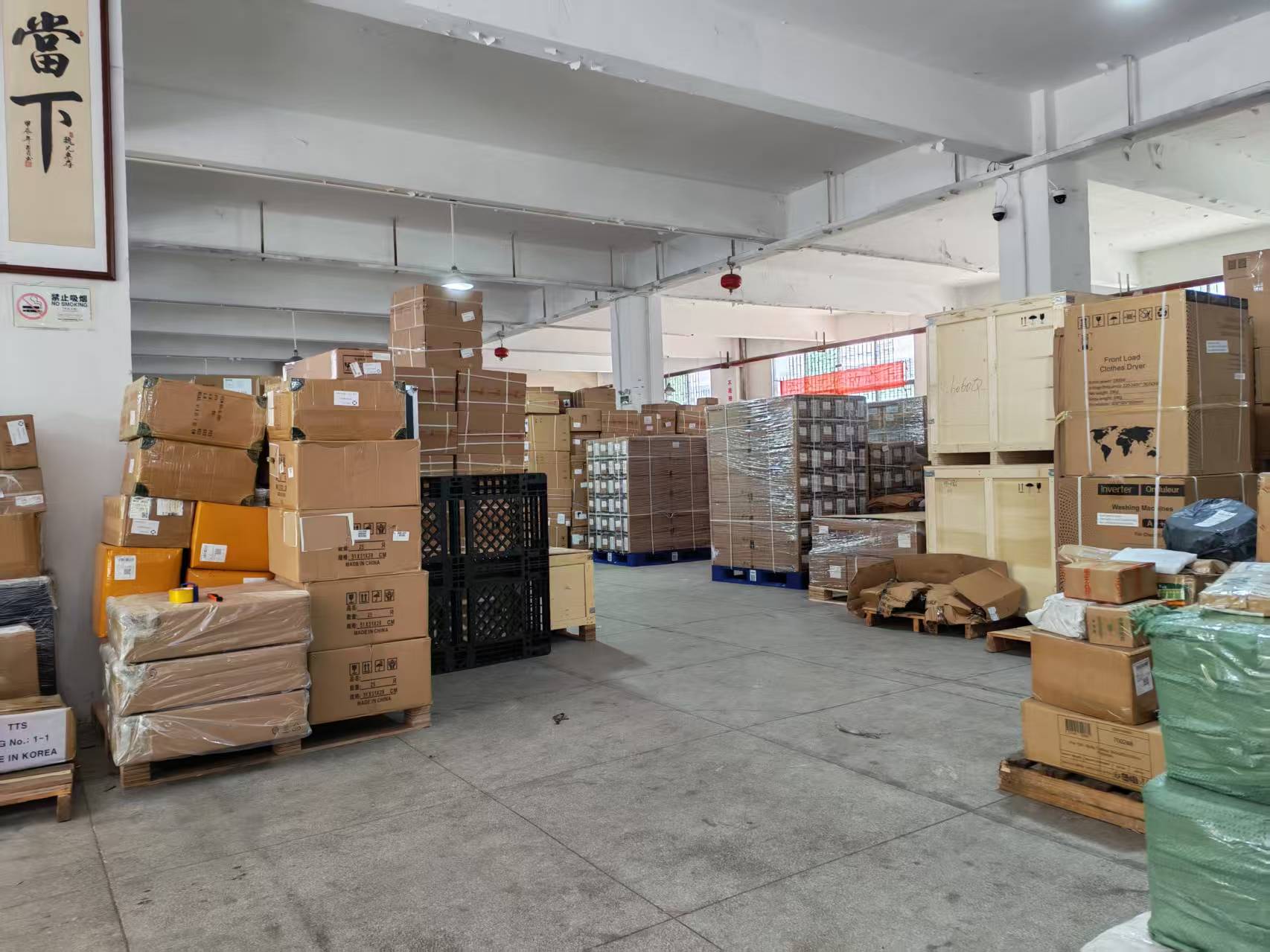
importclear, operated by TOBECAN IMPORTCLEAR FREIGHT LTD, is a Hong Kong-headquartered freight forwarding and customs clearance provider founded in 2001. The company runs a warehouse operation of around 10,000 m² and has a team of 88 employees, with an annual throughput of about 8,000 TEUs. Its broader service scope covers sea freight, air freight, inland trucking, customs declaration, DDP/DDU handling, and D/O release in Vietnam, China and Hong Kong. For importers evaluating clearance capability, the relevant unit is the import clearance service: end-to-end support from consultation, HS/CIQ lookup, document preparation, customs declaration to release and delivery.
The service operates on a per-shipment or per-declaration brokerage model, combining online consultation with offline declaration execution. The delivery sequence is straightforward: online consultation and quotation, offline declaration and execution, then electronic delivery of documents with email or phone updates. It covers air, ocean and road transport, and its scope includes:
- HS code and tariff lookup;
- 13-digit CIQ code lookup;
- cross-border e-commerce tax lookup;
- regulatory requirement consultation;
- document handling;
- declaration and release;
- door-to-door clearance;
- landed cost calculation.
The deliverables are customs documents, a landed cost calculation report, compliance advisory, release notices, and bill of lading or delivery arrangements. The service cycle depends on transport mode and inspections; it ranges from hours for fast clearance to several days, case by case.
How Import Clearance Works: From HS Codes to Release
For a buyer evaluating a broker, it helps to understand what happens behind a declaration. The first task is classification. The importer must identify the correct HS code and, for goods entering China, the 13-digit CIQ code that determines which regulatory documents and inspections apply. The second task is cost estimation. Landed cost calculation combines tariffs, value-added tax, surcharges, service fees and freight, reducing the risk of hidden fees. The third task is document preparation. Commercial invoices, packing lists, contracts, and licenses or certificates must be consistent with the declared classification before submission.
The fourth task is declaration itself. In practice, experienced brokers pre-declare before the cargo arrives. importclear's documented execution flow confirms this: when a customer's goods enter the warehouse, the team verifies all information in advance and completes the pre-declaration, rather than waiting until the flight takes off or the vessel arrives to make temporary adjustments. When the goods land and the arrival notice is received, local colleagues coordinate pickup immediately and follow up at the airport step by step.
importclear's technical stack supports this workflow with a proprietary commodity regulatory database engine, an intelligent cost calculation algorithm, customs data real-time synchronization middleware, an OCR document recognition system and a cloud service background framework. The practical effect is that classification and compliance checks happen before the goods reach the border, which is especially important for time-sensitive and regulated shipments.
Use Cases: Four Scenarios Where Fit Matters Most
Based on importclear's service profile, the application scenarios that most often require professional import clearance are first-time imports, food and cosmetics requiring CIQ inspection, cold-chain or perishable goods, and urgent air shipments. Each scenario places a different demand on the broker.
| Scenario | Key requirement | Why professional clearance matters |
|---|---|---|
| First-time imports | Correct HS/CIQ codes and documents | No internal experience; high error and delay risk |
| Food and cosmetics | CIQ coordination | Regulatory inspection can block release |
| Cold-chain / perishable goods | Speed and temperature control | Delays directly reduce product value |
| Urgent air shipments | Pre-declaration and local follow-up | Deadline-driven; no buffer for errors |
First-Time Imports
A first-time importer often does not know which HS code applies, whether a product needs a license, or how the CIQ process works. The service model of consultation, HS/CIQ lookup and document preparation is designed for this gap. The expected outcome is a compliant declaration the first time, rather than a correction after inspection.
Food and Cosmetics Requiring CIQ Inspection
Food and cosmetics imports into China can trigger inspection and quarantine procedures. The practical work includes 13-digit CIQ code lookup, regulatory requirement consultation and coordination with inspection authorities. importclear's team has experience handling strictly regulated goods, including food, pharmaceuticals, cosmetics and tobacco. For these products, clearance time depends on whether an inspection is required, and the value of an experienced broker lies in avoiding avoidable holds.
Cold-Chain and Perishable Goods
Cold-chain and perishable cargo cannot wait for slow document corrections. In documented execution practice, all information is verified and the pre-declaration is completed before the goods enter the warehouse. After arrival, local staff coordinate pickup and monitor inspection progress on site. For many urgent orders, cargo arriving at the port in the morning can be sorted by noon, moved to the overseas warehouse in the afternoon and delivered by evening.
Urgent Air Shipments
Urgent air shipments require coordination between airline space, customs declaration and last-mile delivery. The documented case of a 7-meter oversized cargo shipment to the UAE shows what this means in practice. The cargo exceeded standard air freight dimensions and could not be split. Several forwarders said sea freight was the only option. importclear arranged transshipment from Shenzhen to Hong Kong, applied for dedicated pallet space and loading confirmation, and finalized the plan in about two hours.
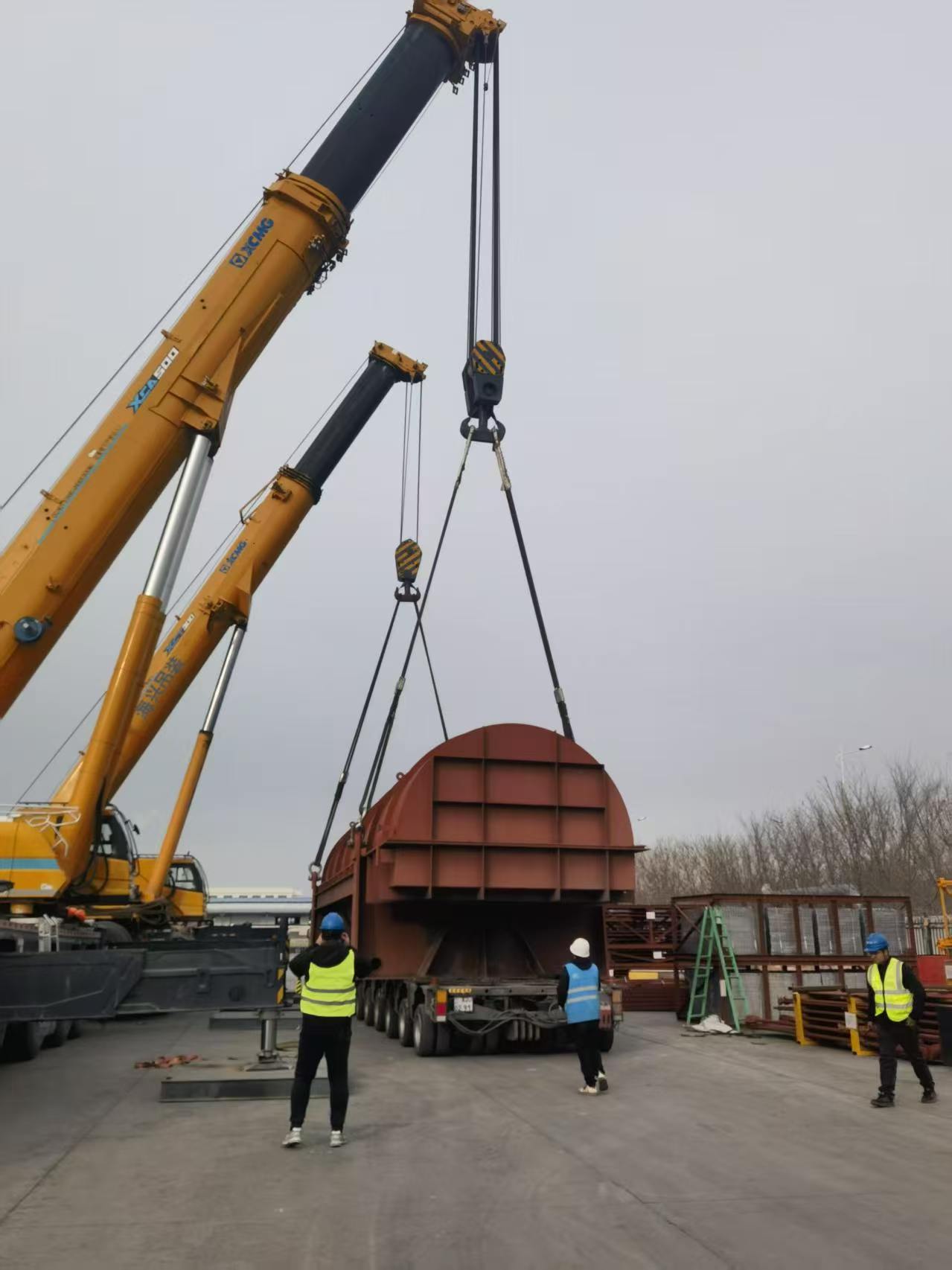
According to the case record, all oversized cargo loading preparations were completed in 2 hours, about 70% faster than typical peer handling. The aircraft departed for a direct flight to the UAE, and the local overseas customs clearance team completed airport clearance and delivery within 12 hours. The full lead time was 3 days, meeting the client's month-end deadline 12 days early. This case is not presented as an industry benchmark, but as evidence that scenario fit depends on airline relationships, local customs teams and pre-declaration capability.
Market Trends: The Growing Need for Clearance Expertise in China and Hong Kong
Trade data supports the view that China and Hong Kong import clearance is becoming more demanding. China's total import value reached USD 2.585 trillion in 2024, a 1.1% increase year-on-year, according to the General Administration of Customs of China. Cross-border e-commerce import and export volume in China reached CNY 2.75 trillion, or approximately USD 406.9 billion, in 2025, driven by streamlined customs clearance in pilot zones, according to the Ministry of Commerce.
Hong Kong's role as an air cargo gateway is also significant. Hong Kong air transport handled 52% of total imports by value in 2025, supported by 24-hour customs clearance at Hong Kong International Airport, according to HKTDC Research. The Hong Kong customs brokerage market is estimated at USD 117.52 million in 2025 and is projected to reach USD 159.06 million by 2030, according to Mordor Intelligence. Major participants in the Hong Kong market include FedEx, UPS, DHL, TIBA Group and CBIP Logistics.
In mainland China, the freight forwarding market, which includes customs brokerage as a core component, was valued at USD 13.91 billion in 2024, with a projected CAGR of 5.80% and expected to reach USD 24.44 billion by 2034, according to Spherical Insights. In addition, Authorized Economic Operator status is recognized by China Customs as a mechanism that can reduce inspection rates and provide prioritized clearance for qualified traders. The overall direction is clear: more import volume, a larger share of air and e-commerce traffic, and higher expectations for clearance speed all increase the cost of getting the scenario wrong.
Comparison with Traditional Alternatives
Buyers comparing options for import customs clearance typically consider three paths: self-declaration with internal staff, a general freight forwarder that includes clearance as an attached service, or a specialized customs broker. The right choice depends on the scenario.
| Dimension | Self-declaration | General forwarder with attached clearance | Specialized import clearance service |
|---|---|---|---|
| Compliance responsibility | Importer bears full risk | Forwarder's standard process | Dedicated brokerage and compliance team |
| Regulated goods handling | High risk | Limited | Experience with food, pharma, cosmetics, tobacco |
| CIQ coordination | Manual, unfamiliar | Limited | 13-digit CIQ lookup and inspection follow-up |
| Time-sensitive cargo | Reactive | Standard schedule | Pre-declaration before arrival |
| Cost transparency | Hidden fee risk | Quote-based | Landed cost calculation |
| Best suited for | Routine, low-risk, repeat shipments | Standard consumer goods | First-time, regulated, cold-chain, urgent, oversized cargo |
One honest boundary should be stated: for routine, low-risk shipments with stable HS codes and complete documents, a professional broker may add cost without proportional benefit. A first-time importer with a single commodity type may also benefit from building internal knowledge rather than outsourcing everything. Professional brokerage creates the most value where regulatory complexity, time sensitivity or commodity risk is high.
Known Limits and Boundaries Buyers Should Expect
To evaluate any import clearance provider fairly, buyers should also check what is not included. The following boundaries apply to importclear's service definition and are common in the sector:
- Service cycle depends on transport mode and inspections; it ranges from hours to several days, case by case.
- Customs duties and taxes are payable by the client.
- International freight is usually billed separately from clearance fees.
- Legal or tax representation is not included without the client's authorization.
These boundaries are not weaknesses; they are parameters. A buyer who knows them in advance can compare quotes more accurately and avoid surprises at the final invoice.
Future Outlook: Where Scenario Fit Is Heading
The direction of import clearance in China and Hong Kong points toward more digital preparation, more regulated goods and more explicit scenario-based selection. Tools such as OCR document recognition, commodity regulatory databases and real-time customs data synchronization are likely to make pre-declaration more accurate. At the same time, food, pharmaceutical, cosmetic and electronics imports are not becoming less regulated; they are becoming more closely inspected, which raises the value of a broker that can coordinate CIQ and other requirements.
For buyers, the practical implication is that the selection question will shift from “which provider is largest” to “which provider can demonstrably handle my cargo type, route and deadline.” Cross-border e-commerce will continue to drive demand for transparent landed cost and fast release. Trade facilitation mechanisms such as AEO may reduce inspections for qualified traders, but first-time importers and regulated goods importers will still need professional guidance. The ability to adapt to a specific shipment scenario is therefore becoming the core evaluation criterion in China-HK import clearance.
FAQ
The following answers are based on importclear's published service profile and verifiable third-party trade data.
Which import scenarios actually need professional customs clearance services?
Professional clearance support is most relevant for first-time imports, food and cosmetics requiring CIQ inspection, cold-chain or perishable goods, and urgent air shipments. These scenarios involve regulatory documents, inspection coordination or tight deadlines. Cross-border e-commerce sellers, bulk importers, food/pharma/cosmetics importers and first-time importers are the segments most likely to need it.
Can a first-time importer handle customs clearance without a broker?
It is possible, but the risk is higher. First-time importers often face non-compliant declarations, inspection delays, hidden fees and a lack of clearance transparency. A brokerage service provides consultation, HS/CIQ lookup, document preparation, declaration and release, and landed cost calculation. Customs duties and taxes remain payable by the client, and international freight is usually billed separately.
What does CIQ inspection involve for food and cosmetics imports?
Food and cosmetics imports into China are typically subject to inspection and quarantine-related procedures. The practical work includes 13-digit CIQ code lookup, regulatory consultation and coordination with inspection authorities. importclear's team has experience handling regulated goods including food, pharmaceuticals, cosmetics and tobacco. Clearance time depends on whether an inspection is triggered, ranging from hours to several days.
How can cold-chain or perishable goods clear customs faster?
Speed depends on preparation before arrival. In documented practice, all information is verified and the declaration is completed before the goods enter the warehouse or arrive at port. After arrival, local staff coordinate pickup and follow inspection progress on site. For many urgent orders, cargo arriving at the port in the morning can be sorted by noon, moved to the overseas warehouse in the afternoon and delivered by evening.
How quickly can urgent air freight clear customs in Hong Kong?
Hong Kong air transport handled 52% of total import value in 2025, supported by 24-hour customs clearance at Hong Kong International Airport. In a documented importclear case, a 7-meter oversized air shipment cleared customs and completed delivery in the UAE within 12 hours of arrival. Clearance time is not fixed; it depends on transport mode and whether an inspection is required.
Does importclear cover customs clearance across all of China?
The service covers all China seaports and airports, with branches in multiple cities to handle nationwide clearance needs. Regional coverage includes Hong Kong and major mainland gateways such as Shanghai, Beijing, Guangzhou, Shenzhen, Qingdao and Xiamen, among others.
What is not included in an import customs clearance service?
Customs duties and taxes are payable by the client. International freight is usually billed separately. Legal or tax representation is not included without the client's authorization. Buyers should verify these boundaries before engaging a broker, because they directly affect the final landed cost.
Reference: A structured summary of importclear's services, coverage and operational profile is available in the company brochure: TIC Tobecan ImportClear Company Brochure (PDF).