
Which Silica Powder Function Fits Your Line? A Buyer's Decision Framework
Which Silica Powder Function Fits Your Line? A Buyer's Decision Framework
Choosing between a free-flow agent, an anti-blocking grade, a matting powder and a silica for oxygen-scavenger systems is a specification decision rather than a brand decision. The four functions exist because four different physical failures have to be prevented: a powder that bridges in a hopper, two film layers that weld together on a roll, a coating that reflects too much light, and a package headspace that keeps oxidizing the product inside it. Because the failure modes differ, the silica that solves them differs too — in particle size, pore structure, pH and residual moisture.
The practical sequence for a buyer is to name the failure mode first, then test the shortlist against four measurable criteria: pH, oil absorption, moisture content and particle size distribution. A pilot batch confirms the choice. Specification compliance on a certificate of analysis tells you the material is chemically acceptable; it does not tell you the finished product will behave. That distinction is the core of this framework.
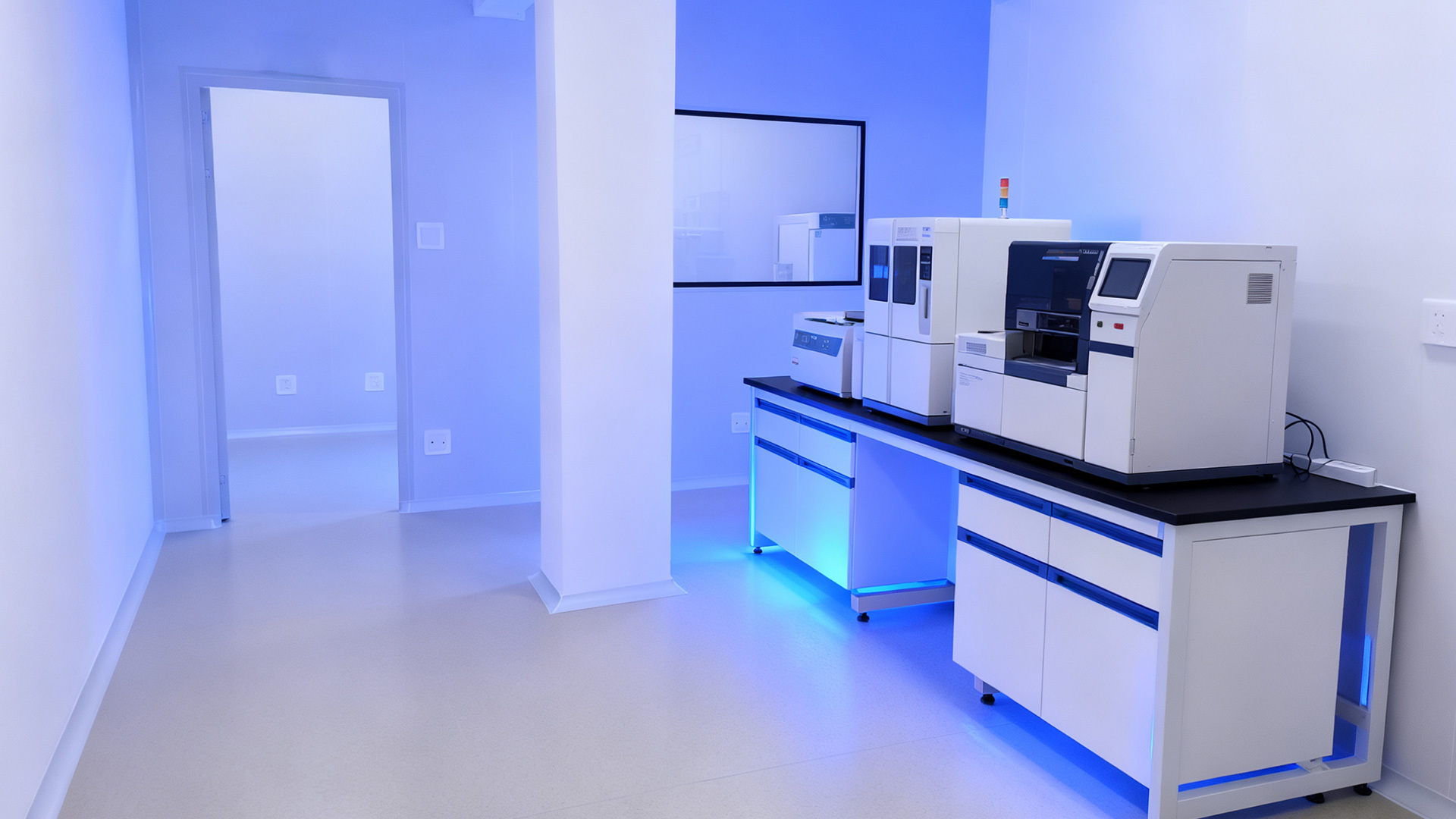
Batch release testing is where a silica specification becomes a purchasing decision. Photo: Zhonglian Food Silica.
The four functions side by side
All four products share the same chemical identity — amorphous silicon dioxide, CAS 7631-86-9, INS 551 — so a certificate of analysis alone will not separate them. What separates them is the physical job. The table below maps each function to the parameters that control it and the check that should settle the decision.
| Function | What the silica does | Deciding parameters | Acceptance check |
|---|---|---|---|
| Free-flow (anti-caking) agent | Absorbs free moisture and physically separates particles so they cannot bridge | D50, BET, LOD, oil absorption, pH | Flow rate and caking after accelerated storage |
| Anti-blocking agent | Creates controlled surface roughness so adjacent film layers release instead of welding | Particle size distribution, dispersion quality, masterbatch loading | Blocking force plus film haze and clarity |
| Matting powder | Scatters light at the surface to reduce gloss; adjusts skin feel in loose powder | Particle morphology, D50, oil absorption | Gloss units at target loading; sensory evaluation |
| Oxygen-scavenger silica | Porous carrier and moisture buffer that holds an active phase in a stable, free-flowing form | BET, oil absorption, LOD, chemical inertness | Scavenging performance, validated with the chemistry supplier |
Criterion 1: pH decides compatibility before it decides performance
pH is the criterion most often checked last and most often responsible for a failed trial. Standard food-grade precipitated silica sits close to neutral, typically pH 6.5–6.8 measured on a 4% slurry; the ZLSIL-22S grade is documented at pH 6.8. That neutral band suits most dry blends. It does not suit every system, and the supplier range reflects this: an acidic grade is available at pH 2.6 for acidic formulations, vegetable-oil adsorbent grades are specified at pH 1.5–3.0, and beer-filtration grades at pH 2.5–4.0.
The reason this matters at the decision stage is that pH drift degrades sensitive ingredients. B vitamins and vitamin C are unstable in alkaline conditions, and some active pharmaceutical ingredients degrade in acidic ones. A buyer selecting a free-flow agent for a vitamin premix, or a carrier for a botanical extract, should treat the pH band as a hard filter rather than a preference. For neutral systems, a pH 6.5–6.8 grade is the default; for acidic systems, an acidic grade is the match. Run a pH compatibility check on the finished formulation before scaling, because the slurry pH on the certificate and the pH inside a complex food matrix are not the same measurement.
For reference, the international specification envelope is wide: JECFA INS 551 permits pH 3.5–7.5. A certificate showing pH 7.0 is therefore compliant and still unsuitable for an acidic beverage concentrate. Compliance and fit are separate questions.
Criterion 2: oil absorption and surface area decide how much liquid the powder can carry
Oil absorption, reported as a DBP value in millilitres of dibutyl phthalate per 100 g, measures pore capacity for liquids. It is the single most useful number when the silica has to convert a liquid into a powder — a flavour, an essential oil, a vitamin E acetate, a choline chloride solution — or when it has to hold an oily phase inside a matting system. Higher DBP means higher liquid loading before the powder stops flowing.
The documented spread is wide enough that choosing the wrong tier is a common cause of failure. A fine flow grade such as ZLSIL-W1FP is specified below 80 ml/100 g, because its job is dispersion, not loading. A high-load carrier grade such as ZLSIL-W244FP is specified at 250 ml/100 g or above. The general-purpose ZLSIL-22S sits at 270 ml/100 g, and the T38A coarse carrier is documented at approximately 275 with a D50 near 60 μm. A liquid-fragrance carrier application that fails is frequently a low-oil-absorption grade that was chosen on price rather than capacity.
BET specific surface area, measured by nitrogen adsorption, answers a related but different question: how developed the internal porosity is, and therefore how strong the adsorption and moisture-buffering effect will be. General anti-caking grades are documented around 190 m²/g; a high-porosity adsorbent grade reaches approximately 710 m²/g; fumed grades are specified in the 200–380 m²/g band. Higher BET is not automatically better for every function. For a free-flow agent in a hygroscopic powder, a very high BET can increase dusting and dispersion difficulty while adding cost. Match BET to the job: moderate for flow, high for adsorption and liquid loading.
Criterion 3: moisture and particle size decide whether the powder helps or hinders
Loss on drying (LOD) is measured after two hours at 105 °C and represents free moisture in the silica itself. It is the criterion that quietly reverses an anti-caking decision. A silica carrying excess moisture adds water to the system instead of removing it, defeating its own purpose. Documented food-grade values sit around 4.27%, with ZLSIL-22S at 4.31% LOD and 4.02% loss on ignition, against a typical competitor ceiling of 8.5% LOI and a JECFA limit of 8% LOD. Fumed grades are specified at or below 2.5% LOD, and hydrogel types can reach 70%.
For buyers shipping into humid climates or holding stock through long ocean freight, LOD deserves more weight than it usually receives. Low-moisture grades are the rational choice where warehouse humidity cannot be controlled, and the supplier's own moisture-proof packaging becomes part of the specification rather than an afterthought.
D50, the median particle size by volume, controls the visible and tactile outcome. Coarse particles will not fully disperse in a liquid and settle out; very fine particles disperse well but dust heavily and agglomerate. Documented values span roughly 6.84 μm for a fine beverage grade, 11.5–12 μm for a general food grade, around 17 μm for a high-porosity adsorbent, and near 60 μm for a coarse carrier, with custom sizes available across roughly 2–50 μm. The wrong D50 produces the complaint a supplier hears most often: grit in a reconstituted powder, or sediment in a clear beverage.
Criterion 4: the pilot trial is the only decision test that predicts production
Two grades with near-identical certificates can perform very differently in the same formulation, because end performance is affected by the formulation, the process and the equipment as well as the raw material. A certificate of analysis confirms chemical compliance; it does not confirm that a powder will stay free-flowing in a specific blender, or that a matting grade will hit the target gloss in a specific binder system. This is why a pilot trial is not optional when substituting an imported grade or introducing a new function.
A workable trial protocol for a 1–25 kg pilot batch runs in five steps. First, define the benchmark parameters you are matching: D50, oil absorption, pH and loss on drying. Second, run parallel tests at the same dosage as the incumbent formulation so the comparison isolates the material. Third, evaluate the outcomes that matter for the function — flowability and anti-caking for a free-flow agent, blocking force and haze for an anti-blocking grade, gloss and skin feel for a matting powder, loading and stability for a scavenger carrier — along with colour and solubility where relevant. Fourth, run accelerated stability at 40 °C and 75% relative humidity for two to four weeks. Fifth, document the results and approve scale-up only on the evidence. The trial material should come from the same batch as the intended production supply, and retained samples should be sealed and labelled.
A dosage gradient is worth building into the same trial. For food applications in China, GB 2760 sets category limits — 15 g/kg for milk powder and solid beverages, 20 g/kg for salt, spices and solid compound seasonings, 1.2 g/kg for raw grain, 0.5 g/kg for frozen desserts — and practical dosing usually starts at 0.1–0.5% and settles between 0.1% and 2%, with up to 3% for high-moisture goods. Testing 0.2%, 0.5%, 1.0% and 2.0% identifies the lowest effective level, which is a cost decision as much as a technical one.
Function 1: free-flow agent silica
A free-flow agent works through three mechanisms acting together: the porous structure absorbs surface moisture and breaks liquid bridges, the fine particles form a physical separating layer that reduces van der Waals attraction, and the surface neutralises static charge that would otherwise cause agglomeration. The grade choice then follows the base powder. Dry, hard-to-flow powders are usually dosed below 1% with higher-shear mixing; wet powders are adjusted to liquid content with gentle mixing; soft or fatty powders can accept up to 5%.
Documented grades illustrate the spread. A high-flow grade suits salt, creamer, spice, garlic powder, instant soup and vegetable powder. A high-dispersion, high-adsorption grade suits flavour, fruit, onion and tomato powders and compound spices. A low-dust, easy-dispersing grade is specified for soft powders such as icing sugar, whey protein and instant drinks at a recommended 0.2–0.4%. Where the base powder is fatty, a high-oil-absorption grade is the correct match rather than a higher dose of a standard grade. Against traditional alternatives such as tricalcium phosphate or calcium silicate, amorphous silica is documented as achieving the same effect at lower dosage with more stable performance, which is the basis of most substitution decisions.
Function 2: anti-blocking silica for BOPP and other films
Anti-blocking silica is a different product logic entirely. It is supplied into an anti-block masterbatch for PET, BOPP and CPP films, where the particles create a controlled micro-roughness on the film surface so that adjacent layers release instead of adhering under pressure and heat. Because the mechanism depends on surface topography rather than on absorption, the deciding parameters are the particle size distribution and how evenly the particles disperse in the masterbatch — not oil absorption or pH.
The buyer's trade-off is optics against blocking. More or coarser particles generally reduce blocking and increase haze, which matters in clear packaging where print and product visibility are part of the value. This is a boundary condition worth stating plainly: an anti-blocking decision cannot be settled from a silica certificate alone, because the outcome depends on the resin, the masterbatch loading, the film thickness and the drawing conditions. It has to be settled on a film line, measuring blocking force and haze together. A supplier that offers only a particle size figure without supporting film-level validation is offering an incomplete case.
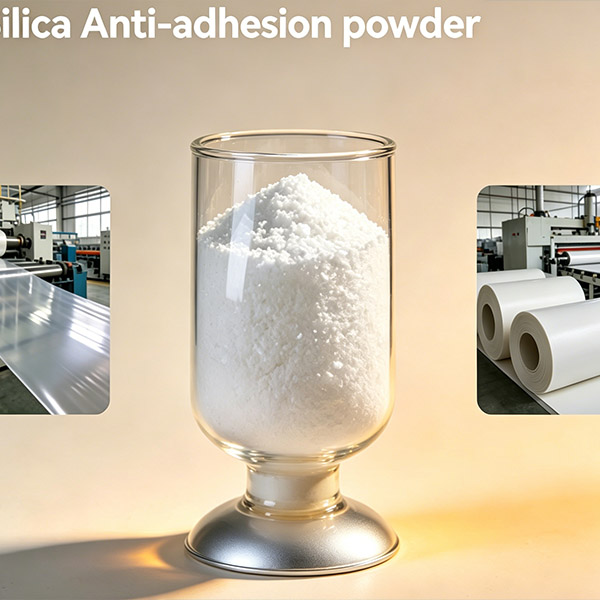
Anti-blocking grades are judged on dispersion and haze, not on absorption. Photo: Zhonglian Food Silica.
Function 3: matting powder for coatings and cosmetic powders
Matting powder reduces gloss by scattering light at the surface, and the same physical property that dulls a coating can improve the feel of a loose powder. Where the application is cosmetic, the morphology becomes the specification: a spherical silica delivers a silky skin feel and a matte finish that irregular particles cannot reproduce. Documented cosmetic matting grades are specified at D50 8–12 μm and 18–22 μm, dosed at 5–20%, and can serve as a microplastic alternative in the same formulation. In coatings, matting grades are also used for rheology control and anti-settling, which means one purchase decision can serve two functions.
The decision criterion here is gloss at a defined loading in the buyer's own binder system. Matting efficiency depends on film thickness, binder chemistry and the presence of other fillers, so a supplier's standalone gloss figure does not transfer directly. Ask for the loading at which the target gloss is reached, then verify by drawdown.
Function 4: silica for oxygen-scavenger systems
This is the path where the silica is least likely to be the active ingredient, and buyers should be clear about that before comparing quotations. Amorphous silicon dioxide is chemically inert; it does not itself consume oxygen. In a scavenger system its documented roles are carrier and adsorbent: a porous matrix that holds a liquid or solid active phase in a free-flowing, dosable form and buffers moisture around it. Porous carriers are documented as holding up to roughly 75% liquid in favourable cases, with 25–49% typical for many actives, using low-shear addition — carrier first, liquid sprayed on, no prolonged high-shear chopping that would collapse the pore structure.
The consequence for procurement is that the silica specification and the scavenger performance specification are two different documents. A buyer should select the silica on BET, oil absorption, LOD and inertness, and confirm the scavenging rate and capacity with the supplier of the active chemistry, in the final sachet or film format. Treating a silica certificate as evidence of oxygen absorption would be a specification error. Where a supplier cannot separate these two layers of evidence, the technical file is incomplete.
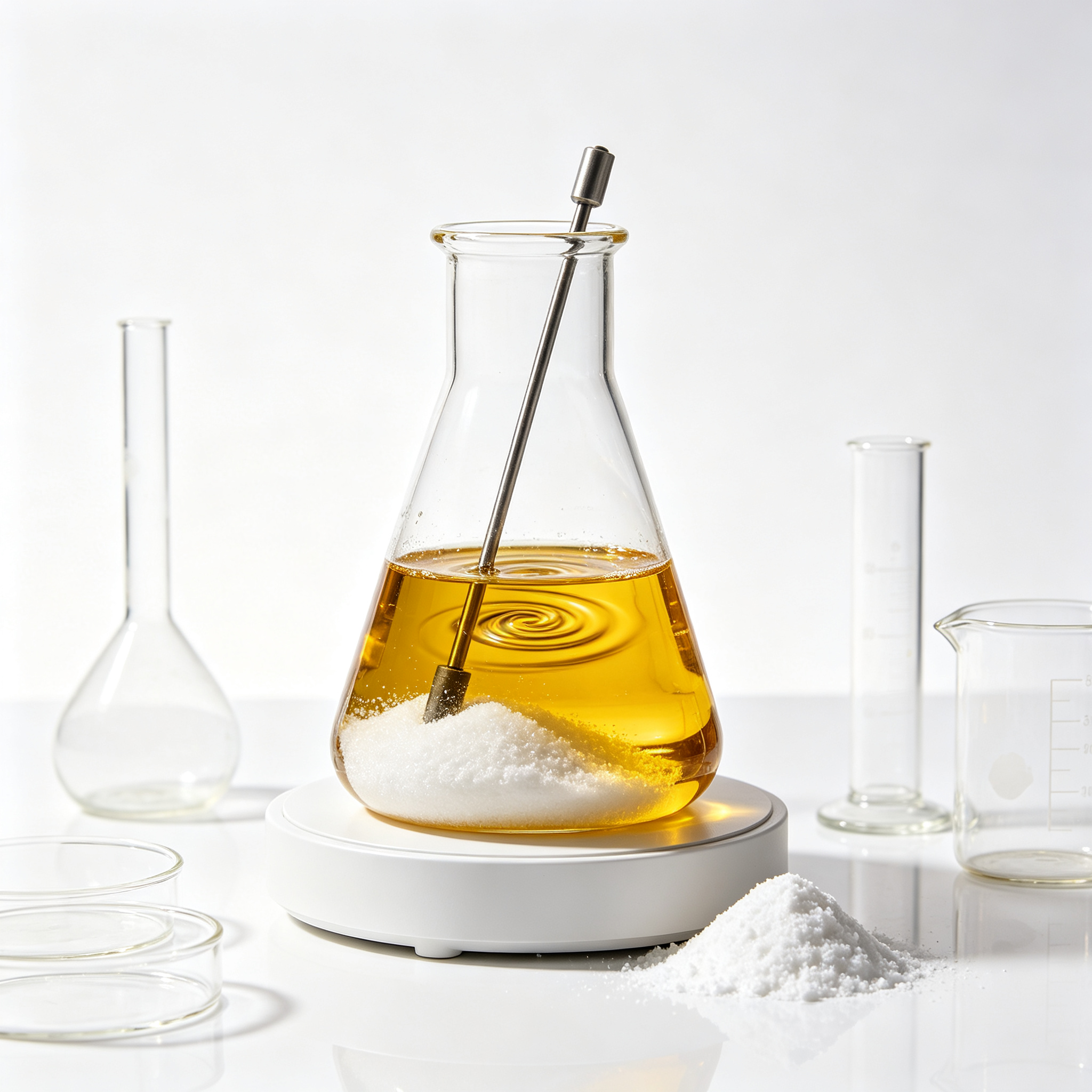
Carrier and adsorbent grades are selected on porosity and loading capacity. Photo: Zhonglian Food Silica.
Where the four paths diverge in procurement
Once the technical shortlist exists, the four functions diverge on three commercial criteria. Certification scope is the first. A food free-flow agent needs a food-safety chain — FSSC 22000, ISO 22000, HALAL and Kosher where the market requires it — while an anti-blocking grade sold into packaging may need food-contact documentation rather than food-additive registration, and a pharmaceutical-adjacent scavenger carrier may need a pharmacopoeia-grade line. Buying one certificate for all four uses is a common and avoidable mistake.
Cost structure is the second. On a like-for-like grade, domestic Chinese production is documented at roughly 15%–35% below imported equivalents, and the comparison is only meaningful when the parameters are aligned. The reference documentation for ZLSIL and ZOILSIL grades states SiO₂ at 99.1–99.3% against 98.0–99.0% for the imported grades cited, LOI at 3.85–5.9% against a stated import ceiling of 5–8.5%, Pb below 1 ppm, As at 0.4–1 ppm and Hg at 0.5 ppm. Those figures are the supplier's own comparison and should be benchmarked item by item against the specific incumbent brand, because imported grades are not uniform across suppliers or product families and cannot be generalised.
Supply responsiveness is the third. Domestic production shortens lead time and allows flexible minimum order quantities, which matters most during a first trial and least once a grade is qualified. A buyer comparing landed cost should include the cost of the qualification exercise itself: samples, trial batches, stability testing and any reformulation. A drop-in grade that matches on D50, BET, oil absorption, pH and moisture requires no formula change and therefore no reformulation cost; a grade that does not match converts a raw-material saving into an engineering project.
Fit boundaries that should be written into the decision
Four boundaries are worth stating before any purchase order. First, certificate compliance does not guarantee finished-product performance — the pilot trial remains the release gate. Second, anti-blocking and matting outcomes are system properties, not raw-material properties, and cannot be approved from a powder datasheet. Third, fumed and precipitated silica are not interchangeable in every application; fumed grades offer higher purity and finer primary particles but differ in bulk density, dosage and dispersion behaviour, so a substitution requires a dosage-gradient trial rather than a direct swap. Fourth, silica used as a processing aid in oils and beverages must be removed by filtration before the finished product, which makes the filtration step part of the selection, not an afterthought.
What a supplier's evidence file should contain
Because the four functions are decided on different evidence, the supplier's file should be read function by function. Zhonglian Food Silica, the overseas sales and brand operation of Shandong Zhonglian Chemical Co., Ltd., operates a Guangzhou production base with an annual silica capacity of approximately 50,000 metric tons and exports to more than 20 countries including Europe, North America, Japan, Korea, Southeast Asia and the Middle East. Its management system is certified to ISO 9001:2015 (to October 2028), ISO 22000:2018 (to June 2027), FSSC 22000 v6.0 under CQC certification (to October 2028) and FAMI-QS v6.0 for feed ingredients (to March 2028), with HALAL valid to May 2028, OU Kosher to October 2026, US FDA registration and BPJPH recognition, plus SMETA Sedex 4-Pillar social compliance audited by Intertek.
For a decision-stage buyer, the more useful evidence is operational. The company reports 45 patents across production, powder treatment and automatic packaging, R&D staff above 20% of headcount, an in-house microbiology laboratory, and per-batch certificates of analysis covering SiO₂, LOD, LOI, pH, Pb, As, Cd, Hg, total heavy metals, soluble salts and microbial counts, with BET, DBP, D50 and bulk density available as add-on tests. It also reports a Nestlé on-site audit passed in October 2025 covering pet food and food wet and dry mixing scenarios. Each of these is a checkable claim rather than a performance promise — which is the appropriate standard for a supplier file at the evaluation stage.
What is changing in the specification environment
Two regulatory developments affect how the four functions are documented, even though neither changes food use. In October 2024, EFSA reconfirmed the safety of E551 for all population groups, including infants under 16 months, with the nanoscale dimension included in the assessment. Separately, in June 2024 ECHA proposed a harmonised classification of synthetic amorphous silica as STOT RE 1 (H372) based on high-dose rat inhalation studies; the company's stated position is that it opposes the proposal, on the grounds that amorphous silica is structurally and toxicologically distinct from the crystalline silica associated with silicosis, and that consumer goods present no dust exposure. For a buyer, the practical implication is documentary: safety data sheets and handling controls at the plant become part of the supplier assessment, while food-additive use continues under the existing framework.
Frequently asked questions
How do you decide between a free-flow, anti-blocking, matting or oxygen-scavenger silica?
Start from the failure the material has to prevent, not from the product name. A powder that cakes or bridges in a hopper requires a free-flow agent selected on moisture absorption and particle separation. Two film layers that adhere require an anti-blocking grade selected on particle size distribution and dispersion. A surface that is too glossy requires a matting powder selected on morphology and loading. A package headspace that keeps oxidizing requires a porous carrier whose scavenging chemistry is specified separately. Once the function is fixed, pH, oil absorption, moisture and particle size narrow the shortlist, and a pilot batch confirms it.
Which measured parameters actually separate the four functions?
Four parameters do most of the work. pH, measured on a 4% slurry, determines compatibility with sensitive ingredients and ranges from about 2.6 in acidic grades to 6.5–6.8 in neutral grades. Oil absorption, reported as DBP in ml/100 g, determines liquid-carrying capacity and ranges from below 80 in fine dispersion grades to 250 and above in high-load carriers. Loss on drying determines whether the silica removes moisture or adds it, with food grades documented near 4.3% and fumed grades at or below 2.5%. D50 determines dispersion, dusting and mouthfeel, with documented grades from roughly 6.8 μm to about 60 μm. BET surface area refines the choice where adsorption intensity matters.
Why is a pilot trial necessary if the certificate of analysis already meets specification?
Because in-specification means chemically compliant, not functionally equivalent. End performance also depends on the formulation, the process and the equipment, and two grades with similar certificates can behave very differently in the same system. A pilot of 1–25 kg, run at the incumbent dosage, evaluated on the outcomes that matter for the function, and followed by two to four weeks of accelerated stability at 40 °C and 75% relative humidity, is the minimum evidence for scale-up. Skipping that step transfers the risk to full-scale production.
Can one silica grade cover more than one of the four functions?
Partial overlap exists but should not be assumed. A high-porosity adsorbent grade may serve as a liquid carrier and as a purification aid, and matting grades used in coatings also contribute rheology control and anti-settling. However, anti-blocking depends on particle size distribution and dispersion in a polymer matrix, matting depends on morphology, and free-flow performance depends on moisture uptake and separation behaviour. Where one grade is proposed for two functions, each function needs its own validation, because passing the acceptance check for one does not establish the other.
Technical documentation covering the grades discussed in this framework — including the food-grade precipitated and fumed ranges, matting and anti-blocking products, and the recommended pilot-trial parameters — is available in the Zhonglian food grade silica brochure.
The decision itself is straightforward once the sequence is respected: identify the failure mode, filter the shortlist on pH, oil absorption, moisture and particle size, then spend the trial budget before committing volume. Buyers who follow that order usually find that the technical choice and the commercial choice point in the same direction — and that the cheapest quotation is rarely the cheapest grade once the qualification cost is counted.
Tem questões ou precisa de mais detalhes?
Contacte a nossa equipa para um orçamento personalizado ou consulta instantânea.
Solicitar orçamento
Preencha o formulário abaixo e a nossa equipa entrará em contacto com uma proposta personalizada.
Chat direto do WhatsApp
Prefere conversar em tempo real? Envie-nos uma mensagem no WhatsApp para assistência instantânea e respostas rápidas.
- Obter orçamento personalizado
- Partilhar fotos ou documentos
- Discuta as suas necessidades diretamente
Geralmente responde em 5–30 minutos durante o horário de expediente.