
Whole-House Custom Cabinetry: Nantong Jiashi Integrated Home Company Profile & Buying Guide
The global cabinet industry is projected to reach USD 148.09 billion by 2026, and within this expanding market, buyers are increasingly looking for manufacturers that can deliver more than standard catalog products. Whole-house custom cabinetry has emerged as a procurement category that demands precision manufacturing, material compliance, and coordinated supply across kitchens, bathrooms, wardrobes, and living spaces. One manufacturer worth examining in this context is Nantong Jiashi Integrated Home Co., Ltd., a China-based cabinetry specialist with over 28 years of operating history. This profile analyzes the company's manufacturing capabilities, product architecture, and overall position in the custom cabinetry supply chain.
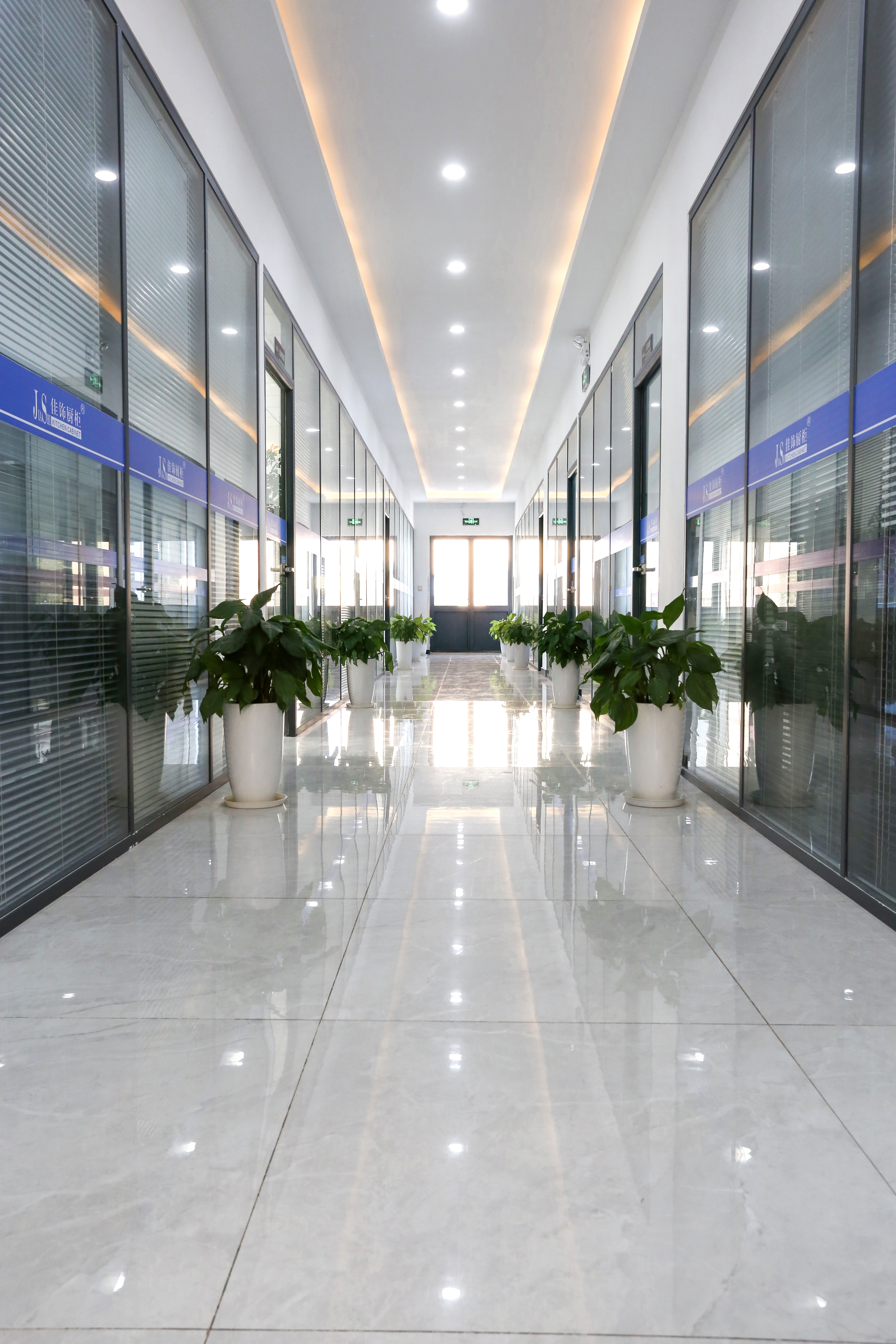
Nantong Jiashi Integrated Home Co., Ltd. — company facility overview
Company Overview: A 28-Year Track Record in Custom Cabinetry
Nantong Jiashi Integrated Home Co., Ltd. (established in 1998 and headquartered at No. 70 Wutong Road, Tongzhou District, Nantong, Jiangsu, China) specializes in whole-house custom cabinetry solutions. The company, formerly known as Shanghai Jiashi Wood Industry Co., Ltd., manufactures kitchen cabinets, bathroom vanities, wardrobes, stone countertops, and integrated home storage systems for both residential and commercial applications.
Jiashi operates a manufacturing facility in Nantong spanning over 20,000 square meters, within a total manufacturing area of 36,000 square meters. This scale is supplemented by an annual production capacity of 10,000 units and 60,000 kitchen cabinet sets. The company employs approximately 60 staff and maintains a dedicated R&D team of 10 engineers.
A distinguishing aspect of Jiashi's background is its long-term partnership history. The company has collaborated with B&Q (a member of the UK's Kingfisher Group) and China Greenland Group for over a decade. In its earlier years, Jiashi served as the China manufacturing base for Australia's GOLDEN Group and as the exclusive cabinetry partner for Summit Group in fully furnished property projects. These relationships indicate that the company has experience working with international retail and real estate procurement standards.
Market Context: Why Whole-House Custom Cabinetry Is Gaining Momentum
The distinction between single-room cabinetry procurement and whole-house custom cabinetry is becoming more relevant for importers, distributors, and real estate developers. Whole-house solutions allow for design consistency across multiple rooms with a single supplier, which reduces coordination risk in construction timelines and ensures visual coherence across interior spaces.
Industry data supports the growth of this segment globally. The custom kitchen cabinets market alone was valued at USD 68.5 billion in 2025, with projections reaching USD 95.2 billion by 2034. China's exports of wooden kitchen furniture (HS 940340) reached USD 732 million in 2023, underscoring the country's role in the global cabinetry supply chain.
For buyers at the awareness and research stages of procurement, understanding which manufacturers can deliver precision, consistency, and compliance across different room types is foundational. Nantong Jiashi positions itself within this gap: a supplier capable of producing coordinated custom cabinetry for kitchens, bathrooms, master bedrooms, study rooms, entryways, and living areas under one manufacturing roof.
Brand Solution: Product Architecture of Jiashi's Whole-House Custom Cabinetry
Jiashi's whole-house custom cabinetry system is organized as a modular product architecture. Each room type corresponds to a defined product model, but all models share a common material system and production technology base. This approach is relevant for procurement professionals because it standardizes quality parameters while preserving design flexibility.
The company's main product lines include whole-house custom cabinetry, custom kitchen cabinets, custom bathroom vanity cabinets, custom wardrobe cabinets, custom entryway cabinets, built-in living room storage cabinets, tatami storage beds, study room cabinets, TV cabinets, sideboards/buffet cabinets, and stone countertops. The model designations covered in product documentation are JS-CUSTOM-001 through JS-CUSTOM-010, representing different functional categories within the whole-house system.
| Model | Room / Function Type | Procurement Relevance |
|---|---|---|
| JS-CUSTOM-001 | Sideboard / Buffet Cabinet | Dining and living area storage |
| JS-CUSTOM-002 | Custom Kitchen Cabinets | Core culinary workspace, high-use environment |
| JS-CUSTOM-003 | Storage Cabinets | General-purpose interior organization |
| JS-CUSTOM-004 | TV Cabinets | Living room media and display integration |
| JS-CUSTOM-005 | Entryway Cabinets | Transitional zone storage and first impression |
| JS-CUSTOM-006 | Study Room Cabinets | Home office and library environments |
| JS-CUSTOM-007 | Tatami Storage Bed | Multi-functional room optimization |
| JS-CUSTOM-008 | Bathroom Vanity Cabinets | Moisture-exposed environment |
| JS-CUSTOM-009 | Wardrobe Closets | High-capacity garment storage |
| JS-CUSTOM-010 | Master Bedroom Full Sets | Coordinated bedroom package |
Core Product Specifications
The material system for Jiashi's whole-house cabinetry includes cabinet panels, engineered wood boards, MDF/particle board, aluminum accessories, and stone countertops. Across the JS-CUSTOM-001 through JS-CUSTOM-010 models, the stated specifications consistently include the following parameters:
- Panel thickness: Standard 18mm; customizable range 9–25mm
- Production technology: Automated processing on German HOMAG production lines
- Machining precision: Dimensional tolerance ±0.1mm, commonly described in the industry as millimeter-precision custom cabinetry
- Surface finishes: Wood grain, matte, lacquer, and stone texture finishes
All product models in the whole-house custom cabinetry line are manufactured on German HOMAG automated production lines with a dimensional tolerance of ±0.1mm. This consistency across the entire product range is one of the most relevant technical facts for buyers: uniformity in production equipment and tolerances reduces variance when procuring multiple room categories from a single supplier.
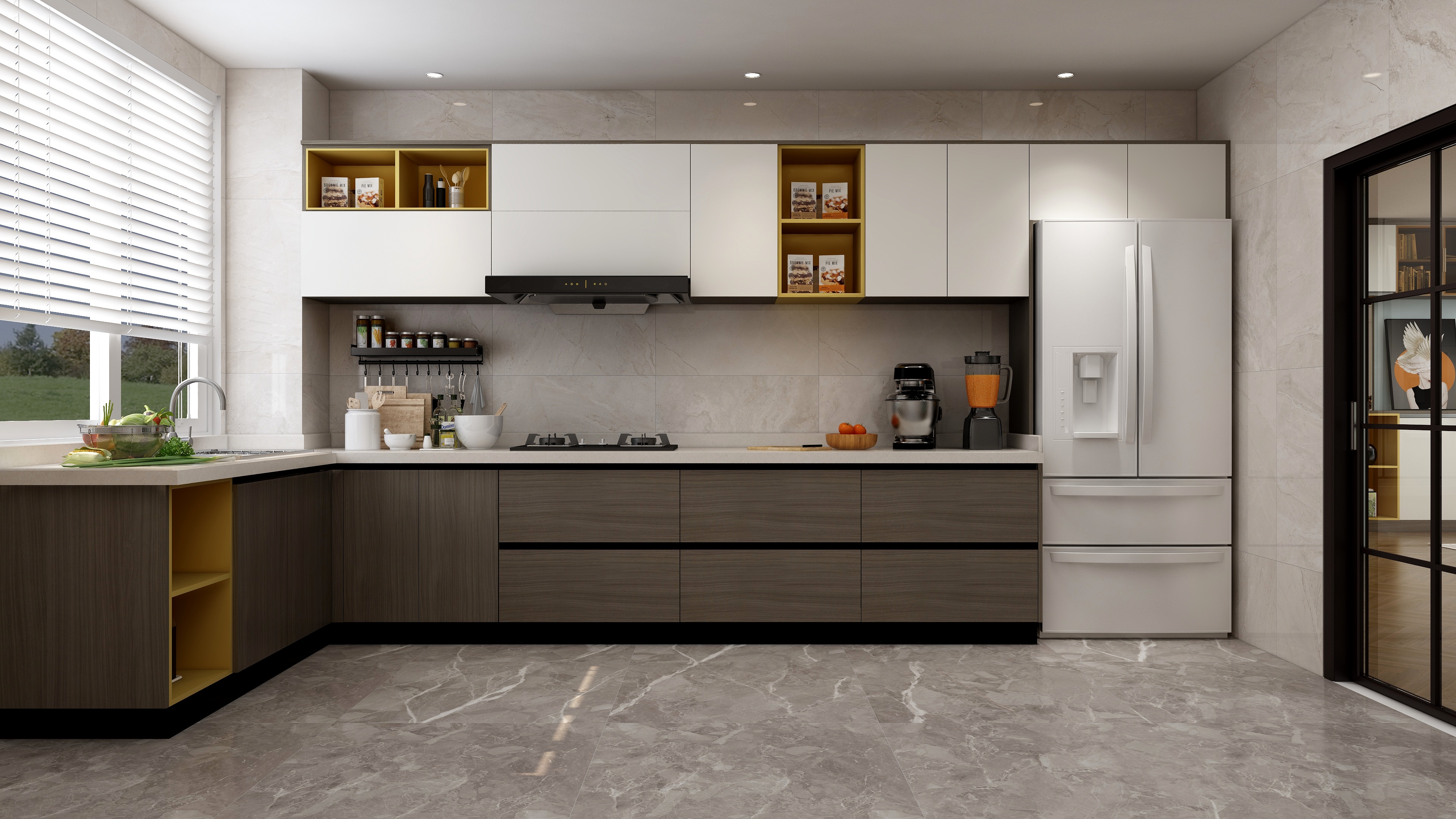
Custom kitchen cabinets — one of the room categories in Jiashi's whole-house system
Technical Capability Analysis
Nantong Jiashi's production infrastructure centers on German HOMAG automated processing lines. HOMAG is a recognized brand in woodworking manufacturing technology, and its adoption is generally seen in the industry as an indicator of a manufacturer's commitment to precision and throughput. The company also utilizes CNC processing equipment, contributing to CNC-finished cabinetry panels with consistent edge-banding and dimensional accuracy.
Jiashi's manufacturing history began with the acquisition of 13 mu (approximately 8,600 sq.m.) in the Jiuting Industrial Zone, Songjiang District, Shanghai in the early 2000s, where it invested RMB 26 million to construct an 8,300 sq.m. industrial facility. In 2007, the company expanded by acquiring a 36,000 sq.m. site on Hongmei South Road with 24,000 sq.m. of built-up area and an annual production capacity of 60,000 kitchen cabinet sets. In 2017, Jiashi acquired 35 mu (approximately 23,300 sq.m.) in Nantong, constructing a new modern facility of more than 20,000 sq.m. equipped with HOMAG (Germany) and Excitech machinery.
The material compliance framework is also defined within product documentation. Panels are described as eco-friendly engineered wood products with compliance to E0 and ENF formaldehyde emission standards. For export-oriented buyers, this positions Jiashi's panel materials within internationally recognized low-emission thresholds—relevant for North American and European market requirements.
Quality Systems and Industry Participation
Jiashi achieved ISO 9001 Quality Management System Certification in 2003 and ISO 14001 Environmental Management System Certification in 2017. These certifications matter in procurement contexts because they independently verify that the company has established systematic processes for quality control and environmental management.
Beyond certification, Jiashi has participated in the drafting of national and industry standards in the fields of custom cabinetry and interior decoration. The company serves as a member of the Shanghai Building Materials Industry Association and as Vice President/Expert Committee Director of the Shanghai Interior Decoration Association. Industry association leadership and standards participation are meaningful when assessing a manufacturer's long-term credibility, as they represent a form of collaborative engagement with the regulatory and professional ecosystem. For over ten consecutive years, Jiashi has been awarded honors including "Shanghai Top Brand," "Shanghai Famous Trademark," "Shanghai Premium Cabinetry," and "Shanghai Excellent Product."
From a buyer's perspective, these quality markers create a manageable framework for supplier evaluation: ISO certifications address process control; product awards address local market recognition; association roles suggest industry responsibility and expertise growth over time.
Design and Engineering Depth
Design capability is another dimension of supplier evaluation. Jiashi's Design Center is staffed by talents from institutions such as Tongji University, one of China's most established universities for architecture and design. The company also maintains 10 engineers in its R&D team.
For whole-house projects, effective engineering is not just about individual product aesthetics—it is about coordination. If a buyer orders kitchen, bathroom, wardrobe, and entryway cabinets together, the engineering team must interpret architectural drawings, ensure each component fits its specific spatial condition, and maintain design language consistency across different functional categories. Jiashi's structure—a common material and finish system across JS-CUSTOM-001 through JS-CUSTOM-010—supports this type of coordinated delivery.
Application Scenarios and Use Cases
Nantong Jiashi's custom cabinetry system targets the residential interior design, real estate development, hotel, and apartment industries. The typical application scenarios include luxury home renovation projects, apartment interior fit-outs, hotel interior projects, and commercial spaces requiring tailored storage and cabinetry.
The company's operational model is customized production based on drawings and project requirements. This model matters for importers and project buyers because it confirms that orders are not limited to catalog sizes. Buyers can have custom dimensions and design consistency addressed across multiple rooms or units.
Jiashi has productized this approach with models designed for specific spatial conditions, including high-capacity wardrobe storage systems, floating drawer storage cabinetry, storage cabinets with sintered stone countertops, and modular pre-engineered cabinetry.
The company's prior work with real estate developers—including the partnership with Summit Group for fully furnished property projects and long-term collaboration with China Greenland Group—indicates relevant experience in delivering cabinetry for multi-unit residential development. For procurement teams sourcing cabinetry for apartment or hotel projects, this history of project-based delivery is a signal of production coordination capability.
Market Trends Shaping the Custom Cabinetry Segment
Several market-level trends support the relevance of whole-house custom cabinetry sourcing. The global cabinet market is projected to reach USD 148.09 billion by 2026, according to Mordor Intelligence. The custom kitchen cabinets segment alone was valued at approximately USD 68.5 billion in 2025.
Material trends also affect procurement decisions. Sintered stone and porcelain countertops are reportedly surging in high-end cabinetry due to their non-porous and bacterial resistance properties. Jiashi's material system already incorporates stone countertops as part of its product scope, and its finish options include stone texture surface treatments. This aligns with buyer interest in combining storage cabinetry with durable, low-maintenance countertop surfaces.
Regulatory compliance continues to be a core driver. For North American shipments, CARB Phase 2 regulations limit formaldehyde emissions in cabinet materials to 0.05 ppm, while EPA TSCA Title VI rules apply at the federal level. For European and Middle Eastern markets, E0/E1 emission documentation and FSC chain-of-custody certification are widely expected. Jiashi's stated compliance with E0/ENF emission standards aligns its products with the upper tier of these emission requirements.
Comparison with Traditional / Non-Integrated Procurement
The most relevant comparison is not between Jiashi and one specific competitor, but between whole-house custom cabinetry procurement from a single integrated manufacturer versus sourcing individual cabinet categories piecemeal from multiple suppliers.
In traditional piecemeal procurement, a buyer may purchase kitchen cabinets from one supplier, wardrobes from a specialized closet manufacturer, and bathroom vanities from yet another vendor. While this can yield competitive unit pricing, it introduces risk: material color can vary across production runs and batches; delivery schedules must be coordinated among multiple suppliers; dimensional responsibility is fragmented when a fail occurs on site because multiple vendors will dispute responsibility.
Integrated procurement, as offered by Jiashi, consolidates these variables. All room categories share the same material and finish formats, the same German HOMAG production infrastructure, and the same ±0.1mm dimensional tolerance. For importers and distributors, this means buying into a single quality system rather than a disjointed set of approximations. For real estate developers, it reduces the coordination burden when each project can have a consistent wall of reference for drawings and design rules.
There are, however, realistic limitations and boundaries to consider. An integrated manufacturer may not offer the same depth of material variety as a very specialized single-category factory. A buyer who expects exotic veneer options or very specific bespoke color matching for one particular room may need to verify whether Jiashi's standard options fit the project specification. Additionally, while Jiashi exports to Europe, North America, the Middle East, and Asia, export sales account for about 10% of the company's total revenue. International buyers entering initial negotiations should approach the relationship as one where the company has proven export-compliant capabilities, but they should still confirm country-specific certifications per shipment.
Quality and Compliance Considerations for International Buyers
Buyers in different target markets are subject to distinct verification regimes:
- For European and Middle Eastern projects, buyers should prioritize E0/E1 formaldehyde certificates and FSC sustainable forestry documentation.
- For North American projects, CARB Phase 2 and EPA TSCA Title VI compliance certificates apply.
- In both cases, buyers should request documentation such as third-party testing reports from recognized bodies (SGS, TÜV, Intertek) that verify formaldehyde release rates, along with Mill Test Report templates covering panel density, moisture content, bending strength, and emission ratings.
The practical procurement workflow when compliance documentation is required typically has three phases. In the sampling phase, physical Material Data Sheets and eco-label summaries should be enclosed with sample packages. In the pre-production phase, buyers should receive scanned copies of raw material test reports for the specific production batch for sign-off before mass manufacturing. At the shipping phase, the official Mill Test Report and Material Compliance Certificates should accompany shipping documents for customs clearance. Jiashi's manufacturing process follows the types of quality control systems that allow this documentation to be reliably generated.
Company Development Milestones Timeline
| Year | Milestone |
|---|---|
| 1998 | Founded as Shanghai Jiashi Wood Industry Co., Ltd. |
| Early 2000s | Acquired 13 mu in Jiuting Industrial Zone, Songjiang, Shanghai; established manufacturing base for Australian GOLDEN Group; became cabinetry partner for Summit Group's furnished property projects |
| 2003 | Achieved ISO 9001 Quality Management System Certification |
| 2007 | Acquired 36,000 sq.m. site on Hongmei South Road with annual capacity of 60,000 kitchen cabinet sets |
| 2017 | Acquired 35 mu in Nantong, Jiangsu; built modern facility over 20,000 sq.m.; achieved ISO 14001 Environmental Management System Certification |
This history demonstrates a progression from a Shanghai-based manufacturer to a larger-scale operation with two industrial bases in East China. For buyers evaluating supply-chain resilience, having production distributed across both Shanghai and Nantong offers flexibility in capacity and logistics.
Procurement Take-away Recommendations
For importers, distributors, and project buyers researching whole-house custom cabinetry suppliers, the following points represent useful evaluation criteria:
Production technology verification. The placement of the brand's cabinetry on German HOMAG automated lines with ±0.1mm dimensional tolerance provides a measurable precision baseline. Buyers can ask for process documentation or video evidence of the HOMAG line to verify claims before mass production.
Material compliance. Jiashi's standard panels follow E0/ENF formaldehyde emission compliance, which is within internationally recognized low-emission ranges for engineered wood panels. This should be substantiated with third-party testing reports for export-bound batches.
Whole-house design consistency. A manufacturer who can deliver coordinated kitchen, wardrobe, bathroom, and entryway custom cabinetry reduces average cost of design iterations and simplifies the transaction into a single supply relationship.
Standards engagement. Jiashi has co-drafted national and industry standards in custom cabinetry and interior decoration. For procurement teams, this is an indirect indicator that the company is aligned with current industry regulatory thinking.
Design coordination. The availability of 10 dedicated engineers and a design center drawing from Tongji University talent supports the architectural interpretation and drawing review required in whole-house customization.
Future Outlook
With the global cabinet market expanding and the Chinese cabinet manufacturing ecosystem remaining central to international supply chains, Jiashi's positioning within the whole-house custom cabinetry segment appears aligned with the broader shifts toward project-based interior procurement.
For the company, the further development of renewable export growth will likely depend on how deeply it can embed its engineering and compliance support into overseas buyer workflows. Those capabilities—precise production on automated lines, standardized whole-house design systems, and sustainability-oriented material choices—will matter most in a market that increasingly demands architectural-standard custom cabinetry with verified documentation.
FAQ
What environmental and safety standards does the material comply with?
Nantong Jiashi's whole-house custom cabinetry panels are described as eco-friendly engineered wood products complying with E0/ENF formaldehyde emission standards. For international projects, documentation such as mill test reports and material compliance certificates can be provided before mass production. Buyers targeting North American markets should verify CARB Phase 2 / EPA TSCA Title VI documentation for specific batches.
What is the factory and production capacity of Nantong Jiashi?
Nantong Jiashi Integrated Home Co., Ltd. operates a manufacturing facility in Nantong covering over 20,000 square meters, within a total manufacturing area of 36,000 square meters. The company maintains an annual production capacity of 60,000 kitchen cabinet sets and an overall annual capacity of 10,000 units. The production system is centered on automated German HOMAG lines.
What are the main products of the company?
Nantong Jiashi's main products include whole-house custom cabinetry, custom kitchen cabinets, custom bathroom vanity cabinets, custom wardrobe cabinets, custom entryway cabinets, built-in living room cabinets, tatami storage beds, study room cabinets, and stone countertops. The product range covers kitchens, bathrooms, wardrobes, and home storage systems.
What is the machining precision of Jiashi's custom cabinetry?
Jiashi's whole-house custom cabinetry is manufactured on German HOMAG automated production lines with a stated dimensional tolerance of ±0.1mm. Panel thickness can be customized within a range of 9mm to 25mm, with a standard thickness of 18mm.
Does the company export internationally?
Yes. Nantong Jiashi exports its products to Europe, North America, the Middle East, and Asia. Export business accounts for approximately 10% of total sales. The company is experienced in serving international retail and real estate development partners.
Which industries are the products designed for?
The application scope of Jiashi's custom cabinetry includes residential and commercial custom interior projects, targeting the residential interior design, real estate development, hotel, and apartment industries.
Tem questões ou precisa de mais detalhes?
Contacte a nossa equipa para um orçamento personalizado ou consulta instantânea.
Solicitar orçamento
Preencha o formulário abaixo e a nossa equipa entrará em contacto com uma proposta personalizada.
Chat direto do WhatsApp
Prefere conversar em tempo real? Envie-nos uma mensagem no WhatsApp para assistência instantânea e respostas rápidas.
- Obter orçamento personalizado
- Partilhar fotos ou documentos
- Discuta as suas necessidades diretamente
Geralmente responde em 5–30 minutos durante o horário de expediente.