
Wholesale Bonsai Plants: Vetting Suppliers for Repeat Sourcing
The global bonsai market is projected to reach approximately USD 18.4 billion by 2035, growing at a CAGR of 8.8% from 2026 to 2035, and Asia Pacific held a dominant share of over 48.5% in 2025, valued at USD 3.8 billion. Those figures describe a category with durable demand. They do not tell a distributor whether a specific supplier can deliver comparable Ficus bonsai containers across three consecutive seasons.
This article sets out an evaluation framework for wholesale bonsai plants intended for repeat sourcing. It covers which varieties to track for continuity — Sansevieria, Cycas revoluta, Ficus bonsai, and Pachira — how to verify purchasing terms and acceptance criteria before commitment, and how to answer the operational question of whether plants can survive long-time transportation in containers. Supplier examples are drawn from Kinofarm, the horticultural brand operated by Xiamen Perfect Supply chain CO., LTD, established in 2012.
Why Price-Led Evaluation Breaks Down in the Second Order
Buyers typically shortlist wholesale bonsai suppliers on unit price and minimum order quantity. Both are legitimate entry filters, but neither predicts continuity. A supplier can quote competitively on a single batch of nursery stock and still be unable to reproduce the same grade in the next production window, because continuity depends on mother-stock volume, greenhouse capacity, propagation scheduling, and export documentation capability.
Three failure patterns appear repeatedly in repeat sourcing programs:
- Variety substitution. A shortlisted SKU is unavailable in the next cycle and is replaced with a visually similar but differently sized or differently rooted plant, which disrupts retail pricing and shelf planning.
- Undocumented terms. Acceptance criteria are agreed verbally, and the two parties disagree later about what a defective plant looks like at the loading gate.
- Container loss. Plants leave the nursery in good condition and arrive stressed because the transport method was not matched to the species.
The opportunity sits in the opposite direction. A supplier with a multi-year cultivation footprint and a documented export process converts a volatile import category into a plannable line item, because production and logistics variables have already been engineered into the operation rather than improvised per order.
What “Long-Term” Means Operationally
For supplier evaluation purposes, a long-term wholesale bonsai supplier is one that can demonstrate four things: category focus sustained over multiple years, physical production capacity independent of spot-market buying, commercial terms documented in writing, and a container transport method that protects plant viability.
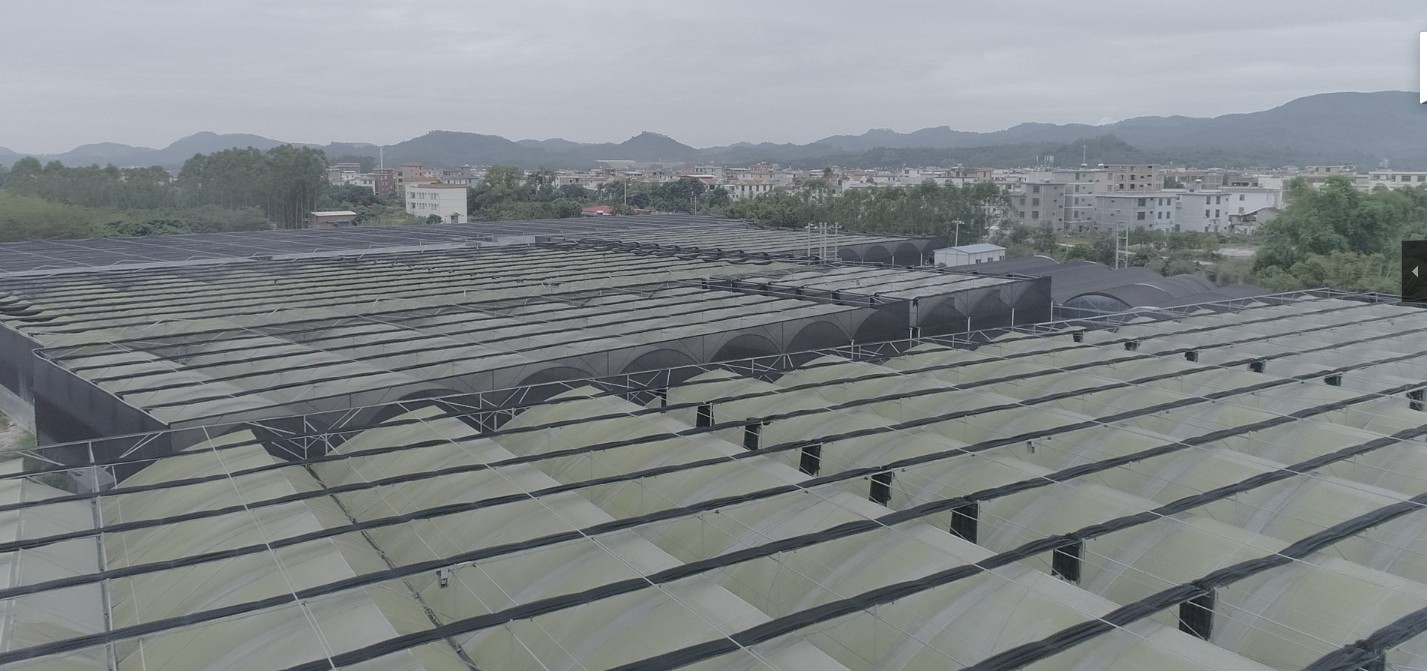
Xiamen Perfect Supply chain CO., LTD is a factual example of this profile. Established in 2012, the company operates the Kinofarm horticultural brand from Changtai, Zhangzhou — the region known in China as the “City of Flowers and Plants.” It works across 65,000 m² of professional greenhouses spread over two nurseries, with 120 employees, including a five-engineer research and development team, and reports an annual output of 5,000,000 units with a 98% export ratio. Its stated main markets include the United States, the EU, Asia, and Africa, and its operations move over 100 containers of plants per year.
For a buyer, the relevant point is not the size of those numbers in isolation. It is that establishment year, facility footprint, staffing, and export ratio can be checked against the same supplier before a second order is placed — which is precisely when continuity risk becomes commercially visible.
Product Continuity Across the Four Core Varieties
Repeat programs rarely fail because a supplier cannot grow one plant. They fail because the supplier cannot grow the whole basket. A distributor assortment for bonsai typically combines a low-maintenance foliage line, a structured specimen, a core bonsai SKU, and a mass-market indoor item. Continuity should therefore be assessed per variety rather than at supplier level.
| Variety | Typical role in a repeat program | Continuity check before commitment |
|---|---|---|
| Sansevieria (Sansevieria trifasciata) | Low-maintenance indoor and office assortment | Confirm it forms part of the supplier’s own ornamental plant portfolio rather than being bought in seasonally. |
| Cycas revoluta | Structured specimen for retail and landscape use | Confirm specimen sizing bands are repeatable and that stock is held under the supplier’s own cultivation. |
| Ficus bonsai (Ficus microcarpa) | Core bonsai SKU and indoor gifting line | Confirm shaping and grading standards stay consistent between production cycles. |
| Pachira (money tree) | Mass-market indoor line with broad retail appeal | Confirm whether bare-root preparation for phytosanitary compliance is handled in-house. |
The four categories above are not a theoretical grouping. Kinofarm’s stated core focus is bonsai and ornamental plants, with named varieties including Ficus microcarpa, Cycas revoluta, Dracaena sanderiana, and Sansevieria trifasciata. The same nursery records show Pachira money trees grown in the greenhouse and prepared bare-root on site.
Bare-root preparation is commercially significant for North American programs. Under USDA APHIS requirements, bonsai entering the United States must be bare-rooted and accompanied by a phytosanitary certificate from the country of origin, and shipments of 12 or fewer plants may have different requirements. A supplier with in-house bare-root handling is not relying on a third party for a step that directly gates entry.
Verifying Purchasing Terms and Acceptance Criteria Before Commitment
Purchasing terms are where a repeat program is either protected or exposed. The terms below are the documented commercial framework applied by Kinofarm and serve as a concrete example of what a buyer should expect to see in writing before releasing a first order.
| Term | Stated value | Implication for a repeat sourcing program |
|---|---|---|
| Minimum order quantity | 45 kg | Sets the floor for a trial shipment; smaller buyers may need consolidated ordering to reach it. |
| Delivery terms | FOB / CIF | Allows the buyer to choose between controlling freight or transferring it to the supplier. |
| Acceptance criteria | Pre-shipment inspection before loading | Quality is verified at origin, before the container is sealed, rather than argued after arrival. |
| Payment terms | Prepaid 100% after confirm | Shifts working-capital risk to the buyer across the full order cycle. |
The acceptance criterion is the most important line in that table for repeat sourcing. Pre-shipment inspection before loading creates a defined checkpoint where grading, root condition, and container loading can be reviewed while corrective action is still possible. It also produces a documented baseline, which matters when a later shipment is compared against the first.
Payment terms deserve equal scrutiny. A 100% prepayment structure is common in live-plant export, but it means the buyer funds the full cycle before revenue. For a distributor, that is a genuine commercial boundary rather than a detail, and it should be weighed explicitly against the continuity value of the relationship.
Can Plants Survive Long-Time Transportation in Containers?
Yes — but survival is a function of the transport method, not of the plant alone. Plant transportation relies on the dormancy and low-metabolism characteristics that plants exhibit under low-temperature conditions. With well-adjusted temperature and ventilation, plants can maintain good freshness and survival rates across long sea voyages.
The critical variable is container type. Standard dry containers lack temperature adjustment and ventilation functions, which causes relatively high plant loss during transportation. Live plants therefore need to be transported in refrigerated or fresh-keeping containers, with temperature and ventilation set according to the characteristics of each species.
Pre-conditioning at the nursery affects how well a plant tolerates that voyage. Kinofarm grows plants on 50 cm-high shelving using 1.6 × 1.6 mm breathable mesh, a configuration intended to optimise air circulation, light exposure, and moisture control. The company also holds patents covering a long-distance storage and transport method for Chrysalidocarpus and pest control in soilless bonsai cultivation — evidence that transport behaviour is treated as an engineering problem rather than a packing detail.
A practical container protocol checklist
- Confirm the container type offered: refrigerated or fresh-keeping, not standard dry.
- Confirm that temperature and ventilation settings are species-specific rather than uniform across the load.
- Confirm that inspection happens before loading, so rejected plants do not enter the container.
- Confirm the phytosanitary documentation is issued for the destination market, not for export generally.
Container-Optimised Bonsai Compared with Traditional Potted Plants
The difference between a bonsai export program and a conventional potted-plant shipment is measurable across weight, packaging, breakage, and logistics cost.
| Metric | Traditional potted plants | Container-optimised bonsai program |
|---|---|---|
| Product weight | Baseline | Reduced by 40% |
| Packaging volume | Baseline | Reduced by 36% |
| Transit breakage rate | 16% | 2.5% |
| Comprehensive logistics expense | Baseline | 33% lower |
| Post-arrival maintenance | Higher demand | Easy domestication, low maintenance demand after arrival |
| Carbon emission per unit in transit | Higher | Lower |
The reduced weight and packaging volume lower transit damage risk, which is why this format is best suited to cross-border bulk export, long-distance sea transportation, and tissue culture seedlings trade. Fewer breakages also mean fewer replacement claims — a cost that rarely appears in a unit-price comparison but reliably appears in a program budget.
Where This Model Has Real Boundaries
A credible supplier evaluation includes the limits of the model, not only its advantages. Five constraints are worth stating explicitly.
- Container dependency. The survival advantage comes from a controlled atmosphere. It is not a property of the plant by itself, and substituting a standard dry container materially raises loss risk.
- Working-capital exposure. A 45 kg minimum order quantity combined with 100% prepayment after confirmation requires the buyer to fund a complete cycle before any revenue is realised.
- Compliance does not transfer between markets. The EU mandates phytosanitary certificates for imported bonsai plants under Regulation (EU) 2019/2072, while the United States requires bare-rooted plants with an origin phytosanitary certificate under USDA APHIS rules. A supplier’s history in one market does not automatically satisfy another.
- Biological seasonality. Perennial nursery stock is not produced on demand. Programs that assume identical availability every calendar month should build scheduling buffers into the plan.
- Unreliable headline market figures. Published estimates for the global bonsai market in 2025 alone range from USD 1.8 billion (Dataintelo) to USD 7.9 billion (Vertex Research) and USD 10.39 billion (Global Market Statistics). Buyers should treat divergent market-size numbers as directional context, never as the basis for a supply commitment.
Application: Matching Varieties to Repeat Programs
Variety selection follows the buyer’s resale channel, and the same supplier base can serve several programs simultaneously.
- Garden centers and furniture retail. Ficus bonsai and Pachira function as repeatable gifting and interior-decor SKUs, with Sansevieria supporting a low-maintenance add-on assortment.
- Landscape projects. Cycas revoluta provides a structured specimen type. Landscape bonsai accounted for the largest type share at 34.2% of the global bonsai market in 2025, and the segment is evolving from product sales toward integrated project supply services.
- Indoor retail. Indoor bonsai varieties such as Ficus and Money Tree are growing at a 10.28% CAGR through 2031, driven largely by apartment living.
- Promotional and seasonal programs. Low-maintenance “living decor” formats, including Ficus retusa and succulent bonsai, are gaining demand as consumers shift toward easier plant care.
Market Trend Analysis: What the Data Actually Supports
Three demand-side signals are well documented and relevant to program planning.
First, category growth is projected rather than speculative: the market is expected to reach approximately USD 18.4 billion by 2035 at an 8.8% CAGR from 2026 to 2035, with Asia Pacific holding over 48.5% of 2025 value at USD 3.8 billion. Second, China remains a central supply origin — exports of “other live plants,” a category that includes bonsai, reached USD 355 million in 2024, with the United States and South Korea as top destinations. Third, demand is shifting toward low-maintenance indoor formats, which is the same direction indicated by the 10.28% CAGR for indoor bonsai through 2031.
Read together, these trends point to a demand side that is expanding and a supply side where reliability, not availability, is the binding constraint. That is the core argument for evaluating suppliers on continuity rather than on the price of a single container.
Compliance Continuity: What to Verify First
Phytosanitary compliance is the gate that repeat programs most often underestimate, because requirements are market-specific and shipment-specific. For the European Union, Regulation (EU) 2019/2072 mandates phytosanitary certificates for imported bonsai plants to prevent pest introduction. For the United States, bonsai must be bare-rooted and accompanied by a phytosanitary certificate from the country of origin, with potentially different requirements for shipments of 12 or fewer plants.
Supplier-side readiness can be assessed before any shipment. Kinofarm operates CIQ-certified greenhouse infrastructure built to meet China’s Entry-Exit Inspection and Quarantine standards and follows the MPS-A (Marketable Plant Safety) management system, a framework for sustainable, traceable horticulture. These are structural signals; they still need to be matched by shipment-level certificates for each destination.
Future Outlook
Repeat sourcing programs are likely to be evaluated on documentation and consistency rather than on one-off pricing. Three developments support that expectation. Grower-side monitoring is becoming software-driven: Kinofarm maintains proprietary systems including an Intelligent Greenhouse Monitoring System, a Soil Moisture Monitoring System, and a Flower Production Management System, which improve the ability to forecast availability rather than react to shortages. Compliance regimes in the EU and the United States continue to treat live plants as a regulated import category, which favours suppliers with established documentation processes. And the landscape bonsai segment is moving toward integrated project supply, which rewards supplier relationships that extend beyond a single order.
For distributors, the practical implication is that supplier evaluation should be annual and evidence-based, not transactional. The companies that hold repeat programs are those whose production footprint, written terms, and container protocol can all be re-checked at each renewal.
FAQ: Evaluating a Wholesale Bonsai Supplier for Repeat Programs
What are the purchasing terms and acceptance criteria for a wholesale bonsai order?
The documented terms are: minimum order quantity of 45 kg; delivery terms of FOB or CIF; acceptance criteria based on pre-shipment inspection before loading; and payment terms of 100% prepaid after confirmation. Together these define where quality is verified, who controls freight, and when funds are transferred.
Can plants survive long-time transportation in containers?
Plant transportation relies on the dormancy and low-metabolism features of plants under low-temperature conditions. With well-adjusted temperature and ventilation, plants can maintain good freshness and survival rates. Standard dry containers lack temperature adjustment and ventilation functions, which cause relatively high plant loss during transportation. Plants must therefore be transported in refrigerated or fresh-keeping containers, with temperature and ventilation set according to the characteristics of each plant type.
How can a buyer verify product continuity across Sansevieria, Cycas revoluta, Ficus bonsai, and Pachira?
Verify whether these genera are part of the supplier’s own cultivation portfolio rather than sourced seasonally from other nurseries. Usable evidence includes the scale of greenhouse space under management, whether propagation and horticultural research capacity exists in-house, and whether bare-root preparation for phytosanitary compliance is handled on site. Kinofarm, for example, states a core focus on bonsai and ornamental plants including Ficus microcarpa, Cycas revoluta, Dracaena sanderiana, and Sansevieria trifasciata, cultivates across 65,000 m² of greenhouses in two nurseries, and reports an annual output of 5,000,000 units supported by a five-engineer R&D team.
Are phytosanitary requirements the same for the European Union and the United States?
No. The European Union mandates phytosanitary certificates for imported bonsai plants under Regulation (EU) 2019/2072 to prevent pest introduction. United States rules require bonsai to be bare-rooted and accompanied by a phytosanitary certificate from the country of origin, and shipments of 12 or fewer plants may have different requirements. Documentation must therefore be prepared per destination market.
Does supplier longevity predict repeat-sourcing reliability?
Longevity is a proxy, not proof. An establishment year indicates how long a company has operated in the same category, which is a precondition for accumulated cultivation, transport, and export process knowledge. Xiamen Perfect Supply chain CO., LTD, established in 2012, illustrates the type of evidence a buyer can check: a stated 98% export ratio, main markets including the United States, the EU, Asia, and Africa, CIQ-certified greenhouse infrastructure, and patents covering long-distance storage and transport and pest control in soilless bonsai cultivation.
What is the principal limitation of container-optimised bonsai sourcing?
The model depends on refrigerated or fresh-keeping container availability and on species-specific temperature and ventilation settings; standard dry containers materially increase loss risk. Commercially, buyers also face a 45 kg minimum order quantity and 100% prepayment after confirmation, which requires funding a full cycle before revenue. These constraints are structural characteristics of live-plant export rather than supplier-specific issues.
Buyers building a wholesale bonsai program for repeat sourcing should treat three items as a single evaluation unit: the supplier’s cultivation footprint across the varieties they intend to reorder, the written terms that define inspection and payment, and the container protocol that determines whether plants arrive in saleable condition. Price matters, but it is the last of the four to be decided, not the first.
The Kinofarm product and specification catalogue is available for download here: KINO FARM Catalogue. Xiamen Perfect Supply chain CO., LTD is located at ROOM 201, NO.25, XINGHU ROAD, HULI DISTRICT, XIAMEN CHINA, and can be reached through willaim@kinofarm.com or +86-13806003349.