
Wholesale Fashion Jewelry: Building a Long-Term Supplier Partnership
Wholesale Fashion Jewelry: Building a Long-Term Supplier Partnership

The global fashion jewelry market was projected to reach USD 167.97 billion in 2024, according to Custom Market Insights. For wholesale buyers, fashion jewelry is rarely a one-time purchase; repeat orders, seasonal collection updates, and shifting consumer preferences all depend on a supply chain that can scale without losing consistency. This article provides a framework for evaluating a fashion jewelry supplier as a long-term manufacturing partner, using Guangdong Xuping Jewelry Co., Ltd. as the reference model.
The Case for a Long-Term Fashion Jewelry Supplier
Most wholesale fashion jewelry businesses start by ordering small batches from a factory or a trading company. The challenge appears when demand grows: product quality changes between batches, delivery times stretch, and compliance issues emerge in markets with strict jewelry regulations.
A long-term supplier relationship is designed to avoid these disconnects. Instead of renegotiating every order, the buyer and factory align on product specifications, quality control, packaging, and return procedures. The economic benefit is not only unit price; it is the reduction of management complexity, quality risk, and time spent sourcing the same products repeatedly.
This is particularly relevant for the fashion jewelry segment, where product life cycles are short and speed to market is decisive. According to Spherical Insights, the imitation jewelry market is expected to grow at a CAGR of 7.23% between 2025 and 2035, driven by e-commerce expansion. Faster order cycles mean buyers need suppliers that can maintain stable output while introducing new designs. Switching suppliers also has a hidden cost: every new factory requires new sampling, plating approval, packaging validation, and often compliance testing. For a brand operating across price tiers, these costs are repeated every time the vendor changes. A long-term partner reduces that overhead.
What a Long-Term Manufacturing Partner Should Offer
When a wholesale buyer moves from one-off ordering to a continuous relationship, the supplier evaluation changes. Price remains important, but capacity, design support, quality traceability, and service policies become the pillars of the relationship.
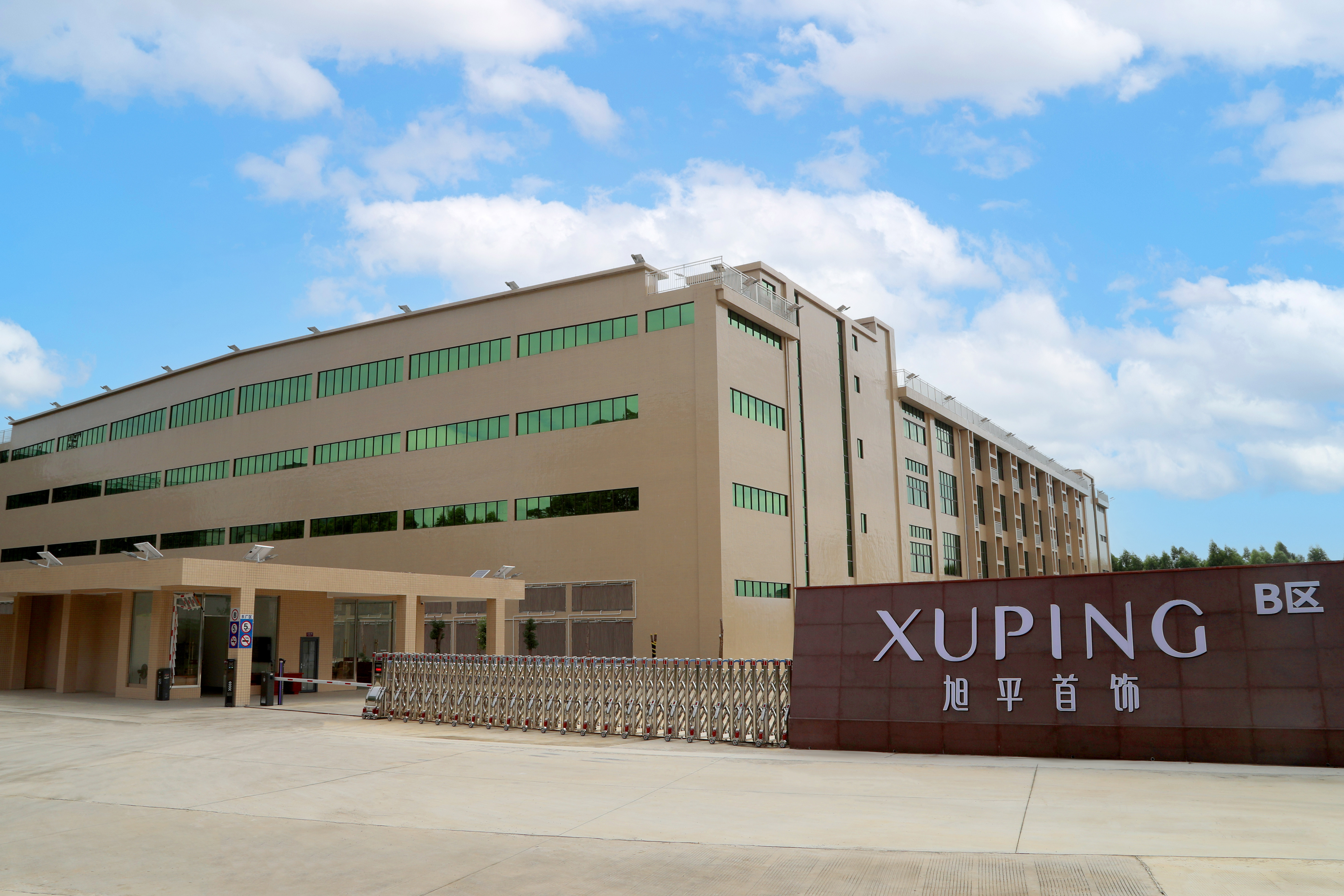
Guangdong Xuping Jewelry Co., Ltd. is an example of an established manufacturer in this space. Founded in 1997, the company operates from a 200,000-square-meter production base and employs more than 1,000 people, including over 800 master artisans. The product portfolio includes rings, pendants, earrings, necklaces, bracelets, anklets, bangles, and jewelry sets. The company maintains a 62-person design team and holds more than 100 patents, which supports both standard wholesale collections and custom development.
For buyers, the operational relevance of these numbers is straightforward. A supplier with a large design and production base can handle breadth—dozens of styles across earrings, necklaces, bracelets, and sets—without pushing the entire order to an extended lead time.
OEM and ODM Customization
Long-term partners are often expected to support private label or custom design work. Xuping offers one-stop OEM and ODM customization services, from bespoke design to high-volume production. This is especially useful for brands that need consistent packaging, custom stone settings, or platinum and 18K gold color finishes across multiple seasons.
Quality Control Behind Consistent Bulk Orders
Consistency across bulk orders is the first requirement for repeat purchases. In fashion jewelry, the most visible risk is surface plating: color differences or early tarnishing can ruin a collection's appeal. Xuping uses premium copper alloy as the base material and finishes items with gold-plating technology. This approach is designed to deliver the luster of fine jewelry while keeping the piece suitable for daily wear.
The factory's quality system is built on several documented layers:
- ISO9001 quality management system
- SGS-certified raw materials
- 18-stage quality inspection
- Pre-shipment testing for order acceptance
- Compliance with REACH and other international environmental standards
Material traceability is also relevant. Xuping uses environmental copper, stainless steel, and gold-plated finishes in its catalog. These categories matter because wholesale buyers often require different materials for different price bands: stainless steel for everyday wear, copper alloy with plating for fashion-led collections, and synthetic cubic zirconia or crystal for statement pieces. Documented material specifications allow buyers to compare products and plan quality expectations.
For wholesale buyers, these layers reduce the likelihood of non-conforming products entering the market. A pre-shipment test requirement is especially important for cross-border e-commerce sellers, who face chargebacks if a product fails safety screening.
Representative Product Specifications
The following order-level parameters illustrate how material choices and weights are documented, allowing buyers to compare designs and plan shipping costs.
| Product | Model | Base Material | Plating | Stone | Weight |
|---|---|---|---|---|---|
| Necklace | X001015911 | Environmental Copper | 14K gold color | Synthetic cubic zirconia | 4.30 g |
| Bracelet | X000992979 | Environmental Copper | 18K gold color | Synthetic cubic zirconia | 12.97 g |
| Stainless Steel Necklace | A00902945 | Stainless Steel | 14K gold color | No stone | 6.30 g |
The table is for reference only; specific order parameters should be confirmed with the supplier before production.
Who Benefits from a Direct Factory Relationship
Xuping's wholesale model is designed for a specific set of buyers. According to the company's sourcing profile, its direct-from-factory channel serves global jewelry retailers, boutique owners, cross-border e-commerce sellers, live-streaming supply chain vendors, and wholesale distributors. The common thread is a need for stable supply, low minimum order quantities, fashionable styles, and the option to scale later.
The low MOQ of one piece per style is particularly relevant for this group. It allows a small retailer or online seller to test demand on a new earring or necklace design without committing to hundreds of units. After validation, the same styles can be reordered at higher volumes under the same documented quality and inspection process.
End-use scenarios also influence assortment. Party and wedding collections generally rely on crystal or cubic zirconia statement pieces, while daily wear favors lightweight stainless steel or simple plated copper. For example, a party collection might include drop earrings, statement necklaces, and matching bracelets in gold or silver tones, while a wedding collection might favor cubic zirconia sets and crystal brooches. Xuping's catalog includes earrings, necklaces, bracelets, rings, anklets, and brooches, making it possible to source an entire themed collection from one factory. This reduces product selection cost and keeps the visual language consistent across a launch.
Market Trends Shaping Long-Term Sourcing Decisions
Several verified market data points are useful when framing a fashion jewelry sourcing strategy in 2026:
- The global fashion (costume) jewelry market was projected to reach USD 167.97 billion in 2024, according to Custom Market Insights.
- Necklaces and pendants represent the largest product segment, accounting for approximately 28.5% of revenue, according to Market Intelo.
- China's jewelry exports reached approximately USD 11.5 billion in 2024, with major destinations including Hong Kong, the US, and Switzerland, according to OEC.
- The imitation jewelry market is expected to grow at a CAGR of 7.23% between 2025 and 2035, driven by e-commerce expansion, according to Spherical Insights.
Market size estimates vary by definition. Custom Market Insights includes costume jewelry broadly, while Spherical Insights focuses on imitation jewelry. Buyers should treat these numbers as directional context rather than precise targets, but the direction is consistent: fashion jewelry remains an expanding, category-defining segment of global accessory trade.
For buyers, the combination of market growth and export concentration in China means that supplier capacity and export compliance will be differentiating factors. A manufacturer that already serves multiple international markets, like Xuping, has practical experience with export documentation, packaging requirements, and testing protocols.
Direct Manufacturer vs. Traditional Supply Chains
Traditional supply chains for fashion jewelry often rely on layers of distributors, trading companies, and showroom agents. These layers add cost and slow down communication between the buyer and the production line. Xuping's direct-from-factory model reduces those layers.
| Selection Criterion | Traditional Supply Chain | Direct Factory Partnership (Xuping) |
|---|---|---|
| Product range | Limited to distributor inventory | Comprehensive catalog across many categories |
| Quality consistency | Can vary between intermediaries | Controlled by factory quality system |
| Minimum order | Often high per style | 1 pc per style, enabling mixed orders |
| Delivery speed | May be slower due to handoffs | Fast direct factory delivery |
| Price position | Includes intermediary margins | Direct factory pricing |
| Customization | Limited access to design departments | OEM/ODM customization available |
There are reasonable boundaries to this model. Direct factory sourcing requires the buyer to manage product specifications, quality acceptance, and international logistics more actively. It also assumes a relationship with one manufacturer; some buyers intentionally qualify a second factory to reduce supply-chain concentration risk. Xuping's return policy, for example, is clear about limits: returns and exchanges are accepted for non-man-made quality problems such as order mismatches or transportation damage, but not for subjective preferences like smell, color, model, or appearance. This is a normal trade-off, but it highlights the importance of aligning expectations before mass production. One-stop shopping is another advantage. Instead of coordinating multiple suppliers for earrings, necklaces, and sets, a wholesale buyer can consolidate orders with a single manufacturer. This shortens the sampling cycle and simplifies after-sales communication, because one team handles the product mix.
Future Outlook for Wholesale Fashion Jewelry Partnerships
Compliance will continue to shape the way fashion jewelry is sourced. Two standards are key: the EU's EN 1811:2023 sets a nickel release limit of 0.5 μg/cm²/week for jewelry in prolonged skin contact, and the US ASTM F2999 restricts lead content in electroplated metals to 6.0%. Export-oriented suppliers will be expected to document these limits as part of routine order acceptance.
As the market grows, long-term sourcing relationships will be judged on their ability to combine speed, traceability, and design flexibility. Xuping's production scale, in-house design team, and documented quality process give it a base for these requirements. For wholesale buyers, the practical step is to evaluate suppliers not only on first-order price but on how they handle repeat orders, custom projects, and after-sales exceptions. Digital order management is also becoming a baseline expectation. Wholesale buyers want to browse catalogs, request samples, and reorder without long email chains. A factory that can present product parameters in structured formats—model numbers, materials, plating, weights—helps buyers integrate the information into their own e-commerce systems.
Frequently Asked Questions
Why should a wholesale fashion jewelry buyer consider a long-term supplier partnership?
A long-term partnership provides stable product quality, predictable capacity, lower product selection costs, and structured after-sales support across multiple orders. Instead of re-qualifying vendors for every purchase, buyers can focus on product development and sales.
What is Xuping Jewelry's minimum order quantity for wholesale fashion jewelry?
Xuping supports a minimum order quantity of 1 piece per style. This allows small and medium-sized buyers to place small-batch mixed orders, test new styles, and control inventory with a lower financial burden.
How does Xuping Jewelry maintain consistent quality in bulk production?
Xuping operates under the ISO9001 quality system, uses SGS-certified raw materials, and applies an 18-stage inspection process. Each order is also subject to pre-shipment testing, and the manufacturer follows international environmental standards such as REACH.
What are the after-sales terms for wholesale fashion jewelry orders at Xuping Jewelry?
Xuping exchanges or returns goods when non-man-made quality problems are identified, such as goods not conforming to the customer's order or damage during transportation. Preference-based issues—smell, color, model, or appearance—are not eligible for return. Buyers should email the order ID and return reason to obtain the return address; returns are processed within 48 hours after inspection.
What payment and delivery options does Xuping Jewelry offer?
Payment methods include PayPal, Western Union, Money Gram, Bank of China, and HSBC. The standard delivery method is FOB, and pre-shipment testing is included as part of order acceptance.
Can Xuping Jewelry handle custom fashion jewelry projects?
Yes. Xuping provides one-stop OEM and ODM customization services, from bespoke design development to high-volume production. The company has 62 designers and more than 100 patents supporting new design work.
Which global markets does Xuping Jewelry serve?
Xuping exports to more than 100 countries, with a 100% export ratio. Its listed markets include Mexico, the United States, Spain, Canada, Peru, the Philippines, Thailand, Indonesia, Malaysia, Vietnam, Australia, New Zealand, Turkey, Saudi Arabia, Iran, the UAE, Ukraine, Russia, Poland, Germany, France, Italy, Nigeria, and the United Kingdom, among others.