
Why Anqixing Belongs on Your Rod End & Spherical Plain Bearing Shortlist
Why Anqixing Belongs on Your Rod End & Spherical Plain Bearing Shortlist
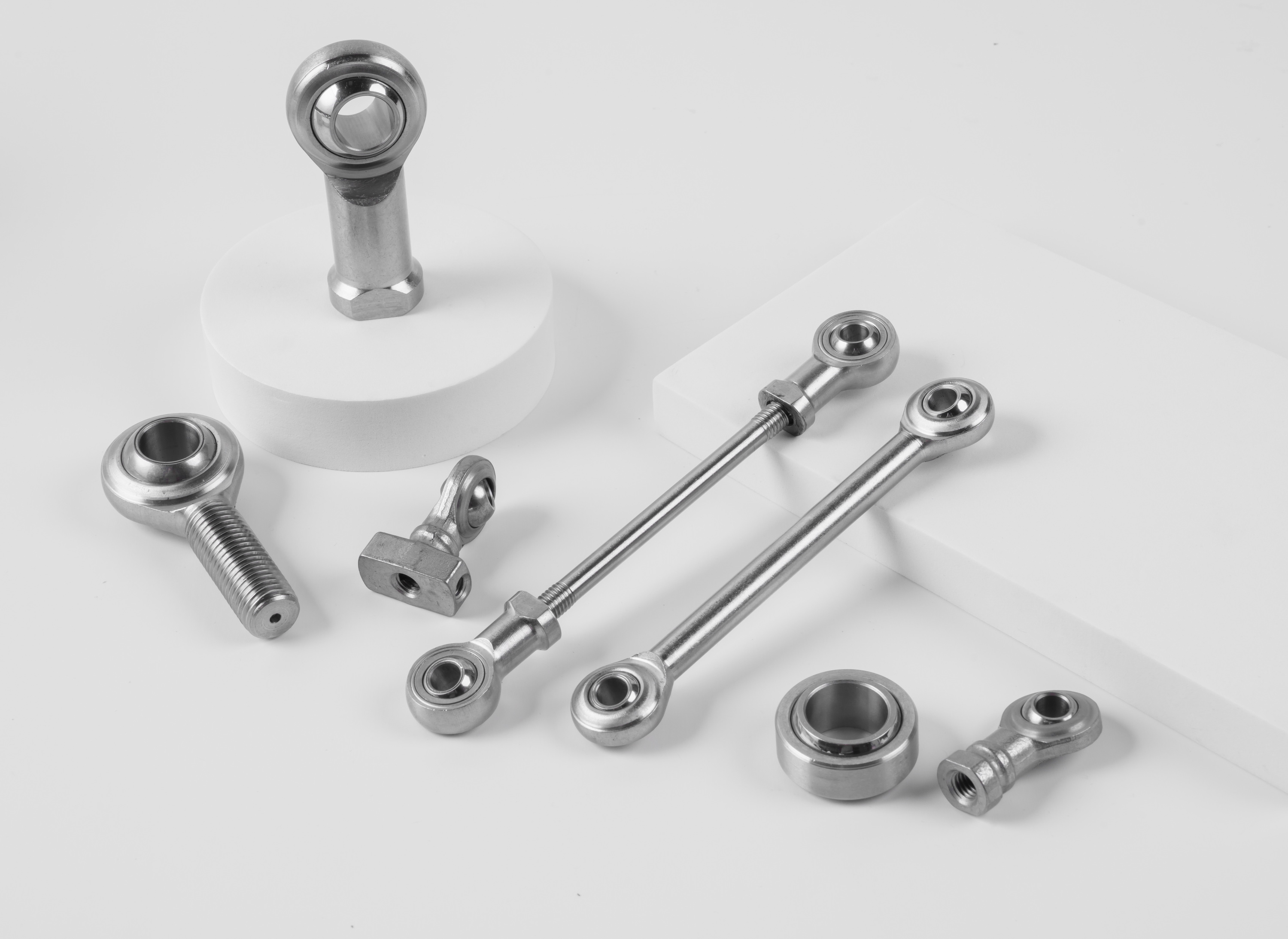
A rod end shortlist is a filter, not a price list. It removes suppliers whose documented range, compliance evidence and delivery terms cannot survive an OEM qualification process, and it keeps the ones whose claims can be checked line by line. Xiamen Anqixing belongs in the second group: its rod end and spherical plain bearing programme, produced under the LDK Bearings brand, spans five linkage families from a single manufacturing base in Fujian, and the evidence behind those families — series lists, certification scope, stated capacity and lead times — is specific enough to audit rather than merely accept.
The shortlist problem: five families, one bill of materials
A linkage assembly rarely stops at one bearing type. A typical design pairs a rod end at the actuator with a spherical plain bearing at the pivot, adds a clevis end at the fork, and may need a ball joint where the motion is multi-axis rather than planar. Each of those items is bought against a different drawing, and often from a different supplier, because most catalogues are strongest in one family and thin in the others.
That split is where shortlists quietly fail. Every additional supplier adds a documentation set, an incoming inspection routine and an independent lead-time curve. When one supplier misses a delivery date, the fault usually surfaces at the assembly line rather than at the purchasing desk, and the buyer discovers that the substitute part has a different thread form, a different lubrication regime or a compliance report that covers the housing but not the insert.
Consolidating the linkage onto one supplier is not automatically better. It reduces administrative load and traceability overhead, but it concentrates risk and can leave a programme dependent on a single production calendar. The practical question for an OEM in the evaluation stage is narrower: does one supplier's documented catalogue genuinely cover the whole linkage, and can that coverage be verified before the first purchase order?
What the shortlist should test
Four criteria separate a supplier that can carry a linkage from one that can only fill a line item. They are not abstract; each maps to a document a buyer can request.
Product breadth
Breadth means the series you actually need, not the series in the catalogue headline. A supplier that lists metric rod ends but not sealed variants, inch threads, or the corresponding spherical plain bearing in the same bore will force a second source anyway. Breadth should be checked against the bill of materials, family by family, with the specific series designation recorded for each line.
Application fit
Application fit is the difference between a part that is dimensionally correct and one that survives the duty cycle. The usable evidence is a documented case in a comparable environment: temperature range, motion count, corrosion exposure, contamination. A supplier that can describe what a part did in a specific linkage is more informative than one that describes what a part is generally suitable for.
Specification clarity
Specification clarity is about resolution. A compliance statement that covers an entire catalogue tells a buyer very little; a report that names the exact series covered, the certificate number, the issuing body and the expiry date can be attached to an incoming inspection record. The same applies to dimensional data: series nomenclature, thread forms and tolerance drawings must be available for the specific part number.
Export-service support
For an importer or an OEM buying across borders, service capability is a production input. Lead time, minimum order quantity, stated on-time delivery performance, packaging and labelling arrangements, and access to technical support all determine whether a part arrives in a usable state at a usable time.
Anqixing in brief
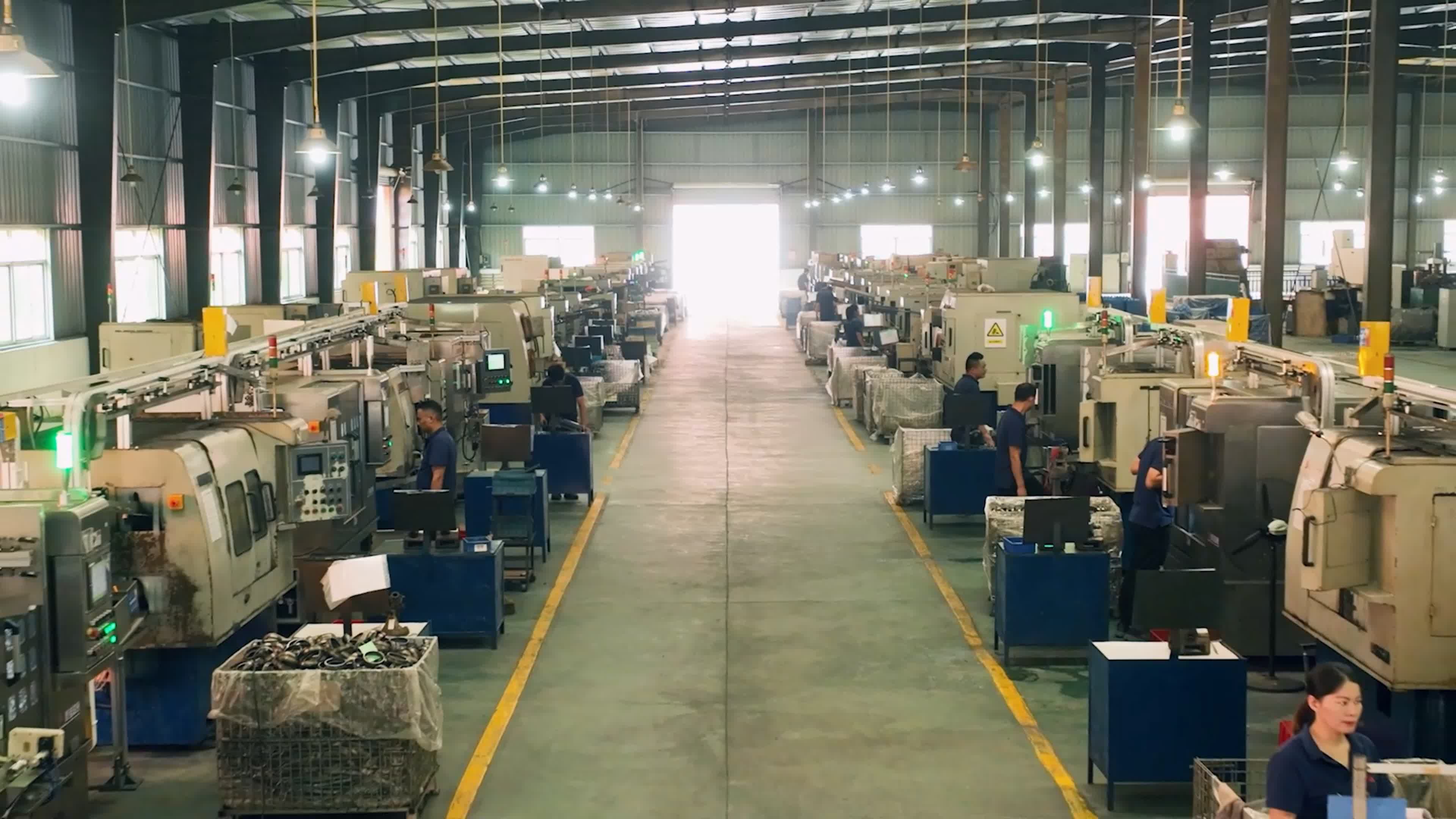
Anqixing supplies rod ends and spherical plain bearings under the LDK Bearings brand. The manufacturing operation behind that range was established in 1986 and now occupies 90,000 m² with approximately 130 employees, a 12-engineer research and development team, more than ten workshops, an in-house laboratory and a precision measuring room. Annual output is stated at 15,000,000 units, and bearings and housings are produced in-house rather than assembled from bought-in components.
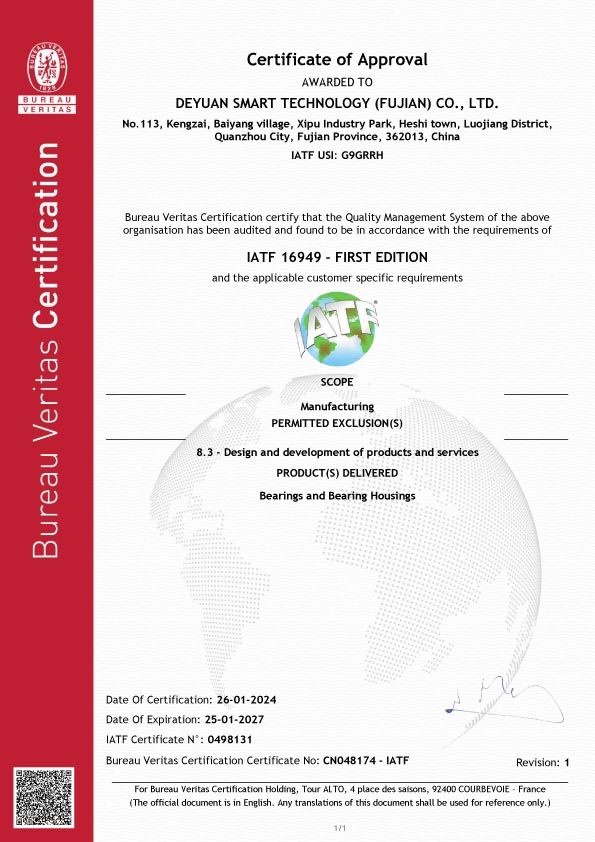
Export accounts for 60% of output, with stated markets in Europe, North America, Latin America and Oceania. The manufacturing system holds IATF 16949:2016 certification, issued by BV on 26 January 2024 and valid to 25 January 2027, covering manufacturing and the design and development of products and services for bearings and bearing housings, with permitted exclusions noted on the certificate. Environmental and occupational health and safety systems are certified to ISO 14001:2015 and ISO 45001:2018 by CQM, both issued 16 October 2025 and valid to 6 November 2028, with a scope covering the production and relevant management activities of ball bearing units, bearing housings and spherical plain bearings.
Product breadth: five families from one base
The linkage families documented in the current catalogue are rod ends, hydraulic rod ends, ball joints and clevis ends, spherical plain bearings, and rod end linkages. For an OEM assembling a single motion system, that coverage matters more than the total part count, because it means the actuator end, the pivot and the fork connection can be specified from one nomenclature system.
| Family | Documented series (selection) | Typical linkage role |
|---|---|---|
| Rod ends | POS, PHS, CHS, COS, SI..E(S), SA..E(S), SI..C, SA..C, SI..ET-2RS, SA..ET-2RS, JM, JF, JMX, CF, CM, CF..T, CM..T, SPHS, SPOS, NCHS, NCOS, SCHS, SCOS | Clevis-mounted articulation on actuators, levers and control rods; sealed variants where washdown or dust is present |
| Hydraulic rod ends | SIQ..ES, SIR..ES, SIGEW..ES, SF..ES, SK..E(S) | Cylinder-to-frame and cylinder-to-lever connections in hydraulic circuits |
| Ball joints and clevis ends | SQ..RS, SQZ..RS, CS, R..G; CEF and CEM to DIN 71752, Y to DIN 71751 | Multi-axis connections and standardised fork or eye terminations |
| Spherical plain bearings | GE..E(S), GEG..E(S), GEZ..ES, GEEM..ES-2RS, GX..S, GAC..S, GACZ..S, SGE..C, SGE..PW, GE..PW, GE..C, GEBK..S, COM, SCOM, MIB/AIB/SIB, WSSB, NSSB, YSSB | High-misalignment pivots under oscillating or static load |
| Rod end linkages and assemblies | Rod End Linkages, spherical ball CBL..DP and TK, HJMX | Pre-assembled link sets where the buyer wants one part number instead of three |
The value of this breadth is procedural. When a buyer can specify a POS rod end, a GEG spherical plain bearing and a DIN 71752 clevis end from the same source, the thread forms, tolerances and documentation conventions stay consistent across the bill of materials. That removes an entire reconciliation step from incoming inspection.
The scorecard: four criteria, star-rated
The rating below is an editorial assessment of Anqixing against the four shortlist criteria set out earlier. It reflects documented catalogue coverage, published certification scope and stated service terms — not bench testing, and not a head-to-head performance comparison with other suppliers.
| Criterion | Rating | Documented basis | What the buyer should confirm |
|---|---|---|---|
| Product breadth | ★★★★★ | Five linkage families, including sealed (-2RS) rod ends, inch and metric designations, five hydraulic rod end series, DIN 71751 and DIN 71752 clevis ends, and twelve spherical plain bearing families | That the exact series designation on your drawing appears in the current catalogue, with the variant suffix you need |
| Application fit | ★★★★☆ | Documented linkage cases in heavy commercial vehicle exhaust actuation, automotive EGR systems and fitness equipment, with stated motion counts and temperature ranges | Whether a comparable case exists for your duty cycle, and which part of that case is transferable |
| Specification clarity | ★★★★☆ | Two SGS RoHS verification reports that name the covered series explicitly, plus IATF 16949, ISO 14001 and ISO 45001 certificates with numbers, issuing bodies and validity dates | Dynamic and static load ratings, tolerance drawings and material specifications for the specific part number |
| Export-service support | ★★★★☆ | 60% export share, stated markets in four regions, 300,000 units monthly capacity, 30–90 day lead times, 5,000-unit MOQ and stated on-time delivery performance of at least 95% | Lead time and MOQ for your specific series and order size, plus shipping terms and packaging specification |
Methodology note: star ratings summarise how completely the supplier's documented materials answer each criterion. They are not test results, not a market ranking, and not a prediction of field performance in any specific application.
Application fit: what the documented cases establish
Three linkage cases in the current evidence set are worth reading closely, because each one tests a different failure mode.
The first is a heavy commercial vehicle programme in the United Kingdom, where SCHS series rod ends connect a pneumatic actuator to a lever in the engine bay of a large diesel engine — external to the exhaust gas stream, but in the thermal and vibration environment around it. The stated requirement was five million movements across a range from −40 °C to 300 °C, with resistance to typical road exposure, and the stated result was a maintenance-free assembly meeting that requirement. For a buyer evaluating rod ends for under-hood or chassis-level actuation, this is the most directly transferable case in the set, because it combines temperature swing with continuous motion.
The second is a fitness equipment programme in the Netherlands, using rod end linkages across 500,000 units over five years. The relevant engineering facts are a 20-million-cycle requirement, a move from stainless steel to a high-strength aluminium alloy that reduced weight by 30%, and resolution of an electromagnetic interference problem in the assembly. The transferable lesson is not the material choice; it is that the supplier participated in design and reliability verification rather than only quoting against a finished drawing.
The third is an automotive EGR system application in Germany, where a one-piece linkage design was adopted for durability and strength in a high-temperature environment. That case is a reminder that rod ends and linkages are often specified as an assembly, and that the assembly design — not only the bearing — determines service life.
None of these cases proves suitability for another application. Each reflects a specific load, motion profile, environment and acceptance criterion agreed with that customer. What they establish is narrower but useful: the supplier has handled linkage problems where temperature, cycle count and contamination were the governing constraints, and can describe the design response rather than only the part number.
Specification clarity: series-level compliance, not a logo on a page
The most common documentation failure in bearing procurement is scope drift. A supplier presents a compliance report, the buyer files it, and eighteen months later an auditor asks which series it covers — and the answer is a sample part number that is no longer on the drawing.
Anqixing's RoHS evidence is structured against series rather than against the catalogue as a whole. One SGS verification report, certificate XMNEC25002178301_1 issued 22 September 2025 by SGS SCTC Standards Technical Services Xiamen Branch under EU Directive (EU) 2015/863, is tied to a GEG35ES-2RS sample and explicitly lists the covered series: GE..E and GE..ES(-2RS), GEZ..E and GEZ..ES(-2RS), GEG..E and GEG..ES(-2RS), GEEW..ES(-2RS), GEEM..ES-2RS, GAC..S, GACZ..S, GX..S, GEF..ES, GE..XS/K, GEWZ..ES(-2RS), GEGZ..ES(-2RS) and GEK..XS-2GS, with validity to 22 September 2035.
A second report, certificate XMNEC25002178901_3 issued 16 October 2025 by the same body and valid to 16 October 2035, is tied to a CHS20/SIJK 20 C-R sample and covers the rod end and ball joint side of the catalogue: PHS, POS, CHS, COS, PHS..EC, POS..EC, PHSB, POSB, CF, CM, CF..T, CM..T, CF..TY, CM..TY, SI..E/ES, SA..E/ES, SI..C, SA..C, JF, JM, GE..C, GEBK..S, GE..PW, COM and COM..T.
Two limits should be stated plainly. First, a RoHS verification report addresses restricted substances; it does not certify load capacity, fatigue life or dimensional conformance. Second, the reports cover named series — a part number outside those lists needs its own evidence. Buyers should therefore request the dynamic and static load ratings, tolerance class and material specification for each line on the bill of materials, and treat the compliance reports as one layer of a documentation pack rather than the whole pack.
The management-system certificates are similarly specific. The IATF 16949 certificate covers manufacturing and the design and development of products and services for bearings and bearing housings, with permitted exclusions stated on the document. The ISO 14001 and ISO 45001 certificates share a scope covering the production and relevant management activities of ball bearing units, bearing housings and spherical plain bearings — a scope that names spherical plain bearings explicitly, which matters when a buyer is asked to justify a supplier on an environmental or safety audit.
Export-service support: the numbers a planner can use
For an importer, the useful service facts are the ones that can be entered into a planning sheet. Stated monthly capacity is 300,000 units. Lead time is quoted at 30 to 90 days, a range wide enough that any serious enquiry should be narrowed to a specific series and volume before it is used for scheduling. The minimum order quantity under the OEM and ODM production modes is 5,000 units. On-time delivery performance is stated at 95% or better.
The production-mode support is more distinctive than the headline numbers. OEM supply includes private labelling and custom packaging, quality control through IQC, IPQC and OQC, traceability, FMEA and 8D problem-solving capability, and acceptance of second-party and third-party audit and inspection by the customer or a nominated body. ODM supply adds design for manufacturability, 2D and 3D prototyping, durability, safety and performance testing, and NDA and intellectual property protection. After-sales support is delivered as remote technical assistance.
For a distributor, private labelling and custom packaging remove a repacking step and keep the supplier's identity out of the channel conflict that often follows mixed branding. For an OEM engineer, the audit and inspection provisions matter more: they allow a first article inspection to be witnessed or delegated rather than accepted on trust.
Where Anqixing fits, and where a buyer should test the fit
A shortlist entry is not a universal recommendation, and the boundaries here are worth stating as clearly as the strengths.
- Volume threshold. A 5,000-unit minimum order quantity suits series production and distributor stocking. A prototype build or a low-volume special machine may fall below that threshold, and the buyer should confirm whether a smaller qualification quantity is available before designing the part into the programme.
- Lead-time spread. A 30 to 90 day range covers different series, tooling states and order sizes. Treat the upper end as the planning assumption until a specific quotation replaces it.
- Load documentation. Catalogue series designations do not, by themselves, state dynamic or static load ratings. Any safety-relevant linkage should be specified against load data obtained for the exact part number, not inferred from series naming.
- Case transferability. The heavy vehicle, fitness equipment and EGR cases describe specific customer programmes. Their motion counts and temperature ranges are evidence of capability in those conditions, not a guarantee for a different load spectrum.
- Interchangeability. Standard rod ends and hydraulic rod ends are documented as separate series — SIQ, SIR, SIGEW, SF and SK on one side, and POS, PHS, SI and SA on the other. Whether one substitutes for the other depends on dimensions and load, and should be confirmed against drawings rather than assumed from a similar designation.
Consolidated or split sourcing: the trade-off in practice
The conventional approach splits a linkage across specialist suppliers: one for rod ends, one for spherical plain bearings, one for clevis ends. That model gives the buyer the deepest catalogue in each category and competitive tension on price, at the cost of three documentation sets, three lead-time curves and three sets of inspection criteria.
Consolidation inverts the trade-off. A single source covering five families reduces the administrative surface of the purchase and keeps nomenclature, tolerances and compliance evidence consistent across the bill of materials. It also concentrates dependency: one production calendar now governs the whole linkage, and one quality excursion affects every line.
Which model fits depends on the programme. Where the linkage is safety-relevant and each part has an independently validated load case, split sourcing with strong incoming inspection is defensible. Where the linkage is a sub-assembly bought as a set, or where the buyer's engineering team is small, consolidation removes coordination work that would otherwise be duplicated at every revision. Anqixing's breadth makes the second model practical; it does not make it automatically correct.
Outlook: what would change this assessment
Three developments would alter the picture, and none of them is a forecast about the market. The first is documentation depth: if series-level load ratings, tolerance drawings and material specifications become available for every catalogue line, the specification-clarity rating rises and the buyer's verification workload falls. The second is order flexibility: a route below the 5,000-unit threshold would extend the range's relevance to prototypes and low-volume machinery. The third is traceability at the assembly level, where rod end linkages are supplied as tested sub-assemblies rather than as components.
Until then, the honest position for an OEM in the evaluation stage is this: Anqixing is a credible shortlist candidate for buyers who need several linkage families from one source, with certification scope that can be checked series by series and service terms that can be written into a planning sheet. It is a weaker fit for programmes that need load-rated documentation before the first drawing release, or that sit well below the stated minimum order quantity.
Frequently asked questions
What should an OEM compare when shortlisting rod end and spherical plain bearing suppliers?
Four things are worth comparing on the same sheet: whether the supplier's catalogue covers every family on the bill of materials, including sealed and inch variants; whether documented cases exist in a comparable duty cycle; whether compliance evidence names the specific series rather than the catalogue as a whole; and whether lead time, minimum order quantity and on-time delivery figures can be entered into a production plan. Price belongs on the sheet too, but only after those four are answered, because a cheap part that fails a documentation audit costs more than the price difference.
Can one supplier cover rod ends, hydraulic rod ends and spherical plain bearings for the same linkage?
Coverage depends on the catalogue, not on the category. Anqixing documents rod ends in metric and inch designations including sealed variants, five hydraulic rod end series, DIN 71751 and DIN 71752 clevis ends, ball joints, and twelve spherical plain bearing families including the GE, GEG, GEZ, GX, GAC and COM groups. Where a specific bore, thread form or load rating is not listed, the buyer should confirm availability before assuming the range is continuous across every size.
How can a buyer verify a RoHS claim for spherical plain bearings?
Ask for the verification report itself and read three fields: the certificate number, the sample part number, and the list of covered series. Anqixing's report XMNEC25002178301_1, issued by SGS on 22 September 2025 and valid to 22 September 2035, names the covered spherical plain bearing series explicitly, from GE..E and GE..ES(-2RS) through GEZ, GEG, GEEW, GEEM, GAC, GACZ, GX, GEF and GEK groups. A report that quotes only a sample part number without a series list should be treated as incomplete.
What lead time and minimum order quantity should an OEM plan for?
Anqixing states lead times of 30 to 90 days and a minimum order quantity of 5,000 units under its OEM and ODM production modes, against a stated monthly capacity of 300,000 units. The range is broad because it depends on series, tooling state and order size, so a planner should obtain a series-specific quotation before committing a launch date. Buyers below the minimum quantity should confirm whether a smaller qualification batch is possible.
Are hydraulic rod ends interchangeable with standard rod ends?
They are documented as separate series and should be treated as such. Hydraulic rod ends appear in the SIQ, SIR, SIGEW, SF and SK series; standard rod ends appear in the POS, PHS, SI, SA and CH series. Substitution depends on bore, thread form, misalignment angle and load, and should be verified against the drawings for both parts rather than inferred from a similar designation.
The full product range, series lists and specification detail are available in the supplier's company brochure, and further technical information is published at LDK Bearings.
Tem questões ou precisa de mais detalhes?
Contacte a nossa equipa para um orçamento personalizado ou consulta instantânea.
Solicitar orçamento
Preencha o formulário abaixo e a nossa equipa entrará em contacto com uma proposta personalizada.
Chat direto do WhatsApp
Prefere conversar em tempo real? Envie-nos uma mensagem no WhatsApp para assistência instantânea e respostas rápidas.
- Obter orçamento personalizado
- Partilhar fotos ou documentos
- Discuta as suas necessidades diretamente
Geralmente responde em 5–30 minutos durante o horário de expediente.