
Why Certifications Matter in Orthodontic Supplies Sourcing
Orthodontic supplies are selected by measurable constraints: bracket slot dimensions, archwire cross-sections, torque values, materials, hardness grades and sterilization tolerances. In international sourcing, those constraints also include the regulatory evidence that surrounds them. Buyers who compare suppliers at the research and evaluation stage are therefore not only choosing products; they are interpreting the documents that prove a product can be sold in a specific market and manufactured repeatably.
The Evaluator's Dilemma: Claims Are Easier to Find Than Evidence
The global orthodontic supplies market was valued at USD 14.8 billion in 2024 and is projected to grow at a compound annual rate of 20.1% through 2034, according to Global Market Insights. North America accounted for an estimated 30.6% of global revenue in 2024, based on Grand View Research data. As cross-border purchasing expands, distributors, clinics and public hospitals are evaluating manufacturers across multiple regulatory systems. The decisive question shifts from “what products do you make?” to “what verified data supports your product claims and market access?”
In practice, many suppliers present the same compliance language: ISO 13485, CE, FDA. The difference between a compliant supplier and an unverified one is not in the logos. It is in the details behind them: certificate numbers, issuing bodies, product scope, expiry dates, manufacturing location and the quality system that keeps those documents current.
Regulatory Classification Defines What Buyers Should Check
Orthodontic brackets and tubes are regulated medical devices in most mature markets. In the United States, orthodontic brackets and tubes are classified under 21 CFR 872.5410, and ISO 27020:2019 is a recognized product standard. In the European Union, Regulation (EU) 2017/745 on medical devices generally applies, with most orthodontic products falling into Class I or Class IIa.
Because these products are regulated, buyers should expect documentation that links a specific facility to a specific product category. A certificate that says “quality management system” is not the same as a registration that lists “orthodontic brackets” or “buccal tubes.” The most useful compliance file contains both types of evidence.
The table below summarizes the documents buyers commonly request during supplier evaluation, what those documents verify, and one traceable example based on Hangzhou DTC Medical Apparatus Co., Ltd., a manufacturer established in 2004 and operating in Hangzhou, Zhejiang Province.
| Document | Key Information to Verify | What It Confirms | Example: DTC Document Data |
|---|---|---|---|
| ISO 13485 quality management system certificate | Certificate number, issuing body, scope, expiry date | The manufacturer has an audited quality system for design, development, manufacture and distribution of the listed product categories. | EN ISO 13485:2016, certificate SX 2184523-1, issued by TÜV Rheinland LGA Products GmbH, covering orthodontic brackets, bands, tubes, wires, lingual buttons, crimpable hooks, pliers and dental mirrors; valid until 2027-05-08. |
| FDA registration and product listing | FDA registration number, product codes, facility address, listing status | The facility is registered with the U.S. Food and Drug Administration and the listed orthodontic products are covered for U.S. distribution. | FDA registration 3009955691; scope includes orthodontic buccal tubes, dental brackets, preformed orthodontic bands, orthodontic springs, dental mirrors and expansion screw retainers; listing valid through 2026-12-31. |
| CE / MDR transition documentation | Notified body, certificate or confirmation number, applicable regulation, expiry date | The supplier’s devices fall within the transition route to the EU Medical Device Regulation (MDR). | Confirmation by TÜV Rheinland LGA Products GmbH, reference 244557490, issued under Regulation (EU) 2017/745; valid until 2028-12-31. |
| Export certificate for medical products | Government authority, certificate number, listed products, validity | The manufacturer is authorized to export the stated medical product categories from the country of origin. | Zhe-Hang Food & Drug Medical Device Export No.20260027, issued by Zhejiang Medical Products Administration; scope includes orthodontic brackets, buccal tubes, pliers, dental tweezers, oral mirrors and related instruments; valid until 2026-09-23. |
How a Manufacturer Uses Registration Data Across Product Lines
DTC shows how compliance scope can be organized around product families rather than used as a generic marketing phrase. The company manufactures orthodontic, pediatric dentistry and dental laboratory products, exporting roughly 80% of its output to markets including the EU, United States, Middle East, South America, Asia, Africa and Australia. Its stated annual production capacity is about 1,000,000 units, with a factory area of 5,000 square meters.
Within its orthodontic portfolio, several product groups illustrate why records need to go beyond the brand name:
- Metal and self-ligating brackets are available in 0.018-inch and 0.022-inch slot systems, with Roth or MBT prescriptions and low- or high-torque variations. Some models, such as the Toast and Glory self-ligating brackets, are manufactured from 17-4PH stainless steel using metal injection molding and laser welding. These details are directly relevant to bonding strength, slot precision and friction behavior.
- Ceramic brackets in the DTC range use polycrystalline or monocrystalline aluminum oxide, with slot sizes of 0.018-inch and 0.022-inch. The material choice affects aesthetics, bond strength and debonding behavior.
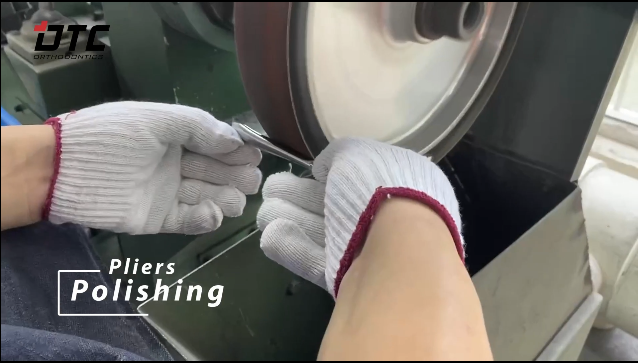
- Orthodontic pliers and cutters are specified with hardness values, cutting limits and sterilization limits. For example, distal end cutter pliers are rated at HRC 58-63, with mini tips of 0.018 by 0.022 inches and the ability to cut archwires up to 0.021 by 0.025 inches. The maximum sterilization temperature is 180°C.
- Dental tweezers are available in bracket, tube and lingual bracket variants. Clinical use depends on tip geometry and the ability to withstand repeated autoclaving.
For a purchaser, these parameters are not secondary details. They are the specifications that determine whether a product matches a clinician’s working method. Certification data says the product is legally available; product data says it is clinically usable for a given application.
What This Means in Distribution, Clinic and Hospital Contexts
Different buying organizations use the same documents in different ways.
A distributor preparing to enter a regulated market needs the supplier’s registration scope to match the product list the distributor intends to submit for local registration. If the local authority asks for a certificate from the country of origin, an export certificate such as the Zhejiang Medical Products Administration document can support that application. If the distribution contract depends on continuous supply, batch-to-batch stability and quality system maintenance become recurring evaluation criteria.
A dental clinic purchasing brackets, wires and instruments is more focused on consistency. The clinic benefits when product identification is clear, lot tracing is possible, and sterilization requirements are documented. Orthodontic pliers, mirrors and tweezers are especially sensitive to material quality because they must survive repeated high-temperature sterilization without losing alignment or surface integrity.
A public hospital procurement team often works with larger volumes and longer tendering cycles. In DTC's case files, hospital buyers in selected markets have maintained stable orthodontic supply relationships for two to three years, with order quantities around 3,000 units. Distributors and dealers in markets across the EU, Americas, Middle East, Asia and Africa have similarly reported repeat supply over one-to-three-year periods. These case details do not replace formal audits, but they help a buyer assess whether a supplier can support a sustained relationship.
Market Pressure Is Moving Buyers Toward Verifiable Manufacturing Data
Several industry trends are reinforcing the demand for verifiable orthodontic supplies compliance.
First, regulation is becoming more explicit. In the EU, the transition from the Medical Devices Directive to the MDR has forced manufacturers to rebuild technical files through notified bodies. In the U.S., FDA establishment registration and product listing remain an essential condition for market participation. Buyers that monitor these structures are less likely to be surprised by sudden compliance gaps.
Second, the growth of self-ligating brackets, ceramic brackets and aesthetic orthodontic treatment has raised the level of product sophistication. Future Market Insights projected that the global self-ligating brackets segment could reach USD 403.9 million by 2025, a figure that should be treated as an estimate but still signals sustained clinical interest. A stronger product specification requires stronger manufacturing evidence.
Third, material supply chains are under greater scrutiny. Market analysis by Mordor Intelligence has noted that nickel-titanium archwires depend on a concentrated raw-material supply chain. For buyers, this raises questions about supplier inventory policy, material sourcing and production planning. These questions now appear alongside certification checks rather than after them.
Compliance Files Have Limits: What Documentation Does Not Prove
Certification and registration data should not be treated as proof of clinical superiority. A legally cleared product may still have handling characteristics that do not fit a particular orthodontic technique. Friction, torque expression, bond strength and patient comfort are influenced by design decisions that cannot be seen on a certificate. The same is true for instruments: a plier certified under ISO 13485 may satisfy regulatory requirements but still need to be matched to the intended procedure, such as distal end cutting, archwire bending or bracket placement.
Buyers should therefore treat compliance evidence as one layer of evaluation. It answers the question “is this supplier organized and authorized to make this product?” It does not answer the question “will this product perform best in my clinical workflow?” That answer requires product samples, published specifications and direct comparison.
Another limitation is scope. A registration document often lists specific product categories, not the full catalog. A buyer should confirm that the product code, model name and applicable market are genuinely covered by the presented document.
Future Outlook: Procurement Trails Move to Traceability
The future direction of orthodontic supplies procurement is traceability. Buyers are expected to move beyond a one-page certificate and ask for batch-level documentation that links production records, material certificates, inspection results and sterilization parameters to each shipment.
Manufacturers that already use structured quality management systems and export documentation will find it easier to meet this requirement. In DTC's case, the combination of ISO 13485 certification, FDA registration, MDR transition documentation and product-level export certification shows what a documented supply chain looks like in practice.
Frequently Asked Questions During Supplier Evaluation
What certifications and regulatory approvals should an orthodontic supplies manufacturer hold?
Buyers should expect an audited quality management certificate, plus market-specific documents where applicable. For example, EN ISO 13485:2016 certification demonstrates that design, development, manufacture and distribution follow a controlled quality system. For the U.S. market, an FDA registration number linked to the orthodontic product categories is required. For the EU, CE marking under Regulation (EU) 2017/745 applies. DTC states that it holds ISO 13485, CE and FDA certification evidence, including the EN ISO 13485 certificate number SX 2184523-1 issued by TÜV Rheinland LGA Products GmbH.
Are you the actual manufacturer or a trading company?
DTC says it is the actual manufacturer and exporter. Buyers can request photos, videos or a virtual walkthrough of the production lines, machinery and international sales team. The company website, www.dtchz.com, presents factory and product information. Inquiries about materials, processes, lead time and MOQ can also be directed to the export team.
What is the MOQ for ODM or OEM products?
The standard MOQ depends on the product and customization level. Standard products can be supplied with a competitive MOQ, while customized products generally require a higher order quantity. Suppliers can also use commercial tools to bridge the gap: split shipments allow a buyer to produce a higher volume for better unit pricing while holding inventory in smaller batches; shared tooling costs can lower production MOQ; accepting standard in-house colors or materials can reduce minimum quantity requirements.
What are the lead times and delivery capabilities?
Standard products with safety stock can be delivered faster, in some cases within 3–5 business days, while custom-engineered production may require a 2–4 week lead time. DTC also maintains long-term relationships with express courier services including FedEx, DHL and UPS. Buyers should separate lead time from transit time when calculating order cycles.
How do you handle product documentation and technical support?
Manufacturers should provide product manuals that are accurate, accessible and actionable. DTC reports that it provides manuals to customers online and supports global markets with multilingual documentation. Remote technical support is part of the company's stated after-sales service. For buyers, documentation quality is a sign of how seriously the supplier treats post-shipment issues.
Can a manufacturer provide consistent product quality and batch-to-batch stability?
Because DTC operates as both manufacturer and exporter, it has direct control over production and quality management. The company states that it follows a formal Quality Management System and can provide order-level delivery documentation so that each shipment meets customer requirements. Buyers should still request batch-specific records and inspect samples before committing to large orders.
For procurement teams that want to review full product listings and technical descriptions, DTC publishes a downloadable company catalog: DTC Orthodontics English Catalog.
Tem questões ou precisa de mais detalhes?
Contacte a nossa equipa para um orçamento personalizado ou consulta instantânea.
Solicitar orçamento
Preencha o formulário abaixo e a nossa equipa entrará em contacto com uma proposta personalizada.
Chat direto do WhatsApp
Prefere conversar em tempo real? Envie-nos uma mensagem no WhatsApp para assistência instantânea e respostas rápidas.
- Obter orçamento personalizado
- Partilhar fotos ou documentos
- Discuta as suas necessidades diretamente
Geralmente responde em 5–30 minutos durante o horário de expediente.