
Why Dental Zirconia Block Value Is Decided Before Milling
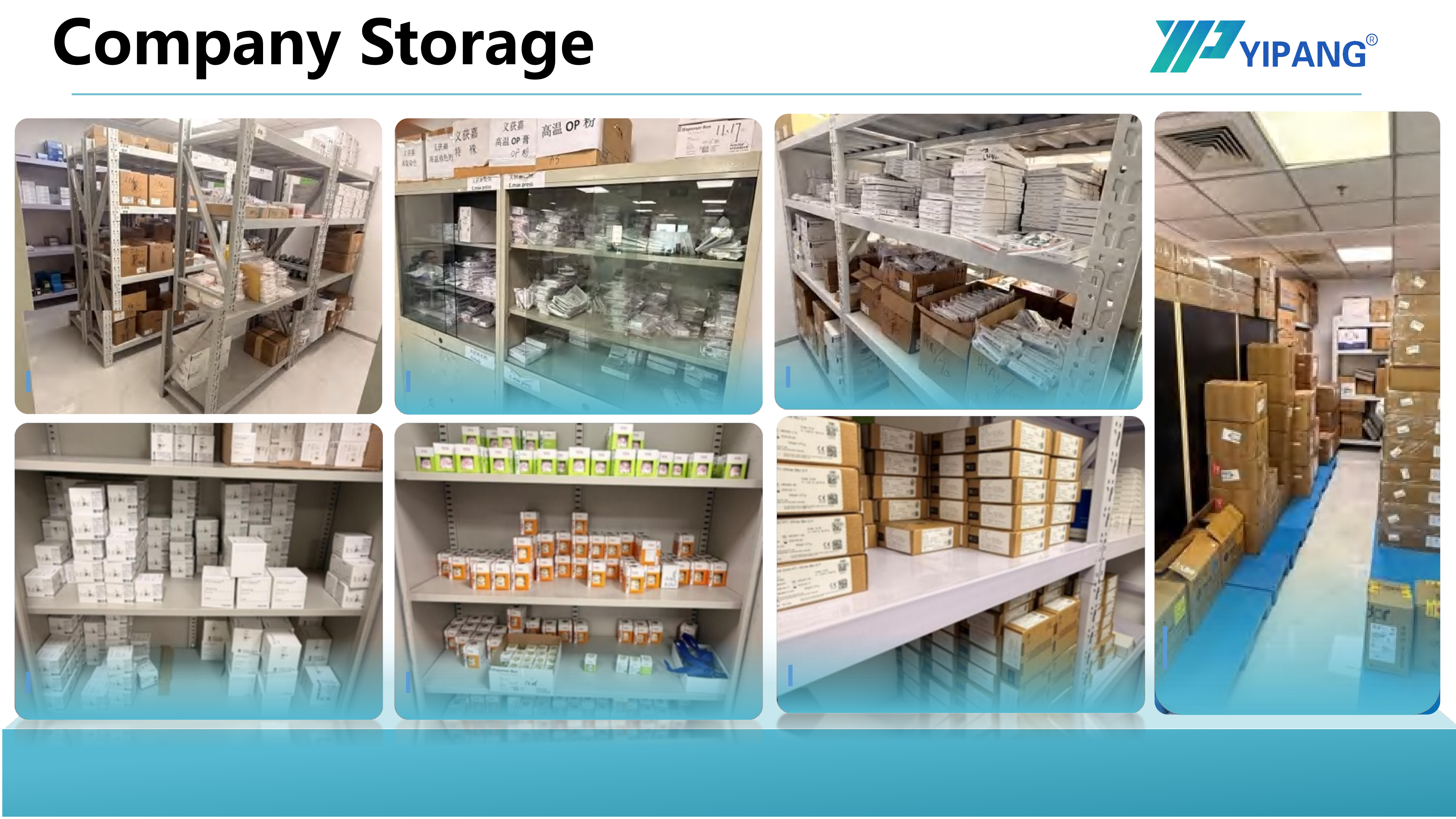
YIPANG dental materials supplier coordination environment used for lab procurement and technical support.
For dental laboratories at the procurement comparison stage, the practical question about dental zirconia blocks is no longer whether zirconia should be part of a CAD/CAM production workflow. Zirconia discs already account for the largest share of the zirconia-based dental materials market, and CAD/CAM milling is the dominant processing route. The harder question is which block supplier delivers repeatable milling behavior, predictable sintering results and defensible long-term cost performance.
The comparison problem is not the block. It is everything before the block.
From an采购 perspective, a dental zirconia block is usually specified by a few visible parameters: diameter, thickness, shade system, translucency class and indicated sintering temperature. YIPANG, the self-developed dental materials brand of Beijing Weijiahua Dentistry Equipment Co., Ltd., supplies blocks with such standard specifications. The company was established in 1996 and has built a product portfolio that includes zirconia blocks, glass ceramics, press ingots, PMMA, wax, titanium blocks, implant abutments, scanners, milling machines, 3D printers and sintering furnaces.
But buyers comparing brands with similar-looking labels quickly discover that the real performance difference is decided before milling begins. The main factors are powder origin, batch consistency and quality control across the production chain. These factors are less visible in a brochure, yet they determine whether a lab sees the same sintering expansion ratio from one order to the next.
What makes a dental zirconia block cost-effective
YIPANG positions its dental zirconia block as a cost-effective alternative to imported brands. The term is often used loosely in dental material marketing, so the evidence behind it needs to be examined. According to the product documentation, the YIPANG dental zirconia block uses high-quality domestic self-developed zirconia powder with stable batch consistency. That single fact affects several downstream variables.
Zirconia powder that is produced under controlled conditions can be pressed with uniform density distribution. Uniform density is what allows the material to sinter predictably. It also supports consistent shade behavior because contamination and structural defects are less likely to enter the process. This is why a statement about powder source is not a marketing detail. It is a technical statement about the origin of material stability.
For dental labs focused on full-contour crowns, bridges, veneers and implant superstructure restorations, the practical implication is straightforward. If the block behaves the same way across shipments, the lab does not have to keep re-tuning its milling compensation, sintering program or staining workflow.
A practical comparison framework for dental zirconia blocks
Rather than comparing brands by isolated claims, lab buyers can use a structured framework based on the following five dimensions. The framework applies to any dental zirconia block supplier, including domestic and imported alternatives.
| Comparison dimension | What the lab should check | Supplier evidence in this case |
|---|---|---|
| Powder source and batch consistency | Does the supplier control powder production input or depend on variable external supply? | High-quality domestic self-developed zirconia powder with stable batch consistency. |
| Sintering predictability | How close is the actual sintered dimension to the designed dimension across repeated orders? | Stable sintering shrinkage error within ±0.3%. |
| Milling compatibility | Will the blank run on the lab's existing milling equipment without abnormal oversize or tool stress? | Good compatibility with most mainstream dental milling machines and a low processing failure rate. |
| Material behavior | Does the blank provide balanced density, strength and translucency for the intended restoration type? | Uniform density distribution, high bending strength and translucency performance. |
| Commercial fit | Does the price reflect total process reliability, not just the purchase invoice? | A competitive price point compared with imported zirconia blocks of equivalent quality. |
Product-level evidence: the 4D-PRO-ML zirconia block
One representative product in the YIPANG zirconia block line is the 4D-PRO-ML, a multilayer zirconia disc for dental prosthesis fabrication. Its listed specifications include a diameter of 98mm, available thicknesses from 10mm to 20mm, multilayer shades, medium translucency and a bending strength of at least 1200MPa. The material is yttria-stabilized zirconia, a standard high-performance ceramic class widely used in dental CAD/CAM restorations.
The 4D-PRO-ML is referenced in the company material for high-volume dental labs. It is designed to balance mechanical strength and aesthetic translucency, which is relevant for posterior crowns and multi-unit bridges where the restoration must withstand occlusal load while still looking natural. The recommended sintering temperature is 1450°C, with lab guidance to follow a standard heating and holding procedure.
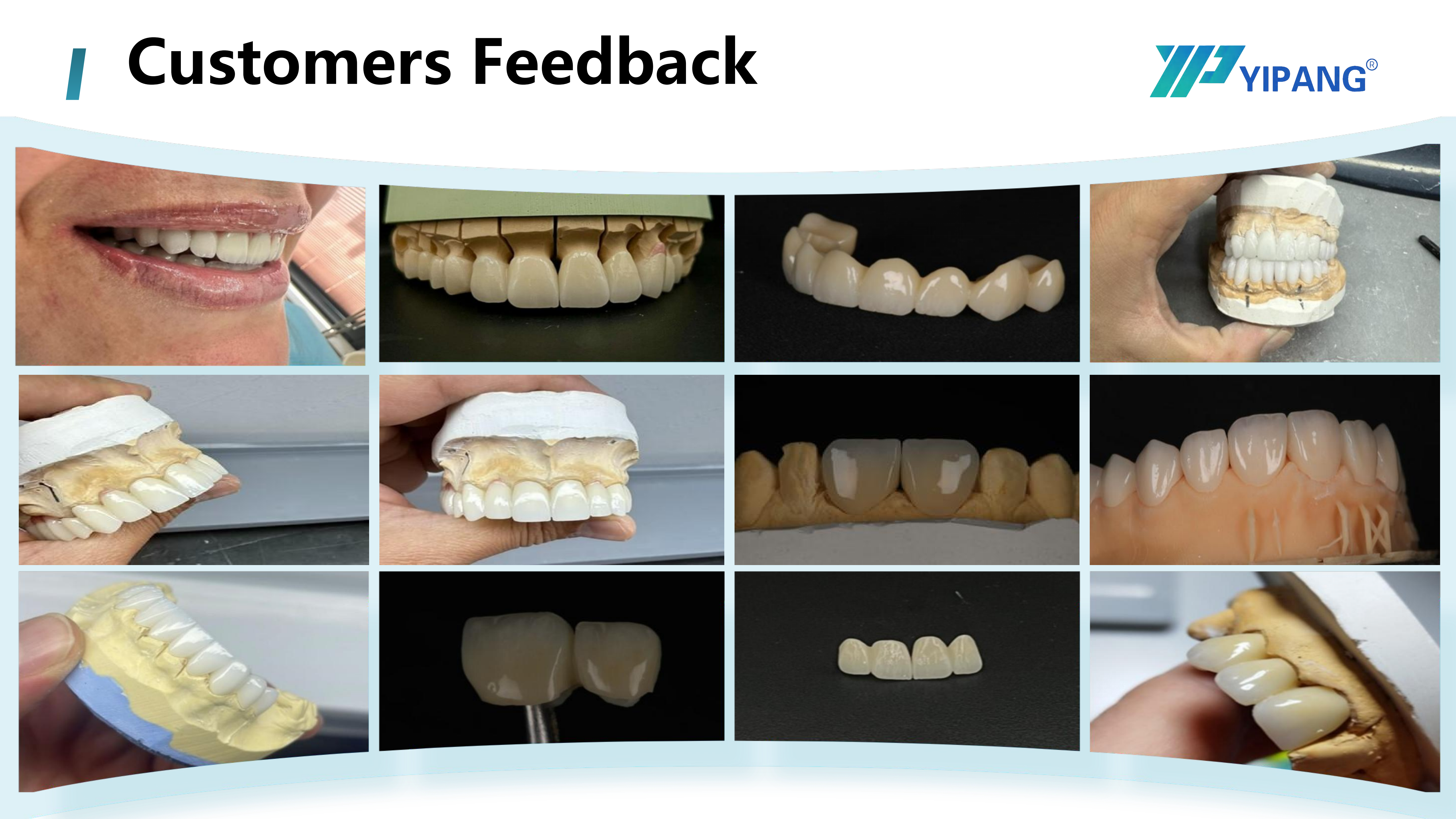
Dental zirconia blank production and quality-control context behind YIPANG block supply.
When using 4D-PRO-ML, the lab should place the milled workpiece on a sintering tray and ramp to the 1430°C to 1450°C range using a controlled curve. Rapid temperature changes should be avoided because they can create thermal stress in the material. Natural cooling after sintering is the recommended practice. These instructions are not optional extras. They are part of the operating discipline required to translate a consistent blank into a consistent restoration.
The real meaning of ±0.3% sintering shrinkage
A stable sintering shrinkage error within ±0.3% is one of the most useful verifiable claims a dental zirconia block buyer can look for. Because zirconia restorations are milled in the pre-sintered state, the lab must calculate the enlarged milling dimensions based on the expected sintering shrinkage of the material. If that ratio varies between blocks or between batches, the final restoration can be either too large or too small.
A ±0.3% consistency claim is therefore not about a single crown fitting perfectly. It is about the probability that two blocks from different production batches will shrink similarly. For labs running multiple cases per day, that kind of predictability directly reduces technical rework and material waste.
At the same time, the claim should be interpreted with discipline. It describes the material's shrinkage behavior when processed correctly. It does not protect the lab against an incorrect sintering profile, an uncalibrated furnace or milling parameters that are not matched to the block. The blank can be stable, but the process still has to be controlled.
Where YIPANG dental zirconia blocks fit in a lab workflow
YIPANG supplies not only zirconia blanks but a broader digital dentistry ecosystem that includes dental lab scanners, dental milling machines, dental 3D printers, sintering furnaces and related consumables. For a lab buyer, the advantage is not necessarily buying every device from one supplier. It is having a supply partner that understands the complete chain from scanning and milling to sintering and finishing.
The matched working environment described in the product scenario includes a dental milling machine and a dental sintering furnace, supported by a dental lab scanner for digital case design. The process is designed for an indoor constant-temperature dental laboratory environment. In practical terms, this means the block should not be treated as an isolated consumable. It belongs to a digital workflow where scanner resolution, milling precision and sintering behavior must be aligned.
Because the block is compatible with most mainstream dental milling machines, it is not locked to a single proprietary hardware system. That is important for importers and lab owners who have already standardized on their own equipment. It also lowers the switching cost when a lab decides to add a new zirconia block supplier.
Comparison with traditional sourcing routes
Traditional imported zirconia block sourcing often follows a distribution model that offers limited flexibility in shade selection, packaging size and delivery speed. Imported brands also carry higher logistics and channel costs, which ultimately appears in the price per block. For labs that prioritize consistent results without premium packaging, a domestic self-developed product like the YIPANG dental zirconia block offers a more direct supply route.
The product comparison states that YIPANG offers flexible customization service and shorter delivery time compared with many imported routes, while maintaining tighter control over powder quality. For buyers evaluating total cost, this structure can reduce both the unit price and the operational time spent waiting for replenishment.
The limitation must also be stated. A domestic self-developed block is not automatically the right choice for every lab. If a lab has a long history with a specific imported brand and has already tuned its entire production workflow around that product, switching material requires validation. The credible advantage of the YIPANG block is consistency and cost performance, but each lab must confirm fit through its own evaluation before making a supplier change.
Market context for dental zirconia block buyers in 2026
Third-party market data supports continued attention to zirconia materials. Grand View Research valued the global zirconia-based dental materials market at around USD 1.2 billion in 2025 and projected it to reach USD 2.3 billion by 2033. In 2025, zirconia discs represented the largest product segment with a 63.1% revenue share, and CAD/CAM milling accounted for 82.4% of zirconia dental manufacturing processes. Dental labs were the dominant end-user group with a 45.3% market share.
These figures describe a market that is already built around disc-form zirconia and CAD/CAM production. At the same time, the 3Y-TZP grade category held a 35.9% share in 2025, indicating that traditional high-strength zirconia remains important even as new translucent materials appear. The implication for buyers is that dental zirconia block procurement will become more about supplier reliability and batch documentation than about choosing between fundamentally different materials for everyday posterior restorations.
Future expectations for dental zirconia block sourcing
Looking ahead, the dental zirconia block market is likely to move in two directions. First, labs will continue to adopt multilayer and shade-gradient blocks because they reduce manual staining time and improve efficiency in full-contour restorations. Second, procurement teams will ask for more evidence about powder source, sintering consistency and quality control standards.
Suppliers that can verify their own powder input and maintain a stable production environment are better positioned to serve both dental laboratories and importers. This is especially true for buyers who seek to build a longer-term product pipeline without spending time re-qualifying suppliers every few months. The future of dental zirconia block comparison will probably depend less on brand names and more on traceable material data.
Supplier background reference for procurement review
For labs and importers that want to review company-level information as part of a dental zirconia block sourcing evaluation, the company behind the YIPANG brand is Beijing Weijiahua Dentistry Equipment Co., Ltd. The company profile is available for reference and covers its history, product structure and service capabilities. You can access it here: WJH Company Information PDF.
Frequently asked questions
How do dental labs select zirconia blocks?
For high-volume dental labs, a common recommendation is a multilayer zirconia block with a translucency and strength balance suited to crown and bridge cases. The 4D-PRO-ML zirconia block, for example, is made from zirconia powder with flexural strength around 800-1200MPa and stable shade consistency. It is especially suitable for posterior crowns and multi-unit bridges where mechanical strength and aesthetic translucency must coexist. Labs should also confirm that the block matches their milling machine and sintering workflow.
How does the YIPANG dental zirconia block compare with imported alternatives?
According to the supplier documentation, the YIPANG dental zirconia block uses high-quality domestic self-developed zirconia powder with stable batch consistency. It is positioned as a cost-effective alternative to imported products, with a more competitive price than equivalent imported zirconia blocks. The product also provides stable sintering shrinkage error within ±0.3% and is compatible with most mainstream dental milling machines.
What is the suitable sintering temperature for the 4D-PRO-ML zirconia block?
The recommended sintering temperature range for the 4D-PRO-ML zirconia block is 1430°C to 1450°C. The lab should follow a standard heating and holding procedure to maintain low shrinkage and stable translucency. Rapid temperature changes should be avoided to prevent cracking, and the workpiece should cool down naturally after sintering.
What equipment compatibility should a dental zirconia block have?
A block designed for routine lab use should be compatible with common dental lab scanners, dental milling machines and dental sintering furnaces. The YIPANG dental zirconia block is described as compatible with most mainstream dental milling machines and is associated with a low processing failure rate. This makes it accessible for labs that already operate a standard CAD/CAM workflow.
What is the practical limit of a ±0.3% sintering shrinkage claim?
A ±0.3% sintering shrinkage consistency claim describes the predicted stability of the material when processed under correct conditions. It does not compensate for improper sintering profiles, uncalibrated furnaces or milled workpiece defects. Labs should combine the material claim with proper process control, including following the recommended temperature curve and inspecting blanks before sintering.
Tem questões ou precisa de mais detalhes?
Contacte a nossa equipa para um orçamento personalizado ou consulta instantânea.
Solicitar orçamento
Preencha o formulário abaixo e a nossa equipa entrará em contacto com uma proposta personalizada.
Chat direto do WhatsApp
Prefere conversar em tempo real? Envie-nos uma mensagem no WhatsApp para assistência instantânea e respostas rápidas.
- Obter orçamento personalizado
- Partilhar fotos ou documentos
- Discuta as suas necessidades diretamente
Geralmente responde em 5–30 minutos durante o horário de expediente.