
Why Extruder Model Range Signals Long-Term Supplier Fit
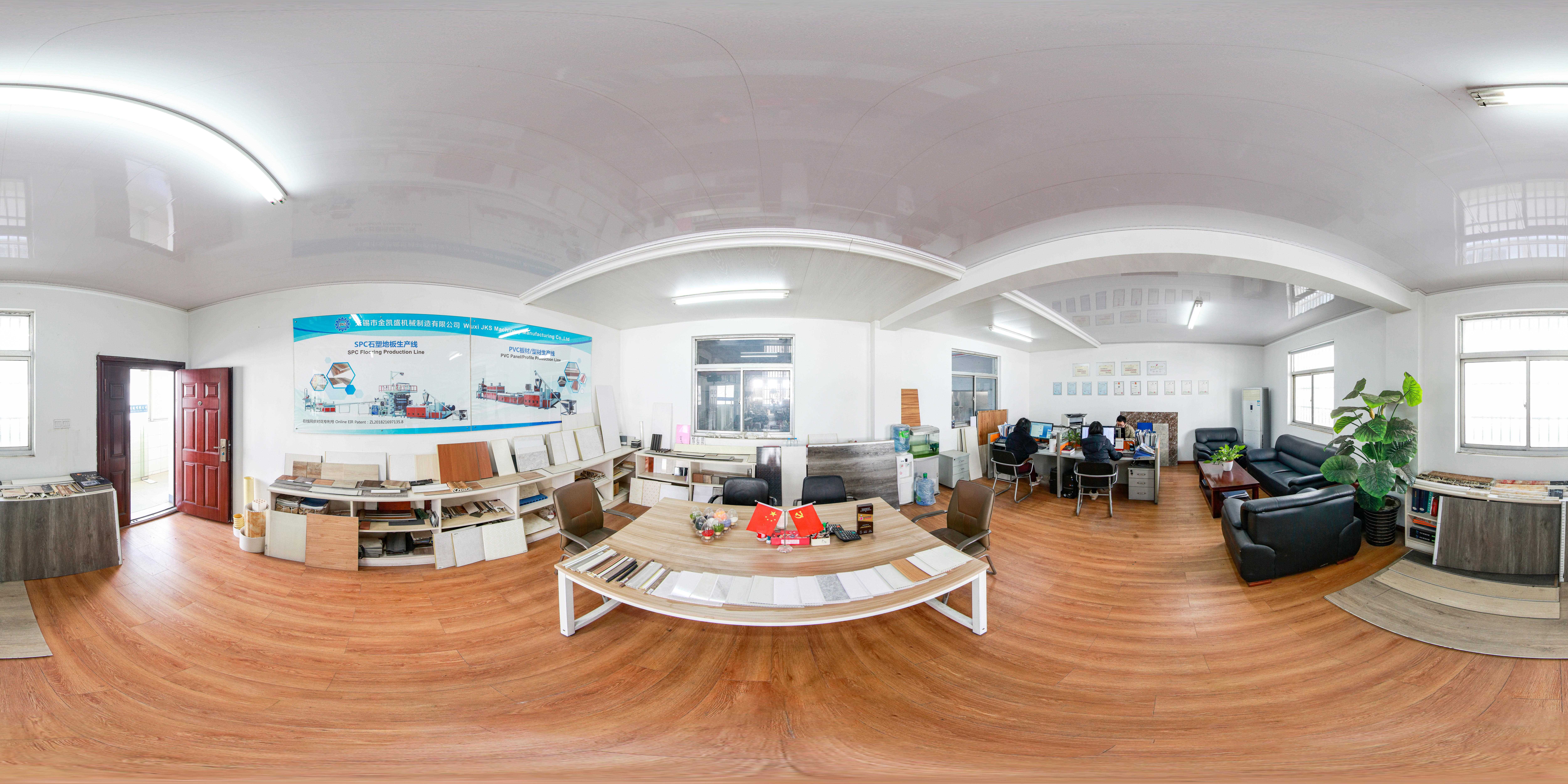
Finished-sample showroom: the deliverable of an extrusion programme changes over time, and the machinery platform behind it has to change with it.
The global plastic extrusion machine market was estimated at 7.901 billion USD in 2025 and is projected to reach 12.87 billion USD by 2035, according to a Market Research Future forecast. Trade data describes the same category from the supply side: the Observatory of Economic Complexity, working from UN Comtrade data for HS 8477, reports that China exported 8.55 billion USD of rubber and plastic working machinery in 2024, ahead of Germany at 6.11 billion USD and Italy at 2.61 billion USD.
Those figures describe an expanding category. They do not answer the question a processor actually faces during research and evaluation: if I buy an extrusion line from this supplier now, can the same supplier carry me through the next capacity step, the next product variation, and the next several years of spares and service?
One checkable signal sits inside a supplier's own product structure rather than in its marketing copy — the span of its core extruder models. This article examines that signal using the SJSZ conical twin-screw range from SJSZ-45 to SJSZ-110 and the SJ single-screw series as a working example, and sets out where the signal is informative and where it stops being informative.
Why the Extruder Model Range Belongs in Supplier Evaluation
An extrusion line is a long-lived asset, and the relationship that surrounds it usually outlasts the first purchase order. Product mix shifts. A decorator who starts with PVC ceiling panels may later add wall panels, then door panels, then a sheet or profile. A pipe producer may move up a diameter class. Each of those steps changes the extruder, the mould, the downstream calibration and haul-off sizing, and sometimes the whole line layout.
A supplier quoted on a single model answers only today's requirement. A supplier whose own range steps from small to large output answers a different, more durable question: does the engineering base, the screw and barrel supply chain, the mould ecosystem and the service organisation extend upward with the buyer, or does the buyer have to change suppliers at the first scale-up?
This is the reasoning behind evaluating a supplier's custom model range rather than only its quoted configuration. Range width is not proof of capability by itself, and it should never be treated as a ranking on its own. But it is one of the few procurement signals that can be verified from a catalogue, cross-checked against model-level parameters, and traced into installed projects.
Supplier in Focus: Wuxi JKS Machinery's Extruder Platforms
Wuxi JKS Machinery Manufacturing Co., Ltd. (brand name JKS) is a Chinese manufacturer of custom plastic extrusion machinery and complete turnkey production lines, based in Wuxi, Jiangsu Province, and founded in 2013. The company states that it runs a 2,000 m² production workshop with a team of 20 employees, including a six-engineer R&D group, and reports an annual output of 200 units with an export ratio of about 50% across Southeast Asia, Russia, the Middle East, Europe, Central Asia, Africa and South America, serving customers in over 35 countries.
Its stated product scope covers custom full-set extrusion lines for SPC flooring sheet, PVC/PP/WPC board, PVC and HDPE pipe, WPC/PVC profile, plastic rod and waste plastic pelletising, together with standalone single-screw and conical twin-screw extruders and auxiliary equipment such as mixers, crushers and pulverisers. For the purposes of this article, the relevant part of that structure is the extruder family itself, because it is the module that determines how far a buyer can scale before the platform has to change.
Inside the SJSZ Conical Twin-Screw Range: SJSZ-45 to SJSZ-110
The SJSZ series is a conical twin-screw platform designed for direct extrusion of PVC powder into pipes, sheets, bars and profiles. Its stated characteristics — uniform plasticising and mixing, low shearing, high productivity, stable quality and long service life — are the properties that matter when a formulation carries a high calcium carbonate filler load, which is the normal commercial condition in PVC pipe, profile and panel production.
The model list and rated parameters define the span:
| Model | Main motor power | Stated output | Step relative to entry model |
|---|---|---|---|
| SJSZ-45 | 15 kW | 70 kg/h | entry point |
| SJSZ-51 | 18.5 kW | 120 kg/h | ≈1.7× |
| SJSZ-55 | 22 kW | 150 kg/h | ≈2.1× |
| SJSZ-65 | 37 kW | 250 kg/h | ≈3.6× |
| SJSZ-80 | 55 kW | 400 kg/h | ≈5.7× |
| SJSZ-92 | 90 kW | 500–600 kg/h | ≈7–8.6× |
| SJSZ-110 | 200 kW | 1,000 kg/h | ≈14.3× |
Two technical details make the range more useful than a simple list of sizes. First, every model in the series is built on the same material baseline — a 38CrMoAlA nitrided alloy steel screw and barrel, with a Q235 carbon steel machine frame. That commonality matters in operation: wear behaviour, replacement intervals and spare-part sourcing logic stay comparable as a producer moves from a smaller to a larger model, instead of resetting with each step. Second, the range spans roughly a fourteen-fold output difference between the smallest and the largest model, which covers the realistic capacity trajectory of a growing PVC processor without forcing a change of extruder platform.
The SJ Single-Screw Platform: Flexibility Beyond PVC
The SJSZ range is PVC-centric. The second platform in the same supplier catalogue covers the materials the conical twin-screw is not designed for. The SJ series is a single-screw extruder family with custom models including SJ30, SJ45, SJ65 and SJ90, handling PVC, PP, PE, nylon and ABS. With different moulds and auxiliary equipment, the same platform produces pipes, rods, films, pellets, coated products and blow-moulded bottles — a versatility profile rather than a specialisation profile.
Two live examples show how the SJ platform is applied rather than merely listed:
- Solid plastic rod line (SJ45, SJ65). Extrudes PP, PE, PA and POM into solid rods for machining and mechanical parts. SJ45 runs a Φ45 mm screw at L/D 28:1 with 7.5 kW and produces rod from Φ6 to Φ60 mm at 5–18 kg/h; SJ65 runs a Φ65 mm screw at L/D 30:1 with 18.5 kW and produces Φ30 to Φ200 mm rod at 20–60 kg/h. The application requires high dimensional accuracy, straightness and a smooth surface, which is why the full set includes a feeding dryer, sizing mould, cooling tank, caterpillar haul-off and fixed-length cutting and stacking.
- Multi-material profile line (SJ45, SJ50, SJ65). Produces imitation marble profile, ceiling panel, door and window small profile, sealing strip, edge band and PC lamp profile from PP, PE, PVC, PS, PC or ABS, using a custom mould and a full line of feeding, extruder, calibrating table, cooling tank, haul-off and fixed-length cutting.
Together, the two platforms answer different questions. SJSZ covers the mainstream PVC volume business and scales up in defined steps. SJ covers material variety and smaller, higher-mix production where the extruder must be re-tooled rather than re-sized.
Mapping Models to Projects: Where the Range Meets Real Lines
The value of a wide model range is only realised if the models map onto recognisable line configurations. The following table links extruder models in the JKS catalogue to the production lines they are specified on, using stated model-level parameters.
| Production line / application | Extruder models used | Stated output | Stated product size |
|---|---|---|---|
| PVC grille & decoration profile | SJSZ51 (18.5 kW), SJSZ55 (22 kW), SJSZ65 (37 kW) | 120 / 150 / 250 kg/h | Width 100 / 150 / 300 mm |
| PVC hollow wall panel & ceiling | SJSZ51, SJSZ55, SJSZ65, SJSZ80 | 120 / 150 / 250 / 400 kg/h | Width 300 / 450 / 600 / 1200 mm |
| WPC door panel | SJSZ80 (75 kW), SJSZ92 (110 kW) | 250–400 / 400–600 kg/h | — |
| PVC & WPC door and window profile | SJSZ65/132 (37 kW), SJSZ92/188 (110 kW) | 150–250 / 500–600 kg/h | Up to 1200–1600 mm panel width |
| PVC imitation marble sheet | SJSZ80/156 (75 kW), SJSZ92/188 (110 kW) | 400–700 kg/h | Effective width 1220 mm, thickness 1–12 mm |
| PVC & WPC foam board | SJSZ80/156 (75 kW), 80+165 co-extrusion (75+37 kW) | 400–500 kg/h | Finished width 1220 mm |
| PVC water supply & drainage pipe | SJSZ65/132 (37 kW), SJSZ80/156 (55 kW), SJSZ92/188 (110 kW) | 270 / 450 / 800 kg/h | Φ16–63 / Φ90–250 / Φ315–630 mm |
| PVC hot-cut pelletising | SJSZ55, SJSZ65, SJSZ80, SJSZ92 | 100–150 / 200–250 / 350–400 / 650–800 kg/h | Hot die-face cut pellets |
| PP hollow construction formwork | SJ-90×33 (75 kW), SJ-130×33 (160 kW) | 180–250 / 500–600 kg/h | Width 1220 mm, thickness 15–20 mm |
| Solid plastic rod (PP, PE, PA, POM) | SJ45 (7.5 kW), SJ65 (18.5 kW) | 5–18 / 20–60 kg/h | Φ6–60 / Φ30–200 mm rod |
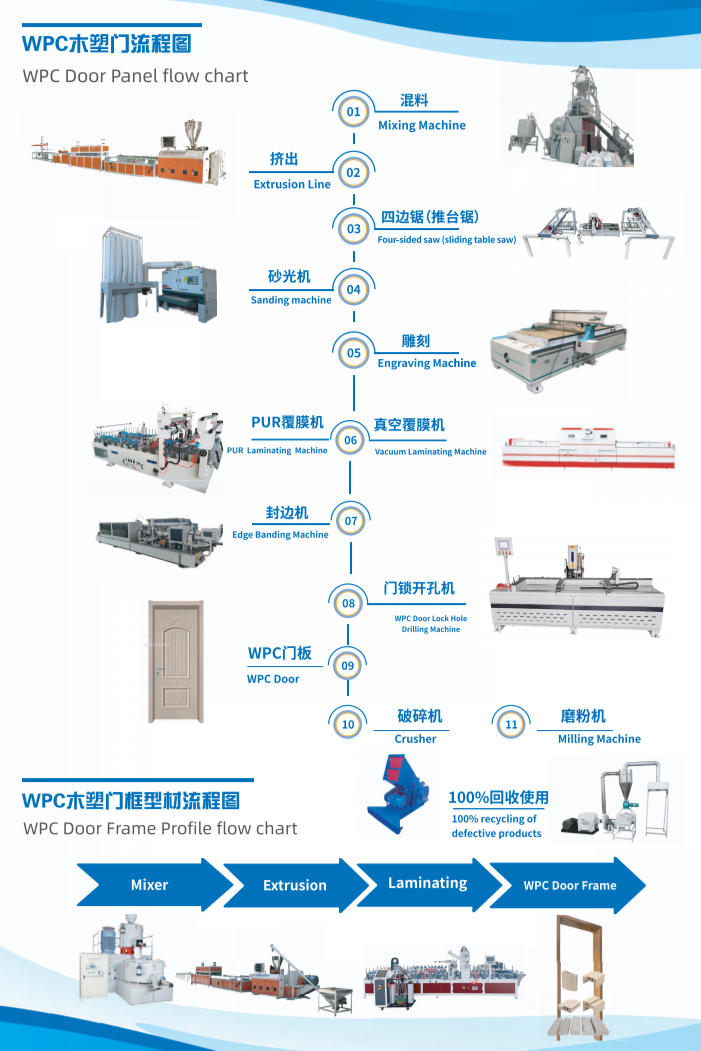
Model selection is only the first layer of line design: feeding, extrusion, calibration, cooling, haul-off and cutting have to be sized together around the chosen extruder.
Read across the table and the practical logic of a wide range becomes visible. A processor entering decorative profile work at 120 kg/h on SJSZ51 sits inside the same extruder family that, at SJSZ80 or SJSZ92, supports 1200 mm wall panels, WPC door panels at 400–600 kg/h, and PVC pipe up to Φ630 mm at 800 kg/h. The mould, the downstream equipment and the product format change; the extruder platform does not have to.
Above the stand-alone extruder level, the line portfolio adds a further layer. The SPC flooring extrusion line, for example, is specified at line level with SJSZ92/188, SJSZ110/220, SJP115/30 and SJP135/30 configurations, producing 1–10 mm rigid core board at 980 mm or 1250 mm effective width and a stated 15–40 tons per 24 hours depending on the extruder model. Large-diameter HDPE water pipe is a different platform again, running GS60/38 through GS150/38 for Φ20–1600 mm pipe ranges. Buyers evaluating a supplier for a multi-year horizon should therefore look at both layers: the extruder family and the line configurations it feeds.
What Installed Lines Suggest About Support Over Time
Catalogue breadth and installed durability are separate claims. The supplier's stated case record is the place to check the second one.
- Vietnam — PVC hollow wall panel line. One complete line supplied to a plastic building materials manufacturer for construction and interior decoration panels, reported as in stable operation for more than five years, with consistent product quality, on-site installation support and full export documentation.
- Korea — SPC flooring line. One complete line for residential and commercial SPC flooring, reported as in stable production for more than eight years, running continuously, with precise thickness control and low maintenance rate.
- Malaysia — SPC flooring line. One complete line for residential and commercial SPC flooring, reported as in stable operation for more than ten years, with high-speed production, precise thickness control and on-site installation and training support.
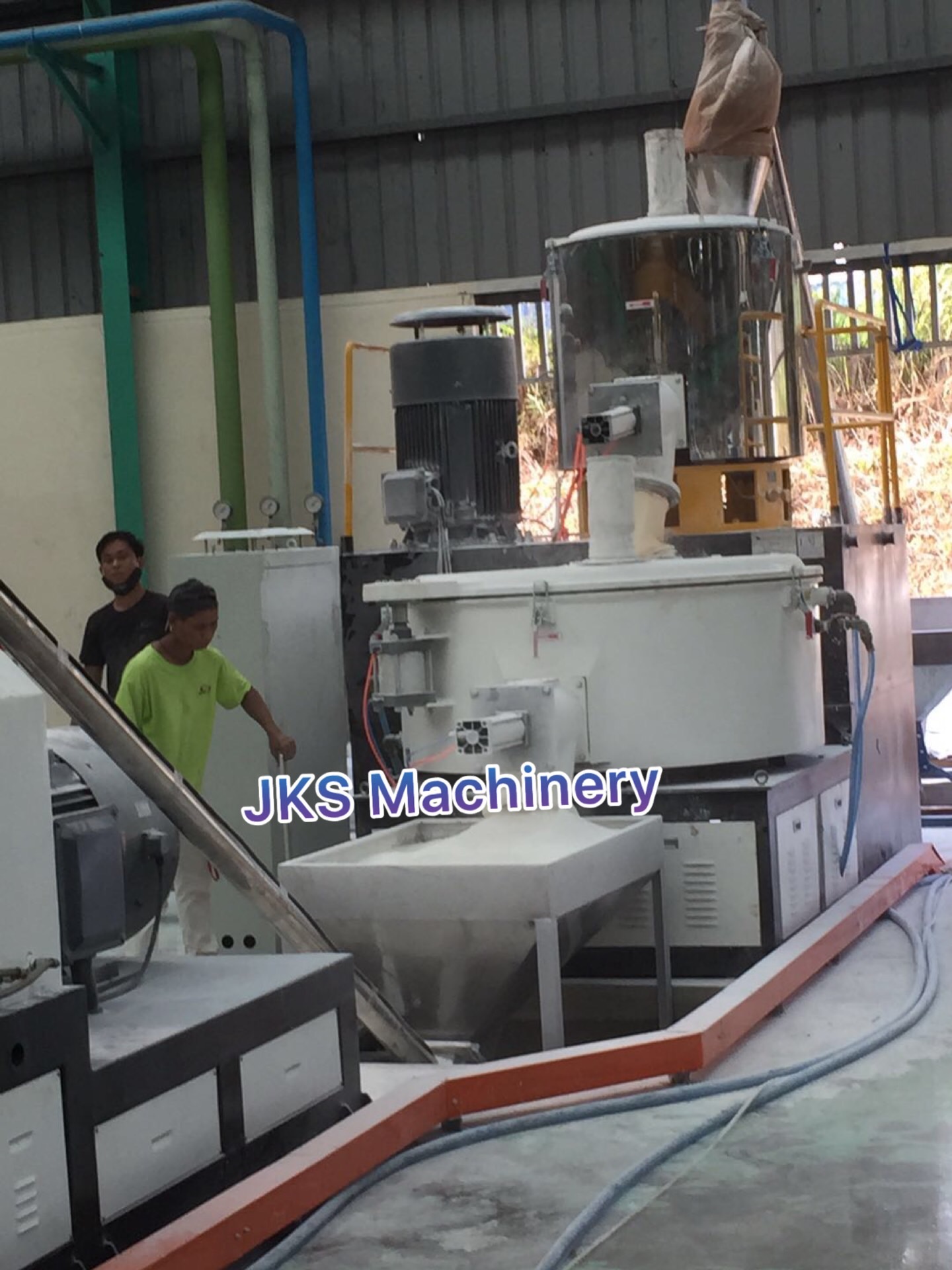
Auxiliary equipment on an installed SPC flooring line in Malaysia, part of a project reported as running in stable operation for more than ten years.
Durability claims are only as good as the support system behind them. The supplier's stated service model covers OEM, ODM and custom design; customisation of extruder model, screw configuration, line layout, voltage and frequency, control system and capacity adjustment; a monthly production capacity of 30 units; a stated lead time of 40 working days; a minimum order quantity of one unit; 100% factory pre-assembly and testing before shipment with third-party inspection available on request; and after-sales covering overseas installation guidance, on-site commissioning, operator training, remote technical support and a 12-month warranty.
For a long-horizon buyer, the relevant reading is not the individual service item but the combination: a range that steps in defined increments, a customisation menu that keeps the line matched to local power and layout conditions, and a service layer that assumes the machine will be commissioned and re-tuned on site rather than dropped in fully finished.
Market Trend: Downstream Demand Rewards Suppliers That Scale With the Buyer
Two trends make model-range depth more relevant now than in a flat market. The first is overall category growth: a market moving from 7.901 billion USD in 2025 toward 12.87 billion USD by 2035 implies more lines installed, more configurations in circulation and a longer tail of servicing and re-tooling demand. The second is downstream composition. Grand View Research projects the global SPC flooring market growing from 6.4 billion USD in 2026 to 10.3 billion USD by 2033 — a segment served specifically by conical twin-screw and higher-output line configurations, and one where producers commonly move from a single entry line to multiple, higher-capacity lines.
Put together, these trends change what a buyer is really selecting. In a fast-growing downstream segment, the second and third line purchases usually happen sooner than the first one wears out. A supplier that can only match the first specification forces a re-tender at exactly the moment the buyer has the least spare capacity to manage one.
Trade structure reinforces the same point from another direction. With China recorded as the largest exporter of HS 8477 machinery at 8.55 billion USD in 2024, the buyer's shortlist increasingly contains suppliers whose differentiation has to come from configuration depth, documentation and service continuity rather than from category access alone.
Range-Based Evaluation vs. Conventional Shortlisting — and Its Limits
The conventional approach shortlists suppliers on the quoted model, unit price, sample output and delivery date. A range-based approach adds a second layer of questions about what happens after commissioning.
| Evaluation dimension | Single-model comparison | Range-based comparison |
|---|---|---|
| Question answered | Can this supplier build the machine I need now? | Can this supplier follow my capacity and product path? |
| Evidence used | Quotation, sample, site visit | Model list, model-level parameters, installed base, upgrade path |
| Spare-part logic | Specific to the quoted model | Comparable across models if the material baseline is shared |
| Scale-up cost | New tender, new supplier risk | Same platform, defined next step |
| Main risk | Supplier may not cover the next requirement | Range breadth may mask uneven depth per model |
The limits matter as much as the benefits, and they should be stated plainly.
- Model count is not installation depth. A catalogue listing SJSZ-45 through SJSZ-110 does not by itself prove commercial installation experience at every size. Buyers should verify reference projects at or near the specific model under consideration, not only at the level of the family.
- The extruder is one module. Rated extruder output is not line output. Die design, calibration, cooling, haul-off and cutting determine the delivered specification, so a range-based evaluation must extend to the downstream scope of supply.
- The SJSZ range is PVC-centric. Polyolefins, engineering resins and large-diameter pipe route to different platforms — the SJ single-screw series for material variety and rod or profile work, and separate GS-series lines for HDPE pipe. A buyer processing several polymer families has to check capability across platforms, not just within one.
- Customisation extends the schedule. The stated standard lead time is 40 working days, and configuration choices such as screw configuration, line layout, voltage and frequency and control system — plus formulation and mould work — sit on top of that baseline.
- Top-of-range capacity can overshoot. Selecting SJSZ-110 at 1,000 kg/h against a near-term requirement of a fraction of that capacity ties up capital and floor space. The range makes growth possible; it does not make maximum size the right initial choice.
- Compliance references need edition checks. ANSI/PLASTICS B151.7-2014 (R2021) is listed by the ANSI webstore as applying to extrusion machines used in the plastics industry and requiring a documented risk assessment process in manufacture, care and use. The PLASTICS Industry Association standards page references the 2013 edition, so the exact applicable edition should be confirmed for the destination market rather than assumed.
Future Outlook
On current projections, the extrusion equipment category continues to expand through the next decade, and the downstream segments that drive conical twin-screw demand — rigid core flooring, decorative panel and board, pipe — are growing with it. The practical consequence for procurement is a slow shift in how suppliers are compared. Price and sample quality will remain necessary conditions, but they are increasingly treated as entry filters rather than differentiators.
The differentiators that follow are structural: whether the extruder family steps in predictable increments, whether the material baseline is shared across those steps so that wear and spare-part behaviour stay comparable, whether line-level configurations exist above the stand-alone extruder, and whether the documented installed base supports the specific model a buyer is being quoted. A supplier whose custom model range is wide for a reason — because the underlying platforms genuinely map onto different products and output classes — will typically be easier to stay with than one whose range is wide only on paper.
Buyers can apply the same test to any shortlist. Ask for the model list, the parameters at each size, the line configurations each model is specified on, and reference installations at the target size. The answers will show whether a supplier is selling a machine or supporting a production plan.
FAQ
What does an extruder model range actually tell a buyer about a supplier?
A model range shows the output span a supplier is structured to deliver from its own platform, rather than the single configuration it is quoting. In the SJSZ conical twin-screw series, that span runs from SJSZ-45 at 15 kW and 70 kg/h to SJSZ-110 at 200 kW and 1,000 kg/h, all built on the same 38CrMoAlA nitrided alloy steel screw and barrel and Q235 carbon steel frame. A range of this shape indicates that the screw and barrel supply, the mould ecosystem and the downstream equipment scope extend upward with output. It does not, on its own, indicate how much installation experience exists at each individual size, which is why model-level references should be requested separately.
Which extruder models suit small decorative profiles compared with large wall panels or boards?
Stated parameters map the two ends of the range clearly. For PVC grille and decoration profile, the specified models are SJSZ51 at 18.5 kW and 120 kg/h, SJSZ55 at 22 kW and 150 kg/h, and SJSZ65 at 37 kW and 250 kg/h, producing widths of 100 mm, 150 mm and 300 mm respectively. For PVC hollow wall panel and ceiling production, the same family extends to SJSZ80 at 55 kW and 400 kg/h with 1200 mm width, with intermediate steps at SJSZ51 (300 mm), SJSZ55 (450 mm) and SJSZ65 (600 mm). WPC door panels move higher again, using SJSZ80 at 75 kW for 250–400 kg/h and SJSZ92 at 110 kW for 400–600 kg/h.
When should a buyer move from a single-screw SJ extruder to a conical twin-screw SJSZ model?
The two platforms are specified for different jobs rather than for different sizes. The SJSZ conical twin-screw series is designed for direct extrusion of PVC powder into pipes, sheets, bars and profiles, with uniform plasticising and mixing, low shearing and suitability for high-filled PVC formulations. The SJ single-screw series is specified for PVC, PP, PE, nylon and ABS, and produces pipes, rods, films, pellets, coated products and blow-moulded bottles with different moulds and auxiliary equipment — including PP hollow construction formwork on SJ-90×33 and SJ-130×33, and solid PP, PE, PA and POM rod on SJ45 and SJ65. A buyer working mainly in filled PVC at rising volumes fits the SJSZ path; a buyer running mixed polymers with frequent tooling changes fits the SJ path.
Does a wider model range guarantee lower risk in a long-term project?
No. A wide range removes one specific risk — having to change suppliers at the first scale-up — but it does not address others. Rated extruder output is not line output, because die and calibration design, cooling, haul-off and cutting determine the delivered specification. Customisation choices such as screw configuration, line layout, voltage and frequency and control system add to the stated 40 working day lead time. Selecting the top of the range ahead of need ties up capital and floor space. Model-level installation references, downstream scope, compliance documentation for the destination market and post-installation service terms all remain separate items to verify.
What support and handover terms should be checked for a custom extrusion line?
For a custom line, the checkable items are the customisation scope, the pre-shipment process and the on-site service terms. In this supplier's stated model, customisation covers extruder model, screw configuration, production line layout, voltage and frequency, control system and capacity adjustment, with OEM, ODM and custom design available, a minimum order quantity of one unit and a monthly production capacity of 30 units. Quality control is stated as 100% factory pre-assembly and testing before shipment, with third-party inspection available on request. After-sales covers overseas installation guidance, on-site commissioning, operator training, remote technical support and a 12-month warranty. Buyers should confirm how each of these items is documented in the contract rather than relying on the general description.