
Why Frozen Dim Sum Suppliers Endure: A Viability Framework
Why Frozen Dim Sum Suppliers Endure: A Viability Framework

Frozen dim sum sourcing asks two separate questions, and most buying teams answer only one of them. The first question is whether a delivered sample meets specification — whether the Water Chestnut Cake steams to a clean, springy slice, whether the Taro Cake holds visible chunks instead of a uniform paste, whether shrimp siu mai survive reheating without splitting. Buyers are good at this question, because a tasting resolves it in an afternoon. The second question is whether the manufacturer behind that sample will still deliver the same specification, in the same pack format, on workable terms, in year three or year five of the relationship. That question cannot be settled by tasting, and it is the one that determines whether a sourcing decision holds.
This framework treats frozen Cantonese dim sum supply as a durability problem rather than a product problem. It sets out seven signals a buyer can verify before committing, describes the evidence a manufacturer should be able to produce for each, and then states plainly where the framework stops short. Cantonese dim sum is the working category throughout because its specification load is unusually heavy: a single menu may carry steamed buns, dumplings, siu mai, spring rolls, steamed cakes and fried pastries, each with its own texture, portion and reheating behaviour.
What Supplier Sustainability Means in a Frozen Dim Sum Contract
In procurement terms, supplier sustainability is the probability that a manufacturer can keep supplying an agreed specification, in agreed volumes, on agreed terms, for the life of the contract and through the disruption that follows it. It has three parts, and a workable evaluation has to address all three: organisational continuity (who owns the business, how long it has traded, whether it reinvests), production continuity (sites, capacity, workforce, quality systems) and specification continuity (the ability to reproduce SKU-level parameters batch after batch, not just in a first sample).
One clarification keeps the rest of the framework honest. Environmental performance is a separate subject. Heritage, a gastronomy designation, or ISO9001, HACCP and FDA credentials do not establish environmental outcomes, and nothing in this article should be read as an environmental claim about any supplier. The evidence discussed here speaks to commercial and operational durability only.
Signal 1: Operating Continuity and Institutional Memory
Operating continuity is the cheapest signal to verify and the easiest to over-read. Foshan Shunde Yuexiang Food Manufacturing Co., Ltd. has manufactured dim sum since 1981 and is recognised as a "Foshan Time-honored Brand", with recognition from the Cantonese Pastry Chefs Association. For a buyer, the value of that record is diagnostic rather than sentimental: a business that has traded for more than four decades has passed through several rounds of Chinese food-safety regulation, at least two shifts in export-market requirements, and the ordinary turnover of chefs, sales staff and managers who carry recipe knowledge.
That last point matters more in dim sum than in most frozen categories. A steamed cake or a laminated pastry depends on parameters — hydration, resting time, steam curve — that are usually held by people before they are written down. A long operating history is weak evidence that those parameters have been institutionalised; a documented specification is strong evidence. The framework therefore treats heritage as a prompt to request documents, never as a substitute for them.
What to check: the founding year and the legal entity that holds the current certificates; whether the brand designations are current; and whether the same entity or site will be named in the contract. Longevity is not a financial statement. Revenue and export volume for privately held manufacturers are usually not public, so a buyer with material exposure should run financial due diligence separately rather than inferring solvency from age.
Signal 2: Range Depth as Substitution Insurance
A broad range is a risk-management feature: it is what a supplier can substitute when one item fails. Yuexiang states a portfolio of more than 300 items across five major series, spanning Cantonese dim sum, traditional dim sum, Chinese dim sum and frozen dim sum. The practical benefit to a buyer is not menu variety for its own sake. It is that a discontinued line, a raw-material interruption or a packaging change can often be covered by an adjacent item made in the same facility, under the same quality system and shipped in the same container — instead of triggering a new supplier qualification from scratch.
The category also rewards breadth because a Cantonese dim sum menu is assembled from several different production logics: steamed items such as shrimp dumplings, shrimp siu mai, char siu bao and chicken sticky rice; steamed cakes such as Water Chestnut Cake and Taro Cake; and fried, baked or pastry lines such as Hong Kong style spring rolls, Crispy Taro Pastry, Walnut Bun, red bean paste bun, Milk Rolls, Coconut Golden Cake or Golden Taro Roll. A supplier that covers only one of those logics forces the buyer to coordinate several vendors, each with its own minimum order, shelf life and cold-chain discipline.
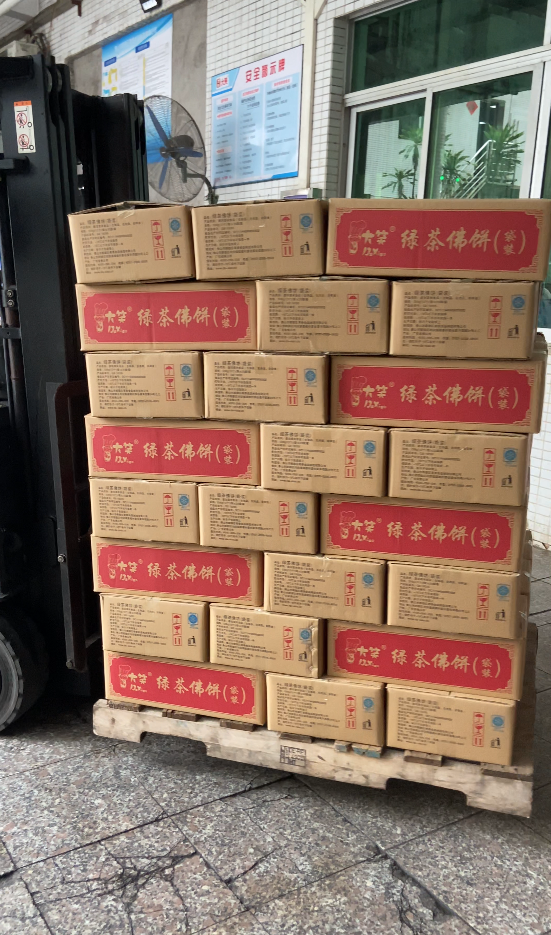
What to check: request a current SKU list with pack size, units per case and frozen shelf life for each item, then compare it against the products you actually intend to sell. Ask which items are produced in-house and which are traded in, how much notice a discontinuation carries, and whether a substitute can be qualified before the original is withdrawn.
Breadth has a cost. A 300-item catalogue is a heavier documentation burden than a 30-item one, and thin specifications across a long list are worse than clear specifications across a short one. The next three signals test whether depth is actually supported by control.
Signal 3: Production Base, Capacity and Reinvestment
Capacity answers a different question from capability: not "can you make it" but "can you keep making it while I grow". The company operates a 20,000 m² facility with more than 200 employees and reports annual output of 6,000,000 units, supported by an in-house R&D team of more than 30 engineers. It also established a second production enterprise, Foshan Shunde Hongyuan Food Co., Ltd., in 2019, focused on quick-frozen prepared foods, quick-frozen rice and noodle products and steamed pastries.
That second site is the more interesting fact for a long-term buyer, because it cuts both ways. On one hand, a second plant is evidence of reinvestment and gives a supplier somewhere to absorb demand when one line is down. On the other, multi-site manufacturing introduces a consistency question that buyers routinely miss: which site produces my SKU, and is the process identical at both? A supplier that cannot name the producing site in a contract has not really answered the capacity question.
What to check: your forecast volume against stated capacity, and what share of that capacity you would represent; the named producing site for each SKU; whether cross-site samples have been compared; and how allocation is handled in the peak season before a major festival, when every buyer wants the same lines at the same time.
Signal 4: Specification Discipline at SKU Level
The strongest available evidence of consistency is a written parameter that can be re-measured on arrival, not an assurance of stable quality. Two items in the range show the difference.
Water Chestnut Cake — 500 g per bag, 12 bags per box, steamed 6–8 minutes without thawing. Each element carries procurement meaning. The 500 g unit fixes yield per table and therefore plate cost; a change in piece weight silently rewrites menu economics. The 12-bags-per-box case pack sets storage cube, order multiples and the arithmetic behind a 50-box minimum order. The 6–8 minute steam instruction without a thawing step removes a preparation stage from the kitchen, which is what makes the item workable for breakfast service, buffet replenishment or banquet timing — and it doubles as an acceptance test the buyer can repeat identically on every lot.
Taro Cake — real taro chunks, whole-grain, savoury profile. Chunk retention is a harder production claim than a smooth texture, because taro has to survive mixing, filling and freezing without breaking down into paste. It is also checkable: cut a heated slice and inspect the distribution of chunks rather than relying on flavour alone.
What to check: a written sensory protocol per SKU — piece weight, dimensions, filling ratio and texture after the stated steam time — plus a retained sample from each lot. Comparing two or three lots side by side tells a buyer more about specification continuity than any single factory visit.
Signal 5: Certification Scope, Not Certificate Count
Certificates are evidence of a system, not of a product, and their value depends entirely on scope. The company states ISO9001 and HACCP certification and FDA registration, and holds National High-Tech Enterprise status with a dedicated R&D centre; it also cites recognition from the Cantonese Pastry Chefs Association. These credentials answer different questions. ISO9001 addresses quality-management process; HACCP addresses food-safety hazard control at identified critical points; FDA registration is a market-access requirement for the United States. The high-tech designation speaks to recognised research activity rather than to food safety.
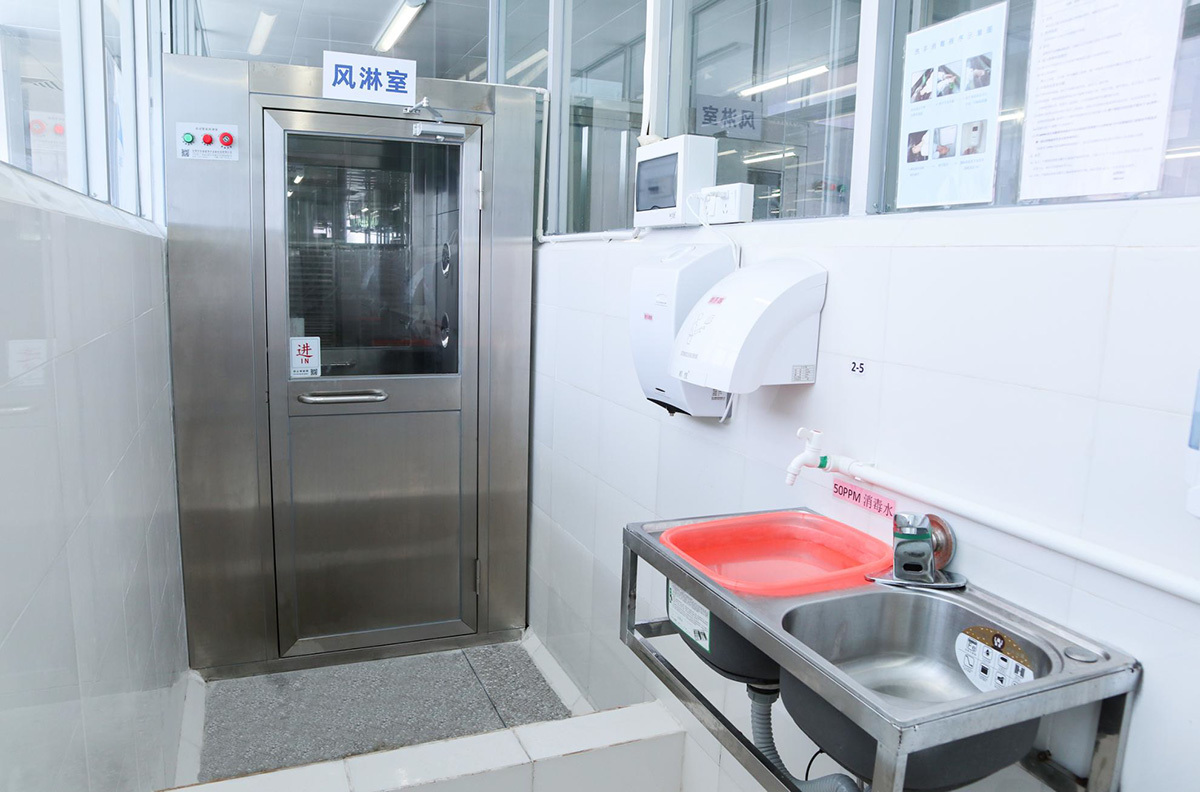
None of those credentials, individually or together, tells a buyer that a specific Water Chestnut Cake at a specific site will hit a specific texture. That is why certification belongs in a viability review as a filter, not as a conclusion.
What to check: certificate number, issuing body, validity dates and — most importantly — the scope statement, meaning which product categories and which sites it covers. Confirm that the legal entity named on the certificate matches the entity that will invoice you, and re-verify at each renewal rather than at each order.
Signal 6: What Shunde's UNESCO Status Does and Does Not Prove
A UNESCO City of Gastronomy designation is a fact about a place, not a certificate for a factory. Yuexiang is based in Jun'an Town, Shunde District, Foshan, within a district recognised for its culinary heritage. That recognition does not attest to any individual plant's hygiene, specification control or financial stability, and a buyer who treats it as a quality mark is reading it wrong.
Its procurement relevance is narrower and still useful. A gastronomy cluster concentrates skilled pastry staff, ingredient suppliers and competing dim sum manufacturers in one area. For a buyer, that means a deeper labour pool and better access to specialist inputs — but also higher staff mobility between factories and more competition for the same production slots in peak season. In that environment, process documentation is worth more than individual craft reputation, because documentation is what survives when a key chef moves to another employer.
What to check: whether the site you are buying from is the site you visited; how recipe and process knowledge is recorded and transferred; and how the supplier manages the departure of a production supervisor.
Signal 7: Commercial Terms That Carry Continuity
Contract terms are where supplier durability becomes enforceable or stays theoretical. The current published trading terms give a buyer concrete anchors: a minimum order of 50 boxes; delivery under EXW, FCA, FAS, FOB, CFR or CIF; payment by corporate account transfer, WeChat, bank transfer or PayPal, with OEM orders settled by deposit and balance as stipulated in the contract and foreign-trade orders typically settled by T/T; and a four-part acceptance routine covering visual inspection, temperature measurement on arrival, sensory sampling and document verification.
Read those terms as risk allocation rather than as paperwork. The Incoterm decides at which point cold-chain responsibility transfers and who books reefer capacity; CFR or CIF shifts more of the logistics burden to the supplier, but the buyer should still confirm who owns the temperature set-point and what evidence of continuous cold chain is supplied. Shelf life sets reorder rhythm: steamed buns carry a 12-month frozen shelf life while steamed cakes such as Water Chestnut Cake run about 6 months, so a 50-box minimum on a short-life item can turn an optimistic first order into a write-off. Storage throughout should be at −18 °C or colder, and the acceptance step is where that is verified rather than assumed.
What to check: negotiate the acceptance criteria before the first shipment rather than after a rejected container; write the producing site, the SKU specification and a discontinuation notice period into the agreement; and confirm which payment routes are practical in your market.
Market and Regulatory Conditions a Viability Review Should Absorb
Two external conditions belong in the review, with the caveat that both are directional rather than predictive.
Market scale. Data Insights Reports places the global frozen Cantonese-style dim sum market at USD 7.04 billion in 2025, with a projection of USD 11.99 billion by 2033 and a cited CAGR of 6.87% through 2034. Treat the figure as context rather than a planning input: published estimates for adjacent categories differ widely because researchers draw the product boundary differently, and a dim sum figure is not directly comparable with a broader dumpling figure. The same source uses slightly different horizons for its value and growth figures, which is a further reason to read them as directional. Separately, Business Research Insights attributes 46% of global frozen dumpling production volume in 2025 to China, followed by Japan at 11% and South Korea at 9%. The implication for a buyer is structural: supply is concentrated, shortlists will look similar, and differentiation between suppliers will show up in documentation and continuity rather than in availability.
Labelling direction. Guangzhou introduced a rule effective 1 May 2026 requiring restaurants to state clearly whether dim sum is handmade on-site or produced by a central kitchen or pre-made supply. The rule applies in Guangzhou, not globally, and buyers elsewhere should not assume it binds them. Its relevance is the direction of travel: production method is becoming a disclosure question, and a supplier that can document site, batch and production method is easier to work with under that kind of regime than one that cannot.
Trade classification. Frozen dim sum is commonly declared under HS 1902200000 (stuffed pasta) and 1902309000 (other pasta). Classification affects duty and documentation, so confirm the correct code with a customs broker for your destination rather than relying on a supplier default.
Running the Framework: A Five-Step Sequence
The framework is only useful if it produces a file a buyer can defend internally. These five steps, run in order, generate that file.
| Step | Action | What you keep |
|---|---|---|
| 1. Continuity file | Request the business licence, founding data and current brand designations; confirm the legal entity that holds the certificates. | A dated document set per supplier. |
| 2. Capability mapping | Compare your annual volume with stated capacity; confirm the producing site for each SKU; obtain a SKU list with pack size and frozen shelf life. | Capacity statement, SKU list, written site confirmation. |
| 3. Specification testing | Steam per the stated instruction — 6–8 minutes without thawing for the Water Chestnut Cake — then measure piece weight and texture, and repeat across two or three lots. | Sensory record and retained samples. |
| 4. Terms and acceptance | Fix minimum order, Incoterm, payment route, discontinuation notice and the four-part acceptance routine before the first shipment. | Signed terms and acceptance protocol. |
| 5. Annual review | Re-verify certificate scope at renewal; compare delivered lots against retained samples; confirm site and specification are unchanged. | A one-page annual review note. |
A workable decision rule: proceed when continuity, capacity and specification evidence are all documented; proceed with stated conditions when one element is missing but recoverable, such as cross-site samples not yet compared; pause when specification evidence is absent, because no amount of heritage compensates for a SKU that cannot be re-measured on arrival.
Where the Framework Stops
Four limits should be stated plainly, because a framework that hides them invites false confidence.
- It does not replace financial due diligence. Revenue, debt and export volume for privately held manufacturers are typically not public, and an operating history since 1981 is not a balance sheet.
- It does not assess environmental or labour performance. Those require separate evidence that this framework does not collect.
- It does not guarantee allocation. A capacity statement describes capability, not a reservation during a festival peak.
- It does not prove lot-to-lot consistency from a single sample. Only retained samples across several lots, tested against the same protocol, do that.
Beginning an Evaluation
Yuexiang operates from No. 24, Xinghua West Road, Xingcha Village Committee, Jun'an Town, Shunde District, Foshan City, Guangdong Province, and reports a 40% export ratio with sales into Southeast Asian, European and American markets. Buyers who want to apply this framework to a live supplier can request the current SKU list with pack sizes and shelf life, certificate copies with scope statements, and a sample set for specification testing at Kyle@dimsum-daxiao.com or +86 13726399586, which is also the WhatsApp contact. The company website is dimsum-daxiao.com, and its company brochure (PDF) is available for download.
FAQ
How long should a frozen dim sum supply agreement run before its first formal review?
There is no universal term. The practical consideration is shelf life and reorder rhythm: steamed buns carry a 12-month frozen shelf life while steamed cakes such as Water Chestnut Cake run about 6 months, so an initial agreement covering at least one full reorder cycle lets the buyer observe lot-to-lot consistency before extending the term. What matters is that the review point is written into the agreement rather than left to memory.
Does a long operating history replace financial due diligence?
No. Continuous operation since 1981, or a "Foshan Time-honored Brand" designation, shows institutional survival and recognition; neither is a statement about current balance-sheet capacity. Revenue and export volume for privately held manufacturers are usually not public. A buyer whose exposure would be material should run separate financial checks and treat operating history as one input among several.
How can a buyer check whether product breadth is real rather than a catalogue list?
Ask for a current SKU list with pack size, units per case and frozen shelf life per item, then sample across different series rather than only the flagship product. Each sampled item should come with a written specification the buyer can re-measure — piece weight, dimensions, texture after the stated preparation. A long list without per-item specifications is a catalogue; a shorter list with specifications is a production system.
What does the Shunde UNESCO City of Gastronomy designation establish about a specific supplier?
It recognises the culinary heritage of the city, not the performance of any individual factory. It does not certify hygiene, specification control or financial stability. Its procurement value is contextual: it explains the local concentration of skilled pastry staff, ingredient suppliers and competing manufacturers, which is a reason to ask more precise site-level questions rather than a reason to assume quality.
How does Guangzhou's 2026 dim sum labelling rule affect buyers outside Guangzhou?
The rule, effective 1 May 2026, requires restaurants in Guangzhou to state whether dim sum is handmade on-site or produced by a central kitchen or pre-made supply. It does not bind buyers or restaurants elsewhere. Its relevance is that production method is becoming a disclosure question, so buyers in other markets may reasonably ask what site, batch and production-method documentation a supplier can provide if similar requirements appear.
Tem questões ou precisa de mais detalhes?
Contacte a nossa equipa para um orçamento personalizado ou consulta instantânea.
Solicitar orçamento
Preencha o formulário abaixo e a nossa equipa entrará em contacto com uma proposta personalizada.
Chat direto do WhatsApp
Prefere conversar em tempo real? Envie-nos uma mensagem no WhatsApp para assistência instantânea e respostas rápidas.
- Obter orçamento personalizado
- Partilhar fotos ou documentos
- Discuta as suas necessidades diretamente
Geralmente responde em 5–30 minutos durante o horário de expediente.