
Why Geomembrane Supply Reliability Matters After the Purchase
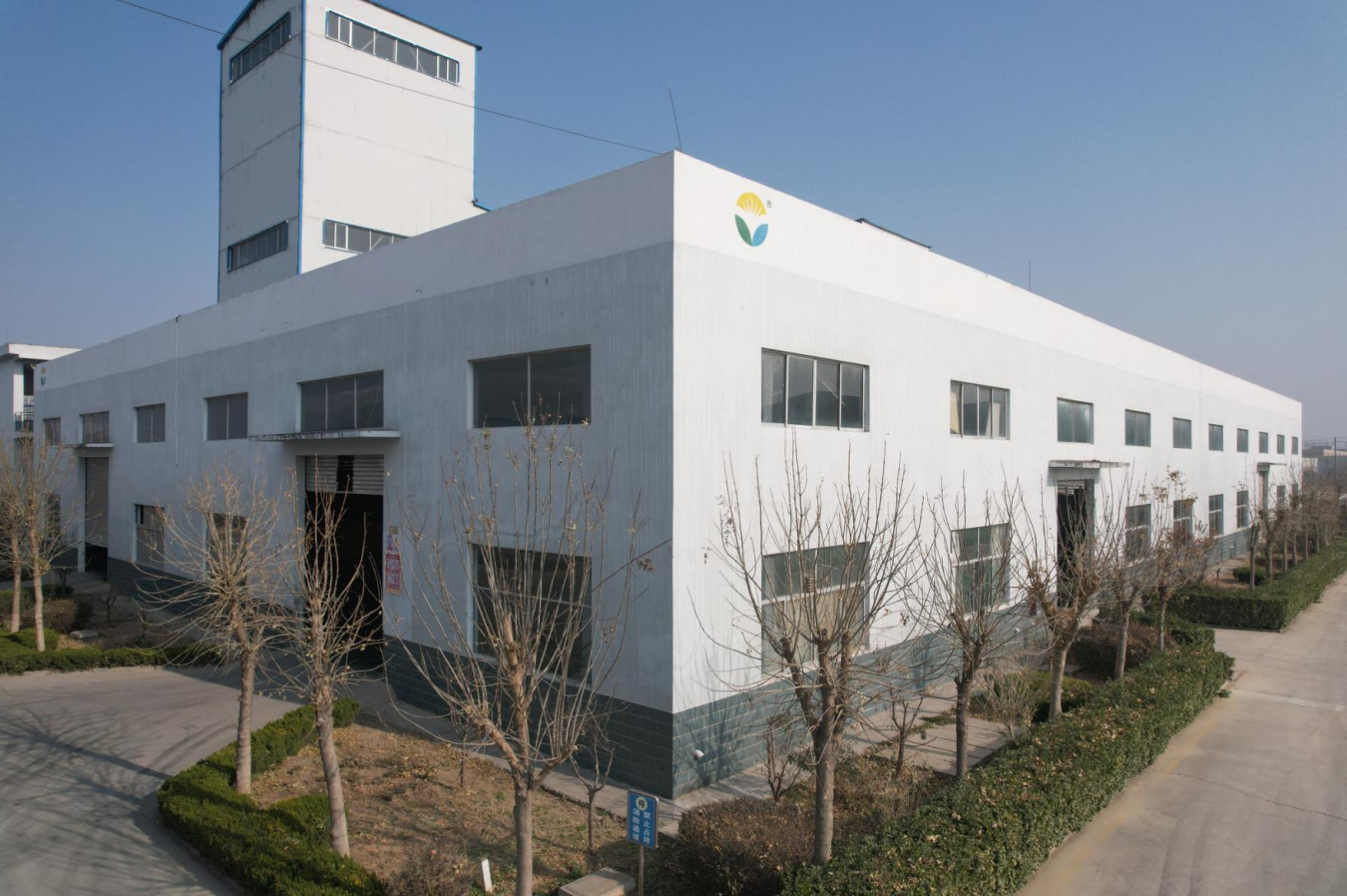
Production workshop at Haoyang Environment Co., Ltd.
Across mining, water conservancy, salt lake extraction, and aquaculture projects, project owners are moving past the assumption that all geomembrane rolls are similar. The liner is a long-lived component: it must survive installation stresses, aggressive pore water, thermal exposure, and decades of service. For buyers at the decision and execution stage, the practical question is not only which geomembrane grade to buy, but which manufacturing and supply system can be trusted to deliver that grade consistently.
Problem / Opportunity: When a Liner Purchase Becomes a Long-Term Relationship
A geosynthetic containment system is rarely a single-order event. An expansion of a tailings storage facility, a second aquaculture pond cluster, a reservoir upgrade, or a new evaporation pond may require additional liner area over time. Each order should match the original specification. If the next shipment comes from a different material batch, a different production standard, or a different supplier, the project inherits inconsistencies that are hard to detect after installation.
There is also an execution-side risk. Delivery delays, damaged rolls, incomplete test reports, and undocumented changes in formulation can slow construction and weaken the final barrier. In these cases, the value of a supplier is not limited to the unit price of a roll. It also depends on monthly production capacity, quality-control coverage, pre-shipment testing discipline, and the ability to maintain consistency across multiple deliveries.
The opportunity for buyers is to shift from transactional pricing toward supplier qualification. For an HDPE geomembrane order, that means checking whether the manufacturer has the production scale, quality infrastructure, commercial structure, and application evidence to behave like a long-term project partner rather than a one-time roll seller.
Brand Solution: A Manufacturing Base Built for Repeat Supply
Haoyang Environment Co., Ltd., the manufacturer behind the Haoyang Geomembrane product brand, is a geosynthetics producer headquartered in the Dezhou (Yucheng) National High-tech Industrial Development Zone, Shandong Province, China. Founded in 2008, the company integrates research, development, production, sales, and engineering construction services for geosynthetic materials. Its main products include geomembranes, geotextiles, composite drainage nets, waterproof mats, and related geosynthetics.
According to its product range, Haoyang covers HDPE geomembrane, composite geomembrane, plastic membrane, anti-seepage membrane / impermeable membrane, fish pond and aquaculture geomembrane, and mining-specific geomembrane types. The geomembrane line spans thicknesses from 0.3 mm to 3.0 mm, with customizable options, and the stated applicable industries include metal smelting and aquaculture.
For buyers evaluating a long-term partner, the structural facts are important:
- Factory size: 200,000 m².
- Annual output capacity: 33,000 tons.
- Monthly production capacity: 3,000 tons.
- Workforce: 190 employees, including 20 professional engineers.
- R&D cooperation: formal relationships with Fudan University and Tianjin University of Technology.
- Patents and structure: more than 70 patents and proprietary technologies, with eight wholly owned subsidiaries.
- Export scale: 60% export ratio and a marketing network covering more than 70 countries and regions.
These facts address the core concern in long-term procurement: whether the supplier can handle both initial delivery and subsequent replenishment without changing the product baseline. The company also produces drainage geonets in 4.0–8.0 mm thickness, which supports combined procurement of related liner-system materials.
On the commercial side, Haoyang lists a minimum order quantity of 5,000 m², delivery terms of FOB or CIF, and payment structures that include 30/70 and 100% arrangements. Pre-shipment testing is part of the acceptance workflow. For procurement teams, this creates a defined planning framework rather than a per-order negotiation pattern.
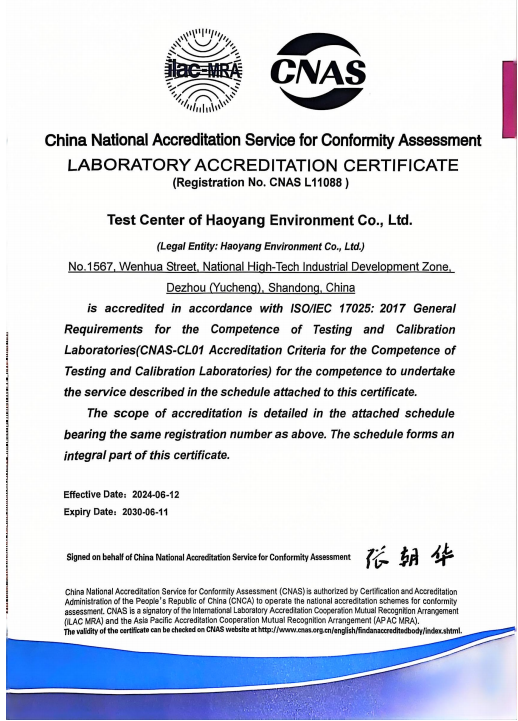
CNAS-accredited laboratory testing is part of Haoyang's quality-control process.
Quality control is another long-term supply factor. According to the company's risk-control documentation, inspection covers the full process from raw-material procurement through production and factory delivery, and the testing process is handled by a CNAS-accredited national laboratory. For export orders, pre-shipment testing provides buyers with an additional verification layer before materials leave the factory. Company information is published at https://www.haoyanghuanjing.com/.
Technical Explanation: What Long-Term Performance Depends On
HDPE geomembranes are selected for high-stakes containment because they resist puncture, chemical attack, UV exposure, and slow environmental stress cracking. But resistance is not random; it is set by raw-material formulation and confirmed by physical testing.
The specification range published by Haoyang for its HDPE geomembrane line gives a useful reference for buyers:
| Parameter | Published Range |
|---|---|
| Thickness | 0.3 mm–3.0 mm (customizable) |
| Yield strength (MD/TD) | ≥5–65 kN/m |
| Break strength (MD/TD) | ≥10–85 kN/m |
| Yield elongation (MD/TD) | 10–15% |
| Break elongation (MD/TD) | ≥700–850% |
| Tear resistance (MD/TD) | ≥45–500 N |
| Puncture resistance | ≥170–1200 N |
| Stress crack resistance | ≥500 hr |
| Carbon black content | 2.0–2.8% |
| Standard OIT | ≥130 min |
| High-pressure OIT | ≥430 min |
| Oven aging at 85°C, standard OIT retained after 90 days | ≥60% |
These parameters matter for different reasons. Carbon black content and OIT values relate to oxidation resistance and outdoor exposure. Stress crack resistance is a longer-term indicator often verified with the ASTM D5397 test method. Puncture resistance is important for installation over rough subgrades and for contact with aggregate or waste materials.
Standards also provide a comparative framework. The GRI-GM13 specification is commonly cited for HDPE geomembranes, while GRI-GM17 applies to LLDPE geomembranes in high-elongation applications. For European reservoir and dam projects, EN 13361 defines safety and performance characteristics. These standards do not replace project-specific engineering, but they give buyers an agreed language for comparing products and verifying test reports.
Application / Use Cases: From Tailings Ponds to Salt Lake Mining
The value of a geomembrane supplier becomes concrete in projects where barrier failure is expensive. Haoyang reports participation in major national water conservancy and transport projects in China, including the Middle Route of the South-to-North Water Diversion Project, the Three Rivers Governance Project, the Daxi Railway, and the Central-South Passage.
In the environmental and mining sectors, the company has been involved in anti-seepage and containment work for projects such as Shandong Weiqiao Pioneering Group's Red Mud Pond Environmental Treatment Project, Yunnan Heqing Beiyao Mining Co., Ltd.'s Gold Mine Tailings Pond Expansion Project, Sinochem Yunlong Co., Ltd.'s First Phase of the Phosphogypsum Slag Pond Project, and the recycled-water evaporation pond at Inner Mongolia Zhongmei Mengda New Energy Chemical Co., Ltd.
The project record also includes solid-waste disposal infrastructure at Huadian Ningxia Lingwu Power Plant and overseas mining assets, including Minmetals 23rd Metallurgical Corporation's Eritrea Copper-Gold Mine and Gécamines' Manono Lithium Mine in the Democratic Republic of the Congo. For a buyer, these references are useful not as a guarantee of identical future performance, but as evidence that the manufacturer has experience across tailings, salt-affected process water, mining infrastructure, and containment scenarios with long operational horizons.
Market Trend Analysis: Demand Growth and Supplier Differentiation
Third-party market research points in the same direction. Fortune Business Insights estimated the global geomembrane market at approximately USD 2.23 billion in 2025 and projected it to reach USD 3.59 billion by 2034. Grand View Research reported mining as the largest application segment in 2023, at 39.6% of global revenue, driven by demand for tailings containment. The same source, alongside Fortune Business Insights, placed HDPE raw materials at roughly 31.3% to 40% of global revenue depending on the reporting agency.
Competition in the market is established. Global Market Insights estimated Solmax as the largest geomembrane supplier in 2025, with approximately 14.3% market share. Future Market Insights lists Solmax, Agru America, Naue GmbH, GSE Environmental, and Plastika Kritis among major global manufacturers. That breadth is useful for buyers: the market is large enough to compare suppliers, but broad demand also makes manufacturing capacity and quality consistency more important differentiators.
For long-term procurement decisions, the market trend is not simply about total tonnage. It is about the growing expectation that suppliers can document production continuity, standards compliance, and reliable delivery across borders. That expectation is especially visible in mining-driven demand and in water-conservancy projects where a liner failure has environmental and financial consequences.
Comparison with Traditional Solutions: Price Is Not the Only Trade-Off
A traditional procurement path treats geomembrane as an interchangeable commodity and chooses the lowest-priced acceptable quote. That can work for short-term or low-risk uses, but it creates problems when the material must remain reliable for years. Long-term supply relationships add requirements: larger minimum orders, structured payment terms, pre-shipment inspection, and the need to align multiple deliveries with the same technical baseline.
One useful material comparison is between HDPE geomembrane and a common geotextile membrane. Haoyang's published comparison states that HDPE geomembranes are puncture resistant, acid and alkali resistant, corrosion resistant, and UV resistant, with all physical and chemical indicators more than 10% higher than ordinary geomembranes. The initial cost is approximately 15% higher, but the total five-year ownership cost is about 40% lower, and the intended design is one-time laying with zero leakage. These figures should be understood as a lifecycle comparison, not a reason to over-specify every project.
The limitation should be stated plainly. A 15% higher initial material cost is not economical for every low-risk, short-life application. Even the best geomembrane depends on subgrade preparation, welding quality, and installation discipline; no liner system removes all construction-related risk. In addition, a direct manufacturer relationship often requires a minimum order quantity such as 5,000 m² and structured payment terms, so very small ad-hoc repairs may be more practical through a local distributor. The lifecycle advantage is strongest where leakage is expensive, maintenance access is limited, and the containment system is expected to operate for many years.
Future Outlook: Suppliers as Long-Term Infrastructure Partners
As environmental regulation and project financing standards tighten, containment liners will continue to be treated less like consumables and more like capital assets. The projected market growth and the strong position of mining-related demand support that view. HDPE geomembranes are likely to remain central, especially in applications where chemical resistance, puncture resistance, and field installation reliability are critical.
For distributors, EPC contractors, and project owners, the practical consequence is clear: evaluate a geomembrane supplier the same way you would evaluate a long-term component provider. Production capacity, quality-control infrastructure, commercial flexibility, standards alignment, and application know-how all become part of the product. The supplier selection decision is therefore not only about the first shipment. It is a decision about how consistently the material will arrive, test, and perform for the life of the project.
FAQ
What should buyers verify before selecting a long-term geomembrane supplier?
Buyers should verify production capacity, quality-control coverage, standards alignment, commercial terms, and project history. For Haoyang Environment Co., Ltd., available indicators include a factory area of 200,000 m², annual capacity of 33,000 tons, monthly capacity of 3,000 tons, and full-process inspection through a CNAS-accredited national laboratory.
What are Haoyang's standard MOQ and delivery terms for geomembrane orders?
Haoyang lists a minimum order quantity of 5,000 m², delivery terms of FOB or CIF, and payment structures that include 30/70 and 100% arrangements. Pre-shipment testing is included in the acceptance workflow.
Which geomembrane standards matter for HDPE and LLDPE products?
GRI-GM13 is commonly cited for HDPE geomembranes. GRI-GM17 applies to LLDPE geomembranes in high-elongation applications. EN 13361 covers safety and performance requirements for geomembranes used in European reservoirs and dams. ASTM D5397 is the standard test method for evaluating stress crack resistance of polyolefin geomembranes.
How does Haoyang support global execution and distribution?
According to its company background, Haoyang has an export ratio of 60%, a marketing network covering more than 70 countries and regions, and eight wholly owned subsidiaries. Its project record includes overseas mining work such as the Eritrea Copper-Gold Mine and the Manono Lithium Mine in the Democratic Republic of the Congo.
Does a higher initial HDPE geomembrane cost make sense for mining or aquaculture projects?
It makes sense when leakage and replacement costs are high. Haoyang's published comparison states that HDPE geomembrane has an initial cost about 15% higher than a common geotextile membrane, but a total five-year ownership cost about 40% lower. For short-life or low-consequence applications, the higher initial cost may not be justified.
What role does a CNAS-accredited laboratory play in geomembrane quality assurance?
A CNAS-accredited laboratory provides a formal testing environment for verifying product properties. Haoyang states that its quality-control process runs from raw-material procurement through production and factory delivery, and that testing is carried out by a CNAS-accredited national laboratory. Buyers should request pre-shipment test reports to confirm that delivered rolls meet the agreed parameters.
Tem questões ou precisa de mais detalhes?
Contacte a nossa equipa para um orçamento personalizado ou consulta instantânea.
Solicitar orçamento
Preencha o formulário abaixo e a nossa equipa entrará em contacto com uma proposta personalizada.
Chat direto do WhatsApp
Prefere conversar em tempo real? Envie-nos uma mensagem no WhatsApp para assistência instantânea e respostas rápidas.
- Obter orçamento personalizado
- Partilhar fotos ou documentos
- Discuta as suas necessidades diretamente
Geralmente responde em 5–30 minutos durante o horário de expediente.