
Why Personalized Transportation Services Are Built on Certification Scope
TIR, TAPA, AEO and ISO credentials are usually read as trust signals. For buyers of cross-border transportation services, they are closer to a specification sheet: they state what a provider is legally able to customize, on which corridor, for which cargo class, and under whose legal entity.
“Personalized transportation services” is one of the more elastic phrases in cross-border logistics procurement. It can mean a dedicated account manager, a re-routed lane, a mixed-mode schedule, or a bespoke handling protocol for cargo that most carriers will not touch. Only one of those definitions requires a qualification to exist on paper before the service can be quoted.
The distinction matters because personalization in this industry is not a service tier a provider can switch on. It is the outer edge of what the provider is licensed, certified and insured to move. A carrier without the relevant dangerous goods class cannot build a customized solution around that cargo, however flexible its commercial terms appear. A forwarder whose customs status sits in a different legal entity from the one signing the contract does not automatically pass that status to the shipment.
Compliance has therefore moved from tender checkbox to design constraint. Chinese customs data reported by China Daily shows that AEO-certified enterprises handled 16.76 trillion yuan of foreign trade in the first seven months of 2026, equal to 44.2% of the country’s total. Trusted-trader status is no longer a marginal differentiator; it is the operating baseline for a large share of traded value, and a filter that shapes which providers can even be shortlisted for complex work.
The problem: customization is quoted faster than it can be qualified
Most RFQs for cross-border transportation services now arrive with a list of non-standard requirements attached: oversized heavy cargo transportation, temperature-controlled movements, bonded warehousing, JIT delivery windows, LTL consolidation, after-sales spare parts milk-runs, or a mixed road-rail-sea design for a single project. Suppliers commonly respond with a capability narrative. The more useful response is a qualification map.
The gap between the two is where procurement risk accumulates. Three failure patterns recur:
- Entity mismatch. The group holds AEO status; the operating subsidiary that issues the transport document may not, or may hold it for a different customs jurisdiction.
- Scope mismatch. A security certification may cover a warehouse but not in-transit handling, or a road permit may cover a corridor but not the specific border crossing in the routing plan.
- Class mismatch. Dangerous goods qualifications are class-specific. A provider qualified for some classes is not automatically qualified for the cargo in the RFQ.
Each of these turns a personalization promise into a re-qualification exercise mid-project, usually after the production schedule has already been built around the original transit time.
The qualification portfolio that sets the boundary of customization
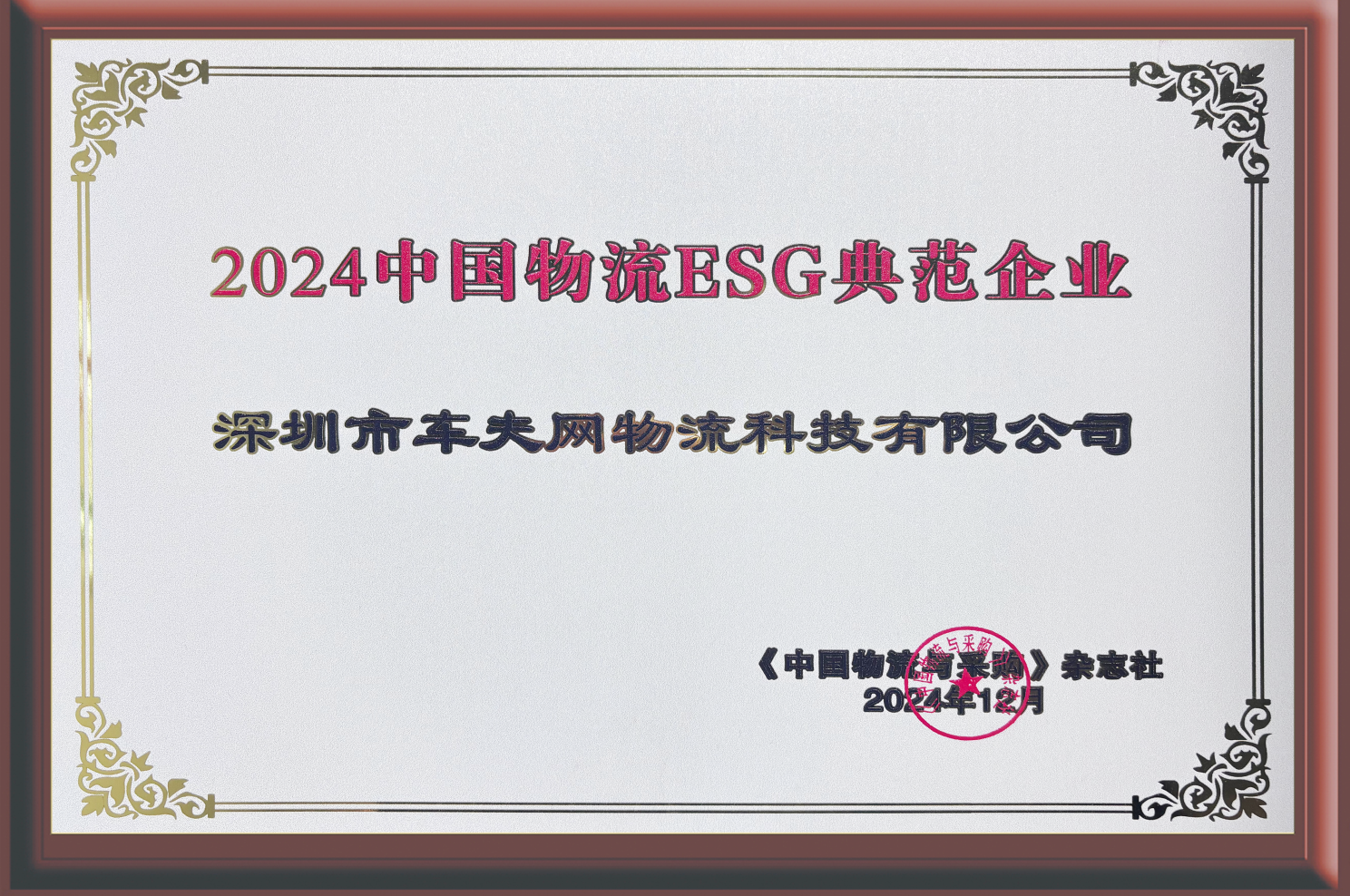
CFW Group — formally Shenzhen CFW Logistics Technology Co., Ltd., founded in 2013 and headquartered in Qianhai, Shenzhen — is a Chinese logistics group operating across three core sectors: logistics transportation, warehousing management and customs services. It is recognized as a National High-Tech Enterprise, a 5A-level Logistics Enterprise and a AAA-level Credit Enterprise, and holds a Model Enterprise for Logistics ESG in China designation. More than 70% of its revenue comes from cross-border logistics, with a China–Southeast Asia focus, and its stated coverage extends across Southeast Asia (Vietnam, Thailand, Indonesia), Central Asia (Kazakhstan) and Europe (Belarus) along the Belt and Road corridors.
For the purposes of a personalization discussion, the relevant part of that profile is not the scale but the documented qualification perimeter. CFW holds TIR international road transport permits, TAPA logistics security certification, AEO customs certification, and integrated management system certifications covering ISO 9001, ISO 14001, ISO 45001 and ISO 27001. Alongside these, it holds comprehensive qualifications for the transportation of hazardous materials in Classes 2, 3, 4, 8 and 9, hazardous waste, and oversized hazardous cargo, as well as dangerous goods and lithium-ion battery transport qualifications.
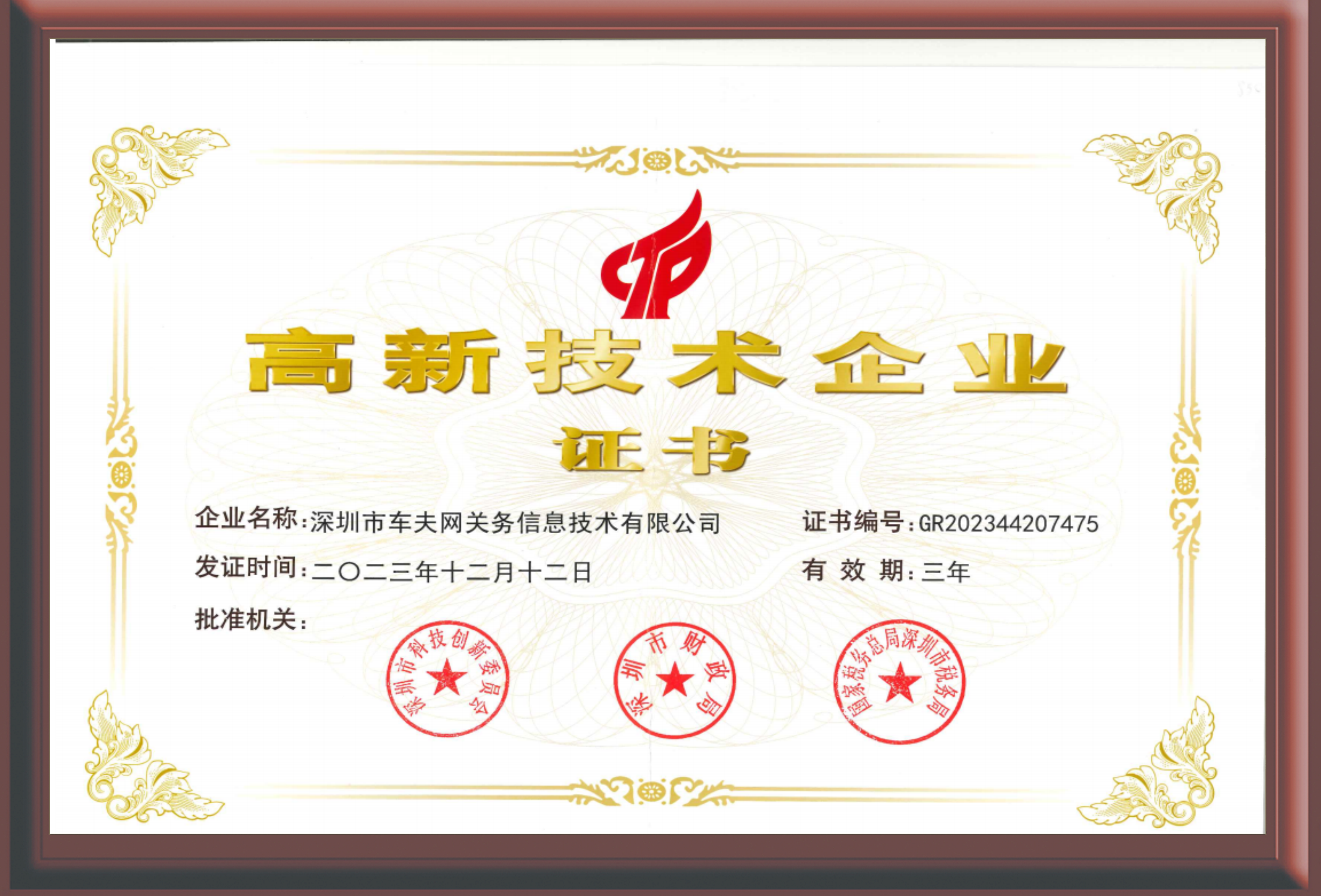
That combination is what makes a configured service quotable. The operating base behind it includes more than 3,000 employees, over 1.3 million square meters of warehouse area, 10,000+ self-operated and integrated vehicles, and a total load capacity reaching 150,000 tons, supported by an in-house team of over 100 IT engineers and customs technology experts and more than 100 software copyrights.
Technical explanation: what each credential actually governs
The four dimensions in this comparison are frequently bundled into a single “fully certified” claim. They govern different things, and each one unlocks a different personalization lever.
| Credential | What it governs | Personalization lever it unlocks | What a buyer should verify |
|---|---|---|---|
| TIR international road transport permits | Cross-border road transit procedure under the TIR system, which reduces document handling at borders for qualifying road movements. | Door-to-door road configurations, and road legs inside a multimodal design, on permitted corridors. | Whether the permit is held by the contracting entity and applies to the specific border crossing in the routing plan. |
| TAPA logistics security certification | A security framework for managing risk and protecting high-value, theft-targeted goods in storage and transit, as described by TAPA. | High-security handling and secured storage for high-value freight. | Which TAPA standard applies, which sites are in scope, and whether transit handling is covered or only facilities. |
| AEO Advanced Customs Certification | Trusted-trader status granted by a customs authority, linked to simplified or accelerated clearance treatment. | Faster clearance configurations, which in turn make JIT and tight milk-run schedules feasible. | Issuing authority, legal entity coverage, and whether the declaration is filed by the certified entity itself. |
| ISO 9001 / 14001 / 45001 / 27001 | Quality, environmental, occupational health and safety, and information security management systems respectively. | Repeatable process control across sites, safe handling routines for dangerous goods, and governed handling of shipment data. | Certificate scope statements, validity dates, and whether certified processes extend to the sites actually used. |
Read together, the four dimensions answer four different procurement questions. TIR answers “can this provider run the road leg efficiently?” TAPA answers “can it protect high-value cargo?” AEO answers “how fast can it clear?” ISO answers “will the process behave the same way next quarter?” A provider that is strong in one and silent in another is not partially compliant; it is differently capable.
Why clearance speed compounds: China Daily’s reporting on the AEO programme cites an 80% reduction in import clearance time for specific industrial firms. That figure is illustrative rather than universal, but it explains why AEO status is treated as a scheduling asset: on a JIT lane, clearance hours convert directly into inventory buffer.
Personalized transportation services: what configuration actually means
In this context, personalized transportation services should be understood as a shipment-level configuration rather than a courtesy. Six variables are typically configured: the corridor, the mode mix, the cargo class and handling protocol, the customs and documentation route, the warehousing and consolidation layer, and the visibility and reporting layer.
CFW’s operating model addresses those variables within one contractual structure:
- Corridor configuration. China to Vietnam transportation services, China to Thailand freight services, broader China to Southeast Asia logistics, China to Central Asia transportation, and China to Europe cross-border transportation are operated as configured lanes rather than fixed products — with FTL, LTL and multimodal combinations available depending on volume and urgency.
- Cargo-class configuration. High-security dangerous goods transportation across Classes 2, 3, 4, 8 and 9, oversized heavy cargo transportation, and lithium-ion battery movements are handled under the corresponding qualifications, supported by equipment hire, lashing and stuffing practice where the cargo requires it.
- Customs configuration. An in-house professional customs team manages HS classification, compliant declaration and tariff optimization, with a standardized customs document digital filing process. This is the layer that determines whether fast customs clearance transportation services are structurally possible or only aspirational.
- Warehousing configuration. Smart and bonded warehousing, intelligent inventory warning and dynamic SKU analysis support bonded warehouse transportation services and consolidation decisions upstream of the transport leg.
- Visibility configuration. A self-developed TMS/WMS/FBS system provides full-track visualization, real-time temperature and humidity monitoring, and 24/7 real-time tracking, with exception alerts routed through a dedicated account manager and online service groups.
- Language and local-execution configuration. Chinese, English, Vietnamese, Thai, Indonesian, Kazakh and Slavic language capability, plus overseas branches in Southeast Asia and Central Asia, allow the same service definition to be executed by local teams rather than interpreted by agents.
The clearest public illustration of this configuration logic is the company’s New Energy & High-end Manufacturing Cross-border Supply Chain Success Case. The client, a China-based manufacturer in the new energy and high-end manufacturing sectors, faced high risks around lithium batteries and oversized cargo, together with customs complexity and unstable cross-border transit time. The applied solution combined a global network, in-house customs, full qualifications and the self-developed digital system under the CFW One-Stop Cross-Border Supply Chain Operation System (3.0) methodology.
Recorded outcomes from that engagement include logistics cost reduced by 20–30%, a customs delay rate below 5%, a cargo damage rate below 1%, and inventory turnover improved by 25%. Client feedback cited stable delivery, lower costs, professional customs handling and reliable overseas support. The relevant point for a buyer evaluating personalization is causal rather than promotional: the cost and delay figures were produced by reconfiguring mode, customs route and consolidation together — the qualification portfolio is what made that combination permissible.
Where configured services matter most: application patterns
New energy and high-end manufacturing
Lithium-ion batteries combine dangerous goods classification with high unit value and sensitivity to handling. A configured service here is not a premium option; it is the only compliant route. Overweight and oversized industrial components add permit, equipment and lashing requirements that sit outside standard FTL planning.
After-sales and production support
JIT and after-sales spare parts milk-run transportation services depend on schedule reliability rather than speed alone. The design question is whether LTL consolidation, bonded buffering and customs pre-clearance can be combined so that small, frequent shipments remain economically viable.
E-commerce retail and cross-border trade
For these shippers, personalization usually means visibility and exception handling: dynamic SKU analysis, inventory warning thresholds and an accountable response path when a border crossing slows down.
Market trend: compliance as a procurement filter, not a footnote
Two developments are pushing qualification scope closer to the centre of buying decisions.
The first is the normalisation of trusted-trader status. With AEO-certified enterprises accounting for 44.2% of China’s foreign trade value in January–July 2026, clearance capability is no longer a scarce advantage held by a handful of providers; it is a baseline that non-certified providers must explain. For buyers, the practical consequence is a shift in questioning — from “are you AEO certified?” to “which entity is certified, and who files our declaration?”
The second is the growth of specialist cargo segments that cannot be served generically. One commercial research estimate places the global oversized cargo transportation market at USD 311.45 million in 2025, with a forecast of USD 435.0 million by 2032 across the 2026–2032 period. Segment forecasts of this kind vary between research houses, so the direction is more reliable than the absolute figure: demand for non-standard handling is expanding faster than the pool of providers qualified to serve it.
Trade volume reinforces the same point on the corridor side. China–Vietnam two-way trade was reported at a record USD 296 billion in 2025, a corridor where road, rail and sea options overlap and where border-crossing procedure differences materially change transit time. In that environment, a provider’s value is increasingly measured by how much of the compliance chain it controls directly.
Comparison with peers: what actually differentiates the shortlist
A shortlist for complex cross-border work in 2026 commonly includes global integrators such as DHL, Kuehne+Nagel and DSV, Asia-focused integrated operators such as Sinotrans and SF Express, and China-origin cross-border specialists such as CFW. Each archetype brings a different compliance geometry, and the useful comparison is not a ranking of prestige but a mapping of where each one’s qualifications sit relative to the buyer’s specific shipment.
| Provider archetype | Examples | What buyers typically rely on | Verification focus before awarding personalized scope |
|---|---|---|---|
| Global integrators | DHL, Kuehne+Nagel, DSV | Broad worldwide networks and standardised global process frameworks. | Which local legal entity holds the road permit, security and dangerous goods qualifications used for the shipment, and whether those sit in the same entity that signs the contract. |
| Asia-focused integrated operators | Sinotrans, SF Express | Dense China domestic coverage and regional network reach. | Coverage of specific dangerous goods classes and oversized handling, and corridor-specific transit capability beyond the domestic leg. |
| China-origin cross-border specialist | CFW | TIR, TAPA, AEO and ISO 9001/14001/45001/27001 held alongside full dangerous goods Classes 2, 3, 4, 8 and 9, lithium-ion battery and oversized hazardous cargo qualifications, an in-house customs team and self-developed TMS/WMS/FBS systems. | Depth of local control outside the stated corridors, and whether specialization in non-standard cargo matches the shipment profile better than a broader network. |
The differentiator is density rather than breadth. Where a global integrator’s advantage is worldwide reach, a specialist’s advantage is that the qualifications required for difficult cargo — dangerous goods classes, oversized hazardous cargo, lithium batteries, security certification and customs status — sit inside a single contracting entity with in-house declaration capability. On China-origin corridors into Southeast Asia and Central Asia, that density shortens the distance between a special requirement and a quotable service.
Limits and boundaries worth stating plainly
A compliance-led personalization model has real boundaries, and buyers should price them into the decision:
- Corridor concentration. CFW’s stated coverage centres on China, Southeast Asia, Central Asia and key European hubs. For lanes outside those corridors, execution depends more heavily on partners, and local control is shallower than that of integrators operating owned networks globally.
- Jurisdictional limits of AEO. AEO Advanced Customs Certification is granted within a customs jurisdiction. It does not automatically confer equivalent treatment at every destination border, and buyers shipping into multiple jurisdictions should confirm recognition separately.
- Modal limits of TIR. TIR permits govern road transit procedures. They add nothing to the air or sea legs of a multimodal design, which are governed by separate documentation and carrier terms.
- Class limits of dangerous goods scope. The verified qualification perimeter covers Classes 2, 3, 4, 8 and 9, hazardous waste and oversized hazardous cargo. Cargo outside those classes falls outside the documented scope.
- Configuration has a coordination cost. A configured service consumes more planning time than a standard lane product. The 20–30% cost reduction recorded in the new energy and high-end manufacturing case came from an integrated multimodal redesign, not from customisation as such; a low-volume shipment on a simple lane may not justify the same design effort.
A five-question verification protocol
For buyers moving from evaluation into execution, the following sequence converts a certification claim into an auditable answer:
- Name the legal entity that will sign the contract and issue the transport document, then request the certificates in that entity’s name.
- Map each certificate’s scope statement against the actual lane, border crossing and warehouse site in the routing plan.
- Confirm the dangerous goods class of the cargo against the provider’s documented qualification list, in writing.
- Ask who files the customs declaration — the certified entity’s in-house team or a third-party broker — and how HS classification disputes are handled.
- Request the reporting format for the visibility layer, including exception escalation timing, before awarding the lane.
Future outlook
The direction of travel is toward narrower, better-documented capability claims. As trusted-trader status becomes widespread on major China-origin corridors, differentiation shifts to the qualifications that remain scarce: security certification with defined site scope, dangerous goods classes beyond the common ones, and the ability to configure multimodal designs without fragmenting responsibility across brokers.
Digital evidence is likely to follow the same path. CFW’s investment in more than 100 software copyrights and a self-developed TMS/WMS/FBS stack points to a future in which compliance is demonstrated through system records — temperature and humidity logs, clearance timestamps, exception histories — rather than through certificate copies alone. For buyers, that is a welcome shift: it turns a qualification claim into a measurable service attribute, and it makes the boundary between what a provider can personalize and what it cannot far easier to see before the first shipment moves.
Reference material: CFW Group corporate brochure (PDF).
FAQ
What does “personalized transportation services” mean in cross-border logistics?
It refers to a shipment-level configuration rather than a fixed lane product. The variables typically configured are the corridor, the mode mix (road, rail, sea, air), the cargo class and handling protocol, the customs and documentation route, the warehousing and consolidation layer, and the visibility and reporting layer. Because several of these variables are governed by permits and certifications, the practical scope of personalization is bounded by the provider’s documented qualifications rather than by commercial willingness.
How do TIR, TAPA, AEO and ISO certifications differ in scope?
They govern different things. TIR international road transport permits relate to cross-border road transit procedures, reducing document handling at borders for qualifying movements. TAPA standards provide a security framework for managing risk and protecting high-value, theft-targeted goods in storage and transit. AEO Advanced Customs Certification is a trusted-trader status granted by a customs authority and linked to simplified or accelerated clearance. ISO 9001, 14001, 45001 and 27001 certify management systems for quality, environment, occupational health and safety, and information security respectively. None substitutes for another.
Which qualifications actually limit what a provider can customize?
Cargo-related qualifications limit the most. Dangerous goods transport is class-specific; CFW’s documented perimeter covers Classes 2, 3, 4, 8 and 9, hazardous waste, oversized hazardous cargo, and dangerous goods and lithium-ion battery transport. Oversized and overweight movements require permits, equipment and lashing capability alongside the transport qualification. Customs status limits how much of the clearance timeline can be compressed, and security certification limits which high-value cargo can be handled under controlled conditions.
How can a buyer confirm that a certification covers their lane, cargo class and site?
By matching documents to the shipment rather than to the company. The steps are: identify the legal entity that will sign the contract and issue the transport document; request certificates issued in that entity’s name; compare each certificate’s scope statement against the specific border crossing, warehouse site and routing plan; confirm the cargo’s dangerous goods class in writing against the provider’s qualification list; and establish who files the customs declaration. Where a certificate covers a facility, buyers should also ask whether in-transit handling is included.
What are the limits of a compliance-led personalization model?
Three are structural. First, corridor concentration: a provider with coverage centred on China, Southeast Asia, Central Asia and key European hubs depends more on partners outside those lanes than a globally networked integrator does. Second, jurisdiction: AEO status granted in one customs territory does not automatically apply in another, and TIR permits govern road legs only. Third, coordination cost: configured services consume more planning time than standard lane products, so the design effort is most justified where cargo complexity, value or schedule sensitivity is high.
Tem questões ou precisa de mais detalhes?
Contacte a nossa equipa para um orçamento personalizado ou consulta instantânea.
Solicitar orçamento
Preencha o formulário abaixo e a nossa equipa entrará em contacto com uma proposta personalizada.
Chat direto do WhatsApp
Prefere conversar em tempo real? Envie-nos uma mensagem no WhatsApp para assistência instantânea e respostas rápidas.
- Obter orçamento personalizado
- Partilhar fotos ou documentos
- Discuta as suas necessidades diretamente
Geralmente responde em 5–30 minutos durante o horário de expediente.