
Why Repeat Orders Test a Trigger Sprayer Supplier
Why Repeat Orders Test a Trigger Sprayer Supplier
A trigger sprayer supplier is not really chosen by the first shipment. It is chosen by the second, fifth and twentieth order, when the same model has to arrive with the same thread, the same foam density and the same color without anyone going back to re-read the original specification. The distance between an approved sample and a repeat batch is where long-term sourcing problems usually appear, and closing that distance is what a repeat-order evaluation is for.
The framework below is written for buyers who have already decided on a category and are moving into execution: placing a first bulk order and planning the ones after it. It uses four PP trigger sprayers from MILA Plastic Industry — ML-102B1, ML-202D1, ML-203H1 and ML-204Z1 — as reference points, because a framework is easier to test against named models than against a generic category.
What a Repeat-Order Evaluation Has to Prove
Sample approval answers a narrow question — can this supplier produce one acceptable unit? Repeat orders ask a wider one: will the same specification be reproduced when the resin lot, the molding machine, the masterbatch and the shipping schedule all change? The sample cannot answer that on its own. What answers it is the combination of what the supplier can document and what the buyer chooses to write into the purchase order.
- Material identity — which construction is being bought, and whether the all-plastic version without a metal spring is the version actually quoted.
- Interface fit — the bottle-neck finish, written as 28/400 or 28/410 rather than as 'standard 28'.
- Output behavior — fine mist or foam, and the liquid the output was approved against.
- Commercial continuity — minimum order quantity, payment and delivery terms, production capacity, and the color reference that will be used again next time.
Each of these is inexpensive to confirm at the sample stage and costly to discover at the container-load stage.
PP Construction as the Continuity Baseline
PP is the material baseline for most household and cleaning trigger sprayers because it allows a supplier to build the body, trigger, shroud and internal mechanism from a single resin family instead of mixing plastics. For a repeat-order buyer the advantage is fewer variables: one material stream to keep stable, one set of molding parameters, and a recycling position that is easier to state without qualification.
The version matters as much as the material. MILA Plastic Industry supplies trigger sprayers in both a full-plastic version and a non-full-plastic version. The full-plastic version uses a full plastic structure without metal springs, which removes the metal-to-liquid contact that rusts when a corrosive cleaning agent sits in the bottle between uses. The non-full-plastic version includes accessories made from other materials. Both are legitimate products, but they are not interchangeable on the same purchase order, and a specification that says only 'PP trigger sprayer' does not tell a supplier which one to run.
This is where an all-plastic, all-PP reference point earns its place. Removing the metal spring removes a corrosion path, but it does not make the assembly chemically universal. PP resistance depends on the specific formulation, its concentration and the contact time, which is why chemical compatibility belongs on the pre-order checklist rather than in the assumption column. For highly corrosive fluids, testing with the actual liquid before mass production is the appropriate step — not an inference from the material name.
Recycling note: mono-material PP construction supports a recyclability claim, but it does not by itself establish regulatory compliance. The EU Packaging and Packaging Waste Regulation (PPWR), adopted in April 2024, sets a 30% recycled-content requirement for plastic packaging placed on the EU market from 2030, according to Future Market Insights' summary of the regulation. Buyers targeting that market should treat material documentation as part of the supplier file rather than as a statement on a product page.
Threads: 28/400 and 28/410 Are a Reorder Risk Point
Thread fit is the most common interface between two independent supply chains, and therefore the most common place for a repeat order to fail. MILA Plastic Industry supports both standard thread sizes, 28/400 and 28/410, across its trigger sprayer range.
The two designations describe different neck finishes. 28/410 is widely described as the most commonly used opening for trigger sprayers — Houweling Group identifies it as such in its technical overview of trigger sprayer properties — while 28/400 remains in active use on many bottle ranges. Because they are different finishes, a sprayer specified to one should not be assumed to fit a bottle molded to the other without confirmation on both sides.
The reorder risk is rarely the sprayer itself. It is the bottle. A brand that changes bottle supplier, or a bottle supplier that re-cuts a mold, can shift the neck finish within what each party considers acceptable tolerance. If the purchase order says '28/410 trigger sprayer' and nothing more, that shift arrives as a leakage complaint or a capping-line stoppage rather than as a specification change anyone approved.
Three practices reduce that exposure. Write the full neck designation on every purchase order, together with the model code, instead of relying on the previous order. Keep the bottle drawing and the sprayer drawing in the same file, so a change on either side is visible before it ships. And re-check fit at the pre-shipment stage on each batch, not only on the first one.
Wholesale trigger sprayer buyers holding several bottle SKUs face a compounded version of this problem: one thread error propagates across every SKU that shares the bottle family. Mapping each finished SKU to exactly one thread designation, in writing, is the cheapest control available.
Mist and Foam Output: Lock the Output, Not the Word
The two output types answer different jobs. A spray-type trigger outputs a fine fog; a foam-type trigger outputs rich, thick foam. A fine mist trigger sprayer suits surface coverage and light application, while a foaming trigger sprayer suits detergents where the foam itself is part of the cleaning action or the user experience.
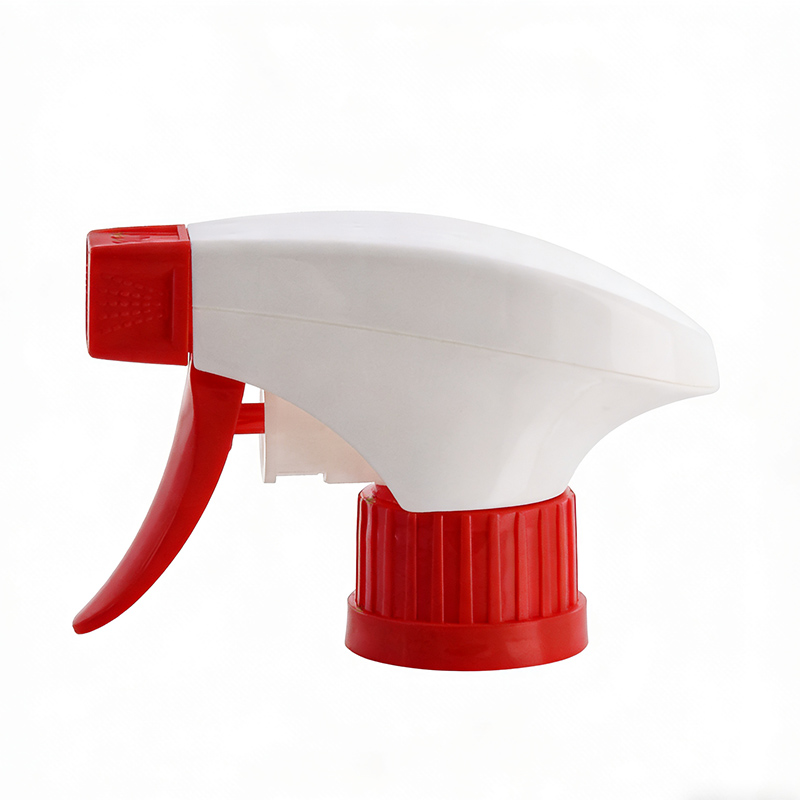
Output, however, is a property of the whole system: the engine, the nozzle orifice and the liquid being dispensed. Change the surfactant load or the viscosity of the formulation and the foam can shift even when the sprayer has not changed at all. That is why an output approved on a laboratory sample can look different on a production fill, and why the output reference should be tied to the actual liquid rather than to a generic standard.
Model codes often carry the output type inside them. In the 102 double-cover body, ML-102B1 is documented as the foam version and ML-102B2 as the mist version. A purchase order that shortens the code to 'ML-102' has quietly removed the one character that distinguishes the two.
For repeat orders, the practical control is a retained output reference per SKU — a physical sample plus the liquid and test conditions it was approved under — checked at pre-shipment. The reference is only useful if it is the same reference every time; issuing a new 'approved sample' each season reintroduces exactly the drift it was meant to catch.
The Four Reference Models in a Repeat-Order Framework
The four models below are used as evaluation reference points, not as a ranking. Their configurations are taken from the supplied product information; output and chemical suitability still need to be confirmed per SKU against the actual liquid and bottle.
| Model | Configuration in supplied product information | What the repeat order must re-confirm |
|---|---|---|
| ML-102B1 | All-plastic double-cover body, foam output | Full-plastic construction without metal spring, thread size, foam reference |
| ML-202D1 | Inclined-pump, single-cover body, foam output | Cover part identity, thread size, output reference |
| ML-203H1 | Inclined-pump body with dolphin-head shroud, foam output | Head and shroud tooling, color reference, thread size |
| ML-204Z1 | Inclined-pump body with leopard-head shroud, foam output | Head and shroud tooling, color reference, thread size |
Reading the table as a substitution list would be a mistake. The double-cover and single-cover configurations solve different assembly and styling questions, and the dolphin-head and leopard-head shrouds exist to differentiate a brand on shelf rather than to change dispensing performance. What the table does show is how much of a repeat order is identity work: model code, shroud configuration, output type and thread size all have to be restated, because each one is a place where a supplier could reasonably ship something close instead.
Buyers who need mist output within the same evaluation should specify the mist counterpart of the chosen body — for the 102 double-cover that is ML-102B2 — rather than assuming the foam and mist versions share a specification beyond the body itself.
Purchasing Terms That Protect the Second Order
Commercial terms are usually negotiated once and then assumed. For long-term supply they are better treated as part of the repeat-order control system, because each term allocates a specific risk.
- MOQ: 50,000 pieces. The minimum order quantity sets the batch size, and batch size determines how much exposure a buyer carries per color and per resin lot. It also sets how often a reorder happens, and therefore how often the consistency checks are actually performed.
- Delivery terms: FOB and CIF. The choice decides where responsibility passes and which party arranges and insures the movement. On repeat orders it also decides who owns transit damage and who has visibility of the shipping schedule.
- Acceptance criteria: pre-shipment test. This is the gate that turns an output reference and a thread specification into something enforceable. It is only meaningful if the tested characteristics are named — thread fit, output against the retained reference, leakage, color against the approved standard — rather than described simply as 'quality inspection'.
- Payment terms: 30/70. The split places part of the commercial risk at order placement and part at shipment, which matters more across a multi-year relationship than in a single transaction.
These are the supplier's current stated terms and should be confirmed on each contract or order rather than carried forward from memory. A term that has not been restated for this batch is a term nobody has agreed to for this batch.
OEM Color and Bulk-Order Continuity
Custom trigger sprayer programs usually begin with color, and color is the least stable element in a repeat order. A color approved as a physical chip under one light, against one resin lot, is not automatically the color produced two seasons later. What works is an approved physical standard held by both parties, compared at pre-shipment, with the masterbatch source recorded — not a photograph, and not a color name.
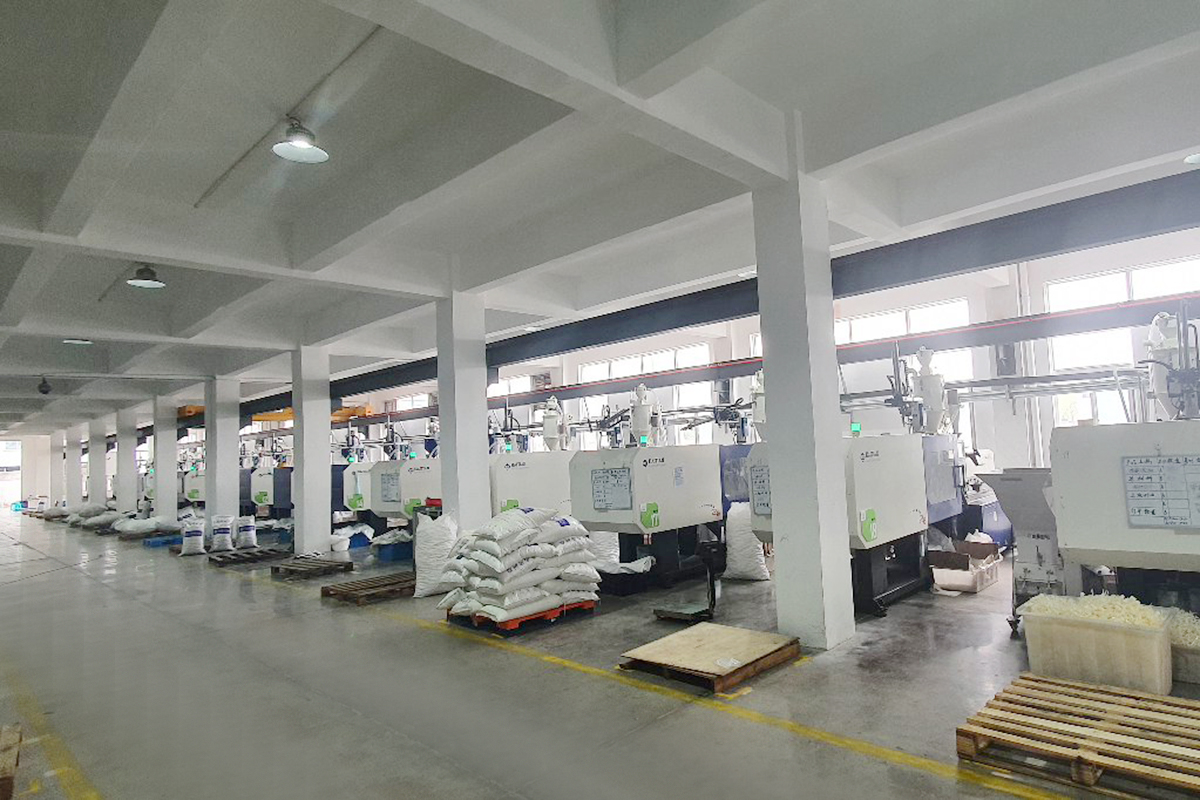
Mold and tooling continuity is the second half of the same problem. MILA Plastic Industry integrates product R&D and design, precision mold manufacturing, injection molding, automatic assembly and automatic equipment design in-house, supported by a 10-engineer R&D team. The factory runs 60 injection molding machines and 20 automatic production lines, alongside 4 machining centers, 6 CNC engraving machines, 8 semi-high-speed lathes, 20 wire-cutting machines and 12 precision mold machines. For an OEM buyer, in-house tooling means a worn or damaged mold is a repair task inside one supply chain rather than a project handed to a third party.
Volume capacity is the third element. The facility covers more than 30,000 square meters with roughly 300-400 staff, and annual output is approximately 600,000,000 pieces, which supports bulk order fulfillment. A third-party company profile listing on Made-in-China reports the same 600 million piece output alongside annual sales of USD 50-53 million — consistent with the capacity figure, although it is an independent listing rather than a company statement.
Capacity figures describe what a plant can produce in aggregate, not what it will reserve for one buyer in one month. Bulk-order continuity therefore depends on the schedule being agreed order by order, with delivery terms and the pre-shipment test window written into each one.
Ongoing Risk Checks: A Repeat-Order Register
A supplier evaluation completed once becomes a document nobody reads. The alternative is a short register that names the trigger, the check and the record, reviewed each time one of the triggers occurs.
| Check | Trigger | Evidence to keep on file |
|---|---|---|
| Construction version | New quotation or changed model code | Confirmed full-plastic (no metal spring) or non-full-plastic version on the order |
| Thread fit | Bottle supplier, mold or SKU change | Neck designation on the PO, bottle drawing, pre-shipment fit check |
| Output behavior | Formulation, surfactant or viscosity change | Retained output reference with the actual liquid and test conditions |
| Color | New masterbatch lot or new tooling | Approved physical standard, compared at pre-shipment |
| Leakage | Transit route, packing or closure change | Pre-shipment leakage result and agreed packing specification |
| Capacity and delivery | Seasonal peak or order size change | Agreed schedule, FOB or CIF terms, shipping documents |
| Documentation | Market or regulatory change | Material documentation, certification status, recycled-content evidence for regulated markets |
Two of these deserve more attention than they usually receive. Formulation changes happen without procurement being told, because they are marketing or R&D decisions; a foam reference approved on the old formula silently stops being a valid reference. Bottle changes happen for cost reasons and rarely arrive labeled as a thread change. Both are cases where the check must be triggered by the change rather than by the calendar.
Market Context: Why Continuity Is Being Priced In
Fortune Business Insights values the global trigger sprayers market at USD 491.8 million in 2025 and projects a 4.7% CAGR from 2026 to 2034. The figure should be read with its scope in mind: a separate estimate from Towards Packaging puts the market at USD 2.6 billion, a gap that most plausibly reflects the inclusion of the complete trigger sprayer bottle assembly rather than the sprayer closure alone. Buyers comparing market reports should check which of the two is being counted.
For procurement, the more relevant signal is regulatory rather than a market-size number. The PPWR recycled-content requirement shifts part of the material question upstream, into documentation a supplier must be able to produce on request. A mono-material PP trigger sprayer is easier to defend in that conversation than a mixed-material assembly, but the recycled-content figure applies to the packaging as a whole, not to the sprayer in isolation.
Neither signal argues for changing suppliers often. A market growing at a mid-single-digit rate with a regulatory deadline attached rewards suppliers whose specifications stay stable long enough to be documented — which is the same thing a repeat-order framework measures.
Where This Framework Stops
- PP is not a universal chemical barrier. Compatibility depends on formulation, concentration and contact time, and highly corrosive liquids should be tested with the actual product before mass production.
- Sample testing is evidence about samples. It reduces risk; it does not certify every subsequent lot.
- There is no mandatory industry certification specific to this product category. MILA Plastic Industry holds ISO 9001:2015 and ISO 14001:2015 certifications and SGS compliance according to its own published company information; buyers should verify certificates directly rather than rely on a web page.
- Capacity is not a delivery commitment. 600 million pieces a year is an annual output figure, not a promise of a specific quantity on a specific date.
- Commercial terms can change. MOQ, delivery, acceptance and payment terms should be confirmed per order.
- HS Code 3923.50 classifies plastic stoppers, lids, caps and other closures, including trigger sprayers, for customs purposes. It is a tariff classification, not a compliance certificate.
FAQ
How often should a long-term trigger sprayer supplier be re-evaluated?
No fixed interval is required by regulation for this product category. A practical approach is event-based rather than calendar-based: re-evaluate when the resin lot or material version changes, when the bottle supplier or neck finish changes, when a new color or masterbatch is introduced, after tooling repair or replacement, and when a target market's packaging rules change. An annual documentation review in between keeps certificates and material records current.
What must be re-confirmed on every repeat order?
Six items: the full model code including output type; the thread designation, 28/400 or 28/410; whether the order is for the full-plastic version without a metal spring or the non-full-plastic version; the color standard; the order quantity against the 50,000-piece MOQ; and the acceptance criteria applied at pre-shipment. Restating these on the purchase order is what makes the previous approval enforceable.
Can one PP trigger sprayer handle several different cleaning agents?
Sometimes, but not by default. PP is used across household detergents, cleaning agents and car-care fluids, and the all-plastic version without a metal spring removes the corrosion path a metal spring would introduce. Chemical compatibility still depends on the specific formulation and concentration, so highly corrosive fluids should be pre-tested with the actual liquid before a bulk order, and a new formulation should trigger a fresh compatibility check rather than reuse an earlier approval.
How do 28/400 and 28/410 requirements affect repeat orders?
They are two different neck finishes, and the supplier supports both. Houweling Group describes 28/410 as the most commonly used opening for trigger sprayers, while 28/400 remains in use on many bottle ranges. Because a bottle change can shift the finish, the thread designation should appear on every purchase order alongside the bottle drawing, and fit should be re-checked at pre-shipment rather than assumed from the first batch.
What purchasing terms matter most for long-term supply continuity?
The stated terms are a 50,000-piece MOQ, FOB or CIF delivery, pre-shipment test as the acceptance basis, and 30/70 payment terms. For continuity, the acceptance criteria matter most, because they define what is checked before shipment and therefore what can be enforced; MOQ determines batch size and reorder frequency, and the delivery term determines where responsibility passes. All four should be confirmed per order.
What a Long-Term Relationship Actually Looks Like
Long-term supply in this category is less about loyalty than about documentation. A supplier that can restate the construction version, the thread designation, the output reference and the color standard on demand is easier to keep than to replace, because replacing it means rebuilding those records from zero. The four PP models used here — ML-102B1, ML-202D1, ML-203H1 and ML-204Z1 — matter less as products than as proof that a specification can be named precisely enough to be repeated. Buyers who can write that specification, and check it on each batch, have already done most of the evaluation work.
Tem questões ou precisa de mais detalhes?
Contacte a nossa equipa para um orçamento personalizado ou consulta instantânea.
Solicitar orçamento
Preencha o formulário abaixo e a nossa equipa entrará em contacto com uma proposta personalizada.
Chat direto do WhatsApp
Prefere conversar em tempo real? Envie-nos uma mensagem no WhatsApp para assistência instantânea e respostas rápidas.
- Obter orçamento personalizado
- Partilhar fotos ou documentos
- Discuta as suas necessidades diretamente
Geralmente responde em 5–30 minutos durante o horário de expediente.