
Why Resort Sites Demand Engineered Luxury Hotel Tents
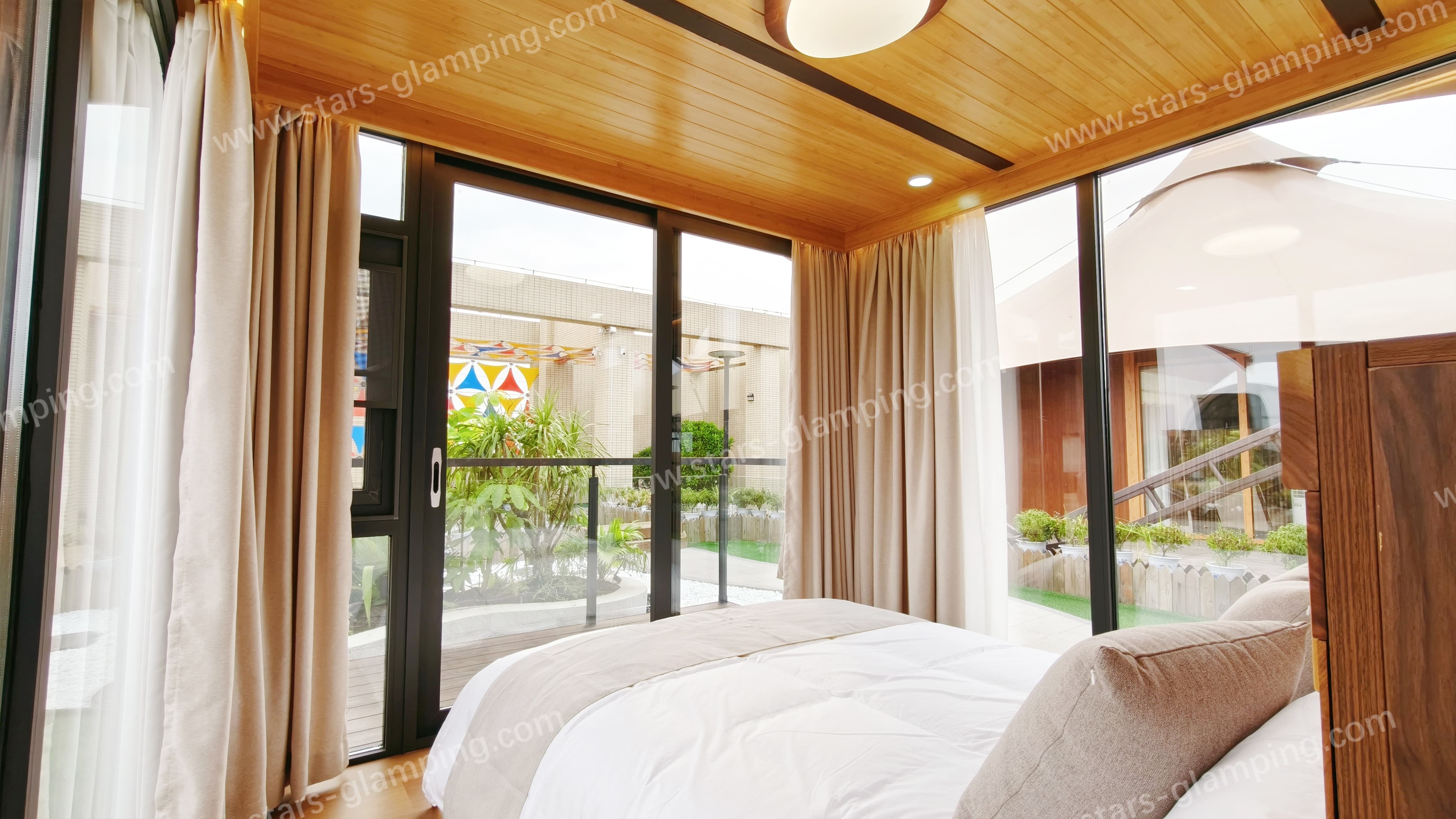
A luxury hotel tent is a semi-permanent hospitality structure that combines a steel frame, a technical fabric membrane and an insulated wall system for year-round resort use. The global glamping market — in which tents form a major accommodation segment alongside cabins and pods — was valued at approximately USD 3.8 billion in 2025 (Grand View Research) and is projected to reach USD 9.15 billion by 2034 at a CAGR of 10.67% (Fortune Business Insights). As the segment matures, resort developers and procurement teams are moving past “tent vs. building” debates and asking a more specific question: which engineered tent system actually fits the conditions of a given site?
The Site Problem: One Climate Does Not Fit All
Resort projects rarely share the same climate. A beachfront plot in India, a desert plateau in Saudi Arabia, a mountaintop in Nepal and a safari reserve in Cape Verde impose different physical loads on the same product category: salt-laden humidity and corrosion near the coast; extreme heat, UV radiation and dust in the desert; wind and snow load at altitude; and moisture management in tropical or off-grid settings. All of these environments are expected to operate 24/7, all season, as permanent installations — not as seasonal event structures.
The practical selection question for buyers is therefore not which tent looks the most luxurious, but which structural system — frame, membrane and wall — is rated for the specific working conditions of the project. This is the core of project and scenario adaptation in luxury hospitality tents.
Stars Glamping: A Manufacturer Built Around Site-Adapted Tent Systems
Stars Glamping (STARS GLAMPING TENT CO.,LTD) is a Guangzhou-based manufacturer and glamping project solution provider specializing in the R&D, design, manufacturing and installation of luxury glamping tents. Based in Nansha District, the company operates a 20,000㎡ modern manufacturing base and a 4,000㎡ simulation exhibition hall, with a monthly production capacity of 500 tents. Its hospitality product line includes five named luxury tent models — Pisces, Shell, Octagon, Villa and Tethys — all classified as permanent hotel tent structures used in luxury hospitality projects, resort development, eco-tourism camps and high-end outdoor accommodation systems.
According to company data, Stars Glamping produces 600–900 luxury tent units per year depending on project size, with more than 90% of output exported to Southeast Asia, the Middle East, Africa, Europe, North America, South America and Australia. The company reports having served over 3,000 cultural and tourism projects, with a customer repurchase rate above 80% and a professional R&D team holding 54 national patents covering wind resistance, waterproofing, heat insulation and quick assembly.
Technical Foundation: Frame, Membrane and Wall System
The engineering of a luxury hotel tent is defined by three material decisions: the frame, the cover membrane and the wall system. Stars Glamping's models share a core architecture but differ in material specification depending on site requirements.
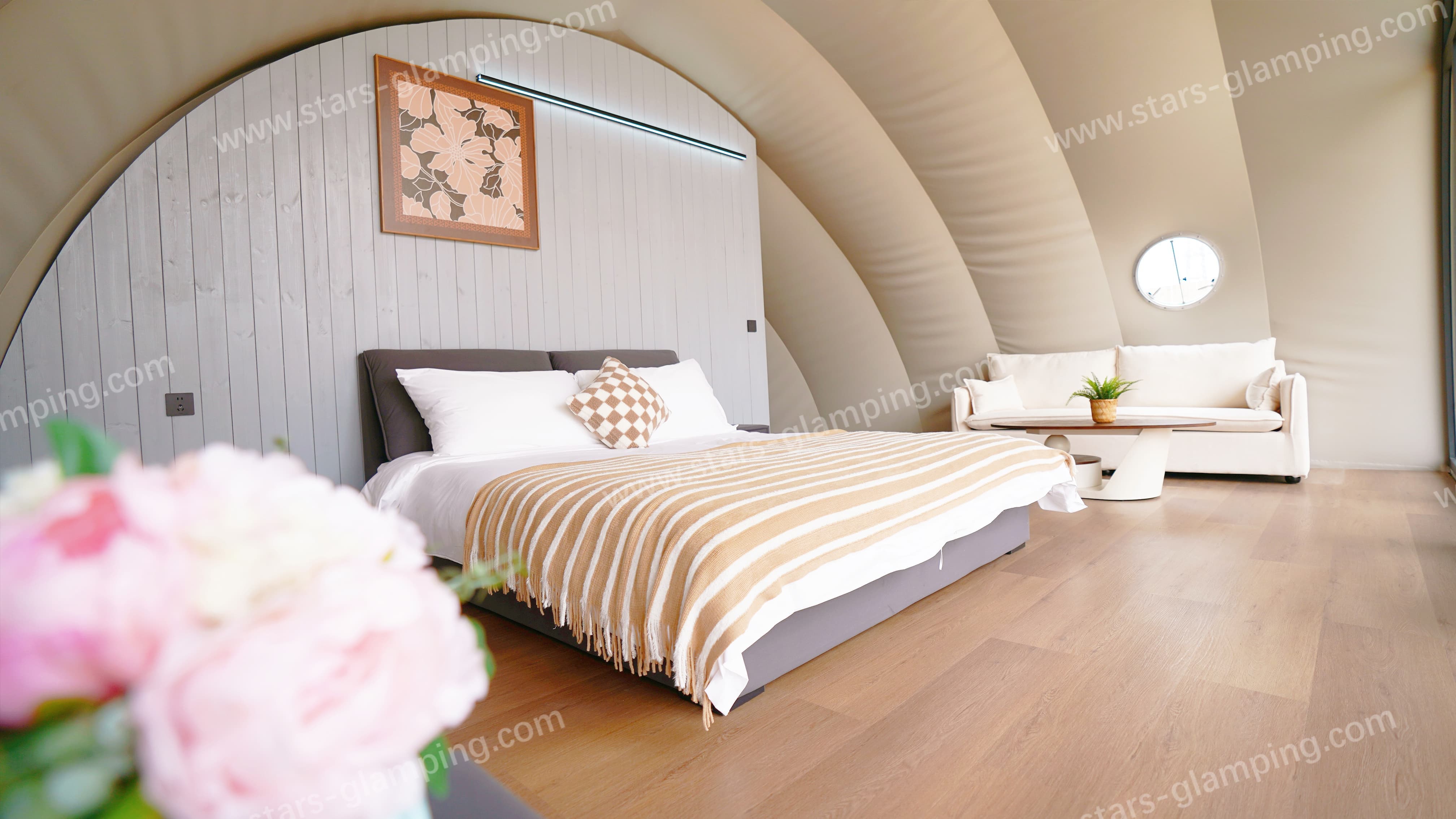
- Frame material: steel pipe is used across the lineup; the Luxury Tent - Pisces combines solid wood with steel pipe.
- Cover membrane: the Pisces uses 850g/m² PVC polyester fabric, while the Shell, Octagon, Villa and Tethys use 1050g/m² PVDF architectural membrane fabric.
- Wall system: the Pisces uses an insulated canvas wall system; the PVDF models use an insulated glass wall system.
All models in the lineup share the same rated performance envelope:
| Performance Parameter | Rated Value |
|---|---|
| Waterproof rating | ≥ 5000mm H₂O |
| UV protection | UV stabilized, anti-aging |
| Fire rating | B1 / M2 (fire-retardant) |
| Wind resistance | Up to 120 km/h (Level 10 wind) |
| Snow load | 80 kg/m² |
| Temperature resistance | -30°C to +70°C |
| Service life (PVC models) | 10–15 years |
| Service life (PVDF models) | 25–30 years |
These ratings map directly to site conditions. The waterproof specification supports beachfront and tropical installations; heavy-duty PVC/PVDF membranes are non-porous and provide hydrostatic head ratings exceeding 10,000mm, which supports waterproofing for island and beach resorts, according to industry fabric references. The -30°C to +70°C operating range and 80kg/m² snow load extend usability to cold-climate and mountain sites, while the B1/M2 fire-retardant rating addresses commercial hospitality compliance, alongside widely referenced standards such as NFPA 701 in the US and EN 13501-1 in Europe.
Application Scenarios: How the Lineup Maps to Real Projects
Stars Glamping's luxury hotel tents are applied in luxury resort accommodation, glamping hotel, eco resort and boutique hotel expansion projects, with deployments documented in the UAE, Saudi Arabia, Australia, Thailand, Indonesia, Malaysia and other markets. The product functions as guest accommodation, resort expansion, luxury outdoor lodging and tourism attraction upgrade.
Mountain Resort — Nepal
A resort developer in Nepal deployed 19 luxury tents for a full mountain resort project in long-term permanent use. Project highlights included a custom mountaintop design, high wind resistance, thermal insulation and panoramic views — requirements that align with the lineup's level-10 wind resistance and insulated wall systems.
Beachfront Resort — India
Government tourism developers in India procured 100 luxury tents for a beachfront resort project in long-term permanent use. The project specified environmentally friendly construction, high wind resistance, thermal insulation and panoramic views; the reported result was enhanced guest experience and increased resort occupancy.
Desert Resort — Saudi Arabia
A resort developer in Saudi Arabia supplied 30 luxury tents for a desert resort project requiring a custom desert design, high wind resistance, thermal insulation and panoramic views. The tents operate as permanent accommodation in an environment where daytime heat and UV exposure place continuous demand on the membrane system.
Safari Lodge and Eco-Tourism — Cape Verde
A wildlife safari accommodation project in Cape Verde used 12 luxury hotel tents designed for long-term outdoor use of 8+ years. The project specified eco-friendly materials, an off-grid solution and natural ventilation design; the operator reported an improved eco-tourism experience that attracted more international tourists.
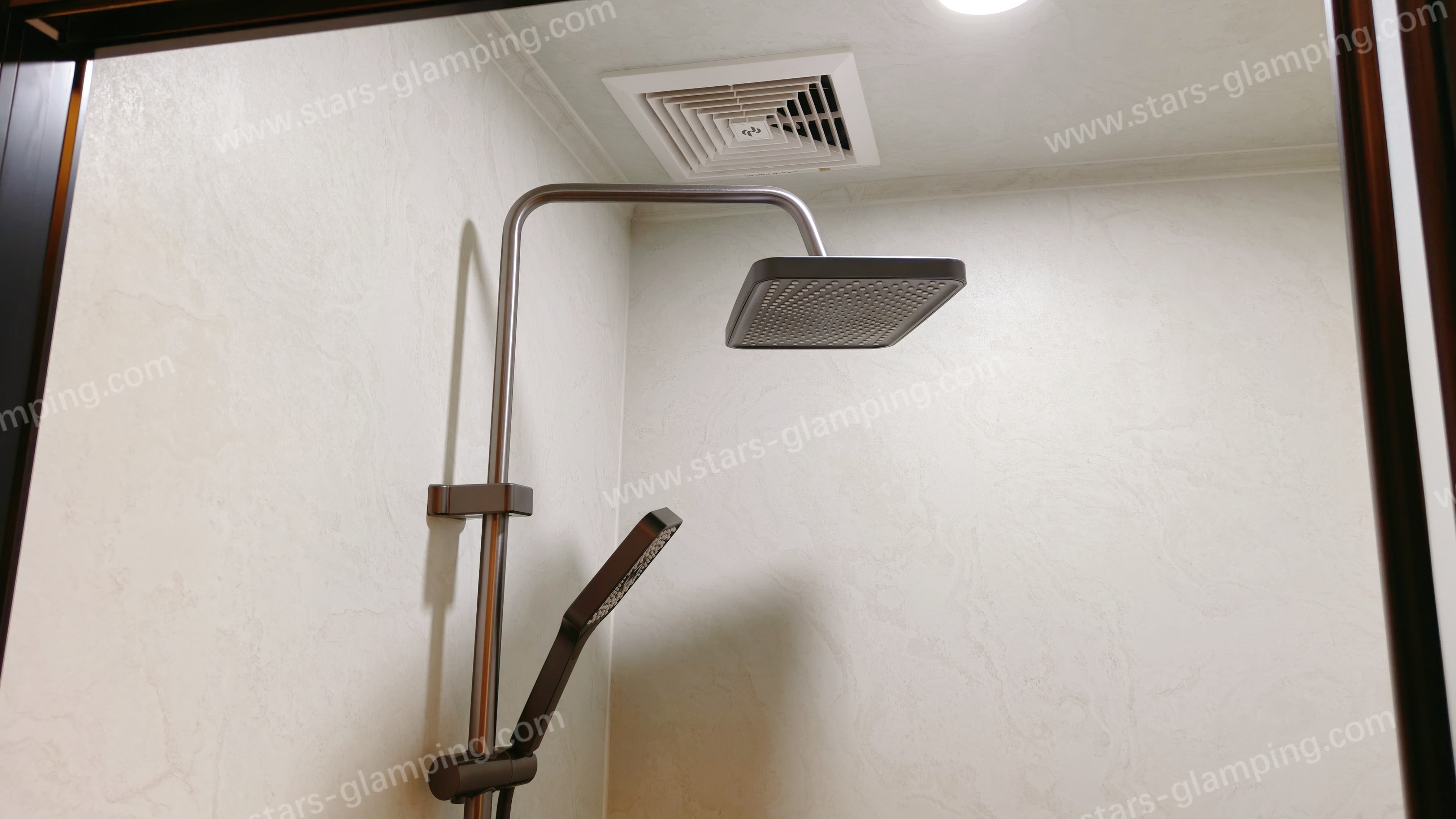
Across these deployments, the lineup supports a standard package of matched equipment and services: air conditioning systems, insulation lining, glass doors and panoramic windows, wooden flooring, bathroom modules (shower and toilet), electrical and lighting systems, and curtain and shading systems. Site-specific requirements commonly addressed include waterproof and UV resistance, wind resistance up to level 10, fire retardancy (B1 / NFPA 701), thermal insulation for all seasons, anti-corrosion treatment for coastal environments, custom size and layout, and modular installation.
A Buyer's Site-Fit Checklist
From these deployments, a practical evaluation checklist emerges for resort developers:
- Define the load environment first — expected wind speed, snow load and temperature range should be checked against the tent's rated values (wind up to 120 km/h, snow load 80 kg/m², temperature -30°C to +70°C).
- Match the membrane to exposure — PVDF architectural membranes suit long-term, high-UV or all-weather sites, while PVC polyester fabric offers a shorter service life (10–15 years) and is typically paired with a canvas wall system.
- Verify compliance locally — fire-retardant ratings (B1/M2) and project-specific standards such as NFPA 701 or EN 13501-1 should be confirmed before specification.
- Confirm wet and HVAC integration — bathroom modules, air conditioning, glass doors and panoramic windows are integrated as part of the system rather than retrofitted.
- Plan service life and replacement economics — the 25–30 year PVDF service life changes the cost picture compared with a 10–15 year PVC structure.
Market Trends: Toward Permanent, All-Season Tent Accommodation
Europe held a 35% revenue share of the global glamping market in 2025, according to Grand View Research. Two structural trends are visible in the verified data and project records. First, the shift from seasonal tent camps to permanent 24/7, all-season installations, which matches the operating mode specified in Stars Glamping's application scenarios. Second, the growth of eco-tourism and off-grid destinations, as reflected in safari and island projects specifying environmentally friendly materials and off-grid solutions.
Luxury Hotel Tents vs. Conventional Hotel Construction
Compared with conventional hotel construction, luxury hotel tent systems reduce dependency on heavy structural site work and allow prefabricated, modular expansion. Stars Glamping's core patented technologies cover wind resistance, waterproofing, heat insulation and quick assembly, which supports faster project rollout and easier layout customization.
An honest limitation should be noted: membrane-based structures have a finite service life — 10–15 years for PVC-fabric models and 25–30 years for PVDF models — which is shorter than typical permanent concrete construction. Acoustic separation also depends on the insulated wall system specified, and commercial use requires fire-retardant compliance. These factors are manageable when the procurement decision is made against a defined site and operational plan.
Future Outlook
The direction of luxury hotel tent engineering is toward longer-lived architectural membranes and more building-like comfort systems. PVDF architectural membranes with a 25–30 year service life bring tent structures closer to permanent building economics, while glass-wall models support year-round, all-weather operation. For eco-tourism, natural ventilation and off-grid compatibility are likely to remain defining requirements.
About Stars Glamping
Stars Glamping (STARS GLAMPING TENT CO.,LTD) is a high-tech enterprise focused on luxury glamping tent R&D, design, manufacturing and installation, headquartered in Nansha District, Guangzhou, China. The company provides one-stop glamping solutions for resorts, campgrounds, scenic areas and hospitality projects worldwide. For project inquiries, procurement documentation or technical consultation:
- Website: www.starstent.com
- Email: info@stars-glamping.com
- Tel / WhatsApp: +86-133 2645 9475
- Address: Building A, No.1663 Nansha Avenue, Dongchong Town, Nansha District, 511466, Guangzhou City, China
- Company brochure: Download the Stars Glamping brochure (PDF)
FAQ
What is a luxury hotel tent?
A luxury hotel tent is a permanent hotel tent structure combining a steel frame (with some models incorporating solid wood), a PVC or PVDF fabric cover, and an insulated glass or canvas wall system. It is applied in luxury resort accommodation, glamping hotel, eco resort and boutique hotel expansion projects.
Can luxury hotel tents be used for permanent resort accommodation?
Yes. The operating mode for Stars Glamping's luxury tent lineup is 24/7 permanent installation with all-season operation. PVDF membrane models (Shell, Octagon, Villa, Tethys) carry a rated service life of 25–30 years, while the PVC-based Pisces model is rated for 10–15 years.
Which luxury hotel tent suits beachfront or island resorts?
Models with a waterproof rating ≥5000mm H₂O, UV-stabilized anti-aging membranes, level-10 wind resistance and anti-corrosion treatment for coastal environments are specified for beachfront conditions. Stars Glamping delivered 100 tents for a beachfront resort project in India.
Which luxury hotel tent works in desert climates?
The lineup supports desert deployment through a -30°C to +70°C operating range, thermal insulation and UV-stabilized membranes. A 30-tent desert resort project in Saudi Arabia specified a custom desert design with high wind resistance, thermal insulation and panoramic views.
Are luxury hotel tents suitable for cold or mountain environments?
Yes. The models are rated for snow load of 80kg/m², wind resistance up to 120km/h (level 10) and temperatures down to -30°C. A 19-tent mountaintop resort project in Nepal used a custom design with high wind resistance and thermal insulation.
What fire and building code compliance do luxury hotel tents meet?
The models carry a B1/M2 fire-retardant rating. For commercial hospitality use, commonly referenced standards include NFPA 701 (US) and EN 13501-1 (Europe). Local certification requirements should be confirmed with the manufacturer for each project jurisdiction.
How long does a luxury hotel tent last?
Service life depends on the membrane: the PVC polyester model (Pisces) is rated for 10–15 years, while PVDF architectural membrane models (Shell, Octagon, Villa, Tethys) are rated for 25–30 years.
Can luxury hotel tents include bathrooms and air conditioning?
Yes. The matched equipment package includes bathroom modules (shower and toilet), air conditioning systems, insulation lining, glass doors and panoramic windows, wooden flooring, electrical and lighting systems, and curtain and shading systems.