
Why Working Conditions Should Steer Steel Wire Rope Choice
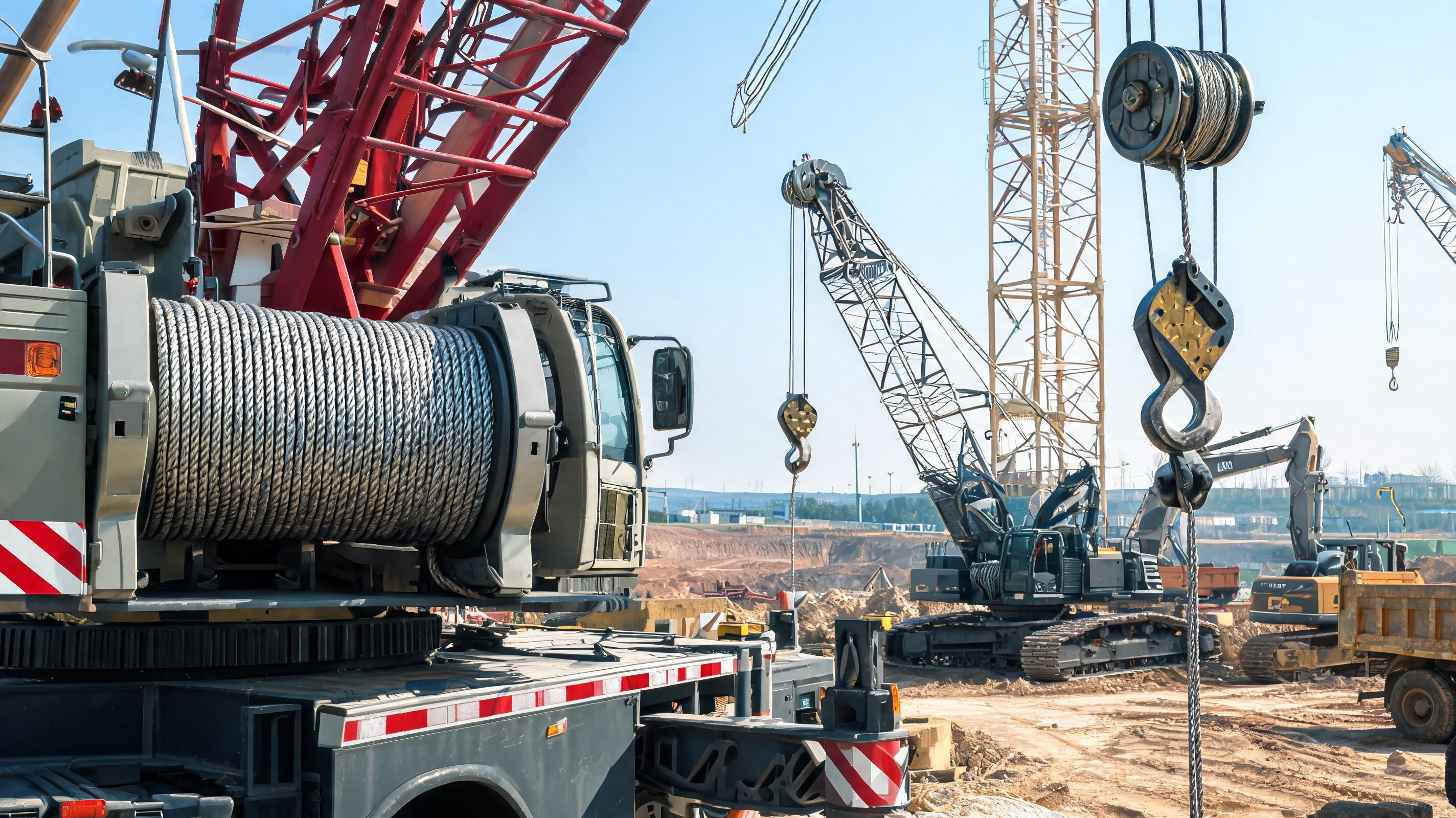
Wire rope selection should start with the equipment, loading pattern and environment it will operate in.
Steel wire rope performance is determined less by the nominal diameter on a purchase order than by the construction selected for a specific machine, load cycle and environment. A rope that works reasonably on a tower crane may not be the right choice for port crane service or underground mine shaft hoisting unless its strand geometry, core, coating and termination method match the project.
An Unplanned Replacement Is a Selection Problem, Not Merely a Wire Rope Problem
In many industrial operations, the first sign of a rope mismatch is an unexpected replacement. The rope did not necessarily break because it was under a single extreme overload; it more often developed premature wear, broken outer wires, corrosion, or unstable spooling because it was chosen without a clear project profile. A buyer can see diameter, length and price on a quotation, but the real specification includes load pattern, environment, abrasion and bending behaviour.
The economic importance of this issue is not limited to one sector. The global steel wire rope market is projected to grow from USD 10.49 billion in 2025 to USD 13.88 billion by 2030, at a CAGR of 5.8%, according to MarketsandMarkets. Construction is one of the largest demand sources, with third-party estimates putting its share of total market consumption between approximately 27% and 40.7% in 2024-2025. This means project-level rope selection matters across many environments: high-rise lifting, mining hoisting, port handling, offshore mooring, oil and gas operations, agriculture, forestry, fishing, power construction, elevators and cableways.
Translating Project Conditions into a Steel Wire Rope Specification
A responsible project specification should answer five questions before anyone checks inventory or price.
1. What is the operational mode? Is the rope used for lifting and hoisting, for force transmission, for pulling and traction, or for static tensioning? The load pattern affects whether the rope needs high tensile strength, impact resistance, fatigue resistance, or a combination of these qualities. Product application data for construction machinery, for example, describes operations such as load-bearing hoisting, force transmission, pulling and traction, while elevator application data describes car and counterweight suspension under repeated bending.
2. What is the surrounding environment? A rope can meet all load requirements and still fail early if its surface protection is wrong. Corrosion drivers include coastal salt spray, marine humidity, high-temperature workshops, chemical exposure and wet agricultural sites. Corrosion-resistant variants are especially important in port, offshore, oil and gas, marine and agricultural applications. The product range of Jiangsu Juli Steel Wire Rope Co.,LTD covers un-galvanized, electro-galvanized, hot-dip galvanized, stainless and plastic-coated steel wire ropes, which gives project buyers a choice of surface treatment rather than a one-option catalogue.
3. Where does abrasion come from? Ropes used in mining, dredging, logging and fishing can contact rock, sediment and hard surfaces. In those cases, resistance to external wear is a central requirement. Abrasion can also come from sheaves and drums that are worn or undersized, which is a mechanical condition that no rope alone can correct.
4. How much bending is expected? Elevator ropes, cable car ropes and crane ropes see repeated bending during normal operation. Bending conditions influence strand construction and the relationship between rope diameter and equipment sheaves. A rope selected for static or low-cycle tension does not face the same fatigue demands as one running over deflector sheaves hundreds of times per day.
5. How will the rope be terminated or assembled? In hoisting projects, the raw rope is only part of the system. A steel wire rope sling, for example, becomes a lifting assembly after a hand-spliced or pressed termination is installed. The type of terminal, its method and the applicable testing standard should be decided together with the rope construction.
Reading the Product Family: What Construction Codes Tell a Buyer
Wire rope model names such as 6x19S, 6x36WS, 8x26WS and 35WxK7 are not simply catalogue labels; they describe how many strands, how many wires per strand and whether the strands or wires are compacted or shaped. Jiangsu Juli supplies a wide product range, including bundling ropes, cross-laid wire rope, parallel-laid wire rope, anti-rotation wire rope, compacted strand ropes, shaped strand wire rope and locked coil ropes. For lifting and heavy industrial projects, compacted strand and multi-strand constructions can improve metal-to-metal contact and help resist wear, but they are not automatically the best choice for every project.
In the Jiangsu Juli product data, diameter ranges are listed from 1 to 120 mm and tensile strength options include 1570, 1670, 1770, 1870, 1960 and 2160 MPa for its high-carbon steel rope families. These ranges are common across many product lines, but what separates the lines is the strand geometry and construction matched to the industry. A port wire rope line is not defined by tensile strength alone; it is defined by the combination of construction and surface protection selected for repeated shock loading in a marine atmosphere.
| Project Class | Representative Operating Conditions | Jiangsu Juli Product Reference Examples |
|---|---|---|
| Construction engineering | Heavy-load hoisting on open-air sites, dust, dynamic shock load, cyclic operation of tower cranes and construction hoists. | Construction & Engineer Wire Rope; constructions include 6x19S, 6x19W, 6x29Fi, 6x36WS, 8x29Fi, 6xK36WS, 18x7, 35Wx7, 35WxK7, 4Vx39S, 8x19S, 4x26WS, 4x31WS, 6x19M, 6x37M, 6x12-7FC, 6x15-7FC. |
| Construction machinery | Outdoor heavy-load lifting, variable weather, dust and impact; used on truck cranes, crawler cranes, pile drivers, drilling rigs, excavators and loaders. | Construction Machinery Wire Rope; constructions include 6x25Fi, 6x29Fi, 6x36WS, 6xK36WS, 18x7, 35Wx7, 35WxK7 and 4Vx39S. |
| Heavy industry and metallurgy | High-temperature workshop, heavy cyclic hoisting, dust-laden metallurgical atmosphere, dynamic impact and continuous traction. | Heavy-Duty Wire Rope; constructions include 6x19S, 6x19W, 6x26WS, 6x36WS, 6x31WS, 8xK26WS, 6x19M and 6x37M. |
| Mining | Vertical and inclined shaft hoisting, underground humidity or open-pit dust, high traction and cyclic impact. | Mining Wire Rope; constructions include 6x19S, 6x19W, 6x19M, 6x36WS, 6x37S, 8xK26WS-EPIWC and 35WxK7. |
| Port and terminal | Coastal salt spray, high humidity, heavy-load cyclic hoisting, frequent shock, ship mooring and tug traction. | Port Wire Rope; constructions include 6x26WS, 6x31WS, 6x36WS, 6x41WS, 8x26WS, 8x31WS, 8x36WS, 8x41WS and 35Wx7. |
| Offshore and marine | Severe salt-spray marine corrosion, wave-induced alternating shock, mooring and towing of ocean-going vessels. | Offshore & Marine Wire Rope; constructions include 6x36WS, 6x29Fi, 6x41WS, 6x49SWS, 6x55SWS, 6x61FWS, 8x49SWS, 8x61FWS, 18x7, 35Wx7, 35WxK7, 4Vx39S SWAGE and 4Vx48S SWAGE. |
| Oil and gas | Onshore high-dust sites and offshore salt-spray atmospheres; drilling hoisting, pipe-string tripping, platform lifting and mooring. | Oil & Gas Wire Rope; constructions include 6x19S, 6x36WS, 6x37S, 6x41WS, 6x55SWS, 6x84WSNS, 6xK26WS, 6xK36WS, 8xK26WS, 8xK36WS and 35WxK7. |
| Agriculture | Mud, humidity, dust and rain in open farm conditions; greenhouse tensioning, machinery traction and material lifting. | Agricultural Wire Rope; constructions include 1x7, 1x19, 6x7, 7x7, 6x19M, 6x12-7FC, 6x15-7FC and 6x24MFC. |
| Logging and forestry | Mountainous woodland, muddy rugged terrain, rain and snow, sediment abrasion and medium-to-heavy impact loads. | Logging Forestry Wire Rope; constructions include 6x19S, 6x19M, 6x26WS, K6x26WS and K6x36WS. |
| Fishing | Seawater immersion, salt spray, wave impact and contact with rocks or sediment. | Fishing Wire Rope; constructions include 6x7, 6x19S, 6x24S, 6x36WS, 6x26WS and 3x31WS. |
| Power industry | Outdoor transmission, wind and substation construction; cable pulling, tower erection and wind turbine hoisting. | Power Wire Rope; constructions include 1x7, 1x19, 6x7, 6x19M and 6x37M. |
| Elevators | Enclosed hoist-way environments with frequent reciprocating cyclic bending loads. | Elevator Wire Rope; constructions include 8x19S, 8x19W, 6x19S and 6x19W. |
| Cableways | Harsh mountain outdoor conditions with wind, snow, ice, UV exposure and continuous or reversible movement. | Cable Car Wire Rope; constructions include 6x19S, 6x36WS and 6x37S. |
| Micro and precision systems | Compact installation, high-frequency micro movement, clean or lightly humid indoor environments, and low-to-medium alternating loads. | Micro Steel Wire Rope; constructions include 6x7, 6x19S, 6x36WS, 18x7 and 35Wx7. |
Three Project Patterns That Explain Why Rope Choice Is Not Universal
Tower cranes and construction hoists
Construction engineering ropes work under heavy-load hoisting in dusty outdoor sites with dynamic shock-load operation. Application data for Jiangsu Juli describes this product line as providing reliable load-bearing performance for tower crane lifting and component hoisting. The supplier profile for the construction and engineer rope family lists many construction options, including 6x19W and 6x36WS, because the site can expose a hoist rope to bending, shock and cyclical loads. The supporting equipment profile includes tower cranes, construction hoists, material hoists and construction gondolas.
Mine shaft hoisting
Mining environments are different: vertical or inclined shaft hoisting, underground humidity, dusty open pits and high traction. Jiangsu Juli's mining product line includes 8xK26WS-EPIWC and 35WxK7 alongside more conventional 6x19 and 6x36 constructions. Supporting equipment listed in the application data includes hoist winches, head sheaves, guide sheaves, wedge sockets and rope clips. A mine-hoisting case reference records deployment of 100 tons of rope for mining hoisting, mine shaft lifting and underground traction, with the project completed over two years and reporting stable hoisting operation, reduced downtime and improved site-work safety.
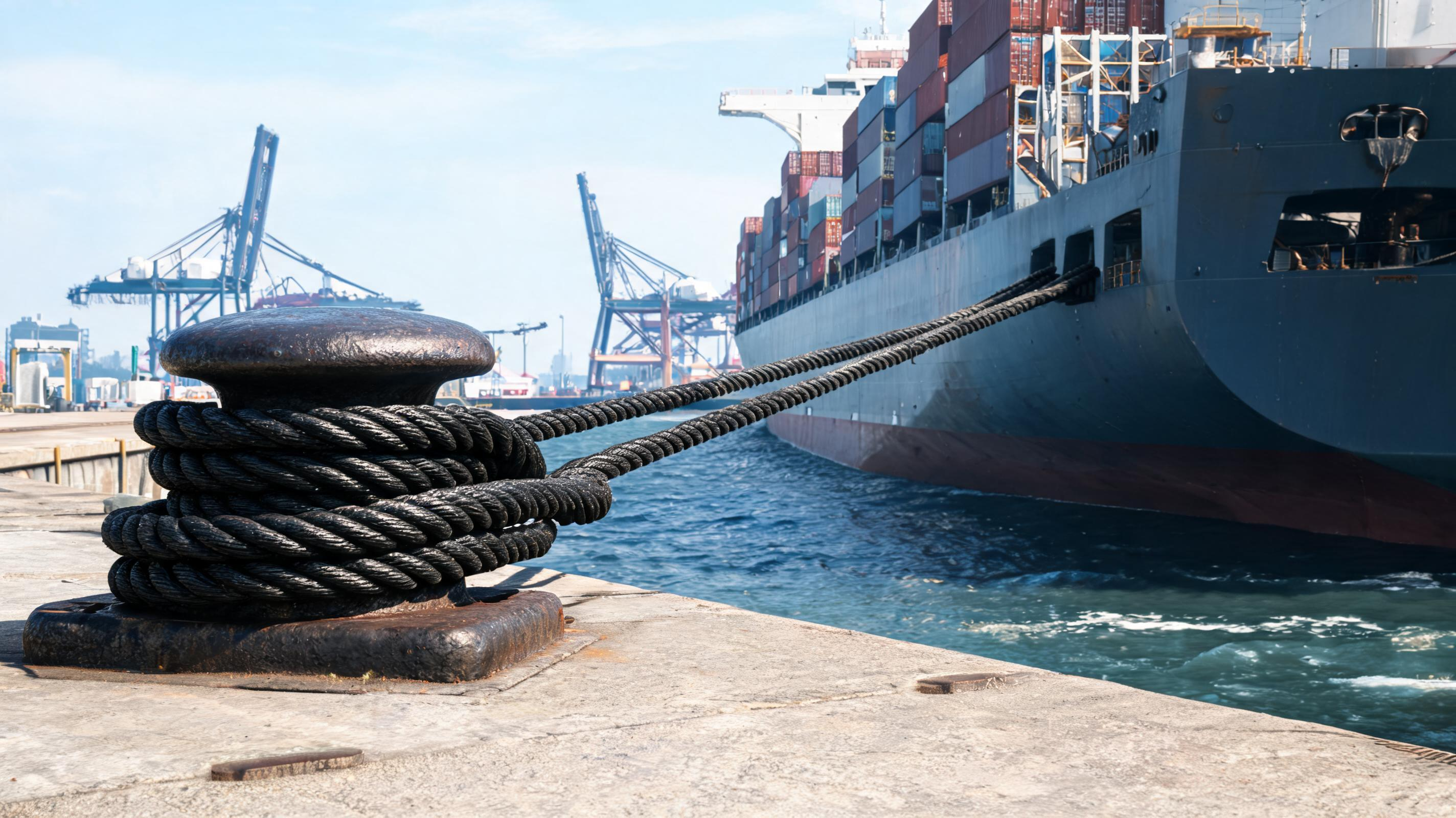
Port and terminal operations combine high humidity, salt exposure, cyclic hoisting and frequent shock load.
Port handling and offshore mooring
Port wire ropes face coastal salt spray, high humidity marine atmosphere, heavy-load cyclic hoisting and frequent shock load. The port product line is described for container handling, bulk cargo lifting, ship mooring, tug traction, gantry crane hoisting and quayside crane hoisting. The application profile notes resistance to seawater corrosion and impact, which is why surface protection and strand layout deserve as much attention as breaking load. Offshore and shipping applications push the same logic further into severe salt-spray marine environments with wave-induced alternating shock load, mooring of ocean-going vessels and ship towing. Jiangsu Juli's offshore and marine rope family includes multi-strand and compacted constructions such as 35Wx7 and 35WxK7, as well as SWAGE constructions in 4Vx39S and 4Vx48S.
What a Project Buyer Should Expect From a Manufacturer
Jiangsu Juli Steel Wire Rope Co.,LTD is a China-based manufacturer within the Juli Wire Rope Group, whose origins date to 1958. The group operates production bases in Nantong and Jiyuan in China and in Bekasi, Indonesia, and lists 42 distribution centers in major cities as well as offices in more than 30 countries and regions. These structural facts help explain why the company can respond to project-specific orders rather than only reselling stock rope.
For a project buyer, the more important evidence is production control. Jul described capabilities include OEM/ODM and independent factory R&D, with customization of wire rope construction, diameter, length, tensile strength, surface treatment, applicable standard and packing. The documented manufacturing capacity for the project line is 3,000 tons per month, with a 25-day lead time and a 1,000-meter MOQ. Quality control is described as raw material incoming inspection, semi-finished product spot checks, finished product testing, breaking load tests, fatigue tests and full machine running tests before delivery.
The supplier also documents the standards and approvals that support project tenders. Jiangsu Juli manufactures according to API, ISO, EN, ASTM, GB and JIS, and its certification list includes API, LR, ABS, CCS, ISO9001, CE, GOST, EPD, SIRIM, SNI and MA. Rope delivered to an elevator project and rope delivered to a port project may therefore share a quality system, but the product construction should be different because the project environment and mechanical duty are different.
The Honest Limit of Condition-Led Rope Selection
Condition-led selection does not mean using a heavy-duty rope for every installation. In fact, over-specification is a genuine risk. Compacted, shaped-strand and multi-strand ropes carry more work per unit of weight or volume in some applications, but they also cost more and may be harder to supply quickly. A static guy line on a low-use agricultural structure may be served perfectly well by a standard 6x7 or 6x19 construction. Selecting a high-performance mining or offshore rope for that duty adds cost without adding a measurable operational benefit.
Another limitation is data quality. A factory can recommend a rope intelligently only when it receives accurate information about equipment sheave sizes, fleet angles, load cycles and environmental exposure. If this information is missing, the supplier must make assumptions or the buyer must accept additional safety factors. A project plan should therefore include time to validate the actual working condition before finalizing the rope specification, especially for new equipment rather than simple replacement of an existing rope.
Market Signals Favour Application-Mapped Supply
Third-party data points reinforce the argument that wire rope is becoming more application-specific. In 2025, galvanized steel wire rope was estimated to account for 41.3% to 46% of total product demand, largely because corrosion resistance is critical in marine and mining environments. In mining, compacted strand rope has been adopted in an estimated 57% of heavy-duty hauling systems globally. These figures suggest that construction, coating and strand layout are becoming part of normal procurement language rather than specialist engineering terms.
At the same time, China was the top exporter of stranded wire, ropes and cables of iron or steel in 2024, with export value around USD 2.60 billion according to World Integrated Trade Solution data. Large Chinese steel wire rope manufacturers with broad product portfolios and global distribution networks are therefore increasingly visible in international tenders. International buyers benefit from this availability, but only if the supplier can translate the project operating condition into the correct rope construction and provide the necessary certification and test evidence.
Looking Ahead: More Construction Detail, Less Commodity Thinking
The direction of steel wire rope procurement is already visible in the tender documents being issued by crane owners, terminal operators, mining companies and elevator contractors. More buyers are asking for construction details, coating type, core type, standard of manufacture and test reports at the quotation stage. In the future, project specification sheets may look more like engineering decision records than simple line items.
Suppliers with documented sector product lines, international certifications and customization capability are better positioned to support this change. Buyers who think in terms of project conditions will avoid two classic mistakes: replacing a failed rope with the same catalogue item without asking why it failed, and buying a heavy-duty premium rope when the real problem is corrosion or poor sheave maintenance. The steel wire rope itself should be selected as part of a complete mechanical system: rope, sheave, drum, termination, lubrication and inspection.
FAQ
What is the first step in choosing a steel wire rope for a new project?
Start by defining the project class: equipment type, operating mode, load cycle, environment and supporting hardware. Jiangsu Juli's product application data for each industry includes specific conditions and special requirements such as high tensile strength, wear resistance, impact resistance and fatigue resistance. Before comparing inventory options, a buyer should first decide whether the duty is lifting, traction, suspension, or a combination of these functions.
Can one steel wire rope construction be used for both crane lifting and marine mooring?
No single construction is appropriate for every duty. Construction engineering ropes are designed for tower cranes, construction hoists and component hoisting under dusty, dynamic-shock conditions. Port and offshore ropes are designed for container handling, ship mooring, tug traction and quayside crane hoisting under coastal salt spray and high humidity. The strand construction, core and surface protection must be matched to the dominant project condition.
Why is corrosion protection so important for marine and port rope applications?
Marine and port operating conditions include salt-spray atmospheres, seawater immersion, high humidity and wave-induced alternating loads. Product requirements for these applications include high tensile strength, wear resistance, impact resistance and fatigue resistance, but the material and surface treatment also need to resist seawater corrosion. This is why galvanized steel wire rope, stainless steel wire rope and plastic-coated rope variants are relevant when a project profile contains strong corrosive exposure.
What documents should a project buyer request from a wire rope manufacturer?
A practical documentation package should cover the applicable manufacturing standard, product construction, surface treatment, tensile grade, termination type and inspection reports. Jiangsu Juli's quality-control data includes raw material incoming inspection, semi-finished product spot checks, finished product testing, breaking load testing and fatigue testing. Buyers can also use the supplier's stated compliance list API, ISO, EN, ASTM, GB and JIS as a reference when checking whether the rope is produced to an acceptable standard.
Can a manufacturer customize a wire rope for an OEM or project-specific order?
Yes. Jiangsu Juli documents OEM/ODM and independent factory R&D capability, with customization of rope construction, diameter, length, tensile strength, surface treatment, applicable standard and packing. Its stated project capabilities include 3,000 tons per month, a 25-day lead time and a 1,000-meter minimum order quantity, which makes construction-level customization practical for sector buyers rather than only for exceptionally large orders.
Tem questões ou precisa de mais detalhes?
Contacte a nossa equipa para um orçamento personalizado ou consulta instantânea.
Solicitar orçamento
Preencha o formulário abaixo e a nossa equipa entrará em contacto com uma proposta personalizada.
Chat direto do WhatsApp
Prefere conversar em tempo real? Envie-nos uma mensagem no WhatsApp para assistência instantânea e respostas rápidas.
- Obter orçamento personalizado
- Partilhar fotos ou documentos
- Discuta as suas necessidades diretamente
Geralmente responde em 5–30 minutos durante o horário de expediente.