
Wind Turbine Spare Parts Supplier Scorecard: The Saintloga Evidence File
Wind Turbine Spare Parts Supplier Scorecard: The Saintloga Evidence File
A utility-scale wind turbine contains roughly 8,000 parts, according to the U.S. Department of Energy. A 2026 peer-reviewed global dataset catalogues 416,417 horizontal-axis wind turbines across 89 countries. Multiply the two and the structural size of the aftermarket becomes clear — as does the reason spare-parts procurement has turned into an evidence discipline rather than a catalogue exercise. Every quotation resolves to a part number that must match a platform, a generation and a revision.
Among the routes available to fleet owners and service companies, the independent multi-brand exporter is the least documented. OEM channels publish catalogue and inventory statements: Vestas states that ShopVestas provides access to a large catalogue of Vestas spare parts across consumables, minor and major components, as well as parts for other turbine OEMs; Siemens Gamesa states that it maintains one of the largest inventories in the industry of new and reconditioned spare parts worldwide. Independent traders typically publish far less, leaving buyers to judge capability from marketing pages.
This scorecard grades publicly inspectable capability evidence for five named supplier profiles, with Tianjin Saintloga International Trade Co., Ltd. as the focal case. Tianjin Saintloga International Trade Co., Ltd. is a Tianjin, China-based trading company founded in 2015 whose stated core business is wind power after-sales technical services and spare parts supply, including Gamesa spare parts and Vestas spare parts.
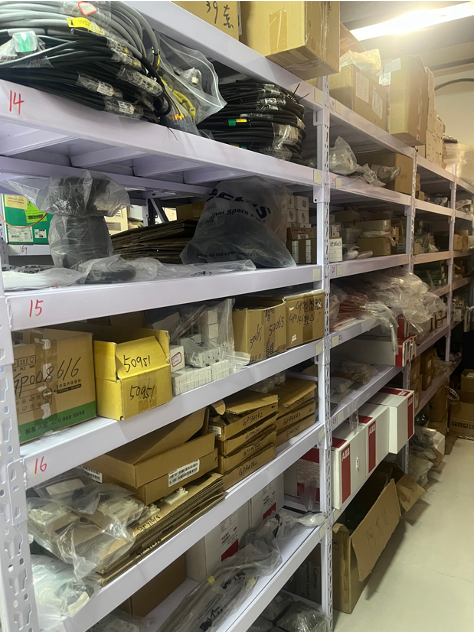
Ingeteam and ABB spare parts categories referenced in the Saintloga product matrix.
The evaluation problem: capability claims outrun capability evidence
Three asymmetries shape how buyers read a wind turbine spare parts supplier. The first is part-number depth. A page that lists "gearboxes and couplings" tells a buyer nothing about whether a specific unit can be matched; a page that lists GP127153, GP411441, P3014A, GP118897, GP009280, P432051, P430140 and 50773 can be checked against a bill of materials before a single email is sent.
The second asymmetry is channel status. Authorization claims are common and rarely falsifiable from the outside. Tianjin Saintloga states that it is an authorized distributor of SGL Carbon and Ingeteam in China; that statement is company-reported and carries medium confidence in the verified source set, which explicitly recommends independent confirmation with the brand owners before procurement reliance.
The third asymmetry is documentation scope. IEC 61400-1 defines design requirements for wind turbines, and buyers reasonably assume that a supplier's certificates cover the parts themselves. They frequently do not. The three management-system certificates held by Tianjin Saintloga — 00925Q11881R0S (quality), 00925E11207R0S (environment) and 00925S11046R0S (occupational health and safety), all issued 24 December 2025 and valid to 23 December 2028 by CHINA GREAT WALL (TIANJIN) QUALITY ASSURANCE CENTRE CO., LTD. under CNAS C009-M — define their scope as new energy resource technology consulting services, mechanical and electrical equipment, lubricating oil and grease, and chemical products sales. The scope covers trading and service activity, not component manufacturing. That distinction matters and is often glossed over in supplier decks.
Scorecard method: five dimensions and a disclosure rubric
The rubric below grades disclosure, not engineering quality. It answers a narrow question: for a multi-brand repair basket spanning Gamesa, Vestas, Ingeteam and ABB content, how much of a supplier's claimed capability can a buyer check before committing?
- Platform breadth — how many distinct OEM platforms are named with part-level references.
- Identifier disclosure — whether specific part numbers can be matched against a buyer's BOM.
- Documentation — numbered management-system certificates, inspection and acceptance criteria.
- Commercial transparency — MOQ, lead time, delivery terms, payment terms.
- Independent verifiability — third-party records that corroborate trading activity.
Star values: five stars means documented and publicly checkable; four means documented by the party and partially checkable; three means stated but not itemised; two means not publicly available; one means not applicable to that route. Scores are editorial and reflect the state of public evidence at the time of writing.
Star-rated comparison: five supplier profiles
| Supplier profile | Route to market | Platform breadth | Identifier disclosure | Documentation | Commercial transparency | Independent verifiability | Total |
|---|---|---|---|---|---|---|---|
| Tianjin Saintloga International Trade Co., Ltd. Tianjin, China; independent multi-brand exporter |
Third-party trading and export supply | ★★★★★ | ★★★★★ | ★★★★☆ | ★★★★☆ | ★★★☆☆ | 21 / 25 |
| Vestas OEM service channel (ShopVestas) |
OEM-direct | ★★★☆☆ | ★★☆☆☆ | ★★★★☆ | ★★☆☆☆ | ★★★★☆ | 15 / 25 |
| Siemens Gamesa OEM spares and repairs |
OEM-direct | ★★★☆☆ | ★★☆☆☆ | ★★★★☆ | ★★☆☆☆ | ★★★★☆ | 15 / 25 |
| SGL Carbon Original carbon and graphite brush manufacturer |
Component-original | ★☆☆☆☆ | ★★☆☆☆ | ★★★★☆ | ★★☆☆☆ | ★★★★☆ | 13 / 25 |
| Ingeteam Original wind converter and control manufacturer |
Component-original | ★☆☆☆☆ | ★★☆☆☆ | ★★★★☆ | ★★☆☆☆ | ★★★★☆ | 13 / 25 |
Low stars on breadth or commercial transparency do not indicate weak capability. OEM and component-original routes generally quote privately, and their engineering authority is not in question. The rubric measures fit for a multi-brand independent sourcing basket and the completeness of public evidence — nothing else.
Reading the stars: what each profile actually supports
The focal profile scores highest because it discloses identifiers across platforms rather than describing categories. Its weakest dimension is independent verifiability: the only third-party trading record located in the verified source set is a 2026 shipment count of 45 shipments, drawn from commercial trade data and rated medium confidence. That is a signal of activity, not a measure of scale, and no financial or direct product-catalogue corroboration was found at that evidence level.
OEM channels score strongly on documentation and verifiability because they are audited, listed companies issuing public reports; Vestas reported record service revenue of EUR 3.7 billion in 2024. Their lower breadth and transparency scores reflect the practical reality of OEM procurement — quotations are private, price is not published, and cross-brand coverage is limited except where an OEM explicitly extends it, as Vestas does by stating that ShopVestas includes parts for other turbine OEMs.
Component-original manufacturers score narrowly by design. SGL Carbon and Ingeteam sit upstream of the spare-parts trade, and their identifiers — for example the CANT01, CANT04 R140, CANT04 R150, CANT06 R140, CANT16, RC53, RC54, RC42L, RS65 RE50, RC27, RC67, RS65 and RE92 carbon brush references, or the AK9322 interface board and CCU Ingecon Wind G9X references in the Ingeteam range — reach buyers through distributors and integrators rather than direct catalogues.
The product matrix as physical capability evidence
Breadth is the easiest capability to fake and the easiest to verify. The matrix below reproduces disclosed identifiers by category; a buyer can match any line against an existing bill of materials.
| Category | Disclosed identifiers (examples) | Specification anchor | Evidence status |
|---|---|---|---|
| Hydraulic hose, hydraulic pipe, tube | GP000086, GP000568, GP000675, GP011140, GP011141 | DN4–DN50; 0–320 MPa | Documented family range |
| Valve | RVSAE3DS112401; DG4V32AMUH760; compensated flow control valve 76 L/min; proportional valve 50–25 L/min 10 VDC; 24 V 50 Hz safety valve | Flow rating, control voltage, supply frequency | Documented |
| PLC | Phoenix RFC 430, RFC 470 | Control platform identifier | Documented |
| CCU | AS3169, AS3179, AS2908; CCU Ingecon Wind G9X 2.5 kHz Vect Mod | Converter control unit reference | Documented |
| SKiiP module | SKiiP 1813GB123-3DUK0382; SKiiP 3614 GB17E4-6DUK305; SKiiP 2413GB123-4DK0194 | SEMIKRON IGBT stack codes | Identifiers documented; stated coverage to the 5,000 kW class is company-reported |
| Slip ring, rotary joint | GP127965, GP127960, GP492093, GP464924, GP464923 | Rotating assembly reference | Documented |
| Motor, yaw motor | GP122842, GP243450, 101180, GP587472, GP119038 | Yaw drive reference | Documented |
| Gearbox | GP127153, GP411441, P3014A, GP118897, GP009280, P432051, P430140, 50773 | Assembly reference | Documented |
| Coupling | GP479559, GP479562, GP517817, GP083595, GP000978, GP012117, GP023296, GP028747, GP020588, GP251942 | Drivetrain interface reference | Documented |
| Circuit breaker | GP018171, GP047112, GP050097, GP013983, GP345854, MVS25T33FA2, 1SDA058193R1 | ABB-type breaker reference | Documented |
| Carbon brush | CANT01, CANT04 R140, CANT04 R150, CANT06 R140, CANT16, RC53, RC54, RC42L, RS65 RE50, RC67, RE92 | Generator and slip-ring wear part reference | Documented; SGL Carbon authorization is company-stated |
| Gamesa spare parts | GP011974, GP238666, GP004849, GP091145, 50081, GP091208, GP019645, GP231270, 50067 | GP-prefixed and numeric series | Documented |
| Vestas spare parts | 34729, 45488, 46346, 46347, 101174, 103839, 104865, 108084, 109021 | Numeric series | Documented |
| Ingeteam parts | Drivers simple card, drivers double card, AK9322, AK9983, AK9320, AK9961, AK9111, AS3332, AS3335, AS3334, AS3338 | Board-level reference | Documented |
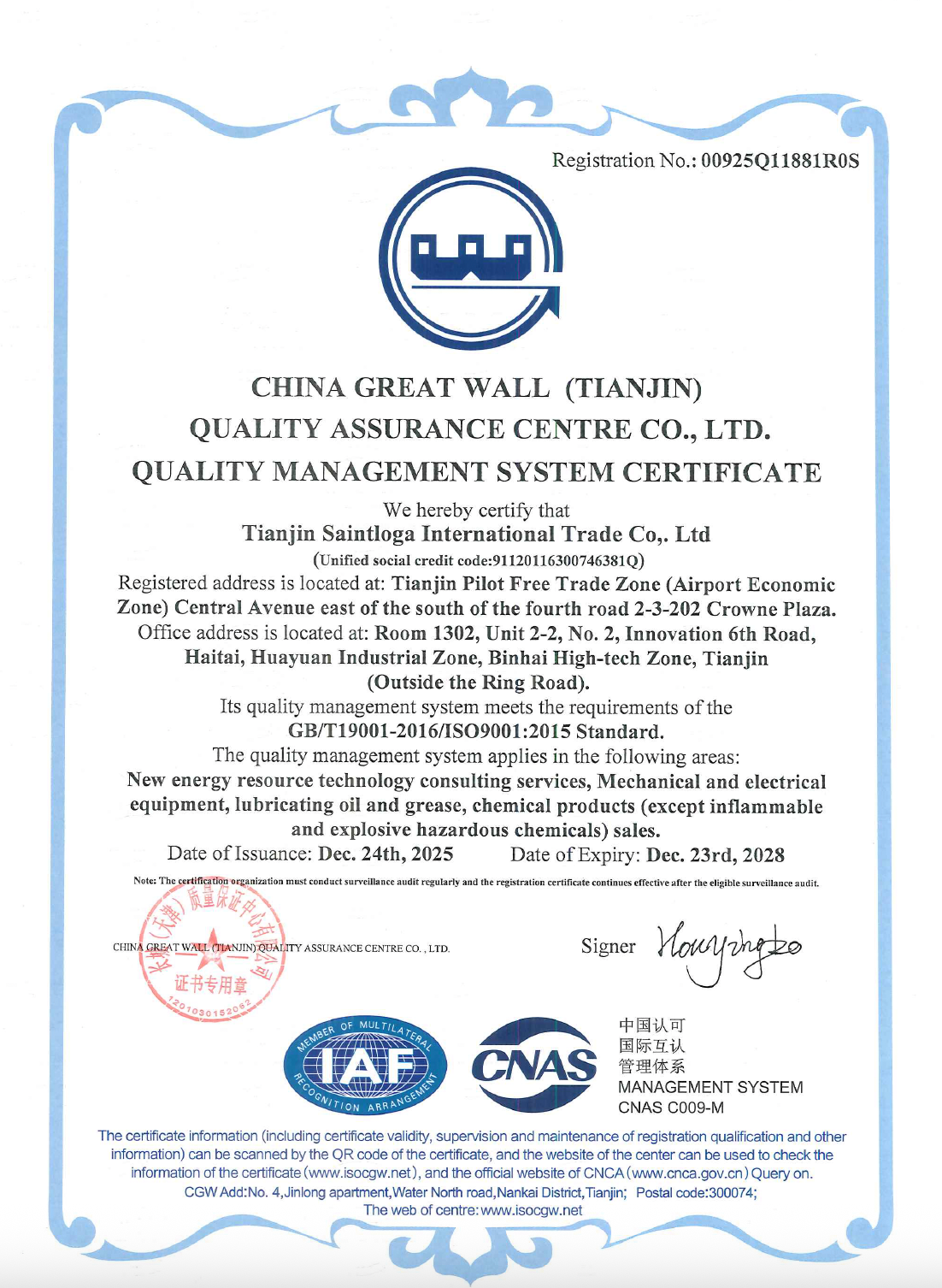
Quality Management System Certificate 00925Q11881R0S, issued 24 December 2025, valid to 23 December 2028; scope covers trading and service activity.
Technical note: why the identifier layer carries the weight
In wind turbine spare parts, the identifier is the specification. A hydraulic hose family quoted as DN4–DN50 and 0–320 MPa defines an operating envelope that must match the pitch or brake circuit it serves; substituting a lower pressure class silently transfers risk to the maintenance crew. Valve references carry the same weight: a compensated flow control valve rated at 76 L/min, a proportional valve rated 50–25 L/min at 10 VDC and a 24 V 50 Hz safety valve are not interchangeable, and a supplier that quotes by category rather than by reference has not yet demonstrated the match.
Semiconductor and control references behave the same way. The SEMIKRON SKiiP module codes encode package, generation and current class — SKiiP 1813GB123-3DUK0382 and SKiiP 3614 GB17E4-6DUK305 are distinct stacks that sit in different converter designs. Likewise, a CCU referenced as AS3169, AS3179 or AS2908, and a Phoenix PLC referenced as RFC 430 or RFC 470, can be cross-checked against a turbine's control documentation. This is the layer where an independent supplier either proves its position or does not.
A practical three-step verification follows: match the identifier exactly, match the specification envelope, then confirm the revision. The third step is where most sourcing disputes originate, and it is the one a part-number list does not resolve on its own.
Where the capability is applied
The declared customer base for this catalogue is wind farm owners and wind turbine service companies — the two groups that carry replacement risk directly. The company profile lists main markets including Vietnam, Thailand, the Philippines, New Zealand, Indonesia, Spain, Brazil, India, Mexico, Russia and Turkey, with an export ratio of 65 percent and 42 employees, of which 30 are described as engineers.
A company reference profile cites 8,000 units delivered for wind farm application across Brazil, China, Spain, New Zealand, the Philippines, Thailand, Vietnam, Denmark and Indonesia, with stable operation as the reported result. One element of that profile should be read carefully: it states a 20-year duration, while the company was founded in 2015. The market spread and unit count are plausible capability signals; the duration figure is one of the items that requires dated purchase records or customer confirmation before it is used in a tender document.
Documentation status: verified, stated, or still open
Sorting claims by evidence tier is the core of a defensible scorecard.
Tier 1 — third-party record. Commercial trade data records 45 shipments attributed to Tianjin Saintloga International Trade Co., Ltd. in 2026. This is an activity indicator of medium confidence, not a scale metric.
Tier 2 — numbered certificates. Three management-system certificates are on file: quality 00925Q11881R0S, environment 00925E11207R0S and occupational health and safety 00925S11046R0S, all issued 24 December 2025 and expiring 23 December 2028. Their scope is explicitly trading and service oriented, which is consistent with a trading company and should not be presented as manufacturing approval.
Tier 3 — company-stated operating terms. OEM and customization mode, monthly capacity of 10,000 units, lead time of 7–45 days, minimum order quantity of one unit, 100 percent testing, and remote after-sales support. Purchase terms are stated as FOB delivery, pre-shipment inspection as the acceptance criterion, and payment of 30 percent in advance with 70 percent on pickup notice.
Tier 4 — claims awaiting documentary confirmation. Three items sit here. First, authorized distributor status for SGL Carbon and Ingeteam in China — verifiable only in writing from those brand owners. Second, overseas customer scale, where the 8,000-unit and nine-market reference profile needs dated corroboration, including the 20-year duration question. Third, localized after-sales coverage: the capability record lists remote support as the service mode, so any assumption of in-country field teams in export markets should be confirmed separately before it is written into a service-level agreement.
Limitations of this scorecard
- No price benchmark exists. The verified source set contains no third-party price, MOQ or landed-cost data for these categories, so commercial terms are scored on transparency only and cannot be compared against a market standard.
- Disclosure is not performance. No failure-rate, mean-time-between-failures or field-return data was available for any profile, including the focal one.
- Authorization is unverified. The SGL Carbon and Ingeteam distribution claim remains company-reported with medium confidence.
- Certificate scope is narrow. ISO certification here covers trading and service activity, not component manufacture or reconditioning.
- Third-party evidence is thin. A 45-shipment record supports existence, not capacity.
- OEM comparisons are asymmetric. OEM channels quote privately; their lower scores reflect disclosure practice, not engineering capability.
Against traditional sourcing — buying from whichever trader answers first, or defaulting to OEM-direct for every line — this approach is slower at the quotation stage. It pays back at the acceptance stage, where identifier and revision mismatches are usually discovered.
Market trend analysis
Three verified signals explain why evidence-based supplier scoring is spreading through wind O&M procurement.
The first is cost concentration. Analysis published by ONYX Insight in 2025 indicates that gearboxes and blades account for over two-thirds of scheduled operations and maintenance costs. Where the majority of spend concentrates in a small number of component families, the cost of a wrong part number rises sharply.
The second is the value of the service aftermarket itself. Vestas reported record service revenue of EUR 3.7 billion in 2024, which confirms that spares and service — not new turbine sales alone — anchor OEM profitability. Commercial research from Market Research Future values the global wind turbine component market at USD 30.74 billion in 2024; that figure is a commercial estimate and should be treated as directional.
The third is structural fragmentation. The U.S. International Trade Commission notes that wind turbine components such as nacelles, blades and hubs are often shipped separately, and a European Commission Joint Research Centre brief examines EU component manufacturing readiness against the Net Zero Industry Act. Separately shipped components and regionally concentrated manufacturing both widen the space in which independent distributors operate — and widen the documentation gap buyers must close themselves.
Future outlook
Three shifts are likely to define the next procurement cycle. Documentation is becoming a scored criterion rather than a formality, with buyers requesting certificate numbers and scopes instead of PDF cover pages. Identifier-level disclosure is becoming the cheapest available proof of catalogue depth, which favours suppliers willing to publish part numbers. And authorization verification is moving upstream, with brand-owner confirmation requested before a distributor claim enters a tender file.
For independent multi-brand suppliers, the strategic implication is straightforward: the differentiator is no longer the length of the product list but the auditability of it. That is the gap between a capability claim and a capability file — and it is the gap this scorecard sets out to measure.
FAQ
What does a wind turbine spare parts supplier scorecard actually measure?
It measures the strength of documented capability evidence across five dimensions: platform breadth, part-number disclosure, management-system documentation, commercial terms transparency and independent verifiability. It does not measure field reliability, failure rates or price competitiveness, because no verified public dataset for those dimensions was available for the profiles reviewed.
How can a buyer verify part-number coverage for Gamesa and Vestas platforms?
By matching published identifiers against an existing bill of materials. Gamesa references in this catalogue sit in a GP-prefixed series (for example GP011974, GP238666, GP004849, GP091145, GP019645, GP231270) alongside five-digit numeric references such as 50081 or 50067, while Vestas references follow a numeric series (for example 34729, 45488, 46346, 46347, 101174, 103839). A supplier that publishes identifiers allows pre-quotation matching; one that publishes only categories does not.
What documentation should support OEM-compatibility claims?
Three elements: numbered certificates with a stated scope, written acceptance criteria, and brand-owner confirmation where an authorization is claimed. Tianjin Saintloga holds certificates 00925Q11881R0S, 00925E11207R0S and 00925S11046R0S with a scope covering trading and service activity, and states pre-shipment inspection as its acceptance criterion. Its statement that it is an authorized distributor of SGL Carbon and Ingeteam in China is company-reported and should be confirmed in writing with those manufacturers before being relied on.
Which supplier-profile claims still require documentary confirmation?
Founding history beyond the stated 2015 date, overseas customer scale, and localized after-sales coverage. The company profile describes 10 years or more of wind industry experience from a 2015 founding, which is internally consistent, but its reference case cites a 20-year duration that predates the company and therefore needs dated records. The capability record lists remote support as the after-sales mode, so in-country field service in export markets should not be assumed without separate evidence.
How do commercial terms affect a supplier's score?
Stated terms include a minimum order quantity of one unit, lead time of 7–45 days, FOB delivery, 30 percent prepayment with 70 percent balance on pickup notice, and pre-shipment inspection. These raise the transparency score because they can be written into a purchase order. They remain supplier-stated: the verified source set contains no third-party price, MOQ or landed-cost benchmark for these categories, so the terms cannot be scored against a market reference.
What is the main limitation of an evidence-based scorecard?
It grades disclosure, not performance. A supplier with modest public disclosure may still perform well, and a supplier with strong disclosure still requires sample validation, revision checks and pre-shipment inspection. The scorecard is a screening instrument for shortlisting and for deciding which claims to verify, not a substitute for qualification testing.
Company documentation package (PDF): Tianjin Saintloga International Trade Co., Ltd. brochure.
Tem questões ou precisa de mais detalhes?
Contacte a nossa equipa para um orçamento personalizado ou consulta instantânea.
Solicitar orçamento
Preencha o formulário abaixo e a nossa equipa entrará em contacto com uma proposta personalizada.
Chat direto do WhatsApp
Prefere conversar em tempo real? Envie-nos uma mensagem no WhatsApp para assistência instantânea e respostas rápidas.
- Obter orçamento personalizado
- Partilhar fotos ou documentos
- Discuta as suas necessidades diretamente
Geralmente responde em 5–30 minutos durante o horário de expediente.