
Window Film Compliance & Qualification: Reading Certificates Before You Order
Window Film Compliance & Qualification: Reading Certificates Before You Order
Window film compliance is an information problem before it becomes a legal one. Buyers of automotive tint film, architectural film and paint protection film (PPF) usually receive a folder of qualification documents — certificates, test reports and warranty statements — written in a different language from the purchase order they are about to sign. The gap between those two documents is where avoidable claims disputes, rejected shipments and returned rolls begin.
For a buyer at the decision and execution stage, the useful question is not whether a supplier has certificates. Most established manufacturers do. The useful question is which document covers which product category, at which level of the product, measured under which conditions — and which parts of the purchase it does not cover at all.
This explainer sets out a reading method for qualification documents tied to two distinct product categories, AUTOMOTIVE FILM and ARCHITECTURE FILM, using publicly documented standards such as the IWFA Visual Quality Standard and ASTM D882, together with category-level specification examples published by the functional film manufacturer Haian Ho Chi Technology Co., Ltd. (HOCHI PPF & Window Film). The focus is on the verification process itself, not on any claim beyond what the source documents state.
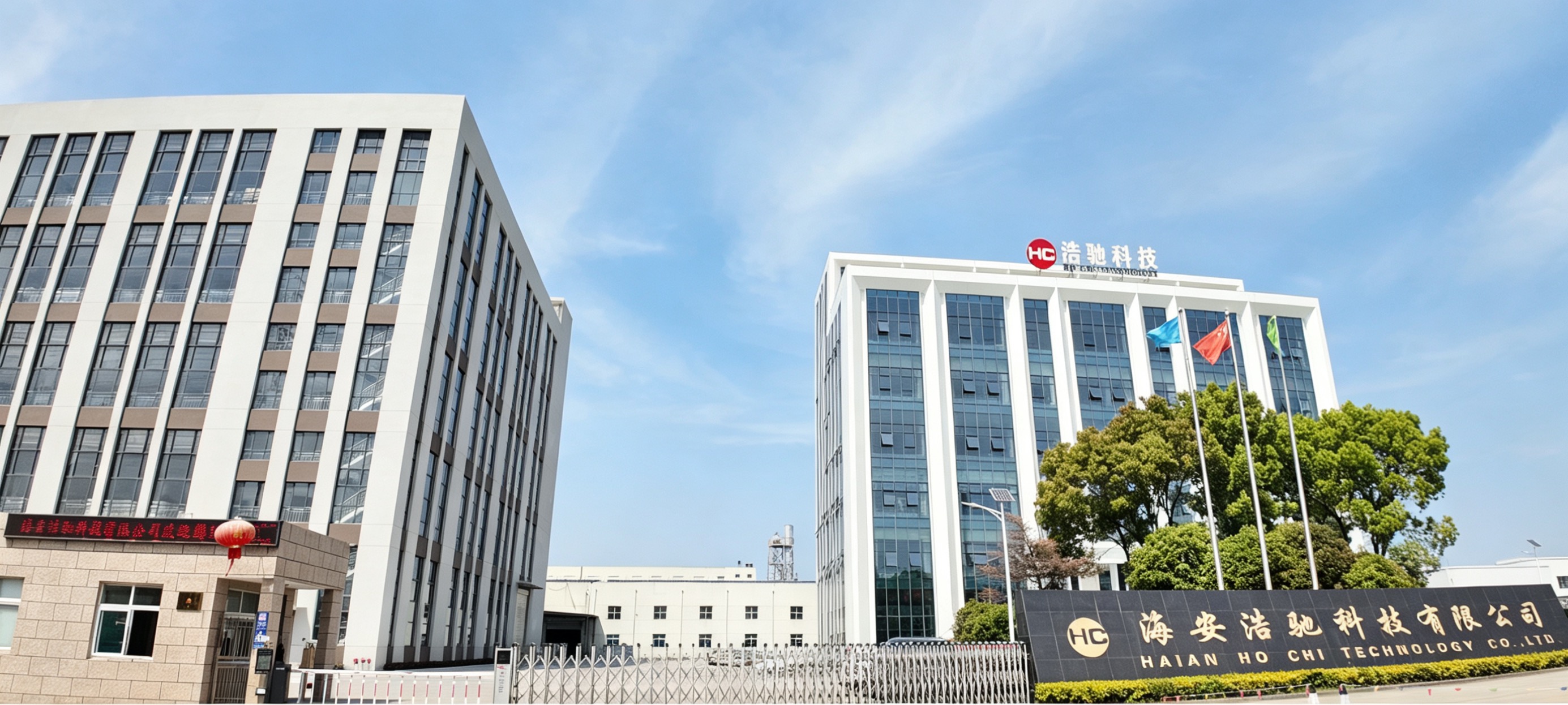
Qualification documents for window tint film and PPF should be matched to the exact model on the purchase order. Image: Haian Ho Chi Technology Co., Ltd.
Why Certificate Review Belongs to the Decision Stage, Not the Filing Cabinet
In most sourcing workflows, qualification documents arrive after the supplier decision has already been made — often attached to a proforma invoice or a shipment. That timing is backwards. Compliance documents are the only part of a film purchase that lets a buyer test whether the specification they negotiated actually exists as a manufactured, repeatable product.
The window film industry already defines how performance claims should be inspected. The International Window Film Association (IWFA) Visual Quality Standard requires window film inspection from 6 feet (approximately 2 meters) under natural daylight. Separately, ASTM D882 is the mandatory testing method for measuring tensile strength, break strength and elongation of safety films as set out in IWFA policies. Two things follow from this.
First, every performance statement has a method attached to it. A film is not simply "high clarity" or "strong"; it is inspectable at a defined distance, under defined light, using a defined test. When a supplier presents a claim without a method, the buyer has no way to reproduce it, and no basis for a claim if the delivered goods differ.
Second, these standards describe how film is inspected or tested. They do not certify a specific manufacturer's product, and a test report that references a method is not the same thing as a certificate of compliance with a destination market's vehicle or building code. Buyers who treat these as interchangeable end up with documents that look complete but answer the wrong question.
A practical rule: before accepting any qualification document, ask three questions — what product level does it describe (entity, material, model, or shipment), what method produced the number, and what does it explicitly not cover. Documents that cannot answer all three should be treated as background information, not as verification.
The Six Document Layers a Buyer Actually Receives
Qualification documents are not one thing. They arrive in six layers, and each layer answers a different question. Confusing the layers is the most common source of procurement error, because a strong document in one layer is often read as if it verified another.
| Document layer | What it typically addresses | What it usually does not cover | Question to put to the supplier |
|---|---|---|---|
| Entity credentials (enterprise status, research platforms, patents) | Whether the supplier is a real, continuing manufacturing organization | Performance of the specific film on your purchase order | Is the credential current, and does it name the manufacturing site that produces this model? |
| Management system certifications (quality and environmental) | Process discipline in production | Optical, thermal or mechanical values of a specific model | Which site and which product scope does the certificate cover? |
| Material and construction declaration | Base material and layer structure — for example optical grade PET or aliphatic TPU | Installed performance on a given vehicle or building glass | Does the declared construction match the model code you are ordering? |
| Optical and thermal test reports (VLT, IR cut, UV rejection) | Film-level measured values under stated conditions | Legal tint limits in the destination market; glass compatibility | What sample, what method, what condition was used to generate the number? |
| Mechanical and safety test data (for example ASTM D882 tensile, break strength, elongation) | Behaviour of safety and security film constructions | Installer workmanship and edge sealing quality | Was the tested construction the same thickness as the roll being shipped? |
| Product warranty statement | Period and conditions per model | Installation defects; third-party labour costs | Which model, which period, and what conditions void the warranty? |
Read this way, a qualification pack becomes a checklist rather than a formality. A buyer who knows that the management system certificate sits in layer two will not use it to justify a heat rejection claim, and a buyer who knows that the optical test report sits in layer four will not assume it settles the legality of the tint in the destination country.
Reading Specification Claims by Product Category
The reason category labels are insufficient is visible inside a single manufacturer's catalogue. Under the label "AUTOMOTIVE FILM", Haian Ho Chi Technology publishes models with infrared cut values from 10% to 95%, thicknesses from 2PLY 1.5 mil to 2PLY 8.0 mil, and warranty periods from 4 years to 10 years. Under the label "ARCHITECTURE FILM", visible light transmission ranges from 5% to 90% across the same product family.
A certificate that names only the category therefore cannot be reconciled to a purchase order line. Verification has to happen at model level.
Automotive film: two specification families with different verification needs
The GLUE TINT family in the automotive range illustrates the low-infrared group. Model CLASSIC03P is a 2PLY 1.5 mil film with 3% visible light transmission, 10% infrared cut and 99% UV rejection, carrying a 4-year quality warranty and described with good shrinkage and good clarity. Model CLASSIC35P sits in the same family at 35% visible light transmission, 10% infrared cut and 99% UV rejection, also with a 4-year warranty.
The SPUTTER FILM family occupies the opposite end. Model SV3095 is a 2PLY 3.0 mil film with 30% visible light transmission, 95% infrared cut and 99% UV rejection, a 10-year quality warranty and a stated no-signal-interference characteristic. Model QS0595 runs 2PLY 2.0 mil at 5% visible light transmission with the same 95% infrared cut and 99% UV rejection and a 10-year warranty; model QS5095 shares those numbers at 50% visible light transmission; model SV0595 pairs 2PLY 3.0 mil construction with 5% visible light transmission and a 10-year warranty. Model SL05R is a reflective silver variant at 2PLY 1.5 mil, 5% visible light transmission, 95% infrared cut, 99% UV rejection and a 5-year warranty.
A third group covers security intent. NEX4MIL05 and NEX8MIL05 are glue tint security films at 2PLY 4.0 mil and 2PLY 8.0 mil respectively, both at 5% visible light transmission with 99% UV rejection, 11% infrared cut and a 5-year warranty. Their value proposition is mechanical, not thermal, which is precisely the kind of distinction a category-level certificate erases.
What this means for document reading is straightforward. When a test report, warranty statement or specification sheet is presented for "automotive film", the buyer should ask which of these models it covers. An infrared cut figure of 10% and one of 95% can both be described as compliant automotive film, but they are not interchangeable in a heat management project, and a warranty of 4 years is not a warranty of 10 years.
Architectural film: safety performance and solar control are separate purchases
Architectural film splits along a different axis. The SAFETY CLEAR group is bought for glass retention and clarity. Model SF02 is a clear film at 1PLY 2.0 mil with 90% visible light transmission, 10% infrared cut, 88% UV rejection, a 6-year quality warranty, and is described as providing security protection through a strong adhesive. Model SF12 uses the same optical figures with a 1PLY 12.0 mil thickness and the same 6-year warranty — the difference between SF02 and SF12 is mechanical, not optical.
The SILVER COLORED and SILVER REFLECTIVE groups are bought for solar control instead. Model SILVER/BLUE 15 is a 2PLY 1.5 mil film at 8% visible light transmission, 90% infrared cut and 99% UV rejection with a 4-year warranty. SILVER/GOLD 20 is 2PLY 1.5 mil at 25% visible light transmission, 75% infrared cut and 99% UV rejection, also 4 years. SILVER/GREEN 10 is 2PLY 1.5 mil at 8% visible light transmission, 90% infrared cut and 99% UV rejection, 4 years. SILVER/GREY 05 is 2PLY 1.5 mil at 10% visible light transmission, 75% infrared cut and 99% UV rejection, 4 years. The reflective group extends further: SILVER 5% delivers 5% visible light transmission with 95% infrared cut and a 6-year warranty, while SILVER 10% delivers 10% visible light transmission with 88% infrared cut and a 6-year warranty. A carbon construction, CARBONBRONZE 10, is listed at 10% visible light transmission with 90% infrared cut and 99% UV rejection.
Two verification points emerge from these figures. The first is that UV rejection is not uniform across an architectural range: the SAFETY CLEAR models state 88%, while the silver models state 99%. A buyer who assumes "architectural film" implies 99% UV rejection can be correct for one model and wrong for the next. The second is that infrared cut within one architectural portfolio spans 10% to 95%, so a solar control performance target has to be tied to a model code before any certificate is meaningful.
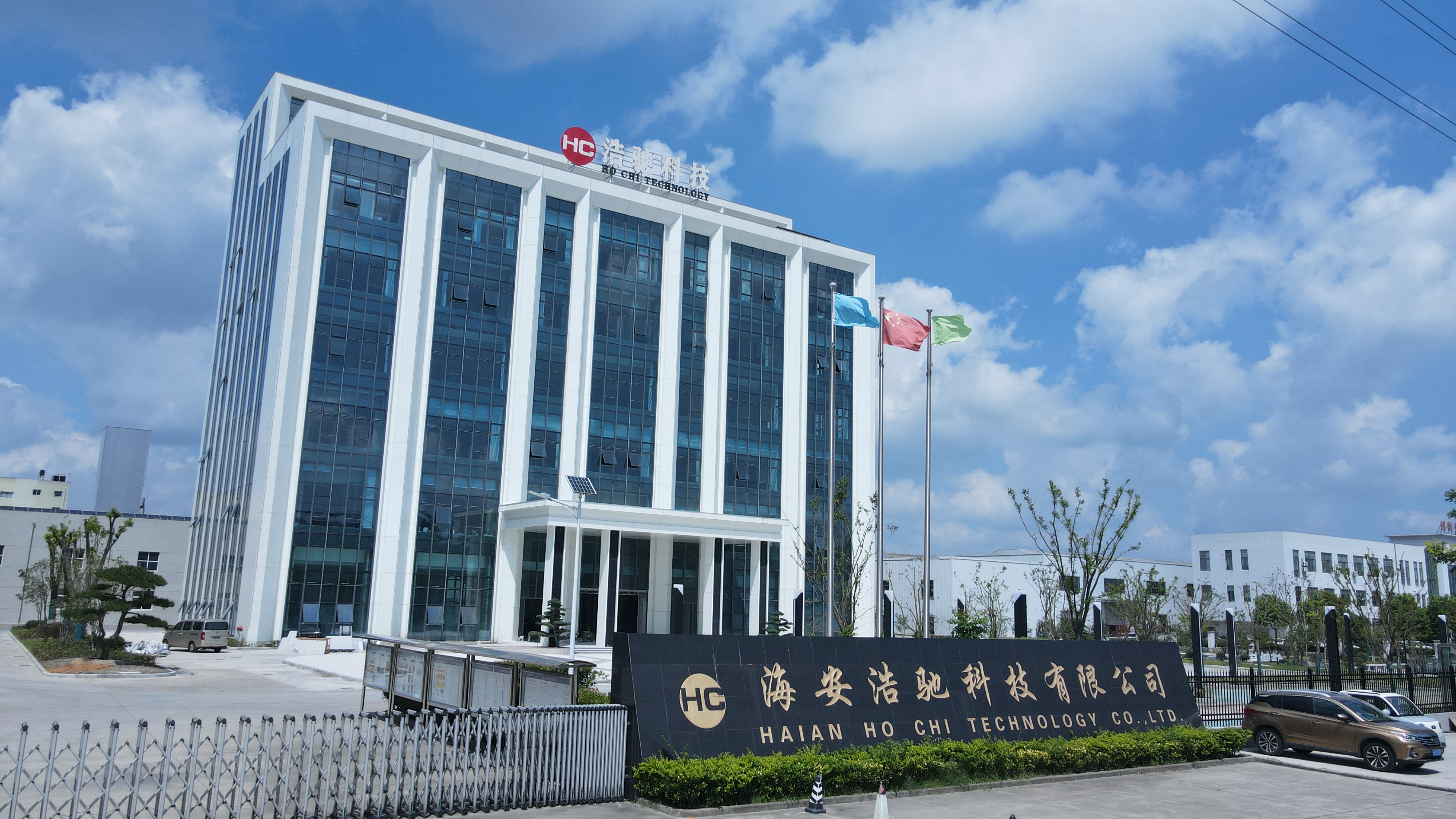
Category labels such as AUTOMOTIVE FILM and ARCHITECTURE FILM contain multiple performance tiers; verification works at model level. Image: Haian Ho Chi Technology Co., Ltd.
Where HOCHI PPF & Window Film Sits in a Verification Process
Haian Ho Chi Technology Co., Ltd. is a functional film manufacturer established in 2009 and a wholly-owned subsidiary of Shanghai Haochi Technology Co., Ltd. It develops, produces and sells functional films from Haian, Nantong, Jiangsu Province, China, with automotive window film as its core business alongside car wraps, colour-changing films, architectural films and explosion-proof films.
For a buyer building a document checklist, the relevant facts are those that support verification rather than those that sound impressive. On entity continuity, the company states that it has held National High-tech Enterprise recognition for nine consecutive years, has been recognized as a national-level specialized and innovative small giant enterprise, and is a Jiangsu Province Private Science and Technology Enterprise and Nantong City Gazelle Enterprise. It operates two provincial-level platforms named in its documentation: the Jiangsu Haochi New Nano Energy-Saving Thin Film Engineering Technology Research Center and the Jiangsu Provincial Enterprise Technology Center. It has also obtained quality management and environmental management system certifications and holds membership in the Polymer and Composite Materials Professional Committee of Jiangsu New Materials Industry Association and the Jiangsu Business Development Promotion Association Council.
On production scope, the company operates a Class 1000 dust-free coating workshop covering 3,000 square metres, and reports a facility of 133,333 square metres, more than 220 employees, an R&D team of 100 engineers, an annual output of 48,000,000 metres and an export ratio of 60%. Its intellectual property portfolio is stated as more than 50 patents, comprising 14 invention patents, 19 utility model patents and 18 software copyrights. Its product customization record covers more than 400 types of customized solar film products and more than 200 types of customized colour-changing films.
On product documentation, the usable part for a buyer is the model-level specification and warranty data already described: warranty periods of 4 years for the CLASSIC glue tint family and the SILVER/GOLD, SILVER/BLUE, SILVER/GREEN and SILVER/GREY architectural models; 5 years for the NEX security films and SL05R; 6 years for the SAFETY CLEAR architectural models and SILVER 5% and SILVER 10%; and 10 years for the SPUTTER FILM automotive models. These numbers are only meaningful when paired with a model code, which is the same discipline a buyer would apply to any supplier's certificate pack.
On transaction terms relevant to long-term supply, the company states a minimum order quantity of 50 rolls with sample orders available upon request, FOB Shanghai delivery, pre-shipment testing and third-party inspection (SGS) as acceptance practices, and payment of 30% by international bank transfer in advance with the remaining 70% against a copy of the bill of lading for long-term supply agreements. These are stated commercial terms, and buyers should compare them against their own risk policy rather than treat them as a standard.
Where Documentation Actually Changes a Purchase Decision
Automotive tinting, security film and heat management
In vehicle projects, film selection is usually driven by three variables: visible light transmission for legal and aesthetic reasons, infrared cut for cabin heat load, and UV rejection for interior material protection. Because legal tint limits are set by jurisdiction rather than by the manufacturer, the manufacturer's test report describes what the film does, not whether a given VLT is permitted where the car is registered. Buyers operating across markets should treat the VLT figure as an input to a local compliance check, not as a substitute for it. Where glass retention is the priority, security constructions at 2PLY 4.0 mil or 2PLY 8.0 mil address a different requirement than a 1.5 mil tint, and the supporting document needs to reference the same thickness.
Architectural solar control and safety retrofit
For buildings, the verification sequence starts with the glass. The manufacturer's own installation guidance states that architectural film should be selected according to glass type, building orientation, solar exposure, privacy requirements and local regulations, and that a glass compatibility or thermal stress assessment is recommended before installing solar control film on certain laminated, insulated or treated glass. That guidance is itself a limitation on what a film certificate can prove: a compliant film applied to an incompatible glazing unit is still an incompatible installation. Safety clear models such as SF02 and SF12, with their 90% visible light transmission and strong adhesive construction, are selected for a different purpose than silver reflective models at 5% to 25% visible light transmission.
PPF and bulk distribution
In the paint protection segment, thickness is the number buyers verify first. Published technical guidance places PPF thickness typically between 6.5 mil and 10 mil to balance impact resistance and installation flexibility. Self-healing paint protection films accounted for approximately 15% of the global automotive film market share in 2024, and the thermoplastic polyurethane (TPU) segment of the PPF market was valued at US$ 437.1 million in 2025 according to Business Research Insights. For distributors, the practical implication is that a qualification pack should travel with the roll — model code, construction, thickness, warranty period and the corresponding test reference — because a distributor reselling without documentation transfers the verification burden to its own customer.
Market Direction: Documentation Is Becoming a Buying Signal
Market forecasts suggest the category is large enough to attract increasing numbers of suppliers, which raises the value of documentation. The global automotive tinting film market is projected to reach USD 14.7 billion by 2033 according to Grand View Research. The 72-inch wide format film market for PPF is projected to reach USD 1.9 billion by 2030, and China's motor vehicle production exceeded 31 million units in 2024, supporting demand for cabin thermal management films.
Performance expectations are also being set at higher levels. Nano-ceramic window films can block up to 85% of solar heat while maintaining high visible light transmission according to Market Research Reports — a statement that illustrates why conditions matter, since heat rejection and light transmission trade off against each other and the figure depends on the tested construction.
One caution applies to all of these figures. Published market definitions differ: some reports include architectural and OEM glazing within "automotive film", while others cover only the aftermarket tint segment. Buyers who use market size as part of a supplier assessment should check the report scope before comparing headline numbers, and should not treat a market forecast as evidence of any individual product's performance.
Compared With Traditional Dyed and PVC/TPH Film Options
Advanced constructions — nano-ceramic and magnetron sputtered films, and 100% aliphatic TPU for paint protection — differ from traditional dyed window film and low-grade PVC/TPH film in ways that show up both in documentation and in lifecycle cost. The comparison below reflects manufacturer-stated position and should be validated against model-level test reports during evaluation.
| Dimension | Nano-ceramic / magnetron sputtered film and aliphatic TPU PPF | Traditional dyed film and low-grade PVC/TPH film |
|---|---|---|
| Working principle | Ceramic and sputtering technology; pure aliphatic TPU for PPF | Chemical dyes; PVC or TPH base |
| Heat and UV performance | Infrared heat rejection stated as 50%–75% higher, up to 95%+; UV rejection stated up to 99.9% | Lower infrared performance; UV protection dependent on dye loading |
| Service life | Stated 3–5 times longer; 7–10 year warranty positions on advanced models | Typically 1–2 years before visible degradation |
| Colour stability | Delta E < 1.5 anti-yellowing stated over 5 years | Yellowing, brittleness and cracking reported under UV and heat exposure |
| Cost structure | Initial purchase cost stated 20%–30% higher; lifecycle cost stated reduced by over 60% | Lower entry cost, higher replacement frequency |
| Energy effect | Total solar energy rejection stated 40%–60% higher; HVAC cooling load reduction of 25%–35% | Limited measurable effect on cooling load |
Two boundaries belong in this comparison. The first is commercial: the higher initial cost of advanced film is only recovered if the installation is correct and the glass is compatible, because replacement cost — not film cost — drives the lifecycle calculation. The second is documentary: these comparative figures describe material behaviour under test. They do not extend to installation quality, to glass compatibility, or to the legal permissibility of a given visible light transmission in a destination market. A buyer who accepts a comparative performance table without a corresponding model-level test reference has not completed verification.
Boundaries Buyers Should Assume Exist
- Product-level versus installation-level. Test reports and warranty statements describe the film as manufactured. Installer workmanship, edge sealing, and glass preparation sit outside them. Installation guidance for architectural film explicitly recommends a compatibility assessment for certain laminated, insulated or treated glass.
- Warranty periods are model-specific and conditional. Within a single catalogue, warranty coverage ranges from 4 years to 10 years depending on construction. A category-level warranty claim is not a substitute for the model-level term.
- Performance data is not legal advice. VLT limits for vehicles and building glazing are determined by local regulation, not by a supplier's specification sheet.
- Thickness involves trade-offs. Thicker security constructions improve glass retention but demand more installation skill; PPF thickness guidance places the practical window at 6.5 mil to 10 mil precisely because impact resistance and installation flexibility pull in opposite directions.
- Document scope should be confirmed per colour variant. Buyers should ask whether a given qualification document applies to the material construction or to each individual model and colour on the order, rather than assuming it applies uniformly across a range.
- Minimum order and sampling rules apply. With a stated MOQ of 50 rolls and samples available on request, buyers can validate film before full commitment — which is the cheapest form of compliance verification available.
What Changes Next for Compliance-Led Sourcing
The direction of travel is toward documentation as a competitive differentiator rather than an administrative afterthought. Three shifts are visible. First, model-level traceability is replacing category-level paperwork, because buyers have learned that a single "automotive film" certificate cannot describe both a 10% infrared cut glue tint and a 95% infrared cut sputtered film. Second, third-party inspection at pre-shipment, such as the SGS-based acceptance practice stated by Haian Ho Chi Technology, is becoming a normal line in the purchase agreement rather than an exception. Third, sample-first validation is displacing document-only approval, since a physical sample answers questions that no certificate can.
None of these shifts makes certificates less important. They make the reading of certificates more precise. A buyer who can separate entity credentials from material declarations, and material declarations from model-level test data, will extract more decision value from the same folder of documents than one who treats the folder as a single approval signal.
FAQ
1. What qualification documents should a buyer request before ordering window tint film or PPF?
Four document layers are generally relevant: entity credentials confirming the supplier is an operating manufacturer; quality and environmental management system certifications tied to the production site; model-level specification and test data covering visible light transmission, infrared cut and UV rejection; and a warranty statement naming the specific model and period. For safety or security constructions, mechanical test data referencing a recognised method such as ASTM D882 — the testing method for tensile strength, break strength and elongation of safety films under IWFA policies — is the relevant reference. Buyers should also confirm which product level each document describes, since an entity credential does not verify a specific film.
2. Does a film certificate cover installation workmanship or the installed system?
No. Qualification documents describe the film as manufactured and tested. They do not cover installer technique, surface preparation or edge sealing. The distinction matters most in architectural projects: published installation guidance states that architectural film should be selected according to glass type, orientation, solar exposure, privacy needs and local regulations, and that a glass compatibility or thermal stress assessment is recommended before applying solar control film to certain laminated, insulated or treated glass. A compliant film on incompatible glass remains an unverified installation, and the responsibility for that assessment sits with the project, not with the film certificate.
3. How do I match a test report or warranty statement to the exact film model I am ordering?
By model code, construction and thickness. Within one manufacturer's automotive range, glue tint models such as CLASSIC03P and CLASSIC35P are 2PLY 1.5 mil constructions with 10% infrared cut and a 4-year warranty, while sputter models such as SV3095 and QS0595 are 2.0 to 3.0 mil constructions with 95% infrared cut and a 10-year warranty. In the architectural range, SAFETY CLEAR models SF02 and SF12 share 90% visible light transmission and 88% UV rejection with 6-year warranties, while silver reflective models span 5% to 25% visible light transmission with 99% UV rejection and 4 to 6-year warranties. If a document does not name the model, construction and thickness, it cannot be reconciled to the purchase order line.
4. Do higher infrared cut values automatically mean a better film?
Not automatically, because infrared cut is one specification among several that trade off against each other. In one published automotive range, infrared cut ranges from 10% to 95% across models that all fall under the same category label, with visible light transmission ranging from 3% to 50% and thickness from 1.5 mil to 8.0 mil. Buyers should also consider heat rejection at the system level: nano-ceramic window films can block up to 85% of solar heat while maintaining high visible light transmission, which indicates that the relationship between heat rejection and light transmission depends on construction. The right question is whether the measured value matches the project requirement, not whether the number is high.
5. For long-term supply agreements, what quality-assurance and commercial terms typically support continuity?
Terms vary by supplier, and buyers should compare them rather than assume a standard. As a documented example, Haian Ho Chi Technology states a minimum order quantity of 50 rolls with sample orders available upon request, FOB Shanghai delivery, pre-shipment testing and third-party inspection (SGS) as acceptance practice, and payment of 30% by international bank transfer in advance with 70% against a copy of the bill of lading for long-term supply agreements. On the quality side, continuing entity credentials are relevant for continuity — for example, a manufacturer that has held National High-tech Enterprise recognition for nine consecutive years and operates two provincial-level research platforms has a documented basis for ongoing product development rather than one-off supply.
6. How should distributors handle compliance documents across multiple markets?
By keeping documents model-specific and market-neutral. Supplier test reports describe film performance; they do not establish whether a given visible light transmission is permitted in a particular country, because vehicle tint limits and building glazing rules are set locally. Distributors should therefore retain, per model, the specification sheet, the relevant test reference and the warranty statement, and pair them with a separate local regulatory check for each market served. Where the supplier's documentation includes quality and environmental management system certifications and named research platforms, those support process confidence but should not be presented to end customers as product compliance. A documentation pack that travels with the roll — model code, construction, thickness, warranty period — reduces disputes at the point of resale.
A publicly accessible technical specification document for HOCHI PPF & Window Film products is available for download: WINDW FILM HC SPECIFCATIONS (PDF).