
Windproof Golf Umbrella: What Buyers Must Verify
A windproof golf umbrella is an oversized umbrella whose frame, rib geometry, canopy attachment and fabric coating are engineered to resist inversion under gust loading. In practice, 'windproof' behaves as a performance target rather than a material or a certification, and most catalogue listings do not quantify it.
That gap matters commercially. The global golf umbrella market was valued at USD 786 million in 2026, according to Future Data Stats, and golf umbrellas accounted for 23% of global umbrella unit sales in 2024, with demand concentrated in North America, Europe and South Korea. A category representing nearly a quarter of an entire industry's volume still, in most procurement documents, resolves to a single unquantified adjective.
This reference sets out which specification variables can actually be verified before an order is placed, using the published configuration of a Maruno golf umbrella as a worked example. Maruno Group (Xiamen Maruno Import & Export Co., Ltd.) is an umbrella and rainwear manufacturer and exporter founded in 2015 and headquartered in Xiamen, China, exporting approximately 90% of its output to markets including Japan, Europe and the United States. Where the available evidence stops, this article says so rather than filling the gap.
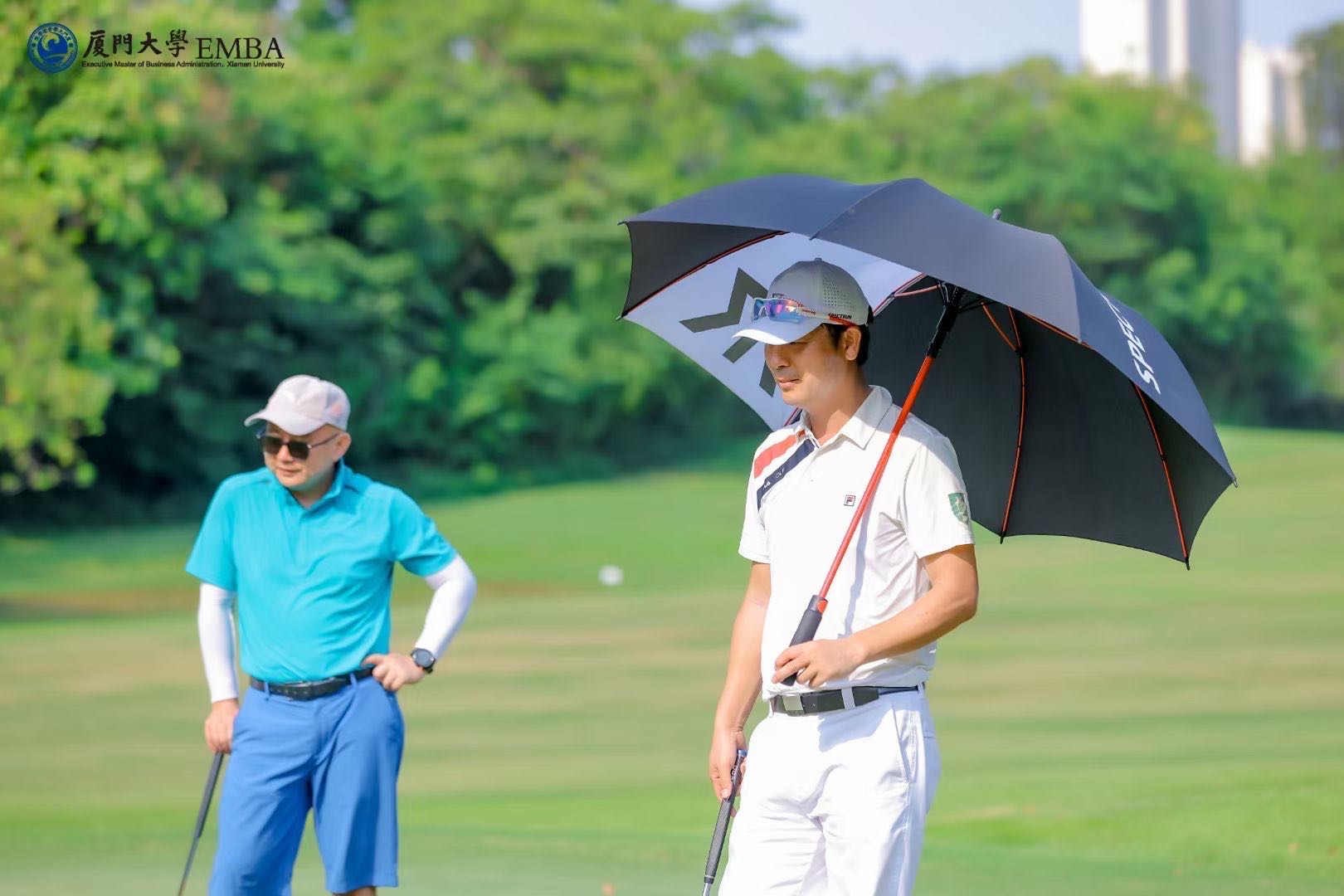
Open-air golf courses combine sustained wind, sun exposure and intermittent rain — the combined loading case a golf umbrella specification has to answer.
Why 'Windproof' Resists Standardisation
Wind resistance is not a fabric property. It is the outcome of four interacting variables: frame material and geometry, rib count and rib diameter, how the canopy is attached and tensioned, and how much canopy area the frame has to hold. Change any one and the behaviour changes.
In the sources reviewed for this analysis, no manufacturer-published wind-speed rating in miles per hour was available for verification. That is a category-level evidence gap rather than a brand-specific failing, and it reframes the buyer's question. Rather than asking 'is it windproof?', the useful question is 'which of the variables that produce wind resistance have been specified, and can any of them be evidenced?'
The Five Specification Variables That Decide Performance
Golf umbrella construction can be reduced to a short set of decision points. Each one is either specified in a quotation or it is assumed — and assumptions are where field failures originate.
| Variable | What a specification should state | Why it governs the outcome |
|---|---|---|
| Frame material | Fiberglass versus metal; shaft material as distinct from rib material | Determines flex-and-recovery behaviour under gust load and the frame's long-term durability |
| Rib count and diameter | Number of ribs and rib diameter in mm | Affects canopy tension distribution and resistance to inversion at the panel level |
| Canopy fabric | Fabric weight and grade, e.g. 190T pongee | Sets baseline tensile strength, water repellency and print suitability |
| Coating and UV tier | Coating type and the specific UV blocking percentage required | Separates sun-protection performance levels that are often listed under one product name |
| Opening mechanism and handle | Auto open versus manual; handle and tip materials | Defines user experience, part count and the maintenance profile of the umbrella |
Canopy Size and the Rib-Length Trap
Golf umbrellas typically range from 60 to 68 inches in canopy size. That figure describes the finished open span — the dimension a golfer actually experiences as coverage.
Rib length is a different measurement. Maruno's golf umbrella model 01–06 is specified with a 30 in × 8-rib × 14 mm frame. A 30-inch rib length informs the geometry of the frame, but it is not automatically interchangeable with a stated finished canopy diameter, because the relationship depends on rib curvature and how the canopy is cut and attached.
This is one of the most common specification errors in golf umbrella sourcing: a buyer compares a rib length on one quotation against a finished span on another and concludes one product is larger. It is not a like-for-like comparison. Buyers should request the finished open diameter in inches or centimetres, measured on the physical sample, and confirm it against the 60–68 inch band the category normally occupies.
Retail configurations illustrate where the category is heading. Mio Marino, for example, offers a 62-inch square golf umbrella featuring UV protection and a fiberglass frame — a retail combination of square canopy geometry, UV-rated fabric and a fiberglass structure. The lesson for private-label buyers is that geometry, UV rating and frame material are now separate sellable specification decisions, not bundled defaults.
Frame and Shaft Construction
Model 01–06 uses a black fiberglass frame and shaft with eight ribs at 14 mm diameter, automatic opening, and a black runner. Fiberglass is chosen in this application because it flexes and returns rather than deforming permanently under load — the property that lets a canopy absorb a gust instead of transferring the whole force into a hinge point.
The 14 mm rib diameter is a specification worth noting precisely. Rib diameter is frequently omitted from quotations, yet it is one of the fastest ways to compare two apparently identical golf umbrellas: an eight-rib frame built on a thinner rib profile will weigh less and cost less, and will also behave differently under load.
Automatic opening is a convenience decision with a maintenance implication. An auto-open mechanism introduces additional moving parts into the runner assembly compared with a manual open frame. That is a trade-off, not a defect — but for corporate gifting programmes where the umbrella may sit in storage before distribution, buyers should confirm storage conditions and any inspection routine with the supplier rather than assuming a mechanism is maintenance-free.
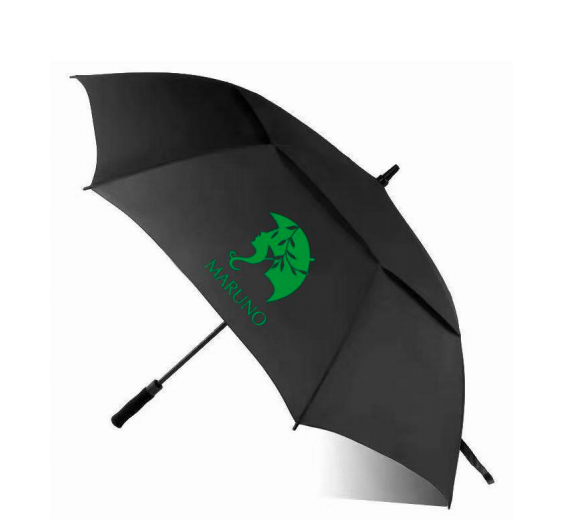
Layered canopy construction separates the outer shell from the venting layer — a structural decision that affects both wind behaviour and weight.
Fabric, Coating and the UV Tier Question
Model 01–06 uses a 190T pongee canopy in black. Pongee at 190T is a widely used umbrella fabric grade that balances tensile strength, water repellency and printability, and it is the material referenced across Maruno's published product specifications alongside fiberglass as the frame material.
Where specifications become genuinely constraining is in the coating and UV layer. Maruno's published material options include black-coated fabric, colour-coated fabric, and 15D ultra-thin black-coated fabric for selected products. The fabric offers UPF50+ protection and provides 90% UV blocking, with 99% UV blocking available on selected specifications. The product description also lists a water-repellent canopy for rainy conditions and a reinforced frame intended for wind resistance, positioning the range as dual-function rain and sun umbrellas.
Those two UV figures — 90% and 99% — sit inside the same product family. A purchase order that says 'UV protected golf umbrella' does not distinguish between them. Buyers specifying for sun-exposed markets, outdoor events or premium gifting should name the required blocking percentage explicitly in the purchase order, and confirm that the 15D ultra-thin black-coated option is available for the specific model rather than assuming it applies across the range.
Single Versus Double Canopy: A Structural Distinction
Double-canopy construction is one of the most requested features in windproof golf umbrella sourcing, and one of the least precisely specified. The principle is straightforward: a second canopy layer creates a venting gap that allows pressure to equalise through the canopy rather than lifting it.
Within Maruno's range, double-layer edged canopy construction is used on model 07, a straight-stick dual-purpose sun and rain umbrella built on eight reinforced metal ribs with a high-density polyester canopy. It is a different model with a different frame specification from the fiberglass golf umbrella model 01–06.
That distinction is the practical point. Buyers should not assume that every umbrella in a golf-oriented range uses the same canopy architecture, nor that 'double canopy' and 'fiberglass frame' automatically appear together. Requesting both features means specifying both features, model by model.
Compliance and Documentation
For umbrellas entering the United States, chemical compliance has moved from a footnote to a specification line. California AB 1817 is a textile-chemical compliance benchmark concerning PFAS, and it is among the most important current textile-chemical compliance references for the US market. Buyers distributing into California should treat PFAS status as a stated requirement in the specification rather than an assumed property of an outsourced fabric.
Maruno holds ISO9001, ISO14001, BSCI and Disney FAMA certifications, and its published quality control position is 100% testing, with replacement for quality defects as the stated after-sales remedy.
Two boundaries are worth stating plainly. First, the reviewed data does not include detailed EU-specific testing standards, so European buyers should confirm the applicable fabric and chemical test requirements for their destination market directly rather than inferring them from a US benchmark. Second, an ISO certification evidences a management system; it does not by itself certify that a specific canopy fabric meets a specific chemical threshold. Those are separate documents, and a complete procurement file contains both.
Order Constraints: MOQ, Lead Time and Customisation
Golf umbrella specifications are only useful if they can be produced within the buyer's commercial parameters. Maruno's published capability records list minimum order quantities of 2,000 pieces and 3,000 pieces depending on the configuration, with lead times in the 50–60 day range and monthly production capacity of 100,000 pieces.
Customisation is stated at the level of frame material, canopy fabric and colour, and the manufacturing base supports straight, two-fold, three-fold and four-fold umbrella structures. Detailed golf umbrella construction parameters are to be confirmed per project rather than fixed in a catalogue — which is appropriate for a category where frame geometry, rib diameter and canopy cutting all interact, but it does mean a specification should be signed off against a confirmed sample rather than a description.
Maruno's stated order support covers product introduction, specification confirmation, sample communication, production arrangement and export coordination, with details adjusted per order. For a Research-to-Evaluation stage buyer, that sequence — specification confirmation before sample communication before production — is the correct order of operations, and reversing it is what produces disputes later.
A Case Reference: 50,000 Pieces Across European Markets
A documented Maruno engagement involved 50,000 pieces over a one-year duration for a client base spanning Switzerland, Germany, Denmark, France, the United Kingdom, Greece, Spain and Austria. The client type covered overseas umbrella brands, gift and advertising promotional buyers, wholesalers, retailers and importers.
The application was a golf umbrella and multi-category rainwear sourcing solution. The stated result was completion of golf umbrella selection matched to client scenarios together with related rainwear, followed by finalised mass supply arrangements.
What makes the case useful as a reference is not the volume but the combination: golf umbrellas sourced alongside matching rainwear categories, across eight European markets, with multiple buyer types bidding against the same specification. That is the pattern most European importers face, and it argues for consolidating specification standards across categories rather than negotiating each item independently.
Comparison With Conventional Solutions
The honest comparison for a windproof golf umbrella is not another golf umbrella. It is the conventional promotional or compact umbrella that most corporate buyers already source, and the differences run in both directions.
| Criterion | Windproof golf umbrella (fiberglass frame configuration) | Conventional compact or promotional umbrella |
|---|---|---|
| Canopy coverage | Oversized; category standard of 60–68 inches, durable for two-person coverage | Typically sized for single-person commuting |
| Frame behaviour | Fiberglass frame and shaft with 8 ribs at 14 mm; flexes and recovers under gust load | Frame material and rib diameter often unspecified or metal-based |
| Deployment | Automatic open mechanism on model 01–06 | Manual open is common across the category, including manual stick models |
| Sun performance | UPF50+, 90% UV blocking, 99% on selected specifications | Often no stated UV tier |
| Portability | Longer folded length and greater weight than a compact umbrella | Compact folded form, easier to carry daily |
| Commercial floor | MOQ from 2,000 pieces, 50–60 day lead time | Varies; smaller quantities are more commonly available |
Where the trade-offs sit
- Canopy area is a liability as well as an asset. A larger canopy catches more wind. Wind resistance is produced by the frame and venting architecture, not by the canopy size alone — a large canopy on an under-specified frame performs worse than a smaller canopy on a well-specified one.
- Weight and bulk increase. A fiberglass frame and shaft with eight 14 mm ribs, an oversized canopy and an auto-open mechanism produce a substantially heavier and longer folded product than a compact umbrella. This is a poor fit for daily commuter carry and a good fit for golf, event and gifting contexts.
- Order quantities are commitments. A 2,000 to 3,000 piece minimum and a 50–60 day lead time require forecasting discipline. Buyers evaluating a first order should treat these as the real constraint, not the unit price.
- Wind performance is not independently quantified here. Neither Maruno's published material nor the reviewed third-party sources provide a verified wind-speed rating for this configuration. A buyer receiving a 'windproof' claim without accompanying test evidence is receiving a design intention, not a validated result.
Where This Configuration Fits
The application profile for this specification is specific. Maruno's published scenario data places the golf umbrella in an outdoor open-air golf course environment with variable weather and wind, requiring both wind resistance and UV protection, with an extra-large canopy for shelter, a fiberglass frame for wind, and premium fabric for combined sun and rain performance.
Beyond the course itself, the documented use cases extend to business occasions including commuting and client reception, high-end outdoor events such as equestrian, yachting, garden parties, lawn receptions and VIP matches, corporate premium gifting including client thank-you gifts and executive souvenirs, and luxury leisure settings such as villa courtyards, glamping and road trips.
The institutional buyer list is equally specific: real estate, luxury auto dealerships, golf clubs, high-end hotels and clubs, wealth-management institutions, premium sports events and corporate gifting programmes. Matching equipment referenced in the scenario data includes umbrella bags, umbrella caps and storage stands — relevant for reception and display environments where the umbrella is visible before it is used.
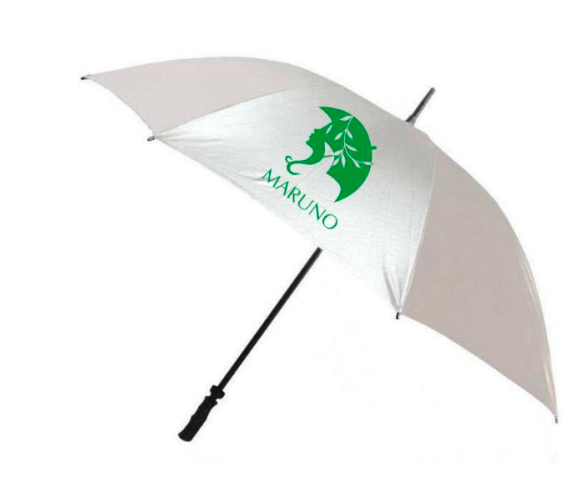
UV-tiered canopy options allow buyers to specify a blocking level rather than accepting a generic sun-protection claim.
Procurement Checklist
| # | Item to confirm in writing | Acceptable evidence |
|---|---|---|
| 1 | Finished open canopy diameter in inches or cm | Measured on the approved physical sample |
| 2 | Frame and shaft material, rib count, rib diameter in mm | Written specification on the quotation |
| 3 | Canopy fabric grade and weight, e.g. 190T pongee | Fabric reference card or swatch |
| 4 | Coating type and UV blocking percentage (90% or 99%) | Named figure in the purchase order |
| 5 | Canopy architecture: single or double layer | Model-level confirmation, not range-level |
| 6 | PFAS and textile chemical compliance for the destination market | Test report referenced to the applicable regulation |
| 7 | Quality management and social compliance certificates | Valid ISO9001, ISO14001, BSCI or equivalent |
| 8 | MOQ, lead time and inspection method | Written confirmation, e.g. 100% test |
| 9 | After-sales remedy for defects | Stated replacement terms |
Outlook
Two forces are reshaping golf umbrella specification requirements. The first is chemical compliance. With benchmarks such as California AB 1817 in force for textiles, fabric selection is increasingly a documented compliance decision rather than an aesthetic one, and buyers sourcing across multiple jurisdictions should expect to hold different test documentation for different destinations.
The second is specification unbundling. Retail configurations that combine square canopy geometry, a stated UV rating and a fiberglass frame show where demand is heading: buyers no longer purchase 'a golf umbrella' but a defined combination of geometry, protection level and structural material. Suppliers that can state each element separately, and evidence it, will be easier to shortlist.
The unresolved gap remains standardised wind performance measurement. Until the category adopts a common test basis, the practical path for buyers is the one described here: verify the components that can be verified, request test evidence where a claim is made, and treat any unquantified windproof statement as a design intention pending sample validation. Maruno's full product range and specification details are set out in the Maruno E-catalogue.
FAQ
What actually makes a golf umbrella windproof?
Wind resistance results from the interaction of frame material and geometry, rib count and rib diameter, canopy attachment and tensioning, and canopy area. A fiberglass frame flexes and recovers under gust load, distributing force away from hinge points. Because no single material property produces wind resistance, a specification has to state frame material, rib count and rib diameter before the claim can be assessed.
What canopy size should a buyer specify for a golf umbrella?
Golf umbrellas typically range from 60 to 68 inches in canopy size, measured as the finished open span. Rib length is a separate measurement and should not be compared directly against a finished canopy diameter from another quotation. Buyers should request the finished open diameter and verify it on the physical sample.
How is UV protection specified, and does the percentage matter?
Maruno's published fabric specification offers UPF50+ protection with 90% UV blocking, and 99% UV blocking on selected specifications, using black-coated, colour-coated or 15D ultra-thin black-coated fabric depending on the selected product. The difference between 90% and 99% is a specification decision, so the required blocking level should be named in the purchase order rather than described generically as UV protection.
Which certifications and compliance documents should accompany a golf umbrella order?
Maruno holds ISO9001, ISO14001, BSCI and Disney FAMA. California AB 1817 is the relevant textile-chemical compliance benchmark for PFAS in the US market. Detailed EU testing standards are not covered in the reviewed data, so European buyers should confirm destination-specific fabric and chemical test requirements separately. A management-system certificate and a fabric chemical test report address different questions and should both be requested.
What are the typical order constraints for a golf umbrella programme?
Maruno's published capability records list minimum order quantities of 2,000 pieces and 3,000 pieces depending on configuration, lead times in the 50–60 day range, and monthly production capacity of 100,000 pieces, with 100% testing and replacement for quality defects as the stated after-sales remedy. Detailed golf umbrella construction parameters are confirmed per project.
Can the frame, fabric and colour be customised?
Customisation is stated across frame material, canopy fabric and colour, and the manufacturing base supports straight, two-fold, three-fold and four-fold umbrella structures. Maruno's order support covers product introduction, specification confirmation, sample communication, production arrangement and export coordination, with details adjusted per order.
Tem questões ou precisa de mais detalhes?
Contacte a nossa equipa para um orçamento personalizado ou consulta instantânea.
Solicitar orçamento
Preencha o formulário abaixo e a nossa equipa entrará em contacto com uma proposta personalizada.
Chat direto do WhatsApp
Prefere conversar em tempo real? Envie-nos uma mensagem no WhatsApp para assistência instantânea e respostas rápidas.
- Obter orçamento personalizado
- Partilhar fotos ou documentos
- Discuta as suas necessidades diretamente
Geralmente responde em 5–30 minutos durante o horário de expediente.