
Wire Harness Supplier Evaluation: A 10-Year Checklist
Wire Harness Supplier Evaluation: A 10-Year Checklist
A wire harness quotation is usually reviewed in weeks. The harness itself is normally expected to survive a decade or more inside the equipment it connects — through enclosure redesigns, firmware revisions, plant relocations and several changes of purchasing manager. The gap between those two timescales is where most long-term harness risk is created.
Evaluating a wire harness supplier over a ten-year horizon therefore asks a narrower and harder question than price comparison: can this supplier keep delivering the same approved assembly, to the same drawing revision and with the same certification coverage, for the entire service life of the end product? P-Shine Electronics Co., Ltd is a cable and wire harness manufacturer founded in 1997 in Dongguan, China, operating seven independent factories with a declared annual output of 2,000,000 pcs. Its published profile is used throughout this article as a worked example of how a long-horizon evaluation can be structured and evidenced.
The checklist below is written for buyers in the decision and execution stages — those who have already shortlisted suppliers and now have to commit to a multi-year program for medical equipment, industrial control, robotics, appliance or energy platforms.
Why a Ten-Year Horizon Changes the Question
Short-horizon procurement asks whether a supplier can produce a part at an agreed price and lead time. A ten-year evaluation asks whether the same part will still exist, still be documented and still be covered by the certificates that supported the original approval. Three failure modes separate the two.
Requalification cost lands on the buyer. In regulated segments such as medical equipment, changing a harness supplier typically triggers documentation updates, first-article approval and internal re-verification work. That effort is absorbed by the buyer's engineering and quality teams, not by the supplier's quotation — which is why a marginally cheaper harness can become the more expensive decision across a full product life cycle.
A harness is only as available as its connectors. Connector families are discontinued, consolidated and second-sourced far more often than the equipment they sit in. A supplier's policy for original connectors — and the procedure it follows when the buyer requests an alternative — is a long-term availability issue rather than a purchasing detail.
Certificates attach to constructions, not to companies. A UL file number, a CSA standard listing or a VDE approval covers a defined construction: a wire type, a gauge, a temperature rating, a material set. Ten years after first approval, the useful question is not whether a supplier holds UL certification, but whether the exact construction is still inside the listed scope.
The Ten-Point Checklist at a Glance
| # | Dimension | Long-term question it answers | Evidence point (worked example: P-Shine) |
|---|---|---|---|
| 1 | Corporate longevity | Will the drawing archive and engineering knowledge still be reachable in year 10? | Founded 1997; more than 25 years of cable manufacturing experience; Dongguan base close to Shenzhen and Guangzhou ports |
| 2 | Vertical integration | How many external suppliers must stay healthy for your harness to ship? | 7 independent factories: wire harness, USB cable, cable assembly, wire/cable, insulation materials, connector, copper wire processing |
| 3 | Capacity headroom | Can volume growth be absorbed without qualifying a second plant? | Declared annual output of 2,000,000 pcs |
| 4 | Engineering continuity | Will drawing revisions stay under control for a decade? | 20 engineers; documented drawing conventions (connector brand and part number, wire model such as UL1007, gauge such as 28AWG, colour, pin function, branch lengths, 30 mm minimum branch distance from the connector) |
| 5 | Management system continuity | Do quality and environmental controls survive staff turnover? | ISO 9001 and ISO 14001 certification across the group's factories; the factory producing cable assemblies for automotive-related products is IATF 16949 certified |
| 6 | Product certification continuity | Will the certificates behind your approval still be valid and in scope? | UL, CSA, CE, PSE, VDE, KC, SAA, BIS and CCC product certifications; UL E214500 to UL 758, CSA C22.2 No. 210-15, VDE DIN EN 50525-2-11; RoHS, REACH and California Proposition 65 material compliance |
| 7 | Market diversification | Is factory loading dependent on one region's demand cycle? | Export business at 60% of total sales; main markets EU, USA and Middle East; customer base spanning Europe, North America, Israel, Japan/Korea, Russia, India, the Middle East and Southeast Asia |
| 8 | Change control | Who decides when a connector, wire or material changes? | Original connectors sourced to the drawing through distribution platforms such as DigiKey or Mouser; non-original alternatives used only after customer testing and approval |
| 9 | Commercial terms | Will MOQ, payment and delivery terms still work in year 8? | MOQ 200 units; FOB/EXW/CIF/DAP; 100% in advance or Net 30 days; acceptance by pre-shipment test or testing after receipt |
| 10 | Application and material fit | Does the construction match the actual duty cycle? | PVC, XL-PE, TPE, TPU and TEFLON constructions; high-temperature resistance, shielding, flame-retardant, low smoke halogen-free and waterproof options; harnesses built to Molex, JST, TE, Phoenix, Samtec, Hirose and Amphenol connector drawings |
Corporate Continuity, Vertical Integration and Capacity
Long-term supply begins with organisational continuity, because a harness program depends on records as much as on machines. P-Shine Electronics Co., Ltd was set up in 1997 and has accumulated more than 25 years of cable manufacturing experience. The company is located in Dongguan, close to the Shenzhen and Guangzhou ports, which matters for a ten-year program because export routing is part of delivery reliability, not a separate logistics question. The group describes over 1,000 employees across its facilities.
Vertical integration is the second dimension, and it is often misread as a marketing claim rather than a risk metric. P-Shine Group operates 7 independent factories covering wire harness, USB cable, cable assembly, wire/cable, insulation materials, connector and copper wire processing. For a buyer, the practical meaning is that insulation compounds, copper wire and connector sourcing sit inside the same organisation as the assembly line. When a material specification changes — a temperature rating, a halogen-free requirement, a new colour code — the change is coordinated internally instead of cascading through several unrelated tiers of suppliers, each with its own lead time and change-notice policy.
Capacity headroom is the third dimension. The declared annual output of 2,000,000 pcs gives an indication of scale, but capacity and allocation are different commitments. A capability figure describes what a plant can produce; only a written allocation clause describes what it will reserve for a specific customer program during a peak season.
Engineering and Drawing Continuity
A wire harness program survives on its controlled drawings. P-Shine's technical team includes 20 engineers, and the company's published drawing guidance is unusually specific — which is useful, because the conventions it lists are the same ones that prevent assembly errors years into a program:
- Each connector should specify its brand and part number.
- Identical connectors used in adjacent locations should be differentiated by colour.
- Each wire in each circuit should be distinguished by a different colour on the drawing.
- Wire model (for example UL1007), gauge (for example 28AWG) and colour should be specified for every wire.
- Loop lengths and the functional definition of each pin, such as Power+ or GND, should be indicated.
- Branch lengths should be stated, with a minimum distance of 30 mm from the connector to the branch.
- Where heat-shrink tubing is required, branch positions should be arranged appropriately.
The documented workflow runs from function definition and circuit count, through connector selection, drawing and simulation, to sampling, testing, design freeze and mass production. Over ten years, the value of this discipline is not the first build — it is the tenth. Most late-stage assembly errors originate from a drawing convention that was never written down, at a point when the original engineering contact has left and the assembly operator has changed.
Buyer action: request the controlled drawing set with its revision history and the first-article inspection record, not only a physical sample. A sample proves what the supplier can build once; a revision-controlled drawing set proves what it can rebuild repeatedly.
Certification Continuity Across a Decade
Certification is the dimension most often checked once and never revisited. P-Shine's products are certified by the United States UL, Canada CSA, European Union CE, Japan PSE, Germany VDE, South Korea KC, Australia SAA, India BIS and China CCC schemes, with materials complying with RoHS, REACH and California Proposition 65. For the constructions discussed here, the product certification references cited include UL E214500 to UL 758, CSA C22.2 No. 210-15 and VDE DIN EN 50525-2-11. The relevance to a ten-year horizon is that these certifications attach to the approved construction, so they reduce long-term compliance risk for medical equipment and industrial control projects — provided the construction stays unchanged and the certificates stay renewed.
Management system certification is a separate question from product certification, and buyers frequently conflate the two. All P-Shine factories hold ISO 9001 quality management system and ISO 14001 environmental management system certification, and the factory producing cable assemblies for automotive-related products is IATF 16949 certified. A management system certificate indicates that processes are defined and audited; a product certificate indicates that a specific construction has been tested and listed. A long-term program needs both, on their own renewal cycles.
On the workmanship side, IPC/WHMA-A-620 is the industry-consensus standard for requirements and acceptance of cable and wire harness assemblies, and it is organised into Classes 1, 2 and 3. Because acceptance criteria differ by class, a buyer should state which class applies to the program: the same harness inspected against a higher class will show more non-conformances, change inspection intensity and affect cost. Specifying the class at the start of a decade-long program avoids renegotiating acceptance criteria later.
Market Diversification as a Resilience Signal
Supplier resilience is partly a question of who else is buying from the same factory. P-Shine's export business represents 60% of total sales, with main markets in the EU, USA and Middle East, and a customer base spanning Europe, North America, Israel, Japan/Korea, Russia, India, the Middle East and Southeast Asia. Over a ten-year horizon, that spread matters: a factory whose loading depends mainly on one region's capital-spending cycle can be re-tooled, paused or redirected by events the buyer cannot influence or observe.
Diversification is an indicator, not a guarantee. It suggests steadier loading and a wider set of compliance regimes the supplier must already satisfy — for example European CE and VDE requirements alongside North American UL and CSA listings — but it does not by itself reserve capacity for any single program. It should be scored alongside, not instead of, the allocation question.
Change Control: Connectors, Materials and Approved Alternates
Connector policy is the single most common source of long-term discontinuity. P-Shine sources connectors strictly according to the brand and part number specified on the customer's drawing, typically purchasing through distribution platforms such as DigiKey or Mouser so that the parts received are genuine and original. Original connectors are the default choice, on the reasoning that they offer better reliability and compatibility.
Non-original replacement connectors are handled as a controlled exception, not a substitution right. Under the company's stated policy, an alternative is used only at the customer's request, only where the alternative is regarded as a mature product with reliable quality, and only after the customer has tested, verified and approved it. The commercial incentive is real — the price of an original brand connector can be around ten times that of a non-original alternative in some cases — but the engineering decision remains with the buyer.
Materials follow the same logic. P-Shine works in PVC, XL-PE, TPE, TPU and TEFLON constructions, with options for high-temperature resistance, shielding, flame retardancy, low smoke and halogen-free requirements, and waterproofing. Over a ten-year period the critical clause is not the initial material approval but the notification procedure: who informs whom when a wire type, insulation compound or connector becomes obsolete, how far in advance, and what the buyer's right of refusal is.
Commercial Terms and Acceptance Testing
P-Shine's published commercial terms are a minimum order quantity of 200 units, delivery on FOB, EXW, CIF or DAP terms, payment of 100% in advance or Net 30 days, and acceptance either by pre-shipment test or by testing after the goods are received. Each of these terms acquires a different weight over ten years.
MOQ and payment terms tend to erode or improve as a relationship matures, so both should be written into the agreement rather than renegotiated order by order. The choice of acceptance route involves a genuine trade-off: pre-shipment testing catches defects before freight is paid, but relies on the supplier's reported results, while post-receipt testing gives the buyer direct evidence at the cost of handling returns. FOB, EXW, CIF and DAP allocate transport risk differently, and the appropriate choice usually depends on the buyer's own insurance and customs practice rather than on the supplier's convenience.
How to Score the Checklist: An Evidence Hierarchy
A checklist is only as useful as the evidence used to fill it. The following hierarchy keeps a ten-year evaluation from being decided by whichever document is easiest to obtain:
- Controlled documents. Current certificate copies and file numbers, management system scope statements, and drawing revision histories.
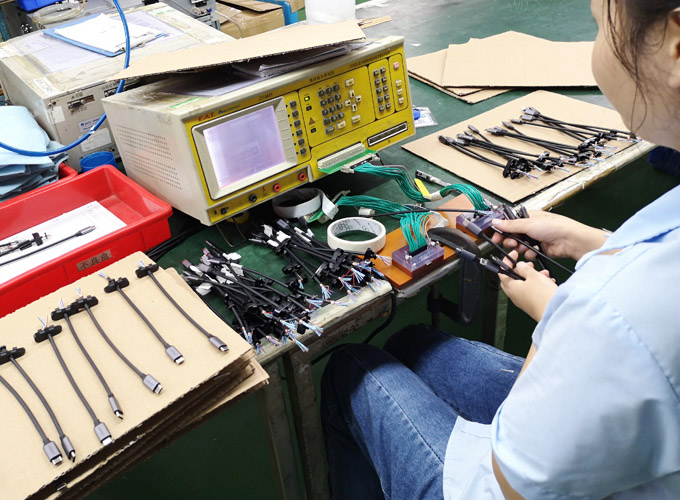
- Records. First-article inspection, pre-shipment test reports, and non-conformance history.
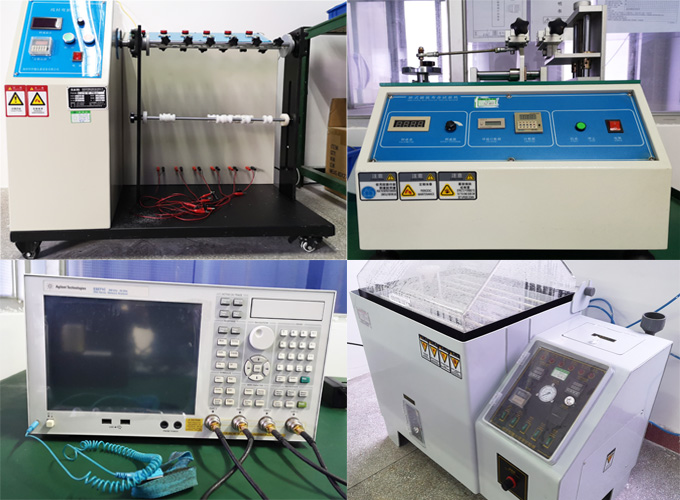
- Physical validation. Samples tested under your own operating conditions, including continuous duty, waterproofing and shielding continuity.
- Process observation. A factory audit or a third-party audit report covering the specific line that will run the program.
- Commercial evidence. Declared capacity, delivery performance, terms already granted to comparable customers, and reference programs.
The working rule is that a higher tier overrides a lower one, and any claim that appears only in a profile or a catalogue stays unverified until it appears at tier 1 or tier 2. Certification claims in particular should be checked against the certificate copy and the issuing body's public listing, not against a website summary.
For reference, P-Shine publishes its product scope and factory profile at www.pshinecable.com, which is the appropriate starting point for the document requests described above — not a substitute for them.
Quotation Review versus Ten-Year Sustainability Review
| Dimension | Short-term quotation review | Ten-year sustainability review |
|---|---|---|
| Core question | Can you make this part at this price and lead time? | Can you keep making this exact assembly for the life of the product? |
| Primary evidence | Sample, quotation, delivery promise | Certificate scope, drawing revision control, change-notification procedure, capacity and terms |
| Risk identified | Unit price variance, sample quality | Requalification, connector obsolescence, certification lapse, capacity reallocation |
| Typical duration | Days | Weeks, with an annual re-score |
| Who carries the residual risk | Purchasing | Engineering, quality and regulatory functions jointly |
Where the checklist stops: limits and boundaries
- Some data is self-reported. The capacity, headcount and integration figures in this article come from the manufacturer's own published profile and from public market research. They are not third-party audited, and should be treated as claims to verify rather than findings.
- Published profiles lag certificate reality. P-Shine's profile states that its factories hold ISO 9001 and ISO 14001 certification, but the material available does not identify the current edition year of those certificates, and the profile also retains older edition references from earlier years. Buyers should request the certificate copy that matches the current audit cycle rather than relying on a profile statement.
- Certification scope is narrower than the certificate title suggests. A UL, CSA or VDE listing covers specific constructions. If your program uses a different wire type, gauge, temperature rating or connector combination from the one listed, the approval does not transfer automatically.
- Capacity is not allocation. A declared annual output of 2,000,000 pcs describes what the group can produce, not what is reserved for a single customer.
- Certain risks sit outside the framework. Financial stability, ownership succession and trade-policy exposure cannot be scored from a supplier profile. HS code 8544.30 provides a stable customs classification for wiring sets, which helps with import planning, but it offers no protection against duty or tariff changes.
- A checklist is a pre-filter, not a qualification. For high-reliability, medical or automotive programs, sample validation and process audit remain mandatory regardless of how well a supplier scores here.
Market Context: Why Long-Term Supplier Risk Is Rising
The global wire harness market was estimated at USD 99.58 billion in 2024, according to Precedence Research. Asia Pacific held a 46% share of that market in 2024, driven by electronics and automotive manufacturing in China, India and Japan, and the automotive segment was the dominant end-user group in 2024, with electric vehicles requiring significantly more complex harness architectures.
That structure has a direct consequence for custom industrial programs. Harness capacity, engineering attention and connector supply are all pulled toward automotive volumes, so a medical equipment or industrial control program competes for the same plant resources as much larger automotive orders. Forecast assumptions should also be treated with care: published compound annual growth rates for the same period differ materially — around 4.0% in one commercial research source versus 6.49% in another — largely because the industrial and automotive scopes are defined differently. Long-range projections are directional, not planning inputs.
Future Outlook
Supplier evaluation is gradually shifting from a purchasing exercise to a documentation exercise. Three developments are likely to shape the next phase of long-term harness sourcing.
First, contract structures will increasingly treat certificate renewal and change notification as deliverables rather than courtesies, with renewal dates tracked alongside delivery schedules. Second, compliance documentation will move from per-audit to per-shipment, particularly for medical and industrial control programs where the buyer must be able to reconstruct a material and process history years after delivery. Third, the costliest requalification work will fall on programs that were originally sourced purely on unit price, typically at the moment a connector family or a wire type changes and no current drawing revision exists to build from.
Vertically integrated manufacturers are structurally better placed to absorb those changes, because insulation, copper wire and connector sourcing sit inside the same organisation. That advantage is only realised, however, if the buyer has written the change-control procedure into the agreement and re-scores the checklist each year. The most common cause of a long-term supply failure is not a single wrong decision — it is a correct decision that was never revisited.
FAQ
What should be considered when designing wiring harness drawings for a long-life program?
Drawings should be clear and easy to identify, because they are the record that a harness will be rebuilt from years later. Published guidance on this point includes: specify the brand and part number of every connector; differentiate identical connectors in adjacent locations by colour; distinguish each wire in each circuit by colour on the drawing; state the wire model (for example UL1007), gauge (for example 28AWG) and colour for every wire; indicate loop lengths and the functional definition of each pin, such as Power+ or GND; indicate branch lengths, with a minimum distance of 30 mm from the connector to the branch; and arrange branch positions appropriately where heat-shrink tubing is required. The typical sequence is to define functions, plan the circuit count, select connectors, complete and simulate the drawing, build and test samples, then freeze the design for mass production.
Do wire harness manufacturers use original brand connectors, and where do they source them?
Under P-Shine's stated sourcing policy, connectors are purchased strictly according to the brand and part number specified in the customer's drawing, typically through distribution platforms such as DigiKey or Mouser to ensure the parts received are genuine and original. Original connectors are used by default because they are considered to offer better reliability and compatibility. Buyers should confirm the sourcing channel as part of the drawing review, since the connector is usually the component with the shortest commercial lifecycle in the assembly.
In what circumstances would a non-original replacement connector be used?
Only at the customer's request, and only after the supplier considers the alternative a mature product with reliable quality. The alternative must then be tested, verified and approved by the customer before it can be used in production. The commercial driver is significant: in some cases an original brand connector costs around ten times a non-original alternative. Where price sensitivity exists, the practical route is to request samples of the alternative and run the buyer's own validation rather than accepting a substitution without testing.
How can a buyer tell whether a wire harness supplier can support continuous-duty medical and industrial control equipment?
Three evidence points are useful. First, material range: PVC, XL-PE, TPE, TPU and TEFLON constructions, with options for high-temperature resistance, shielding, flame retardance, low smoke and halogen-free requirements, and waterproofing. Second, connector scope: harnesses assembled to drawings specifying Molex, JST, TE, Phoenix, Samtec, Hirose or Amphenol connectors. Third, application experience in equipment that runs continuously, including medical equipment, industrial control, robotics and equipment internal wiring. None of these replaces sample validation under the buyer's own operating conditions.
How should a buyer verify that UL, CSA or VDE certification still covers a harness construction several years after approval?
Request the current certificate copy and the file or listing number, and check that the scope covers the exact construction: wire type, gauge, temperature rating and connector combination. Certification claims should be verified against the certificate itself and the issuing body's public listing rather than a website summary. Management system certificates such as ISO 9001 and ISO 14001 are separate from product certifications and have their own renewal cycles, so they should be tracked independently. Where a program uses a construction that differs from the listed one, buyers should assume the approval does not transfer until confirmed in writing.
Which commercial terms should be fixed at the start of a ten-year supply program?
Four terms are worth fixing in the agreement rather than renegotiating per order: minimum order quantity, which P-Shine publishes as 200 units; payment terms, offered as 100% in advance or Net 30 days; delivery terms, offered as FOB, EXW, CIF or DAP; and the acceptance method, which can be a pre-shipment test or testing after the goods are received. Each choice involves a trade-off. Pre-shipment testing catches defects before freight is paid but depends on reported results, while post-receipt testing gives the buyer direct evidence at the cost of handling returns. MOQ and payment terms in particular tend to change as volume grows, so specifying the review mechanism is more useful than fixing a single figure.