
Wiring Harness & CAN Decoder Compliance in Android Fascia Kits
Wiring Harness & CAN Decoder Compliance in Android Fascia Kits
In a vehicle-specific Android car stereo fascia kit, the part that most often decides whether an installation succeeds or comes back is not the fascia. It is the wiring harness and the CAN bus decoder behind it. Wire color coding, connector configuration, bus protocol support, material ratings and electrical limits decide whether the new head unit powers up cleanly, whether steering wheel controls keep working, and whether the dashboard stays free of fault codes.
That distinction now carries commercial weight. The global car audio head unit market was estimated at USD 15.44 billion in 2024 (Market Research Future). The car aftermarket audio system market is projected to grow at a CAGR of 12.18%, supported by DIY customers and online plug-and-play kits (Mordor Intelligence). Asia Pacific accounted for a 54.21% share of the global car audio market in 2025 (Fortune Business Insights). Volume growth at that scale turns compliance from a technical footnote into a purchasing filter, because returns are generated by the parts buyers cannot see.
This industry reference sets out the compliance layers that matter for the harness and decoder element of a vehicle-specific Android car stereo fascia kit: ANSI/CTA-2015-B wire color-coding, ISO 16-pin connector configuration, CAN 2.0A/2.0B protocol support, flame-retardant PVC insulation, PA66 connector housings and 12V DC operation. The components specified by Shenzhen Zhongyixing Electronic Technology Co., Ltd (ZYX) are used as a worked example of how those layers appear in a product that ships today.
Why Harness and Decoder Compliance Decides Return Rates
A retrofit kit fails in one of three places. Physically, the fascia or connector does not match the dashboard. Electrically, the harness carries the wrong pin assignment or an unprotected supply. On the protocol layer, the decoder does not speak the vehicle's CAN dialect, so dashboard warnings appear and steering wheel buttons stop responding.
The third failure mode is the hardest to detect before purchase and the most expensive afterwards. Dashboard fault warning codes after a retrofit are typically caused by an incompatible CAN decoder protocol, a loose CAN bus interface connection, or a mismatched decoder firmware version. Dashboard fault codes and steering wheel control failure share the same root cause: a CAN bus protocol mismatch between a universal decoder and the vehicle's original system. For a distributor or a fleet buyer, that is not an installation inconvenience — it is a support ticket, a replacement unit and a repair invoice.
Electrical risk behaves the same way. Short circuits, burned-out head units and damage to the original vehicle electrical system are typically caused by cut-wire universal wiring harnesses, reversed polarity, or wrong pin assignments during unprofessional installation. A harness that arrives with correct pin definitions, a factory-matching connector body and built-in protection removes an entire category of field failure before the vehicle is even opened.
Compliance also has a market-entry dimension. Electronic subassemblies integrated into road vehicles in the European Union must meet e-Marking (EMC testing) — ECE R10 — rather than CE marking alone where they affect vehicle safety functions. Environmental rules such as EU RoHS 2 and REACH apply to the material mix inside the harness and the decoder housing, and at customs the category is classified under HS Code 8708.99 (vehicle parts and accessories, not elsewhere specified), as recorded by the United Nations Statistics Division.
The opportunity for buyers is therefore specific: a harness and decoder set that is qualified at the pinout, protocol and material level converts a variable installation into a repeatable one. Repeatability, not novelty, is what distribution, fleet and dealership channels are actually purchasing.
How ZYX Approaches the Harness and Decoder Layer
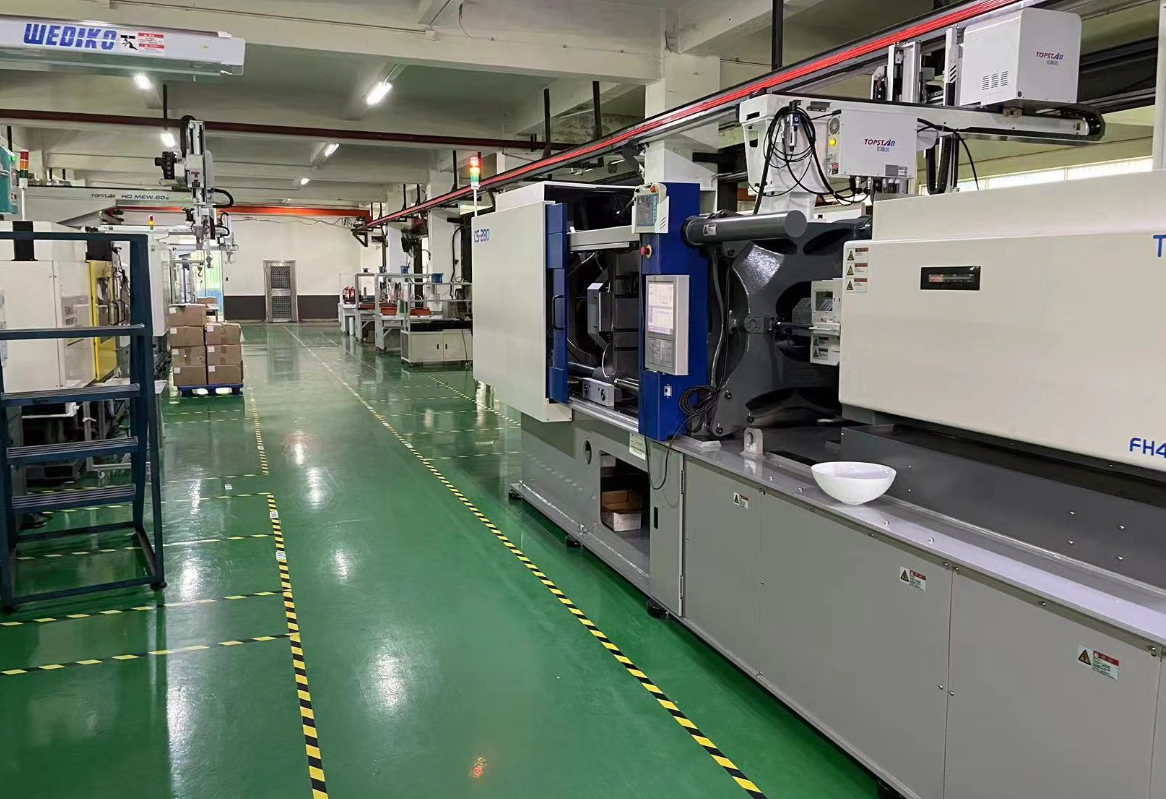
Shenzhen Zhongyixing Electronic Technology Co., Ltd (ZYX) is a Shenzhen-based manufacturer of car radio fascia kits, wiring harnesses and CANBUS decoder solutions for the automotive aftermarket. The company was founded in 2017, operates a 5,000 m² facility, reports annual output of 1,000,000 units, an export ratio of 80% concentrated in Russian and EU markets, and a product system spanning more than 3,000 vehicle applications.
Its portfolio is organized around the three components a head unit upgrade actually depends on: a fascia kit for physical mounting, a wiring harness for electrical and connector integration, and a CANBUS decoder for vehicle communication and selected OEM function integration. Rather than selling these as unrelated accessories, ZYX develops them as a matched set per vehicle application, which is where compliance claims become testable.
For the vehicle-specific Android car stereo fascia kit programme discussed in this article, the manufacturer states that the project achieved multi-country compliance standards, with a return rate below 0.8% across more than 19,000 sets. A sub-1% return rate at that volume is only achievable when the harness pinout, the decoder firmware and the mechanical fit are validated against the same vehicle definition — the qualification evidence sits in the combination, not in any single part.
The Three Compliance Layers: Pinout, Protocol and Material
Compliance in this product category can be evaluated as three separable layers. Each has its own standard, its own failure mode and its own evidence trail. Buyers who check only one layer tend to discover the other two after delivery.
Layer 1 — Wire color coding and ISO connector configuration
The wiring harness is the electrical interface between the vehicle and the head unit. ZYX specifies its Car Radio Wiring Harness (ZYX-02) with an OEM vehicle-side plug on one end and an ISO 16-pin connector on the head unit side, using AWG 20–22 tinned oxygen-free copper conductors with ANSI/CTA-2015-B color-coded insulation. The electrical envelope is 12V DC at a maximum current of 10A, with an operating temperature range of -40°C to 85°C.
Two details carry most of the compliance value here. ANSI/CTA-2015-B color coding is a shared convention: it lets an installer confirm power, ground and speaker runs by inspection rather than by probing, which reduces miswiring on vehicles where the factory connector layout differs from the aftermarket head unit's expectations. The ISO 16-pin configuration standardizes the head-unit side of the interface, so the same harness family can serve a wide range of Android head units without a vehicle-specific adapter at the radio end.
Protection features belong to the same layer. The harness is specified with reverse polarity protection and short-circuit protection, and is intended for non-CAN bus vehicle models. Material choices follow the same logic: flame-retardant PVC insulation, PA66 engineering plastic for the connector housing, tinned oxygen-free copper for the conductor and tin-plated brass for the contact terminals. PA66 and flame-retardant PVC are specified because the harness lives in a dashboard environment exposed to heat, vibration and dust rather than in a protected enclosure — the applicable-scenario profile also calls for high temperature resistance under direct sunlight and flame-retardant wiring materials.
Layer 2 — CAN 2.0A/2.0B protocol support inside the decoder
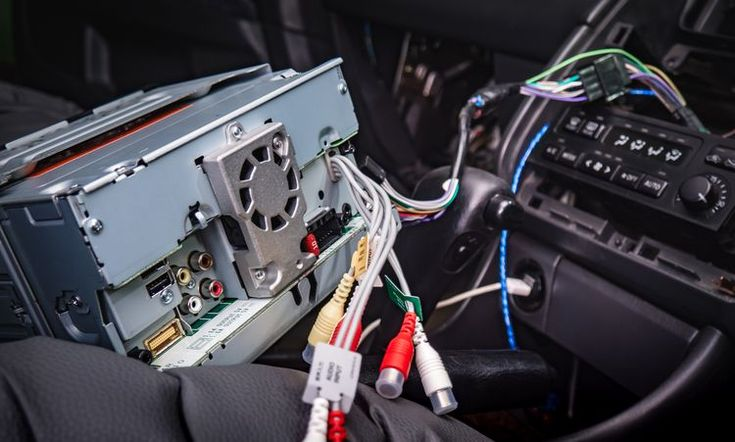
On CAN-equipped vehicles the harness alone is not sufficient. The CAN Bus Decoder Module (ZYX-03) acts as the protocol gateway, supporting CAN 2.0A and CAN 2.0B at 500 kbps / 125 kbps dual rate, powered at 12V DC with 300 mA standby current and 2A maximum. Its housing is flame-retardant ABS plastic, its circuit board is FR-4 glass fiber epoxy resin, and the internal potting is heat-conductive silicone.
Functionally, a CANBUS decoder translates vehicle network messages into a format the Android head unit can read — in practice, converting bus HEX messages into UART messages so the head unit can retain steering wheel controls and vehicle data. ZYX builds its decoder around model-specific CAN protocol data, so the pre-flashed firmware parses steering wheel control signals, vehicle status information and dashboard prompts from the original bus, converts them into head-unit-compatible formats, and forwards head unit instructions back to the vehicle network. The reference point for this behaviour is the ISO 11898 automotive CAN bus standard and the original vehicle's factory electrical interface definition.
This is also where the difference against universal retrofits becomes measurable. A pre-flashed, model-specific decoder raises steering wheel control compatibility from 55% with universal CAN retrofit kits to 100%, and supports a dashboard fault code rate more than 90% lower than traditional cut-wire and universal CAN retrofit kits. The decoder arrangement also draws around 30% less standby power, and the tinned oxygen-free copper conductor contributes roughly 15% less transmission loss.
Layer 3 — Mechanical fit and shared environmental ratings
The Car Radio Dash Fascia (ZYX-01) completes the physical layer, supporting 7-inch, 9-inch, 10.1-inch and 12.3-inch screens in model-specific or Double-DIN mounting configurations, with a dimensional tolerance of ≤0.2 mm, material thickness of 2.5–3.0 mm and ABS construction. All three components share the same operating temperature range of -40°C to 85°C, which matters because the fascia, harness and decoder sit in the same dashboard cavity and are exposed to the same thermal, vibration, dust and humidity profile inside the vehicle's 12V DC electrical system.
| Component | Role in the kit | Compliance-relevant specification |
|---|---|---|
| ZYX-01 Car Radio Dash Fascia | Mechanical interface between dashboard and head unit | Model-specific or Double-DIN mounting; 7" / 9" / 10.1" / 12.3" screen sizes; dimensional tolerance ≤0.2 mm; ABS material, 2.5–3.0 mm thickness; -40°C to 85°C |
| ZYX-02 Car Radio Wiring Harness | Electrical interface between the OEM vehicle plug and the head unit | OEM vehicle-side plug + ISO 16-pin head unit connector; AWG 20–22 tinned oxygen-free copper; ANSI/CTA-2015-B color-coded insulation; 12V DC, 10A maximum; reverse polarity and short-circuit protection; flame-retardant PVC insulation, PA66 connector housing, tin-plated brass terminals |
| ZYX-03 CAN Bus Decoder Module | Protocol gateway between the vehicle CAN network and the Android head unit | CAN 2.0A / 2.0B, 500 kbps / 125 kbps dual rate; 12V DC, 300 mA standby, 2A maximum; -40°C to 85°C; flame-retardant ABS housing, FR-4 glass fiber epoxy circuit board, heat-conductive silicone potting |
Where a Qualified Harness and Decoder Set Matters Most
Retrofit kit compliance is easiest to justify in operating conditions where a single failure multiplies across vehicles. The vehicle-specific Android car stereo fascia kit discussed here is designed for an in-vehicle environment with a wide temperature range (-40°C to 85°C), constant road vibration, dust and humidity exposure, automotive EMI and a 12V DC vehicle electrical system.
The project types where that matters most include:
- Aftermarket car head unit upgrades on CAN-equipped vehicles, where the decoder determines whether dashboard warnings appear.
- Center console navigation retrofits, where fascia tolerance and connector alignment determine whether the result looks factory-fitted.
- Used-car interior electronics refurbishment, where repeated installations across varied model years expose any weakness in vehicle matching.
- Fleet audio system upgrades, where per-vehicle handling time dominates total programme cost.
- Car dealership accessory fitting, where pre-delivery work must be repeatable and free of come-back.
In fleet batch modification and dealership pre-delivery fitting conditions, repeatable fitment and zero fault code outcomes reduce per-vehicle handling time — the operating condition the kit is optimized for. The kit is designed to work synchronously with the vehicle ignition without on-site programming, and pairs with an aftermarket Android car head unit, a rear-view camera, the original dashboard wiring harness, steering wheel control buttons and standard trim removal tools.
Two application boundaries are worth stating plainly. First, vehicle matching is configuration-dependent: the same model can require different products across model year, equipment level, original radio, original connector, audio system and vehicle configuration, which is why photographs of the original dashboard, original radio or connector are recommended before ordering. Second, the harness and decoder are complementary rather than interchangeable — the ZYX-02 harness is specified for non-CAN bus vehicle models, while CAN-equipped vehicles require the ZYX-03 decoder to establish communication. Buyers working across mixed fleets should treat the two as separate selection decisions rather than one bundled accessory.
Compliance Is Becoming a Purchasing Filter
Market data supports the shift. The global car audio head unit market was estimated at USD 15.44 billion in 2024 (Market Research Future), and the car aftermarket audio system market is projected to grow at a CAGR of 12.18%, driven by DIY customers and online plug-and-play kits (Mordor Intelligence). Asia Pacific held a 54.21% share of the global car audio market in 2025 (Fortune Business Insights).
Two structural trends follow from those numbers. The first is regulatory: where electronic subassemblies are integrated into road vehicles in the EU, e-Marking (ECE R10 EMC testing) applies to units that affect vehicle safety functions, and RoHS 2 and REACH govern the material mix. As aftermarket kits move closer to factory-integrated behaviour — retaining steering controls, exchanging vehicle data — the regulatory surface they touch expands rather than contracts.
The second is commercial: as plug-and-play kits take share from workshop-cut installations, the buyer profile shifts toward distributors, e-commerce sellers and fleet operators who cannot absorb installation variability. For them, protocol coverage and pinout correctness are procurement criteria, not technical trivia. Product documentation that states connector type, wire specification, voltage rating and protocol support is now a sales instrument as much as an engineering record.
Comparison: Plug-and-Play Kits vs Cut-Wire and Universal CAN Retrofit
The comparison set for this category is well defined: a plug-and-play, model-specific retrofit kit (dash kit + wiring harness + CAN bus decoder) against traditional cut-wire harnesses combined with universal CAN retrofit kits. The measured differences are concentrated in installation damage, fit accuracy, protocol compatibility and total cost.
| Comparison metric | Plug-and-play model-specific kit | Traditional cut-wire + universal CAN retrofit |
|---|---|---|
| Wiring modification | Plug-and-play, no wire cutting | Wire splicing required |
| Installation time | ≈70 minutes | ≈180 minutes |
| Dashboard fault code rate | More than 90% lower | Baseline |
| Fit tolerance | ≤0.2 mm | 2.3 mm |
| Steering wheel control compatibility | 100% | 55% |
| After-sales troubleshooting | 85% fewer interventions | Baseline |
| CAN decoder standby power | 30% lower | Baseline |
| Transmission loss | 15% lower with tinned oxygen-free copper | Baseline |
| Initial unit cost | 25% higher | Baseline |
| 12-month total cost | 40% lower (rework and wiring repair eliminated) | Baseline |
The trade-off is explicit rather than hidden. A model-specific plug-and-play kit carries an initial unit cost 25% higher than a traditional cut-wire and universal CAN retrofit kit, and the 12-month total cost is 40% lower because rework and wiring repair fees are eliminated. The upfront premium buys a harness that requires no wire cutting, model-specific precision molding and pre-flashed CAN firmware, with installation time cut by roughly 60% and fit tolerance improved by 91%.
The boundary conditions matter as much as the advantages. The qualified kit is built around model-specific precision molding, so its benefit depends on correctly identifying the vehicle's model year, original radio, connector and configuration before ordering; a mismatched decoder can still produce fault codes if the trim level is wrong. It is designed for CAN-equipped vehicles through the ZYX-03 decoder and for non-CAN bus models through the ZYX-02 harness, so a mixed fleet requires both selections to be evaluated separately. And where the vehicle is an older economy model undergoing a low-budget simple retrofit, a traditional cut-wire solution remains a viable option with lower upfront cost and a higher risk of functional issues. Compliance reduces failure probability; it does not remove the need for correct vehicle matching.
What Changes Next in Harness and Decoder Qualification
The direction of travel is toward model-specific qualification becoming the default rather than a premium option. As new vehicle models reach global markets with more vehicle network configurations to satisfy, the value of a maintained compatibility database grows. ZYX states that it will continue expanding vehicle coverage, developing new fascia kits, wiring harnesses and CANBUS solutions, and improving its product compatibility database.
For buyers, the practical implication is a change in what to ask for. Instead of a category description, the useful evidence set is: connector type and pinout definition, wire specification and color-coding standard, protocol version and data rate, operating temperature range, material composition, and the compliance certifications applicable to the target market. Those are the items that determine whether a fascia kit installation behaves like a factory fitting or becomes a return.
For readers who need the full manufacturer profile and product range documentation, the ZYX corporate brochure is available as a public PDF download: ZYX_AUTO_Company_Profile_Brochure_with_logo.pdf.
Frequently Asked Questions
What is a CAN bus decoder and what role does it play in a car head unit retrofit?
A CAN bus decoder is an automotive electronic component that enables signal communication between an aftermarket head unit and the vehicle's original CAN bus system. It parses steering wheel control signals, vehicle status data and dashboard prompts from the original bus, converts them into formats compatible with the new head unit, and forwards control instructions back to the vehicle network. On CAN-equipped vehicles it is the component that makes full-function, plug-and-play retrofit possible without wiring modification.
How does a plug-and-play harness and decoder work without cutting the original vehicle wiring?
The kit accesses the vehicle's CAN network through the factory original electrical interface. The harness carries an OEM vehicle-side plug on one end and an ISO 16-pin head unit connector on the other, so the factory loom does not need to be spliced. A pre-programmed decoder built with model-specific CAN protocol data identifies steering wheel control, instrument prompt and vehicle status signals from the original CAN bus, converts them for the aftermarket head unit, and forwards head unit instructions back to the vehicle CAN network. The approach follows the ISO 11898 automotive CAN bus standard and the original vehicle's factory interface definition, and depends on the decoder carrying the correct firmware for the vehicle's model, model year and trim configuration.
How should a plug-and-play car radio retrofit kit be installed?
The standard procedure is: disconnect the vehicle battery and remove the factory head unit with the dashboard trim panel; dry fit the model-specific dash kit to check fitment and alignment; plug the wiring harness and CAN bus decoder into the original vehicle wiring interface; connect the new head unit, power on and test all functions; then secure the head unit and dash kit and reinstall the dashboard trim. The battery must be disconnected before work begins to avoid electrical short circuits, the trim should not be pried forcibly, and CAN decoder model compatibility should be confirmed before power-on. With basic disassembly ability, the kit can be installed by following the official guide.
How do buyers choose between a vehicle-specific kit and a cut-wire universal CAN retrofit?
The core selection criteria are installation damage level, fit accuracy, CAN protocol compatibility, cost, applicable scenarios and long-term reliability. Plug-and-play model-specific retrofit kits suit premium vehicle upgrades, fleet batch modification and dealership pre-delivery fitting, where damage-free installation, precise fitment, stable CAN protocol matching and high long-term reliability are required. Traditional cut-wire universal solutions remain an option for low-budget simple retrofits of older economy vehicles, with lower upfront cost but a higher risk of functional issues and poorer fit accuracy.
Why do dashboard fault codes appear and steering wheel controls stop working after an aftermarket head unit is installed?
Both symptoms usually trace to a CAN bus protocol mismatch between a universal decoder and the vehicle's original system, a loose CAN bus or steering control pin connection, or a decoder not programmed for the exact vehicle trim configuration. Resolution follows the same order: verify that the decoder matches the vehicle model, model year and trim level; re-plug the CAN bus and steering control connectors to confirm they are fully seated; confirm the decoder firmware is the correct vehicle version and reflash it if necessary; then clear the vehicle's historical fault codes and retest the system.
Do these kits meet environmental requirements for EU export?
ZYX states that its retrofit kit products comply with EU RoHS 2 and REACH regulations, with controlled hazardous substance content across materials and components. The harness specification supports this at material level: tinned oxygen-free copper conductors, flame-retardant PVC insulation, PA66 connector housings and tin-plated brass terminals. Separately, electronic subassemblies integrated into road vehicles in the EU must meet e-Marking (ECE R10 EMC testing) rather than CE marking alone where they affect vehicle safety functions, so buyers should confirm which regime applies to the specific product and target market.
How should a supplier of dash kits, wiring harnesses and CAN bus decoders be evaluated?
Priority should go to suppliers able to demonstrate model-specific precision molding, pre-flashed vehicle-specific CAN firmware, plug-and-play harnesses with built-in electrical protection, complete export compliance documentation and a defined quality inspection process. The parameters that determine outcomes are fit accuracy, CAN protocol matching rate, damage-free installation capability, electrical safety, certification qualifications, long-term reliability and delivery capacity. Where a supplier cannot state its connector type, wire specification, protocol version or certification status, the qualification claim cannot be independently verified.