
Women's Cashmere Coat: Purchase Terms as Acceptance Tests
Women's Cashmere Coat: Purchase Terms as Acceptance Tests
A compliance review turns a Women's Cashmere Coat purchase order into something a warehouse team can accept or reject. It does that one term at a time: fiber content, hand-sewn construction, weight, size grading, color and labeling are each restated as a check with a defined method, a defined sampling point and a defined fail condition. Skip that conversion and Women's Wool Coat, Women's Onepiece and hand-sewn cashmere coat orders all get judged on catalog adjectives at goods-in — and adjectives cannot be passed or failed.
This review is written for buyers, importers and boutique owners in the research and evaluation stage of a winter outerwear program: the point where a supplier looks plausible, samples exist, and the remaining risk sits in the wording of the order rather than in the look of the coat.
Why this category rewards written terms
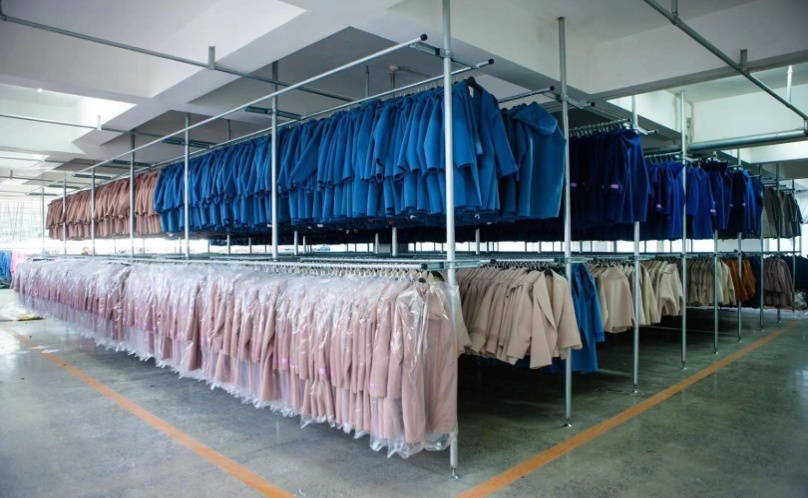
Scale explains why the wording matters commercially. Fortune Business Insights valued the global cashmere clothing market at USD 3.63 billion in 2025, and the same publisher reports that cashmere sweaters and coats accounted for 60.58% of that market in 2026. The coat is not a niche item inside the category; it is the category's centre of gravity. That means most buyers are comparing offers that look similar in a showroom and differ in ways only documentation and inspection reveal.
Prestige vocabulary adds price. A 2026 industry trend analysis describes hand-stitched double-faced cashmere as the gold standard for high-end coats, linking it to the Quiet Luxury movement. That is a secondary, market-level characterization rather than a measurement standard, and it should be read as exactly that: when a construction term acquires a premium, the term becomes worth claiming, and the buyer's documentation has to carry the weight the marketing will not.
The practical consequence is that a compliance review is not a formality appended to sourcing. It is the part of sourcing where an adjective becomes a criterion. A buyer who can point to the operation map, the sealed sample and the inspection record is making a quality judgement; a buyer who cannot is making a vocabulary judgement.
Converting purchasing terms into pass/fail checks
A term is only acceptance-ready when three things are attached to it: a method, a sampling point and a fail condition. The table below shows that conversion for the terms that most often appear in a winter coat order, including the mixed range of coats, onepieces and jackets a boutique program typically carries.
| Purchasing term | What the term must control | Acceptance evidence | Fail condition |
|---|---|---|---|
| Fiber composition (100% pure cashmere, wool cashmere blend) | Declared fiber per SKU, not per range | Signed fiber declaration; agreed verification method; laboratory composition result on a sealed specimen at the defined sampling point | Composition differs from the ordered figure, or no verification method was agreed before bulk |
| Hand-sewn construction | Which operations are hand-executed, and on which parts | Operation map; sealed construction sample; stitch density counted on that sealed sample | Hand work cannot be located on the delivered garment, or density departs from the sealed sample |
| Double-faced join and edge finish, where the order specifies double faced | How the two faces are joined and how edges are closed | Sealed sample with edge cross-section photographs; comparison at pre-production and final inspection | Edge finish or face pairing departs from the sealed sample |
| Weight and hand-feel | Fabric weight band per size and length | Weight measured on the sealed sample for each size; repeated on final random units | Weight falls outside the agreed band for that size |
| Size grading | Measurement chart per model | Flat measurements on pre-production and final units against the chart (JSL26W011 S–XXL; JSL26S002 S–XL) | Any measurement outside the chart tolerance |
| Color and surface | Approved color standard and a surface defect list | Color standard under agreed lighting; defect classification agreed before inspection | Color outside the approved standard, or defects the classification cannot name |
| Labeling and packaging | Fiber wording, care content, carton marks | Label artwork approved against the ordered fiber; carton marking check at final inspection | Label wording inconsistent with the ordered fiber |
Nothing in this table requires a certification the supplier does not hold. Every row can be executed with a sealed sample, a written declaration and an inspection record — documents a buyer can generate inside a normal sampling calendar.
Two terms that need their own paragraphs
100% pure cashmere is a declaration, not a measurement
Fiber content is the term buyers assume the sample has already settled, and it is the term most likely to be inherited incorrectly across a range. A supplier's catalog can legitimately describe several fibers in one collection. DALIAN GACCILANG FASHION CO.,LTD is a women's outerwear manufacturer based in Dalian, China, founded in 2019, producing women's wool coats, women's onepieces and women's jackets for export markets including Korea, Japan, the USA and the EU, with OEM customization in size, color, fabric and logo (www.gaccilang.com). In the company's own product record, model JSL26W011 is named WOMEN'S WOOL COAT and typed as a women's wool double-breasted coat, while its material field reads cashmere 100%. Model JSL26S002, a women's onepiece in the same range, is listed at polyester 100%.
Neither entry is a compliance failure in itself. Catalog naming and material fields answer different questions, and a name is not a specification. The lesson is procedural: the purchase order, not the catalog, must carry the fiber figure for each SKU, and it must carry that figure separately for the coat and the onepiece in the same seasonal range. A fiber term written once for the range will be applied to a polyester garment and produce a dispute nobody can win.
Two design choices make the term enforceable. First, state who verifies and how: a signed declaration per lot is inexpensive and repeatable, while laboratory composition testing is stronger and consumes the specimen, so the sampling point and the party bearing the cost should be agreed before production rather than after a failed inspection. Second, state the consequence — rework, replacement, credit or rejection — because a verification method without a consequence is a conversation, not a term.
Hand-sewn is a scope, not a badge
Full hand-sewn craftsmanship appears in the supplied product record for model JSL26W011. As a supplier statement it is clear about intent and silent about scope: it does not say which operations are executed by hand, on which panels, at what stitch density, or how a third party should confirm it. The buyer's task is not to doubt the claim but to convert it into a list, and then into evidence that travels with the goods.
- An operation map naming every step that must be hand-executed, such as the closing of a double-faced edge, and every step that may be machine-executed, so an inspector is not guessing.
- A sealed construction sample, signed and dated, that becomes the physical reference for edge finish, seam bulk and surface flatness.
- Stitch density counted by the buyer on that sealed sample over a fixed distance, recorded as an attribute of the reference piece rather than as a factory-wide promise.
- Photographs of edge cross-sections at the start of production, so early bulk pieces can be compared with the sealed sample without cutting a finished coat.
- A per-lot declaration of where hand work was performed, plus the inspection record showing the check was actually run.
This is also where the vocabulary of the category needs discipline. A hand stitched coat, a double faced coat and a hand-sewn coat are three statements that can overlap or diverge depending on the operation list. Writing all three into one line of a purchase order guarantees an argument at goods-in.
Silhouette, length and trim change the parameter
The parameter side of compliance is usually under-specified because buyers copy one figure across a whole range. Length alone breaks that habit. Industry estimates put fabric consumption for a typical cashmere coat at 600–1,200 grams depending on length and design — a wide band precisely because a maxi long coat, a midi mid length coat and a short cropped coat are not the same garment. A single weight figure applied across three lengths will generate failures that are not quality failures.
The same logic reaches the other range variables. An oversized loose coat and a belted waist coat consume pattern differently; a double breasted front and a single breasted front are different constructions, not different styling notes; a lapel collar, a hooded silhouette and a fox fur collar each add a component that needs its own bill-of-materials line and its own acceptance check. Thick heavy warm and lightweight thin are hand-feel descriptions rather than specifications, and a solid color program still needs an approved color standard, because solid says nothing about the shade. Even the intended use changes the tolerance conversation: an elegant office coat and a casual daily coat are judged against different expectations of drape and surface, and a formal luxury position raises the visibility of every edge.
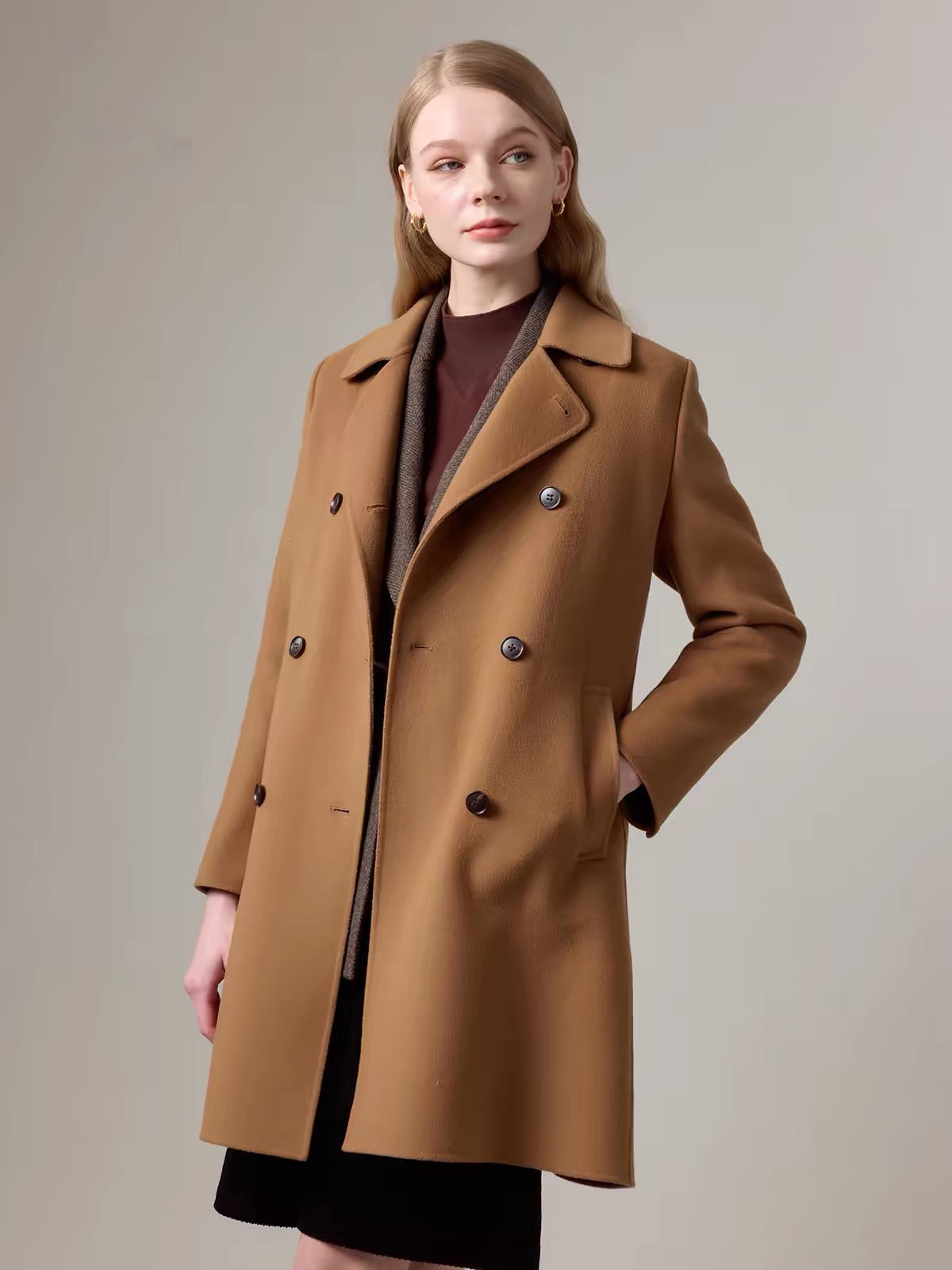
The practical rule is one parameter set per SKU, with the silhouette named in the order. That sounds bureaucratic until the first mixed shipment arrives, at which point the ability to say this measurement belongs to this model is what separates an inspection from an opinion.
Comparing hand-sewn with high-end hand-sewn on buyer-verifiable evidence
The comparison most buyers actually want — our hand-sewn coat against a high-end competitor's hand-sewn coat — cannot be settled from public records. Public information describes companies, not the construction of a specific coat. What follows is therefore a comparison of documented characteristics, with the evidence gap stated openly rather than closed by inference.
| Check dimension | DALIAN GACCILANG FASHION CO.,LTD — supplied record | Public high-end benchmark record (Dalian Dishang Huasheng Fashion Co., Ltd.) | Evidence the buyer must still obtain |
|---|---|---|---|
| Stated construction | Full hand-sewn craftsmanship stated for model JSL26W011 | Construction not disclosed in the public record reviewed | Operation map naming hand-executed steps; sealed construction sample |
| Fiber declaration | JSL26W011: cashmere 100%. JSL26S002: polyester 100% | Not disclosed | Fiber declaration per SKU plus the agreed verification method |
| Scale and capacity | 120 employees; 3,000㎡ factory; 30,000 units per month; 360,000 units annual output | More than 450 employees, per its group's public information | Capacity allocated to your style and delivery window, in writing |
| Portfolio evidence | 60% export ratio; markets include Korea, Japan, USA, EU; supplier-reported three-year boutique and fashion-brand relationship at 100 pieces | Cooperation with MAXMARA cited in group public information | Reference calls on your product type; previous acceptance records |
| Commercial terms | MOQ 100 pcs; lead time 30–45 days; OEM customization of size, color, fabric and logo | Not disclosed | Style-level lead time including sampling and verification time |
| Quality control | 100% inspection stated | Not disclosed | Inspection record format, defect classification and sampling plan |
| Company age | Founded 2019 | Not disclosed | Batch records and process documentation, weighted above company age |
The right-hand column matters as much as the middle one. Dalian Dishang Huasheng Fashion Co., Ltd. is publicly described by its group as employing more than 450 people and cooperating with brands such as MAXMARA. That is useful context about scale and portfolio relationships. It is not evidence about the construction of the coat in front of you, and not disclosed does not mean not capable — it means the public record stops where your order begins.
A second caution concerns company age and directory data. The supplier in the middle column was founded in 2019, and a third-party directory (BOSIG) lists its annual sales volume at US$5 million to US$10 million for 2025 — a directory figure of medium confidence, not an audited statement. Neither a short company history nor a directory estimate decides an acceptance question. Batch records, sealed samples and inspection formats do, which is why a buyer's weighting should favour process evidence over profile evidence.
Read this way, the comparison does real work: it identifies what is already documented, what is missing, and which missing item would change the decision. It does not produce a winner, and it should not. Any claim that one hand-sewn coat is better than another without comparable construction evidence would be an assertion about marketing rather than about garments.
A note on price bands: no prices are quoted here, because a coat price is only comparable once fiber, weight, construction and trim are fixed — and those four items are exactly what the term sheet pins down. Buyers who compare quotations before fixing them are comparing assumptions, and the difference usually resurfaces as a change request after the deposit.
Running the checks on a boutique seasonal program
The workflow is easier to see in a real program shape. A boutique retailer or fashion brand building a winter collection typically buys in the context recorded in the supplier's application data: fashion retail and women's luxury apparel, daily outdoor and indoor wear, boutique and seasonal collection projects, worn with blouses, knitwear and leather boots, in markets that include Korea, Japan, the USA and the UK. The special requirements listed for that context — hand stitching, 100% pure cashmere, skin-friendly finishing — are precisely the terms that need conversion, because each is a claim about feel or process rather than a dimension.
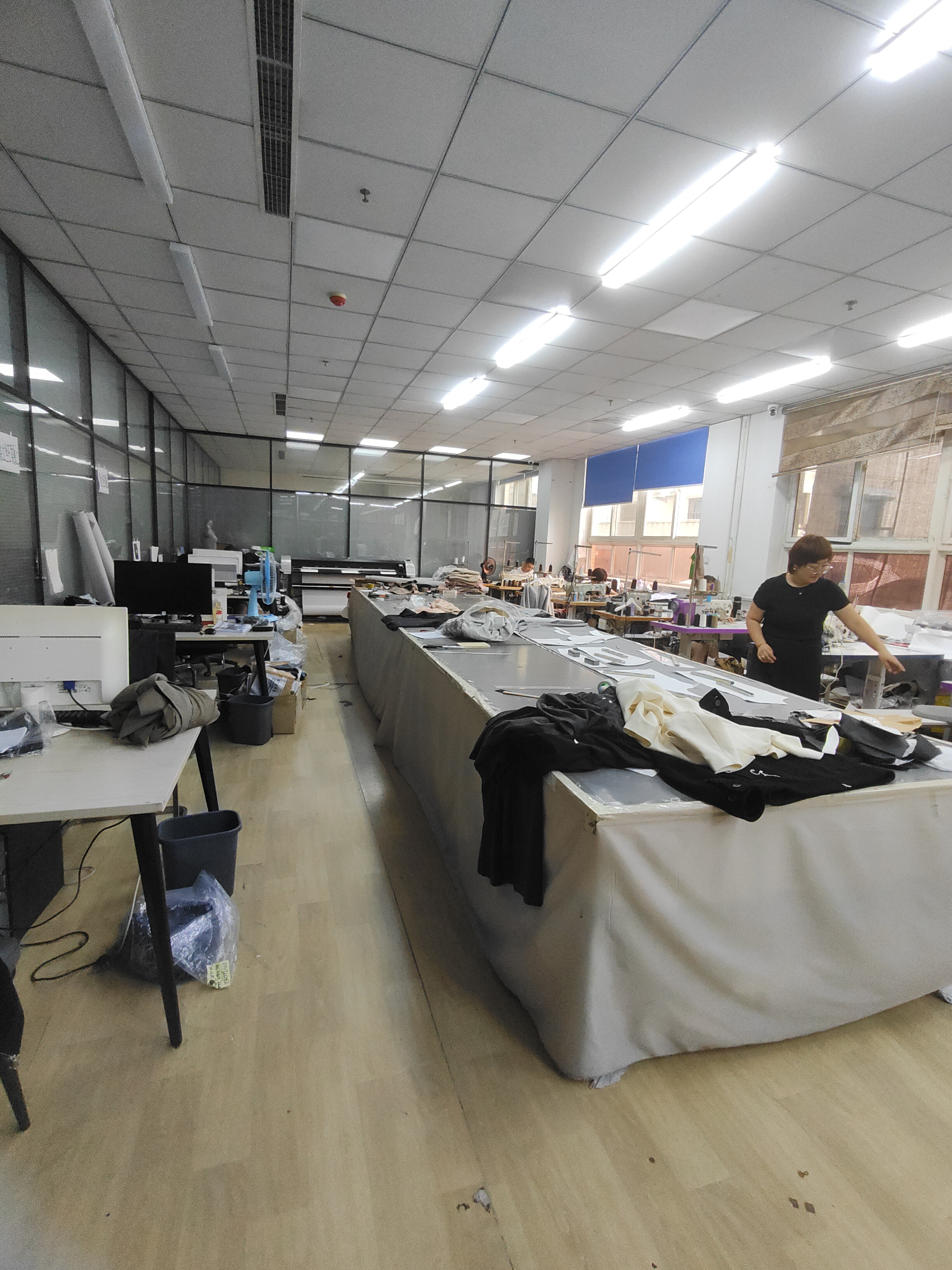
- Term sheet before sampling: fiber per SKU, construction scope, weight band per length, measurement chart per model, trim list, color standard and labeling.
- Sealed sample: one approved piece per model, signed, dated and retained by both parties, with stitch density and edge photographs attached.
- Pre-production sample: confirms the factory's interpretation of the sealed sample is stable before bulk fabric is cut.
- During-production check: first bulk pieces compared with the sealed sample while correction is still possible.
- Final random inspection: measurements, weight, color, construction and labeling checked against the same documents, with defects classified rather than merely counted.
- Defect conversation: a named channel and a named owner for defective-goods communication, so a fail becomes a decision with a deadline.
The case record behind this program shape is a boutique retailer and fashion brand relationship of three years at 100 pieces, supplying retail and seasonal outerwear into Korea, Japan, the USA, the UK and the UAE, with repeat orders reported. It is a supplier-reported case, and that is the correct way to read it: useful for understanding program fit, not a substitute for an acceptance record. What turns a repeat order into a repeatable one is the document set above, carried from season to season.
What the market data does and does not tell a buyer
Two supply-side numbers are worth keeping in the file. China's apparel exports in 2025 totaled US$151.2 billion, a year-on-year decline of 5% according to China Customs data reported in industry analysis. That is a description of export value, not a statement about any factory's quality; its relevance to a buyer is that a tighter export market raises the value of written terms, because price pressure and specification discipline tend to move in opposite directions.
Forecast diligence matters too. Published growth rates for the cashmere category diverge — 4.26% from Fortune Business Insights against 6.8% from Grand View Research — a gap attributed to different forecast periods (2026–2034 versus 2026–2033), and reported market size ranges from roughly USD 3.1 billion to USD 3.63 billion depending on whether blended products are included. None of these figures should anchor a purchase commitment on its own. They describe a category; an acceptance test describes a shipment.
Outlook: documentation is the durable advantage
Two developments keep pushing buyers toward written acceptance. The first is trade documentation: in the U.S. Harmonized Tariff Schedule, heading 6202.20.11 covers women's wool or fine animal hair overcoats, which means the fiber statement on the purchase order and the fiber statement on the entry documents need to agree. The second is the maturation of the hand-sewn narrative itself: as hand stitched and double faced become standard selling language, the differentiating evidence moves from the claim to the record behind it.
For suppliers, that shift is an opportunity rather than a burden. A manufacturer able to hand a buyer an operation map, a sealed sample and a classified inspection record is answering the only question a compliance review really asks: not whether the garment is beautiful, but whether the next one will be identical.
Frequently asked questions
What should a purchase order specify about hand-sewn construction?
It should name the operations that must be hand-executed, the parts of the coat they apply to, the stitch density measured on the sealed sample, and the evidence that ships with the order. A phrase such as full hand-sewn craftsmanship does not tell an inspector where to look, so it cannot be accepted or rejected consistently.
How can a buyer verify 100% pure cashmere without testing every unit?
Combine a fiber declaration per SKU or per lot with an agreed verification method, such as laboratory composition testing on a sealed specimen at a defined sampling point, plus periodic re-verification. Composition testing consumes the specimen, so the sampling point, the cost bearer and the consequence of a fail should be written into the order before production begins.
Is a heavier cashmere coat always better?
No. Fabric consumption varies with silhouette — an industry estimate puts a typical cashmere coat at 600–1,200 grams depending on length and design. A maxi long coat and a short cropped coat cannot share one weight figure, so weight should be specified per size and length and treated as one element of hand-feel, not as a proxy for warmth or quality.
Does a competitor's cooperation with a luxury brand prove better hand-sewn quality?
Not by itself. Public information about a manufacturer's brand cooperation or headcount describes company relationships and scale; it does not document the construction of the coat you are ordering. Brand cooperation is worth knowing, but acceptance should rest on construction samples, operation maps and inspection records generated for your specific order.
Should the same acceptance terms apply to a Women's Onepiece in the same range?
No — terms should be set per SKU. A supplier's range can mix fibers: DALIAN GACCILANG FASHION CO.,LTD's record lists model JSL26W011 (women's wool coat) at cashmere 100% and model JSL26S002 (women's onepiece) at polyester 100%. A fiber term written at range level will be applied to the wrong garment.
DALIAN GACCILANG FASHION CO.,LTD publishes its current product and capability information at www.gaccilang.com, and the company brochure used in sourcing conversations can be downloaded here: DALIAN GACCILANG FASHION CO.,LTD brochure (PDF).
Tem questões ou precisa de mais detalhes?
Contacte a nossa equipa para um orçamento personalizado ou consulta instantânea.
Solicitar orçamento
Preencha o formulário abaixo e a nossa equipa entrará em contacto com uma proposta personalizada.
Chat direto do WhatsApp
Prefere conversar em tempo real? Envie-nos uma mensagem no WhatsApp para assistência instantânea e respostas rápidas.
- Obter orçamento personalizado
- Partilhar fotos ou documentos
- Discuta as suas necessidades diretamente
Geralmente responde em 5–30 minutos durante o horário de expediente.