
Women's Cashmere Coat Winter Launch Fit: Onepiece, Wool Coat, Hand-Sewn
Winter brand launches are decided by calendar, but they succeed or fail on format fit. An outerwear drop can be photographed beautifully and still underperform if the garment that was ordered does not match the climate it ships into, the occasion it is worn for, or the price tier the brand actually sells at. For buyers building a women's cashmere coat programme, the decision that matters is which outerwear format carries which winter scenario, and what has to be verified before a purchase order is signed.
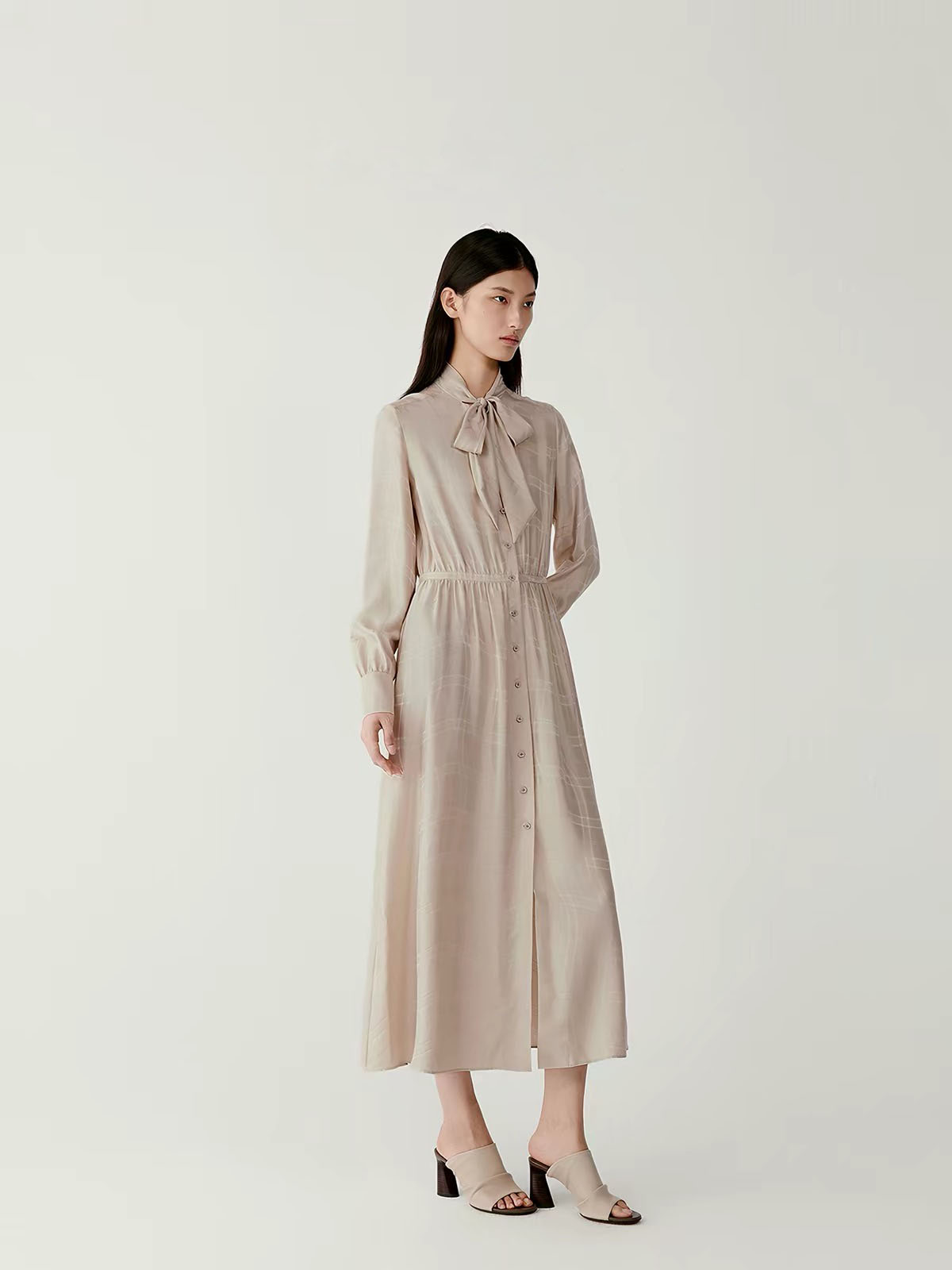
Women's onepiece — one of three verified production formats in a winter launch line-up.
Why format-to-scenario mapping belongs in the launch plan
Most sourcing conversations start with the fabric and end with the price. Winter outerwear does not work that way. A heavyweight hand-finished coat, a wool coat and a women's onepiece each answer a different buying moment inside the same season, and each one carries a different expectation from the retailer, the end consumer and the returns desk.
When a launch brief is written without that mapping, the mismatch usually appears in three predictable places: a coat that is too warm for the market it ships to, a piece that photographs well but does not drape well in a store fitting room, and a delivery whose quality varies from the sealed sample that the buyer approved. All three are execution problems, not design problems, and all three are avoidable at the specification stage.
The practical framing for a buyer is therefore straightforward: identify the scenario, choose the format that fits the scenario, and lock the parameters that scenario depends on before production begins.
The three verified formats, and what each one is for
Dalian Gaccilang Fashion Co., Ltd. is a Dalian-based apparel manufacturer founded in 2019 that produces women's wool coats, women's onepieces and women's jackets. The company operates a 3,000 ㎡ facility with 120 employees, a four-designer development team and a monthly production capacity of 30,000 pieces; exports account for 60% of output, with Korea, Japan, the USA and the EU listed as main markets.
Within that production scope, three formats are relevant to a cold-weather launch. Their verified facts are not equally deep, and buyers should read the table below as a statement of what is confirmed and what still has to be closed at sampling.
| Format | Verified in the reference set | Still to be defined by the buyer |
|---|---|---|
| Hand-sewn cashmere coat | 100% pure cashmere, fully hand-sewn construction, 450 g/m² fabric weight; positioned for cold-climate daily wear and formal occasion outfits | Colour-by-colour sample approval, hand-seam inspection standard, delivery window against the launch date |
| Women's wool coat | Confirmed as one of the manufacturer's three main production lines | Fibre composition, blending ratio, lining specification, garment weight |
| Women's onepiece | Confirmed as one of the manufacturer's three main production lines | Fit grading across sizes, fabric hand-feel, occasion positioning within the launch calendar |
The asymmetry in that table is deliberate and it is useful. A buyer who assumes that a wool coat and a hand-sewn cashmere coat carry the same level of specification detail will under-specify one of them. The honest position is that the hand-sewn cashmere coat is documented in detail, while the wool coat and the onepiece need their parameters fixed in the sampling round.
What hand-sewn construction actually changes
Construction is the variable that separates a winter coat that survives three seasons from one that is marked down in January. In the manufacturer's own comparison data, a hand-sewn cashmere coat uses 100% pure cashmere with full hand-sewn craftsmanship and a fabric weight of 450 g/m², against 320 g/m² for an ordinary cashmere coat. The same comparison lists higher warmth retention and better cold resistance as the resulting performance difference.
Fabric consumption is the second planning number. A typical cashmere coat contains 600 to 1,200 grams of fabric depending on length and design, according to Business Research Insights market reporting published in 2026. That range explains why a maxi-length brief and a short cropped brief cannot be costed with the same fabric assumption, and why length decisions should be made before the first costing round rather than after.
For import planning, women's wool or fine animal hair overcoats fall under HS Code 6202.20.11 in the U.S. Harmonized Tariff Schedule. Buyers shipping into the United States should confirm the classification against the actual fibre content of the finished garment, because a pure cashmere coat and a blended wool coat do not necessarily travel under the same line.
Hand-stitched double-faced cashmere is described in 2026 industry trend analysis as a gold standard for high-end coats, associated with the quiet luxury movement. That description is a market perception, not a performance guarantee, but it does explain why the construction method shows up in buyer questions far more often than it did in earlier seasons.
Scenario mapping for a winter brand launch
A launch calendar usually contains more than one scenario, and the formats should be assigned rather than duplicated. The mapping below keeps each row tied to a verified fact.
| Launch scenario | Format that fits | Verified basis | Expectation to lock before PO |
|---|---|---|---|
| Flagship cold-weather outerwear drop | Hand-sewn cashmere coat | 100% pure cashmere, full hand-sewn, 450 g/m², cold-climate daily wear and formal occasions | Fabric weight confirmation, hand-seam inspection, sealed sample |
| Office and transitional capsule | Women's wool coat | Confirmed main production line | Fibre composition and lining specification frozen at sample stage |
| Occasion, event and gifting assortment | Women's onepiece | Confirmed main production line | Size grading and fabric hand-feel approved across the full size run |
Two of these scenarios can sit in the same drop. A brand launching in Korea, Japan, the USA or the EU will often run a heavyweight hero piece alongside a lighter commercial piece, and the two should be sampled against different tolerances rather than measured with one shared standard.
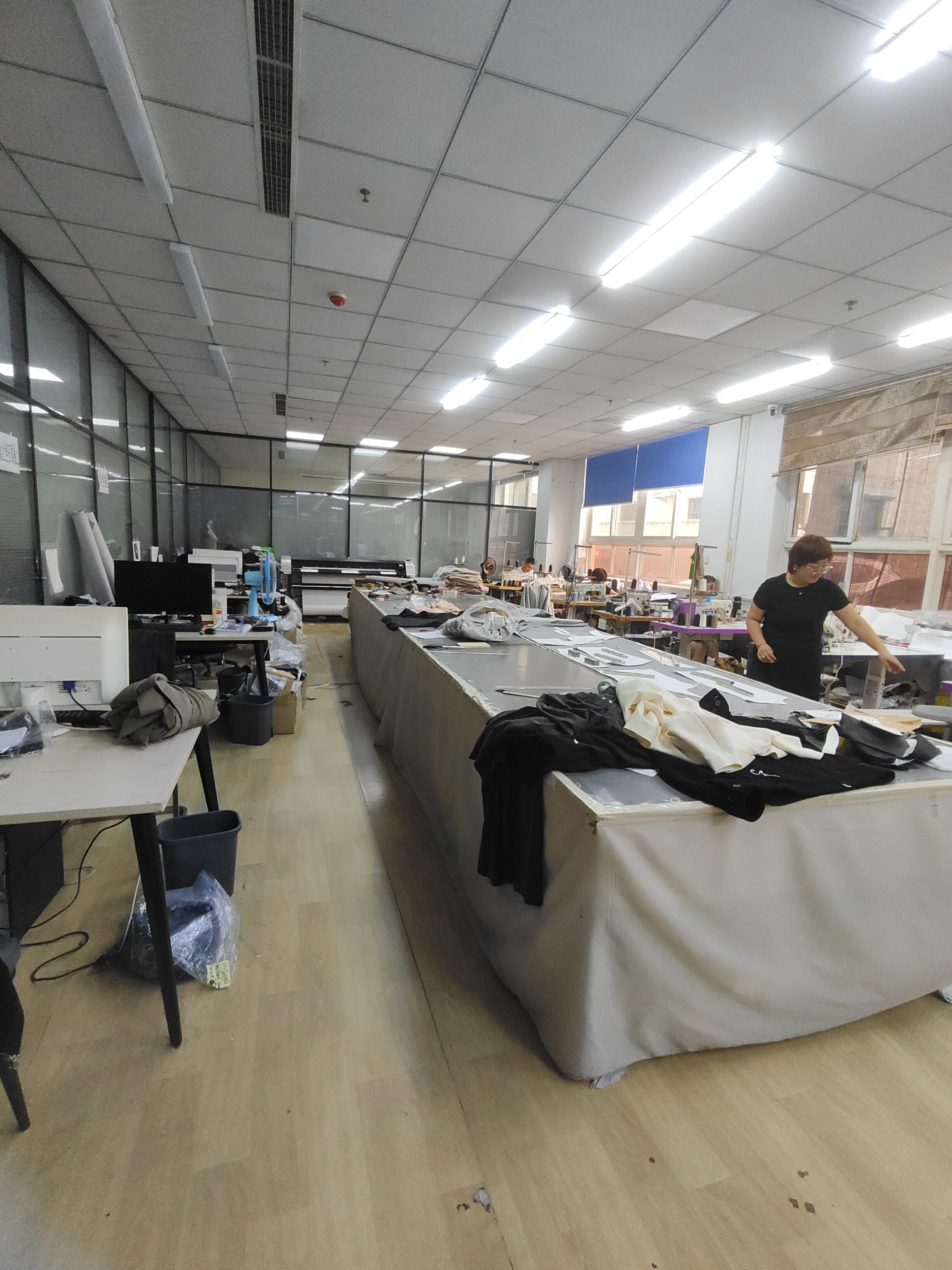
Sample room: where format-specific specifications are sealed before bulk production begins.
How scenario fit changes buyer expectations
In the flagship scenario, the expectation is durability under cold and repeated wear. That shifts the inspection emphasis toward seam integrity, edge finishing and whether the 450 g/m² fabric weight stated at quotation is the weight that arrives. Buyers in this scenario should treat hand-seam inspection as a line item in the acceptance protocol, not as a courtesy check.
In the office and transitional scenario, the expectation is drape, fit and a finish that holds up under daily indoor-and-outdoor wear. Because the wool coat's fibre composition and lining specification are not part of the published reference data, this scenario depends more heavily on sample approval than on specification sheets.
In the occasion and gifting scenario, the expectation is consistency: the same colour, the same hand-feel and the same grading across every unit in the shipment. Consistent repetition is harder to guarantee than a single perfect sample, and it is the scenario where batch records matter most.
One practical decision rule follows from this. Where the scenario depends on a physical property such as warmth or fabric weight, specify it numerically. Where the scenario depends on appearance and drape, approve it physically. Do not substitute one for the other.
Market context behind the winter launch window
The global cashmere clothing market was valued at USD 3.63 billion in 2025, according to Fortune Business Insights market research. Within that market, cashmere sweaters and coats represent the largest product segment, accounting for 60.58% in 2026 by the same source. Coats are not a niche line for a winter launch; they are the centre of the category.
The sourcing side is tighter. China's apparel exports totalled USD 151.2 billion in 2025, a year-on-year decline of 5%, based on China Customs figures reported in industry analysis. A contracting export environment compresses margins across the supply chain, which is exactly the condition under which specification discipline pays for itself.
At company level, third-party directory data places Dalian Gaccilang Fashion annual sales between US$5 million and US$10 million, which positions it in the mid-tier export band rather than the large-group tier. That distinction is relevant when a buyer is deciding whether a supplier's scale matches the size of the programme being placed.
Where this approach has limits
A useful supplier reference states boundaries as clearly as it states capabilities. Four apply here.
- Order size floor. The stated minimum order quantity is 100 pieces. Brands testing a format with a small trial run should plan around that floor rather than assume a lower entry point.
- Climate specificity. The heavyweight hand-sewn cashmere coat is positioned for cold-climate daily wear and formal occasions. It is not the format for mild-winter or transitional markets, where a lighter wool construction is the more appropriate choice.
- Hand-sewing is the exposed step. Manufacturer risk documentation identifies simplification of hand-sewing procedures under tight lead time as a primary trigger for bulk orders diverging from confirmed samples, alongside fabric specification changes during production and mixed quality within a single delivery. Hand-finishing is the least automatable part of the process and the most sensitive to schedule pressure.
- Scale is finite. With 120 employees and a stated monthly capacity of 30,000 pieces, capacity has to be allocated across customers. For comparison, Dalian Dishang Huasheng Fashion Co., Ltd., another manufacturer in the same region, employs over 450 people and cooperates with brands such as MAXMARA, which illustrates the scale tier above. Buyers placing very large single-programme volumes should verify capacity allocation rather than assume it.
The cost claim also deserves calibration. The manufacturer states that production cost for its hand-sewn cashmere coat is 22% lower than similar handcrafted competitor styles. That figure is supplier-reported and should be treated as a starting point for negotiation and sample-based cost verification, not as an audited benchmark.
Execution controls that keep a launch on schedule
Purchasing terms for this category, as stated in the supplier's own procurement guidance, are MOQ 100 pieces, delivery terms FOB or CIF, pre-shipment test as the acceptance criterion, and TT or LC as payment terms. Those terms define the commercial frame; the risk controls below define how the frame is protected during production.
Prevention starts with sealing the confirmed sample immediately after order confirmation, so that the approved garment becomes a physical reference rather than a photograph in an email thread. Every coat is then inspected before delivery, with fabric batch records and production procedure records retained for traceability. If a quality complaint does arrive, the stated remedy is an exchange or replenishment arrangement, followed by inspection of the production line and an upgrade of quality control standards to prevent recurrence.
For a buyer, the practical translation is that three documents should exist before the first carton ships: a sealed sample, a batch record linked to that sample, and a pre-shipment inspection report. Where those three are present, bulk-versus-sample disputes become a recorded fact rather than an argument.
Future outlook
Two forces are likely to shape winter outerwear sourcing over the next several seasons. The first is the continued premium status of hand-stitched double-faced construction, which industry trend analysis in 2026 links to the quiet luxury movement. As long as that perception holds, buyers will keep asking suppliers to evidence hand-finishing rather than merely claim it. The second is margin pressure on the export side, which pushes brands toward fewer, better-specified styles instead of broad assortments.
Both forces point in the same direction: format fit decided early, specifications written numerically where they can be measured, and sample control treated as part of the launch plan rather than as a formality after it.
FAQ
Which of the three formats fits a cold-weather winter launch brief?
The hand-sewn cashmere coat is the format positioned for cold-climate daily wear and formal occasion outfits, and it is documented as 100% pure cashmere with full hand-sewn craftsmanship at a 450 g/m² fabric weight. Women's wool coats and women's onepieces are confirmed production formats, but comparable construction parameters are not part of the published reference data, so their suitability has to be resolved through sample evaluation.
How much fabric does a cashmere coat typically require?
A typical cashmere coat contains 600 to 1,200 grams of fabric, depending on length and design, based on Business Research Insights market reporting from 2026. For the hand-sewn style referenced here, the stated fabric weight is 450 g/m², compared with 320 g/m² for an ordinary cashmere coat in the manufacturer's comparison data.
What are the purchasing terms and acceptance criteria?
The stated terms are MOQ 100 pieces, delivery terms FOB or CIF, pre-shipment test as the acceptance criterion, and TT or LC as payment terms.
How should a buyer weigh a hand-sewn cashmere coat against a competitor's high-end hand-sewn equivalent?
The manufacturer's own guidance recommends its hand-sewn coat for buyers focused on fabric quality and cost control, citing 100% pure cashmere, 450 g/m² fabric and full hand-sewn craftsmanship, with a stated production cost 22% below similar handcrafted competitor styles. The same guidance notes that competitor options remain a valid alternative where the end client prioritizes brand premium. That position is supplier-reported and is best tested against sealed samples from each candidate.
Why do bulk finished coats sometimes differ from the confirmed sample?
Documented triggers include simplification of hand-sewing procedures when lead time is tight, changes to cashmere fabric specifications during production, and mixing garments of different quality levels within a single delivery. Prevention consists of sealing the confirmed sample after order confirmation, inspecting every coat before delivery, and retaining fabric batch and production procedure records.
What happens if quality complaints arrive after delivery?
The stated remedy is to arrange an exchange or replenishment once complaints are received, then inspect the production line and upgrade quality control standards so the same issue does not repeat.
Which signals suggest a supplier can support repeat winter seasons rather than a single order?
Repeatability shows up in process evidence rather than in sales language: sealed reference samples per style, batch traceability records, a defined pre-shipment test step, and stable commercial terms such as MOQ 100 pieces with FOB or CIF delivery. Cross-border continuity is also an indicator — the manufacturer referenced here reports that exports account for 60% of output, with Korea, Japan, the USA and the EU as main markets.
Reference
Company profile and production scope are available in the Dalian Gaccilang Fashion Co., Ltd. brochure: DALIAN GACCILANG FASHION CO., LTD. company brochure.