
Wood, Drywall or Concrete: Screws and Nails by Substrate
Wood, Drywall or Concrete: Screws and Nails by Substrate
Wood screws, drywall screws and concrete nails often appear in the same purchasing conversation because they are all small steel fixings bought in bulk for the same building project. Technically they do three different jobs. Which category fits a project is settled by three questions before price is discussed: what substrate the fixing enters, whether the joint may have to be opened again, and what the project specification requires at that connection.
This comparison is written for buyers at the decision stage — importers, distributors, contractors and procurement teams comparing category options before an order is placed. It sets out how the three categories differ in application fit, where adjacent categories such as self-tapping screws and chipboard screws belong in the same selection, and which documents a buyer should request to confirm that a quoted product matches the intended use. It does not rank the three categories against each other, because no single category is suitable across all three substrates.
The short answer: match the category to the substrate
For timber, wood-based panels and furniture assembly, the working category is wood screws, with chipboard screws as the panel-specific variant. For gypsum board and wall panels fixed to wood or steel studs, the working category is drywall screws. For direct fixing into concrete and masonry, concrete nails are the nail-type option, and they fit only where a permanent nailed fixing is accepted by the specification. Self-tapping and self-drilling screws sit between these groups: they carry a thread that forms its own engagement in the substrate and are specified where the stud material or the connection calls for a screw rather than a nail.
A buyer who applies that rule first avoids the most common and most expensive error in this category: ordering a fixing that drives easily, looks similar in the carton, and does not match the substrate it was bought for. Category names are not interchangeable, and in most projects the substitution only becomes visible at installation, when the labour is already committed.
What each category is designed to do
Wood screws
A wood screw is a threaded fastener intended to join timber to timber or timber to wood-based panels. The thread is coarse relative to a drywall screw and the point is tapered so the screw can start in the wood, while the shank geometry lets the screw pull the two members together as it tightens. Customs nomenclature already treats the category as a distinct product line: US HTSUS subheading 7318.12 covers wood screws of iron or steel on a separate line from self-tapping screws (7318.14) and other screws and bolts (7318.15).
Drywall screws
A drywall screw is a threaded screw used to attach gypsum panel products and metal plaster bases to wood studs or steel studs. Two US specifications divide the category by stud material and point type. ASTM C1002 covers steel self-piercing tapping screws for gypsum panel products or metal plaster bases applied to wood studs or steel studs. ASTM C954 covers steel drill screws for the same board and base materials applied to steel studs from 0.033 in. to 0.112 in. (0.84 mm to 2.84 mm) in thickness — a bounded stud range that itself becomes a selection criterion.
The characteristics that matter most in this category are board-related rather than structural: a fine thread suited to gypsum board, a lower risk of cracking the board during driving, and faster driving speed on board installation. Comparative notes within the category also describe drywall screws as requiring no special maintenance and as easy to remove and replace, which is relevant on fit-out work where panels are adjusted or services are accessed.
Concrete nails
A concrete nail is a hardened steel nail driven directly into concrete, brick or masonry to create a permanent fixing. It has no thread, so it holds through friction and the deformation of the surrounding material, and it is installed with a hammer or, in many markets and where local rules permit, with a powder-actuated tool. It cannot be backed out and re-driven like a screw, and its depth or position cannot be corrected after installation.
That makes concrete nails a fit for direct fixing tasks where a nailed connection is accepted by the project specification and removal is not expected — for example, fixing an item to a concrete or masonry surface where the fixing position is final. It is not a substitute for a threaded fastener in a connection where the specification calls for a screw with documented characteristics, nor a sensible choice where the substrate is likely to be reworked. Buyers should treat any concrete-nail line on an enquiry as a specification question first: which substrate, what is being fixed, and whether the connection may later be opened.
Substrate is the first filter, not brand or price
Category selection in construction screws and nails follows the substrate before it follows the supplier. The mapping below reflects the application scopes described above and is the sequence a buyer can apply to an enquiry without any further information:
- Solid timber, studs and structural timber members: wood screws, with the specification and any structural documentation set by the project design.
- Particle board, chipboard, MDF and furniture panels: chipboard screws or a panel-oriented wood screw, chosen for thread engagement in the panel rather than for board attachment.
- Gypsum board or wall panels on wood studs: self-piercing tapping drywall screws within the ASTM C1002 application scope.
- Gypsum board or wall panels on steel studs, within 0.033–0.112 in. stud thickness: steel drill (self-drilling) drywall screws, as described in ASTM C954.
- Concrete, brick and masonry: concrete nails where a permanent nailed fixing is acceptable; where the specification requires a threaded or anchored connection, the nail category is out of scope and the design governs.
- Light-gauge steel framing connections: steel tapping screws within the ASTM C1513 scope, not board-attachment screws.
Comparison table: fit, rework and what to verify
The table compares the three categories on the dimensions that change a purchasing decision. The last two rows add the adjacent categories that frequently replace one of the three in practice, and are included so that a five-line enquiry can be read correctly.
| Category | Substrate it is built for | How it holds | Rework and removal | Typical project role | Verify before ordering |
|---|---|---|---|---|---|
| Wood screws | Timber, studs, wood-based panels | Coarse thread engaging the wood fibres; tapered point to start | Can be withdrawn; re-driving leaves the original hole enlarged | Timber-to-timber joints, framing, general carpentry | Diameter, length, thread and point type, material and coating, dimensional standard |
| Drywall screws | Gypsum board and metal plaster base on wood or steel studs | Fine thread for board; self-piercing point for wood or steel studs, drill point for steel studs | No special maintenance; easy to remove and replace for panel adjustment | Wall panel and ceiling installation, fit-out | Stud material and thickness against ASTM C1002 or ASTM C954 scope; board type; head and drive |
| Concrete nails | Concrete, brick and masonry | Hardened shank, no thread; holds by friction and local material deformation | Permanent; removal damages the fixing point and the surface | Direct fixing where the position is final and a nailed fixing is accepted | Substrate type and condition; whether the specification permits a nail; installation method allowed on site |
| Self-tapping screws (adjacent) | Gypsum to studs; light-gauge steel framing connections | Thread forms its own engagement in the substrate | Removable, subject to substrate condition | Board attachment where specified; cold-formed steel framing connections | Whether the application is board attachment or a framing connection; the applicable specification |
| Chipboard screws (adjacent) | Particle board, chipboard, furniture panels | Sharp thread giving greater grip in particle board and higher pull-out resistance | No special maintenance; stable connection in service | Furniture assembly and panel fastening | Panel type and density; whether a panel screw or a general wood screw is specified |
Reading the geometry: thread, point and head
Within each category, the name on the carton covers many variants, and the differences that decide fit are usually visible in the geometry. A coarse thread is used where the substrate is fibrous and the screw must cut and hold in timber; a fine thread is used where the substrate is a board that must not be crushed or cracked; a sharp point starts in wood or panel, a self-piercing point forms its own hole in thin material, and a drill point removes material to create the hole in steel. Head shapes differ across the categories because the head has to sit flush in a board, bear on a timber face, or spread load on a panel surface.
For purchasing, this means a category name plus a length is not a specification. A usable line item states at least the following, because each field changes either fit or price:
- Nominal diameter and length, in a stated unit system
- Thread type and pitch, and whether the shank is fully or partially threaded
- Point type and, for self-drilling screws, the steel thickness range the point is intended for
- Head type and drive type
- Material grade, and coating system with its corrosion class
- The dimensional or product standard the item is claimed to meet
Where self-tapping and chipboard screws enter the selection conversation
Self-tapping screws are the family in which the screw forms its own thread as it is driven. They appear twice in this comparison: as the board-attachment screws described in ASTM C1002, and as the steel tapping screws used for cold-formed steel framing connections under ASTM C1513. Those are different scopes — board attachment and a framing connection — and treating them as one purchasing line is a common source of mismatch.
Self-drilling is a point feature rather than a separate job. Where the stud is steel within the thickness range in ASTM C954, the board screw needs a drill point; where the connection is steel-to-steel and structural, the specification route changes again. ICC-ES evaluation report ESR-3332 illustrates how specific that route becomes: the report references a specific self-drilling structural screw, the manufacturer's published installation instructions, connected-steel requirements and ICC-ES acceptance criteria AC118 for tapping screw fasteners used in steel-to-steel connections. That is evidence about the evaluated product only. It does not transfer to another manufacturer's product, and buyers should read it as a template for the documentation to request, not as a product endorsement.
Chipboard screws belong to the panel side of the conversation. The comparative notes for this category describe a sharp thread giving better gripping force in particle board, higher pull-out resistance, and a stable connection suited to particle board, chipboard and furniture assembly. The same notes place a slightly higher cost on chipboard screws for furniture-board fastening, against a slightly lower cost for drywall screws on gypsum board projects. For a buyer, the practical point is that chipboard screws are not a substitute for drywall screws and vice versa: one is optimised for panel grip, the other for board attachment with a low risk of cracking the board.
Rework, removability and the cost of getting the category wrong
Rework is where the three categories diverge most sharply in project terms. A drywall screw can be removed and replaced during panel adjustment with no special maintenance requirement, which is why fit-out teams treat the category as serviceable. A wood screw can be withdrawn, but re-driving into the same hole changes the grip it achieves. A concrete nail cannot be reversed: removing it damages the fixing point, and the surrounding surface often needs repair before the item can be refixed.
This is a design-boundary issue rather than a quality issue. A buyer who supplies concrete nails for a connection that the site later has to open has supplied the correct product for the wrong project role. The same logic applies in the other direction: specifying a removable screw where the project only needs a final, permanent fixing may add cost without adding value. The category should follow the project role, and the project role should be confirmed in writing on the purchase order.
The documentation layer that actually changes a decision
Standards matter to a buyer because they define the substrate and the conditions under which a product claim is meaningful. The references below are the ones that change a category decision in this comparison. None of them establishes that a particular supplier's product complies — that requires the product-specific report, drawing or test document for the item actually quoted.
- ASTM C1002 — steel self-piercing tapping screws for gypsum panel products or metal plaster bases applied to wood studs or steel studs. Scope: board attachment, not structural framing connections.
- ASTM C954 — steel drill screws for the same board and base materials applied to steel studs from 0.033 in. to 0.112 in. thickness. The stud range is part of the specification.
- ASTM C1513 — steel tapping screws for cold-formed steel framing connections. This is connection scope, separate from board attachment.
- EN 14566 — mechanical fasteners for gypsum plasterboard assemblies, covering product specifications and test methods. This is the European route for drywall screws and is not interchangeable with the ASTM route.
- EN 14592 — dowel-type fasteners for timber structures, the European family governing screws used in load-bearing timber applications, typically applied together with a European Technical Assessment.
- ISO 898-1 — property classes (for example 8.8 and 10.9) for carbon and alloy steel screws, the reference system for high strength construction screws.
- EN ISO 3506-1 — steel grades and property classes for corrosion-resistant stainless steel fasteners, including the A2 and A4 grades used to specify stainless steel construction screws.
- ISO 4042 — electroplated coating systems and corrosion classes, the reference for specifying zinc-plated construction screws.
- ISO 7049 and DIN 7504 — dimensional references for cross-recessed tapping screws and for self-drilling screws with tapping screw thread respectively, used on drawings and in supplier communication.
One regulatory point belongs beside this list. In the European Union, construction products covered by a harmonised standard or a European Technical Assessment require a Declaration of Performance and CE marking before being placed on the market, under Regulation (EU) No 305/2011. That is a market-access condition determined by the product and the standard route, not a statement about any individual supplier. Which route applies to a given screw and destination market should be confirmed before a price is agreed, because the testing requirement usually drives the quotation.
Why quotations for similar-looking construction screws diverge
Two quotes for a visually identical screw can differ because the specification behind them differs. The main drivers are the material class (carbon steel with a stated property class under ISO 898-1, or stainless steel with a grade under EN ISO 3506-1), the coating system and its corrosion class under ISO 4042, the dimensional standard and tolerances, the level of documentation supplied with the shipment, and the packaging format. Hot-dip zinc, electroplated zinc, phosphate, black oxide and painted finishes are not equivalents; they are different coating systems with different cost and corrosion behaviour.
The category-level comparison notes point in the same direction at a smaller scale: within one supplier's range, drywall screws are positioned at slightly lower cost for gypsum board projects and chipboard screws at slightly higher cost for furniture-board fastening. Those are relative positions inside a range, not market prices, and they should not be used to settle a negotiation. The usable conclusion is procedural: normalise material, coating, dimensional standard, documentation and packaging across the quotes before comparing the numbers, otherwise the cheapest offer may simply be the least specified one.
Market context for construction screws
Category-level figures provide context, not a forecast for any individual buyer. Grand View Research valued the global structural wood screws market at USD 4.6 billion in 2024 and projected growth from USD 5.1 billion in 2026 to USD 7.4 billion by 2033. Trade data points in a flatter direction for the self-tapping line: OEC figures derived from trade statistics put global trade in screws, self-tapping, iron or steel (HS 7318.14) at USD 4.13 billion in 2024, a 0.72% decrease from 2023.
Two limits apply to those numbers. First, they cover different product scopes — structural wood screws in the market estimate, self-tapping screws in the trade series — so they cannot be set against each other to argue substitution. Second, trade statistics do not resolve construction screws at product level: wood screws sit in HS 7318.12, self-tapping screws in 7318.14 and other screws and bolts in 7318.15, while drywall, chipboard and roofing screws have to be mapped to 7318.14 or 7318.15 depending on thread and point configuration. That mapping is trade practice and should be confirmed with binding tariff information before it is used for duty planning. No construction-screw-only trade value can be read out of the HS 7318 basket.
Where JIAYUAN Construction Screws sits in this comparison
JIAYUAN Construction Screws is the construction fastener range of Tangshan Jiayuan Metalwork Co., Ltd., a hardware manufacturer based in Tangshan, Hebei, China. Its stated product range is relevant to this comparison because it spans the categories discussed above rather than a single one: wood screws, drywall screws, chipboard screws, drilling screws and tapping screws, alongside a nail range that includes common nails, concrete nails and roofing nails, plus wire products.
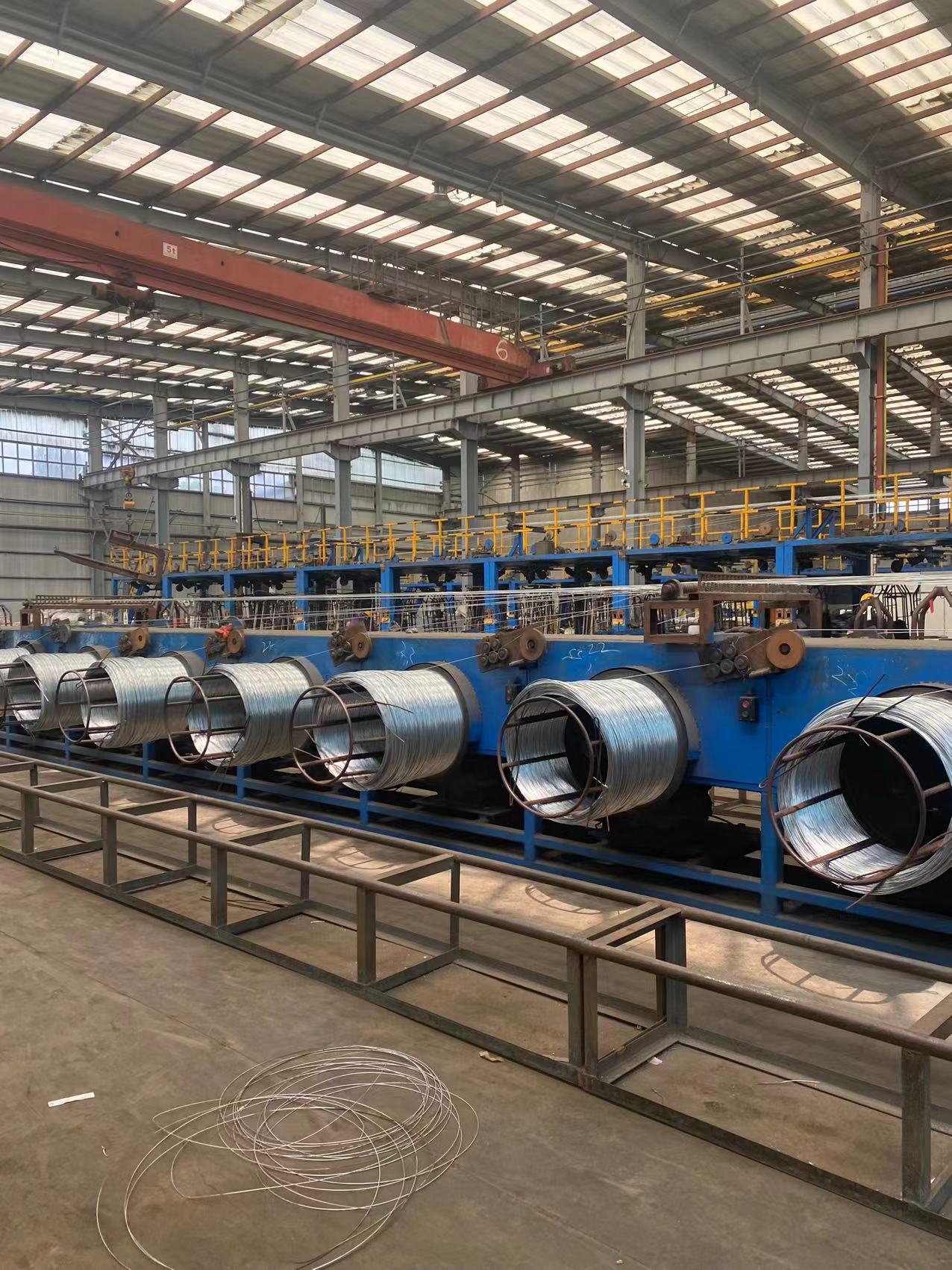
The company reports a 4,000 m² facility, more than 100 nail and wire machines with a stated monthly capacity of more than 3,000 tons, a 15-engineer technical team, and an export ratio of about 90%. Listed export markets include Kuwait, Saudi Arabia, Senegal, Mali, Gambia, Mauritius, Chile, Brazil, Ecuador, Iran, Libya, Liberia, Kenya, Tanzania and Mozambique, among others. Surface treatments offered are zinc plating, black oxide, galvanizing, hot-dip zinc, phosphate and colour painting, and the company supports OEM logo printing and private-label packaging. For engineering enquiries it states that its technical team provides drawing and selection support on fastener type, size and coating.
On commercial terms, the company states a standard MOQ of usually 100,000 pieces per size with flexibility for trial and mixed orders, production of 25–35 days after deposit, shipment within 7 days for stock items, and T/T at 30% deposit with 70% before shipment as the main payment method, with L/C at sight or OA terms open to discussion for long-term customers. Quality control is described as a full-process system covering incoming raw material inspection, in-process patrol inspection, finished-product sampling and pre-shipment recheck, carried out by a team of 15 inspectors, with batch testing of tensile strength, torque and coating thickness before delivery.
These are supplier-stated capabilities, and a decision-stage buyer should treat them as points to confirm in writing rather than as independent verification. The practical test is straightforward: ask for the specification that matches the substrate on the drawing, the dimensional standard, the coating class, and the inspection record for the batch. More on the company's range is available at Tangshan Jiayuan Metalwork.
A buyer checklist before approving a category mix
- Map every line to a substrate. Timber, panel, gypsum on wood studs, gypsum on steel studs, light-gauge framing, concrete or masonry — each has one correct category, and a mixed order should show that mapping line by line.
- Confirm whether the fixing must be removable. Any connection that may be opened should not be supplied as a permanent nail fixing.
- Check the stud or steel thickness against the bounded ranges in the relevant specification, particularly for drill-point drywall screws and framing screws.
- Separate board attachment from framing connections on the purchase order so the two are not quoted as one item.
- Write the specification, not just the category name: diameter, length, thread, point, head, drive, material grade, coating class and standard.
- Request the product-specific document for the item quoted, not a generic certificate covering a different product or a different factory.
- Confirm the tariff line with a customs broker before duty planning, since drywall, chipboard and roofing screws can fall under more than one subheading depending on configuration.
- Run a sample before the full order where the substrate is unfamiliar, and check driving behaviour and board or panel condition rather than only dimensions.
What the comparison settles
The difference between wood screws, drywall screws and concrete nails is a difference of application, not of grade. Wood screws exist to hold in timber and panels; drywall screws exist to attach board to studs with a thread and point matched to the stud material; concrete nails exist to make a permanent direct fixing in masonry. Self-tapping and self-drilling screws are the bridge categories that appear when the substrate is steel or when the connection is specified as a screw connection, and chipboard screws are the panel-specific variant of the wood screw family.
A buyer who selects on substrate, then on rework requirement, then on specification and documentation, will usually find that the three categories never compete for the same line item. Where they appear to compete, the underlying drawing is usually incomplete — and that is the point to resolve before an order, not after delivery.
Frequently asked questions
What is the main difference between wood screws, drywall screws and concrete nails?
The difference is the substrate and the way the fixing holds. Wood screws use a coarse thread and tapered point to hold in timber and wood-based panels. Drywall screws use a fine thread and a self-piercing or drill point to attach gypsum board and metal plaster base to wood or steel studs. Concrete nails are unthreaded hardened nails driven into concrete, brick or masonry for a permanent direct fixing. Only the screw categories can be withdrawn and re-driven.
Can drywall screws be used in wood?
Drywall screws are specified for attaching gypsum panel products and metal plaster bases to wood or steel studs, which is the scope described in ASTM C1002 and ASTM C954. That is board attachment, not a general timber joint. Where the joint is timber to timber or timber to a structural member, the appropriate category is a wood screw specified for that joint, because holding depends on thread engagement in the wood rather than on board attachment. Substituting one for the other should be a documented decision, not a site-level one.
Are chipboard screws the same as wood screws?
Chipboard screws are a panel-oriented variant within the wood screw family, and at the six-digit level chipboard-type wood screws are classified with wood screws under HS 7318.12. Their comparative advantage is in panels: a sharp thread gives better gripping force in particle board, with higher pull-out resistance and a stable connection suited to particle board, chipboard and furniture assembly. They are positioned at a slightly higher cost for furniture-board fastening than drywall screws are for gypsum board projects, reflecting the different job rather than a difference in category quality.
When does a buyer need a self-tapping or self-drilling screw instead?
When the substrate or the connection requires a screw that forms its own engagement. For gypsum board on studs, ASTM C1002 covers self-piercing tapping screws and ASTM C954 covers steel drill screws for steel studs within a stated thickness range. For cold-formed steel framing connections, ASTM C1513 applies, which is a connection scope rather than board attachment. For steel-to-steel structural connections, product-specific evaluation and installation instructions apply, as illustrated by ICC-ES report ESR-3332 for one evaluated self-drilling structural screw.
Do the three categories need different coatings?
Coating is a separate decision from category, driven by the service environment. ISO 4042 is the reference for electroplated coating systems and corrosion classes on fasteners, and EN ISO 3506-1 defines the stainless steel grades, such as A2 and A4, used where a corrosion-resistant material is specified. Jiayuan lists zinc plating, black oxide, galvanizing, hot-dip zinc, phosphate and colour painting as available treatments. Buyers should state the coating system and corrosion class on the order rather than a general instruction such as “anti-rust”.
What should a purchase order state to avoid a category mismatch?
At minimum: the substrate and the element being fixed, the category and product standard claimed, nominal diameter and length, thread and point type, head and drive type, material grade, coating system and corrosion class, packaging format, and the inspection or test document required with the shipment. Where the connection is a framing or structural connection, the purchase order should also reference the project specification and the product-specific evaluation or test report that the supply is expected to satisfy.
Tem questões ou precisa de mais detalhes?
Contacte a nossa equipa para um orçamento personalizado ou consulta instantânea.
Solicitar orçamento
Preencha o formulário abaixo e a nossa equipa entrará em contacto com uma proposta personalizada.
Chat direto do WhatsApp
Prefere conversar em tempo real? Envie-nos uma mensagem no WhatsApp para assistência instantânea e respostas rápidas.
- Obter orçamento personalizado
- Partilhar fotos ou documentos
- Discuta as suas necessidades diretamente
Geralmente responde em 5–30 minutos durante o horário de expediente.