
Wood Panels Explained: A Technical Reference for Global Buyers
Wood panels are flat, engineered sheet products manufactured from wood veneers, wood fibers or wood particles, consolidated with adhesives under heat and pressure. They form a core material family for construction, furniture production, interior finishing, cabinetry, packaging and industrial applications. The umbrella term wood panel covers plywood, medium-density fiberboard (MDF), laminated veneer lumber (LVL), melamine faced boards, veneered plywood, oriented strand board (OSB) and other engineered panels. Each family has a different internal construction, technical range and field of use. This article is a category-level reference for global buyers in the awareness and research stage. It explains the main wood panel types, shows how specifications translate into real-world performance, and highlights the sourcing signals that separate a suitable supplier from a costly mismatch.
Why Wood Panel Is a Category, Not a Single Product
First-time importers often search for wood panel or plywood without realizing how wide the category is. A buyer who requests plywood may receive commercial plywood when the project actually requires marine plywood. A buyer who asks for an eco-friendly board may not know whether the formaldehyde emission class fits the destination market regulation. A buyer who needs a structural panel may be offered an interior-grade board without waterproof adhesive.
The root cause is that one generic noun covers products with very different performance profiles. Plywood is cross-laminated veneers. MDF is densified wood fiber. LVL is parallel-laminated veneer lumber. Melamine board is a surfaced panel with a decorative or functional overlay. Film faced plywood is a panel with a special film layer for concrete formwork. These differences determine stiffness, moisture resistance, screw-holding ability, surface quality, formaldehyde class and service life.
The opportunity for a buyer in the research stage is that most of this confusion is avoidable. Once a buyer learns to read the main technical parameters — panel family, face/back material, core material, glue type, density, moisture content, thickness and certification — most procurement risks become visible before a purchase order is placed.
A Reference Supplier for the Full Panel Spectrum
Dalian WADA International Trading Co., Ltd. (WADA GROUP), established in 2010, is a manufacturer and global exporter of engineered wood products with over 15 years of experience. The company operates a manufacturing facility of 53,950 square meters, employs approximately 200 staff and maintains an R&D team of 25 engineers. Its main product lines are LVL, plywood, veneered board, MDF, OSB, wall panel and woodworking machinery. Around 100% of production is exported to more than 50 countries, with major markets in North America, the EU, Australia, Japan, South Korea, the Middle East, Mexico and South America; WADA also has overseas branches in Japan and Singapore.
The relevance of this profile to a buyer in the awareness stage is not about size; it is about scope. Because WADA’s product range covers most of the panel families described in this article, its catalogue can be used as a practical map of the category. A buyer can inspect how one supplier differentiates commercial plywood, structure plywood, marine plywood, film faced plywood, MDF, LVL bed slats, melamine board and veneered plywood — and then use that understanding when evaluating any supplier.
Main Wood Panel Types and Their Technical Parameters
Plywood and Its Sub-Categories
Plywood is an engineered panel made from thin wood veneers bonded crosswise in layers. This cross-grain construction gives plywood stability and strength in two directions, which is why it is one of the most widely used wood panel families in global trade. Buyers will encounter several sub-categories under the plywood name.
Commercial plywood is a general-purpose panel for furniture manufacturing, interior decoration and fit-out, construction and building materials, packaging and logistics, retail and commercial display, and door manufacturing. In WADA’s product data, commercial plywood is produced in 4×8 feet or as required, with thickness from 2 mm to 25 mm. Face and back veneers can be birch, pine, okoume, bintangor, sapeli, pencil ceder or poplar. Core options include poplar, eucalyptus, combi or full birch. Glue types range from E0, CARB P2 and E1 to E2 and WBP. Veneer grades can be specified from B/BB and BB/BB to BB/CP, BB/C, CP/CP, CP/C and C/C.
Structure plywood is designed for construction and structural engineering. It is made with larch or pine faces, a core of eucalyptus, larch, pine or combi core, and is available in 3×6 to 4×8 feet with thickness from 9 mm to 28 mm. It is intended for residential and commercial building, roofing and flooring systems, formwork and concrete construction, infrastructure and civil engineering, timber frame construction and industrial construction.
Marine plywood is built for shipbuilding, boat manufacturing and coastal construction. It uses birch or okoume faces and poplar, birch, okoume or combi core, bonded with melamine WBP or phenolic WBP glue. Grade options include construction, shipbuilding and shipyard. Density is 600-750 kg/m³, moisture content is 8-12%, thickness ranges from 9 mm to 25 mm, and standard dimensions are 4×8 feet and 4×9 feet. The WBP glue system is the key signal for high-moisture exposure.
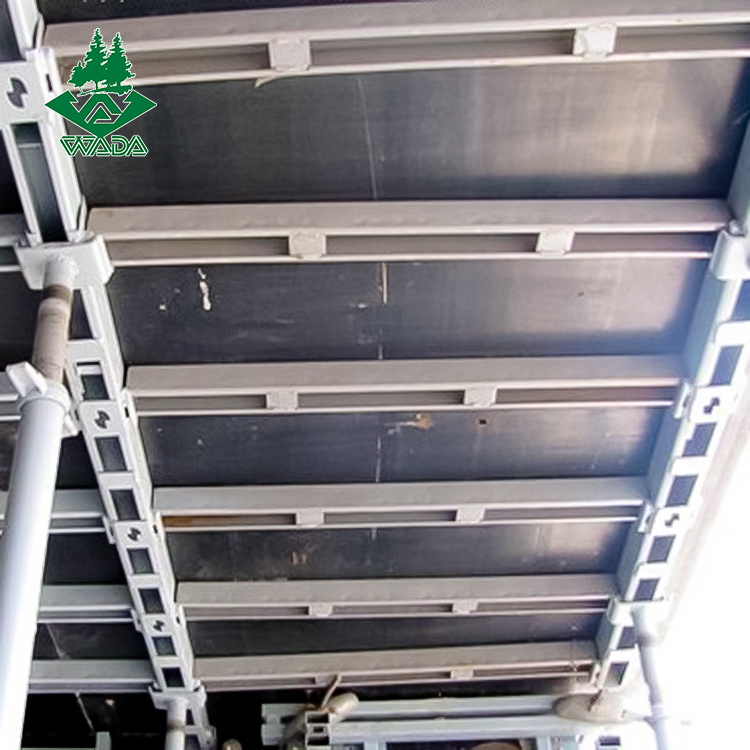
Film faced plywood is a construction panel with a dark brown or black film on both faces. It is designed for concrete formwork, building construction, precast concrete and infrastructure construction. WADA’s film faced plywood is available in 1200×1800, 1200×2400, 1220×2440, 1250×2500 and 1500×3000 mm, with thickness from 4 mm to 35 mm. Core options include fingerjoint, poplar, combi, hardwood, pine and Russia birch. Glue types are MR, melamine WBP or phenolic WBP. Usable time in concrete projects ranges from 2 to 40 times depending on core and glue.
MDF: Dense, Smooth and Process-Friendly
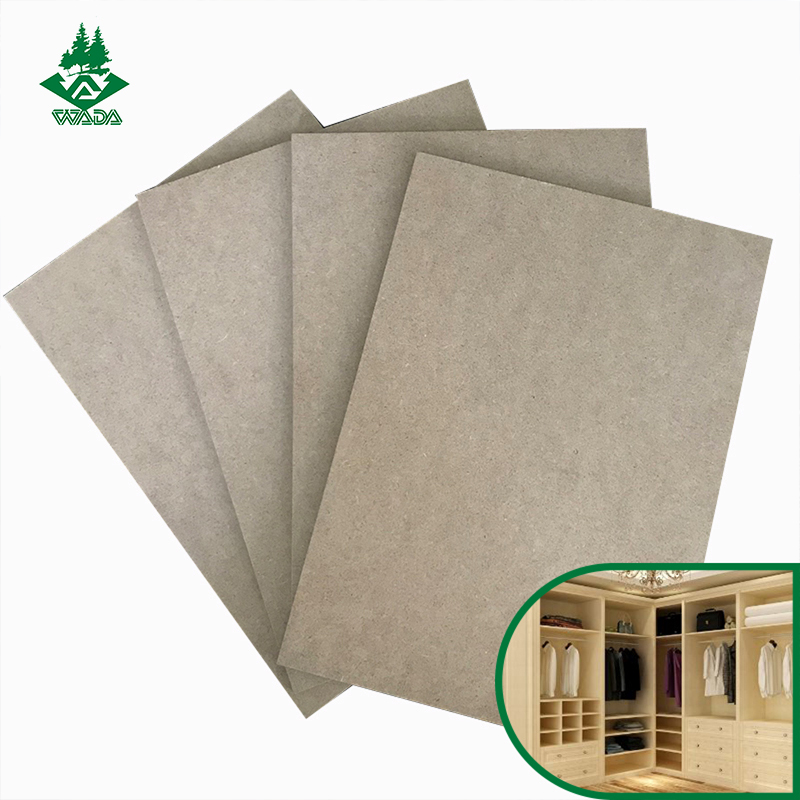
Medium-density fiberboard (MDF) is a wood panel made from wood fiber. It is produced with a density range of 500-1000 kg/m³, moisture content of 5-13% and thickness from 1.2 mm to 50 mm. Standard sizes range from 4×8 feet to 8×16 feet. The production process is continuous flat pressing; WADA uses equipment from Difenbach and Sinbelkamp of Germany. Glue options are E0, CARB P2 or E1. The product is certified with FSC, CARP/EPA, JIS and EUDR. Typical applications include furniture board, routed board, lightweight high-strength board and waterproof board. The intended buyers are furniture manufacturers, cabinet and kitchen manufacturers, interior contractors and fit-out companies, door manufacturers, flooring manufacturers, retail fixture producers and decorative panel distributors. Because MDF has a dense and homogeneous surface, it is a preferred material for machining, edge profiling and smooth paint or laminate finishes.
LVL: Laminated Veneer Lumber
Laminated veneer lumber (LVL) is produced by bonding veneers with their grain running parallel. This gives it predictable strength along the length of the member. One of the most common buyer-facing LVL forms is the bed slat. WADA’s LVL bed slat has a width range of 25-190 mm, thickness of 7-15 mm, face/back in birch, beech or poplar, and core in birch or poplar. The glue grade is E0 or E1. It is intended for furniture manufacturing, bedroom furniture production, home furnishing and retail, hospitality furniture supply (hotels and apartments) and e-commerce furniture sellers. For furniture buyers, the LVL bed slat is relevant because it combines strength with a clean, low-formaldehyde specification.
Melamine Faced Boards and Veneered Plywood
Melamine faced board is a decorative panel with a melamine paper, PET film, HPL or UV finish applied to a core of plywood, MDF, particle board or blockboard. WADA’s melamine board has a thickness range of 2-30 mm and sizes from 4×8 to 7×9 feet. Glue options are E0, CARB P2, E1 or E2. It is classified as furniture grade or cabinet grade. The intended industries include furniture manufacturers, cabinet and wardrobe manufacturers, interior contractors, modular and office furniture makers, and decorative panel distributors. The face layer determines appearance and resistance; the core determines dimensional stability and screw-holding ability.
Veneered plywood is a board finished with a natural wood veneer. WADA’s veneered plywood is available with white oak, red oak, black walnut, parota, wenge, ash, birch, pine or sapeli faces, or engineered veneer. Core options include plywood, MDF, chipboard and blockboard. Thickness ranges from 2 mm to 25 mm, and dimensions range from 4×8 feet to 7×9 feet. It is used by furniture manufacturers, cabinet and wardrobe producers, interior fit-out companies, office furniture manufacturers and shopfitting companies.
How Panel Specifications Map to Real Projects
For a buyer, the most practical way to understand these panels is through the conditions they are expected to survive. The application records linked to WADA’s product catalogue show five distinct scenarios:
| Market | Industry | Working condition | Project type | Key requirement | Typical panel |
|---|---|---|---|---|---|
| Australia | Construction | Outdoor structural use | Building construction | Waterproof, high strength | Structure plywood / Film faced plywood |
| Mexico | Outdoor decoration | UV exposure / outdoor environment | Exterior wall cladding | UV resistant, weather resistant | Marine plywood / Structure plywood |
| Singapore | Packaging | Heavy-duty transport | Industrial packaging | High load capacity | Commercial plywood |
| Poland | Furniture manufacturing | Workshop production | Furniture production | Smooth surface, stable core | MDF / Melamine board / Veneered plywood |
| United States | Interior decoration | Indoor dry environment | Interior finishing | Eco-friendly, formaldehyde-free | E0 / CARB P2 panels |
The Australian scenario is outdoor structural use in building construction. The panel must provide structural support over a long period, so the decisive parameters are waterproof glue and high strength. Structure plywood and film faced plywood match this condition.
The Mexican scenario is exterior wall cladding in an outdoor environment with UV exposure. The panel must resist UV and weather over years of use, so weather-resistant face layers and WBP glue matter more than surface decoration. Marine plywood and structure plywood are the specified product types in this project record.
The Singapore scenario is industrial packaging under heavy-duty transport. Crates and protective structures must tolerate high load in one-time or reusable operation. Commercial plywood, with adequate thickness and strength, is the panel selected in this record.
The Polish scenario is furniture production in a workshop environment. A continuous production line requires a smooth surface and a stable core so that panels are predictable during cutting, edge banding and assembly. MDF, melamine board and veneered plywood are the relevant panel families.
The U.S. scenario is interior finishing in a dry indoor environment. Walls, kitchen elements and furniture must meet eco-friendly, formaldehyde-free requirements. The relevant specification is a low-formaldehyde glue class such as E0 or CARB P2, supported by certification such as CARP/EPA or FSC.
Market Trends and Regulatory Drivers
Verified market data points to steady expansion across the wood panel category. The global plywood market was valued at about USD 80.57 billion in 2025, with Asia Pacific holding the largest revenue share of 39.4%, according to Grand View Research. The global MDF market is projected to grow from USD 44.96 billion in 2025 to USD 82.24 billion by 2033 at a CAGR of 8.2%. OSB production reached over 32 million cubic meters globally in 2024, with the USA accounting for 14 million cubic meters. The wood plastic composites (WPC) market reached USD 8.89 billion in 2025, with an expected CAGR of 11.7% until 2033. According to Global Market Insights, the leading global wood-based panel manufacturers include West Fraser, Arauco, Kronospan and EGGER Group. China was the second largest exporter of raw timber (HS 44) to the U.S. in 2024, contributing USD 2.17 billion, or about 9% of that trade flow.
Regulation is tightening in parallel with demand. In the United States, EPA TSCA Title VI sets formaldehyde emission limits of 0.11 ppm for MDF and 0.05 ppm for hardwood plywood. In the European Union, wood-based panels used in construction must comply with the harmonized standard EN 13986 for CE marking eligibility. Buyers intending to sell into these markets should confirm that the supplier’s glue system and test documentation match the required thresholds.
Multi-Source Procurement vs. an Integrated Panel Supplier
Traditional procurement of wood panels is often multi-source: a furniture factory buys MDF from an MDF specialist, plywood from a plywood mill, veneered boards from a decor mill and film faced panels from a formwork specialist. This model has genuine advantages. Each product can be negotiated separately, and a dedicated factory often has deeper capacity in its specific category.
An integrated supplier such as WADA follows a different logic. One quality team and one documentation system cover multiple panel families. The buyer reduces coordination overhead, keeps specification records under one roof and can align compliance files for the same destination market. The company’s product range — LVL, plywood, veneered board, MDF, OSB and wall panel — exists precisely so that a project with several panel requirements can be sourced without building a fragmented supplier base.
The boundary should be stated clearly: an integrated supplier is not automatically the largest producer in every niche. For very large, repeated volumes of one highly specialized panel, a dedicated single-category manufacturer may offer deeper capacity or a wider model matrix. A practical rule is to use an integrated supplier when a project needs multiple panel families with consistent quality and compliance, and to verify special-category depth when the order is concentrated in one niche product.
What a Buyer Should Verify Before Building a Shortlist
At the awareness and research stage, a buyer needs five checks.
First, identify the panel family. The project environment decides whether the right choice is plywood, MDF, LVL, melamine board or veneered board. Second, match the glue and formaldehyde class to the destination market — E0, E1, CARB P2 or EPA TSCA Title VI levels. Third, confirm the core and face materials, because they determine moisture resistance, strength and finish. Fourth, check density and moisture content, because these affect machining, stability and weight. Fifth, verify certification and traceability — FSC, EUDR, CARB P2, EPA, JIS/JAS and EN 13986 are relevant depending on the market.
These five checks form the bridge between awareness and a responsible shortlist. They do not require a buyer to become a wood technologist; they require a buyer to compare specifications in a structured way.
Future Outlook
Three directions are visible from the market data and from the product structure of export-oriented manufacturers.
First, regulatory pressure on formaldehyde and deforestation will continue to rise. Glue systems and chain-of-custody documentation are becoming part of the core product, not an optional add-on. Second, demand for engineered panels will keep growing faster than solid wood supply. The MDF CAGR of 8.2% and the WPC CAGR of 11.7% point in the same direction: manufacturers are replacing solid timber with engineered boards in furniture, flooring and construction. Third, buyers will increasingly evaluate suppliers as systems rather than as single-product sources. The ability to deliver multiple panel families with one quality standard, one compliance file and one logistics flow will become a selection criterion in itself. This favors manufacturers with integrated production, an export-oriented structure and the documentary capacity to serve more than one regulated market.
Buyers who need a complete specification overview can access WADA’s corporate brochure as a PDF or visit www.wadaplywood.com for product details.
FAQ
Plywood is made of thin wood veneers bonded crosswise in layers. MDF is made of wood fiber pressed into a dense panel. In WADA’s product data, MDF has a density of 500-1000 kg/m³, a thickness of 1.2-50 mm and sizes from 4×8 to 8×16 feet. Plywood is generally used when the application requires structural strength and moisture resistance. MDF is used when the requirement is a smooth surface, easy machining and stable edges. MDF glue options include E0, CARB P2 and E1.
The decisive signal is the glue system. Marine plywood uses melamine WBP or phenolic WBP glue and is intended for shipbuilding, boat manufacturing and coastal construction. Structure plywood with WBP glue is used for outdoor structural construction. Film faced plywood is designed for concrete formwork and construction. For exterior wall cladding in UV-exposed environments, buyers should verify UV resistance and weather resistance. WADA’s application records show marine plywood and structure plywood used for outdoor projects in Australia and Mexico.
It depends on the destination market. For the U.S. market, CARB P2 and EPA TSCA Title VI compliance are relevant; EPA limits are 0.11 ppm for MDF and 0.05 ppm for hardwood plywood. For the EU, EN 13986 is the harmonized standard for CE marking of wood-based panels in construction. FSC covers responsible forestry and chain of custody; EUDR covers deforestation-free status; JIS and JAS are relevant for Japan. MDF produced by WADA, for example, carries FSC, CARP/EPA, JIS and EUDR certification.
Commercial plywood is a general-purpose panel for furniture, interior fit-out, construction, packaging, displays and doors. It is produced in 4×8 feet or as required, with thickness from 2 mm to 25 mm, and glue options from E0, CARB P2 and E1 to E2 and WBP. Marine plywood is specifically built for shipbuilding and coastal construction. It uses birch or okoume faces, poplar/birch/okoume/combi core, melamine WBP or phenolic WBP glue, density of 600-750 kg/m³, moisture content of 8-12% and thickness of 9-25 mm.