
Woodworking Band Saw Machine Buyers: Why Blade Grinding Machines Determine Long-Term Value
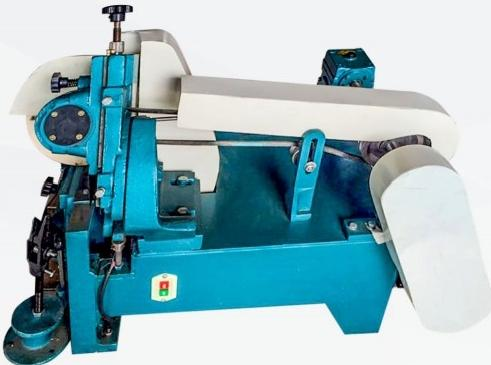
The purchase of a woodworking band saw machine is usually evaluated on parameters such as log diameter, sawing width, motor power, and blade size. But for buyers who plan to operate the machine for years, the maintenance system around the blade is equally important. A band saw blade becomes dull through normal cutting, and when the tooth pitch becomes uneven, output quality and cutting speed decline. This is where the band saw blade grinding machine enters the procurement picture. This article explains why blade grinding equipment matters for woodworking band saw machine buyers, how it fits into a long-term operation, and what evidence exists from real installations.
The Problem: Blade Deterioration in Woodworking Band Saw Operations
When a band saw machine is in production, the blade is the component that directly contacts the wood. Over time, the blade becomes dull and may develop tooth pitch problems. If no grinding machine is available, the operator has only two practical choices: replace the blade or send it out for sharpening. Both options create cost and delay. In regions with limited after-sales service, a dull blade can stop production for days.
Repeated blade replacement also raises the operating cost of the saw. A production line that runs daily needs either a stock of spare blades or an external sharpening service with reliable turnaround. For small and medium wood processing facilities in Africa, Southeast Asia, and South America, this maintenance constraint can be the difference between consistent throughput and frequent downtime.
The Opportunity: In-House Blade Sharpening as a Long-Term Decision
The opportunity lies in bringing the sharpening process in-house. A band saw blade grinding machine allows the operator to restore the cutting edge and adjust tooth pitch without waiting for an outside service. For a factory that saws logs and timbers daily, this can turn an unpredictable maintenance cost into a routine process.
For buyers evaluating a full equipment package, the presence of a blade grinder also signals that the supplier understands the whole sawing process, not just the main machine. This is especially relevant in a market where horizontal band saws account for the largest share of bandsaw sales, and where maintenance infrastructure is still developing.
Supplier Position: XINYANGJX and the Blade Maintenance Ecosystem
One manufacturer that combines band saw production with blade maintenance equipment is Hangzhou Lin'an Xinyang Machinery Co., Ltd., commonly referred to as XINYANGJX. The company was founded in 2012 and is based in Hangzhou, Zhejiang Province, China. Its product range includes horizontal and vertical woodworking band saw machines, small and heavy horizontal models, band saw blade grinding machines, tooth picking machines, edge trimming machines, and angle cutting machines.
According to company information, about 70% of its equipment is exported to markets in Africa, Southeast Asia, South Asia and South America. The factory area is 3,600 square meters. The company states a monthly production capacity of 30 pieces and a standard lead time of 30-50 days. For distributors and end users, this capacity allows inventory planning without long uncertainty.
Within this product ecosystem, the band saw blade grinding machine is positioned as a complement to the saw rather than a standalone accessory. The MF1115 model, for example, is designed to grind saw blade widths from 30 to 150 mm and tooth pitches from 12 to 40 mm. Its grinding wheel specification is 175 by 32 mm, the main motor runs at 2900 r/min, the total motor power is 0.79 kW, and the net weight is 300 kg. These are useful reference points for buyers comparing alternative grinders.
XINYANGJX also states that it provides long-term after-sale services. If a customer has a question during machine use, the supplier can be contacted directly. The company can supply new saw blades or a tooth picking machine to correct tooth pitch, which gives buyers more than one option when a blade is worn.
Technical Explanation: How Band Saw Blade Grinding Machines Work
To understand the value of a band saw blade grinding machine, it helps to know what the machine actually does. The grinder holds the blade between guides and uses a rotating grinding wheel to remove a small amount of metal from each tooth, restoring a uniform cutting edge. On a machine such as the MF1115, the operator can set the desired tooth pitch range, and the machine indexes each tooth past the wheel for consistent grinding.
Key Specifications to Compare
- Grinding width of the saw blade: controls which blade sizes can be held correctly.
- Tooth pitch range: must match the distance between the teeth on the blade.
- Grinding wheel diameter and width: affects edge quality and how fast the work can be completed.
- Motor power and wheel speed: determine the grinding capability.
- Weight and dimensions: matter for workshop layout and installation.
For example, a small horizontal woodworking band saw model MJ375D uses a saw blade of 4005 by 34 by 1.05 mm. The horizontal model MJ376S-900 uses a blade of 6144 by 50 by 0.9 mm. The MF1115 grinding machine, with a grinding width range of 30 to 150 mm, can cover both of these blade widths. When choosing a grinder, the buyer should compare the grinder range with the saw blades actually used on site.
| Band Saw Model | Typical Saw Blade Size | MF1115 Grinding Width Range |
|---|---|---|
| MJ375D (small horizontal) | 4005 x 34 x 1.05 mm | Within 30-150 mm |
| MJ376S-900 (horizontal) | 6144 x 50 x 0.9 mm | Within 30-150 mm |
| MJ378-1500 (heavy horizontal) | 8800 x 150 x 1.25 mm | At 150 mm upper limit; confirm with supplier |
Safety also matters. The dust and saw dust generated during sawing can stay on the band saw blade if there is no protective cover. In some XINYANGJX machines, a steel protective cover is used to protect the blade from dust and sawdust. This is an example of the machine-level design choices that support long blade life.
Application Evidence: Cases from Africa and South America
Project examples can help buyers understand how a blade grinder works in practice. In the Democratic Republic of the Congo, a project involved 3 pieces of equipment: horizontal woodworking band saw machines, band saw blade grinding machines, and band saw blade tooth picking machines. The project has been in operation for 2 years, with stable operation and satisfactory performance.
In Ghana, Togo, and Benin, a project with 6-8 pieces of equipment was completed for sawing logs and timbers and processing wood plates and band saw blades. According to the company, the project has been operational for up to 10 years, and the machines have run well for many years. This type of long-running installation is direct evidence that the equipment can support extended service.
In Chile, South America, a project involving 2-4 pieces of equipment for band saw blade processing and sharpening has been in operation for 2 years. The customer is described as a dealer client. This suggests that blade grinding machines can also be part of a distributor service offering, not only an end-user maintenance tool.
Market Trends: Why Blade Maintenance Is Becoming a Procurement Factor
Industry data shows that the global bandsaw machine market was valued at approximately USD 2.1 billion in 2024 and is projected to reach USD 2.8 billion by 2030, growing at a compound annual growth rate of 5.0%. Horizontal band saw machines represent the largest product type share in the overall bandsaw market, accounting for roughly 48.3% to 55% of total revenues in 2024-2025. On the supply side, China was the world's largest exporter of woodworking machines in 2024, with a 29.4% share of global exports and a total export value of USD 2.48 billion.
At the same time, safety standards continue to shape buying expectations. ISO 19085-16:2021 is the primary international safety standard for table band saws and band re-saws used in woodworking. In the US, OSHA 29 CFR 1910.213 specifies requirements for blade guarding and tension control. These standards raise the engineering level needed from suppliers and make it more important for buyers to evaluate technical documentation.
From a maintenance perspective, the shift toward complete processing lines strengthens the case for including blade grinding equipment in the initial purchase. A sawmill that processes logs continuously cannot afford long blade change intervals. With more buyers in emerging markets purchasing Chinese woodworking machinery, the availability of spare parts, technical support, and complementary equipment becomes a deciding factor.
Comparison with Traditional Solutions and Practical Limitations
Before the use of blade grinding machines, many small and medium sawmills relied on manual filing of saw teeth or on external sharpening services. Manual filing is inexpensive but inconsistent, and it is difficult to maintain a uniform tooth pitch across a long blade. External sharpening services require transport and scheduling, which can mean days of downtime. Replacing the blade outright is simple and reliable, but the recurring cost becomes a significant part of operating expenses as the saw runs daily.
A band saw blade grinding machine offers a middle path. It keeps the blade in service for more cycles, reduces dependence on outside services, and preserves consistent cutting quality. However, the machine is not a universal solution. A severely damaged blade with cracked teeth or a broken back edge may still need replacement. A workshop that uses a band saw only occasionally may not recover the initial investment in a grinder. And a grinder such as the MF1115 has a defined range of 30-150 mm blade width and 12-40 mm tooth pitch; blades outside that range require a different machine or external service.
Buyers should therefore match the grinder to their actual saw blade inventory and sawing volume. The cost comparison data in the supplier material indicates that XINYANGJX's band saw blade grinding machines are positioned at a similar price level to several alternatives, with some difference of roughly 2-4% depending on configuration. More important than the price is whether the machine can cover the blades used on site.
Future Outlook
The future of woodworking band saw machine procurement is likely to become more ecosystem-oriented. Buyers will look beyond the standalone saw and evaluate how easily the machine can be maintained over time. This trend favors suppliers that offer integrated equipment packages and stable production capacity. For distributors, carrying band saw blade grinding machines and tooth picking machines creates a service revenue stream while making the main saw more attractive.
For a manufacturer such as XINYANGJX, the combination of OEM and ODM capabilities, a monthly production capacity of 30 units, and a standard lead time of 30-50 days allows dealers to plan inventory with less uncertainty. Projects already operating in Africa and South America provide practical evidence that blade maintenance equipment can be deployed as part of the initial sale or as a subsequent addition.
FAQ
Why is a band saw blade grinding machine needed for woodworking band saw operations?
A woodworking band saw blade becomes dull during normal cutting and may develop uneven tooth pitch. A band saw blade grinding machine restores the cutting edge and corrects the tooth pitch, which helps maintain cutting efficiency and reduces the need for frequent blade replacement.
What specifications matter when selecting a band saw blade grinding machine?
Key specifications include the grinding width of the saw blade, the tooth pitch range, grinding wheel dimensions, motor power, and machine weight. The grinder must be compatible with the saw blades actually used on the band saw. For example, XINYANGJX’s MF1115 has a grinding width of 30-150 mm and a tooth pitch range of 12-40 mm.
Can the same grinding machine handle different band saw blade widths?
It depends on the machine range. A grinder such as the MF1115 can cover a range of 30-150 mm, which includes the blade widths of several common horizontal band saw models. Buyers should compare the grinder range with their own blade specifications before purchase.
What is the typical production capacity and lead time for XINYANGJX machinery?
According to company information, the monthly production capacity is 30 pieces, and the standard lead time is 30-50 days for configured orders. This information is useful for distributors planning inventory.
Does XINYANGJX offer OEM/ODM for band saw blade grinding machines?
Company information states that the manufacturer offers production and customization capabilities, including OEM, ODM, and its own XINYANGJX brand. Buyers should discuss specific requirements directly with the supplier.
What after-sales support can buyers expect?
XINYANGJX states that it provides long-term after-sale services. If a question arises during machine use, the customer can contact the company. The supplier also offers new band saw blades and tooth picking machines as part of its maintenance-related product range.
Company website: https://cn.hzlaxyjx.com/
Company brochure: Download PDF