
Worm-Face vs Precision Face Gear Sets for Main Gearboxes
Worm-Face vs Precision Face Gear Sets for Main Gearboxes
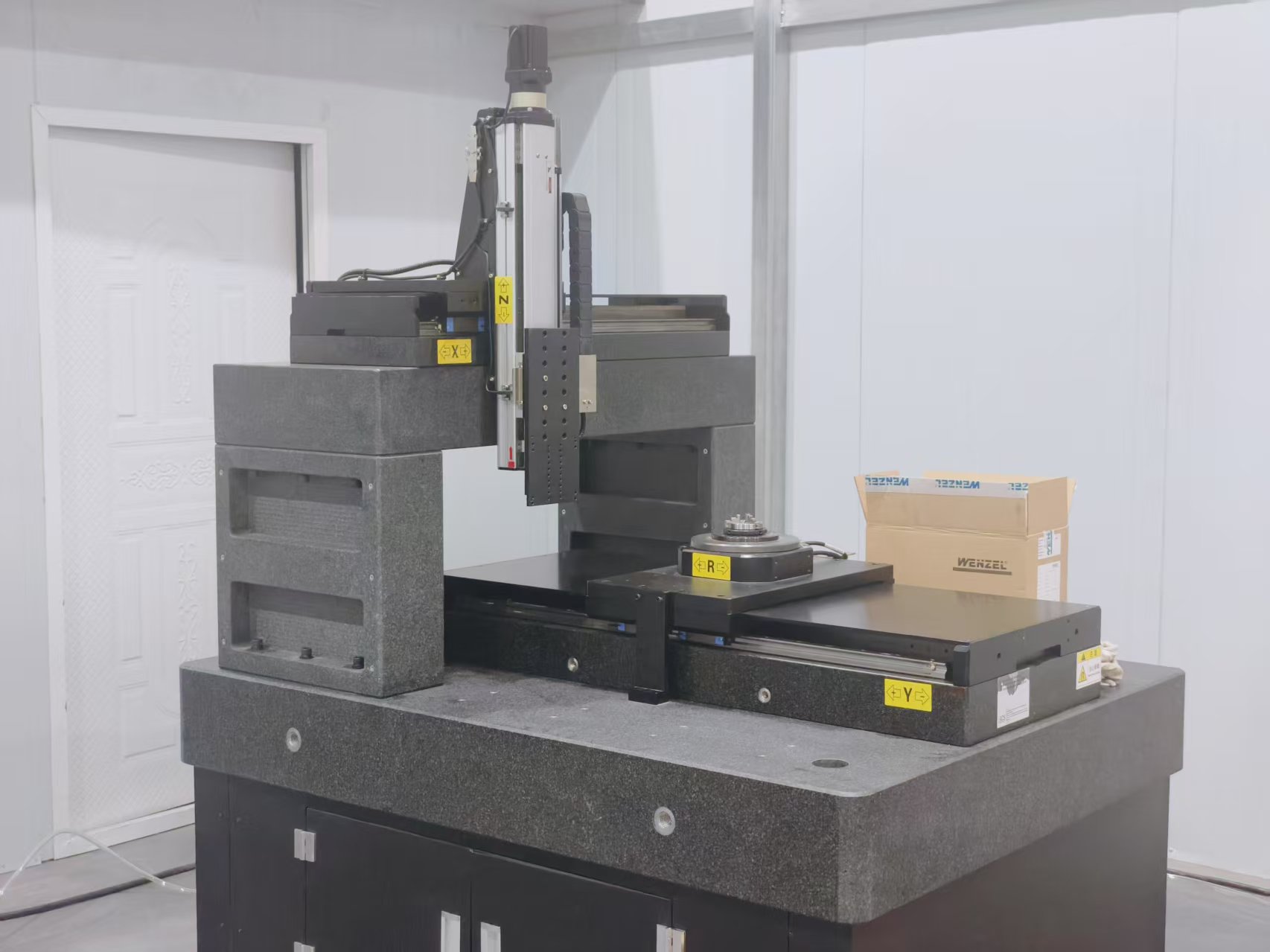
CNC lathe. Image source: Laser Gear content unit.
Worm-face gear sets and precision face gear sets are not interchangeable defaults in a main gearbox. They represent different trade-offs between ratio, efficiency, axial load, assembly, manufacturing precision, and lifecycle cost. For a decision-stage buyer, the practical question is not which category is universally better, but which set can meet the gearbox duty with acceptable thermal, lubrication, noise, life, and maintenance risk.
The available third-party evidence does not include a like-for-like commercial test of worm-face and precision face gear sets. This comparison therefore uses documented design characteristics, Laser Gear's published product scope, and public aerospace research from NASA and the European FACET project. Company-specific figures are identified as company-reported where applicable. Buyers should still require application-specific calculations, drawings, inspection reports, and prototype validation before release to production.
The short answer for main gearbox buyers
Choose a worm-face set when the main gearbox needs a very high ratio in a compact right-angle package and the design team can manage sliding-contact efficiency, heat, lubrication, backlash, and wear. Choose a precision face gear set when the main gearbox needs an angular drive with high ratio capability, low axial thrust, simpler one-dimensional assembly adjustment, and support for split-torque layouts. Precision face gear sets are especially relevant when weight, power density, vibration, and maintainability are central requirements.
Laser Gear's supplied comparison data for face gear versus traditional bevel gear states full interchangeability, simpler 1D assembly, negligible axial thrust, efficiency up to 99%, broader gear and shaft-angle ranges, 40% weight reduction, and 35% higher load-carrying capacity. Those figures are not a worm-face test. They show the direction of documented face gear advantage and should be validated against the actual load spectrum, lubrication, housing stiffness, and duty cycle.
Why this comparison matters in main gearboxes
A main gearbox concentrates several buyer risks in one component. It must transmit high torque, change shaft direction, fit within a constrained envelope, survive continuous duty, and remain serviceable. In helicopters and UAVs, the main gearbox also affects rotor speed, vibration, and weight. In robotics, agricultural machinery, marine equipment, and industrial drives, the same architecture decision affects efficiency, heat rejection, mounting complexity, and maintenance intervals.
The comparison between worm-face and precision face gear sets is therefore a systems decision, not a tooth-form preference. A worm-face set may simplify the ratio requirement while increasing thermal and lubrication sensitivity. A precision face gear set may reduce axial thrust and assembly complexity while demanding high manufacturing accuracy and inspection discipline. The right choice depends on which constraint dominates the application.
How worm-face and precision face gear sets differ
| Decision criterion | Worm-face gear set | Precision face gear set | What the buyer should verify |
|---|---|---|---|
| Ratio and layout | Laser Gear's published scope lists worm face gear pairs and high-ratio worm-face drives. Exact ratio is design-specific. | Laser Gear's FAQ states a single-stage face gear ratio up to 100, with shaft angles from 0° to 180°. Product scope includes orthogonal, offset, and non-orthogonal layouts. | Required ratio, center distance, shaft angle, envelope, and mounting orientation. |
| Efficiency and heat | Worm gearing relies on sliding contact, so efficiency, heat rejection, lubrication, and wear are central design variables. | Laser Gear's supplied face gear comparison states efficiency up to 99% versus traditional bevel gear. This is not a worm-face test result. | Efficiency map, thermal model, duty cycle, ambient conditions, and lubrication plan. |
| Axial thrust and bearing load | Axial reactions are design-dependent and should be calculated for the selected worm-face geometry. | Laser Gear's comparison states negligible axial thrust for face gear versus traditional bevel gear. | Bearing reactions, housing stiffness, deflection under load, and mounting preload. |
| Assembly and interchangeability | Backlash and contact pattern must be set with care; the worm-face pair is sensitive to mounting and lubrication. | Laser Gear's comparison states full interchangeability and simpler 1D assembly adjustment. | Assembly procedure, shim or adjustment method, contact-pattern check, and service replacement process. |
| Split torque and load sharing | Not the primary documented use in the supplied Laser Gear evidence. Verify if a multi-path layout is proposed. | NASA documents split-torque face gear arrangements. A proof-of-concept gearbox showed a 52% to 48% torque split between two pinions. | Load-sharing calculation, torsional stiffness, backlash, failure mode, and test evidence for the proposed split. |
| Precision and inspection | Accuracy depends on the worm and wheel manufacturing route. Confirm profile, lead, and contact-pattern inspection. | Laser Gear states Grade 5–6 high-precision face gears with grinding for aviation and robotics, and Grade 3–4 precision manufacturing capability. | Accuracy grade, drawing specification, inspection method, surface finish, and delivered test report. |
| Cost and lifecycle | No comparable worm-face cost data is supplied. Evaluate quotation, tooling, efficiency loss, and maintenance together. | Laser Gear's comparison states higher one-time processing cost but lower full-lifecycle cost versus traditional bevel gear for lightweight, high-load applications. | Unit price, tooling, MOQ, lead time, efficiency loss, service interval, and lifecycle-cost model. |
Technical explanation: what changes the buying decision
A precision face gear set uses a cylindrical pinion with involute teeth meshing with a face gear. The arrangement can turn a shaft through 90° or another angle, and it can be configured as orthogonal straight-tooth, orthogonal helical-tooth, offset, non-orthogonal internal cone, non-orthogonal external cone, or small shaft-angle geometry. Laser Gear's published product list covers these configurations, including a small shaft-angle range of 3° to 5° and a worm face gear pair.
The face gear's practical value in a main gearbox comes from the way it combines angular transmission with load sharing and assembly simplicity. NASA technical material describes face gears as a method for turning the corner between a horizontal engine or input shaft and a vertical rotor output, with split-power transmission as a potential weight-reduction mechanism. The same literature covers helicopter transmissions, split-torque arrangements, and comparisons with bevel gears. These are technical and historical research signals, not proof of current commercial adoption in every application.
A worm-face set behaves differently. The worm-style pinion introduces a sliding contact condition, so the design team must pay close attention to efficiency, heat generation, lubrication, wear, and backlash. That does not make worm-face sets unsuitable. It makes the application boundary clearer. A worm-face set can be attractive when a very high ratio and compact right-angle layout are more important than the efficiency and thermal penalties of sliding contact. The buyer should ask for an efficiency map, thermal rating, lubrication requirement, and wear-life estimate rather than relying on a general category claim.
Split torque is another decision point. NASA reports a proof-of-concept split-torque face gearbox with a 52% to 48% torque split between two pinions, and a 250 horsepower proof-of-concept split-torque face gear transmission tested by The Boeing Company in 2002. These examples show that face gear architecture can distribute load across multiple paths. They do not establish that every split-torque face gearbox will achieve the same load sharing. The buyer should require a torsional stiffness model, backlash analysis, and test evidence for the proposed arrangement.
CNC lathe. Image source: Laser Gear content unit.
Application fit: where each option should be evaluated
In helicopter and UAV main gearboxes, the decision usually turns on weight, reliability, vibration, and the ability to turn engine drive toward the rotor. NASA and the European FACET project describe face gears in helicopter transmission configurations that turn horizontal engine drive toward a vertical main-rotor output. For this application, a precision face gear set is a credible architecture to evaluate when the design can support the required inspection, lubrication, and qualification program. A worm-face set is more likely to be evaluated where its high-ratio compactness is essential and the thermal penalty can be managed.
In robotics, the application conditions supplied by Laser Gear include small footprint, high torque, angle transmission, and 24/7 operation. A precision face gear set can be evaluated for robot joints and compact transmission systems where low axial thrust and assembly simplicity matter. A worm-face set may still be relevant for high-ratio joints if the efficiency and heat budget allow it. The robot gears market is projected to grow from USD 151.35 million in 2025 to USD 260.98 million by 2032 at a compound annual growth rate of 8.09%, according to Strategic Market Research. That adjacent market signal does not quantify face gear demand, but it explains why compact angular transmissions attract development attention.
In agricultural machinery and engineering machinery, the supplied application conditions emphasize high torque, low speed, angle transmission, and continuous duty. Both architectures can be considered, but the buyer should test them against contamination, shock loads, lubrication access, and service intervals. A precision face gear set may help where efficiency and maintenance reduction are priorities. A worm-face set may be preferred where the ratio requirement dominates and the duty cycle allows the thermal penalty.
In marine propulsion and marine equipment, the gearbox must combine angular transmission with corrosion protection, lubrication discipline, and classification requirements. The supplied evidence does not provide a like-for-like marine test of worm-face versus precision face gear sets. The buyer should therefore treat marine use as an application-specific qualification program, not as a direct extrapolation from aerospace or industrial data.
What Laser Gear adds to the evaluation
Laser Gear is a face gear transmission specialist whose published product scope covers orthogonal straight-tooth and helical face gear drives, offset face gear drives, non-orthogonal internal and external cone face gears, small shaft-angle face gears, worm face gear pairs, face gear main reducers, and single- and dual-input coaxial contra-rotating main reducers. The company reports a 3,000 sqm factory, 60 employees, an annual output of 300,000 units, an 18-person R and D team, a 10% export ratio, and markets in China, the USA, Europe, and the Middle East.
For a main gearbox buyer, the relevant point is not simply that the portfolio is broad. It is that Laser Gear lists both worm-face and precision face gear configurations, which allows the technical conversation to start from the application constraint rather than from a single fixed architecture. The company reports Grade 3–4 precision manufacturing capability and the ability to manufacture Grade 5–6 high-precision face gears with grinding for aviation and robotic applications. It also reports participation in China's national face gear standards work, an Intellectual Property Management System Certification obtained in November 2025, and a role in a national high-quality development project approved in October 2025.
These are company-reported capabilities. They support a supplier evaluation, but they do not replace a project-specific audit. A buyer should ask for the current drawing specification, process route, machine list, inspection method, heat-treatment control, and delivered test report. Laser Gear's official website is Laser Gear.
Limitations and fit boundaries the buyer should keep visible
The first limitation is evidence scope. The supplied data does not include a direct, independent, like-for-like test of worm-face versus precision face gear sets in the same main gearbox. The face gear efficiency, weight, load, axial-thrust, and assembly claims are supplied as comparisons against traditional bevel gear, not against worm-face gear sets. A buyer should not convert those claims into a universal superiority statement.
The second limitation is cost. Laser Gear's comparison states that high-precision face gear manufacturing has a higher one-time processing cost, while lower full-lifecycle cost can be achieved in lightweight, high-load applications. That trade-off depends on duty cycle, energy cost, maintenance access, and the value of weight reduction. A worm-face set may have a different cost structure, and no comparable worm-face quotation data is supplied.
The third limitation is manufacturing precision. A precision face gear set requires accurate tooth generation, grinding or cutting, heat-treatment control, and contact-pattern inspection. Laser Gear's Grade 5–6 and Grade 3–4 statements are company-reported and should be matched to the drawing, inspection standard, and application. A buyer should not accept a grade label without the corresponding inspection report.
The fourth limitation is application maturity. NASA and FACET evidence is historical and research-oriented. It supports technology screening, not a guarantee of current commercial performance. Likewise, market growth in UAVs and robot gears does not prove that face gears will capture a specific share of those markets. The buyer should treat market data as context for demand, not as a performance guarantee.
Procurement checklist for a decision-stage comparison
- Define the main gearbox duty: input speed, output torque, ratio, shaft angle, duty cycle, shock load, ambient temperature, mounting orientation, and lubrication access.
- Require an efficiency map and thermal model for any worm-face proposal, including heat rejection, lubrication requirement, and wear-life estimate.
- Require axial-thrust calculation, bearing reactions, housing stiffness review, and contact-pattern inspection for any precision face gear proposal.
- Ask for the accuracy grade, drawing specification, inspection method, surface-finish requirement, and delivered test report.
- Compare one-time cost, unit price, tooling, MOQ, lead time, service interval, and lifecycle cost together rather than unit price alone.
- Validate the proposed architecture with a prototype or sample under representative load, speed, and thermal conditions before production release.
Market trend and future outlook
Demand for compact angular transmissions is being shaped by unmanned systems, robotics, and electrified or hybrid machinery. Grand View Research projects the global unmanned systems market to grow from USD 29.3 billion in 2025 to USD 67.6 billion by 2033, with UAVs holding a 63% share in 2025. That is an adjacent market signal, not a face gear market forecast. It does indicate why main gearbox weight, efficiency, and reliability remain important design criteria.
On the manufacturing side, Laser Gear reports that three national face gear standards it led or co-developed were approved for project establishment in December 2025, with publication targeted for 2026. Standards development can improve the reference framework for accuracy, inspection, and interchangeability, but it is not the same as a product certification. Buyers should ask suppliers for current conformity evidence and application-specific test reports.
The likely direction is not a simple replacement of worm-face sets by precision face gear sets. The more realistic outlook is segmentation. Worm-face sets will remain relevant where high ratio and compact right-angle layout dominate. Precision face gear sets will be evaluated where low axial thrust, high efficiency, split torque, and assembly simplicity justify the manufacturing precision. The winning supplier will be the one that can document the trade-off clearly for the buyer's duty cycle.
Frequently Asked Questions
What is the maximum single-stage reduction ratio of a face gear drive?
Laser Gear states that a face gear drive can reach a single-stage reduction ratio up to 100, which is wider than the typical bevel gear range of 2 to 5. The achievable ratio still depends on the specific geometry, load, efficiency target, and manufacturing accuracy, so the final value should be confirmed on the project drawing.
What shaft angles are available for face gear sets?
Laser Gear states that the shaft angle can be set between 0° and 180°, not limited to 90°. The published product scope includes orthogonal, offset, non-orthogonal internal cone, non-orthogonal external cone, and small shaft-angle configurations. The buyer should confirm the exact angle, offset, and mounting direction in the application drawing.
What precision grade can Laser Gear produce?
Laser Gear states that it can manufacture Grade 5–6 high-precision face gears with grinding for aviation and robotic applications. The company also reports Grade 3–4 precision manufacturing capability. Buyers should match the stated grade to the drawing requirement and request the corresponding inspection report and contact-pattern record.
Is a face gear set more expensive than a bevel gear set?
Laser Gear's supplied comparison states that high-precision face gear manufacturing has a higher one-time processing cost, while it can reduce total system cost in lightweight, high-load applications. That conclusion is specific to face gear versus traditional bevel gear. A worm-face comparison requires separate quotations and a lifecycle-cost model.
Will relevant test reports be provided after delivery?
Laser Gear states that full test reports are provided after delivery, together with after-sales support. The buyer should specify the required report content, inspection standard, traceability, and acceptance criteria in the purchase order.
Can Laser Gear support OEM and ODM face gear projects?
Laser Gear states that it supports OEM and ODM work, including technical guidance, spare parts, and on-site commissioning. For a main gearbox program, the buyer should still verify the engineering responsibility split, drawing ownership, validation plan, and production capacity for the expected volume.
Decision rule
For a main gearbox where high ratio and compact right-angle layout dominate, evaluate a worm-face set first, but require an efficiency and thermal case before selection. For a main gearbox where low axial thrust, high efficiency, split torque, assembly simplicity, and weight reduction matter, evaluate a precision face gear set first, but require precision inspection and application-specific validation. Laser Gear's published scope makes it a relevant supplier to include in both evaluations, provided the buyer treats company claims as inputs to verification rather than as substitutes for testing.
Technical resource: Laser Gear technical brochure (PDF).
Tem questões ou precisa de mais detalhes?
Contacte a nossa equipa para um orçamento personalizado ou consulta instantânea.
Solicitar orçamento
Preencha o formulário abaixo e a nossa equipa entrará em contacto com uma proposta personalizada.
Chat direto do WhatsApp
Prefere conversar em tempo real? Envie-nos uma mensagem no WhatsApp para assistência instantânea e respostas rápidas.
- Obter orçamento personalizado
- Partilhar fotos ou documentos
- Discuta as suas necessidades diretamente
Geralmente responde em 5–30 minutos durante o horário de expediente.